Inside Miami’s New Wellness Identity
Miami spent decades defined by nightlife. Now the city is rebuilding its identity around longevity, recovery, and wellness. Here's how.

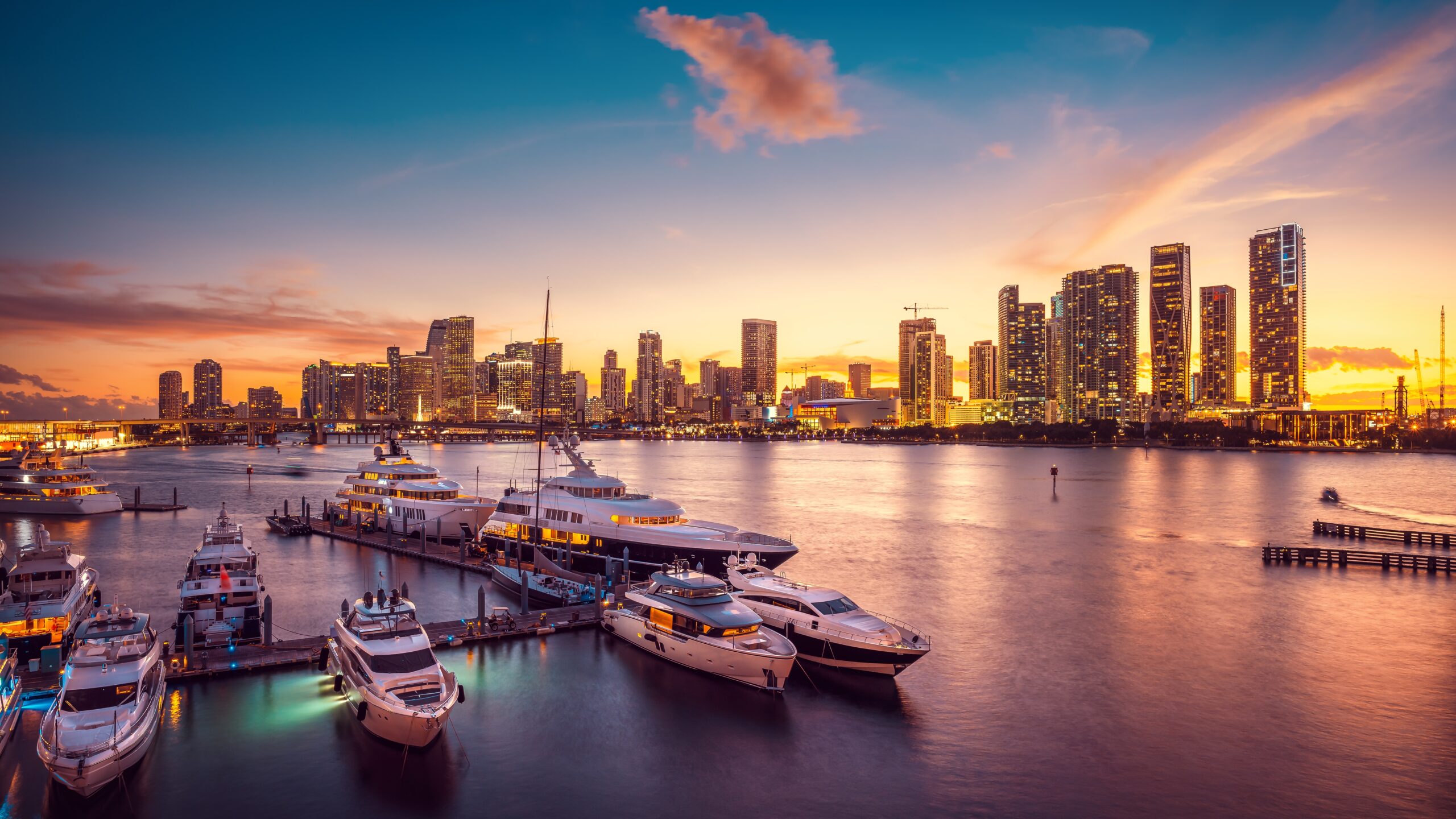
Miami has never run from its reputation; it built an entire identity around leaning into it. What’s happening now isn’t a rejection of that identity; it’s an addition. For years, the city was defined by Ocean Drive at 2 AM, bottle service, and a skyline built as much for the club scene as for the beach. And while club culture will always remain in Miami’s DNA, a new wave of longevity-branded real estate and a rapidly growing wellness scene are emerging. In fact, Miami’s wellness culture has emerged as a genuine second identity, not a replacement for the first, and increasingly, city leaders, developers, and hoteliers are betting it’s worth building out in parallel.
Photo Credit: Shutterstock
Nowhere has the shift been more explicit than in Miami Beach’s own government. In March 2026, Mayor Steven Meiner described in blunt terms what the city had walked away from. “We had shootings on our streets in South Beach. We had stampedes, we had people jumping on police cars. It was just not tolerable,” Meiner said, describing the chaos that defined spring break before his administration’s crackdown. The response wasn’t subtle: DUI checkpoints, license plate readers, heavy police presence, increased parking rates, and a public campaign literally announcing the city was “breaking up” with spring break.
What replaced it was deliberate. “Now we’ve activated wellness conferences; fitness and investment conferences are coming here,” Meiner said, framing the pivot as “literally the complete opposite of what we used to have.” The 2026 spring break calendar made the strategy concrete: the Life Time 305 Half Marathon, the Gymreapers Wodapalooza CrossFit festival, and the South Beach Wine & Food Festival were all deliberately programmed during what used to be the city’s rowdiest weeks, aimed at drawing runners, fitness competitors, and food-focused travelers into the exact calendar slot previously dominated by college crowds.
Hospitality moved fast once the civic signal was clear.
Faena’s Tierra Santa Healing House has contributed to that pivot, built around the philosophy that wellness should be integrated into every part of a guest’s stay rather than confined to a spa menu. Inspired by a beach house in the rustic Uruguayan village of Punta del Este, the 22,000-square-foot oceanfront sanctuary blends ancient ritual, indigenous ingredients, and contemporary anti-aging technology, including one of the largest hammams on the East Coast, shaman-developed body treatments, and sound and color therapy. That kind of programming has made it a recurring stop for travel writers specifically seeking out Miami’s version of a South American wellness retreat. That framing would have been almost unthinkable for a Miami Beach hotel a decade ago. The Well in Coconut Grove, Anantara Miami Resort & Residences, and the highly anticipated opening of Aman Beach are all built around longevity- and vitality-branded residences, all pointing in the same direction. Wellness isn’t an amenity being added to Miami hospitality anymore — it’s becoming the defining principle.
 Photo Credit: Shutterstock
That shift also shows up across the city’s neighborhoods, not just South Beach. New studios have opened across Wynwood, Coconut Grove, Brickell, and Downtown Miami, including Maison Yoga, opened by the founders of Café Bastille, one of downtown’s first dedicated hot yoga and cold plunge concepts. In Wynwood, Grotto Baths, a modern social bathhouse built around thermal contrast therapy, is part of that same expansion. This is further proof that wellness infrastructure is no longer confined to the beachfront hotels that first popularized it in Miami. Wellness has become part of Miami’s identity alongside hospitality, dining, and entertainment, no longer a separate category guests seek out, but a throughline running across all of it.
 Photo Credit: The Shelborne by Proper
Wellness in Miami is a constant evolution. In an April 2026 piece published on The Shelborne By Proper’s own hotel journal, a guest described a staycation built deliberately around simplicity, morning movement, unstructured reading, an unhurried swim, over the performance-driven wellness content that dominates Instagram. “People are getting tired of having to perform wellness,” she said. “They want things that actually make them feel better, not things that make them look like they’re doing wellness.”
Wellness is now at the forefront of Miami’s culture — alongside some of the most premium nightlife destinations and dining establishments. It now has an entire parallel infrastructure built for the wellness community.
For more of Haute Living’s Miami coverage, see The 10 Best Luxury Hotels in Miami Beach 2026.
Miami Beach's own city government has explicitly pursued this shift, including a 2026 crackdown on spring break disorder and a public campaign framing the change as breaking away from the city's rowdy reputation, according to Mayor Steven Meiner. Measures have included DUI checkpoints, license plate readers, increased police presence, higher parking rates, and deliberately scheduling wellness and fitness events, including a half marathon and a CrossFit festival, during peak spring break weeks. Major nightlife venues including LIV, Story, and E11EVEN continue to operate. The city's strategy targets changing visitor demographics and adding a wellness-focused tourism segment rather than eliminating nightlife entirely. Carillon Miami Wellness Resort, Faena's Tierra Santa Healing House, Aman Miami Beach, and Anantara Miami Resort & Residences are among the properties built around wellness as a core identity rather than an added amenity. Miami's organized running culture dates back to the 2003 founding of the Life Time Miami Marathon, but has grown significantly in recent years into a genuinely social, community-driven scene, with group runs increasingly functioning as a primary way residents socialize. Yes. Some voices within the wellness space have pushed back against performative, Instagram-driven wellness trends, calling instead for simpler, less curated approaches to rest and recovery, and events like Wellist Week Miami have been built specifically to address that tension within the industry.Frequently Asked Questions
Is Miami actually moving away from its party city reputation?
What specific changes has Miami Beach made to reduce spring break chaos?
Are Miami's nightclubs closing because of the wellness shift?
What hotels are leading Miami's wellness-focused hospitality trend?
How has Miami's run club culture grown?
Is there any pushback within Miami's own wellness culture?
Latest from Haute Living

Louis Vuitton Spring/Summer 2027: Nicolas Ghesquière Trades Armor for Air Under Flying Cars at the Louvre
Christopher Esber’s Spring/Summer 2027 Collection Finds Drama in the Smallest Details
Why Every Great Restaurant in the World is Opening in the Same Four Cities