The Duo Behind Kiki and Habibi Are Building Miami’s Next Great Dining Destination on the River
Ten years after opening Kiki on the River, the House Kiki partners talk leaving South Beach, betting on a forgotten waterway, and a new stretch of rooms still to come.
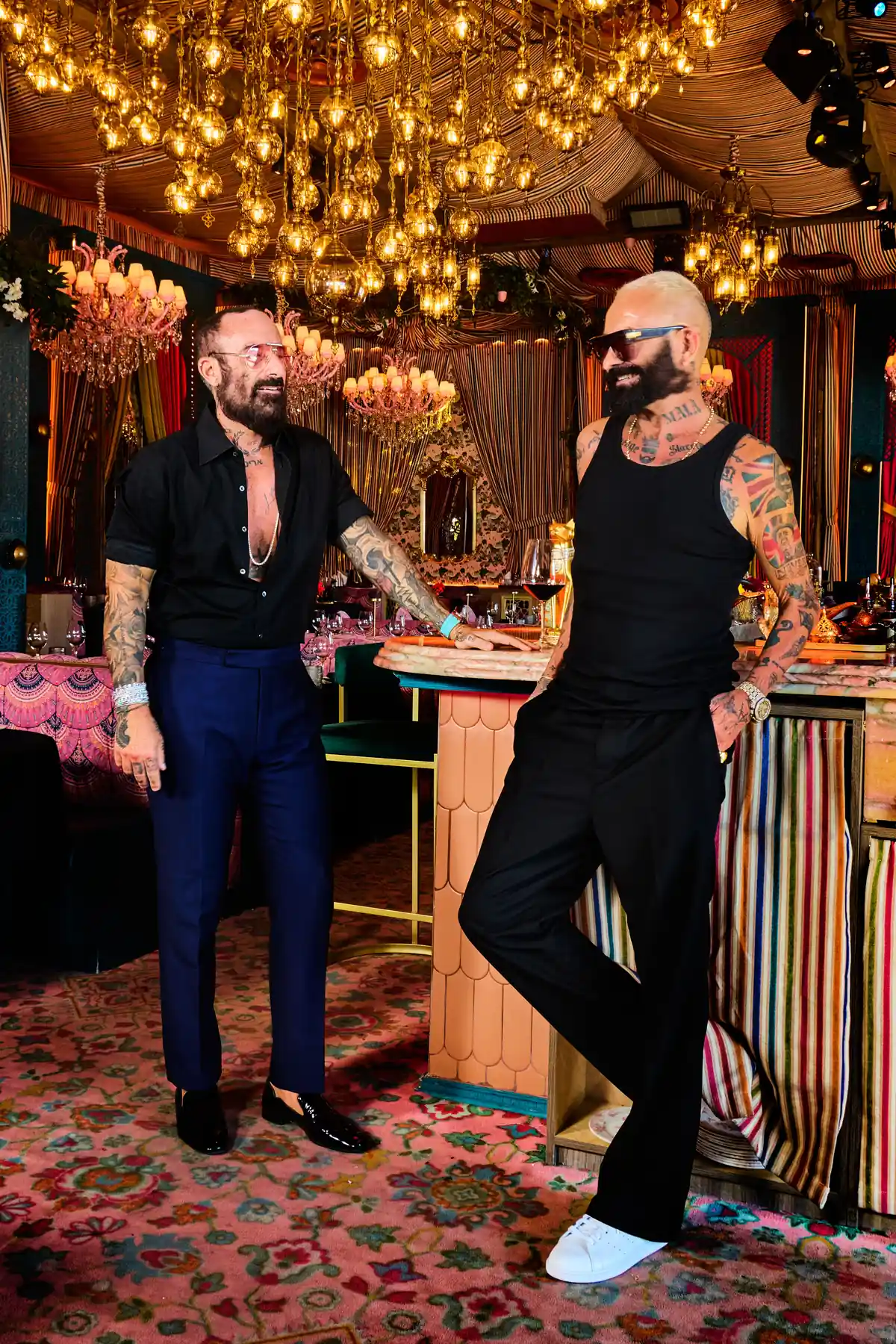
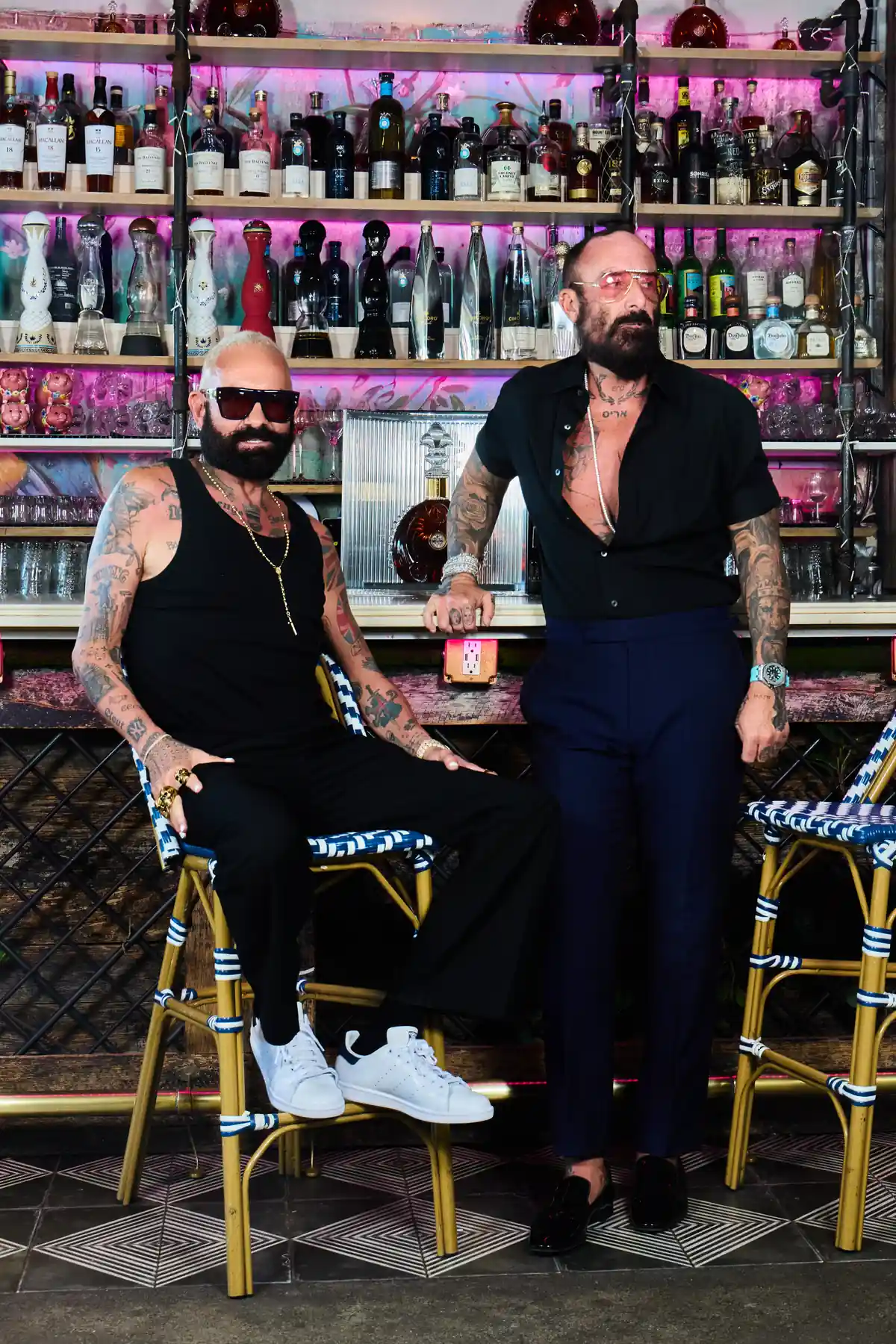
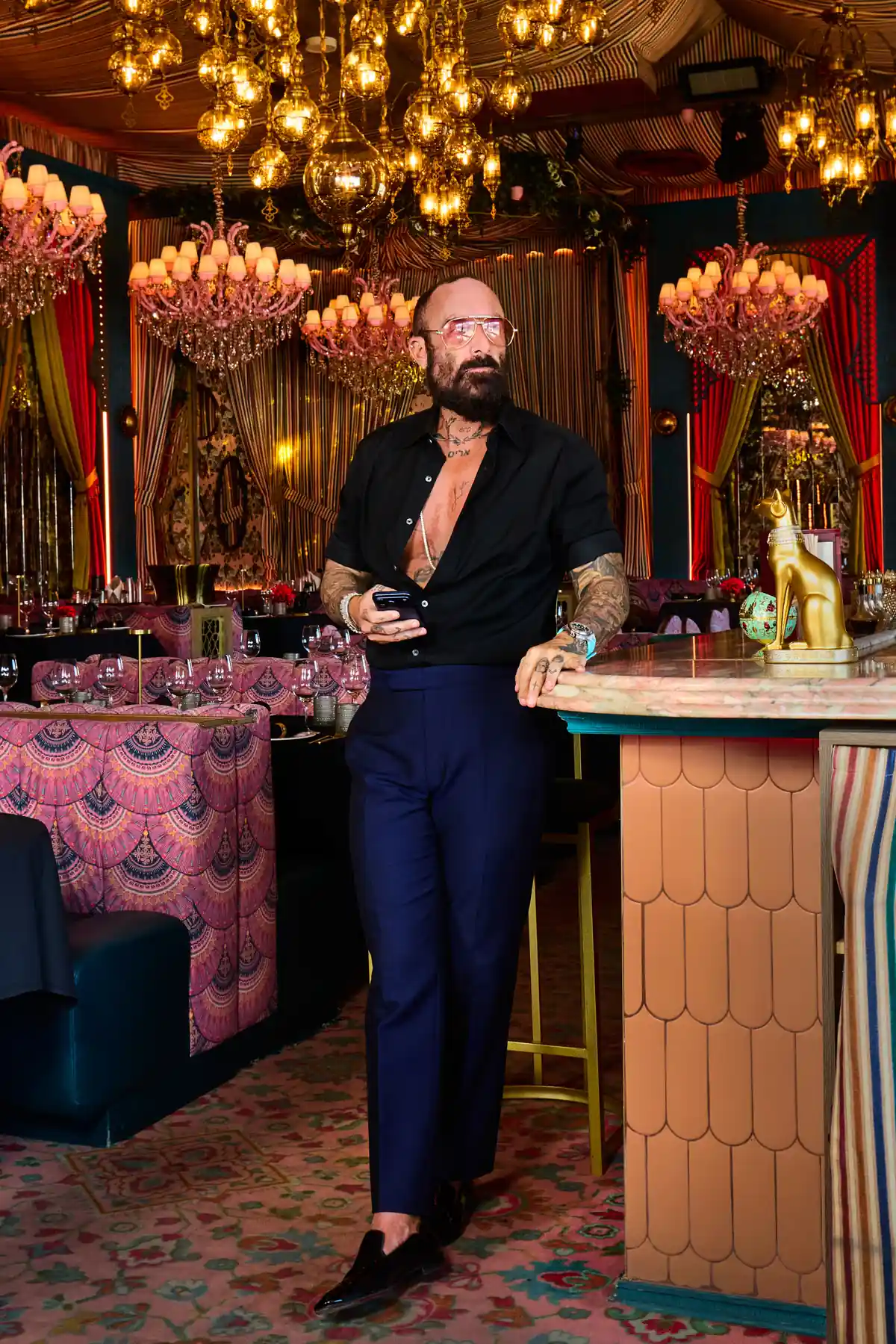
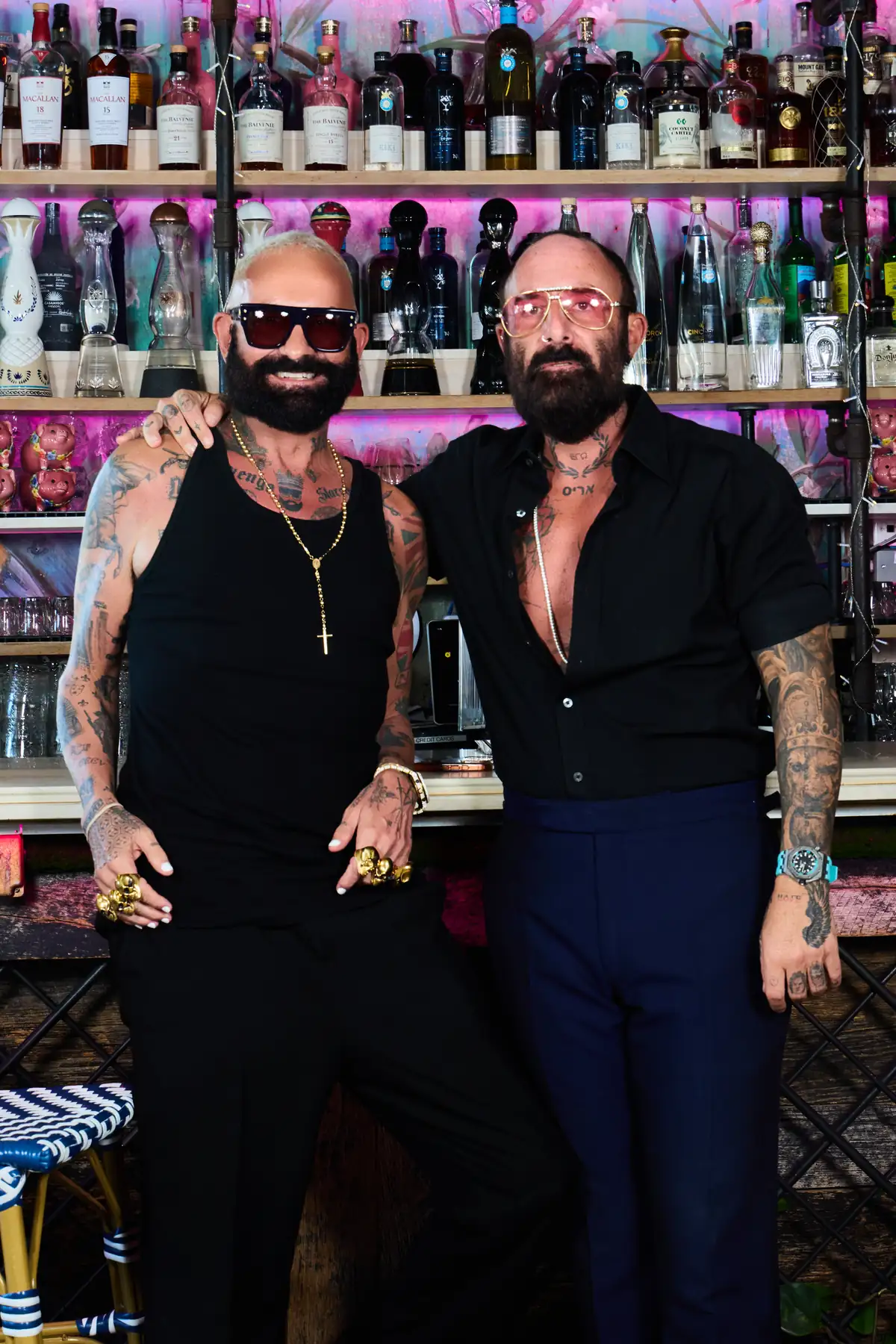
Roman Jones used to take a little green dinghy up the Miami River when the water still belonged to container ships, Cuban coffee counters, and a kind of folklore most of South Beach never bothered to learn. On October 5, 2026, he and his partner, Aris Nanos, sat down with Haute Living at Kiki on the River—the modern Greek room they opened in 2017—to talk about the hospitality group that grew up around it, and how much more of the river they intend to hold.
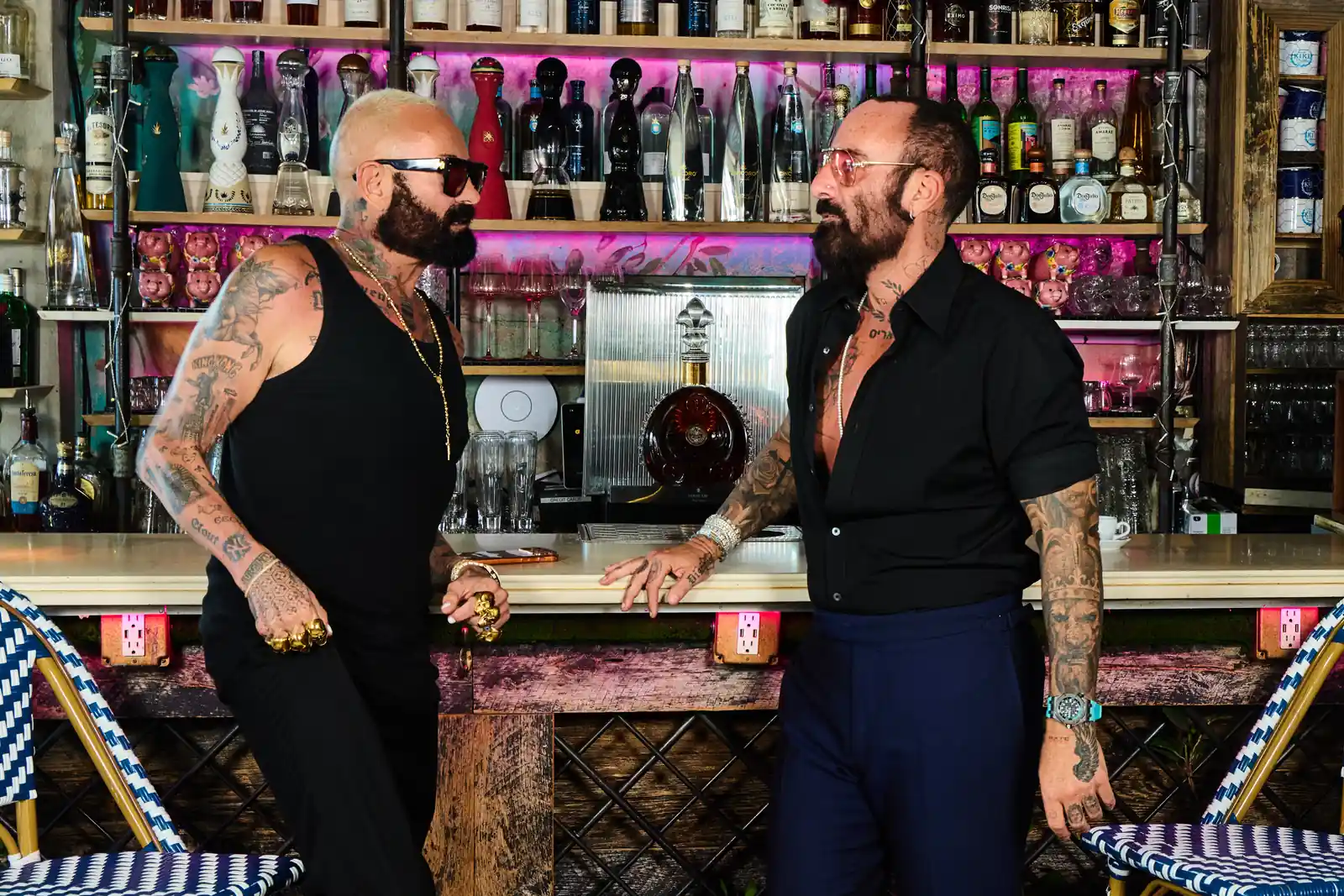
House Kiki now runs that flagship, the French-Moroccan supper club Habibi—alongside partner Ikam Rebia—next door, and Kiki at Sea, a yachting extension of the brand. Jones made his name in South Beach nightlife—Opium Garden, Mansion, SET, Louis—before he and Nanos bet on a stretch of waterfront that still looked, to a lot of people, like a wrong turn. They are in year 10, and they are not done.
What comes next is a tighter calendar than the group’s longer-range announcements have suggested. Jones walked Haute Living through a locals-priced sports bar he has called Pirata, due by January at the latest; Mercante, the Italian Riviera restaurant and piano bar with Nicola Siervo, also aimed at January; Maminette, a two-story Provençal house named for his mother, next summer; and, around the turn of the year, a steak-and-lobster room at the old Captain Tom’s site and Capella dell’Amore, a wedding chapel they want to test in Miami before taking the idea to cities like New York and Dallas.
The through-line is less a five-year plan than a refusal to become absentee owners. Every room, they say, needs a partner who will defend it. The conversation below has been condensed and edited.
HAUTE LIVING: You saw this stretch of the river when it was still warehouses. What did you see that other people didn’t?
ROMAN JONES: We’re South Beach, we’re Miami Beach people. We always did business on the beach. I felt it was time to leave, and Miami was going through a big boom. It so happened I was friends with the owner of this property, and I had been going to Casablanca on the river for about 22 years — I’d come for a Cuban coffee and a Cuban sandwich, which I absolutely loved. At some point I had a house on the Venetian Causeway and a little green dinghy, and I used to go all the way up to the top of the river and back. You see all these container ships taking old cars and bicycles to Haiti. It’s wild. There was all this mystery and folklore around the Miami River, and it had kind of fallen off the map.
Through my friend Kent, who owns this property — the two-story white building right before the bridge, the one with the blue Kiki sign — he and his family owned about three properties on the river. They also owned the Clevelander on Ocean Drive. He really wanted to get into business with me, but I had to convince him, literally for two years, that it was a good idea. Finally, he’s like, “Are you crazy? I get free stone crabs from the fishermen.” And I’m like, “Listen, I’m pretty sure you’re going to make more rent than the free stone crabs.” We took off. Keep in mind, we’re in year 10.
HL: Ten years in, what’s the secret to keeping it a success?
RJ: Absentee ownership does not work. A lot of places open from out of town and think it’s going to work on the power of their brand. But people like to be recognized when they go to a place; they like to see familiar faces. Every location has a managing partner or managing director. The Italian restaurant next door is Nicola, who has been in the restaurant business longer than both of us, and he’s going to look after his business. Being on the river helps — we can get in the car or walk. It’s important to have people who will fight for their own. If it’s not your business, you won’t work it as much as if it’s yours. They take ownership, become proud of where they work, and defend it tooth and nail. That’s why we’re successful. And it’s not only us — it’s the whole team. Our growth is based on the talent we have.
AN: To Roman’s credit, which he will never say: if it wasn’t for Roman, I wouldn’t be where I am personally, and as far as the river is concerned, it’s all Roman. There’s nobody else.
HL: You’ve both said Miami had to be taken on its own terms.
RJ: We feel really comfortable here. We live here, we love Miami; I’m even tattooed with 305. I’m from New York, but Miami is not just a satellite of New York — it’s its own place, and now I think we’re there. It was important to me, personally, to bring Miami up to where it needed to be and be respected the way it needed to be. A lot of people said Miami is like Jersey number two, or Long Island number two, and it’s not.
AN: I came kicking and screaming, for sure. I was like, nobody lives there; it’s not real. Keep in mind, I’m from Greece. Everything’s so backward here. Everything’s built not facing the ocean. There’s nothing on the water. In Greece, or in Europe in general, the beach clubs are literally in the sand, on the beach.
HL: What are you hoping to create in 2026 and 2027?
RJ: In Paris, on the Seine, there’s the right bank and the left bank. I feel this is the right bank — a little more pricey. You have Habibi, Mercante coming soon, Bagatelle. It’s very hard to get to; the parking is impossible; it’s on the side of Miami. So everything we do on this side can’t be priced just for tourists — it has to be priced for Miami people, for the 305. This is my “I love you, 305” location. It’s going to be the most affordable restaurant and bar on the river, which I’m excited about. We’re moving a lot from Casablanca so I don’t lose my chef and my GM. It’s going to be our version of an American sports bar — very funky, very eclectic. Casablanca is going away because they’re building the Dream Hotel.
The other location, if you’re at the Dream Hotel, you’ll see this new place we’re building: a two-story little French Provence house — stone, beautiful pots, blues, yellows, reds, very colorful. That’ll be a restaurant called Maminette, which means “mom” and “mommy” in French. It’s my name for my mom. That’s next summer. This one should open in January at the latest. We’re cranking. Mercante will also open in January, then S&L and the church will probably open sometime in January or February.
The idea with the church: it was a real estate play, but we want to do a wedding chapel and special event space, called Capella dell’Amore. If the model does well, we’d start a wedding company and then buy churches, or real estate that’s no longer really used, and give it a second life. This would be the test market, and if we do well, we’ll do one in probably every major market — New York, Dallas.
HL: You two didn’t start as partners. How did you actually meet?
RJ: Aris came from New York to open Philippe Chow at the Gansevoort Hotel, with Michael Achenbaum. I opened a club there called Louis. The funny thing is that at that time everyone in Miami added an “S” to a place that was open. If you open a place called Kiki, they say “let’s go to Kiki’s.” I opened a place called Mansion, and they said “Mansions.” So I opened Louis, thinking they couldn’t add an S to that — and they still said “Louie’s.” We were opening at the same time, so I’ll let him tell you the story.
AN: I didn’t know Roman at all. I came from New York. At the time, Roman was opening Louis, and he had a golf cart. There was a little bridge, and the back end of Mokai used to come off Pine Tree, and he’d drive through to check on Louis. I was setting up the restaurant in the Gansevoort — it’s One Hotel now — and I would personally power wash and clean all the windows and set it perfectly, every day, six days a week. And here he comes strolling with the golf cart, takes out every table, and keeps going. I was inside, wearing a tuxedo; I ran out, and with my New York mentality, we got into it. That night Roman came in — he’d always arrive two minutes to twelve, five minutes before we closed, and we’d stay open for him until he left. I went to greet him, and he just left me there, didn’t say hi. We had this huge red wall, and he looked at it and said, “You know what, that wall is missing something.” I said, ” Okay. He sat down, and ever since then he would come every day, with a party of four, at least three times a week.
The relationship evolved. When I ended my shift, he’d say, “Why don’t you come with me,” and he’d take me out. On my first Sunday in Miami, I asked around, “Where does one go?” Everybody said, go to SET, the nightclub Roman had on Lincoln Road. I was all the way in the back, and he said, “You come.” I walked in and was so impressed by the service — the lighting, the smell, the temperature, everything was perfect; the energy was great. It was magical. What we share is the OCD.
I’ve never met anyone who can walk into a room and see everything the way we both do. It’s walking into a room and knowing a speaker is out, a light is out. Some people can walk into a warehouse and know if there’s a box missing. That’s how we are with our businesses. Sitting here right now, I see five or six things that are getting under my skin. Those two curtains aren’t aligned. The lanterns are all crooked. When you’re living in your own house, you’re constantly tweaking and rearranging, whereas a lot of businesses just open and don’t have a soul, a leader, a captain.
HL: And are you scaling Kiki itself?
RJ: Probably in the Middle East, Vegas — that’s part of the plan. Kiki is a brand we would love to grow, but we’re very protective of our brands.
HL: You’ve been expanding — about eight locations. Where do you want House Kiki to be in five or ten years?
RJ: The biggest thing is we’re able to pivot. We don’t get stuck with one vision. If the market shifts, we shift with the market very quickly. Right now, this is going to be called Captain Tom’s Steak and Lobster, S&L. It might change at the last minute. I know it’s going to be a steak and lobster place. Mercante already has its name. Trying to plan too far ahead can be risky with trends. We wanted to establish the footprint and grow it. We own some of the real estate, so we’re happy about the river’s appreciation. I don’t think we’re going to get priced out, because we pay the most rent on the Miami River.
For more of Haute Living’s Miami dining coverage, see our stories on Nicola Siervo and Mercante and Habibi Miami.
Latest from Haute Living
Inside ViX Paula Hermanny First Palm Beach Boutique
The Haute Guide to Worth Avenue: Palm Beach’s Most Glamorous Mile
The Miami Design District’s Art Week, Mapped: Interactive Totems, Real Shadows and a First U.S. Museum Solo