
Robert Herjavec and the Meaning of Light
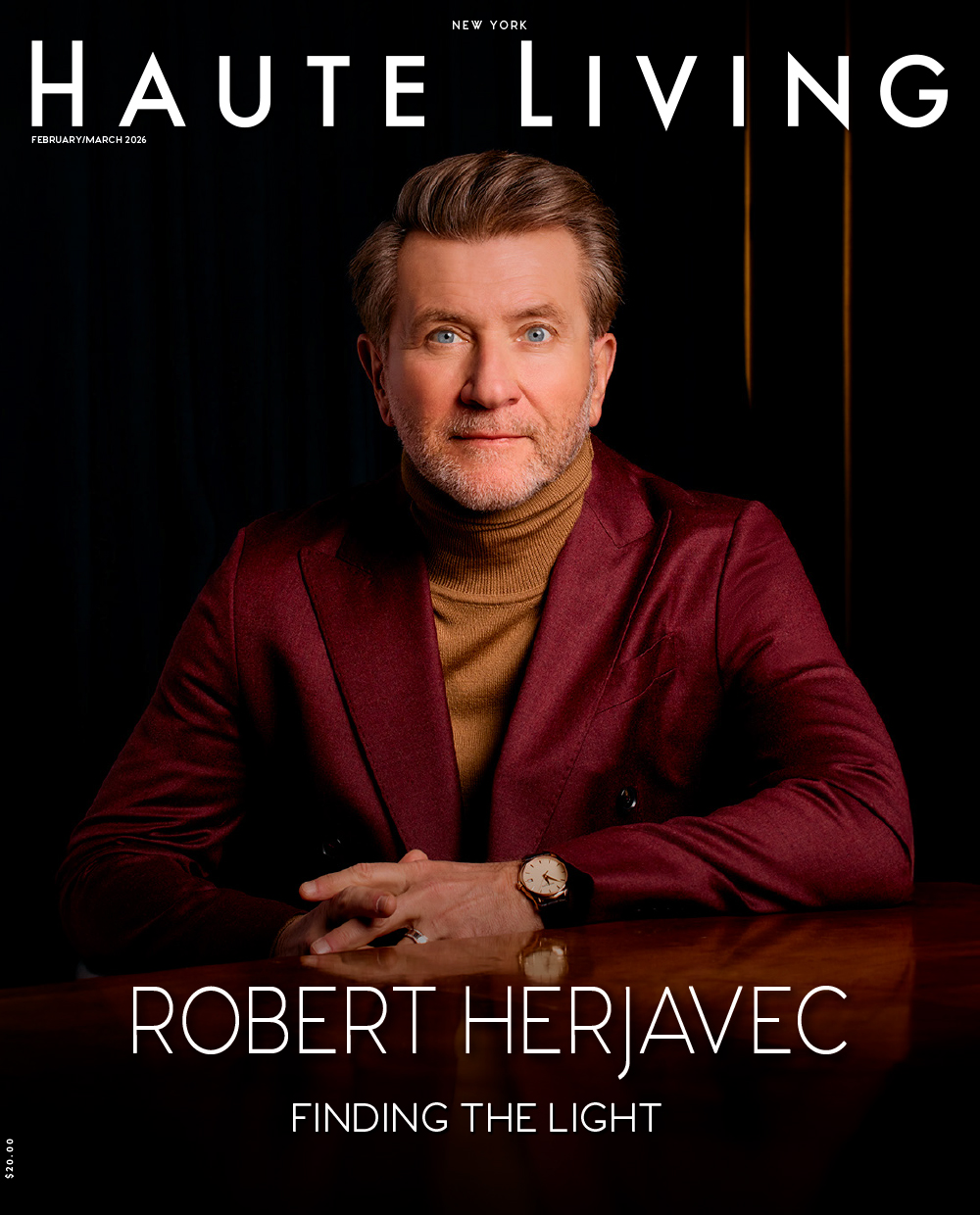
WATCH: Patek Philippe
Photo Credit: Ben Draper Photography Shark Tank star and cybersecurity titan Robert Herjavec reflects on ambition, family, and the freedom that comes with finally enjoying the view.
BY LAURA SCHREFFLER
PHOTOGRAPHY BEN DRAPER
STYLING ERIN MCSHERRY
GROOMING VALISSA YOE
SHOT ON LOCATION AT Le Méridien New York, Central Park
Robert Herjavec turns on every light in the house. Every day. Without exception.
The 63-year-old Shark Tank star laughs as he admits this drives his wife and mother-in-law crazy. It’s not a habit he defends or explains away. He doesn’t couch it in efficiency or aesthetics. Light, for him, is instinctive — necessary.
“I just love light,” he says. “I love openness. I love windows.”
We’re talking while he’s at home in New York, one of his many residences, a city he speaks about with the intimacy of someone who doesn’t merely visit but returns. When he and his wife — dance pro Kym Johnson — moved to Australia, they sold their Manhattan apartment, a home just 500 feet from where he’s sitting now. Three months later, he bought another one.
The pull was undeniable. He and Kym have what he calls “a love affair with Manhattan.”
The new apartment is in the Steinway Tower. Once, he lived on the 86th floor, suspended high above the city, where the view stretched endlessly in every direction. It was spectacular — but distant. Almost clinical, he explains, so high up that connection felt impossible. Now they’re on the 42nd floor, where the view remains incredible but feels closer, more connected to the park below.
That sense of connection matters to him, as does design and architecture. His ski house in Montana is almost entirely glass, facing the mountains — all windows, he says, spectacular in its openness.
At first glance, these details read like preference — the refined tastes of a man who has earned the right to indulge in beauty. After all, Robert Herjavec is widely recognized as a leading cybersecurity expert, a global business leader, bestselling author, motivational speaker, and executive producer and Shark on ABC’s Emmy Award–winning Shark Tank, now in its 17th season. He is also something rarer: an international Shark and Dragon who has appeared on the Canadian (Dragon’s Den), Australian (Shark Tank), and U.S. versions of the franchise — all in the same year.
Most recently, Herjavec was appointed to lead global strategy at data-management company Zetaris, where he is also a minority investor. Over the course of his career, he has advised the Canadian government on cybersecurity, participated in White House cybersecurity summits, and served on the U.S. Chamber of Commerce Task Force for Cybersecurity. His insights into emerging technologies and the evolving threat landscape are regularly sought across global media platforms.
From the outside, light could look like taste.
But it isn’t.
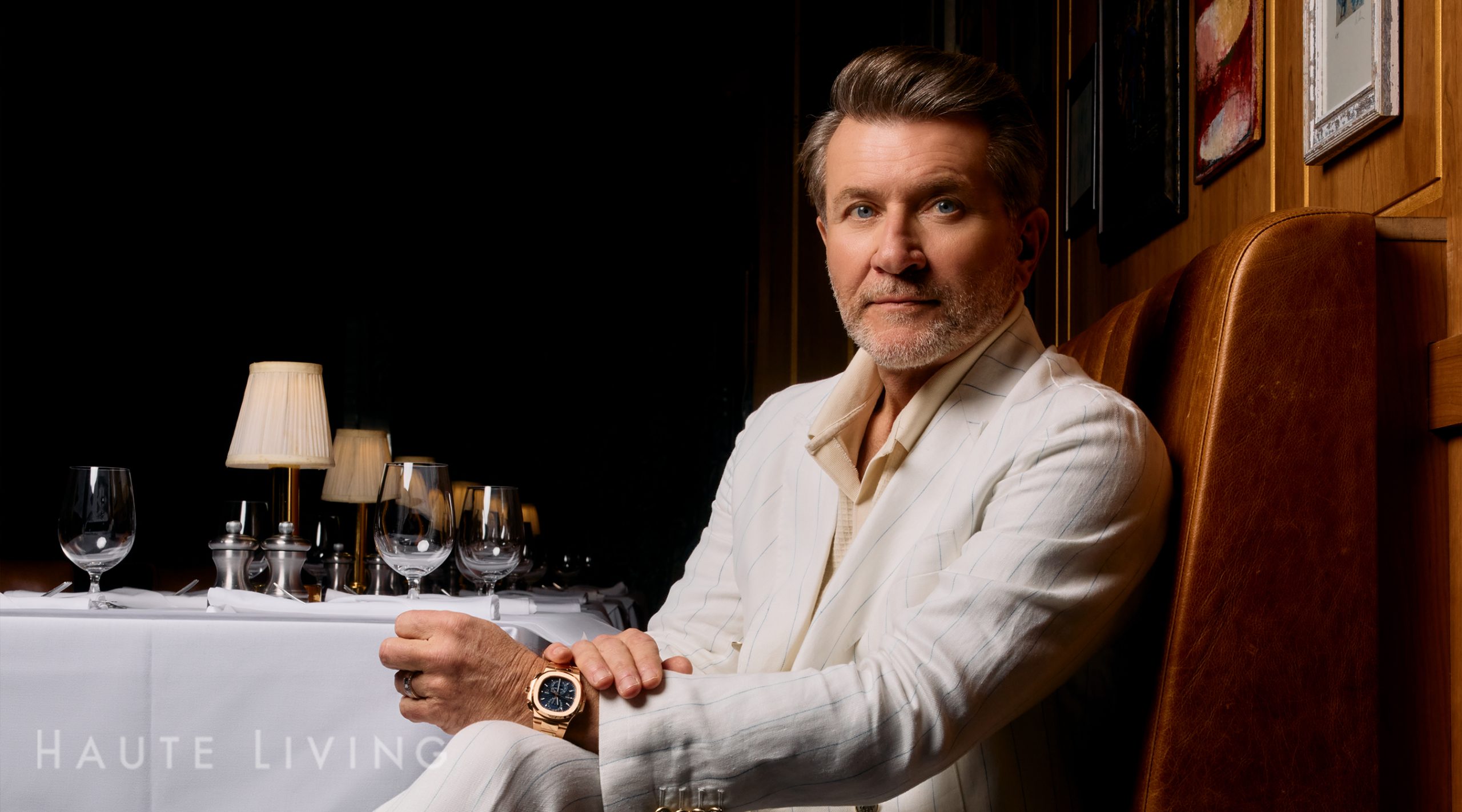
SHIRT: Bonobos
WATCH: Patek Philippe
Photo Credit: Ben Draper Photography
“I hate the darkness,” he admits.
It takes a moment before the reason surfaces — not as a revelation, but as a memory.
Herjavec was born in Communist Yugoslavia. When he was young, his parents made the decision to leave everything behind in search of a better life. With little more than a single suitcase, they boarded a boat in Italy and set out for Canada.
There was no safety net waiting for them.
When they arrived, the family lived in a basement apartment for eighteen months. The darkness wasn’t metaphorical. It was structural. Low ceilings. Limited space. Small windows that reminded you where you were — underground. For a child learning a new language in a new country, trying to understand a new system, the feeling lingered.
“There was no light,” he says. “And I don’t mean emotionally — I mean physically. Just those little basement windows.”
Much of what he’s accomplished, Herjavec reflects, wasn’t about creating wealth. It was about escaping poverty.
Scarcity, for him, was not an idea — it was an environment. It shaped how he thought about security, control, and movement. It taught him early that systems mattered, and that the rules of one country did not apply in another.
One day, shortly after arriving in Canada, Herjavec and his father were walking down the street when they stopped in front of a Cadillac. Coming from a country where the most aspirational car was a Yugo — and one his family couldn’t afford — the car felt otherworldly.
He asked his father what it was. A Cadillac, his father told him. For rich people.
At eight years old, Herjavec didn’t know what a Cadillac was. He didn’t know what rich people were either. But the message was unmistakable.
Later, still trying to decode the new world around him, he asked another question: “What’s a capitalist?”
His father’s answer was simple: “A capitalist is somebody who owns two cars.”
To a child who had never owned even one, the idea felt almost unimaginable. That concept, Herjavec says, really got embedded in him. Two cars meant security. Stability. Proof that you had arrived.
As a teenager and young adult, Herjavec worked relentlessly — delivering newspapers, waiting tables, doing whatever was necessary to support his family. There was no illusion that opportunity would come looking for him. He learned early that movement required effort.
Eventually, he found himself drawn to technology — not as a prodigy, but as a student. Computers represented possibility. Systems that could be learned. Rules that could be understood. And, perhaps most importantly, a future not limited by where you started.
When he entered the cybersecurity field, he was acutely aware of what he lacked. The competition was fierce — computer engineers, electrical engineers, people he describes as far smarter than him at their craft.
It could have been paralyzing. Instead, it became motivating.
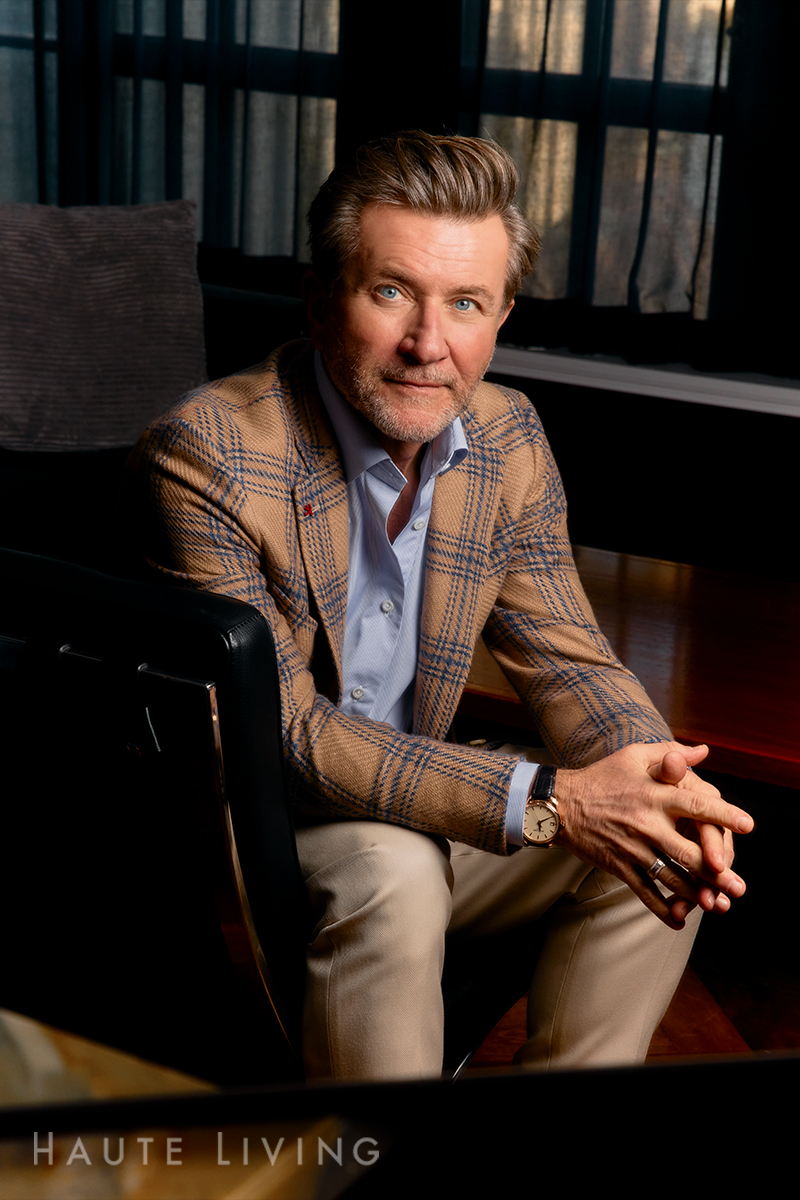
SHIRT: Eton available at Saks Fifth Avenue
PANT Isaia
WATCH: Patek Philippe
Photo Credit: Ben Draper Photography
Herjavec launched a computer company from his basement — a quiet echo of where his family had once lived. Over time, that company grew into a billion-dollar global enterprise. In 2003, he founded Herjavec Group with just two employees. It would quickly become one of North America’s fastest-growing technology companies, expanding to more than 1,000 people before later becoming Cyderes, now a global leader in managed cybersecurity services with secure operations centers in Canada, the United States, the United Kingdom, and India.
Still, success did not erase memory.
For all of the scale and visibility that followed, one moment remains the emotional center of his story.
Years after that first Cadillac sighting, Herjavec took his father to a dealership under the pretense of running errands. He told him he was building a fence — laughable, he admits, since he’s the least handy guy in the world.
They stopped for coffee. Across the street sat a Cadillac showroom.
Inside was a single car — a white, pearlescent de Ville sedan.
Herjavec told his father to sit in it. His father resisted but eventually relented. He placed his hands on the steering wheel. When Herjavec asked what he thought, his father said simply: “One day.”
Herjavec’s voice softens as he recalls what happened next. He flipped the visor and gave his father the keys. “I said, ‘Today’s the day.'”
The car became a symbol not of extravagance, but dignity. His father drove it only on Sundays. Never in the rain. He parked far away so no one would scratch it. When he passed away, the car was ten years old and had 1,800 miles on it.
Herjavec refurbished it. Years later, he donated it to charity.
“When you’re really poor,” he says, “wealth doesn’t mean jets or fancy things. It means security.”
Light, then, was never indulgence. It was proof that he had made it out.
THE VIEW HE CHOSE
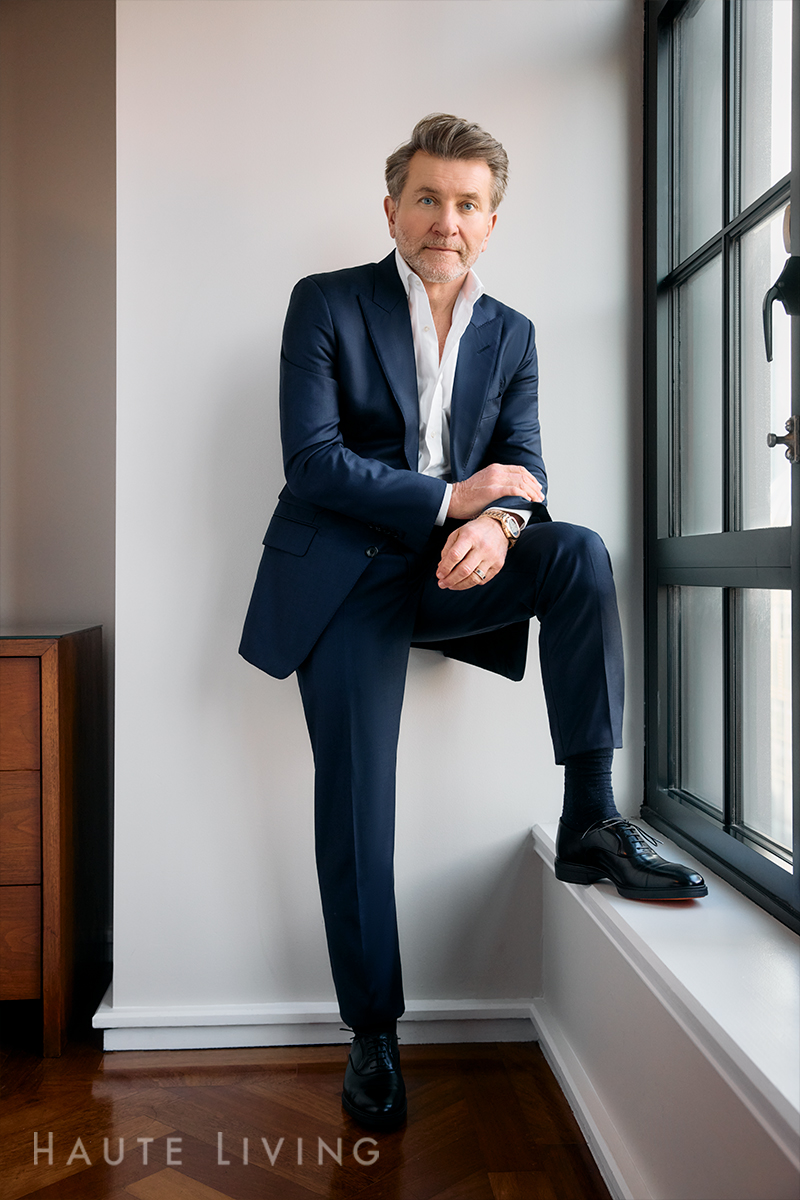
SHIRT: Ralph Lauren Purple Label
SHOE: Santoni
WATCH: Patek Philippe
Photo Credit: Ben Draper Photography
Survival taught Robert Herjavec how to move; success would teach him how to compete.
By the time he founded Herjavec Group in 2003, he had already internalized a truth that would define his career: technical brilliance alone was not enough. The cybersecurity space was crowded with people who had deeper formal training, more credentials, and more academic fluency.
He looked around and thought he was going to get his ass handed to him. Everyone he was competing with had engineering degrees — computer, electrical, and computer science. The credentials were intimidating.
Rather than retreat, he recalibrated.
What he realized was that he had joy. So he told his team: when you have nothing to sell, sell joy.
It wasn’t naïveté. It was strategy.
Herjavec still woke up at 4:30 every morning. He still learned engineering. He still worked relentlessly to understand a rapidly evolving technical landscape. But he also understood something many overlooked: business, at its core, is relational. People buy from people, he notes — a cliché, perhaps, but profoundly true.
That combination — discipline paired with genuine warmth — became a differentiator. His company’s reach expanded as cybersecurity threats grew more sophisticated, and his expertise became increasingly sought after on the global stage.
And then there was television.
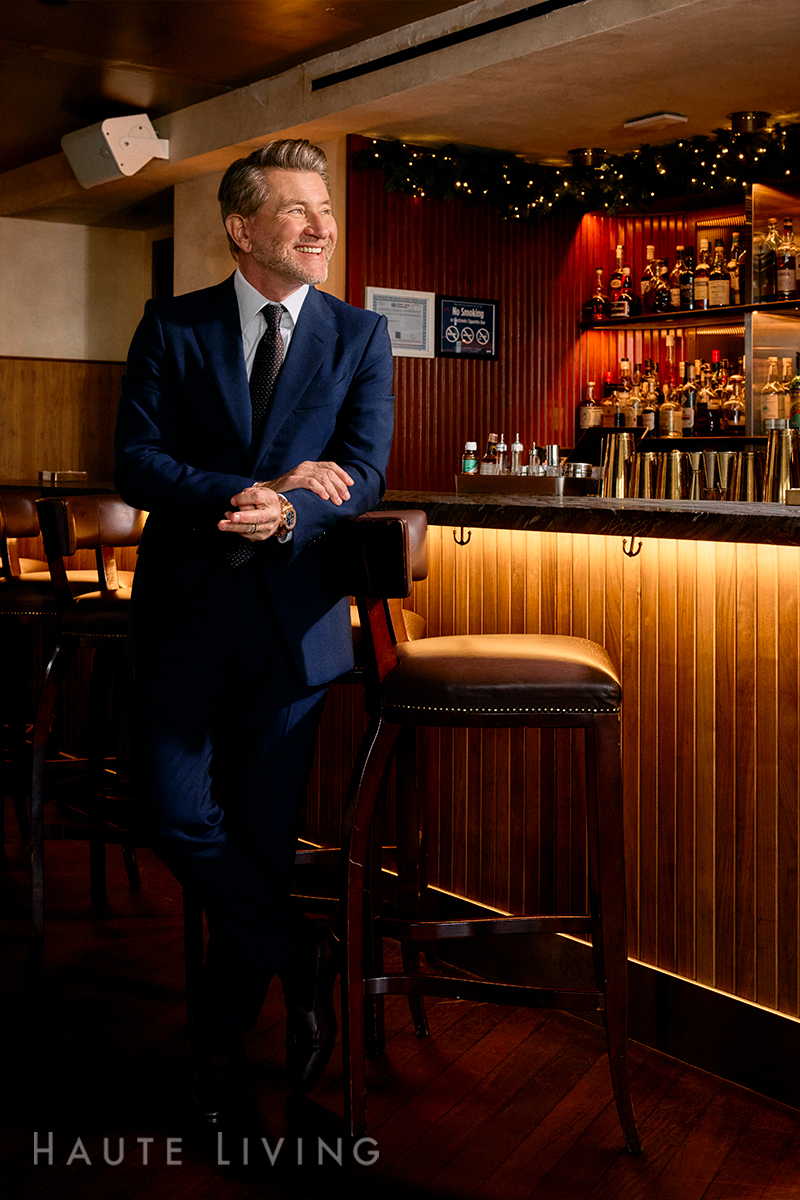
TIE: Isaia
SHOE: Loro Piano
WATCH: Patek Philippe
Photo Credit: Ben Draper Photography
When Shark Tank first came into his life, it wasn’t a media ambition — it was an extension of momentum. A willingness to say yes. A belief that opportunity only works if you move toward it.
Opportunity, he’s learned, is everywhere. His friends who struggle often say they wish they had an opportunity. He calls that bullshit. There is an opportunity everywhere.
What viewers saw on screen wasn’t performance. It was consistency. People always ask if he’s really like that, he says. The answer is yes.
Television brought visibility — and with it, comparison. Sitting alongside entrepreneurs with even greater material success forced him into a familiar mental loop. When Mark Cuban joined the show, Herjavec felt intimidated by how much more success Cuban had achieved materially.
The treadmill started to speed up. He wanted a bigger jet, wanted to grow his business more, wanted all these other things.
Then, one day, something shifted. He looked back and questioned what he was doing. He hadn’t started his company to get a bigger paycheck. He’d started it because he believed in what they were doing.
The realization didn’t dull his ambition — it clarified it.
“What great wealth has done for me,” he says, “is expose more of who I already am.”
That exposure extended beyond business and into identity. Racing cars — one of his greatest passions — became a metaphor for how he approached life at its highest speeds. Staying laser-focused when driving a car over 200 miles an hour, he explains, requires the same approach as growing a business in today’s world.
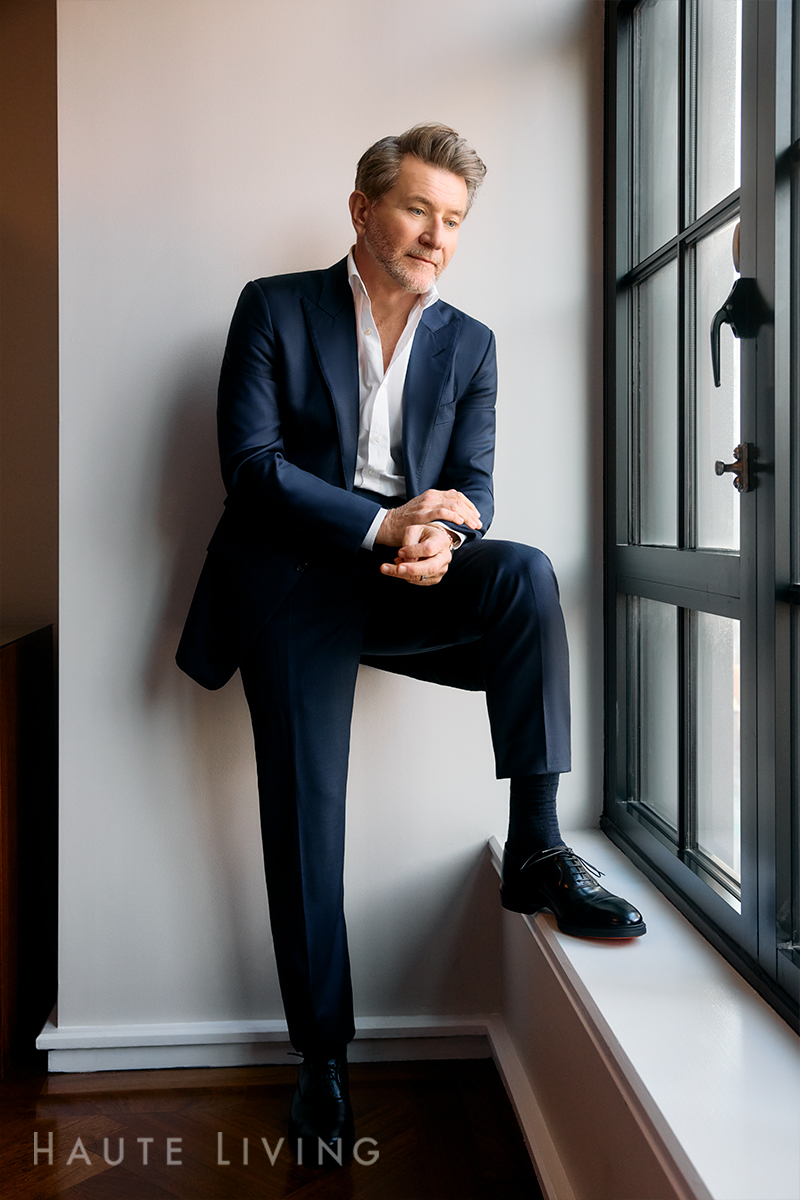
SHIRT: Ralph Lauren Purple Label
SHOE: Santoni
WATCH: Patek Philippe
Photo Credit: Ben Draper Photography
Focus, however, does not mean frenzy. Over time, Herjavec began to see how relentless acceleration could hollow out joy if left unchecked.
There are two types of entrepreneurs, he observes: the ones who hesitate and the ones who are action-oriented. He’s definitely in the action camp.
That tendency brought success — and a new challenge. The hard part, he’s discovered, is learning how to get off the treadmill.
It was around this time that saying yes — once his greatest advantage — began to take on a different meaning.
One yes, in particular, reshaped his life.
Years earlier, long before television was part of his daily reality, his mother had loved Dancing with the Stars. During her illness, he would visit her every Monday in the hospital, where they watched the show together. One day she said to him, “Robbie, you so pretty. Why you not be on Dancing with the Stars?”
He made her a promise. If they ever asked, he’d do it for her.
When the call came years later, he didn’t hesitate. He said yes without even thinking about it.
At the time, his life was not in a place that suggested expansion. He was tired. Worn down. Uncertain. But the yes opened a door he hadn’t known was waiting.
It led him to Kym Johnson, who went from being his partner on DWTS in 2015 to becoming his wife a year later.
The moment, he says — literally the moment — he knew. She didn’t feel it immediately. He did.
What hit him right away wasn’t just that she was beautiful or talented. It was how caring and empathetic she was. How smart and powerful she was.
Balance mattered. Strength mattered. Comfort in one’s own skin mattered.
That single decision — made not for ambition or strategy, but for love and a promise kept — became the pivot point of his personal life.
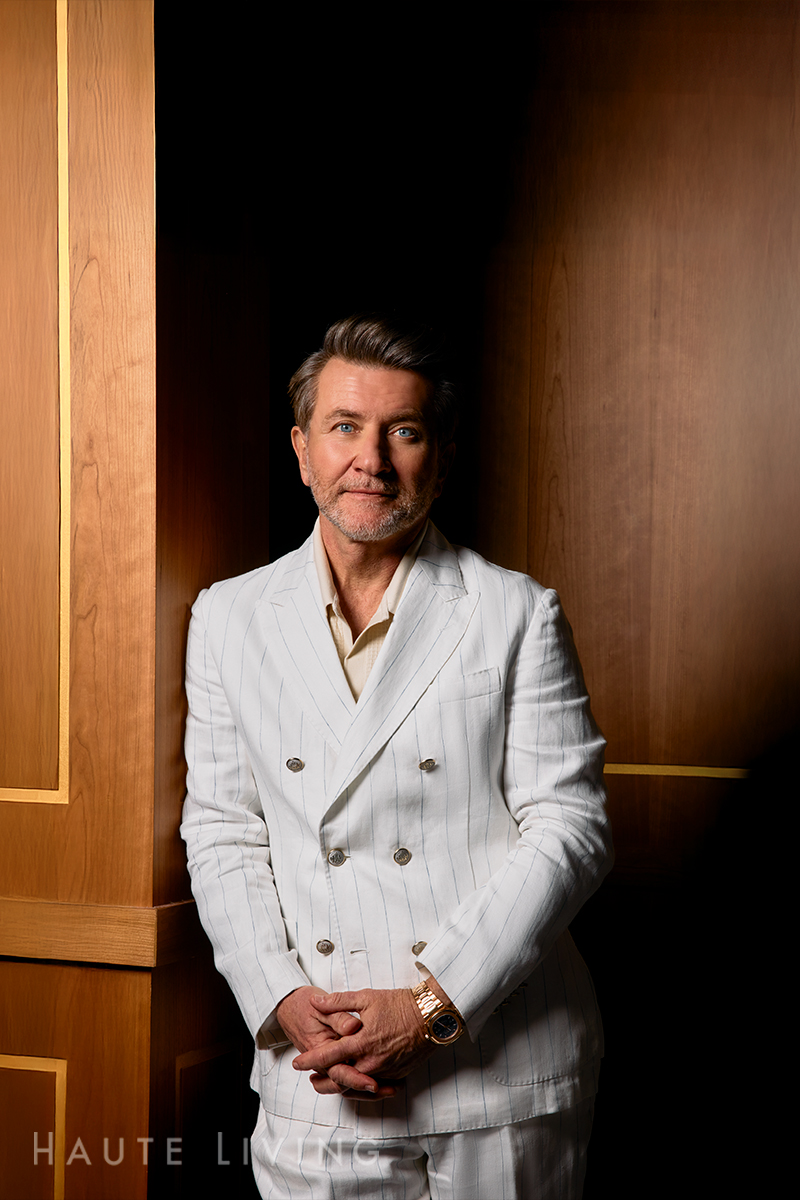
SHIRT: Bonobos
Photo Credit: Ben Draper Photography
Today, they split their time between Toronto, Los Angeles, and Australia, raising young twins — a chapter of his life he once thought might never exist. They weren’t supposed to be able to have kids, he says. And then they ended up with twins.
Fatherhood changed the equation entirely. As he’s gotten older, the only thing that really matters to him is his family.
Charity followed naturally. Herjavec remains actively involved with organizations including the American Cancer Society, the Humane Society, PLAY – Physical Lifestyles for Autistic Youth, and Seattle’s Union Gospel Mission — not as a brand extension, but as a continuation of values formed early.
When asked how he would describe this moment in his life, the word comes quickly: grateful.
That gratitude didn’t come from slowing down — it came from reframing. There’s a saying that the purpose of climbing a mountain is to climb the next mountain, he explains. To see how high the top is, and then find the next one.
As he’s gotten older, he thinks that’s bullshit.
“Sometimes the purpose of climbing a mountain is just to enjoy the view,” he says. “And if that’s all it is, that’s okay.”
For someone who once chased light simply to escape the dark, the shift is profound.
“We only have a certain amount of time. I don’t want to waste mine rushing toward something that won’t change my family, my happiness — any of those things.”
He pauses, then adds with characteristic honesty: “Don’t get me wrong. I’d love a bigger plane. I’d love more cars. But it’s also a process — making sure none of my emotional life is tied to those things.”
The lights still go on every morning. Every single one. In New York, in Toronto, in Los Angeles, in Australia — wherever he wakes up, the ritual remains the same.
His wife still shakes her head. His mother-in-law still comments. But Herjavec doesn’t apologize for it anymore, doesn’t laugh it off as a quirk.
Because he understands now what he’s really doing.
For years, turning on those lights was about proving something — to himself, to his father, to the eight-year-old boy who once stood in front of a Cadillac and couldn’t imagine owning even one car. It was about making sure he never went back to that basement apartment, never returned to the darkness.
But somewhere along the way, the meaning changed.
Now, when he walks through his home in the early morning, flipping switches as he goes, he’s not running from anything. He’s illuminating what he’s found. His children’s rooms. The kitchen where his family gathers. The windows that frame not just spectacular views, but the life he’s built within them.
“I just love light,” he said at the beginning of our conversation, as if it were simple preference.
But it was never simple.
Light, for Robert Herjavec, has always been the distance between where he started and where he stands now. Between scarcity and security. Between survival and choice.
The boy from Communist Yugoslavia learned that darkness was something to escape.
The man he became is learning that light is something to share.
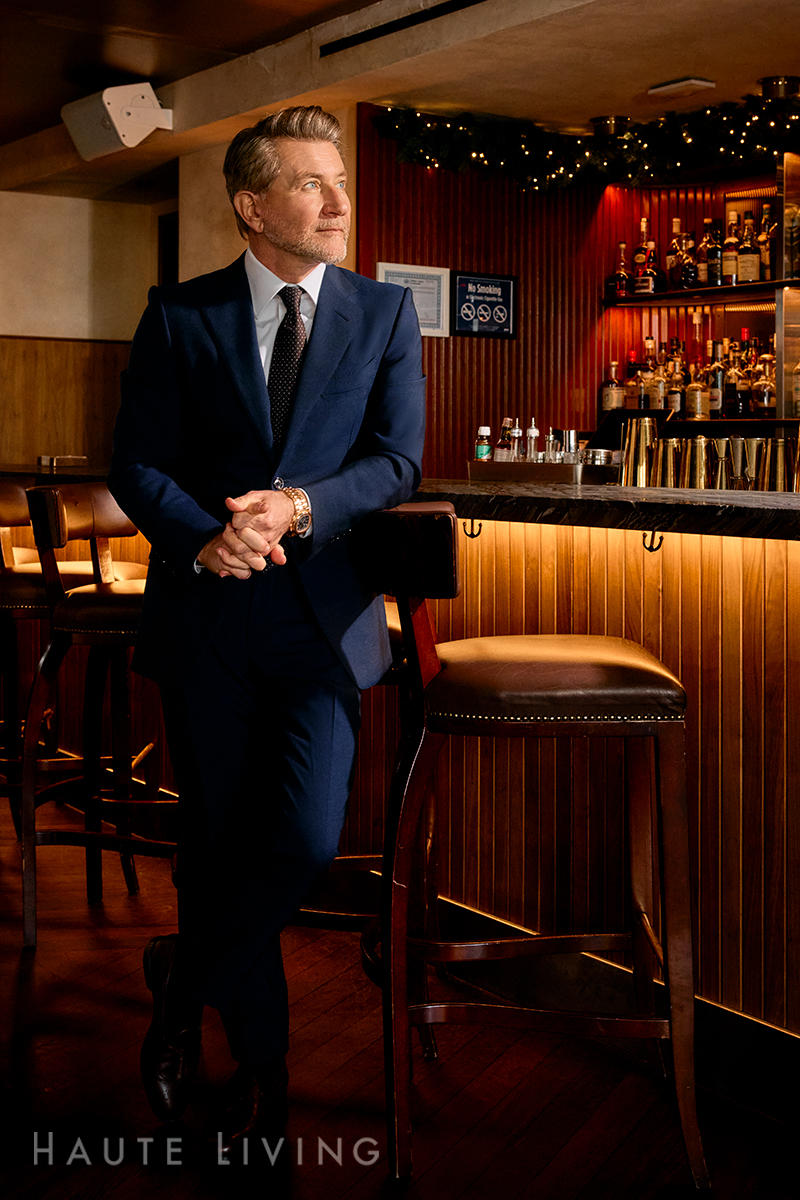
TIE: Isaia
SHOE: Loro Piano
WATCH: Patek Philippe
Photo Credit: Ben Draper Photography
The apartment in the Steinway Tower still has those floor-to-ceiling windows. The Montana ski house still faces the mountains, all glass. And yes, every morning, Herjavec still walks through his home turning on every light.
But now, when he flips those switches, it’s not just about banishing the memory of that dark basement apartment. It’s not only proof that he escaped.
It’s a choice to see clearly what he’s built. To illuminate what matters. To make sure that in all the brightness he’s created, he doesn’t miss the people standing in it with him.
The boy from Yugoslavia spent years learning that light meant freedom. The man he became is learning something harder: that freedom means knowing when you’ve arrived, and having the courage to stay there.
He’s no longer climbing to prove he can.
He’s choosing the view.
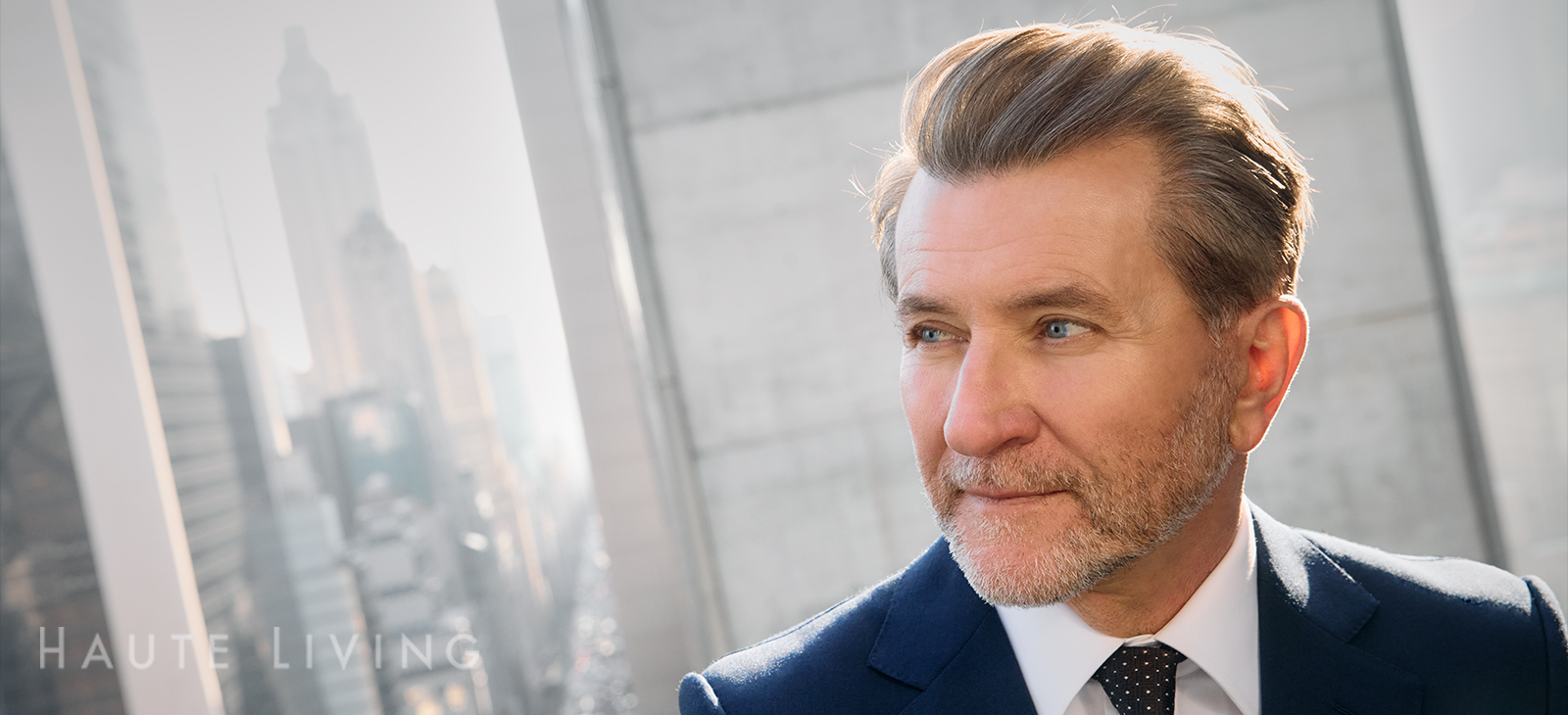
TIE: Isaia
Photo Credit: Ben Draper Photography
Related Articles
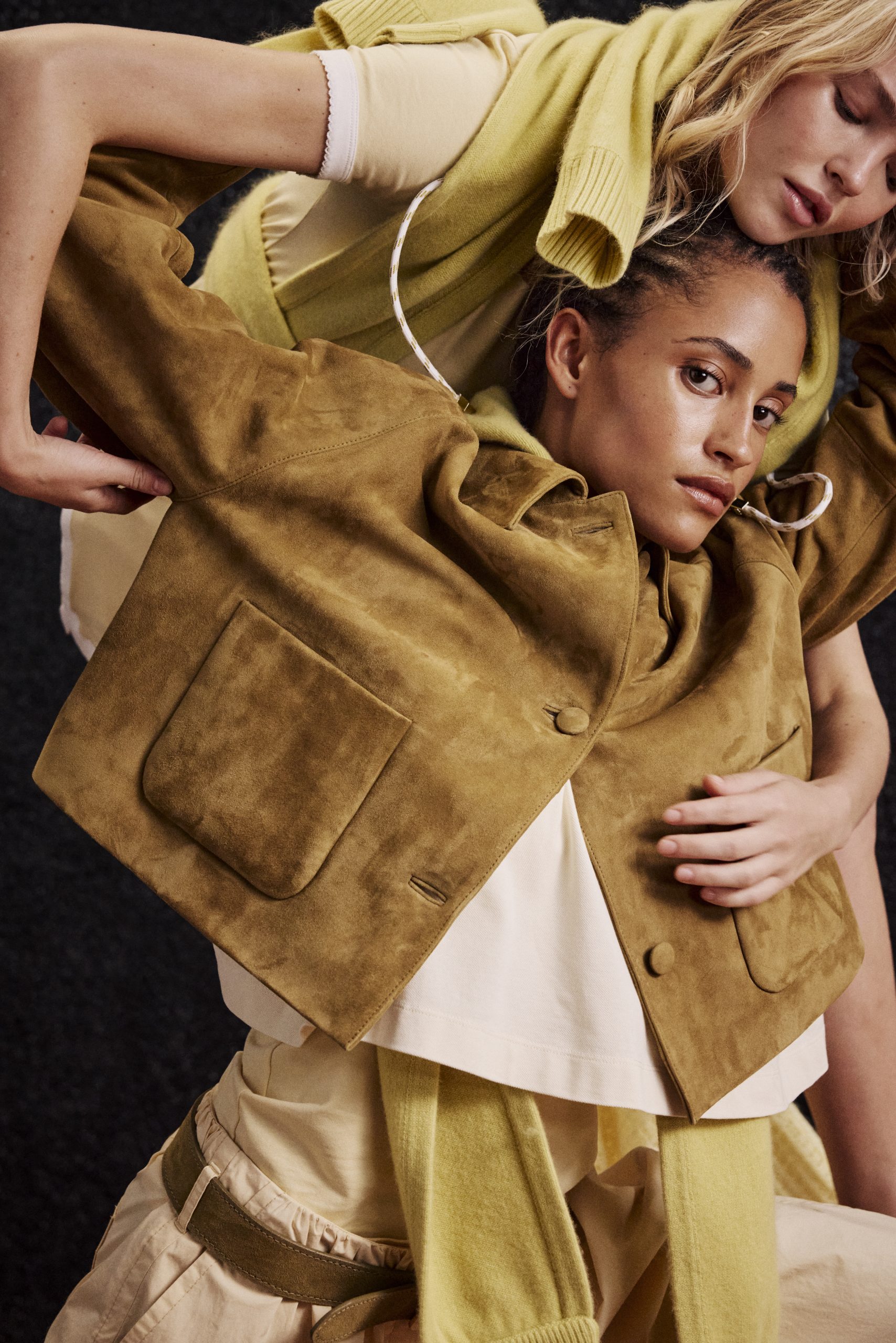
How Dorothee Schumacher Brings the Art of Dance Into Its New Collection
Dorothee Schumacher’s latest collection actually draws inspiration from the brand’s work on The Atelier Dance Project.
The Haute List: The April Must-Haves for Haute Living Editors
Discover the April 2026 Editor Haute List featuring the most coveted luxury items, experiences, and trends curated by Haute Living editors.
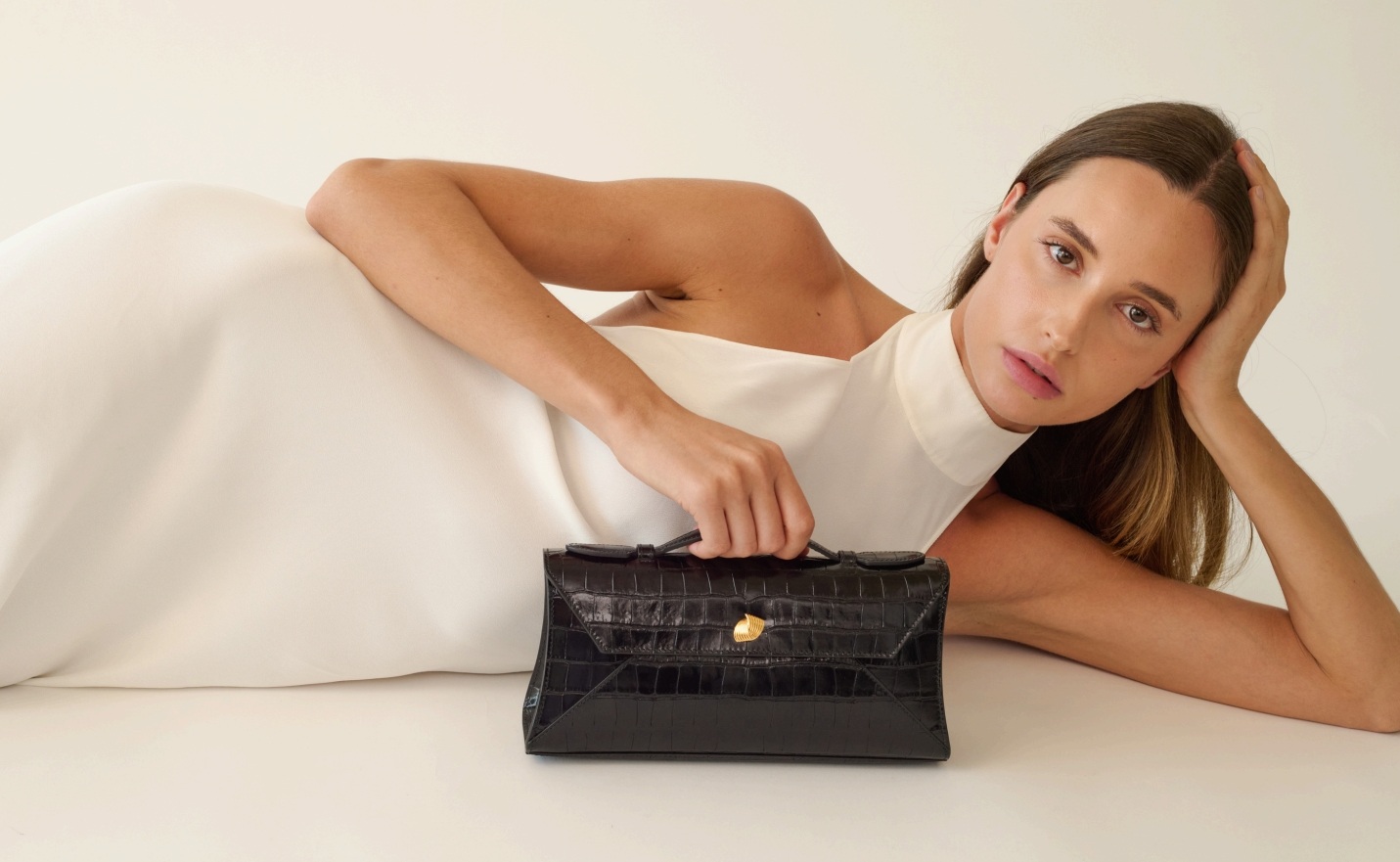
Aureum Collective Elevates Spring Style With Limited-Edition Croc Handbags Crafted in Italy
Aureum Collective unveils limited-edition croc handbags handcrafted in Italy, blending timeless luxury with refined spring colorways.
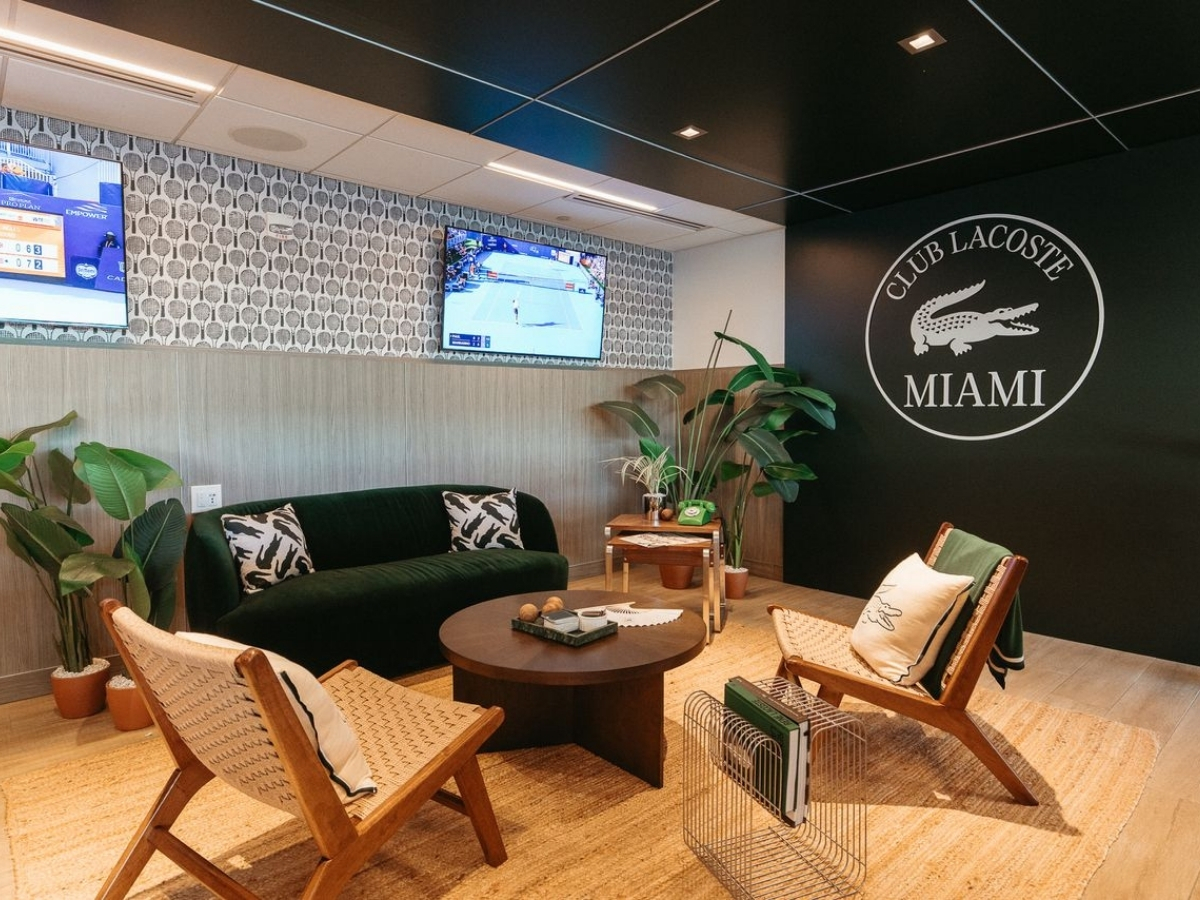
This is the Miami Open’s Most Exclusive VIP Suite of 2026
Step inside Le Club Lacoste at the Miami Open 2026 to see how luxury and sport create unforgettable moments.

Haute Leaders Gather for an Elegant Brunch at Rose Café in Sunny Isles
Haute Living brought together an intimate circle of industry leaders and visionaries for a refined brunch at Rose Café in Sunny Isles, Florida. The sun-drenched gathering united beauty and real estate tastemakers for a morning of elevated conversation, warm hospitality, and Italian-inspired indulgence. Photo Credit: Alejandro Pazmino Rose Café provided the perfect backdrop, a chic, […]
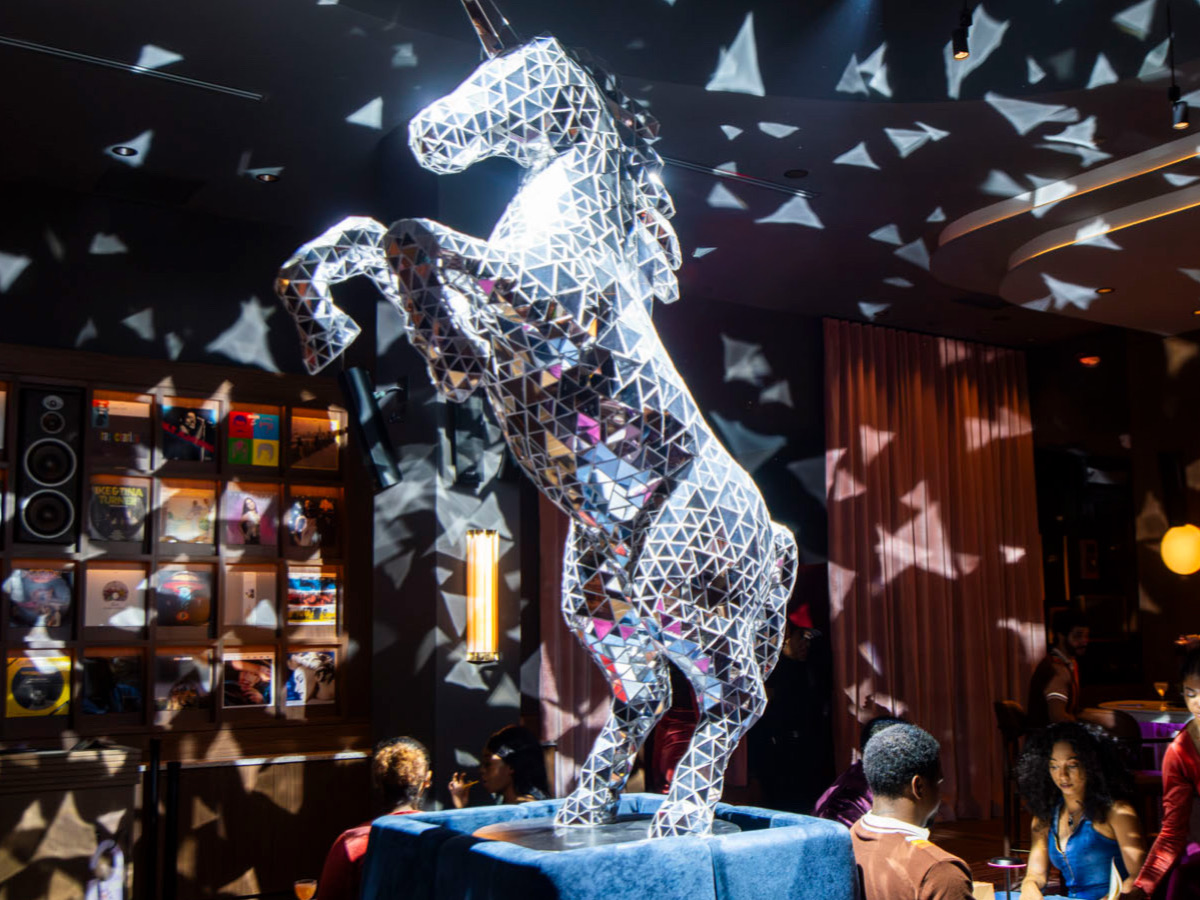
Jagger Suite Ignites Atlanta: A Rooftop Oasis of Studio 54 Glamour and Unapologetic Luxury
Join the buzz around Jagger Suite Rooftop Bar as it opens in Atlanta, introducing a glamorous new destination for nightlife.
Latest Stories
Trending Articles

Related Articles
How Dorothee Schumacher Brings the Art of Dance Into Its New Collection
Dorothee Schumacher’s latest collection actually draws inspiration from the brand’s work on The Atelier Dance Project.
The Haute List: The April Must-Haves for Haute Living Editors
Discover the April 2026 Editor Haute List featuring the most coveted luxury items, experiences, and trends curated by Haute Living editors.
Aureum Collective Elevates Spring Style With Limited-Edition Croc Handbags Crafted in Italy
Aureum Collective unveils limited-edition croc handbags handcrafted in Italy, blending timeless luxury with refined spring colorways.
This is the Miami Open’s Most Exclusive VIP Suite of 2026
Step inside Le Club Lacoste at the Miami Open 2026 to see how luxury and sport create unforgettable moments.
Haute Leaders Gather for an Elegant Brunch at Rose Café in Sunny Isles
Haute Living brought together an intimate circle of industry leaders and visionaries for a refined brunch at Rose Café in Sunny Isles, Florida. The sun-drenched gathering united beauty and real estate tastemakers for a morning of elevated conversation, warm hospitality, and Italian-inspired indulgence. Photo Credit: Alejandro Pazmino Rose Café provided the perfect backdrop, a chic, […]
Jagger Suite Ignites Atlanta: A Rooftop Oasis of Studio 54 Glamour and Unapologetic Luxury
Join the buzz around Jagger Suite Rooftop Bar as it opens in Atlanta, introducing a glamorous new destination for nightlife.
Subscribe to Haute Living
Receive Our Magazine Directly at Your Doorstep
Embark on a journey of luxury and elegance with Haute Living magazine. Subscribe now and have every issue conveniently delivered to your home. Experience the pinnacle of lifestyle, culture, and sophistication through our pages.

Haute Black Membership
Your Gateway to Extraordinary Experiences
Join Haute Black and unlock access to the world's most prestigious luxury events