
Perrier-Jouët Plants a New Future at Art Basel Miami Beach
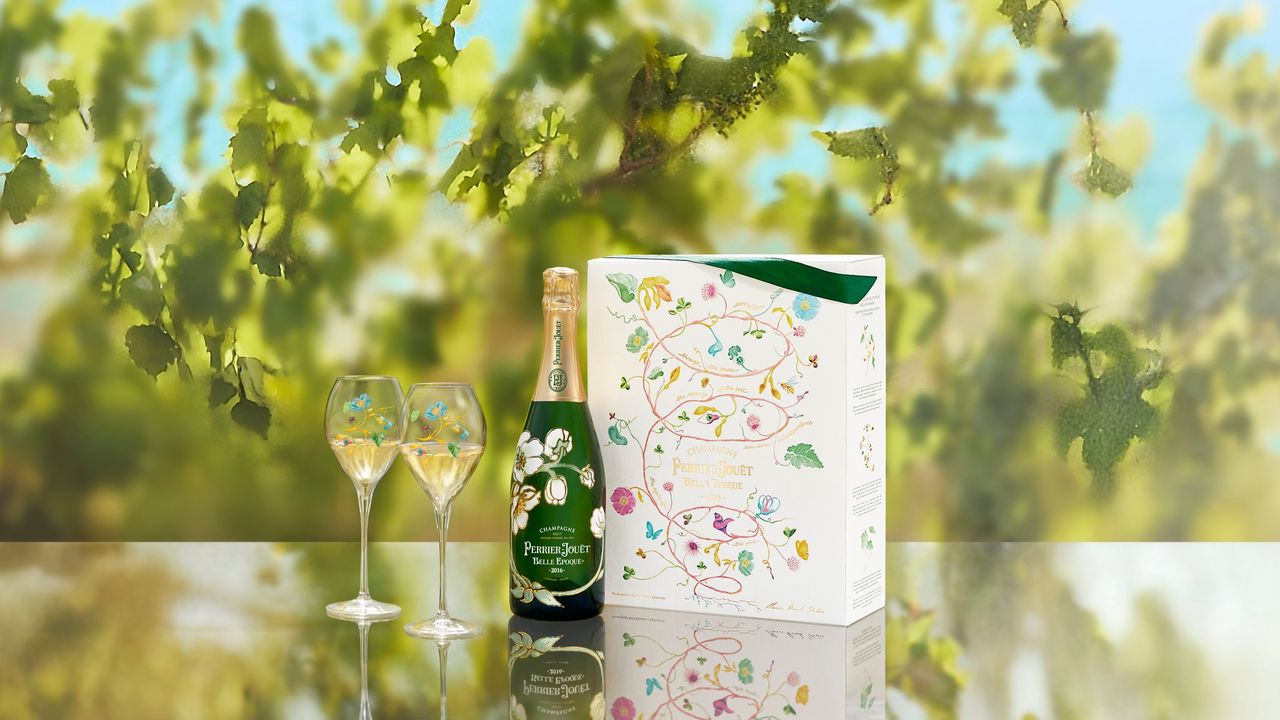
A poetic collision of nature, design, and champagne — with a creative resonance that lingers long after the last sip.
At Art Basel Miami Beach 2025, Perrier-Jouët didn’t just pop up, it shifted the energy of the week. The Maison arrived with a unified mission: to bring nature, design, and craftsmanship into a single emotional register. What emerged was Plant Pulses, a new installation by longtime collaborator Marcin Rusak, and the debut of the Design for Nature Award, signaling a bold new chapter in the Maison’s cultural influence.
Axelle de Buffévent, Perrier-Jouët’s Global Culture & Creative Director, framed Miami itself as part of the exhibition. To her, the city’s shoreline and atmosphere were not the backdrop, but the medium — a landscape in dialogue with Rusak’s work. She noted that the piece’s future is still unfolding, hinting that the Miami installation may be only a beginning.
A Botanical Dialogue, Encased in Time
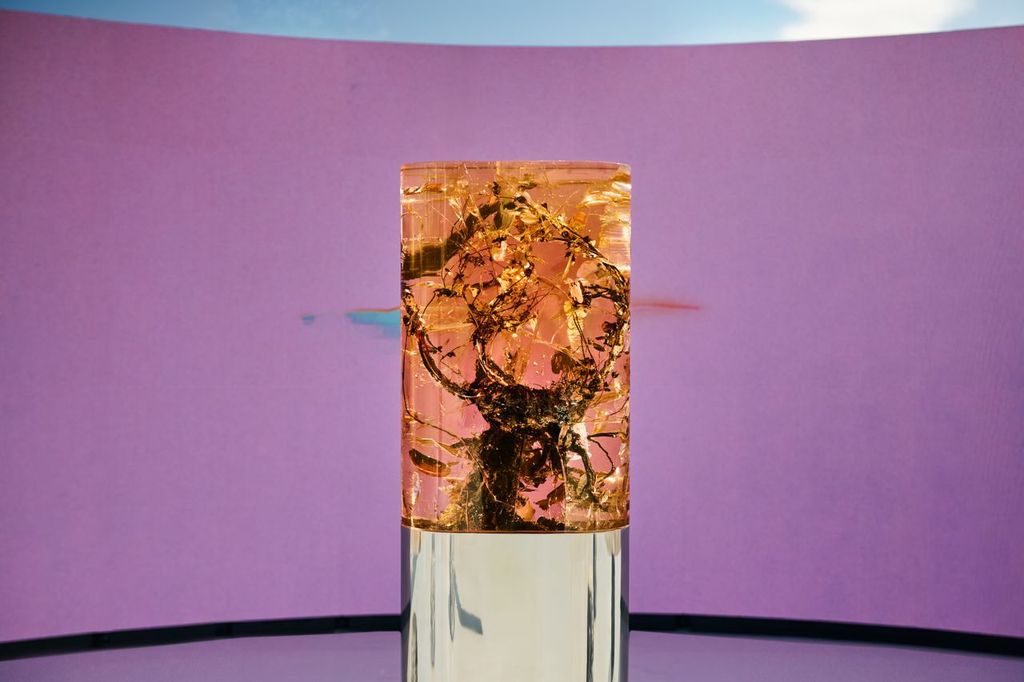
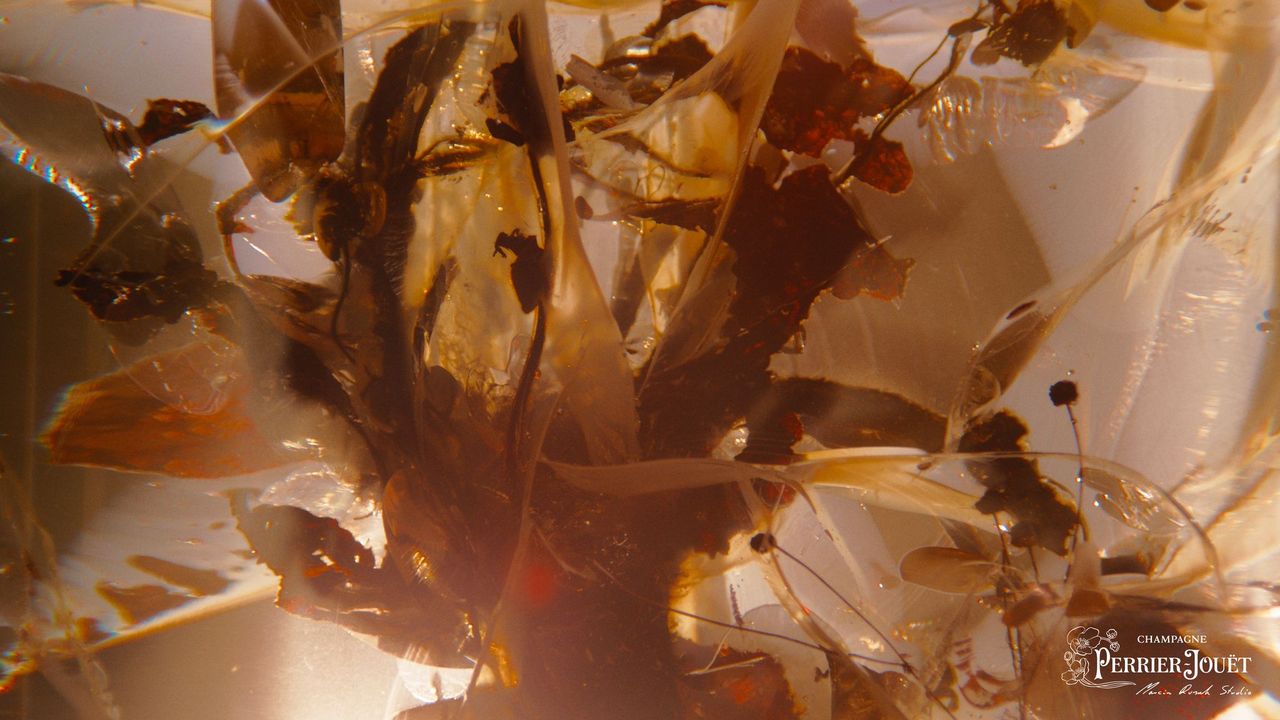
Rusak’s Plant Pulses is a resin-cast time capsule built around three plants central to Perrier-Jouët’s vineyards: vine, birthwort, and white clover. On the sand, it resembled something excavated from a future world. An artifact that held not only botanical forms but also plant-derived soundscapes. Rusak approached the installation as an extension of his ongoing fascination with memory and preservation, creating an animation that feels almost analog, intentionally tactile, and approachable.
His intention was disarmingly simple: to create a piece that both children and adults could intuitively understand.But behind that simplicity was a profound sensory architecture built around sound — the quiet, rhythmic “tick” of plant life that became the emotional spine of the installation.
Rusak explained that beauty was his first point of entry, a way to draw people close before inviting them to go deeper.
“I like to focus on beauty as a first aspect of coming closer to a project,” he said. “You can dig deeper and understand what it’s about, but if we take away the beauty, it can become too much.”
The beauty, in this case, was a gateway into a world that felt almost like science fiction. The project began with a desire to “listen” to plants — to give them, as he put it, a platform. When collaborating scientists sent over the raw audio data, the team discovered that plant communication was startlingly minimal: a soft tick that occurs roughly once an hour, intensifying during drought. Hearing it for the first time shifted something in him.
That near-silent pulse, Rusak recalled, “completely changed my perception of the plant world,” exposing a hidden sensitivity he had never fully imagined.
Perrier-Jouët’s longstanding relationship with the designer allowed this sensitivity to flourish; Buffévent remarked that their collaborations grow over years of conversation. Some take a decade before the right moment emerges.
Evolving Without Losing the Roots
When selecting artists and designers to carry forward its legacy, the Maison looks to a constellation of values drawn directly from its Art Nouveau origins. Buffévent described the four pillars that guide their choices.
“The first one is really about adding beauty to everyday life, and champagne is joyful,” Buffévent explains. “The second one is about craftsmanship, which can be very broad. Crafting the questions of how you can propel the craft’s heritage into the future.”
Nature is the gravitational center of this philosophy. As Buffévent explained during the week, the Maison sees nature not just as inspiration, but as a partner and process. That grounding principle is why Perrier-Jouët’s cultural collaborations feel coherent, even as they evolve.Evolution is essential: after more than 200 years and only eight cellar masters, the Maison moves slowly, deliberately, with each creative era connected to the last.
The Design for Nature Award: Amplifying the Voices That Shape Tomorrow
The debut of the Design for Nature Award marked a new kind of leadership for the Maison — one rooted in humility. Buffévent emphasized that the point is not for Perrier-Jouët to impose ideas, but to amplify those emerging from the design world. The Maison sees itself as part of an ecosystem of creators, scientists, and innovators working toward a more sustainable future.
This ethos mirrors the work happening within its own vineyards, where regenerative agriculture is reshaping how champagne is cultivated. The award, in many ways, is a cultural extension of that research, a recognition that true progress comes from conversation among many disciplines, not from one voice alone.
A Dinner of Creative Exchange
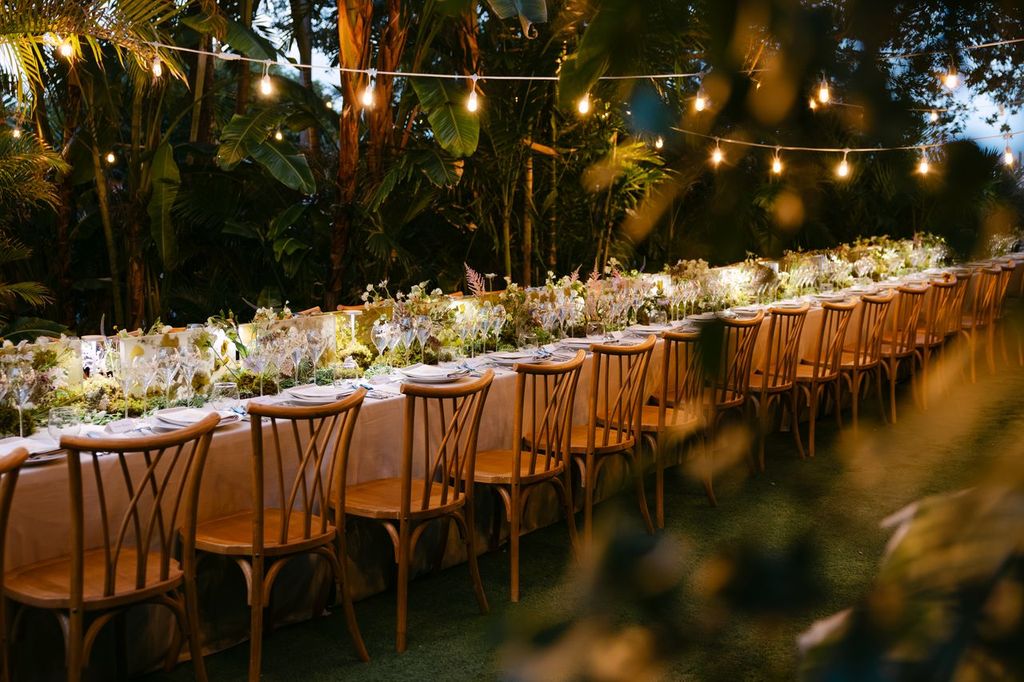
During Miami Art Week, Perrier-Jouët hosted an intimate dinner with culinary icon Pierre Gagnaire and cellar master Séverine Frerson, transforming the night into a sensory dialogue. The table, adorned with Rusak’s botanical centerpiece and arrangements echoing the textures sealed within the resin installation, felt alive. A living extension of the artistic themes unfolding across the beach.
For Buffévent, these gatherings are never just about food or wine. They are designed as catalysts, meant to spark the kind of conversations that define the Maison’s creative mission. The dinner, much like the installation, functioned as an immersive artwork of its own.
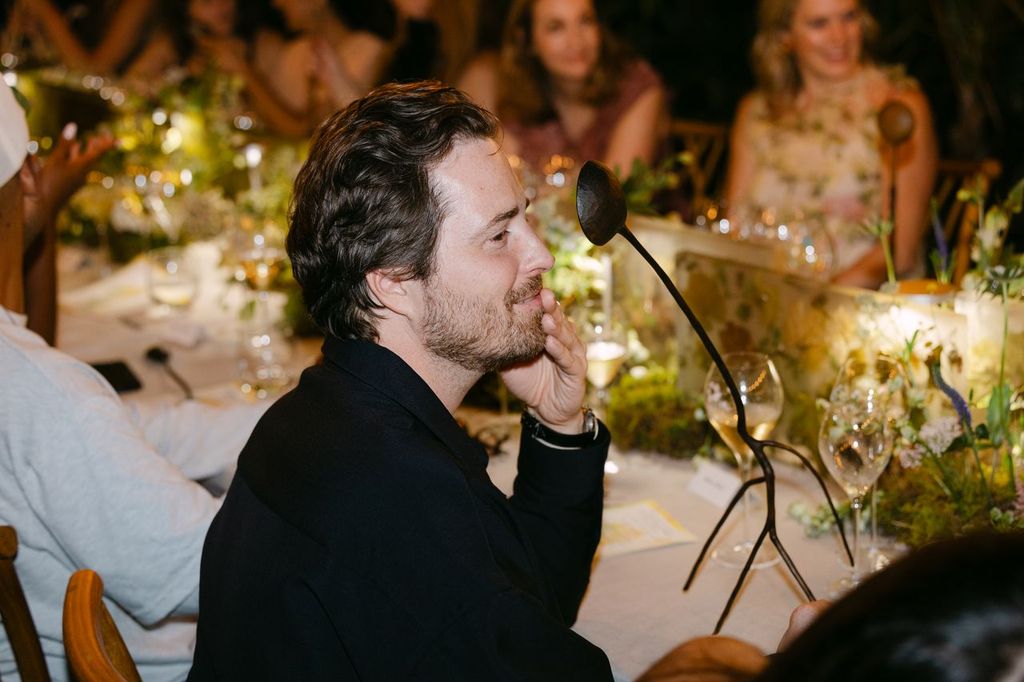
Steinbeisser, the Dutch creative collective known for pushing the boundaries of gastronomy and design. Founded by Jouw Wijnsma and Martin Kullik as an experimental studio that merges food, art, and craft, has made a name for itself through its Experimental Gastronomy projects — immersive dining experiences in which artists and chefs collaborate to rethink how we relate to what’s on the plate, how we use tableware, and how we share a meal.
Their Art Basel collaboration with Perrier-Jouët was a beautiful example of this, from water carafes that required guests to flip the vessel to pour a glass of water, carrying both symbolism and irony.
“We wanted to make people more aware of it, but then we kept noticing the water was spilling everywhere,” he admitted. “That’s the irony. But also the point.”
The undeniable crowd favorite was the oversized, whimsically sculpted spoon given to each guest — no two alike — turning the act of eating into a playful negotiation. As diners navigated how to lift even the simplest bite, Steinbeisser reminded them that the true challenge wasn’t the cutlery at all, but the invitation to slow down and fully appreciate what sits before us.
“They also try to bring us out of autopilot when we switch into this state in our daily lives. It’s so easy to not be aware, these pieces, because they don’t get easier as you use them, help you slow down,” Martin Kullik says.
Toward a Living Future
At its core, Perrier-Jouët’s presence during Art Basel 2025 communicated a simple but powerful truth: to innovate meaningfully, you must be deeply rooted. Knowing where you come from — the land, the craft, the heritage — is what allows the Maison to keep evolving with intention, rather than abandoning its identity.
Across Rusak’s installation, the award, and the dinner, the Maison’s message echoed with quiet clarity: the future of luxury lies not in spectacle, but in connection — between disciplines, between eras, and ultimately, between humans and nature.
Rusak captured the spirit of the week best when he reflected on the collaborative process as “a group for all these actors to come together.” What happens next, he suggested, may be another chapter entirely — another pulse, another memory, another step in a growing ecosystem of ideas.
And in Miami, surrounded by sea, sand, and the quiet hum of living plants encased in light, it felt like that future had already begun.
Related Articles
How Dorothee Schumacher Brings the Art of Dance Into Its New Collection
Dorothee Schumacher’s latest collection actually draws inspiration from the brand’s work on The Atelier Dance Project.
The Haute List: The April Must-Haves for Haute Living Editors
Discover the April 2026 Editor Haute List featuring the most coveted luxury items, experiences, and trends curated by Haute Living editors.
Aureum Collective Elevates Spring Style With Limited-Edition Croc Handbags Crafted in Italy
Aureum Collective unveils limited-edition croc handbags handcrafted in Italy, blending timeless luxury with refined spring colorways.
This is the Miami Open’s Most Exclusive VIP Suite of 2026
Step inside Le Club Lacoste at the Miami Open 2026 to see how luxury and sport create unforgettable moments.
Haute Leaders Gather for an Elegant Brunch at Rose Café in Sunny Isles
Haute Living brought together an intimate circle of industry leaders and visionaries for a refined brunch at Rose Café in Sunny Isles, Florida. The sun-drenched gathering united beauty and real estate tastemakers for a morning of elevated conversation, warm hospitality, and Italian-inspired indulgence. Photo Credit: Alejandro Pazmino Rose Café provided the perfect backdrop, a chic, […]
Jagger Suite Ignites Atlanta: A Rooftop Oasis of Studio 54 Glamour and Unapologetic Luxury
Join the buzz around Jagger Suite Rooftop Bar as it opens in Atlanta, introducing a glamorous new destination for nightlife.
Latest Stories
Trending Articles
Related Articles
How Dorothee Schumacher Brings the Art of Dance Into Its New Collection
Dorothee Schumacher’s latest collection actually draws inspiration from the brand’s work on The Atelier Dance Project.
The Haute List: The April Must-Haves for Haute Living Editors
Discover the April 2026 Editor Haute List featuring the most coveted luxury items, experiences, and trends curated by Haute Living editors.
Aureum Collective Elevates Spring Style With Limited-Edition Croc Handbags Crafted in Italy
Aureum Collective unveils limited-edition croc handbags handcrafted in Italy, blending timeless luxury with refined spring colorways.
This is the Miami Open’s Most Exclusive VIP Suite of 2026
Step inside Le Club Lacoste at the Miami Open 2026 to see how luxury and sport create unforgettable moments.
Haute Leaders Gather for an Elegant Brunch at Rose Café in Sunny Isles
Haute Living brought together an intimate circle of industry leaders and visionaries for a refined brunch at Rose Café in Sunny Isles, Florida. The sun-drenched gathering united beauty and real estate tastemakers for a morning of elevated conversation, warm hospitality, and Italian-inspired indulgence. Photo Credit: Alejandro Pazmino Rose Café provided the perfect backdrop, a chic, […]
Jagger Suite Ignites Atlanta: A Rooftop Oasis of Studio 54 Glamour and Unapologetic Luxury
Join the buzz around Jagger Suite Rooftop Bar as it opens in Atlanta, introducing a glamorous new destination for nightlife.
Subscribe to Haute Living
Receive Our Magazine Directly at Your Doorstep
Embark on a journey of luxury and elegance with Haute Living magazine. Subscribe now and have every issue conveniently delivered to your home. Experience the pinnacle of lifestyle, culture, and sophistication through our pages.
Haute Black Membership
Your Gateway to Extraordinary Experiences
Join Haute Black and unlock access to the world's most prestigious luxury events