To Fendi & Beyond: An Afternoon with Silvia Fendi
To think of the FENDI Empire as homegrown is difficult considering the nearly century-old Italian fashion stronghold has its roots firmly placed in the future; but an afternoon spent with Silvia Fendi sheds new light on the idea.
To think of the FENDI Empire as homegrown is difficult considering the nearly century-old Italian fashion stronghold has its roots firmly placed in the future; but an afternoon spent with Silvia Fendi sheds new light on the idea.
[highlight_text] “Really FENDI was a company built from five women working together with Karl [Lagerfeld], so it was an équipe work—always an exchange of ideas and points of view.” [/highlight_text]
Bayside at Miami Beach’s Standard Hotel, Silvia Venturini Fendi sits proud, breeze blowing through her hair, in the good company of her FENDI team and her daughter-cum-jewelry designer Delfina Delettrez-Fendi to chat with Haute Living about her latest venture. Another feather in her hat, if you will, in terms of the strides Fendi has been able to make in blurring the lines between fashion, technology, art, music, and most recently, architecture.
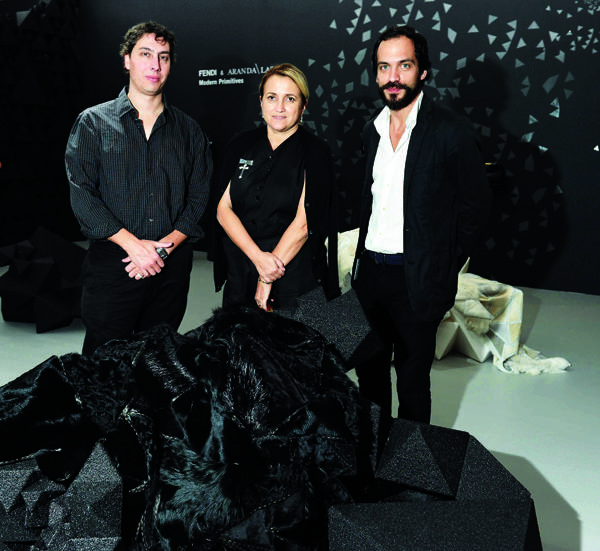
Fendi swept into town for DesignMiami/ to celebrate the unveiling of the brand’s collaboration with contemporary, New York-based architecture duo Aranda\Lasch–the latest in a series of similar collaborations for FENDI and one that adds new dimension to their on-going efforts to tap emerging talent for exciting, statement-making crossovers. A major proponent of DesignMiami/, FENDI is going on three years of supporting the art and design fair through specially curated, interactive projects that incorporate creativity through varying mediums.
“It’s something that is very related to the DNA of FENDI,” explains Fendi, who acts as reigning empress of the brand today but vividly remembers where it all started. “Really FENDI was a company built from five women working together with Karl [Lagerfeld], so it was an équipe work—always an exchange of ideas and points of view.” The five women in question are Fendi-sisters, Paola, Franca, Carla, Alda, and Silvia’s mother, Anna, who took the Italian fashion house, started in 1925 by their parents, Edoardo and Adele, into the international spotlight. The rest is documented history. Lagerfeld remains at the helm as creative director, while Silvia acts as accessories director, designing all those extras for which FENDI is so well respected—a task that she approaches from a creative place, reinventing constantly and pushing the proverbial envelope whenever possible. (We all remember how she revolutionized the handbag with her creation of the Baguette.)
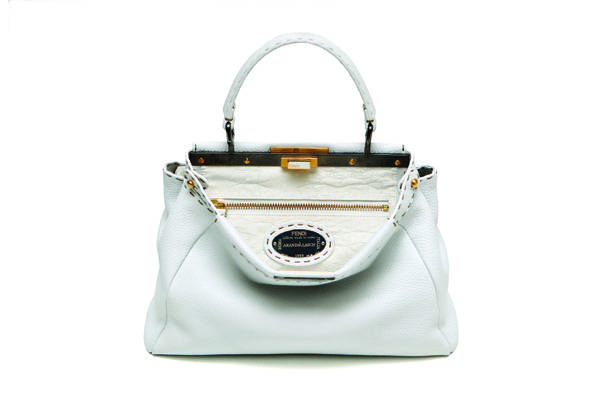
While their runway collections deliver trends that run the gamut from season to season, embracing the diaphanous for spring and so on, the truth is that the most relevant looks are those that embrace FENDI’s heritage and incorporate its calling card of innovation. Trailblazing approaches to working with materials like leather and fur have allowed the brand to etch their name in luxury goods history. It was FENDI, after all, that transformed the way the world looked at fur, changing the über high-end fabric, which Fendi remarks was once considered “the most traditional and boring item in history used only as a status symbol for the man who was buying it for his woman,” into something of a high-fashion accessory. “[FENDI was] tearing it and cutting it and really destroying the idea of a man showing his wealth through his wife; but we said ‘no, that’s not possible’…we had the courage to show it inside out, torn, dyed.” Of course today women across the globe vie for one of these sheared, multi-colored, cropped or “destroyed” FENDI furs, but at the onset Fendi recalls “it was a scandal.”
Today that mantra continues to steer their ship. Especially where Fendi is involved, on the accessories end and specifically with handbags: “We gave a new life to accessories, treating them like a piece of fashion at a time when they were so boring, needing only to respond to a function and not a fashion statement at all.” Revolutionary in her own, little way is how she humbly describes it.
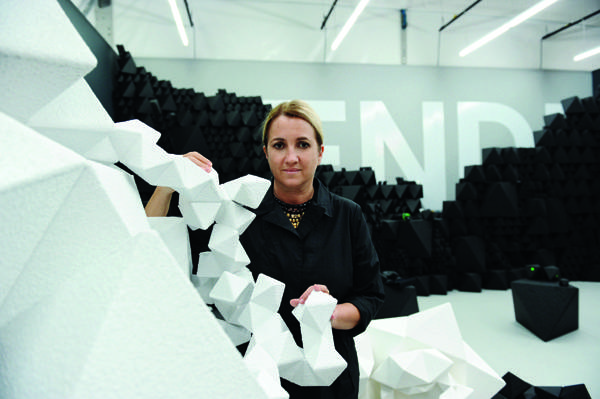
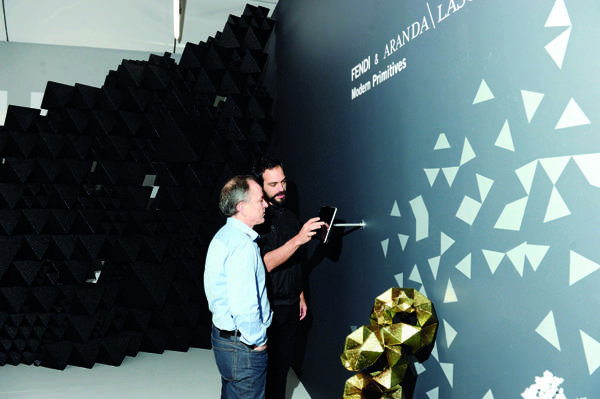
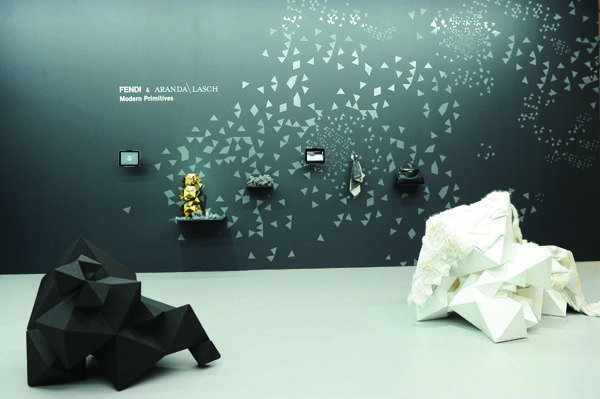
FENDI has, in fact, been at the forefront of revolutionizing fashion; melding concepts and crossing industry lines through collaborative projects throughout the world. “We are always researching a way to nourish our creativity by interacting in other fields,” explains Fendi. For this collaboration with Aranda\Lasch, the brand went out on a new limb, exploring mathematical formulas and interpreting them in the FENDI way. The installation, entitled “Modern Primitives,” is a two-step project that premiered at the Venice Biennale in August and continued its evolution at DesignMiami/ in December. Experimental in nature, the project explores architecture using small foam pieces connected to larger ones culminating in end structures that hold weight so that they can be sat upon or leaned against making the installation quite interactive—a familiar end-result for FENDI collaborations, which tend to engage the audience by inviting them to participate in the project, creating a dialogue between the art and the viewer.
And while one would think collaborating with a brand with an expansive world presence like FENDI would be overshadowing for the young talent on board, Fendi explains how she uses the genius of her partners to help evolve her own brand as opposed to stripping the collaborator of their vision. “These projects are not about marketing platforms for us; what we are really interested in is the creative process. That is what makes fashion, design, or art come alive. Otherwise no one really needs a new pair of shoes every two minutes or a new chair in the house. It’s about the strength in the idea that makes you say ‘Well that’s really interesting and there’s really a value in what I’m seeing’.”

Approaching each project with innovative vision is what makes the collaborations so seamlessly organic. In the relationship between FENDI and Aranda\Lasch, the pairing of both parties’ artistic principles, including advanced technology, quality of construction, and detailed craftsmanship is what made it work so well. Aranda\Lasch’s mathematical formulas were applied to FENDI-branded objects converting them into something tangible and wearable. “Modern Primitives” elements were translated into fur and leather covered pieces, small-scale replicas of the installation were printed on fabric used as scarves and to line peek-a-boo bags. Similarly, the two explored new materials to make the project fresh. “We used a fabric called Washi which is at the same time very modern and very primitive. It’s made of rice and cotton through a technique normally used in Japan for paper but we had an Italian company transform it into fabric.” The Washi, it turns out, is anti-pollutant and medicinal—we knew shopping could be good for you.
When asked how she decides which partnerships to take on, Fendi divulges that she is passionate about sticking to projects in which she really believes, looking to constantly evolve, and always deliver a new surprise. “We decided to start these types of collaborations to support young designers and we will continue to support the creativity of young people through projects that excite us.” How does she know it’s right? “There has to be that feeling of ‘well that’s new, that’s cool, that’s something that we’ve never done; let’s do it’ and also to be amused by it, that’s where we really get a strong pleasure.” The idea of pushing boundaries purely for the world’s benefit is genuinely her driving force. It’s definitely not for profit, as the pieces created are in limited quantity and not for sale. The Aranda\Lasch-created bags, scarves, and fur throws were developed in two-piece runs and that’s it. It’s more about being at the forefront and dabbling in what she thinks will be the next wave. “I’m very interested in exploring the future; we are going to have a lot of inspiration from scientists going forward and I think the projects scientists are making is where creativity is most strong right now. What we are supporting is just challenging thinking in ways that all the creative field can benefit.”

Perhaps her passion for emerging artists lies in her Italian upbringing, one that she explains can be hindering for young talent in her country. “In Italy, we really feel the gap between generations because the history is so heavy that for young people to emerge is sometimes very difficult. It’s not like in the States where if you have a good idea and you are young and you go with it, you can make it easily. Maybe that’s why we like so much to support young people.”
And her young fledglings grow leaps and bounds after flying her coop. Fendi has the grin of a pleased parent as she recalls a favorite Miami memory from the week: “Last night I went and I saw Simon Hasan who presented his first installation in Milano and now he’s huge. We were instrumental in giving him that visibility. I feel proud.”
Latest from Haute Living
Gabrielle’s Angel Ball Returns to New York for an Evening of Philanthropy and Glamour

From Seattle to South Florida: A New Wave of Wealth Sets Its Sights on Miami
This $4,200 Cognac Is One of the Most Extravagant Diwali Gifts of the Year