






One of the most common concerns I hear from patients considering veneers is, “I want my teeth to look better, but I don’t want them to look fake.”
And I completely understand.

Photo Credit: Courtesy of Dr. Sep Pouresa
When veneers first became popular, many people associated them with overly white, bulky, uniform teeth that didn’t necessarily fit the person’s face. Fortunately, cosmetic dentistry has evolved tremendously. Today, the goal isn’t to create a “veneer look.” The goal is to create a smile that looks like it naturally belongs to you.
I believe the best cosmetic dentistry is the kind that no one notices. People may tell you that you look refreshed, healthier, or more confident, but they shouldn’t immediately think you’ve had dental work done.
So what do natural veneers in Beverly Hills actually look like?
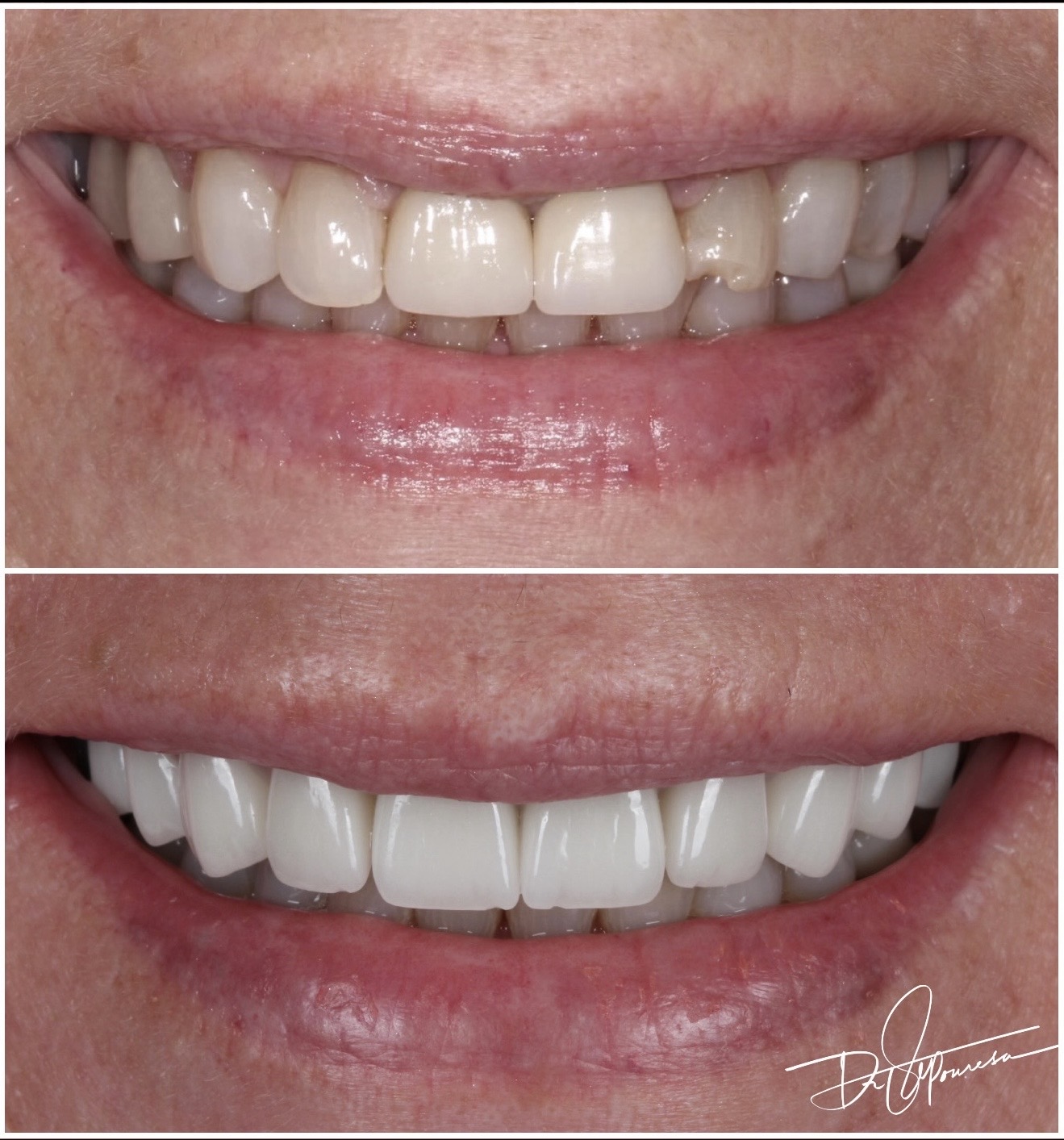 Photo Credit: Courtesy of Dr. Sep Pouresa
The answer starts with understanding that nature is not perfectly symmetrical. Natural teeth have subtle variations in shape, texture, translucency, and brightness. Replicating these characteristics is what separates an average smile makeover from an exceptional one.
Smile design is both an art and a science.
Over the years, artists, architects, and scientists have recognized that beauty often follows certain proportions. In dentistry, we apply these principles to create harmony between the teeth, lips, gums, and facial features. Every smile should be customized to the individual rather than copied from a photograph or a celebrity.
No two patients are the same.
Factors such as facial shape, age, personality, lip dynamics, and even skin tone all influence how veneers should be designed. A smile that looks beautiful on one person may not look natural on someone else.
Another important aspect of creating natural-looking veneers is preserving healthy tooth structure whenever possible.
I am a strong believer in minimally invasive cosmetic dentistry. In many cases, very little tooth reduction is required, and sometimes no-preparation veneers may even be possible. The objective is not simply to place porcelain on teeth but to preserve as much natural enamel as possible while enhancing aesthetics.
Material selection also plays a significant role.
Modern ceramics, such as lithium discilicate porcelain, are capable of mimicking the optical properties of natural teeth. Light passes through these materials similarly to enamel, creating depth and translucency rather than an opaque, artificial appearance. This is why high-quality porcelain veneers can look remarkably lifelike.
Equally important is communication between the dentist, the patient, and the ceramist. Every smile is designed collaboratively. Through photographs, digital smile design, mockups, and detailed discussions, patients are able to preview their new smile before treatment begins. This allows us to create results that align with their goals and personality.
I often tell patients that the best veneers are the ones nobody suspects.
The most rewarding moments are when patients tell me that people compliment their smile without realizing they had veneers. Friends and family simply assume they have naturally beautiful teeth.
Beyond aesthetics, the emotional transformation can be just as profound.
A smile affects how we communicate, how we laugh, and how we present ourselves to the world. When patients feel comfortable smiling again, they often experience renewed confidence that extends into every aspect of their lives.
Ultimately, natural veneers should enhance your appearance, not change who you are.
They should complement your face, respect your individuality, and allow your personality to shine through. The objective isn’t perfection. It’s harmony.
Because the most beautiful smiles aren’t the ones that look manufactured.
They’re the ones that look effortlessly natural.
For more information, visit Dr. Sep Pouresa's social media: