How to Make Your Fireplace a Sophisticated Statement Wall

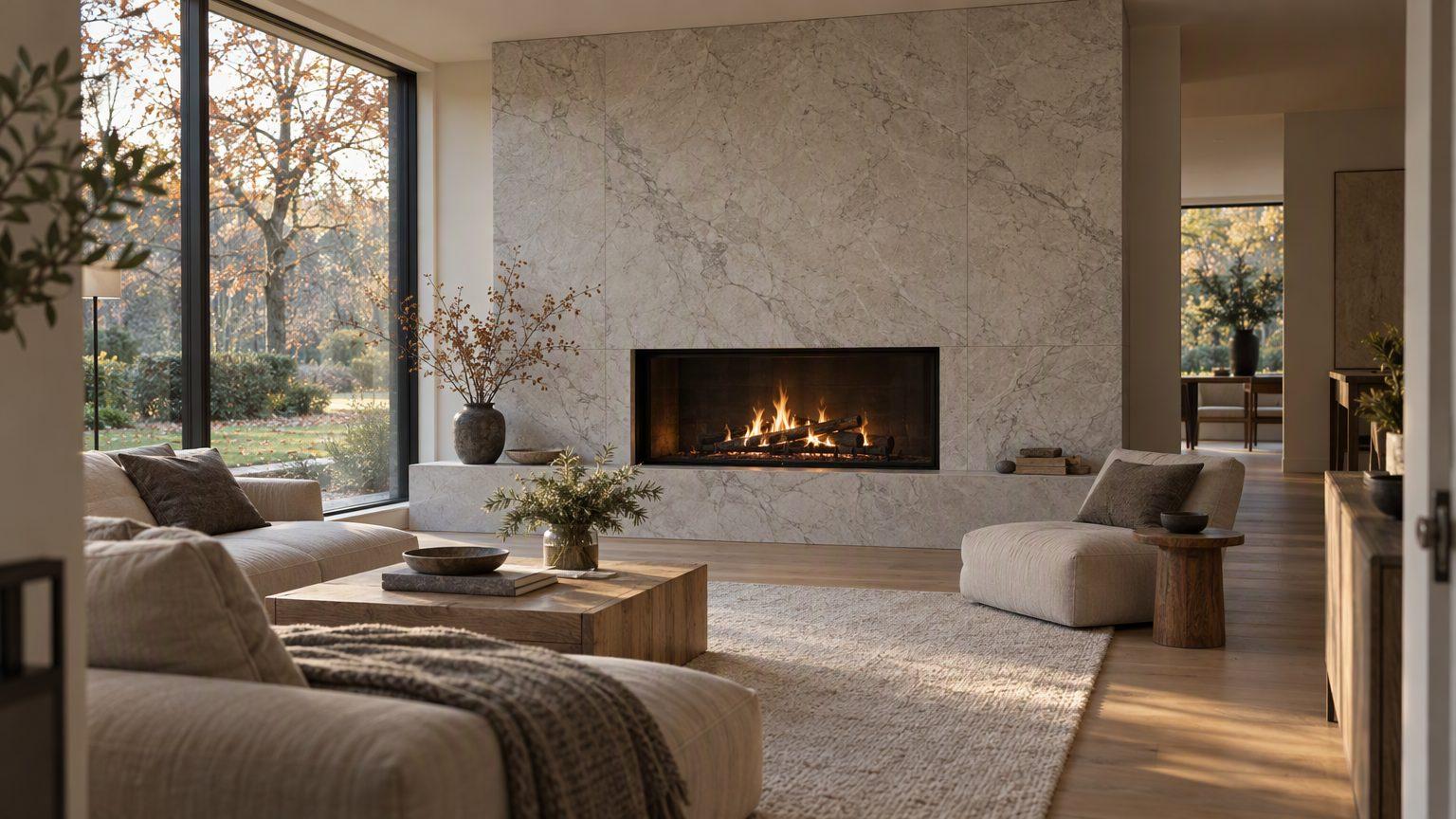
Start with the room’s proportions when sizing the fireplace tile. A quiet pattern across an unbroken surface lets the fire catch your eye without overwhelming the furniture or view. Stick with one pattern. The opening’s shape tells you how wide and tall to tile the wall.
Choose Fireplace Tiles by Surface, Scale, and Heat Exposure
Match the material to its location
Choose fireplace surround tile only after checking its cleaning needs against your routine and confirming the manufacturer approves that spot. Marble offers natural veining but may need sealing; porcelain delivers a more consistent surface with simpler upkeep. Ledgestone veneer’s strong relief suits plain furnishings.
Consider material choice separately from the product’s technical approval when searching for fireplace tiles. Have the manufacturer and installer confirm the permitted application and substrate requirements for each shortlisted product. They’ll need to check clearances, too.
Compare the five treatments
| Treatment | Strongest placement | Visual character | Practical consideration |
|---|---|---|---|
| Marble | Surround or full-height wall | Natural veining and formal polish | Confirm sealing and cleaning needs |
| Porcelain | Surround or full-height wall | Controlled color with minimal visual noise | Verify approval for the intended surface |
| Ledgestone veneer | Surround or tall feature wall | Pronounced depth and shadow | Textured joints collect more dust |
| Herringbone | Compact surround | Tailored movement | Requires precise cuts and alignment |
| Mosaic tile | Accent zone or approved hearth | Fine texture and decorative detail | More grout increases maintenance |
Build a Clear Visual Hierarchy
Scale the pattern to the room
Fewer joints make a modern full-height fireplace wall look calmer when it’s finished in large-format porcelain or quietly veined marble. In a smaller room, compact herringbone around the opening moves the eye without covering the whole wall.
Control color and texture
Check the fireplace wall tile samples beside the flooring and upholstery in daylight and evening light, with metal samples nearby. Let one texture lead. But keep grout quiet with figured tile; plain tile can take gentle contrast to define each joint.
Decide where the tile stops
Modern fireplace tile design needs deliberate boundaries. Full-height tile gives the fireplace architectural weight; a surround leaves more of the wall exposed. And align the edges with a mantel or an adjacent opening.
Finish the Installation With Precision
Resolve joints, edges, and safety
Specify grout width and finished edges before installation, including outlet positions and the transition to flooring. Ask for an edge sample so you can judge the exposed profile beside the hearth. Decorative appeal must never compromise safety: always follow the manufacturer’s installation instructions and listed non-combustible clearances—including the mantel and hearth—before work begins. Have the installer verify all clearances against local building codes prior to tiling.
Let the Fireplace Carry the Room
Let the fireplace lead the room by keeping the surrounding furniture in the background. The fireplace wall looks most sophisticated when it feels like part of the room’s architecture, from its size and tile joints to its texture.
Latest from Haute Living

CHANEL’s Holiday Dinner Set the Tone for the Season

The Berkeley Palm Beach Brings B&B Italia to West Palm Beach’s Skyline

Saks Fifth Avenue’s Holiday Windows & Light Show Return on November 23