A Shattered Collarbone, a Bangkok Shophouse and a Love Story: The Couple Behind LenLen, NYC’s Most Unapologetic Thai Restaurant
LenLen, the Flatiron Thai bar on E. 20th St., is a Bangkok love letter from ex-hockey hopeful Peter Tondreau and Wanisa Torboonsitikorn.

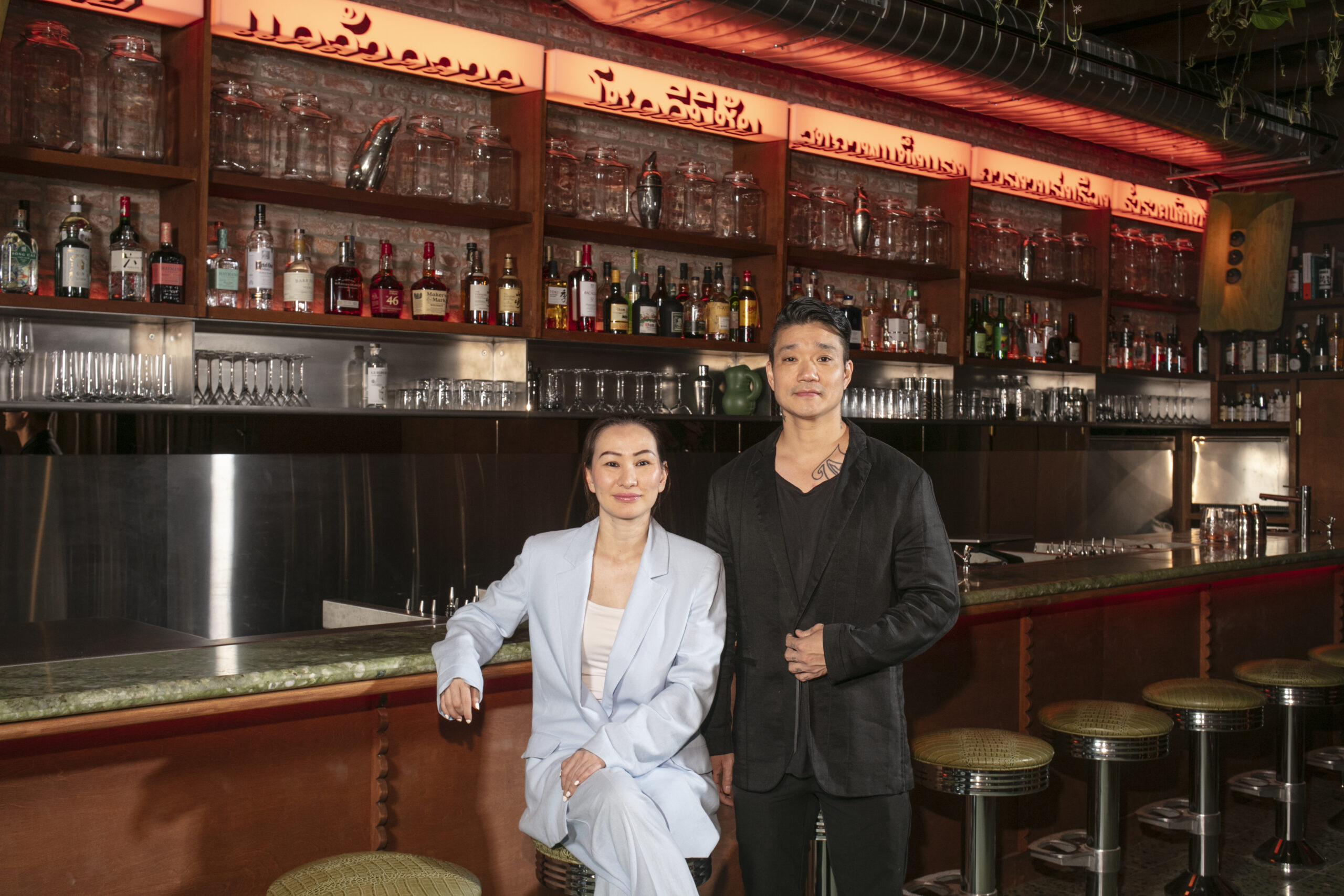
Before there was a restaurant, there was a question Peter Ki Suk Tondreau couldn’t answer. He was at the edge of an ice rink, gripping the boards, trying to put weight back down on a body that had suddenly stopped holding him up. A shattered collarbone at the Canadian Invitational had just ended the hockey career that carried him as far as alternate on a Junior Olympic team. The answer, as it turns out, lives at 40 East 20th Street: LenLen, the Flatiron District Thai bar and restaurant he built with his life and business partner, Bangkok-born Wanisa Torboonsitikorn. Modeled on the 1970s Bangkok shophouse where Wanisa grew up, it’s the place for Wagyu Beef Boat Noodle Soup, Crab Durian Curry and a house wine called GoodGood, and it’s the couple’s first standalone, sit-down restaurant after building a small empire in Chelsea Market.
“The first thought wasn’t poetic—it was pure, terrifying blankness,” he tells me. “‘If I can’t skate, what the hell do I do with all this energy?’” When you’ve trained your entire youth for a single timeline, he adds, “having that track vanish overnight feels like the ground falling out from beneath you.”
Photo Credit: Liz Clayman
It’s a telling question from a man who now spends his days building places for other people to have a good time. (LenLen, fittingly, means “playful” in Thai.) Long before the menus and the floor plans, he had to figure out where to put the part of himself that still wanted to compete.
Look closely at the gallery walls and you’ll find a photograph of Wanisa and her mother. Beside it, in Thai script, is her mother’s favorite piece of advice: “Be Safe.” It’s a funny thing to hang in a restaurant built by two people who have taken one risk after another. It’s also, I’d argue, the key to the whole room.
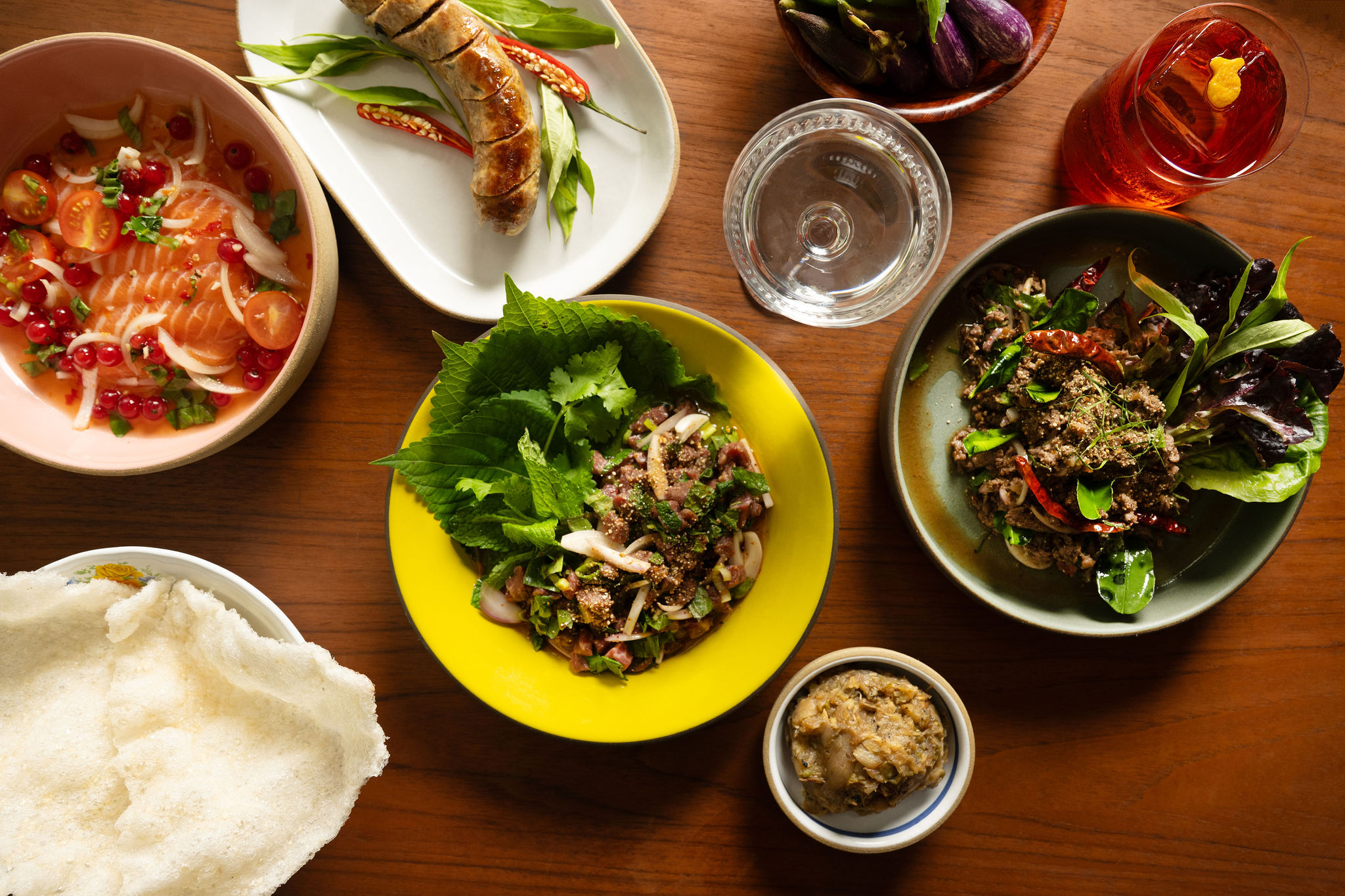 Photo Credit: Liz Clayman
The Only Other Arena
Peter was born in Korea and arrived in Los Angeles as a three-month-old adoptee, raised by an American family in Agoura Hills, California, whose table ran from Korean and Indian to Thai, Chinese, Middle Eastern and Mexican. Sports were the obsession (skateboarding, surfing, snowboarding, soccer) until hockey took over entirely and pulled him to Seattle, where he made one of the top nationally ranked teams of the era. Then came the collarbone.
He’d worked in restaurants since he was 14, but the kitchen wasn’t a calling at first. It was a sedative. “Prep and line work were just ways to stay on my feet and exhaust myself so I could sleep,” he says.
Then came a dinner rush that demanded everything. Ticket machine screaming, pans flying, every second mattering, and suddenly he recognized the feeling: the same razor-thin margin of error he’d known on the ice. “Cooking stopped being a distraction and became the discipline,” he says. “The kitchen was the only other arena that demanded the same obsession.”
The athlete never quite left the building. Peter still watches how cooks pivot, how stations are set “to the millimeter,” how the physical lines of a room dictate its flow. “On the ice, wasted motion bleeds speed,” he says. “In a kitchen and behind a bar, taking three steps when you could take one ruins your rhythm. If your physical layout isn’t dialed, your execution never will be.” (I suspect his contractors have heard this speech before.)
His education was part classroom, part passport stamp. He tended bar and waited tables across Europe, Asia and South America to fund the next leg; taught English in Taiwan, where he fell hard for the hand-pulled noodle shops; studied abroad at Yonsei University in Seoul; and earned a business degree from the University of Washington while working as a hotel prep cook, rising to chef de cuisine by graduation. Then came James Beard Award-winning kitchens and, eventually, Wolfgang Puck’s Spago in Beverly Hills, which held two Michelin stars at the time: a brigade of 30 cooks from Japan, Italy and France, all chasing perfection. For Peter, it was hockey tryouts all over again.
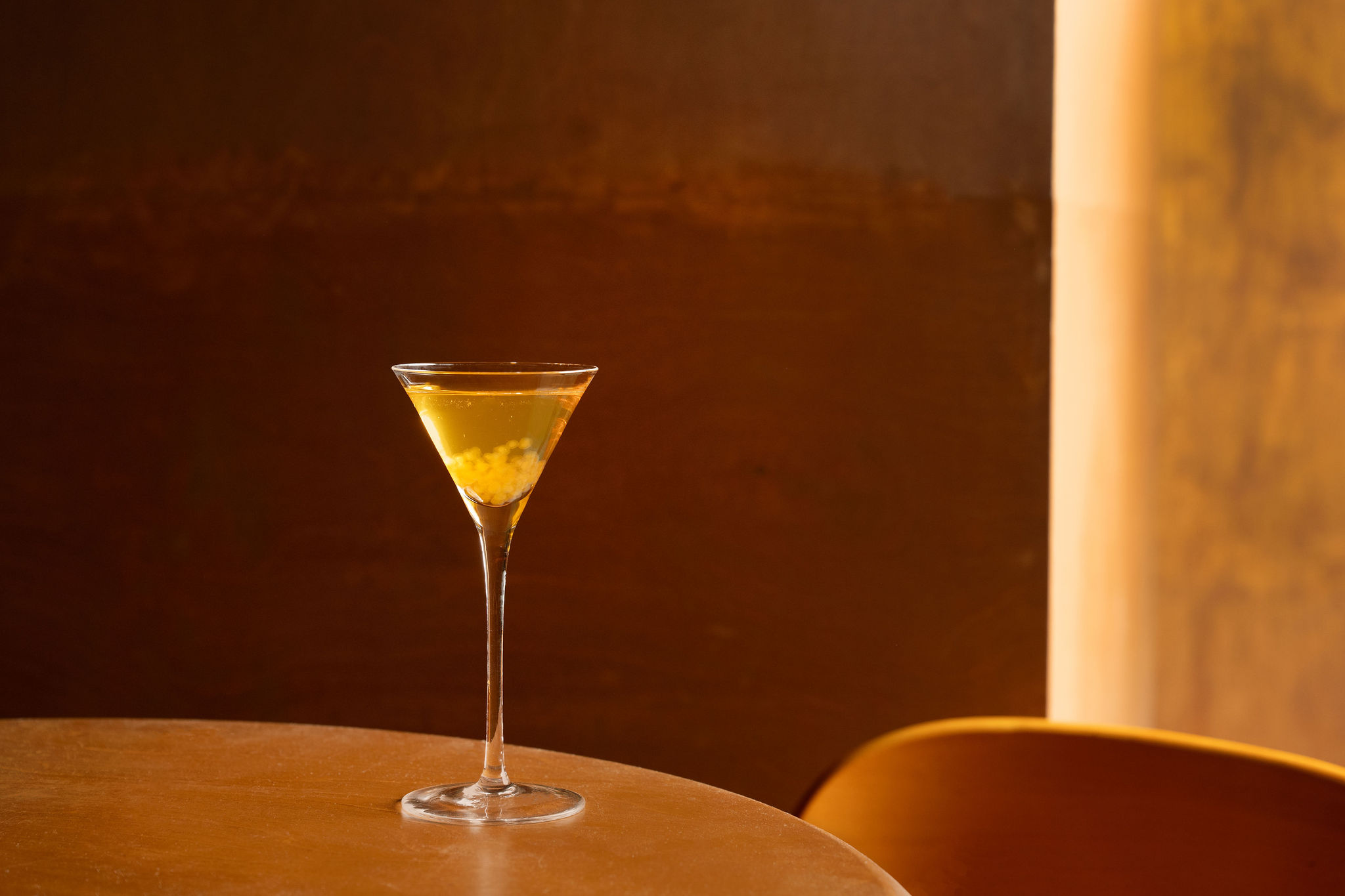 Photo Credit: Liz Clayman
Spago taught him rigor. It also taught him what he didn’t want. “Fine dining at that level teaches unmatched rigor, but the food felt performative rather than electric,” he says. “I didn’t want to build museum exhibits. I wanted the raw, visceral energy of street stalls, neighborhood joints, and spaces where design, music, and food collide into something alive.” A New Year’s Eve invitation to New York sealed it. He moved cross-country and never looked back.
But the most consequential stop on the itinerary came earlier, in Portsmouth, England, where a young traveler walked into a Thai-themed bar looking for a bartending gig to pay for the next leg of his trip. The manager was Wanisa, who had come from Bangkok to study business administration, with a focus on marketing communications, at the University of Portsmouth. She hired him. They fell in love. (Somewhere, an HR department winced. Romance did not care.)
Wanisa’s hospitality education started long before that bar. She grew up in a Thai-Chinese shophouse in Bangkok, the classic arrangement of family business below and family life above, with a Thai mother and a Chinese immigrant father. Her mother gave her the cooking, the travel, the flavors and a sunny compulsion to make everyone around her happy. Her father gave her something harder: the immigrant’s drive to build from scratch in an unfamiliar place, take the risk and outlast the competition. It’s what eventually sent her to New York with a simple conviction: “I can build something distinct here.”
The business revealed itself the way the best ones do, at the kitchen table, when late-night conversations turned into brand identity boards, floor plans and financial models. Peter brought the design obsession. Wanisa brought the financial acumen and what he calls her “innate hospitality magnetism.” His summary of the division of labor is the best line in this piece: “I design the stage; she ensures it’s wildly profitable and that every guest has the night of their lives.”
Let’s be clear about the second half of that sentence, because it’s easy to romanticize the hostess and miss the operator. Wanisa leads a team of 140 across the group’s six venues, overseeing brand strategy and daily operations, combing through P&Ls, analyzing prime costs and managing cash flow for businesses that range from high-volume fast-casual counters to labor-intensive precision dining. Her stated ambition is to help women out-strategize, out-execute and out-scale existing structures until the term “female entrepreneur” is completely redundant. I’m here for it.
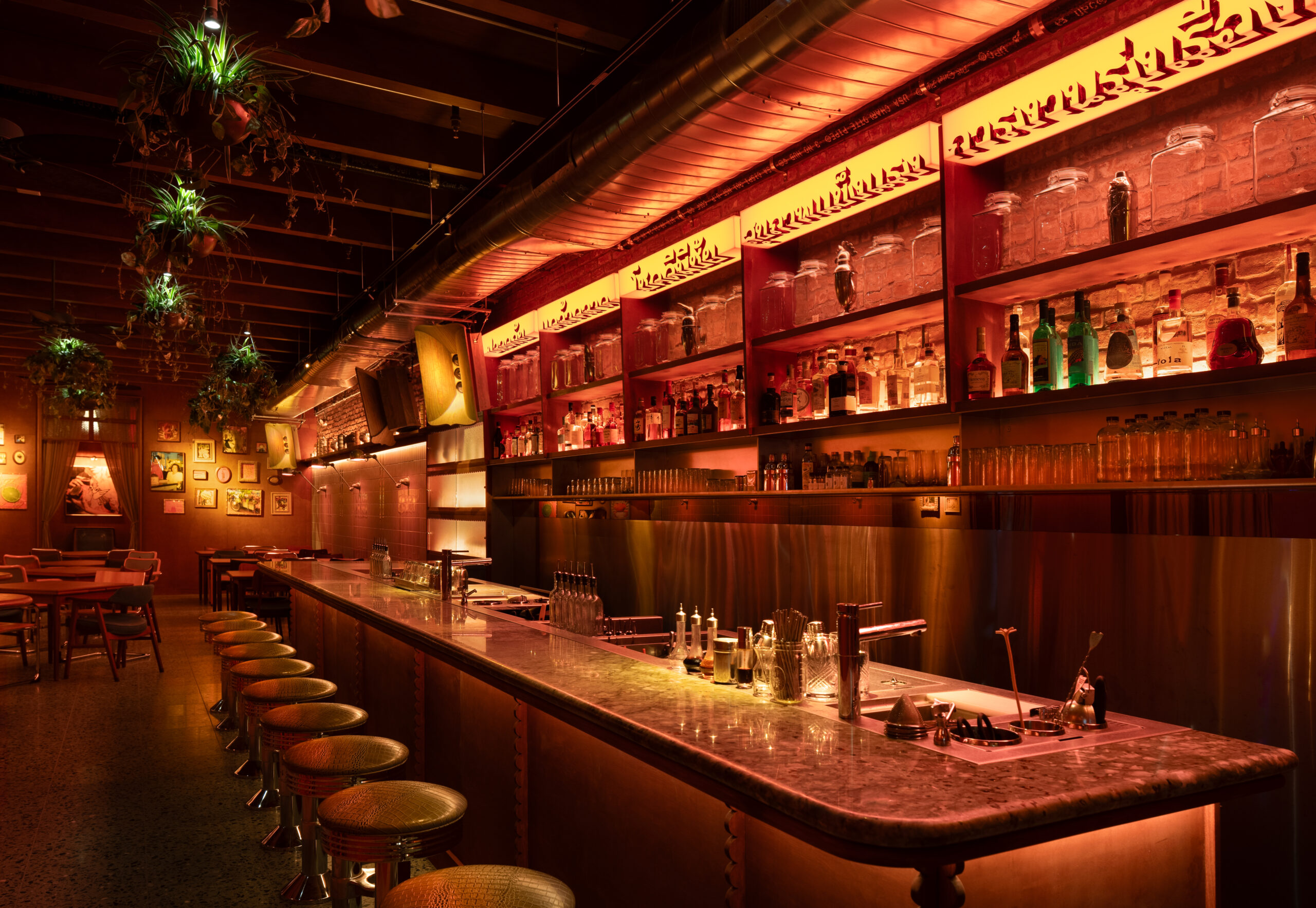 Photo Credit: James Dangremond
A Shophouse With the Doors Wide Open
LenLen became non-negotiable the day the couple looked at New York’s Thai landscape and saw the gap. It wasn’t another stylish noodle bar; it was the near-total absence of the real thing. “Too many places sanitize Southeast Asian food to play it safe,” Peter says. “People were starving for the real thing: the intense fermentation, the sharp acidity, the deep herb profiles, and the uncompromising heat you get on the streets.” The first rule they agreed on, from day one: shrimp paste, fish sauce, chilies and funky fermented notes would stay “100% true to how they’re meant to taste.” Mom’s “Be Safe” hangs on the wall. The kitchen does not play it safe.
The room, designed by Peter with Chris Li of 3.WRKS, reinterprets the Bangkok shophouses of the 1970s and ’80s with what the team calls “newstalgia.” Tiled walls, a vintage television, a retro display cabinet, mid-century-to-’70s furniture and gloriously mismatched vintage chairs make it feel less like a dining room than somebody’s living room after the good bottle has been opened. An 11-seat marble-topped bar anchors 50 seats, three gallery walls carry traditional Thai photographs alongside Wanisa’s family portraits, and the entry foyer doubles as a tiny shop selling Thai ramen packs, sauces, condiments and LenLen T-shirts, a nod to the shophouse’s double life as home and business.
Then there’s the sound. Artist Joel Seigle built the sculptural custom speakers from eco wood with non-toxic stains, and Peter curated the playlist himself: 1960s and ’70s Thai psychedelic, funk, groove, rock and jazz. (If you’ve never heard Thai psych-funk over a bowl of boat noodles, consider your evening upgraded.) The sustainability story holds up, too: 100% LED lighting, roughly 80% eco-friendly construction materials led by renewable, low-emission birch plywood, and hanging living plants doing double duty as décor and air purifiers.
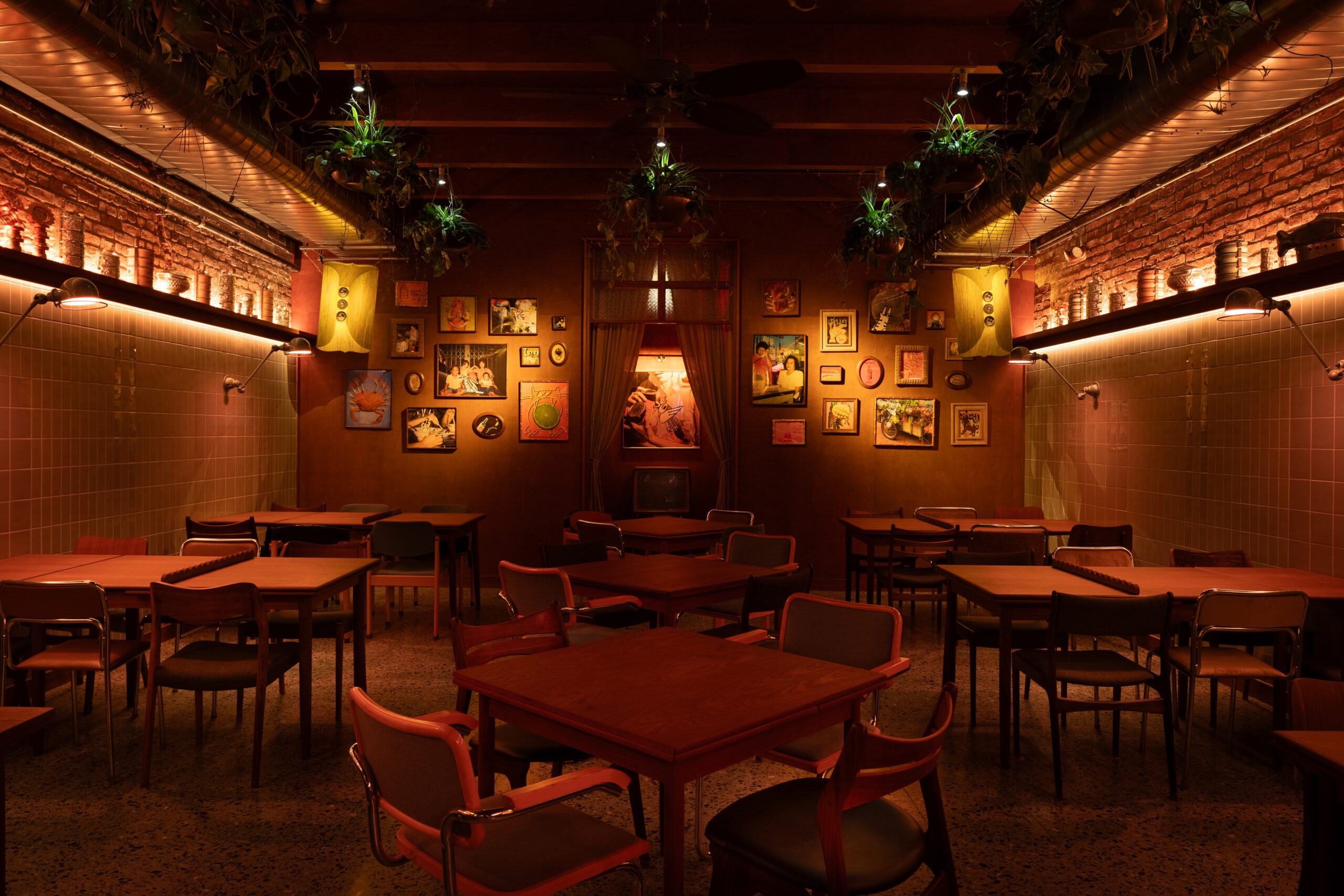 Photo Credit: James Dangremond
All of it serves namjai, the generous-hearted spirit at the core of Thai hospitality, which Wanisa treats as a discipline rather than a mood. The reference point is Bangkok at dusk: the hum of conversation, the laughter around low plastic stools, the smell of lemongrass, garlic and hot oil. “People think Thai hospitality is just being polite and soft-spoken,” Peter says. “Wanisa proves it’s about commanding warmth, magnetic energy, anticipating every guest’s need before they speak, and making every table feel like the center of the party.”
On the plate, Peter, who has traveled Thailand extensively for more than 15 years, channels the street carts and night markets where there’s no pretense and nowhere to hide. “The chew has to be exact, the aromatics hit immediately, and the balance of heat, acidity, and fat is unapologetic,” he says. “At LenLen, the way we balance our broth—building layers of char, spice, and umami—is an homage to hawker stalls where a vendor has spent decades mastering one specific bowl.” Produce comes from Thai farmers in the U.S. and the Union Square Greenmarket around the corner, filtered through fine-dining training: Beef Tartare Larb made with hand-cut flatiron beef (in the Flatiron, naturally), Wagyu Beef Boat Noodle Soup draped with generous slices of the good stuff, a Crab Durian Curry that mellows the world’s most notorious fruit, plus Papaya & Seasonal Fruit Som Tum, Pad See Ew, a Skirt Steak Ssam Set and a Pandan Pancake to finish.
Behind the bar, a reduced-waste cocktail program concepted by Peter drinks like the kitchen cooks: the Thai Tea, the Tomato Som Tum. In March 2026 the restaurant launched GoodGood, its first private-label wine, and named as a cheeky counterpoint to “playful” LenLen. The inaugural release pairs a Château Tassin Bordeaux of 85% Sauvignon Blanc and 15% Sémillon with a 100% Pinot Noir from Domaine Famille Paquete in Burgundy, both dry, light-bodied, single-vineyard and vinified entirely in stainless steel, 3,000 bottles each, at $16 a glass and $64 a bottle. The white’s citrus-and-pear acidity is built for the Seafood Po Tai and Market Green Curry; the cherry-bright Pinot goes to the noodles. “We want wines that not only stand up to the spice and richness of our dishes, but to also enhance the flavors,” Peter says. The rest of the list runs Old World and New, from $16 to $19 a glass and $64 to $115 a bottle.
Here’s my favorite part of the story: they got their own restaurant wrong. The couple built LenLen expecting a quick-turn noodle counter. Guests had other ideas. They came for the bowl and stayed for the night. So Wanisa reworked the revenue models and floor service, and Peter retuned the bar layout and mood lighting for the lingering crowd. Plenty of operators would have fought their guests. These two listened.
Walk the room with them and you’ll realize they’re seeing two different restaurants. Peter clocks the menu typography, lighting levels, custom finishes, acoustics and kitchen station flow. Wanisa reads guest body language, the energy of the front-of-house team, and how labor costs and menu mix are trending against the daily P&L. Who’s usually right? “A clean 50/50 split,” Peter says. Diplomatic, and probably accurate.
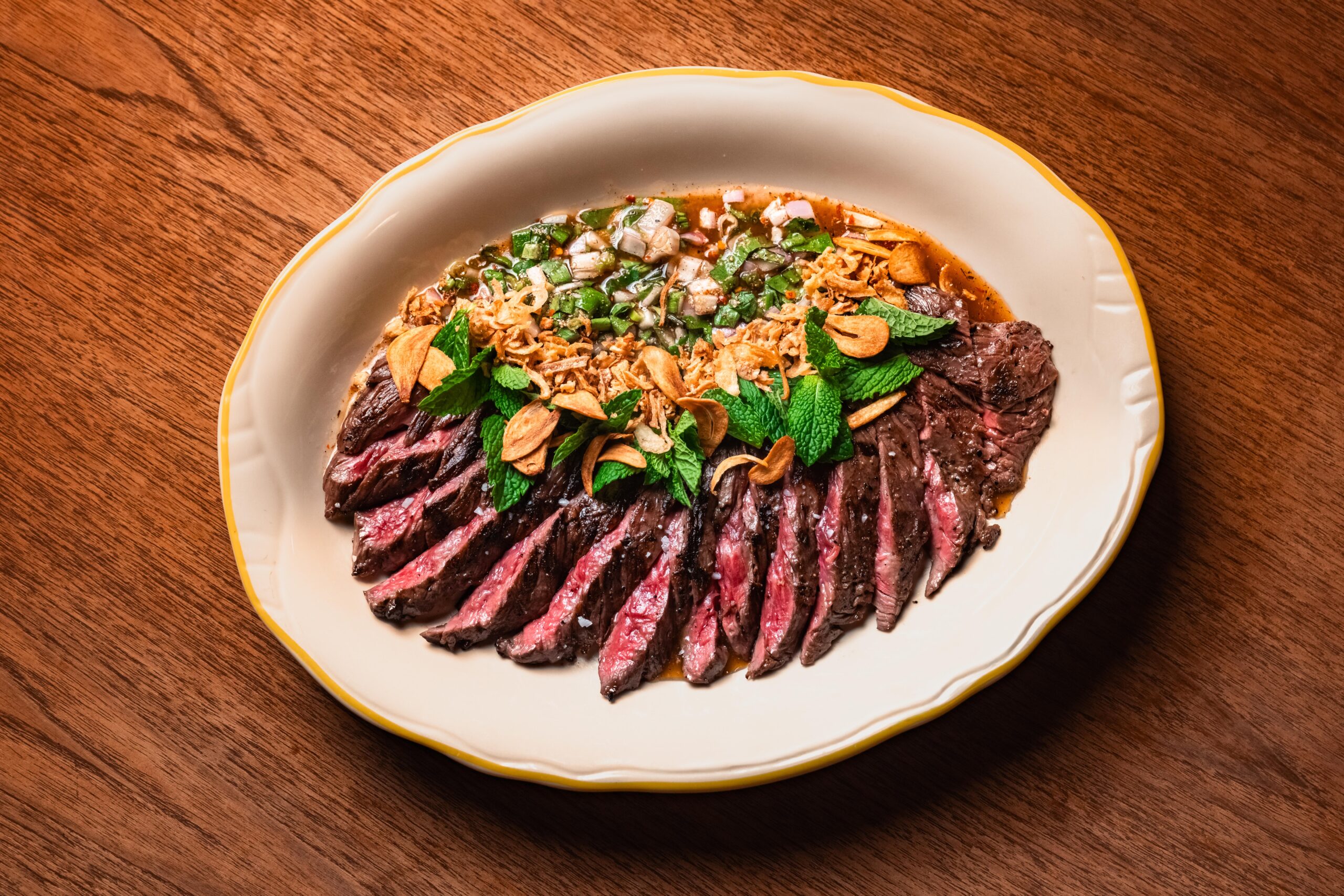 Photo Credit: Ben Hong
They do disagree, about exactly what you’d expect. Peter wants the custom architectural finish, the high-spec lighting, the bespoke packaging; Wanisa pulls up the P&L and shows him the payback period. “The lesson was realizing that tension makes us bulletproof,” he says. “The design stays elevated, and the business stays profitable.” At home, they try to leave operator mode at the door. By their own count, they succeed about 80% of the time. (Frankly, that’s a better number than most couples who don’t share a payroll.)
LenLen is the flagship, but it’s hardly the first act. Bar Suzette began with Peter buying burners and teaching himself crêpes at the Madison Square Eats food hall, hopped to the Union Square Holiday Market, then landed in Chelsea Market, where it posted the highest revenue per square foot of any bar or restaurant in the food hall up to that point and helped kick off a citywide crêpe craze. Tings, a Jamaican jerk chicken and patty counter with a rum bar, grew into Big Tings. The former Le Song space became a trio: N’Between, a Japanese-style speakeasy record bar and izakaya shortlisted for Best Bar Design by North America’s 50 Best Bars; Maki a Mano, a Japanese-Peruvian handroll bar; and Mini Konbini, for onigiri and kakigori.
Peter is also a partner in Very Fresh Noodles, the Taiwanese hand-pulled beef noodle spot that became the highest-grossing operation in Chelsea Market, and he wants it on premium grocery shelves nationwide as the benchmark non-fried instant noodle. “Capturing the bite, elasticity, and spring of a fresh, hand-pulled noodle in a packaged product without deep-frying it is brutal food science,” he says. He compares the whole portfolio to running a creative label: he sets the visual identity, spatial language and operational cadence, and each partner brings their own frequency.
Which brings us downstairs. GohGoh, the couple’s subterranean lounge beneath LenLen, is Wanisa’s father’s chapter, built from his stories of Yaowarat, Bangkok’s Chinatown, with its back alleys, neon glowing through steam and vintage herbal apothecaries. Building it under a working restaurant was, in Peter’s words, “an absolute logistical nightmare,” which meant excavating, reinforcing and running HVAC, electrical and sound isolation while diners upstairs carried on without smelling dust or hearing jackhammers. The payoff is a deliberate jolt. Upstairs, LenLen hits you with warm light, clattering bowls and steam. Downstairs, he promises “subterranean shadows, heavy vinyl warmth, glowing neon accents, and the feeling of entering an exclusive, clandestine den steeped in Yaowarat Chinatown lore.” Mom gets the living room. Dad gets the speakeasy. Seems fair.
As for the hockey player, Peter has made his peace. “I’ve let him go, but I respect him,” he says. “If the injury hadn’t happened, maybe I would’ve made the Games, maybe I would’ve coached, but I wouldn’t have built the creative world I have now.” The obsessive repetition and the tolerance for grind survived. They just changed jerseys.
At LenLen, all of it is close enough to touch: in the broth, in the Thai funk pouring out of Joel Seigle’s speakers, in a childhood photograph with two words written beside it. Be safe, her mother told her. Wanisa kept the warmth, took the risks anyway, and the rest of us get to pull up a chair.
Read More
Hungry for the next reservation? See Haute Living’s The 9 Best New Restaurants in New York Right Now and The 5 Best New Restaurants in New York City to Try Right Now, or browse the full Haute Living New York City Guide.
Frequently Asked Questions
What is LenLen in NYC?
LenLen is a Thai bar and restaurant in Manhattan’s Flatiron District inspired by the 1970s Bangkok shophouses where co-owner Wanisa Torboonsitikorn grew up. Its name means “playful” in Thai, and it serves bold, unfiltered Thai comfort food alongside culinary cocktails and its own private-label wine.
Where is LenLen and what are its hours?
LenLen is at 40 East 20th Street, between the Flatiron District and Gramercy, near Union Square. It is open daily from 5 p.m. to 1 a.m. and takes reservations through Resy.
Who owns LenLen?
LenLen is owned by the hospitality couple Chef Peter Ki Suk Tondreau, a Korean-American chef and former Olympic hockey hopeful, and Bangkok-born operator Wanisa Torboonsitikorn. Peter serves as executive chef, concepts the cocktail program and designs the brand and spaces; Wanisa oversees brand strategy, finance and operations.
What should I order at LenLen?
Signatures include the Wagyu Beef Boat Noodle Soup, Crab Durian Curry, Beef Tartare Larb with hand-cut flatiron beef, Papaya & Seasonal Fruit Som Tum, Pad See Ew, the Skirt Steak Ssam Set and the Pandan Pancake. At the bar, order the Thai Tea or Tomato Som Tum cocktails.
Latest from Haute Living

FLIBS 2026 Goes Beyond the Docks With Floating Pickleball, Helicopter Shuttles and a New VIP Cabana Club
What Makes Locale Firenze One of the World’s Best Bars? Step Inside Its Renaissance Palazzo

Palm Tree Music Festival Returns to West Palm Beach February 6–7, 2027