How to Plan a Champagne Tour That Balances Culture, Tasting, and Thoughtful Enjoyment
Plan a Champagne tour through Reims and Épernay with tips on tastings, cellar visits, booking, etiquette and responsible wine tourism.
A champagne tour is an invitation to understand wine from the inside out. Beyond the glass, it connects you to chalk geology, centuries of blending expertise, and the particular character of a landscape shaped by its terroir. Planning one well makes the difference between a rushed itinerary and a genuinely absorbing experience.
What Should You Consider Before Planning a Champagne Tour?
The decisions you make before departure shape everything that follows.
How Do You Choose the Right Region, City, and Style of Visit?
Champagne is a protected appellation in northern France, defined by specific grape varieties, a cool climate, and the méthode traditionnelle. Reims and Épernay serve as the two main hubs, each with a distinct character. Reims pairs Gothic architecture with historic cellars carved into ancient chalk, while Épernay offers a more concentrated, avenue-lined approach to the great houses.
Before booking, clarify your priorities. Whether you are most interested in production methods, tasting depth or historical context, having a clear focus makes it easier to choose the right experience. Large historic houses tend to offer structured narratives and impressive cellar architecture.
How Far in Advance Should You Book?
Many houses require reservations well ahead, particularly at weekends and during the harvest season. A practical approach:
- Confirm opening hours and any seasonal closures directly with each site
- Plan transport from the train station and allow walking time between visits
- Build in buffer time to avoid palate fatigue from back-to-back tastings
Keeping digital copies of all bookings reduces unnecessary stress on the day.
How Can You Design a Champagne Tour That Feels Both Elegant and Responsible?
Good planning extends into how you experience each visit, not just how you reach it.
How Do You Balance Tasting and Learning?
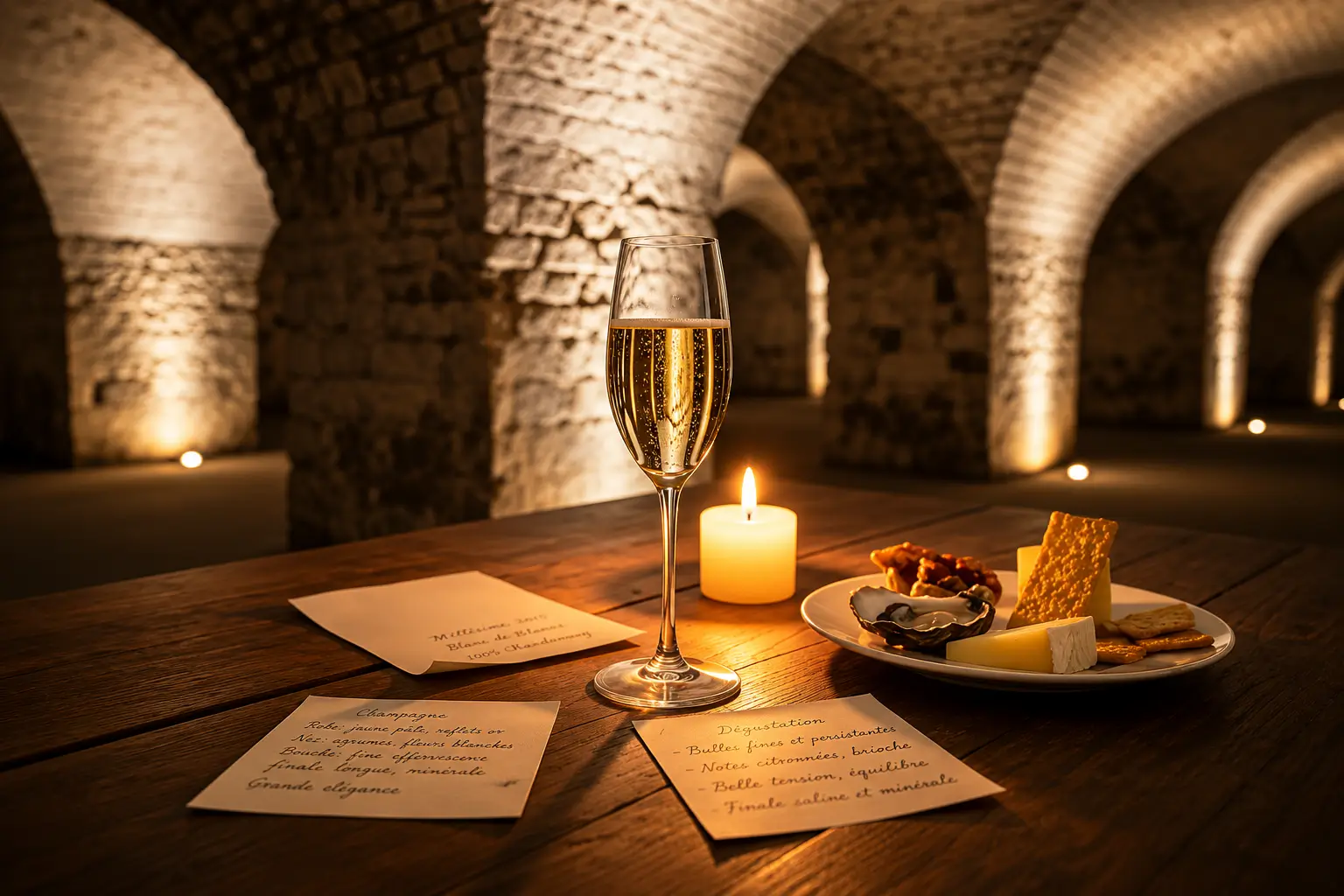
Depth over quantity is the guiding principle. Alternate cellar walks with seated tastings, and use water and bread between cuvées to reset your palate. Treat each pour as a chance to observe colour, assess effervescence, and reflect on structure and finish rather than simply moving to the next glass.
Where Does a Champagne Tour in Reims Fit Into a Cultured Itinerary?
Reims rewards those who look beyond the cellars. Its cathedral quarter, Art Deco architecture and proximity to vineyard villages make it a natural base for a broader exploration of the region. A champagne tour in Reims with a renowned house such as Veuve Clicquot fits naturally within that itinerary, offering insight into both Champagne production and the pioneering legacy of Madame Clicquot. Using established house visitor pages to plan the day and understand what each experience includes before arriving helps visitors make the most of their experience.
What Tasting Etiquette Enhances Your Experience?
Arriving on time, asking thoughtful questions about blending and ageing, and avoiding strong fragrances that interfere with aromas all show genuine respect for the craft. Keeping brief notes on each cuvée, from its dosage and texture to its finish, helps preserve those impressions long after the visit. If you decide to buy bottles, choose the styles that genuinely appealed to you rather than making impulse purchases, and check storage conditions and serving temperatures before travelling home.
Disclaimer: Written in partnership with APG.
Latest from Haute Living
Your Next Five-Star Concierge Might Be AI — and These Luxury Hotels Are Already Proving It
The Best Products From Celebrity Beauty Brands That Actually Deliver

Inside the Gucci Store Show, Demna’s First Full Statement for the House