Art, Architecture, and Dinner: The Miami Restaurants Redefining the Dining Room
Nine Miami restaurants where the design is as compelling as the menu, spanning a historic Brickell manor to SEIA above Biscayne Bay.

Miami is a city that demands spectacle, and its restaurants have never been exempt from that expectation. The most compelling dining rooms here have always understood that the room is part of the meal. What is happening now goes further still. Across Brickell, the Design District, South Beach, and Coconut Grove, a generation of restaurateurs, architects, and designers are creating interiors that function as destinations in their own right, spaces where considered materials, custom furnishings, collectible art, and site-specific design produce experiences that stay with you well past the last course. Here are nine dining rooms that are setting the standard.
Amazónico
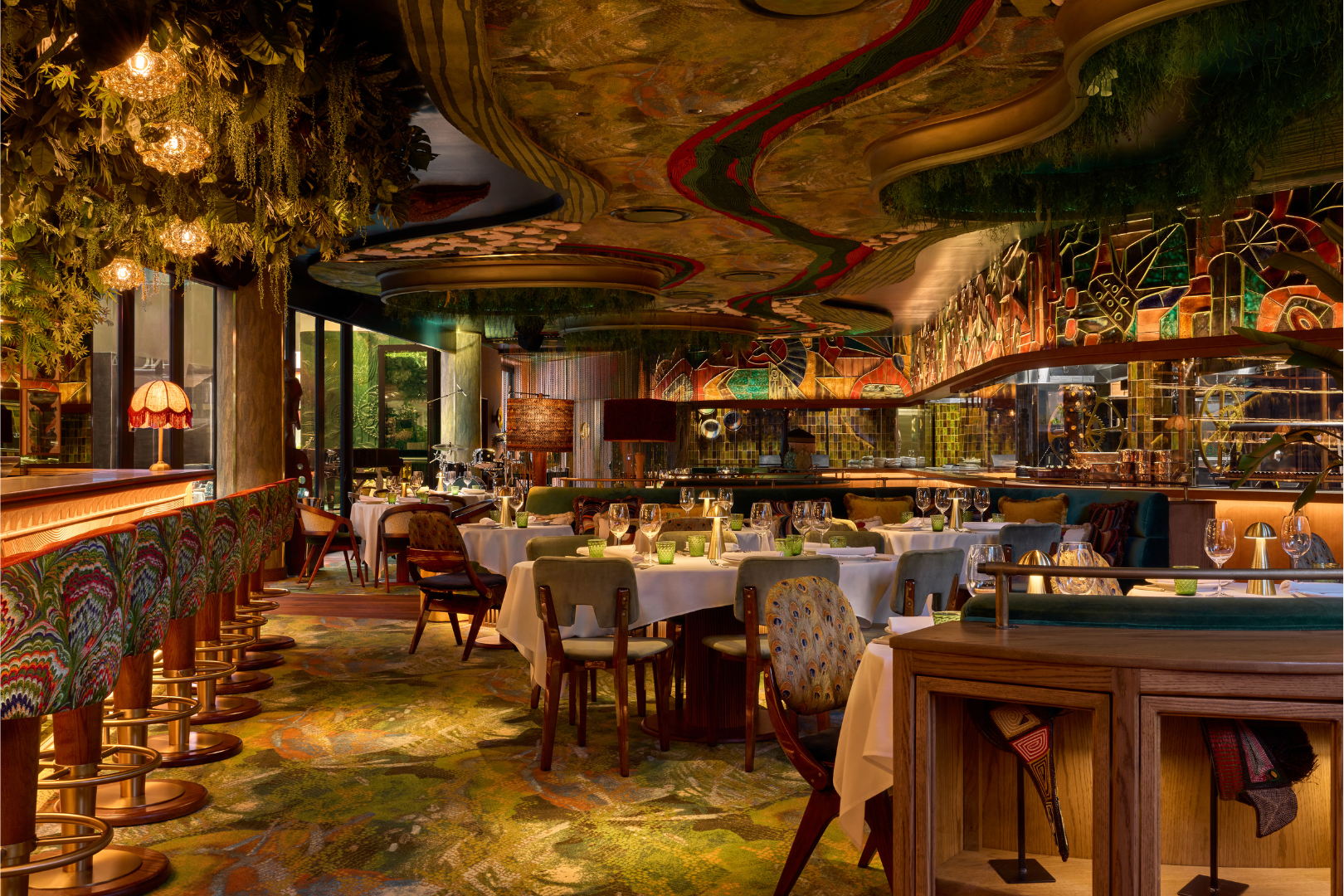 Photo Credit: James McDonald
The most immersive dining environment in Miami is also one of its most architecturally ambitious. Amazónico at 800 Brickell Avenue is a four-part experience designed by internationally acclaimed designer Lázaro Rosa-Violán, whose work draws on Latin American modernism, including the legacy of Oscar Niemeyer and Lina Bo Bardi, to produce an environment of lush greenery, volcanic stone, dark tropical woods, and woven textures. The main restaurant puts the open kitchen on full display while a central stage brings live jazz, bossa nova, and Cuban rhythms into the dining room. The Bar and Lounge above it operates in a more theatrical register, with mirrored ceilings, rich textures, and sculptural details anchoring a Sushi Counter and a private jungle-inspired dining room for up to 14 guests. The open-air Rooftop offers Miami skyline views surrounded by lush landscaping, with a signature Peacock Bar and LED-panelled DJ booth as visual focal points. Selva, the most intimate of the four, trades the Rooftop’s openness for dramatic lighting, a starlit ceiling, and a darker, more immersive design conceived as a dedicated late-night music venue. The progression from dining room to cocktail lounge to open-air rooftop to late-night destination is one of the most considered guest journeys in the city.
Carbone Miami
Photo Credit: Carbone Miami
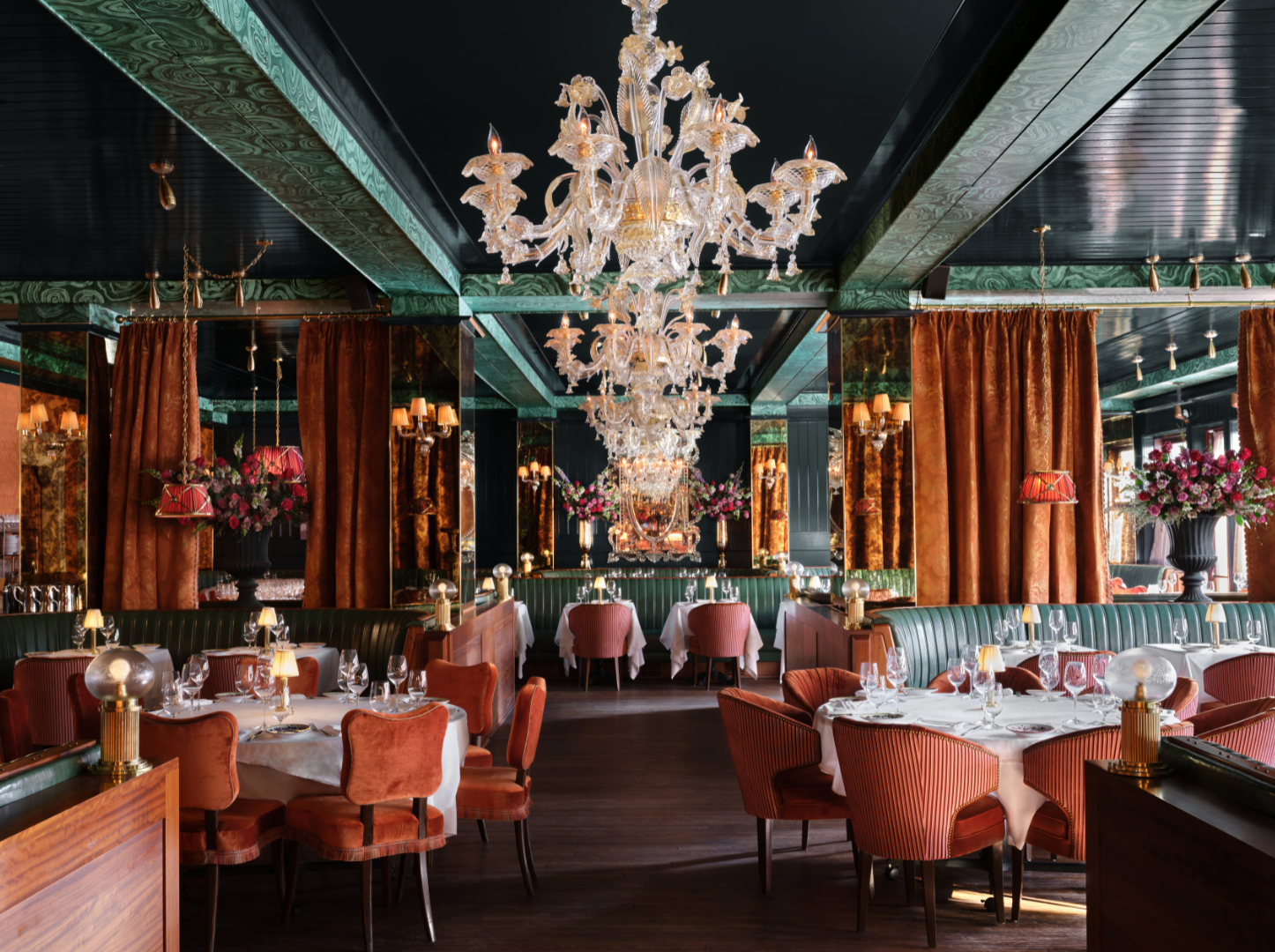
Carbone Miami at 49 Collins Avenue brings Major Food Group’s celebrated New York-style Italian restaurant to South Florida through interiors conceived by renowned designer Ken Fulk. A decadent palette of terracotta, cream, and rich emerald green runs through the room, with malachite ceiling beams and columns, damask-upholstered walls, leather banquettes, and Murano sconces and chandeliers casting a warm glow throughout. Fulk’s hand-drawn wallpaper extends the design into the bathrooms. The lush patio, with rattan ceiling fans, eclectic furnishings, and tropical greenery, nods to Havana in a way that feels specific to Miami rather than borrowed from it. Art is integral to the experience, with gallerist Vito Schnabel curating works by Julian Schnabel, Gus Van Sant, and Harmony Korine throughout the restaurant, making Carbone Miami as much a gallery destination as a dining one.
Chateau ZZ’s
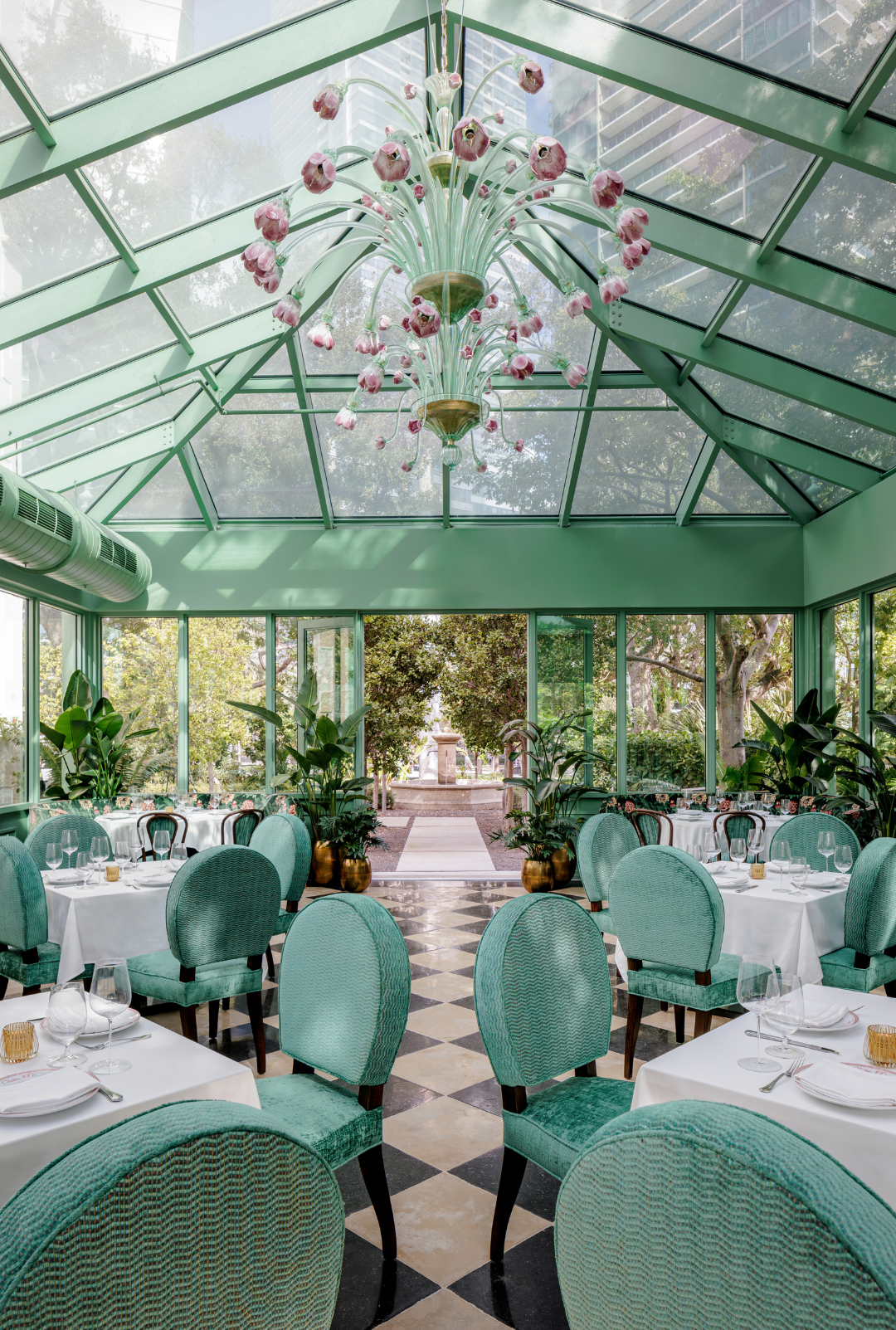 Photo Credit: Kris Tamburello
The most historically significant dining room in Miami is also one of its most theatrical. Chateau ZZ’s at 1500 Brickell Avenue occupies Petit Douy, a historically protected French-style manor built in 1931 by architect Martin L. Hampton and inspired by the Priory of Saint-Julien in Douy, France. Major Food Group’s in-house team collaborated with Ken Fulk, Inc. to return the estate to its former grandeur while reimagining it as an immersive hospitality destination, with a series of indoor and outdoor dining environments, a dramatic glass-enclosed solarium, a vibrant bar and lounge, and lush gardens. The design preserves the architectural character and old-world sophistication of the historic residence while layering in Fulk’s signature sense of glamour, color, and theatricality. Intimate rooms give way to light-filled tropical spaces throughout the property, with the original architecture, richly layered interiors, and surrounding landscape functioning as essential parts of the experience rather than its backdrop.
L’Atelier de Joël Robuchon
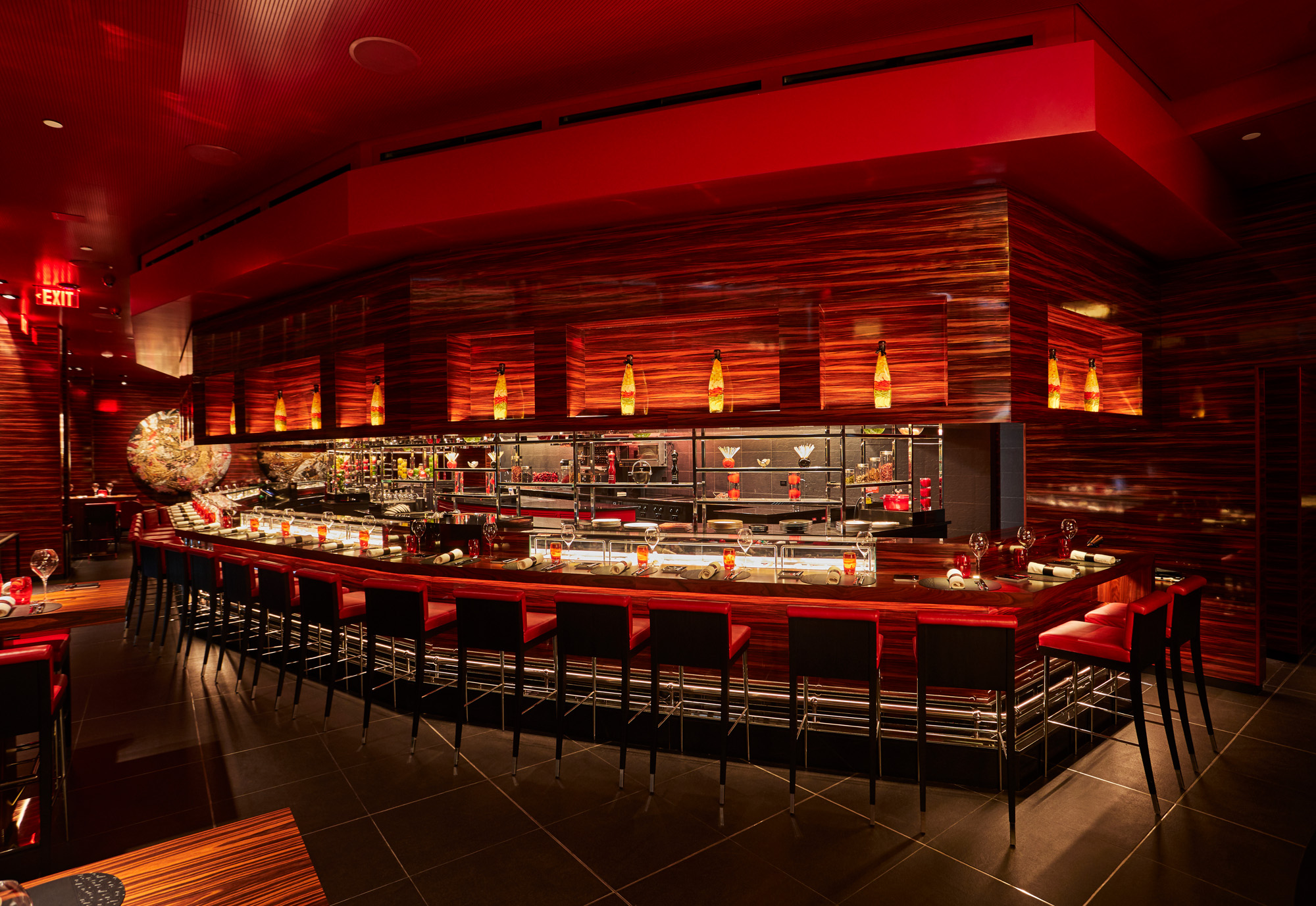 Photo Credit: L’atelier de Joël Robuchon
South Florida’s only two-Michelin-starred restaurant brings Joël Robuchon’s groundbreaking modern French concept to the Miami Design District under The Bastion Collection in a 3,300-square-foot space designed by acclaimed French architect Pierre-Yves Rochon, who has designed L’Ateliers worldwide. The room centers around the concept’s signature 34-seat dining counter facing directly into the open kitchen, creating a dynamic dialogue between chefs and guests that is as much a performance as a meal. Polished rosewood walls, custom-made red leather Italian seating, flame-brushed black granite flooring, and black acoustical ceilings establish a theatrically inclined gastronomic environment where dramatic lighting and rich materials produce an interplay of warmth and contrast that makes the room feel both intimate and monumental.
Carbone Vino
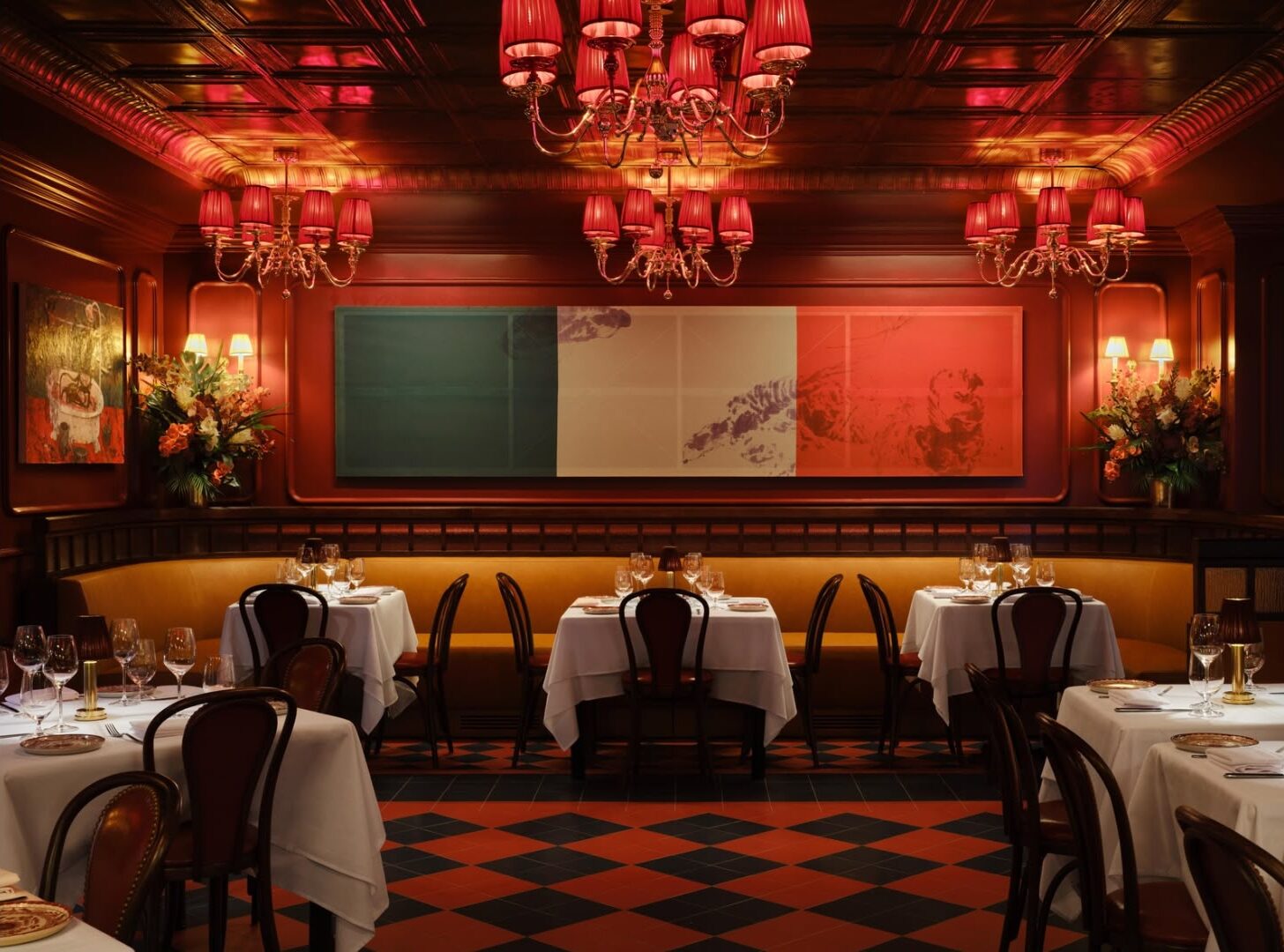 Photo Credit: Douglas Friedman
Carbone Vino in Coconut Grove, Major Food Group’s wine-driven evolution of the Carbone concept, pairs the brand’s New York-style Italian dining with one of Miami’s most extensive wine programs in a setting conceived by award-winning Bishop Design. The interiors pay homage to the original Carbone on Thompson Street through moody, romantic environments across a main dining room, lounge, and private dining room. Deep wine and blue tones are layered with warm lighting, heavy velvet drapery, gold-accented wallpaper, intricate ceilings, and custom leather banquettes. A softly arched bar finished in burnished bronze serves as the room’s sculptural focal point. A collection curated by Vito Schnabel, featuring works by Rene Ricard, Lola Montes, Francesco Clemente, and Julian Schnabel, runs throughout the interiors, continuing the Major Food Group tradition of treating art as architecture rather than decoration.
Le Jardinier
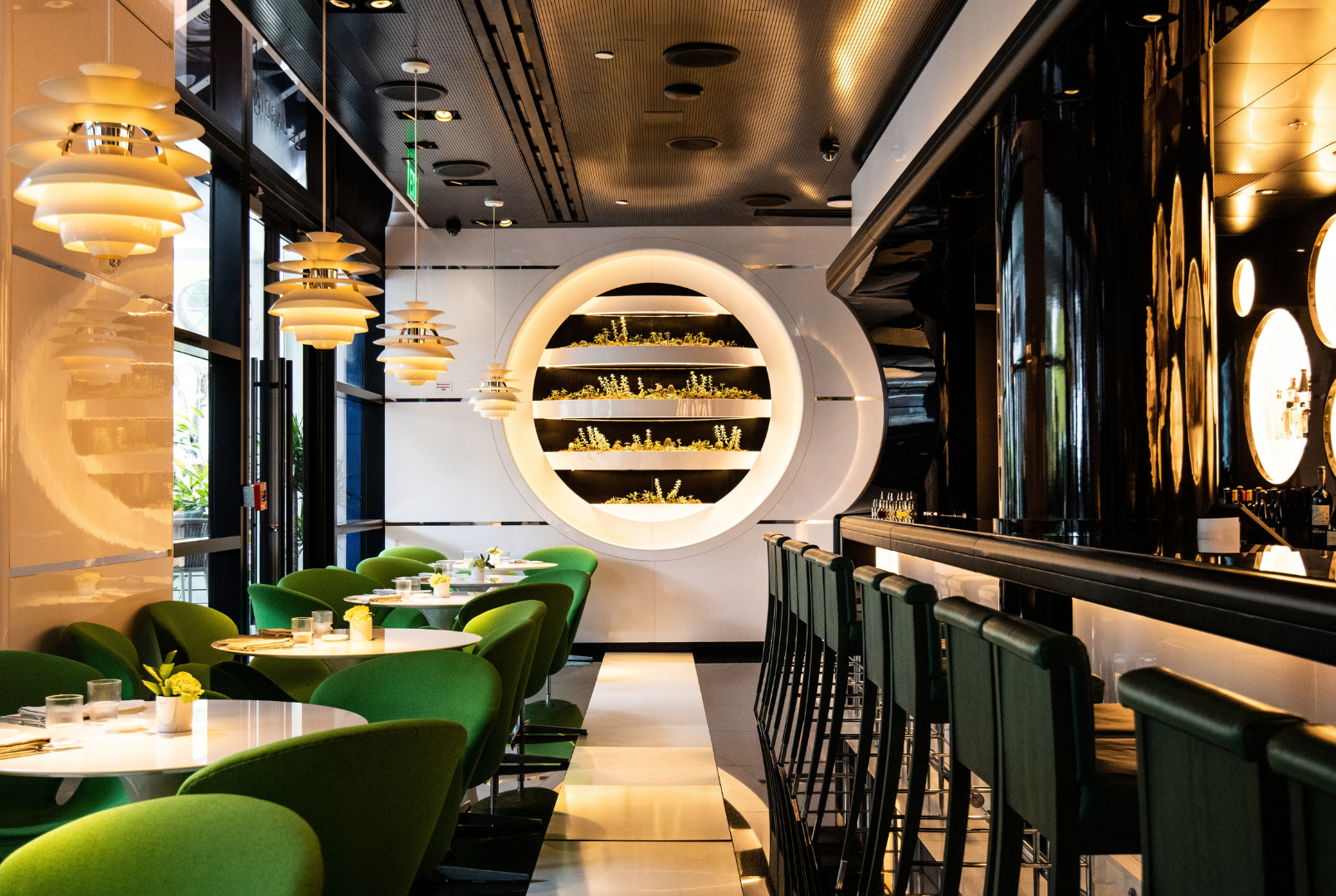 Photo Credit: Le Jardinier
Le Jardinier in the Miami Design District, the Michelin-starred restaurant created by Chef Alain Verzeroli and The Bastion Collection, pairs a retro-glam aesthetic with an interior designed by Pierre-Yves Rochon that is as precisely calibrated as its menu. One-of-a-kind, custom-made black-and-white marble walls and floors, marble tables, metal chairs, eye-catching light fixtures, and a vertical garden create a room that reads as both rigorous and alive. Tall windows flood the dining room with natural light. A 17-seat black marble bar, framed by circular accent lights behind glass shelving, is one of the more beautiful bar moments in the city. Outside, a lush, plant-filled patio extends the restaurant’s connection to nature and its philosophy of relaxed elegance into an urban oasis within the Design District.
Le Specialità
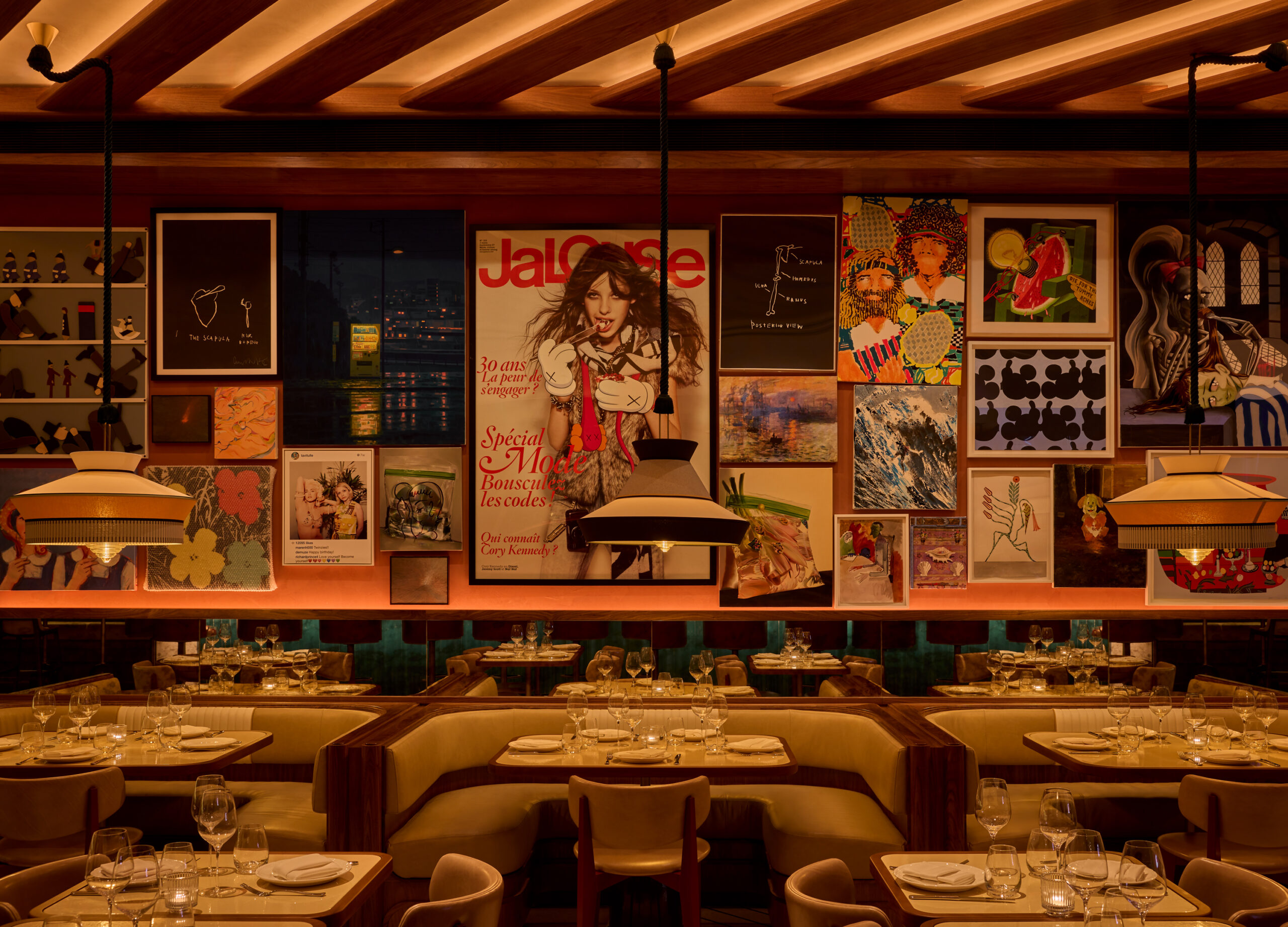 Photo Credit: Jason Varney
Le Specialità at 40 NE 41st Street brings a celebrated Milanese institution to the Miami Design District through a richly layered interior conceived by Rockwell Group. Drawing inspiration from Milan’s radical design movement of the 1960s and 1970s, the space features sweeping curves and bold geometric details alongside a tactile palette of leather, wood, terrazzo, mirror, and stone. A green lavastone bar, terrazzo floors with metal inlays, and a black-and-white mosaic-clad pizza oven create architectural moments worth pausing at. Custom furniture and lighting handcrafted by Italian artisans through Artemest reinforce the restaurant’s Italian provenance with a specificity that most design-forward restaurants do not achieve. The art collection, curated by Spicy Hospitality Group founder Andre Sakhai, features works by Jean-Michel Basquiat, KAWS, Rashid Johnson, Takashi Murakami, Richard Prince, Peter Saul, Joel Mesler, and John Wesley alongside vintage Italian photography. Standouts include KAWS’ Jalouse, Takashi Murakami’s Eye Love SUPERFLAT, and Rashid Johnson’s Standing Broken Men. Together they create a dialogue between contemporary art, Italian craftsmanship, and Rockwell Group’s expressive interiors.
SEIA
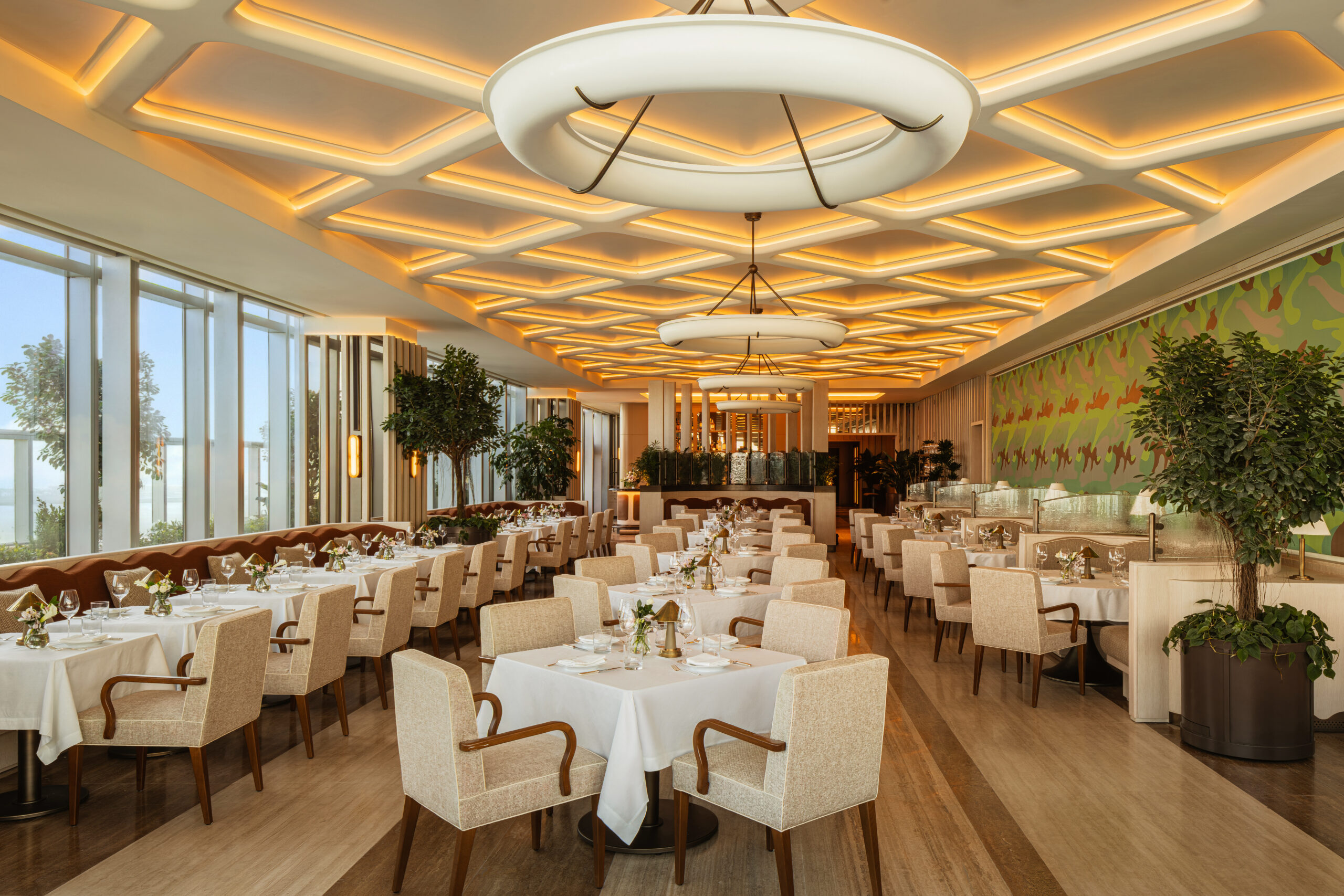 Photo Credit: Courtesy of Seia
SEIA at 830 Brickell Plaza, perched on the 54th floor with an expansive 180-degree terrace overlooking the city and Biscayne Bay, is the most elevated dining room in Miami in every sense of the word. Designed by Laurence Macadam of Zervudachi, Roberts and Macadam London, the interiors balance Italian modernity with the warmth and texture of the Miami landscape through layered materials and artisanal Italian craftsmanship. The private art collection woven throughout SEIA and Seia Club on the 55th floor is one of the most significant in any restaurant in the country, featuring works by Andy Warhol, Damien Hirst, George Condo, Richard Prince, Keith Haring, and Ling Pui Sze. Standouts include Warhol’s Camouflage (1986), Hirst’s Since the Majority of Me Rejects the Majority of You (2006), and Condo’s Pope (1987) and The Gardener (2019), alongside photography by Dennis Hopper. A digital art program curated by Blackdove places physical and moving-image works in continuous dialogue with the architecture, making art not an amenity at SEIA but its organizing principle.
The Joyce
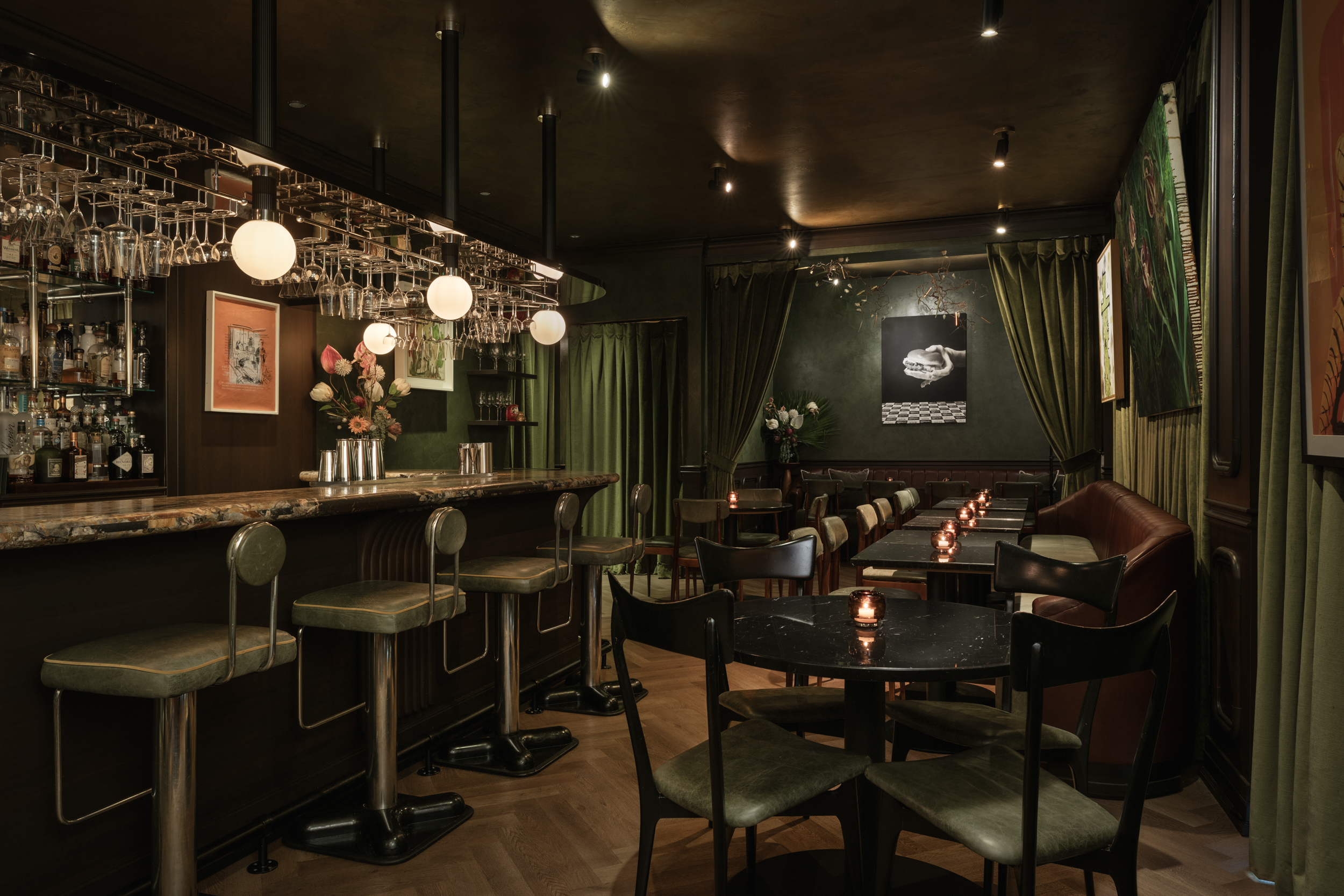 Photo Credit: The Joyce
The most intimate room on this list and the one that best demonstrates what collectible design looks like when it is treated as function rather than decoration. The Joyce at 429 Española Way in Miami Beach brings the character of a classic Chicago steakhouse and the atmosphere of a Prohibition-era speakeasy to one of South Beach’s most historic streets. Guests enter through dark green drapery into a low-lit dining room wrapped in rich custom walnut millwork, where warm woods, vintage detailing, and concealed lighting create a cinematic atmosphere. Dining chairs by legendary Italian architect Gio Ponti and bar stools by modernist designer Joe Colombo are used as the furniture they were always intended to be, not as objects under glass. The art, drawn from a rotating selection personally curated from Andre Sakhai’s collection, includes works by Pablo Picasso, Jean-Michel Basquiat, Richard Prince, KAWS, and Namio Harukawa, integrated naturally throughout the intimate dining room to create the feeling of a highly personal, collected interior.
For more of Haute Living’s Miami coverage, see The 8 Negroni’s Redefining Miami’s Cocktail Scene and The Haute Guide to Brickell and Downtown Miami.
through Haute Black.
Haute Living access. Two decades inside the world’s best hotels.
Virtuoso partner. Upgrades & VIP arrival at 1,200+ properties.
One advisor. Who knows you by name.
Frequently Asked Questions
Which Miami restaurants have the best interior design?
The Miami restaurants with the most compelling interiors in 2026 are Amazónico, Carbone, Carbone Vino, Chateau ZZ's, L'Atelier de Joël Robuchon, Le Jardinier, Le Specialità, SEIA, and The Joyce. Each takes a distinctly different approach to how art, architecture, and interior design shape the dining experience.
What is Chateau ZZ's Miami?
Chateau ZZ's is Major Food Group's first Mexican restaurant, located in Petit Douy, a historically protected French-style manor built in 1931 at 1500 Brickell Avenue. Designed by Major Food Group's in-house team in collaboration with Ken Fulk, Inc., the property features a series of indoor and outdoor dining environments, a glass-enclosed solarium, bar and lounge, and lush gardens.
Is L'Atelier de Joël Robuchon Miami Michelin-starred?
Yes. L'Atelier de Joël Robuchon Miami holds two Michelin stars, making it the only two-Michelin-starred restaurant in South Florida. It is located at 151 NE 41st Street in the Miami Design District.
What is the art collection at Le Specialità Miami?
Le Specialità's art collection is curated by Spicy Hospitality Group founder Andre Sakhai and includes works by Jean-Michel Basquiat, KAWS, Rashid Johnson, Takashi Murakami, Richard Prince, Peter Saul, Joel Mesler, and John Wesley, alongside vintage Italian photography.
Latest from Haute Living
The Fendi Spring/Summer 2027 Show Was Quintessentially Maria Grazia Chiuri
Brunello Cucinelli Debuts The Nature of Savoir-Faire for Spring/Summer 2027 in Milan

Our Editors Say This is the Skincare Brand Actually Changing How Luxury Skincare Works