
Designing Connected Living Spaces Across Europe: Why Seamless Connectivity Matters
Explore how smart living, eSIM technology, and connected design are reshaping modern urban lifestyles across Europe.

Photo Credit: Adobe Stock
As architecture and design continue to evolve in the digital age, the concept of “living” is no longer confined to physical structures. Platforms like Autodesk Living increasingly reflect a broader vision, where spaces are interconnected, intelligent, and responsive to the needs of modern occupants. Across Europe, this shift is especially visible in urban developments, co-living environments, and sustainable housing projects that prioritize both physical comfort and digital accessibility.
Today’s residents expect more than just aesthetically pleasing environments. Whether in Paris, Berlin, or Barcelona, people demand seamless connectivity that supports remote work, smart home integration, and on-the-go lifestyles. Architects and designers are therefore rethinking how infrastructure can support these expectations, not only within buildings, but beyond them.
One often overlooked aspect of connected living is mobile data accessibility. While Wi-Fi remains essential indoors, the increasing mobility of residents means that reliable connectivity must extend outside the home. This is particularly relevant in Europe, where cross-border travel is frequent, and residents often move between countries for work, leisure, or study.
For example, consider a digital nomad living in a co-designed smart apartment in Amsterdam. Their daily routine might include working from a shared workspace, attending meetings in another city, and traveling over the weekend. In such a lifestyle, relying solely on local SIM cards or unstable roaming options can disrupt productivity and user experience.
This is where solutions like an eSIM become increasingly relevant. By enabling instant, flexible access to mobile networks across multiple European countries, eSIM technology aligns perfectly with the philosophy of fluid, connected living spaces. It eliminates the need for physical SIM cards and allows users to switch networks or data plans effortlessly, an essential feature for those constantly on the move.
From a design perspective, this shift also influences how spaces are planned. Developers are now integrating digital infrastructure as a core component of residential projects. Smart locks, energy monitoring systems, and IoT-enabled appliances all rely on stable connectivity. But equally important is ensuring that residents themselves remain connected wherever they go, extending the concept of “smart living” beyond the walls of the building.
Moreover, as sustainability becomes a central concern in European design, reducing physical waste and improving efficiency are key priorities. eSIM technology contributes to this by eliminating plastic SIM cards and simplifying logistics. It’s a small but meaningful step toward more sustainable digital ecosystems, something that resonates strongly with the values of modern urban developments.
At the same time, the rise of hybrid lifestyles, where individuals seamlessly alternate between home, shared workspaces, and international travel, has redefined expectations around continuity. Connectivity is no longer tied to a fixed location but must follow the user across environments. This evolution challenges designers to think beyond static infrastructure and consider how digital access, identity, and services remain consistent regardless of place. In this sense, mobile-first solutions become an extension of the built environment itself, supporting a truly borderless experience of living and working across Europe.
Ultimately, the future of living in Europe lies in the convergence of design, technology, and mobility. Platforms like Autodesk Living highlight how architecture can respond to these changes, creating environments that are both functional and forward-thinking. And while connectivity may not always be the centerpiece of design discussions, it remains a critical enabler of the modern lifestyle.
By considering tools like eSIM as part of the broader ecosystem, designers and developers can ensure that their spaces truly support the way people live today, connected, mobile, and without borders.
Disclaimer: Written in partnership with APG.
Latest from Haute Living

Meet Miami Business Club: Building Miami’s Next Generation of Business Community
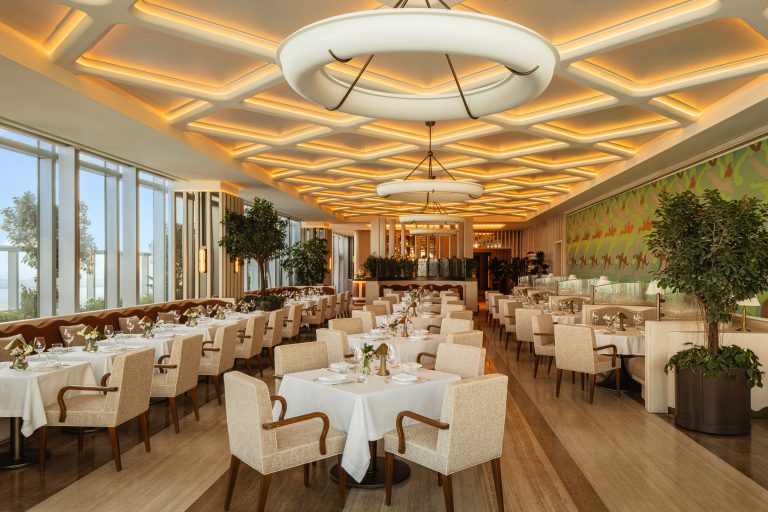
Inside Seia’s Museum-Grade Hospitality

Our Editors Say This is the Skincare Brand Actually Changing How Luxury Skincare Works