Going Behind the Bar in Milan With Roku Gin and the Japanese Talent Shaping the World’s Best Bars
At The 50 Best Bars 2026, Shingo Gokan and Julia Momosé show how Japanese craft and hospitality shape the world’s best bars, with Roku Gin.

During The World’s 50 Best Bars week in Milan, Shingo Gokan, Julia Momosé and Roku Gin made the case that the most influential ideas behind the bar right now come from Japan.
Photo Credit: Roku Gin
Milan already knows how to turn one drink into the whole night. Aperitivo has its own rhythm here, fashion is part of the furniture, and “just one” is a polite fiction. So when The World’s 50 Best Bars landed in the city this year, bringing the people behind the planet’s most celebrated bars along with it, the only real question was how much of it a person could physically fit in.
I came with Roku Gin to chase one thread in particular: Japanese cocktail culture, and the bartenders carrying it far beyond Japan. Two of them did most of the talking. Shingo Gokan took over the bar at Ceresio 7 before collecting the Roku Industry Icon Award at the ceremony. Julia Momosé, the force behind Chicago’s Kumiko, arrived with a Martini that tastes of the sea and an explanation of the highball that will make you rethink every rushed whisky-soda you’ve ever ordered.
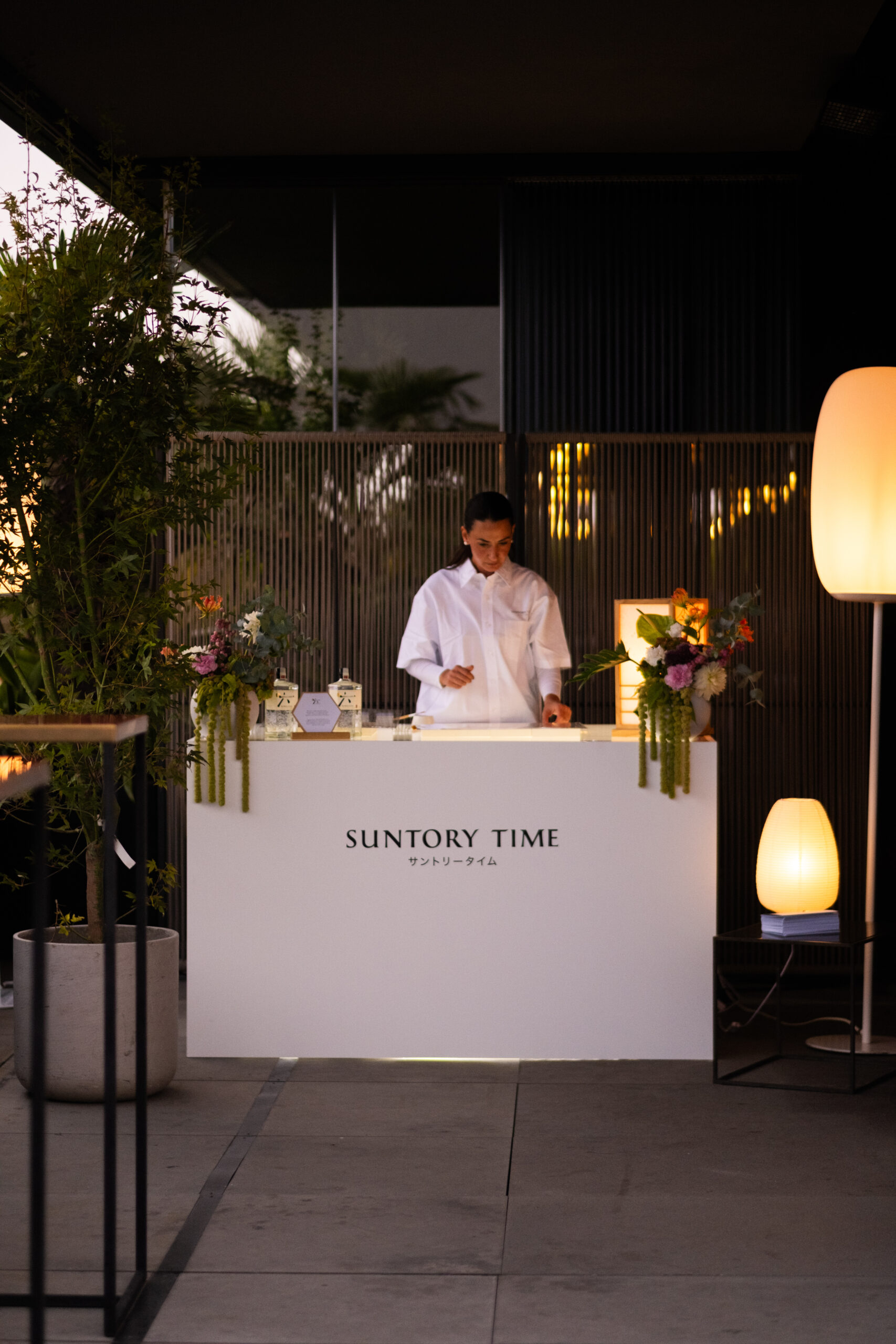 Photo Credit: Roku Gin
Why Japan, Why Now
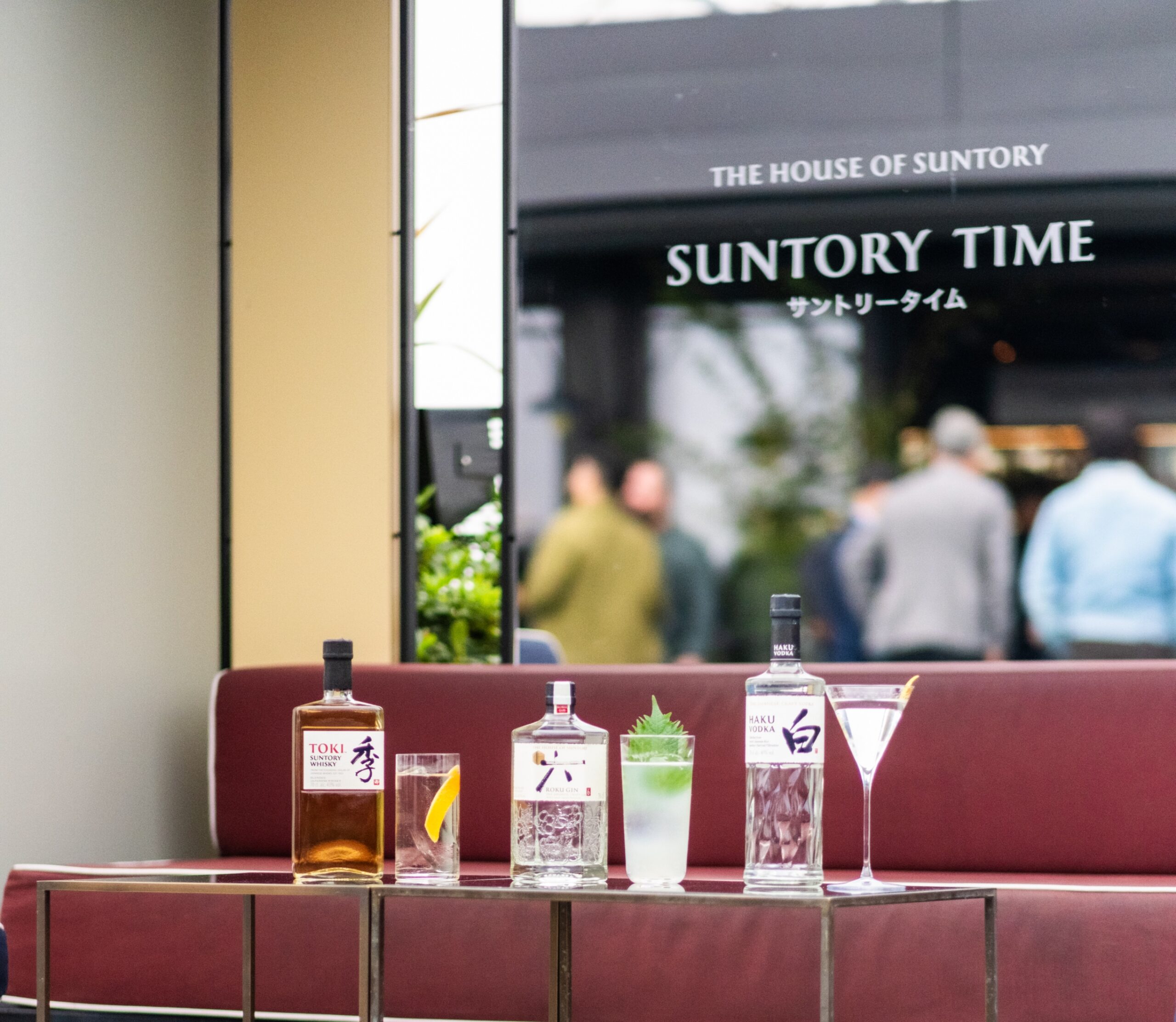
The premise came courtesy of Suntory Time, The House of Suntory’s new platform for exploring modern Japan through what (and how) it drinks. Milan was its first live outing, a run of masterclasses and guest shifts with Gokan, Momosé and Kenta Goto of New York’s Bar Goto, three people who have built entire careers on Japanese ideas and created distinct expressions of Japanese hospitality abroad.
Roku sits at the center. Its six Japanese botanicals (sakura flower, sakura leaf, sencha, gyokuro, sanshō pepper and yuzu peel) are each harvested at their peak, a concept the Japanese call shun: catching an ingredient at the precise moment it has the most to say. For a bartender, that means floral, tea, citrus and spice in one bottle, with a different note stepping forward depending on the drink. Toki whisky and Haku, a vodka made from Japanese white rice, rounded out the cast. Suntory Time’s guest shifts and masterclasses took place independently during awards week; Roku was the awards’ official gin partner and sponsor of the Roku Industry Icon Award.
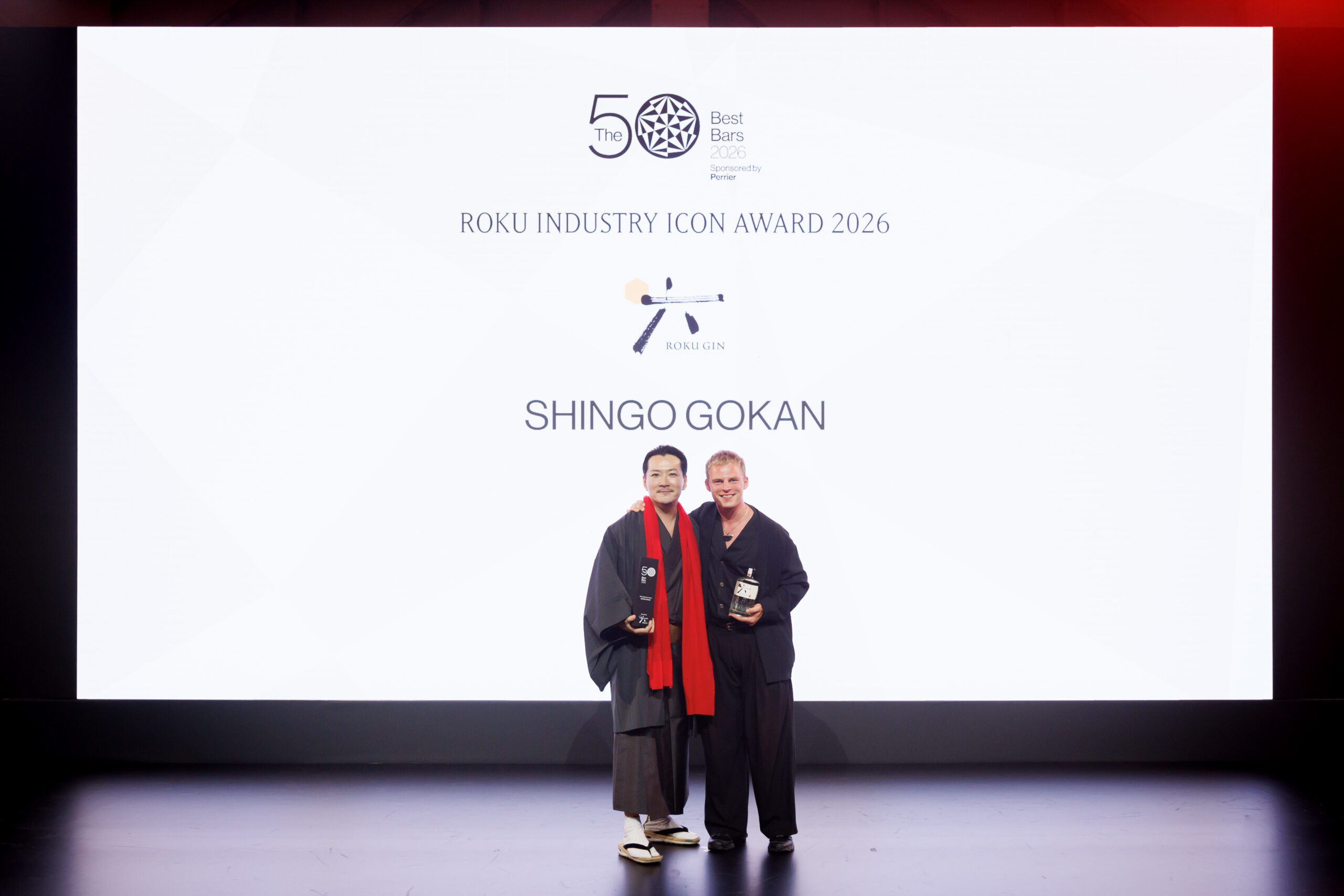
Photo Credit: Roku Gin
Shingo Gokan Reads the Room
If you wanted one person to explain how far Japanese bartending has traveled, you would pick Gokan. He made his name at New York’s Angel’s Share, won the 2012 Bacardi Legacy competition with a drink called Speak Low, then opened a Shanghai bar of the same name in 2014. Tokyo’s The SG Club followed, then Hong Kong’s Gokan (No. 41 on this year’s global list) and New York’s Sip & Guzzle with Steve Schneider, named the Best Bar in North America in 2026. Add a small army of bartenders he has mentored, and “icon” stops sounding like marketing.
At Ceresio 7, though, his brief was refreshingly unglamorous: make something that works at this party.
“I’ve been serving cocktails in all kinds of settings for the past ten-plus years, adapting flexibly each time,” he tells me. “This time it was a rooftop with a DJ playing, great vibes, a guest shift at a party, and the temperature was fairly warm—so I adjusted to a cocktail that matched that atmosphere.”
The answer was the Figroni, a fig Negroni built on Roku, which he tweaked mid-shift by serving Three Cents’ Fig Soda on the side. “It made the whole cocktail more refreshing, and pairing it that way created a synergy.” The man has bars on three continents, and he was thinking about the DJ and the weather. That, right there, is the job.
His Spumoni offered another cultural connection. “This time I served a twist on a cocktail called Spumoni,” he says. “Spumoni is an Italian-named cocktail based on amaro, but interestingly, it’s known only in Japan. It’s a very famous aperitivo cocktail in Japan, sometimes even served at izakaya.”
A drink with an Italian name that’s known only in Japan, poured for Italians by a Japanese bartender: the conversation more or less started itself. “Serving this cocktail in Milan and explaining it to Italian guests was personally a really interesting experience, and the Italian guests were very interested and happy about it.”
The same instinct shapes how he talks about Roku. “I personally love Roku’s ‘tsukuriwake’ (the art of blending variations), and I talk about it often,” he says. “It’s a one-of-a-kind gin that incorporates the philosophy of Japanese cuisine. I think the parts that stand out change depending on the cocktail or the food it’s paired with, and that comes from the tsukuriwake.”
Then came the ceremony, the Icon Award, and three of his bars on the global list. He seemed genuinely caught off guard. “I’d received the Icon Award once before in Asia, so I never thought I’d get it again—it was a real surprise and honored,” he tells me. “Three venues, at completely different bars with different concepts, in different countries, being chosen from among the countless bars around the world makes me genuinely happy and proud.”
As for what’s next: “Going forward, I want to stay true to our style, keep enjoying what we do, and contribute to the bar industry alongside Japanese culture.”
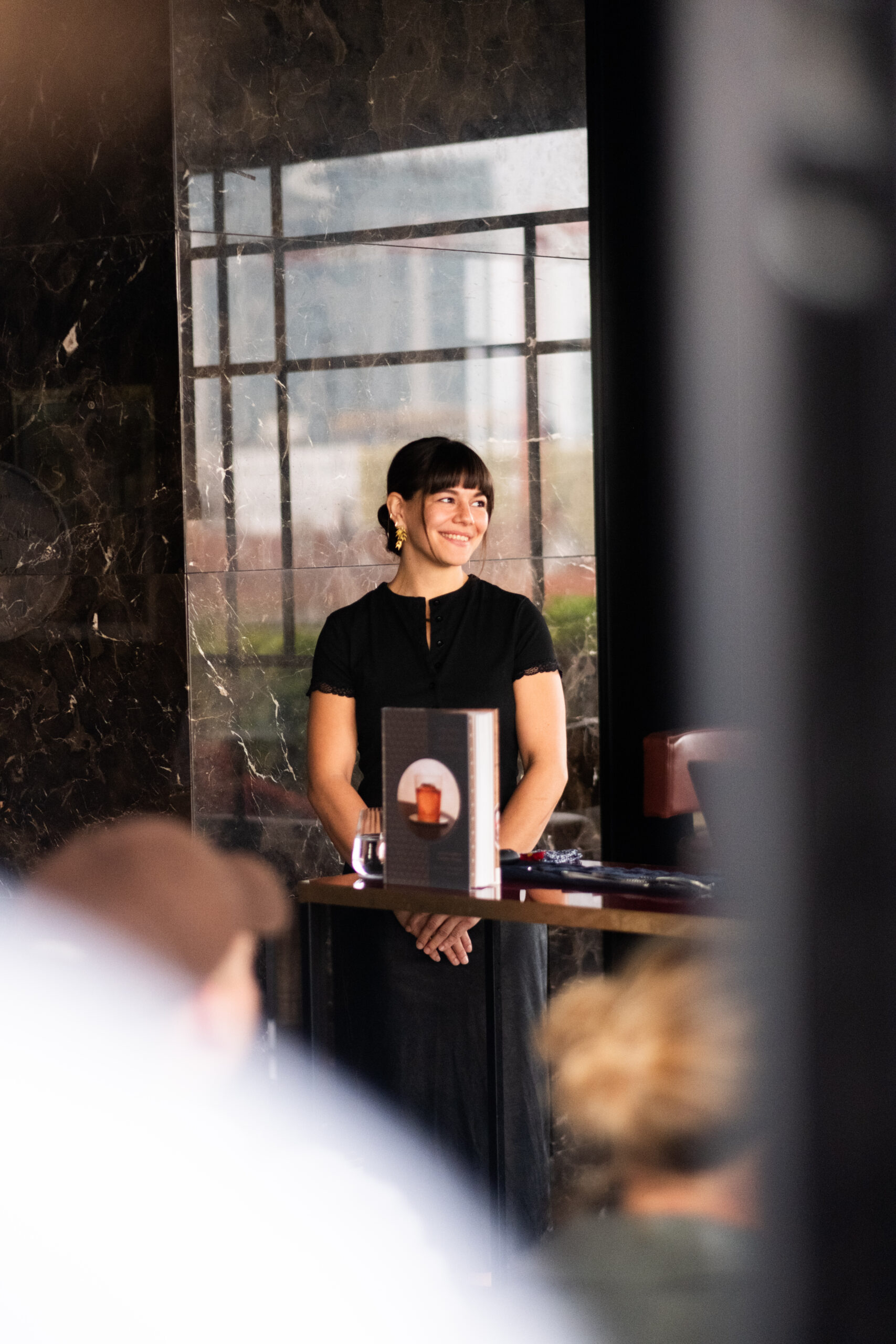
Photo Credit: Roku Gin
Julia Momosé and the Art of Paying Attention
Momosé, born and raised in Japan, opened Kumiko in 2018 and took over as executive chef in December 2024, folding the food and drink under one creative vision. The trophy shelf is crowded: the 2025 James Beard Award for Outstanding Bar, World’s Best Bar and Best U.S. Restaurant Bar at that year’s Tales of the Cocktail Spirited Awards, a James Beard Award for her book, The Way of the Cocktail, and the first-ever Michelin Guide Chicago Exceptional Cocktails Award. She even has Milan history, having consulted on the beverage program for the Starbucks Reserve Roastery here.
Japanese bartending tends to get flattened into two words, precision and ritual. She’d like to add a few more. “Precision and ritual are important parts of Japanese bartending, but when they become the only terms used to define it, we lose the intuition behind the practice,” she says. “Bartending is also about the relationship between the bartender and the guest. A bartender must read the person in front of them and understand what has brought them there, while guests also participate in the experience by understanding the bar they have chosen.”
I love that last part, because it puts some responsibility on us. Walking into a great bar is a choice, and choosing well is half the evening. “The guest comes first, but hospitality is a shared experience,” she says. “Precision, ritual, intuition, and hospitality work together to make it meaningful.”
To Ceresio 7 she brought Kumiko’s Seagrape Martini. “I brought the Seagrape Martini, a Kumiko signature inspired by my love for Japan as an island nation,” she tells me. “Roku takes its name from six Japanese botanicals, and I wanted to build on that sense of place with the essence of the sea, represented by Okinawan umibudo, or sea grapes. We combine Roku Gin with olive brine and a cucumber brine made from shio-koji-pickled cucumbers at Kumiko. Instead of vermouth, I use Albariño for its minerality and natural salinity, allowing the nuances of the gin to shine.”
Albariño instead of vermouth. I’m still thinking about it.
Her shift took place later in the evening, but she’d built the menu with Milan’s early-evening habit in mind. “I love the spirit of Italian aperitivo,” she says. “I wanted to serve drinks that were approachable and enjoyable throughout the evening, with enough structure and character to stand on their own.”
Then there was the highball, the centerpiece of her masterclass on the Toki Highball and Roku Gin Fizz. “On paper, a highball is simply whisky and soda,” she says. “But in practice, it is a moment.” What follows is the most persuasive argument for slowing down I’ve heard in years.
“I like a delicate, thin-walled glass, so that when you bring it to your lips, you feel the cold and the bubbles before you even taste the drink. I chill the glass, add clear ice, and pour in cold whisky. If the whisky is not cold enough, I take a moment to chill it first; temperature is important to retaining the carbonation. Then I gently add cold soda, aiming for the whisky rather than the ice or glass, to preserve as much of that effervescence as possible. Finally, I top it off with a little nuzzle of soda to lift the ice and allow the whisky and soda to intermingle, then gently lower the ice back into place. A garnish is optional, depending on the guest.”
“When it is made beautifully, the first sip is intensely refreshing. You feel the cold and the liveliness of the bubbles, while the whisky remains present. Nothing is complicated, but every detail matters.”
Suntory, for her, is personal before it’s professional. “I have been a fan of Suntory since childhood through its waters, juices, snacks, and other treats,” she says. “As an adult who moved from her country of birth, The House of Suntory has become a connection to my Japanese roots. I began reaching for Japanese spirits early in my bartending career, as soon as I could put my own cocktails on menus. Hibiki 12 Year was one of my first loves in Japanese whisky, Hakushu 12 Year remains my highball of choice.” She ties it to the house’s three pillars: wa (harmony), monozukuri (craftsmanship) and omotenashi (hospitality). “These principles resonate with how I approach my work at Kumiko.”
The detail I keep coming back to, though, has nothing to do with technique. “Growing up in Japan, you grow up noticing the seasons: stores dressed in pink for sakura, the smell of roasted sweet potatoes in autumn, or the scent of yuzu in December,” she says. At Kumiko, the menu follows them. Every autumn brings back the Yakiimo Old-Fashioned, made with roasted sweet potato-infused Toki Black, kuromitsu and sweet potato shochu, and it stays, she says, “until my mother sends me a photograph of the ume tree near her beginning to bloom. That is my signal that spring is arriving in Japan, and it is time to make the ume Old-Fashioned.”
Seasonality, for Momosé, isn’t only a harvest date. Sometimes it arrives as a photograph from home.
As a guest at Milan’s 1930 Cocktail Bar, she found the same attentiveness she values behind her own bar. “I remember the sherry poured as a welcome, the ashtray changed regularly, the thoughtful guidance through the menu, and the little lights they brought for some of us and placed around our necks,” she says. “What I admire most is how they made room for the unpredictability of the evening without losing control of the experience they wanted to create.”
Her verdict: “To navigate a week as demanding as 50 Best with that much grace, while preserving the identity and intention of the space, is extraordinary. They made it possible for us to simply relax and be present. That is hospitality I deeply admire.”
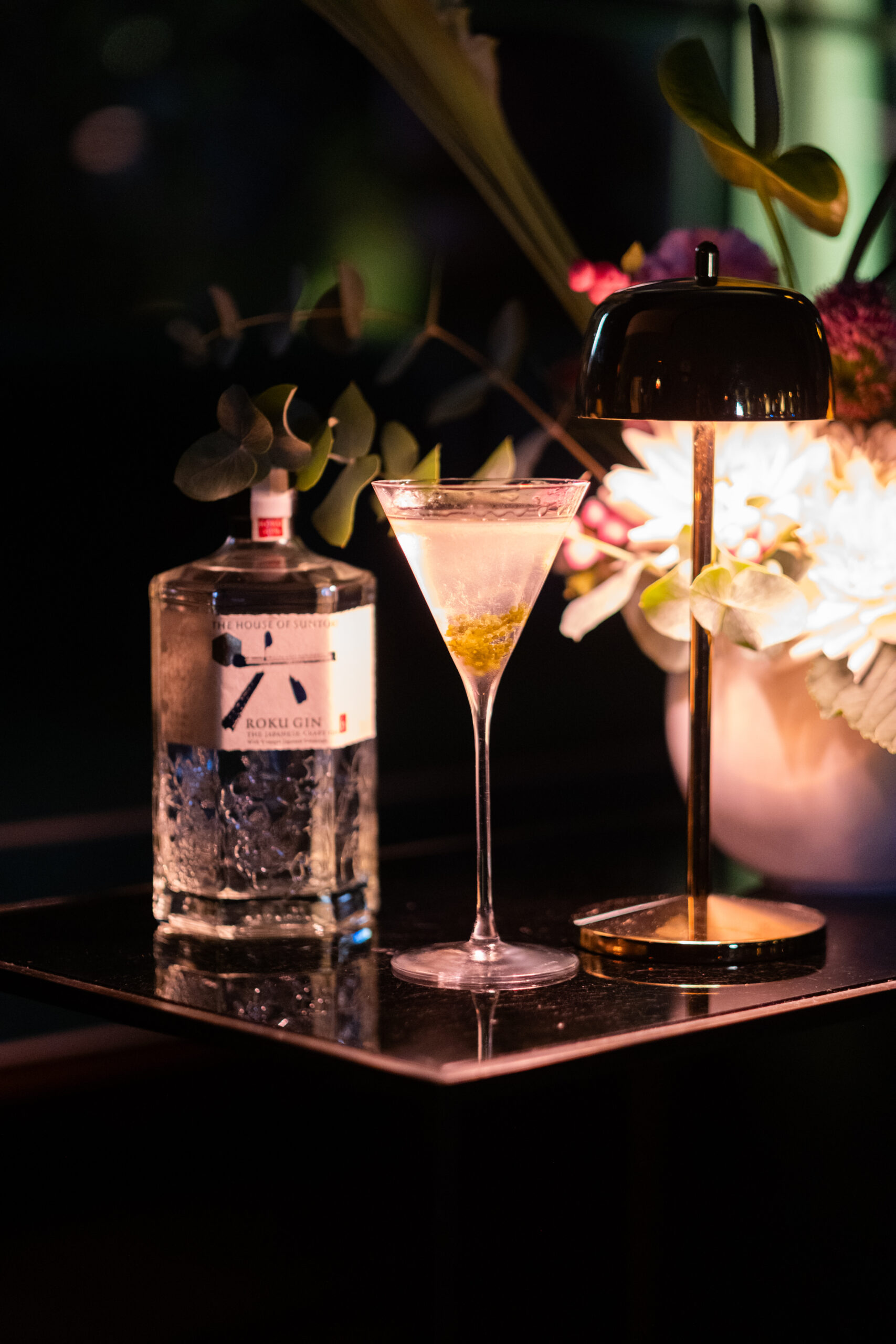
Photo Credit: Roku Gin
Where to Find Japan in Milan
The conversation didn’t stop at Ceresio 7. Milan has been building its own Japanese scene for nearly two decades, and it’s worth planning a few meals around. Four addresses, four very different ways in.
Claudio Liu opened IYO on Via Piero della Francesca in 2007, and it has held a Michelin star since 2015, which makes it one of the reasons contemporary Japanese cooking earned a place in Milan’s fine-dining conversation at all. After a top-to-bottom restyling by Lai Studio, it reopened in June 2024 with a robatayaki counter where you can watch the charcoal at work, a gyoza selection, a cocktail bar built for aperitivo and two tasting menus, including the seven-course Faccio IYO. Regulars will be relieved to find the Ika Somen, squid cut into fine, noodle-like ribbons, still on the menu. For something more intimate, Liu’s group also runs IYO Omakase at Piazza Alvar Aalto, a traditional Japanese sushi counter led by sushi master Masashi Suzuki. It shares an entrance with the separate IYO Kaiseki restaurant. Book the counter well ahead.
Sakeya, at Via Cesare da Sesto 1 near Porta Genova, bills itself as Italy’s first house of sake, and it’s run by the people best placed to make the claim: Lorenzo Ferraboschi and Maiko Takashima of Sake Company, the country’s leading sake importer. The bar, modeled on Japan’s speakeasy-style cocktail bars, pours around 150 sakes from across Japan, with new labels arriving regularly, alongside Japanese whisky, gin, shochu and awamori. Chef Masaki Inoguchi’s menu takes its cue from Kyoto’s homestyle obanzai cooking, with charcoal-grilled kushiyaki, wagyu tataki and black cod. Much of the furniture was salvaged from Japanese flea markets (the entrance counter once belonged to a pharmacy). Order a flight, ask questions, and leave time for the shop on your way out.
Nobu Milano sits within Giorgio Armani’s world, one of the city’s longest-standing meeting points between Japanese cooking and Milanese style. The kitchen speaks fluent Nobu, black cod miso included, with an Italian accent: Sicilian red shrimp, Mediterranean sea bass. On Wednesdays and Fridays, dinner comes with a DJ set in the lounge, which is about as Milan as Japanese dining gets.
MOGO, in Isola, comes at Japan through the ears. Giorgia Longoni Studio designed it as a modern take on the jazz kissa, the listening cafés that spread through postwar Japan, with Milanese industrial edges: terracotta and aquamarine, carved wood, washi paper and a luminous ceiling that warms to amber as the night goes on. At its heart sits a handcrafted 360-degree sound station wrapped in steel, velvet and carved wood. The kitchen is Italian with global influences, and behind a set of moss-green curtains there’s a private room where guests slip off their shoes. The name comes from mmogo, the Sotho word for “together.” After Gokan’s lesson in how much a DJ can shape a drink, it makes a fitting last stop.
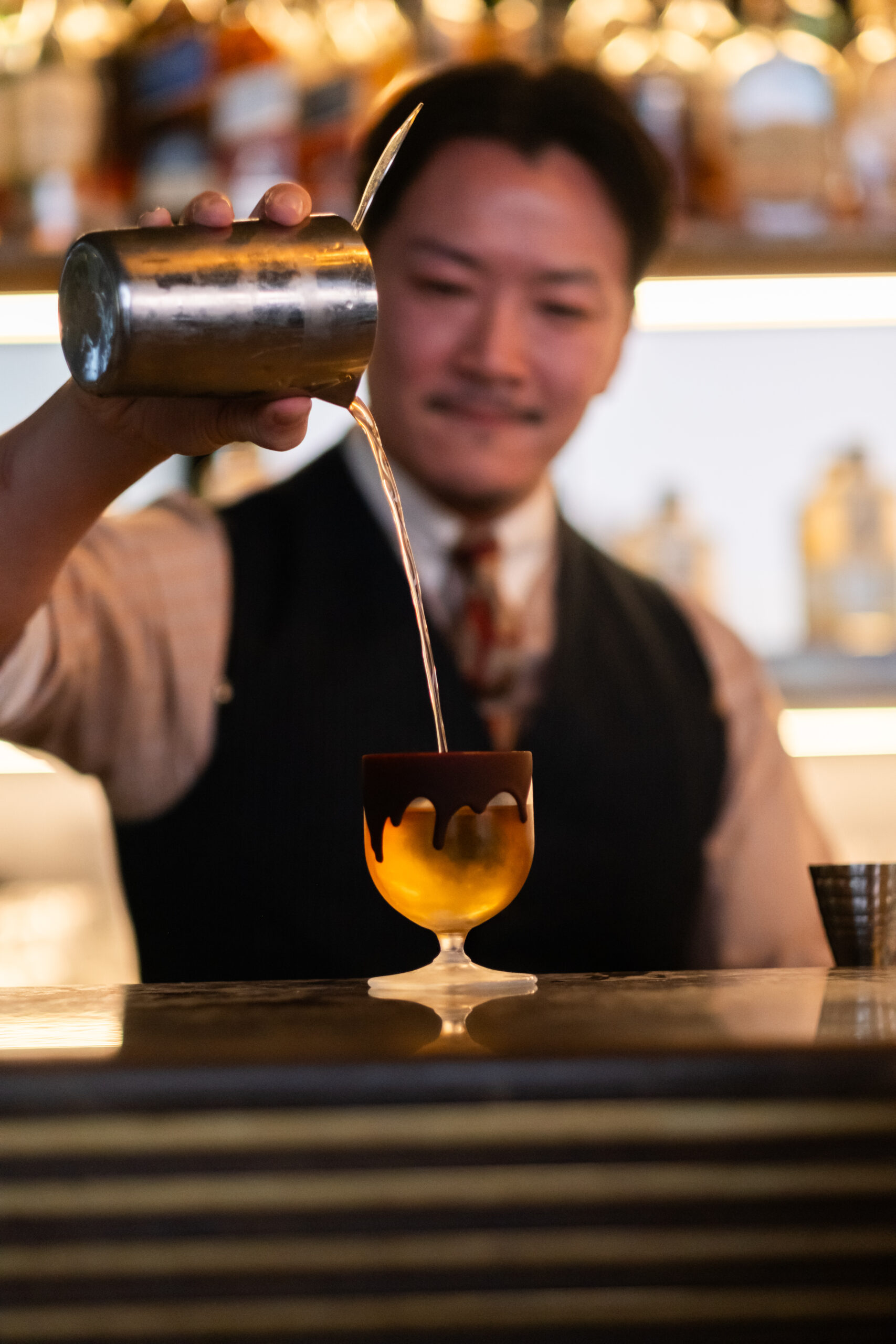
Photo Credit: Roku Gin
Last Call
What stays with me isn’t the trophies or the guest list. It’s the details. A fig soda on the side of a Negroni because the rooftop was warm. Albariño in place of vermouth. Whisky chilled before it ever meets the soda. A photograph of an ume tree deciding when a menu changes on the other side of the world.
Milan, a city that has spent centuries making room for the rest of the world, was the right place to see it all come together. The pleasure was in the drinks, sure. The real thrill was meeting the people who knew exactly what they wanted each one to say.
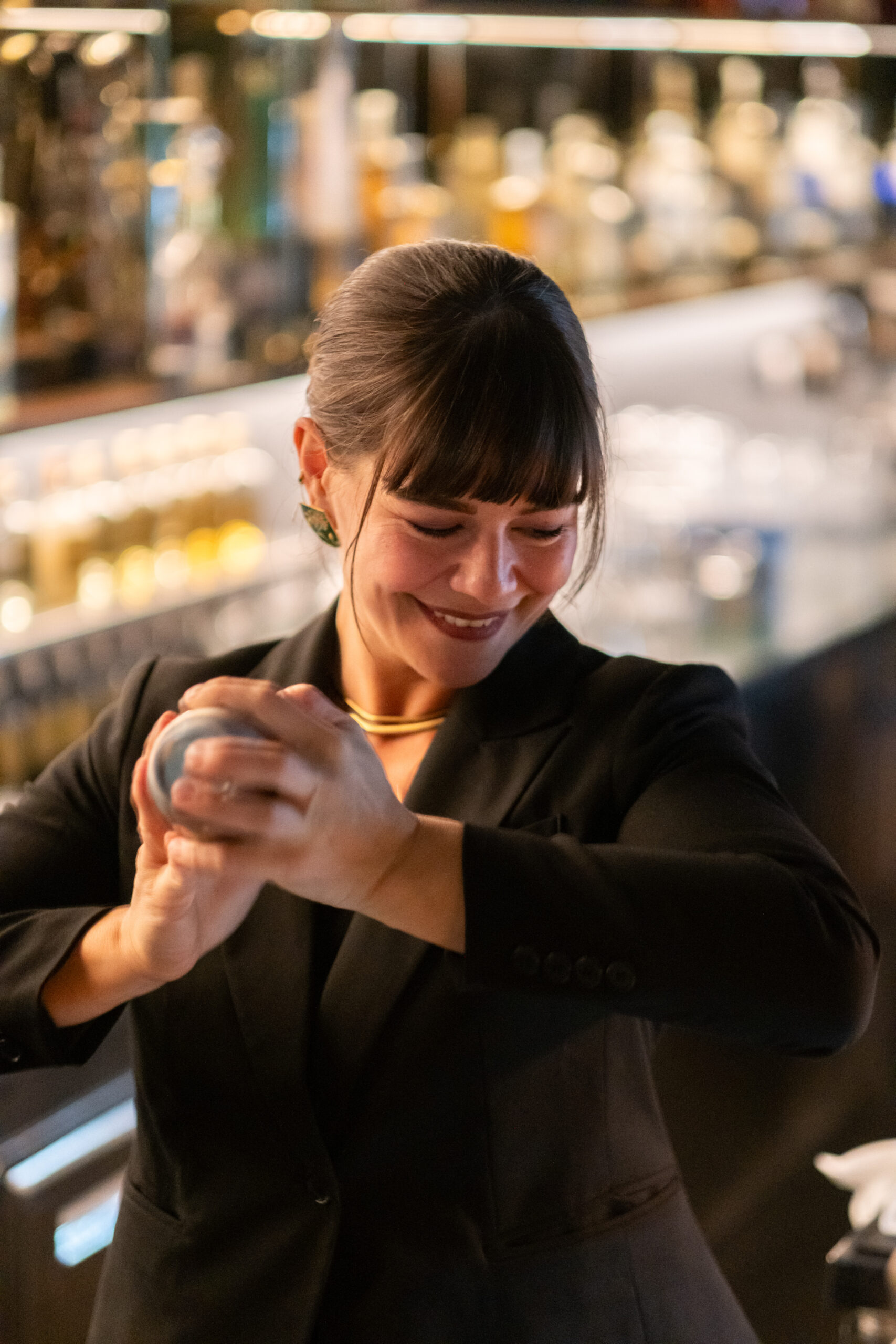
Photo Credit: Roku Gin
Read More
More from the bar world: Haute Living’s report on everything that mattered at Tales of the Cocktail 2026, where Kumiko’s team is a fixture, and our guide to the essential cocktail bars on the Upper East Side.
Frequently Asked Questions
Who won the Roku Industry Icon Award in 2026?
Shingo Gokan received the 2026 Roku Industry Icon Award at The World’s 50 Best Bars ceremony in Milan, recognizing his outstanding contribution to the bar industry. Three of his bars also appeared on the 2026 list.
Who is Shingo Gokan?
Shingo Gokan is a Japanese bartender and bar owner who rose to prominence at New York’s Angel’s Share, won the 2012 Bacardi Legacy competition with Speak Low, and has since opened bars including Speak Low in Shanghai, The SG Club in Tokyo, Gokan in Hong Kong and Sip & Guzzle in New York, named the Best Bar in North America in 2026.
Who is Julia Momosé?
Julia Momosé is the Japan-born partner, creative director and executive chef of Kumiko in Chicago, which won the 2025 James Beard Award for Outstanding Bar. She is also the James Beard Award-winning author of The Way of the Cocktail.
What is Suntory Time?
Suntory Time is The House of Suntory’s platform for discovering modern Japan through drinking culture. Its Milan programming during The World’s 50 Best Bars week was its first experiential activation, featuring Roku Gin, Toki whisky and Haku vodka. The guest shifts and masterclasses took place independently of the awards, where Roku was the official gin partner and sponsor of the Roku Industry Icon Award.
What are Roku Gin’s botanicals?
Roku Gin uses six Japanese botanicals: sakura flower, sakura leaf, sencha tea, gyokuro tea, sanshō pepper and yuzu peel, each harvested at its seasonal peak (shun).
Latest from Haute Living

Gisele Bündchen and Karlie Kloss Just Had a Million-Dollar Night in Miami

The Miami Day Date to Book Now: Ottoman Lunch at Topkapi, Then a Turkish Hammam for Two
What Happens 64 Floors Above Vegas Is Worth Telling Everyone About