How to Reduce Household Dust and Improve Indoor Air Quality
Household dust is more than a cosmetic nuisance. Combining smart cleaning habits, HEPA filtration, moisture control, and source reduction leads to meaningful, lasting improvements in indoor air quality.

Household dust is more than a cosmetic nuisance. It is a complex mixture of dust-mite particles, pet dander, pollen, mold spores, shed skin cells, and outdoor soil that settles across surfaces—and easily becomes airborne again whenever people walk, sit, or run heating and cooling systems. For individuals with allergies or asthma, these particles can aggravate symptoms, though cleaning habits should always complement, rather than replace, professional medical care. While no routine can eliminate every particle in a home, combining smart cleaning habits, moisture control, and source reduction leads to meaningful, lasting improvements.
Pinpoint Where Dust Accumulates First
Different areas of a home collect dust at different rates. Carpets, rugs, and upholstered furniture trap particles deep within their fibers, making floors and soft furnishings top priorities. Bedding, curtains, cushions, and stuffed toys also act as allergen reservoirs that require regular laundering.
Meanwhile, entryways and clutter are frequently overlooked contributors. Shoes, coats, and open windows introduce outdoor debris, while cluttered surfaces give dust more places to settle. Using sturdy doormats, removing shoes indoors, keeping windows shut during peak pollen seasons, and storing loose items in closed containers immediately cut down on daily buildup.
Follow a Top-to-Bottom Cleaning Sequence
Effective cleaning relies on order and technique rather than intensity:
- Declutter first to clear surfaces.
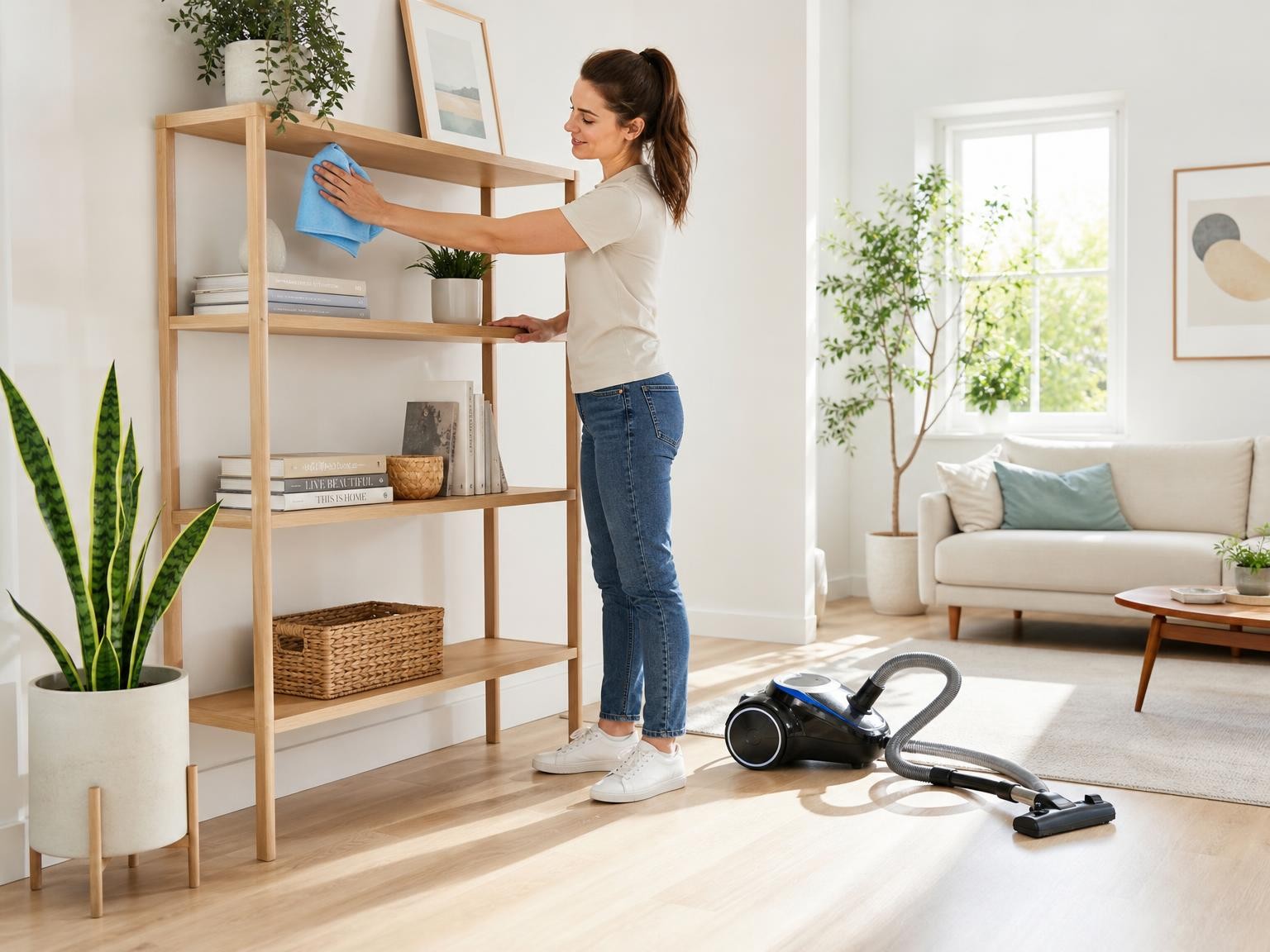
- Dust from top to bottom so displaced particles fall onto floors you haven’t cleaned yet. Always use a damp microfiber cloth or damp mop instead of a dry duster, which simply scatters particles back into the air.
- Vacuum floors and upholstery last, moving slowly to give the machine time to lift embedded debris.
Equipping your vacuum with a sealed filtration system and a HEPA filter helps prevent fine particles from blowing back out through the exhaust. Just as importantly, maintain your tools by emptying canisters carefully and washing or replacing filters on schedule. Because vacuuming temporarily stirs up particles, anyone sensitive to allergens should leave the room until the air settles.
Manage Humidity and Indoor Air Sources
Controlling moisture is essential for limiting dust mites, which thrive in warm, damp environments. Keeping indoor relative humidity below 50%—using a dehumidifier or air conditioning when necessary—gradually makes your home less hospitable to them. Pair humidity control with regular bedding washes, allergen-resistant mattress and pillow encasements, and prompt repairs to any leaks or damp spots.
Common Mistakes to Avoid
- Dry dusting or sweeping in ways that redistribute particles into the air.
- Vacuuming floors before wiping shelves, forcing you to clean twice.
- Relying on scented sprays to mask staleness instead of physically removing dust.
- Waiting for sporadic deep cleans rather than maintaining steady, manageable habits.
Build a Sustainable Routine
A realistic dust-control plan divides tasks by priority rather than attempting everything at once. Focus frequent attention on entryways and high-traffic floors; regular weekly attention on bedding, upholstery, and main living areas; and occasional monthly attention on curtains, baseboards, under-furniture spaces, and rarely used rooms. By focusing on consistency over perfection, you can steadily lower indoor dust levels and breathe easier at home.
Latest from Haute Living

3 Michelin Star Chef Grant Achatz’s Big Sky Restaurant Returns for a Second Winter

Haute Insider: “Victorious” Star Daniella Monet’s Guide to L.A.

Wes Gordon On Why Carolina Herrera Belongs in Miami