A living trust is essentially a legal instrument that holds your assets—think real estate, investments, and business interests—in a private “container” you continue to control throughout your life. When you pass, a successor you’ve hand-picked takes the reins and distributes those assets directly to your loved ones, completely avoiding the costly and public probate court process.
Demystifying The Living Trust

It’s helpful to think of a living trust as a detailed rulebook you write for your own wealth. Unlike a will, which becomes a public document that only activates after your death, a living trust is a private arrangement that functions during your lifetime and continues seamlessly after you’re gone. This structure is built on three essential roles, all of which you typically fill yourself at the outset.
The Three Core Roles In A Living Trust
Grasping these three roles is the key to understanding how a trust operates. Initially, one person often holds all three titles, which means you maintain total control over your assets.
- The Grantor (or Settlor): This is you—the creator of the trust. You set the rules, decide which assets go into it, and name who gets what.
- The Trustee: This is also you, at least at the beginning. The trustee is the manager, tasked with handling the assets held by the trust according to your own rules.
- The Beneficiary: Again, this is usually you during your lifetime. You benefit from the assets in the trust, whether that means living in a home owned by the trust or receiving income from its investments.
This initial setup ensures you lose zero control over your property. You can still buy, sell, or refinance assets just as you always have. The real power of the trust is unlocked when you plan for the future by naming who comes next.
“When properly funded, the assets in your Trust can be passed directly to your chosen beneficiaries without court involvement, cutting down on time, expense, and stress for your family.”
How A Successor Trustee Takes Over
A critical part of your trust is naming a successor trustee. This is the trusted person or institution that steps into the manager role if you pass away or become incapacitated and can no longer manage your own affairs.
Their job is to follow your instructions to the letter, distributing assets to your heirs without needing a judge’s permission. This complete bypass of the court system—a process known as probate—is a primary reason high-net-worth individuals favor this powerful tool.
In fact, living trusts have become a cornerstone of modern financial planning for affluent families. Data shows that nearly 65% of households with estates over $1 million use revocable living trusts to manage their legacies. It makes sense, as probate can easily cost heirs 3% to 7% of an estate’s total value in fees and legal costs.
To give you a quick overview, here are the main advantages of a living trust, which we will explore in greater detail throughout this guide.
Living Trust At-a-Glance Key Benefits
| Feature | Benefit |
|---|---|
| Probate Avoidance | Assets pass directly to heirs without court involvement. |
| Privacy Protection | Keeps your financial affairs and family matters confidential. |
| Incapacity Planning | Allows a successor to manage assets if you are unable to. |
| Control Over Assets | You dictate exactly how and when beneficiaries receive assets. |
| Reduced Legal Costs | Avoids the significant fees associated with the probate process. |
By establishing a living trust, you’re not just creating a legal document; you’re building a private, efficient, and controlled succession plan. For a deeper look, check out our comprehensive guide on trust and estate planning to protect your assets today.
Choosing Between a Living Trust and a Will
Many people think a living trust and a will do the same job, but they couldn’t be more different in how they operate. Grasping this distinction is the first step in choosing the right tool to protect your family and preserve your assets.
A will is a document that only springs to life after you die. In contrast, a living trust is a dynamic legal entity you create and manage during your lifetime. It’s a private arrangement, meaning it doesn’t need a court’s stamp of approval to work, which makes for a much smoother transition of your assets.
The real difference comes down to when and how each one functions.
The Public Process of a Will
A last will and testament is a familiar concept, but its public nature often comes as a shock. When you pass away with only a will, your executor must submit it to a court for validation through a process called probate.
Probate is the court-supervised ordeal of authenticating your will, settling your debts, and distributing what’s left. Because it’s a court proceeding, everything becomes public record. That means your will, a detailed list of your assets, your debts, and who gets what are all available for anyone to look up.
This lack of privacy can be deeply unsettling for families. On top of that, probate is notoriously slow and expensive. The process can drag on for months—or even years—while legal fees and court costs steadily chip away at the value of your estate.
The Private Advantage of a Living Trust
A living trust, on the other hand, operates entirely outside the courtroom. Because you already transferred your assets into the trust during your lifetime, there’s nothing for a judge to oversee after you’re gone. Your chosen successor trustee simply steps in and distributes the assets according to your private instructions.
This bypass of probate delivers several powerful advantages:
- Complete Privacy: Your financial affairs and family inheritance details stay confidential, exactly where they belong.
- Immediate Distribution: Your beneficiaries can receive their inheritance in a matter of weeks, not the months or years that probate demands.
- Reduced Costs: By avoiding court fees and drawn-out legal proceedings, your estate preserves its value for your heirs.
A will is essentially an instruction manual for the court, which takes over after you’re gone. A living trust, however, is a private business plan that your successor trustee can execute immediately, without needing a judge’s permission.
Handling Incapacity and Control
Another critical difference emerges when you consider the possibility of incapacitation. If you become unable to manage your own financial affairs due to illness or injury, a will offers zero protection. Your family would likely be forced to petition the court for a conservatorship—a public, stressful, and often costly process.
A living trust is designed for this exact scenario. Your trust document can include specific provisions that allow your named successor trustee to take over management of your assets seamlessly and privately. This ensures your financial life continues uninterrupted without court intervention, preserving both your dignity and your wealth.
The table below offers a direct comparison, making it clear why a living trust is often the superior choice for those who value privacy, efficiency, and control.
Comparison of Living Trust vs. Last Will and Testament
| Feature | Living Trust | Last Will and Testament |
|---|---|---|
| Takes Effect | Immediately upon signing and funding. | Only after your death and probate approval. |
| Probate | Avoids probate entirely, saving time and money. | Requires probate, a public and costly court process. |
| Privacy | Completely private. Your assets and heirs are not public record. | Becomes a public document during the probate process. |
| Incapacity Plan | Includes provisions for a successor trustee to manage assets. | Offers no protection; requires a separate power of attorney. |
| Asset Distribution | Can be distributed quickly by the successor trustee. | Delayed until the probate process is complete (months to years). |
| Upfront Cost | Higher initial cost to set up and fund. | Lower initial cost to draft. |
| Contestability | More difficult to legally challenge. | More easily contested in court. |
While a will has its place, the advantages of a living trust—particularly in avoiding probate, ensuring privacy, and planning for incapacity—make it a far more robust tool for sophisticated estate planning.
Revocable vs. Irrevocable Trusts: A Critical Distinction
Not all living trusts are built the same. As you dive into estate planning, you’ll immediately face two distinct paths, each designed for very different outcomes. Making the right choice between a revocable and an irrevocable trust is the cornerstone of a plan that actually works for your financial reality.
Think of a revocable trust as your estate’s flexible blueprint. It’s the go-to tool for most people looking to sidestep probate and ensure their assets are managed if they become incapacitated. With a revocable setup, you keep the reins—free to change, amend, or even completely scrap the trust at any point.
This means you can add a new property, remove an old investment account, switch beneficiaries after a life event, or appoint a different successor trustee whenever you see fit. Because you never truly give up control, the assets are still considered yours in the eyes of the IRS.
The Power of Flexibility with a Revocable Trust
A revocable living trust is designed for a life that changes. As the creator (or grantor), you typically name yourself the trustee, managing the assets just as you always have. It creates a seamless transition if you’re ever unable to manage your own affairs and, crucially, lets your assets pass to your heirs without the headache and publicity of probate court.
Key features of a revocable trust:
- Complete Control: Modify the trust’s terms or dissolve it entirely on your own terms.
- Seamless Management: Simplifies handling your assets during your lifetime and in case of disability.
- Probate Avoidance: Ensures a private, efficient transfer of assets to your beneficiaries.
But this flexibility comes at a price. Since you technically still own everything in the trust, it offers zero protection from creditors and does nothing to reduce your estate tax liability. For tax purposes, it’s business as usual—all income is reported on your personal return.
The Fortress of an Irrevocable Trust
Now, let’s talk about the irrevocable trust. As the name suggests, this is like carving your wishes into stone. Once you move assets into an irrevocable trust, you can’t just change your mind and take them back. Modifying the terms is difficult, if not impossible, without getting your beneficiaries to agree.
So why would anyone give up that much control? For the powerful protections it provides. By legally severing your ownership, you put those assets out of reach of creditors and can dramatically shrink your taxable estate—a critical move for high-net-worth families.
An irrevocable trust is a strategic weapon for asset protection and legacy preservation. It creates a legal wall between you and your assets, and that separation is the source of its power.
This is the structure used for more advanced planning, including:
- Minimizing Estate Taxes: Shifting assets out of your name can slash the value of your estate, potentially shielding millions from federal and state estate taxes.
- Asset Protection: Assets held in a properly structured irrevocable trust are generally safe from lawsuits, creditors, and bankruptcy proceedings.
- Qualifying for Government Benefits: It can be a tool to manage assets while preserving eligibility for programs like Medicaid.
The choice comes down to your primary goals. If avoiding probate and planning for incapacity are your main concerns, a revocable trust is a smart, effective solution. But if you’re dealing with a significant estate, potential lawsuits, or complex tax issues, an irrevocable trust isn’t just an option—it’s a necessity to discuss with sophisticated legal counsel.
How to Create and Fund Your Living Trust
Putting a living trust together is a deliberate, multi-step process. Simply drafting the document isn’t enough; a trust without assets is like an empty vault—it exists on paper but protects nothing. Bringing your trust to life involves careful planning, precise legal drafting, and the critical act of funding.
Think of it as building a secure vehicle for your legacy. First, you design the blueprint, then you construct the vehicle, and finally, you load your valuable assets inside for the journey. Neglecting any of these steps can render the entire structure ineffective when your family needs it most.
The Initial Planning and Design Phase
Before any legal documents are written, you have to map out your intentions. This planning stage is where you make the foundational decisions that will shape your entire estate plan. It’s a process of taking inventory of both your assets and your relationships.
Your first task is to create a comprehensive list of everything you own. This includes:
- Real Estate: Your primary residence, vacation homes, and any investment properties.
- Financial Accounts: Checking, savings, money market, and brokerage accounts.
- Retirement Plans: IRAs, 401(k)s, and other qualified plans (which require special handling).
- Business Interests: Ownership stakes in LLCs, partnerships, or corporations.
- Personal Property: Valuable art, jewelry, collectibles, and vehicles.
With a clear picture of your assets, you can then decide on your beneficiaries—the people or organizations who will receive them. You also need to select a successor trustee, the person you trust implicitly to manage the trust and distribute the assets according to your wishes after you’re gone.
Drafting the Legal Trust Document
Once your plan is clear, the next step is creating the formal trust agreement. And while online templates exist, this is not a DIY project for anyone with significant assets. A generic document simply can’t account for state-specific laws, complex family dynamics, or advanced tax strategies.
Working with an experienced estate planning attorney is non-negotiable. They will translate your wishes into a legally sound document that appoints your successor trustee, names your beneficiaries, and details your specific instructions for how and when assets should be distributed. This is where you can build in protections, such as staggering distributions for younger beneficiaries.
The costs for professional guidance are an investment in certainty. For example, attorney-drafted living trust packages in a high-demand market like California can range from $1,500 to $4,000, while complex estates with business holdings can cost more. These fees often cover a full suite of documents, including a pour-over will and powers of attorney, providing comprehensive protection that far outweighs the potential 3% to 7% of your estate’s value that could be lost to probate fees. You can get more details on the cost considerations of setting up a living trust on brillantlaw.com.
This infographic offers a clear visual breakdown of the key differences between the two main types of trusts you’ll discuss with your attorney.
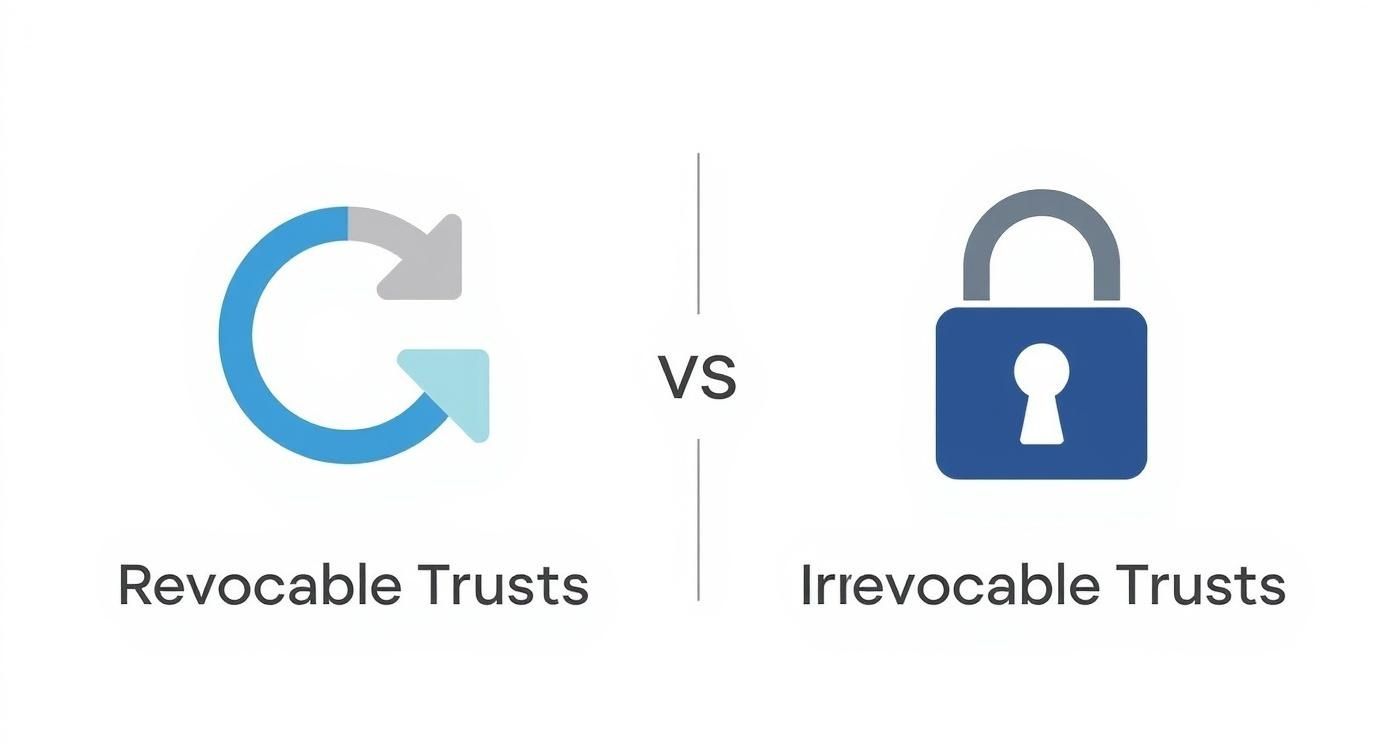
This comparison highlights that your choice depends entirely on your goals—whether you prioritize flexibility and control or asset protection and tax reduction.
The Critical Step of Funding Your Trust
This is the most important—and most frequently overlooked—step in the entire process. Funding the trust means officially transferring ownership of your assets from your individual name into the name of the trust. If you skip this, your trust remains an empty, useless document.
Here’s a simplified checklist of what that looks like in practice:
- Retitle Real Estate: You must prepare and file a new deed for each property, transferring ownership from “John and Jane Doe” to “John and Jane Doe, Trustees of the Doe Family Revocable Trust.”
- Update Bank Accounts: Contact your financial institutions to change the title on your checking, savings, and non-retirement investment accounts to the name of the trust.
- Assign Personal Property: Create a legal document called an “Assignment of Personal Property” to transfer tangible items like art, furniture, and collectibles into the trust.
- Address Business Interests: Work with your attorney to properly assign your ownership interests in any LLCs or partnerships to the trust.
Each asset requires a specific legal procedure to be properly funded. Failing to retitle even one major asset, like your home, could force that single asset through the probate process you intended to avoid. Diligent funding is what makes your living trust a powerful and effective estate planning tool.
Common Misconceptions About Living Trusts

Living trusts are remarkably powerful estate planning instruments, but a persistent fog of myths often obscures their true function. Falling for these misconceptions can lead to devastating mistakes, completely undermining the security and privacy you intended to create.
Let’s clear the air. By debunking these common fallacies, you can engage in far more productive conversations with your legal counsel and build an estate plan that actually works.
One of the most pervasive myths is that a living trust is a silver bullet for avoiding taxes. It’s not. While a revocable living trust is brilliant for sidestepping the probate process, it does almost nothing to shield your estate from taxes. For income tax purposes, the IRS still considers the assets yours. For estate tax purposes, they’re still counted as part of your taxable estate. Serious tax reduction strategies almost always involve sophisticated irrevocable trusts.
Another dangerous assumption? Believing that once you’ve signed the trust document, you’re finished. This “set it and forget it” attitude is a direct path to failure.
The Single Biggest Trust Planning Mistake
The most critical—and shockingly common—error is the failure to properly fund the living trust. An unfunded trust is nothing more than an expensive, legally useless piece of paper. It’s an empty box that holds nothing and, therefore, protects nothing.
Funding simply means retitling your significant assets—your home, brokerage accounts, business interests—into the name of the trust. Any asset left in your individual name falls outside the trust’s control. It will almost certainly be dragged through the very public, costly probate process you worked so hard to avoid.
Other Critical Pitfalls to Avoid
Beyond the failure to fund, a few other mistakes can completely derail an otherwise well-crafted plan. Each one can create bitter conflict and unnecessary expense for the very people you sought to protect.
- Choosing the Wrong Successor Trustee: Naming someone who is disorganized, financially irresponsible, or prone to family drama can be a catastrophe. Your successor trustee must be trustworthy, highly capable, and impartial.
- Relying on Generic Online Templates: A high-value estate with unique assets or complex blended family dynamics cannot be protected by a one-size-fits-all document. Professional legal advice is non-negotiable for creating a legally sound plan tailored to your life.
- Forgetting to Update Your Plan: A living trust isn’t a static document. It must be reviewed and updated after major life events like a marriage, divorce, the birth of a child, or a significant change in your financial situation.
Despite the clear advantages of proper estate planning, a startling number of Americans have no formal plan in place. Recent data shows a staggering 55% of the total American population has neither a will nor a trust. The gap is particularly stark in rural communities, where only 8% of residents have established trusts. You can find more details in this report on estate planning demographics from trustandwill.com.
A trust is a living document for a reason. It is designed to adapt to your life’s changes, but it can only do so if you give it the attention it deserves.
By understanding these common mistakes, you’re in a much stronger position to build an estate plan that delivers on its promises. Avoiding these errors ensures your living trust will function exactly as intended—providing privacy, efficiency, and security for your family when they need it most.
When to Get Professional Estate Planning Help
This guide gives you the foundational knowledge for understanding what a living trust is and how it can protect your legacy. But let’s be clear: turning this knowledge into a legally sound and effective estate plan is not a weekend DIY project. The stakes are simply too high to rely on generic templates or guesswork, especially when significant assets are on the line.
Crafting a robust living trust means navigating a maze of state-specific laws, complex financial instruments, and your own unique family dynamics. An improperly drafted or unfunded trust can completely fail when your family needs it most, leading to the very probate process you sought to avoid in the first place. Professional guidance is the bridge between good intentions and a secure outcome.
Clear Signs You Need an Expert
While everyone can benefit from professional advice, certain situations make it absolutely essential. If you find yourself in any of these scenarios, it’s time to move from research to action.
- You Own Real Estate: This is a big one. If you own property in more than one state, a trust is vital to avoid multiple, costly, and time-consuming probate proceedings in each state.
- You Have Significant Assets: For high-net-worth individuals, a simple will is dangerously inadequate. A trust is necessary for maintaining privacy, avoiding probate, and sophisticated tax planning.
- You Have a Blended Family: Navigating relationships with children from previous marriages requires careful, customized planning. A well-drafted trust prevents disputes and ensures your specific wishes are honored, not challenged.
- You Own a Business: A trust can be a critical component of your business succession plan, ensuring a smooth transition of ownership and management without disrupting operations.
Your financial legacy is the result of a lifetime of hard work, strategic decisions, and sacrifice. Protecting it with a professionally crafted estate plan is the final, crucial step in securing that legacy for the generations to come.
An experienced attorney does far more than just draft documents; they provide strategic counsel tailored to your life. They will help you select the right type of trust, choose a capable successor trustee, and ensure every single asset is properly titled and funded into the trust. It’s a meticulous process.
Protect what you’ve built. The only way to ensure your living trust is airtight is by working with a qualified legal expert. You can start your search and find the best estate planning lawyers in our curated network to create a plan that reflects your unique circumstances and provides lasting peace of mind.
Frequently Asked Questions About Living Trusts
As you dig into the specifics of a living trust, a few practical questions almost always come up. Getting clear on these points is key to understanding how this powerful tool fits into your overall estate plan.
We’ve put together straightforward answers to the most common inquiries to fill in any gaps and give you a solid, real-world grasp of how a living trust actually works.
Can I Be My Own Trustee?
Yes, absolutely. In fact, for a revocable living trust, this is the standard setup. When you create the trust, you typically wear all three hats: you’re the grantor (the one who creates it), the initial trustee (the one who manages it), and the lifetime beneficiary (the one who benefits from it).
This structure gives you complete, uninterrupted control over your assets. You can buy, sell, invest, and manage the property inside the trust just like you did before. You’ll also name a “successor trustee”—a person or institution you trust—to take over management if you become incapacitated or after you pass away.
Do I Still Need a Will?
Yes, and it’s a critical piece of the puzzle. Even with a perfectly drafted living trust, you should have a special kind of will called a pour-over will. Think of it as the ultimate safety net for your estate.
A pour-over will is designed to “catch” any assets you might have forgotten to move into your trust or acquired just before your death. It then directs, or “pours,” those leftover assets into your trust. This ensures everything is distributed according to your wishes, rather than being left to the mercy of state intestacy laws, which dictate who gets what when there’s no will.
A living trust is your primary vehicle for asset distribution, while a pour-over will is the essential backup plan that ensures nothing is left behind or distributed incorrectly.
Does a Living Trust Protect My Assets from Creditors?
This is a crucial distinction, and the answer depends entirely on the type of trust. A revocable living trust does not offer creditor protection. Because you keep total control and can dissolve the trust anytime, the law sees the assets as yours. That means they’re still on the table for your creditors.
For serious asset protection, an irrevocable trust is usually the way to go. This involves permanently giving up control over the assets you place in it. By creating that legal separation, you can effectively shield those assets from future lawsuits and creditors, but it comes at the price of flexibility.
How Often Should I Review My Trust?
An estate plan isn’t a “set it and forget it” document. It’s smart to review your living trust every three to five years to make sure it still reflects your wishes and lines up with current laws. More importantly, you must review it after any major life event.
These events include:
- A marriage or divorce
- The birth or adoption of a child or grandchild
- A significant change in your net worth
- The death of a beneficiary or successor trustee
- Changes in federal or state estate tax laws
Regular reviews keep your plan effective and current. This is also a good time to review related documents, and you can learn more by reading about when a power of attorney might expire in our related guide.