
Think of a statute of limitations as a legal stopwatch. It’s a law that dictates the absolute maximum amount of time you have to file a lawsuit after something has happened. These deadlines are critical. They vary dramatically depending on the statute of limitations by state and the specific type of claim, and missing one can permanently lock the courthouse doors—no matter how strong your case might be.
Understanding the Purpose of Legal Deadlines

At its heart, a statute of limitations is about fairness and keeping the legal system practical. These laws exist to stop the endless threat of lawsuits hanging over someone’s head years, or even decades, after an event. The entire principle is built on encouraging people to resolve disputes while the facts are still clear and the evidence is reliable.
Just imagine trying to defend a car accident claim filed 15 years after the crash. Witnesses would struggle to remember key details, physical evidence would be long gone, and piecing together the truth would be next to impossible. Statutes of limitations exist to prevent exactly these kinds of scenarios, ensuring outcomes are based on solid information, not faded memories.
Core Principles Behind These Laws
The justice system relies on these time limits for a few fundamental reasons. They create a predictable framework for everyone involved, allowing both people and businesses to eventually move on without the constant fear of an old claim suddenly appearing out of nowhere.
The main motivations are pretty straightforward:
- Preserving Evidence: Time is the enemy of evidence. Physical proof degrades, crucial documents get lost, and human memory is notoriously unreliable. Acting quickly ensures a case can be decided on the best available facts.
- Preventing Stale Claims: These laws protect defendants from having to fight claims so old that mounting a fair defense is no longer feasible.
- Promoting Diligence: They push plaintiffs to act on their rights in a timely manner instead of “sleeping on them,” which helps keep the wheels of justice turning efficiently.
A statute of limitations is a crucial gatekeeper for our justice system. It strikes a balance between a plaintiff’s right to have their day in court and a defendant’s right to be free from defending against claims that are simply too old.
Getting a handle on the specific statute of limitations by state is the first, non-negotiable step in protecting your legal rights. Whether you’re navigating a personal injury, a breach of contract, or any other legal matter, this guide will give you the essential reference points to get started.
Key Concepts That Modify Filing Deadlines

While the deadline set by a statute of limitations by state may seem like a hard stop, the reality is far more nuanced. Certain legal principles can fundamentally alter when the clock starts ticking or even pause it altogether. Knowing these exceptions is critical—they can sometimes breathe life back into a claim that looks dead on arrival.
Three of the most important concepts you’ll encounter are the discovery rule, tolling, and statutes of repose. Each one serves a distinct purpose and only applies under very specific circumstances, which is why a one-size-fits-all approach to legal deadlines is a recipe for disaster.
The Discovery Rule Explained
In a typical case, the statute of limitations clock starts the moment an injury or breach of contract happens. But what if the damage isn’t immediately obvious? This is where the Discovery Rule comes in. It’s an equitable exception that delays the start of the countdown until the injured party discovers—or reasonably should have discovered—both the injury and its likely cause.
This rule is an absolute game-changer in cases where the harm lies hidden for years.
- Medical Malpractice: A surgeon leaves an instrument inside a patient. The patient feels fine for years, then develops severe pain. The clock wouldn’t start from the date of the surgery but from the moment the forgotten instrument is discovered.
- Toxic Torts: Illness from long-term exposure to a substance like asbestos might not show up for decades. The statute of limitations typically begins when the illness is diagnosed and officially linked back to the exposure.
- Fraud: In complex financial schemes, the deadline might start when the victim finally uncovers the deception, not when the fraudulent transaction originally occurred.
Understanding Tolling and Paused Deadlines
Tolling is a legal doctrine that acts like a pause button on the statute of limitations clock. For a specific period, the clock simply stops running. Once the condition that triggered the tolling ends, the clock resumes right where it left off. This mechanism ensures fairness when a plaintiff is legally prevented from filing a lawsuit.
A few common scenarios trigger tolling:
- Minority: If the injured party is a minor, the statute is often tolled until they legally become an adult, which is 18 years old in most states.
- Mental Incapacity: A person who is legally declared mentally incompetent cannot pursue a lawsuit, so the deadline may be paused until their competency is restored.
- Defendant’s Actions: If a defendant actively hides their wrongdoing or flees the state to avoid being sued, the clock may be tolled for the entire time they are absent or concealing their actions.
It is crucial not to confuse these exceptions with a Statute of Repose. This is an absolute, final deadline that cannot be extended by either the discovery rule or tolling. You often see these in construction defect cases, where they set a hard cutoff (e.g., 10 years after construction is finished) regardless of when an injury was discovered.
These modifying concepts introduce layers of complexity to what might seem like a simple deadline. As you review the statute of limitations by state in the tables that follow, keep in mind that these doctrines could dramatically alter your specific timeline. The only way to know for sure how they apply to your unique situation is to consult with an experienced attorney.
State Deadlines for Personal Injury Claims
Personal injury claims are one of the most common reasons people end up in civil court. These lawsuits happen when someone gets hurt in an accident, and another party might be legally responsible for that harm. This is a huge umbrella, covering everything from car crashes and slip-and-fall incidents to medical malpractice and claims over defective products.
Knowing the statute of limitations by state is absolutely critical, as these deadlines are all over the map and can make or break your right to seek compensation.
A personal injury lawsuit is the formal legal process you, the plaintiff, use to hold a person or company accountable for negligence that caused your injury. Whether you’re recovering from a highway collision or an injury that happened on someone else’s property, the clock to file your claim starts ticking right away.
For cases involving a vehicle, the timelines are especially strict. You can find a deeper dive into that process in our guide to a car accident lawsuit.
Why Personal Injury Deadlines Vary So Much
You might wonder why one state gives you two years to file a claim while another gives you six. The reasoning is a complex balancing act by state legislatures—they’re trying to protect an injured person’s right to sue while also protecting potential defendants from the threat of a lawsuit hanging over their heads indefinitely.
As a result, the statute of limitations for personal injury lawsuits ranges from just one year to as long as six, depending on where you are and the specifics of your case.
The most common timeframes are two or three years. In fact, approximately 35 out of 50 states have settled on this window, viewing it as a fair amount of time for someone to recover, collect evidence, and get the legal process started. You can see how the states stack up by reviewing an overview of these legal deadlines.
Personal Injury Statute of Limitations by State
To give you a quick way to find the deadline that applies to you, the table below lists the general statute of limitations for personal injury claims in all 50 states. But think of this as a starting point, not the final word.
Legal doctrines like the Discovery Rule (which starts the clock when you discover the injury) or tolling for minors can change these deadlines.
Disclaimer: This information is for educational purposes and is not a substitute for professional legal advice. Laws change, and every case is unique. Always consult with a qualified attorney to confirm the exact filing deadline for your situation.
Here is a complete list of the general personal injury statute of limitations for all 50 U.S. states and their corresponding legal codes.
| State | Statute of Limitations (Years) | Relevant Statute Code |
|---|---|---|
| Alabama | 2 | Ala. Code § 6-2-38 |
| Alaska | 2 | Alaska Stat. § 09.10.070 |
| Arizona | 2 | Ariz. Rev. Stat. Ann. § 12-542 |
| Arkansas | 3 | Ark. Code Ann. § 16-56-105 |
| California | 2 | Cal. Civ. Proc. Code § 335.1 |
| Colorado | 2 | Colo. Rev. Stat. § 13-80-102 |
| Connecticut | 2 | Conn. Gen. Stat. Ann. § 52-584 |
| Delaware | 2 | Del. Code Ann. tit. 10, § 8119 |
| Florida | 2 | Fla. Stat. Ann. § 95.11 |
| Georgia | 2 | Ga. Code Ann. § 9-3-33 |
| Hawaii | 2 | Haw. Rev. Stat. Ann. § 657-7 |
| Idaho | 2 | Idaho Code Ann. § 5-219 |
| Illinois | 2 | 735 Ill. Comp. Stat. Ann. 5/13-202 |
| Indiana | 2 | Ind. Code Ann. § 34-11-2-4 |
| Iowa | 2 | Iowa Code Ann. § 614.1 |
| Kansas | 2 | Kan. Stat. Ann. § 60-513 |
| Kentucky | 1 | Ky. Rev. Stat. Ann. § 413.140 |
| Louisiana | 1 | La. Civ. Code Ann. art. 3492 |
| Maine | 6 | Me. Rev. Stat. Ann. tit. 14, § 752 |
| Maryland | 3 | Md. Cts. & Jud. Proc. Code Ann. § 5-101 |
| Massachusetts | 3 | Mass. Gen. Laws Ann. ch. 260, § 2A |
| Michigan | 3 | Mich. Comp. Laws Ann. § 600.5805 |
| Minnesota | 2 | Minn. Stat. Ann. § 541.07 |
| Mississippi | 3 | Miss. Code. Ann. § 15-1-49 |
| Missouri | 5 | Mo. Ann. Stat. § 516.120 |
| Montana | 3 | Mont. Code Ann. § 27-2-204 |
| Nebraska | 4 | Neb. Rev. Stat. Ann. § 25-207 |
| Nevada | 2 | Nev. Rev. Stat. Ann. § 11.190 |
| New Hampshire | 3 | N.H. Rev. Stat. Ann. § 508:4 |
| New Jersey | 2 | N.J. Stat. Ann. § 2A:14-2 |
| New Mexico | 3 | N.M. Stat. Ann. § 37-1-8 |
| New York | 3 | N.Y. C.P.L.R. § 214 |
| North Carolina | 3 | N.C. Gen. Stat. Ann. § 1-52 |
| North Dakota | 6 | N.D. Cent. Code Ann. § 28-01-16 |
| Ohio | 2 | Ohio Rev. Code Ann. § 2305.10 |
| Oklahoma | 2 | Okla. Stat. Ann. tit. 12, § 95 |
| Oregon | 2 | Or. Rev. Stat. Ann. § 12.110 |
| Pennsylvania | 2 | 42 Pa. Cons. Stat. Ann. § 5524 |
| Rhode Island | 3 | R.I. Gen. Laws Ann. § 9-1-14 |
| South Carolina | 3 | S.C. Code Ann. § 15-3-530 |
| South Dakota | 3 | S.D. Codified Laws § 15-2-14 |
| Tennessee | 1 | Tenn. Code Ann. § 28-3-104 |
| Texas | 2 | Tex. Civ. Prac. & Rem. Code Ann. § 16.003 |
| Utah | 4 | Utah Code Ann. § 78B-2-307 |
| Vermont | 3 | Vt. Stat. Ann. tit. 12, § 512 |
| Virginia | 2 | Va. Code Ann. § 8.01-243 |
| Washington | 3 | Wash. Rev. Code Ann. § 4.16.080 |
| West Virginia | 2 | W. Va. Code Ann. § 55-2-12 |
| Wisconsin | 3 | Wis. Stat. Ann. § 893.54 |
| Wyoming | 4 | Wyo. Stat. Ann. § 1-3-105 |
State Deadlines for Breach of Contract Claims
When one party fails to hold up their end of a deal, the clock starts ticking. Breach of contract claims are the backbone of commercial and consumer law, covering everything from unpaid invoices and undelivered goods to services left incomplete. For any business owner, contractor, or individual relying on an agreement, knowing these deadlines isn’t just helpful—it’s essential.
The statute of limitations by state for contract disputes nearly always draws a hard line between two types of agreements: written and oral. The reason is simple: evidence. A written contract is a tangible record of terms, obligations, and signatures, making it far easier to prove your case in court.
Because a written agreement provides such a clear paper trail, the legal system gives you a much longer window to file a lawsuit. An oral contract, on the other hand, often comes down to one person’s word against another’s. Memories fade and details get fuzzy, so the shorter deadlines for these verbal agreements push for quick legal action while the facts are still fresh.
Written vs Oral Contract Deadlines
The difference in filing deadlines can be dramatic. One state might grant you ten years to sue over a signed document but only three years for a verbal promise. This reality underscores the immense value of getting every significant agreement down in writing. A solid contract is your best defense, not just for outlining the terms but for preserving your legal rights for years to come.
Beyond the basic written-versus-oral split, a few other factors can change your filing window.
- Promissory Notes: These formal written promises to repay a debt often have their own unique statutes of limitations, which can sometimes be even longer than for general contracts.
- Contracts for Sale of Goods: Nearly every state has adopted the Uniform Commercial Code (UCC), which sets a standard four-year statute of limitations for disputes involving the sale of goods. This is the default unless the contract itself specifies a shorter period.
- Specific State Laws: Always look for unique state-level rules. Some jurisdictions have carved out special deadlines for certain contract types, like those related to construction projects or real estate transactions.
While the typical statute for a personal injury claim lands between two and three years across the country, some categories show more variance. For instance, motor vehicle accident claims have distinct limits in several states: Michigan law gives you just one year to file, Kentucky and Wisconsin provide two years, and Colorado allows for three. Medical malpractice laws are similarly diverse; Illinois statutes set a general two-year limit, while Minnesota offers a more generous four-year period. You can dig deeper into these differences in the personal injury statute of limitations by state.
The chart below shows how personal injury deadlines cluster in that two-to-three-year range, with a few notable outliers.
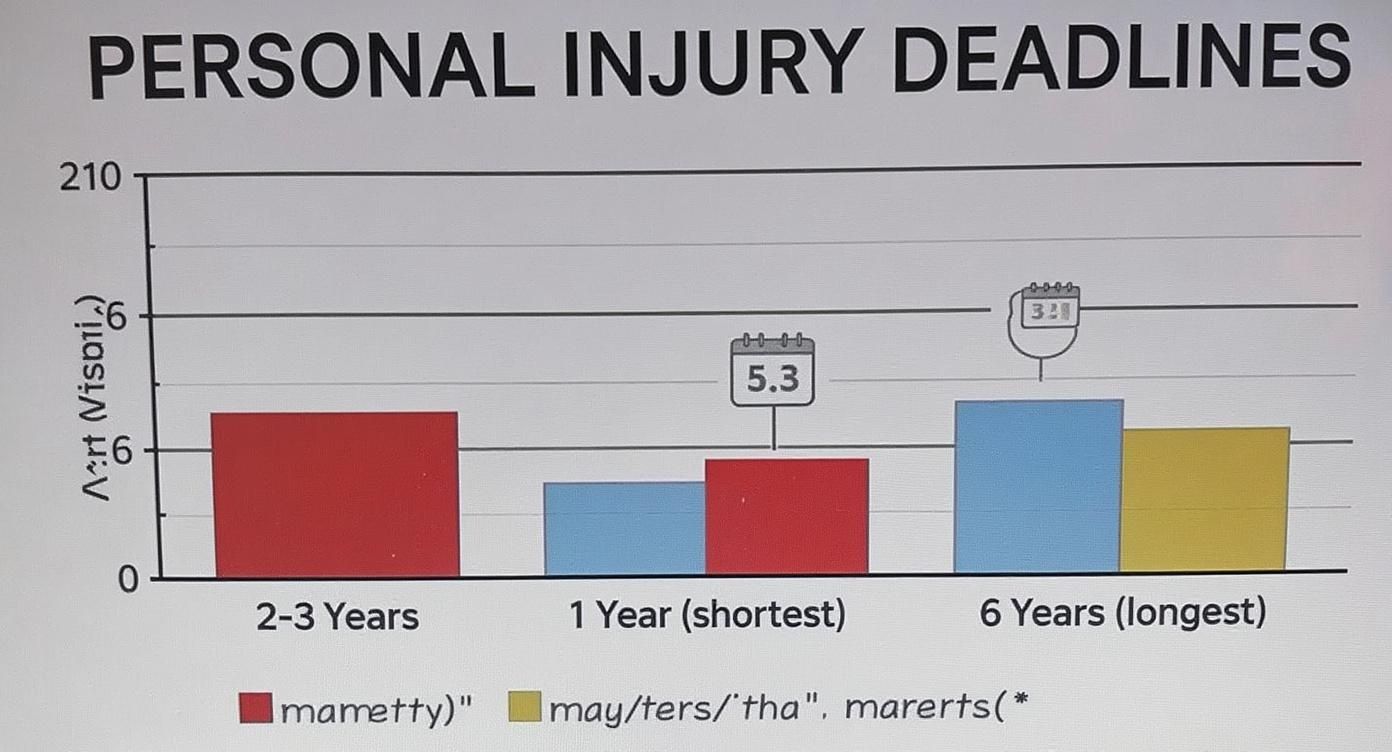
As you can see, while most states give you a two or three-year window, a handful have very short one-year periods or much longer six-year deadlines to file a claim.
Contract Breach Statute of Limitations by State
The following table offers a comprehensive, state-by-state look at the filing deadlines for both written and oral breach of contract claims. Use this as a starting point to understand the time limits you’re working with in your jurisdiction.
Disclaimer: This table is for informational purposes only and does not constitute legal advice. Contract law is complex, and deadlines can be affected by the contract’s terms and other state-specific rules. Always consult an attorney to verify the precise statute of limitations for your case.
| State | Written Contract Limit (Years) | Oral Contract Limit (Years) |
|---|---|---|
| Alabama | 6 | 6 |
| Alaska | 3 | 3 |
| Arizona | 6 | 3 |
| Arkansas | 5 | 3 |
| California | 4 | 2 |
| Colorado | 3 | 3 |
| Connecticut | 6 | 3 |
| Delaware | 3 | 3 |
| Florida | 5 | 4 |
| Georgia | 6 | 4 |
| Hawaii | 6 | 6 |
| Idaho | 5 | 4 |
| Illinois | 10 | 5 |
| Indiana | 10 | 6 |
| Iowa | 10 | 5 |
| Kansas | 5 | 3 |
| Kentucky | 10 | 5 |
| Louisiana | 10 | 10 |
| Maine | 6 | 6 |
| Maryland | 3 | 3 |
| Massachusetts | 6 | 6 |
| Michigan | 6 | 6 |
| Minnesota | 6 | 6 |
| Mississippi | 3 | 3 |
| Missouri | 10 | 5 |
| Montana | 8 | 5 |
| Nebraska | 5 | 4 |
| Nevada | 6 | 4 |
| New Hampshire | 3 | 3 |
| New Jersey | 6 | 6 |
| New Mexico | 6 | 4 |
| New York | 6 | 6 |
| North Carolina | 3 | 3 |
| North Dakota | 6 | 6 |
| Ohio | 6 | 4 |
| Oklahoma | 5 | 3 |
| Oregon | 6 | 6 |
| Pennsylvania | 4 | 4 |
| Rhode Island | 10 | 10 |
| South Carolina | 3 | 3 |
| South Dakota | 6 | 6 |
| Tennessee | 6 | 6 |
| Texas | 4 | 4 |
| Utah | 6 | 4 |
| Vermont | 6 | 6 |
| Virginia | 5 | 3 |
| Washington | 6 | 3 |
| West Virginia | 10 | 5 |
| Wisconsin | 6 | 6 |
| Wyoming | 10 | 8 |
This data makes it clear just how much the deadlines can vary. A state like Louisiana gives you a decade for both types of contracts, while others like California and Washington draw a sharp distinction, giving you significantly less time to act on a verbal agreement.
Special Deadlines for Claims Against the Government
Thinking of suing a government agency? Hold on. Whether it’s a city, county, or state entity, the rules are fundamentally different than for a lawsuit against a private company or person. The entire legal framework is built on a very old principle called sovereign immunity, which historically meant you couldn’t sue the government at all.
Modern laws, often called Tort Claims Acts, have chipped away at that immunity, but they’ve replaced it with a maze of procedural hoops. You can sue, but only if you follow their strict, unforgiving rules to the letter. Forget a step, and your case is likely dead on arrival.
The Mandatory Notice of Claim
Here’s the first and biggest hurdle: you can’t just file a lawsuit. You must first file a formal Notice of Claim. This is an official document telling the government body you intend to sue, outlining the incident, your injuries, and what you’re seeking in damages. Think of it as a mandatory heads-up, and it’s non-negotiable.
Missing the deadline for this notice is catastrophic for your case. We’re not talking about the regular statute of limitations by state, which might give you years. The window for a Notice of Claim is shockingly short.
- Extremely Short Deadlines: You often have just 90 to 180 days from the date of injury to get this notice filed correctly.
- Permanent Bar to Your Claim: If you miss this window, your case will almost certainly be thrown out for good, no matter how strong it is.
- Specific Procedural Rules: Every state has its own detailed rules on who gets the notice and exactly what information must be included.
The contrast with standard personal injury cases is stark. While a typical injury claim might have a limitation period of one to six years, claims against the government operate on a different clock. New Hampshire, for example, gives you three years for a state lawsuit, while West Virginia might allow up to 10 years for certain state claims. These variations reflect different policy goals, but the Notice of Claim is the universal prerequisite. For a deeper dive, you can explore these state-by-state comparisons.
The official purpose of the Notice of Claim is to give the government a chance to investigate early, preserve evidence, and maybe settle. In reality, its tight deadline often acts as a procedural trap that eliminates valid claims before they even start.
Once you’ve properly filed the Notice of Claim and waited for the government to respond (or for a mandatory waiting period to pass), only then can you file your actual lawsuit. The clock on the statute of limitations for the lawsuit itself doesn’t even begin until you’ve cleared these preliminary hurdles. Given how complex and unforgiving these rules are, speaking with an attorney the moment an incident with a government entity occurs isn’t just a good idea—it’s essential.
How to Confirm Your Legal Filing Deadline
While the tables in this guide offer a critical overview of the statute of limitations by state, think of them as a starting point, not the final word. State laws are fluid. New legislation or a single court ruling can shift these deadlines, often with little public notice. Relying on outdated information is a mistake that can completely derail your legal claim before it even begins.
For that reason, independently verifying the exact deadline for your situation isn’t just a good idea—it’s an absolute necessity. A small amount of diligence now is the best way to protect your rights down the road.
A Step-By-Step Verification Process
To be certain you have the correct filing date, you need a two-pronged approach: go straight to the source, and then have that information validated by a legal professional. This method is your best defense against missing a critical cutoff.
Here’s how to confirm your deadline:
- Pinpoint Your Exact Legal Claim: Start with precision. Is this a personal injury claim from a car accident, a breach of a written contract, or a case of medical malpractice? Each claim type has its own distinct statute of limitations.
- Go to the Official State Legislature Websites: Every state maintains a website with its official, codified laws. Search for terms like “[Your State] revised statutes” or “[Your State] general laws.” From there, you’ll need to navigate to the section covering civil procedure or limitations of actions to find the specific statute that applies.
- Cross-Reference and Take Notes: Once you locate the relevant statute, read it carefully. Note the exact time limit and look for any mention of exceptions that might apply to your case, like the discovery rule or tolling for minors.
Legal statutes are rarely written in plain English. The nuances can be incredibly difficult to interpret correctly without a legal background, and a statute might reference other laws, making it easy to miss a crucial detail.
The Final and Most Important Step
While researching state laws yourself is a valuable exercise, it can’t replace professional legal advice. The final, non-negotiable step is to consult with a qualified attorney.
An experienced lawyer will do more than just confirm the statute of limitations. They will analyze the specific facts of your case to see if any exceptions might extend—or even shorten—your filing window. Finding the right legal expert is crucial when time is of the essence. You can learn more about how to find a personal injury lawyer who can provide the clarity and confidence you need. An attorney is your ultimate safeguard against missing that critical deadline.
Frequently Asked Questions
The web of legal deadlines is notoriously complex, and it’s completely natural to have questions. Getting straightforward answers is the first step toward protecting your rights and making sure you don’t accidentally forfeit them. Here, we tackle some of the most common points of confusion around the statute of limitations by state.
Of course, general answers often lead to very specific questions about your own situation. To help you prepare for a productive conversation with a legal professional, it’s worth reviewing these essential personal injury lawyer questions to ask.
What Happens If I Miss the Statute of Limitations Deadline?
The consequences for missing the statute of limitations are almost always severe and final. If you file a lawsuit after the deadline has expired, you can expect the defendant’s attorney to immediately file a motion to dismiss your case.
In nearly every instance, the court will grant that motion. This means your case is permanently over before it even begins, and you lose the right to sue for that particular claim forever—no matter how strong your evidence might have been.
Do Statutes of Limitations Apply to Criminal Cases?
Yes, but the rules are fundamentally different from the civil cases this guide covers. For the most serious crimes, like murder, there is often no statute of limitations at all. Prosecutors can bring charges decades after the fact.
However, most other felonies and misdemeanors do have time limits dictating how long the state has to begin a criminal prosecution. This guide focuses exclusively on civil statutes of limitations, which govern lawsuits between private individuals or entities. It’s a critical distinction to make.
Can a Statute of Limitations Be Paused or Extended?
Under very specific circumstances, yes. The law recognizes that certain situations make it impossible or unfair to expect someone to file a lawsuit. When this happens, the clock on the statute of limitations can be paused—a legal concept known as tolling.
We covered this in our “Key Concepts” section, but some of the most common reasons for tolling include:
- The Plaintiff is a Minor: The deadline is often paused until the individual turns 18 and can legally act on their own behalf.
- Mental Incapacity: If a person is legally deemed mentally incompetent, the clock may be tolled until their competency is restored.
- The Defendant’s Conduct: The deadline might be paused if the defendant fraudulently conceals their wrongdoing or flees the state to avoid being served with a lawsuit.
These exceptions are highly technical and vary significantly from one state to another. You absolutely must consult an attorney to determine if any tolling provisions could apply to your case.