Estate planning isn’t just a legal chore; it’s a profound act of love and responsibility. Think of it as the final gift you give your family—a clear, thoughtful roadmap that protects your loved ones, ensures your children are cared for by people you trust, and preserves your assets for their future. It provides security and peace of mind when they need it most.
Why Estate Planning Is an Act of Love for Your Family
Many people mistakenly believe estate planning is a complex process reserved only for the wealthy. That couldn’t be further from the truth. In reality, it’s a practical instruction manual you create to safeguard your family’s future, providing clarity and security during an otherwise chaotic time.
A well-crafted plan goes far beyond a simple will. While a will is a critical starting point, comprehensive estate planning for families tackles a much wider range of essential questions to protect the people you care about.
This infographic shows how estate planning acts as a shield, protecting your family’s well-being and future.
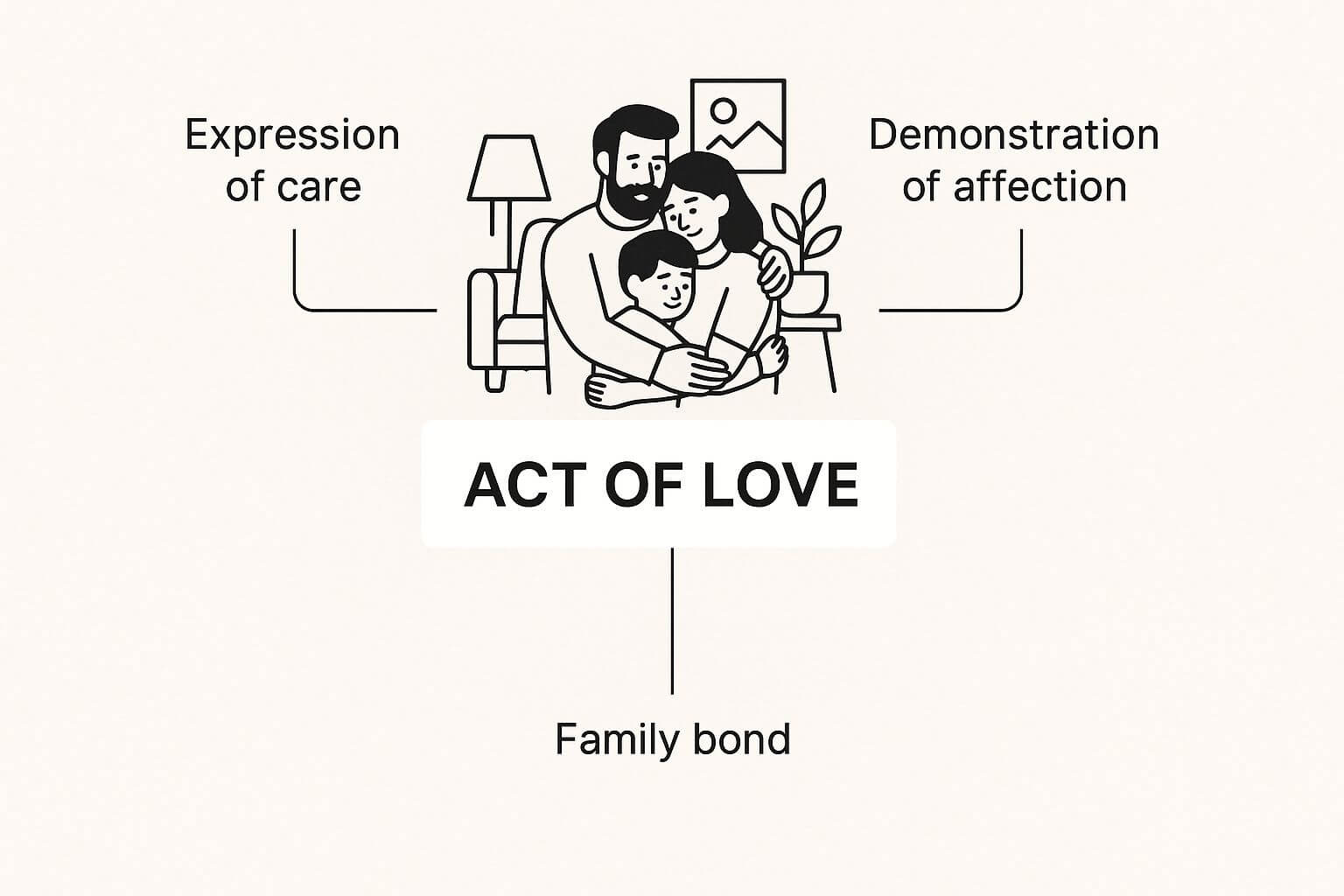
It makes one thing clear: this process is fundamentally about safeguarding the people you love, not just managing assets.
Beyond the Basics of a Simple Will
A simple will can outline your basic wishes, but a complete estate plan offers a more robust shield for your family. It involves making key decisions today to prevent confusion and conflict tomorrow. This proactive approach ensures your values guide your family’s future, even when you’re no longer there.
Key components of this protective shield include:
- Designating Guardians: This is arguably the most critical decision for parents. You choose who will raise your children, ensuring they are cared for by someone who shares your values and parenting philosophy. Without your input, a court will make this decision for you.
- Managing Assets: You decide how and when your children will inherit assets, protecting them from mismanagement or youthful indiscretion. This can be structured through trusts to provide for their education, home purchases, and well-being over time.
- Planning for Incapacity: What if you become unable to make decisions for yourself due to an accident or illness? A proper plan appoints trusted individuals to manage your finances and make healthcare decisions on your behalf, preventing stressful and expensive court intervention.
An estate plan is your voice when you can no longer speak. It communicates your final wishes, removes the burden of guesswork from your family, and ensures your legacy is one of peace and provision, not chaos and conflict.
Despite its importance, a surprising number of people are unprepared. Recent data reveals that a staggering 60% of people have no will or estate planning documents in place. This gap can leave families vulnerable during their most challenging moments.
Interestingly, modern planning is also evolving to include beloved pets, with 62% of Americans now believing pets deserve the same consideration as humans in estate plans. You can discover more insights about these estate planning trends and see the full report.
To give you a clearer picture, here’s a breakdown of the core elements every family should consider.
Essential Components of a Family Estate Plan
This table provides a quick overview of the key documents and decisions that form a comprehensive estate plan for any family.
| Component | Its Purpose for Your Family |
|---|---|
| Last Will and Testament | Names an executor to manage your affairs and, most importantly, names guardians for minor children. |
| Revocable Living Trust | Holds your assets to avoid the costly and public probate process, allowing for private and efficient distribution. |
| Financial Power of Attorney | Appoints someone to manage your finances if you become incapacitated and unable to do so yourself. |
| Healthcare Power of Attorney | Designates an agent to make medical decisions on your behalf if you cannot communicate them. |
| Living Will (Advance Directive) | Outlines your wishes for end-of-life medical care, removing a heavy burden from your family. |
| Beneficiary Designations | Ensures retirement accounts (401ks, IRAs) and life insurance policies go directly to your chosen heirs. |
Each of these documents plays a vital role in creating a protective legal shield around your family, ensuring your wishes are honored and your loved ones are secure.
Understanding Your Core Tools: Wills and Trusts
Every estate plan is built on two foundational legal instruments: the will and the trust. While both are designed to manage your assets after you’re gone, they operate in fundamentally different ways. Understanding their distinct roles is the first step toward building a plan that truly protects your family.
Think of a will as a set of final instructions left for your family and the court system. It’s a public document that only becomes active after your death. Its main jobs are to name an executor to handle your affairs, designate who inherits your property, and—most critically for parents—nominate a guardian for your minor children.
A trust, on the other hand, operates more like a private, secure container for your assets, managed by a person you appoint. Unlike a will, a trust can be active during your lifetime and continue seamlessly after your death, holding and distributing assets on behalf of your beneficiaries according to your precise rules.
Wills: The Essential Starting Point
Let’s be clear: every parent needs a will. Without one, the state’s intestacy laws step in to decide who gets your assets, and a judge—not you—will determine who raises your children. A will is your chance to make these crucial decisions yourself, giving your loved ones a clear roadmap.
But a will isn’t a complete solution. Any instructions in a will must pass through a court-supervised process called probate.
Probate is known for being:
- Time-Consuming: The process can easily drag on for months, sometimes years, leaving your family waiting for access to critical assets.
- Costly: Legal, court, and executor fees can eat into your estate, reducing the inheritance your family ultimately receives.
- Public: Wills become public records. Anyone can look up the details of your estate, see who your beneficiaries are, and find out what they inherited.
While a will is a non-negotiable component of estate planning for families, relying on it alone can create unnecessary headaches for your loved ones. Even with clear instructions, challenges can arise. You can learn more about the circumstances under which a will can be contested to better understand these potential legal hurdles.
Trusts: The Key to Control and Privacy
A trust provides a far more dynamic and private way to manage your legacy. For most families, the go-to tool is a revocable living trust. You create it during your lifetime, transfer major assets like your home or investment accounts into it, and typically serve as the trustee yourself, so you never lose control.
When you pass away, the successor trustee you named steps in immediately to manage and distribute the trust’s assets based on your rules—all without court intervention. This probate-free transfer ensures your family has access to resources when they need them most.
A will tells the world what you want to happen after you’re gone. A trust makes it happen privately and efficiently, on your own terms. It’s the difference between leaving a public memo and executing a private, pre-arranged plan.
Trusts also offer sophisticated control over how inheritances are managed. For instance, instead of an 18-year-old receiving a large lump sum, you can structure the trust to distribute funds at specific ages or for key life events, like graduating from college or making a down payment on a home.
For families with unique situations, like a child with special needs, an irrevocable trust can provide lifelong financial support without disqualifying them from essential government benefits. Ultimately, the right strategy isn’t about choosing a will or a trust—it’s about using both to achieve your family’s specific goals for privacy, asset protection, and long-term control.
Choosing a Guardian to Protect Your Children
For parents, there is no single decision in the entire estate planning process that feels as heavy as choosing a guardian for your children. This isn’t just about filling in a name on a legal form; it’s about entrusting your children’s entire future to someone else. This one choice ensures that if the unthinkable happens, they will be raised in a loving, stable home by someone you trust without reservation.
In fact, this decision is often what finally pushes families to start their estate planning journey. Without your legally documented choice, a judge—a stranger who doesn’t know you or your children—will make this life-altering decision. Taking the time to think through this now is one of the most profound acts of love you can undertake for your kids.

Key Qualities to Consider in a Guardian
Picking a guardian requires an honest, clear-eyed look at the people in your life. It’s less about who loves your children the most and more about who is genuinely equipped to handle the immense responsibility of raising them from childhood to adulthood.
Think about a couple, Sarah and Tom, navigating this decision. They adore both Sarah’s sister and Tom’s brother, but they see that each person offers a very different future for their kids. They sit down and map out the crucial factors to guide their conversation:
- Shared Values and Beliefs: Does this person share your core values on education, religion, and morality? This alignment is key to ensuring your children are raised with the principles you hold dear.
- Parenting Philosophy: If they have kids, watch how they parent. Is it similar to your style? Consider their temperament, patience, and ability to provide real emotional support.
- Financial Stability: A guardian doesn’t need to be wealthy, but they must be financially responsible. Raising children is expensive, and while your estate will provide the money, you need someone who can manage it wisely.
- Age and Health: Be practical about the person’s age and long-term health. A guardian needs to be able to care for your children until they reach adulthood without their own significant health issues getting in the way.
- Location and Lifestyle: Would this choice force your children to move? Uprooting them from their school, friends, and community adds another layer of trauma to an already devastating situation.
After some tough conversations, Sarah and Tom realize Sarah’s sister, despite living a few states away, shares their calm parenting style and educational priorities, making her the better fit for the day-to-day care of their children.
Two Guardian Roles You Must Appoint
Many parents don’t realize that “guardian” actually involves two distinct and equally vital roles. You can choose one person for both, but you might find that different people are better suited for each responsibility.
The most effective estate planning for families recognizes that the person best suited to give hugs and help with homework may not be the same person best suited to manage a large inheritance. Appointing separate guardians can provide a valuable system of checks and balances.
Understanding these two roles is critical:
- Guardian of the Person: This is who will physically raise your children. They are responsible for daily care, making decisions about school and healthcare, and providing the love and emotional support your kids will need. Think of this as the hands-on parenting role.
- Guardian of the Estate (or Trustee): This person manages the money and assets you leave behind. They are in charge of investing the inheritance, paying for expenses like college and healthcare, and protecting the funds until your children are old enough to manage it themselves. This role demands financial savvy and a high degree of responsibility.
In Sarah and Tom’s plan, while Sarah’s sister is their choice for Guardian of the Person, they name Tom’s brother, an accountant, as the trustee to manage the kids’ inheritance. This setup lets each sibling use their unique strengths to protect the children’s emotional and financial futures, ensuring a balanced and secure upbringing.
Planning for Incapacity, Not Just the Inevitable
Too often, we think of estate planning as something that only matters after we’re gone. But what happens if an accident or a sudden illness leaves you unable to make your own decisions?
Without a solid plan, your family is thrown into a stressful, public, and expensive court battle just to get the authority to pay your bills or talk to your doctors. This is where incapacity planning becomes one of the most critical parts of any estate planning for families—it’s about protecting you during your life.
Appointing Your Financial Co-Pilot
The first person you need to name is someone to manage your financial world. This is done with a Durable Power of Attorney for Finances, a legal document that gives a trusted “agent” the power to handle your money, property, investments, and taxes if you can’t.
The word “durable” is the key. It means this document stays in effect even after you become incapacitated. Without it, your loved ones are forced to petition a court for a conservatorship—an emotionally and financially draining process that puts your life on public display.
Planning for incapacity is an act of profound kindness. It removes the burden of uncertainty from your family, replacing it with a clear roadmap they can follow to care for you exactly as you would have wanted.
Designating Your Healthcare Advocate
Just as critical is choosing who will make medical decisions on your behalf. This requires a Healthcare Power of Attorney, sometimes called a healthcare proxy. This document empowers your chosen agent to speak with doctors, review your medical records, and make crucial treatment decisions aligned with your wishes.
This isn’t a role for just anyone. You need someone who understands your values, stays calm under pressure, and will be a fierce advocate for your care. It gives them the legal standing to act, preventing devastating disagreements among family members who might have different ideas about what’s best. The specifics of how long these documents last are vital, and you can learn more about when a power of attorney expires to understand their function over time.
Putting Your Medical Wishes in Writing
Your healthcare agent has the authority, but how will they know what you truly want in a moment of crisis? That’s the role of a Living Will, or an Advance Directive. This isn’t about distributing assets; it’s a direct, written statement about your preferences for end-of-life medical care.
A Living Will answers the tough questions, so your family doesn’t have to guess:
- Do you want to be kept alive by artificial means if you have a terminal condition?
- What are your preferences regarding feeding tubes or ventilators?
- How do you feel about different approaches to pain management?
By putting these wishes on paper, you lift an unimaginable weight from your loved ones. It’s your voice, clear and strong, providing guidance when they need it most. Together, these documents—the Durable Power of Attorney, Healthcare Power of Attorney, and Living Will—create a protective shield for you and your family against the chaos of a crisis.
Protecting Your Assets from Taxes and Threats
A central goal of any serious estate planning for families is making sure the wealth you’ve spent a lifetime building ends up with your loved ones—not lost to taxes or unexpected creditors. This isn’t just about drafting a will. It’s about strategic financial moves that shield your assets now and for generations to come.
Many families hear “estate tax” and immediately tune out, assuming it’s a problem reserved for the ultra-wealthy. While it’s true that federal estate taxes have a high threshold, many states impose their own with much lower exemption limits. Overlooking these local rules is a classic mistake that can cost a family dearly.

This kind of proactive planning is becoming absolutely critical. The estate planning market is set to hit $2.43 billion by 2034, fueled by the massive transfer of wealth from Baby Boomers. Despite this, a shockingly low 24% of Americans have a will as of 2025—a steep decline from 40% in 2016. Discover more insights about these estate planning statistics and trends.
Smart Strategies to Minimize Taxes
Fortunately, there are several powerful and well-established strategies to lighten the tax load and maximize what you pass on. And they aren’t just for multimillionaires. These tools can deliver huge benefits for families at many different asset levels.
One of the most straightforward methods is annual gifting. You can give a specific amount to anyone you choose each year, completely tax-free, without touching your lifetime gift tax exemption. Done consistently over the years, this can shift a significant amount of wealth to children or grandchildren, all while shrinking your taxable estate.
Another powerhouse is the specialized trust. Take an Irrevocable Life Insurance Trust (ILIT), for example. By setting up an ILIT to own your life insurance policy, you remove the entire death benefit from your taxable estate. That simple move ensures the payout goes to your heirs 100% free of estate taxes.
The Overlooked Power of Proper Titling
While trusts and gifting get a lot of attention, one of the most common and costly mistakes families make is simply ignoring how their assets are titled. The name on a deed or an account statement can completely override even the most carefully written instructions in your will.
Getting the titling right is a non-negotiable part of a solid plan:
- Joint Tenancy with Rights of Survivorship (JTWROS): When one owner passes away, the asset automatically goes to the surviving owner. It’s a clean transfer that bypasses the probate court process, making it a popular choice for married couples.
- Transfer-on-Death (TOD) or Payable-on-Death (POD): You can add these designations to bank accounts and brokerage accounts. They act like a direct pipeline, sending the funds straight to your named beneficiary upon your death.
- Funding Your Trust: A trust is only effective if you actually put your assets into it. This step, known as “funding,” involves retitling your house, accounts, and other property into the name of the trust.
An unfunded trust is like an empty treasure chest—it looks official, but it protects nothing. The simple administrative task of retitling assets is what gives your estate plan its real power.
Similarly, the beneficiary designations on your 401(k)s, IRAs, and life insurance policies are legally binding contracts. They will always trump what your will says. It is absolutely critical to review these designations every few years to ensure your money is going to the right people and your financial legacy remains secure.
How to Assemble Your Professional Planning Team
While DIY estate planning tools might seem tempting, the real complexities of protecting your family’s future demand expert guidance. Think of it like building a custom home; you wouldn’t attempt it without a proven architect, a structural engineer, and a sharp project manager. A professional team ensures your plan is legally sound, financially efficient, and built to withstand whatever comes next.
This approach elevates estate planning for families from a mere checklist to a coordinated, strategic defense of your legacy. Each professional brings a critical perspective, working in concert to safeguard your assets and honor your final wishes.
The Core Members of Your Team
Putting together your team starts with knowing who does what. Three key professionals form the foundation of any robust estate plan, each playing a distinct and vital role.
- The Estate Planning Attorney: This is your plan’s architect. They draft the essential legal documents—your will, trusts, and powers of attorney—ensuring everything complies with state law, minimizes legal exposure, and perfectly captures your intentions for guardianship and asset distribution.
- The Financial Advisor: Consider your financial advisor the engineer of the project. They make sure the plan is financially sound and aligned with your long-term wealth goals. Their job is to structure investments, manage retirement accounts, and ensure your estate has the necessary liquidity to function smoothly.
- The Certified Public Accountant (CPA): Your CPA is the tax strategist, focused on minimizing the impact of estate, gift, and income taxes on your legacy. Their expertise is absolutely critical for preserving the maximum amount of wealth for your heirs and sidestepping costly tax mistakes.
For most families, finding the right legal expert is the crucial first step, as a great attorney can help coordinate with your other advisors. If you need help getting started, you can learn more about how to find an estate planning attorney near you and begin building your team.
Selecting the Right Professionals
Choosing your team requires far more than a quick internet search. You’re entrusting these experts with your family’s most sensitive information and financial future. Look for dedicated specialists in estate planning, not generalists.
When you interview potential advisors, ask about their experience with family dynamics similar to yours. Have they handled blended families, special needs trusts, or business succession before? The right fit involves both professional competence and a personal connection—you have to feel completely confident in their counsel.
Assembling an expert team isn’t an expense; it’s an investment in your family’s security. Their coordinated advice helps prevent costly mistakes, family conflicts, and legal challenges down the road, delivering peace of mind that is truly priceless.
The rise of digital platforms has introduced new, automated options. Interestingly, a recent study found that 20% of Americans now trust AI-generated legal advice as much as or more than a human attorney. While these tools can offer a starting point for simple situations, they can’t replace the personalized strategy a human expert provides for complex family needs. Building a team of trusted advisors is the only way to ensure your plan is truly comprehensive and resilient.
Common Questions About Family Estate Planning
Diving into estate planning often feels like opening a door to a room full of more questions. It’s a landscape of critical decisions, and feeling a bit out of your depth is completely normal. Here are some straightforward answers to the most common questions we hear from families, designed to give you the clarity and confidence to move forward.
When Is the Right Time to Start Estate Planning?
The short answer is simple: now. While many people mistakenly link estate planning with retirement, the real trigger for most families is the birth or adoption of a child. That’s the moment you have someone whose future depends on you, and naming a legal guardian becomes non-negotiable.
Of course, other major life events should also send you straight to your plan to create or update it:
- Getting married or divorced
- Buying a home or another major asset
- A significant shift in your financial picture
- Launching a business
Don’t fall into the trap of waiting until you feel “old enough” or “rich enough.” A foundational plan that names guardians and lays out your healthcare wishes is a critical safety net for every parent, no matter their age or the size of their bank account.
How Often Should We Update Our Estate Plan?
Think of your estate plan as a living document, not a “set it and forget it” task you check off a list. Life is dynamic, and your plan has to keep up. A good rule of thumb is to pull out your documents for a thorough review every three to five years.
That said, certain moments demand an immediate update. The birth of another child, a change in marital status, the death of a person you named as a guardian or beneficiary, or a major financial event all qualify. An outdated plan can cause as many problems as having no plan at all, creating confusion and conflict because it no longer reflects your family’s reality.
Are Online Estate Planning Tools a Good Option?
For families with truly straightforward circumstances—say, a young couple with one child and a single primary home—online tools can be a reasonable first step. They offer a fast, cost-effective way to get basic protections on the books.
However, the moment your situation has any layer of complexity, you need to speak with an attorney.
An attorney does something an automated platform can’t: they provide personalized legal counsel. They’re trained to spot risks you didn’t know existed, navigate messy family dynamics, and build a plan that’s tailored to you, dramatically reducing the risk of expensive mistakes or future legal fights.
This is especially critical if you have a blended family, a child with special needs, own a business, or have enough assets to potentially trigger estate taxes.
What Happens to Digital Assets Like Social Media and Crypto?
In today’s world, our digital lives are a huge—and often forgotten—part of our legacy. Without clear instructions, your loved ones could be permanently locked out of everything from your social media profiles and cloud photo storage to email accounts and cryptocurrency wallets.
Your estate plan absolutely must include a digital asset inventory. This document should list all your accounts and provide instructions for access (though you should never put actual passwords in the will itself). Even more importantly, you must legally appoint a digital executor in your will. This is the person with the legal authority to manage these assets just as you wished, whether that means saving priceless family photos or transferring digital currency to your heirs. Any truly comprehensive estate planning for families has to account for this modern reality.
Finding the right legal expert is the most important step in protecting your family’s future. The Haute Lawyer Network connects you with a curated selection of the nation’s top attorneys, each vetted for their professional excellence. Elevate your search and find the trusted advisor your family deserves. Learn more about our exclusive network of legal professionals.