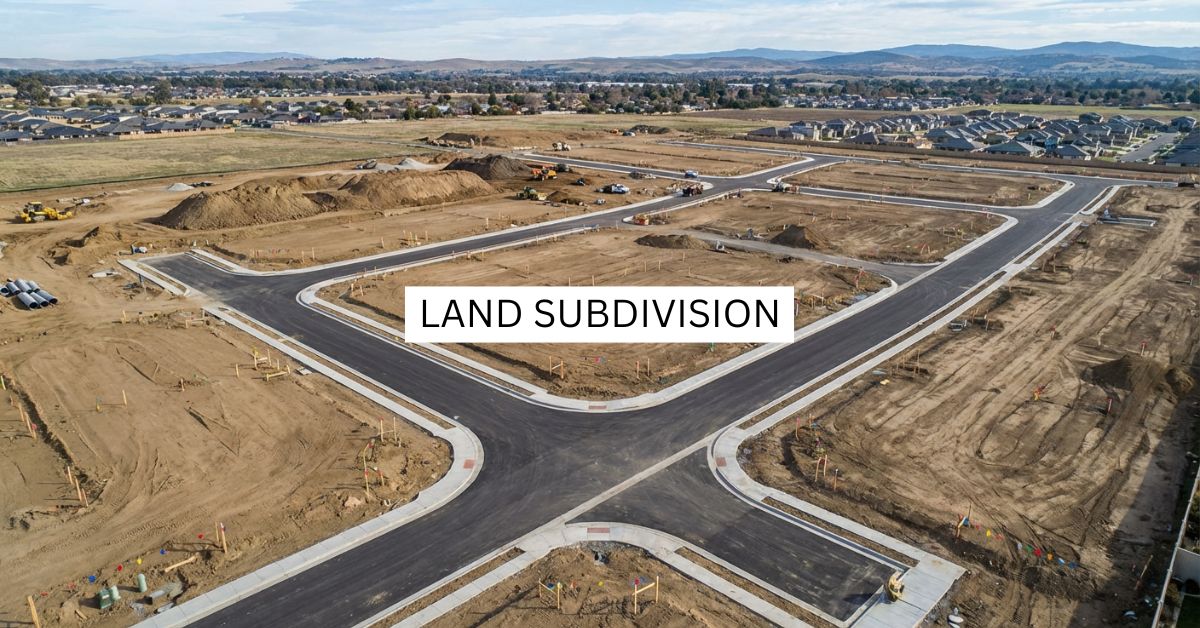
Subdividing land is more than just a real estate transaction; it’s the process of legally dividing a single property into two or more smaller, distinct parcels. For property owners, this can be an incredibly powerful strategy to unlock financial value, creating new assets to sell, develop, or gift to family. But it’s not as simple as drawing lines on a map—it requires meticulous planning, professional guidance, and a deep understanding of local government regulations.
Is Subdividing Your Land the Right Move
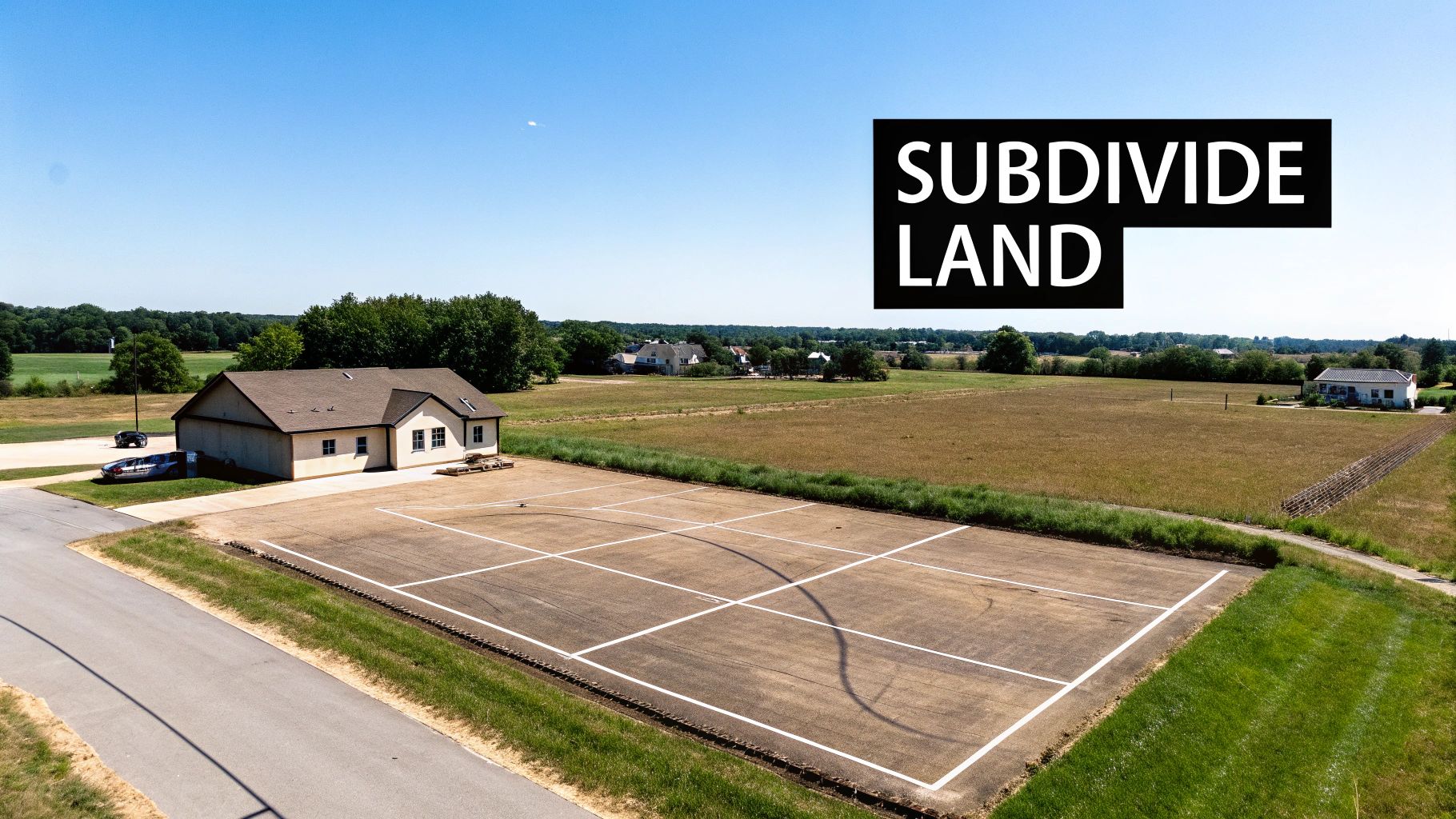
Before you even think about calling a surveyor or visiting the city planning department, you need to understand the road ahead. Deciding to subdivide land kicks off a complex project loaded with legal, financial, and logistical challenges.
The most common driver is, of course, financial. A subdivision can transform one large, often illiquid property into multiple smaller, more marketable parcels that can be sold off individually for a significant cumulative profit.
But money isn’t the only reason. Many landowners I’ve worked with do it to carve out separate lots for their children, giving them a place to build their own homes. Others see a chance to contribute to their community’s housing stock by creating new lots for single-family homes or even denser developments.
A Historical Perspective on Land Division
The systematic division of land is a cornerstone of American property rights. This practice was formally structured after the Louisiana Purchase in 1803, which instantly doubled the size of the nation. To manage this massive new territory, the government rolled out the Rectangular Survey System, organizing land into a neat grid of one-square-mile sections.
These sections were designed to be further divided into smaller lots, creating a standardized and repeatable method for selling and developing the frontier that still influences property lines today.
Before diving in, a quick feasibility check can save you from costly missteps. Use this table as a high-level guide to see if your project has a fighting chance from the start.
Initial Subdivision Feasibility Checklist
| Key Consideration | What to Look For | Why It Matters |
|---|---|---|
| Zoning & Land Use | Is your property zoned for the number of lots you want? Check for minimum lot size, frontage, and density requirements. | The local zoning code is the rulebook. If your plan doesn’t comply, you’ll face an uphill battle for approvals. |
| Physical Access | Does the property have direct access to a public road? Will each new lot have legal and physical access? | Every created parcel must be accessible. Lack of road frontage can stop a project before it even begins. |
| Utilities Availability | Can you connect to public water, sewer, and electricity? Are the main lines close enough to be economically viable? | Extending utilities can be incredibly expensive. The cost can quickly erase any potential profit from the subdivision. |
| Deed Restrictions | Are there any restrictive covenants on your deed that prohibit further subdivision? | Private restrictions are just as binding as public regulations. Ignoring them can lead to legal challenges from neighbors or an HOA. |
This checklist isn’t exhaustive, but it covers the major hurdles that can derail a project early on. If you find red flags here, it’s time to dig deeper before committing serious capital.
Assembling Your Team and Setting Expectations
A successful subdivision is never a solo mission. You need a team of seasoned professionals to navigate the process. At a minimum, your core team should include:
- A Land Surveyor: This is your expert for creating the official subdivision plat—the legal map that defines the new lot boundaries and gets recorded with the county.
- A Real Estate Attorney: An attorney specializing in land use is indispensable. They handle the legal paperwork, represent you at public hearings, and ensure the deeds for the new lots are correctly drafted and recorded.
- A Civil Engineer: For any project involving new infrastructure like roads, drainage systems, or utility extensions, an engineer’s expertise is absolutely non-negotiable.
Embarking on this process means preparing for a marathon, not a sprint. A simple lot split might take three to six months, but a more complex subdivision can easily stretch to a year or more. A comprehensive approach, similar to the due diligence process in real estate transactions, is essential for identifying potential roadblocks early.
Decoding Local Zoning and Land Use Rules

Before you drive a single stake into the ground, your subdivision project lives or dies by one thing: the local rulebook. Every city, county, and township has a unique set of zoning ordinances that dictate exactly what you can—and cannot—do with your property. Mastering these regulations isn’t just about avoiding fines; it’s the foundation of your entire strategy.
Think of zoning as the DNA of your community. It’s what separates quiet residential streets from commercial hubs and industrial parks. For your project, the zoning code holds the answers to the most fundamental questions that will shape your entire plan.
Your first move is to identify your property’s specific zoning classification. This is usually on your local government’s planning department website, often through an interactive map. Once you have the code—like “R-1” for single-family residential or “A-1” for agricultural—you can dive into the municipal code to see what’s possible.
Your Zoning Code Hit List
As you dig in, you’re on a mission to find the specific, non-negotiable numbers that define your project’s limits. These are the deal-breakers. Focus your initial research on uncovering these key metrics:
- Minimum Lot Size: This is the absolute smallest area a new parcel can be. If the minimum is one acre and you have five, you can theoretically create up to five lots.
- Minimum Lot Width/Frontage: This dictates how much of the lot must border a public road. A property might be large enough but too narrow to meet the frontage requirements for multiple lots.
- Setback Requirements: These rules specify the minimum distance a building must be from the property lines, directly impacting the buildable “envelope” of each new lot.
- Density Limitations: Some zones limit the number of dwelling units per acre, a critical factor for any multi-family or townhome development plans.
Finding these details can feel like a scavenger hunt. The best advice is to start online, but don’t hesitate to call the planning department directly. A quick conversation can often save you hours of searching through dense legal documents.
Uncovering Hidden Restrictions and Overlays
Beyond the basic zoning rules, you need to search for any overlays or special districts that apply to your land. These are additional layers of regulation often tied to specific geographic features or policy goals.
An “environmental overlay,” for example, might add strict rules if your land contains wetlands or steep slopes. A “historic preservation overlay” could severely limit any changes. You must also check the official county map for easements (like for utility access) or public right-of-ways, as these can restrict where you can place new boundary lines.
The Pre-Application Meeting: A Critical Step
After your initial research, the single most valuable action you can take is to schedule a pre-application meeting with your local planning department. This is your chance to present your concept and get direct feedback from the staff who will eventually review your formal application.
Prepare for this meeting like a business pitch. Bring a simple sketch of your proposed subdivision, your zoning research, and a well-thought-out list of questions.
Your goal is to walk away with clear answers to questions like:
- Based on my concept, are there any obvious red flags you see?
- Are there any upcoming changes to the zoning code that could affect my project?
- Which other agencies—public works, health department—will need to approve this?
- Can you give me a general overview of the timeline and fees for a project of this scale?
This early collaboration builds rapport with municipal staff and turns what could be an adversarial process into a partnership. Getting these answers upfront provides the strategic clarity you need to move forward with confidence.
Building Your Professional Subdivision Team
Trying to subdivide land yourself is a high-stakes gamble destined to fail. The process is a minefield of legal statutes, technical surveys, and municipal red tape that can stop a project cold. Assembling the right team of professionals isn’t an expense—it’s the single most critical investment you will make to shield your project from devastating errors and delays.
This isn’t a small-stakes game. The land development industry in the U.S. is on track to hit $22.9 billion in revenue by 2025, involving over 8,000 separate businesses. You can explore the market research on land development in the U.S. to grasp the scale of the field you’re stepping into. Success here demands specialized expertise.
Your First Call: The Land Surveyor
Think of the land surveyor as the architect of your new property lines. This is the professional who creates the subdivision plat—the official, legally binding map that dictates the precise boundaries, dimensions, and easements of your new parcels. Without a licensed surveyor’s stamp, your subdivision simply doesn’t exist in the eyes of the government.
Their job is far more than just measuring. A surveyor conducts detailed topographic surveys to map the land’s unique contours, identify existing structures, and flag any physical features that could derail your plans. This data becomes the foundation upon which your entire project is built.
When you’re vetting surveyors, insist on seeing examples of subdivision plats they have successfully recorded in your specific county or city. This is non-negotiable, as it proves they know the local standards and what the planning department expects to see.
The Legal Navigator: Your Real Estate Attorney
While the surveyor draws the lines, the real estate attorney makes sure those lines are legally defensible and properly recorded. An attorney specializing in land use and zoning is your indispensable guide through the maze of paperwork and public approvals.
Their role is multifaceted and absolutely critical:
- Title and Covenant Review: They will dig deep into your property’s title history to uncover any hidden deed restrictions, easements, or covenants that could prohibit or severely complicate a subdivision.
- Legal Document Preparation: From the subdivision application itself to drafting the new deeds for each individual lot, they ensure every document is airtight and enforceable.
- Public Hearing Representation: They act as your advocate at planning commission meetings and public hearings, professionally presenting your case and fielding tough legal questions from officials.
Securing the right legal counsel is not optional. For complex projects, it’s wise to find top real estate attorneys who specialize in navigating these exact challenges and have a proven track record of success.
The Infrastructure Expert: The Civil Engineer
If your project involves more than a simple lot split, you will almost certainly need a civil engineer. Their expertise is infrastructure—the essential services that transform raw land into a buildable, valuable lot.
A civil engineer is the bridge between your raw land and a functional, approved development. They answer the critical questions: How will people get to the new lots, where will the water come from, and where will the wastewater go?
Engineers are responsible for designing the practical, physical elements of your subdivision, including:
- New roads, access driveways, and cul-de-sacs
- Stormwater drainage systems to manage water runoff
- Grading plans to ensure proper site preparation
- Layouts for extending water and sewer lines
They work hand-in-glove with your surveyor and attorney to create a comprehensive plan that meets all municipal engineering standards. Their signed and sealed plans are a mandatory part of any major subdivision application, confirming that your project is not just legally sound, but physically viable and safe.
Navigating The Application And Approval Gauntlet
Alright, you’ve done your homework and assembled your A-team of professionals. Now it’s time to dive into the official municipal approval process. This is the moment your vision starts its journey from a concept on paper to a legally recognized, sellable asset.
It can feel like a bureaucratic maze, but it’s manageable once you understand the key milestones. The entire process hinges on one critical document: the subdivision plat. This isn’t just a map; it’s the official survey that illustrates the new property lines, access roads, and easements. Your path to getting this plat recorded unfolds in two distinct phases.
Your Opening Move: The Preliminary Plat
The first major hurdle is submitting your preliminary plat. Think of this as the master blueprint for your project. It’s a highly detailed drawing your surveyor and engineer have painstakingly prepared, showing everything from proposed lot sizes and road layouts to utility connections and existing topography.
This isn’t a casual sketch. It’s a technical document designed to prove your plan adheres to every local zoning ordinance and subdivision rule.
Once you submit it, the plat gets passed around to various city or county departments. The engineering department will scrutinize your drainage plans, the utility department will confirm your water and sewer proposals are viable, and the fire department will ensure emergency vehicles have proper access. It’s a multi-pronged review designed to flag any issues early on.
Key Takeaway: The feedback you get on your preliminary plat is gold. Don’t view it as criticism; see it as a collaborative effort to refine your project. Being responsive and flexible to staff comments will make the final approval stage infinitely smoother.
Stepping Into The Arena: The Public Hearing
For many landowners, the public hearing in front of the Planning Commission is the most daunting part of this whole ordeal. This is where your project gets presented to appointed community members, and your neighbors get to weigh in with support or concerns. Winning them over comes down to meticulous preparation.
Work closely with your attorney to craft a clear, concise presentation. The smartest approach is to anticipate objections before they’re even raised.
- Traffic Worries: Come armed with data from your engineer showing how the new lots will—or won’t—impact local traffic.
- Water Runoff Concerns: Have your engineer ready to explain the stormwater management plan and how it protects adjacent properties from flooding.
- Property Value Questions: Frame your subdivision as a high-quality addition that enhances the neighborhood’s character, not detracts from it.
A calm, fact-based presentation always beats a defensive one. Listen respectfully to what people have to say and let your attorney or engineer provide the expert answers.
Your professional team is the bedrock of your success here, working in concert to build the comprehensive package needed for a smooth application and hearing.
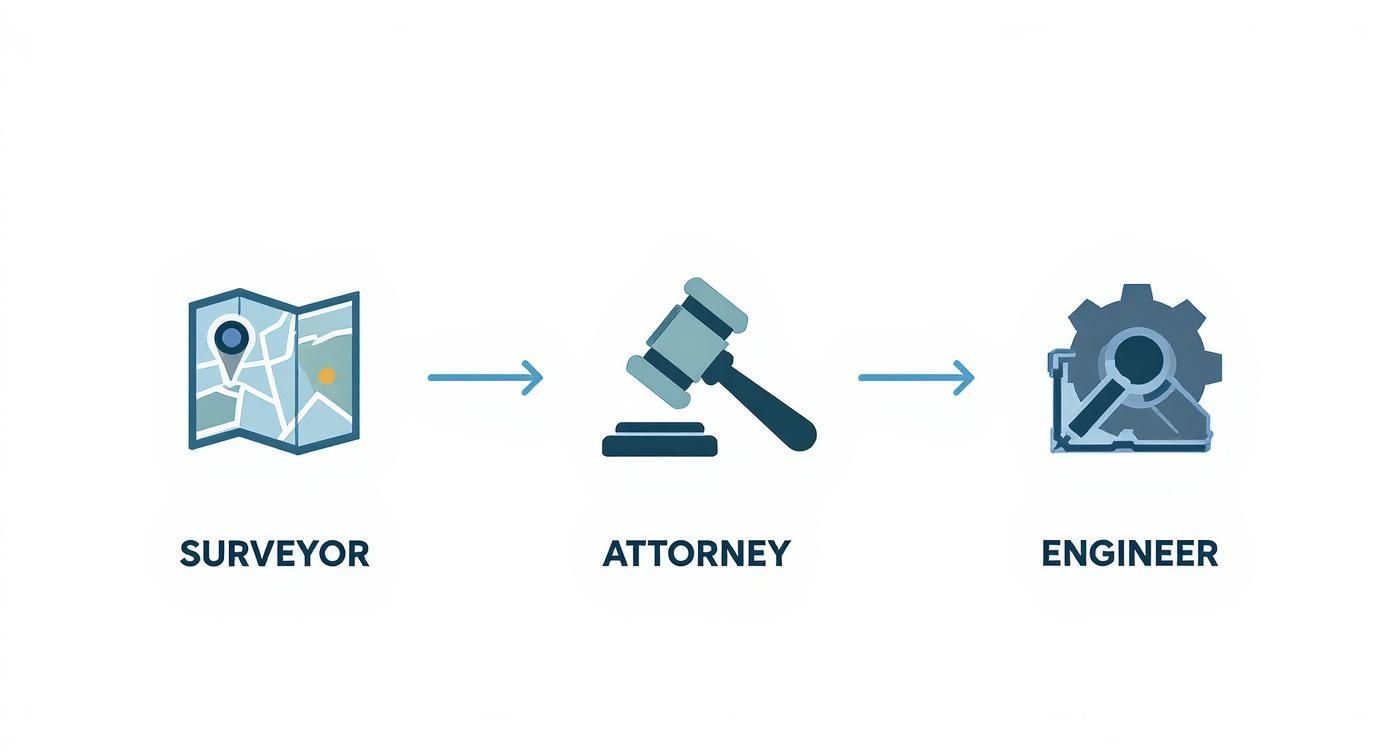
This workflow shows exactly how your surveyor, attorney, and engineer collaborate to prepare you for the public-facing and private negotiations that lie ahead.
The Final Plat: Making It Official
Once your preliminary plat gets the green light—usually with a list of conditions attached—your team shifts gears to create the final plat. This is the polished, legally binding document ready for the public record. It will incorporate every required change from the planning commission and include formal certifications from your surveyor and engineer.
This is the finish line. After the planning commission chair gives their final signature, the plat is ready for recording at the county Register of Deeds. The second it’s recorded, your new lots officially exist in the eyes of the law.
This is a monumental step, but it’s also where new legal and financial duties begin. Any small oversight in the final legal review can snowball into massive issues, which is precisely why you must prevent costly real estate closing disasters with a thorough attorney review.
With the plat recorded, each new lot gets its own tax parcel ID number. You are now officially cleared to start marketing and selling them as individual, legally distinct properties.
Planning for Utilities and Site Infrastructure
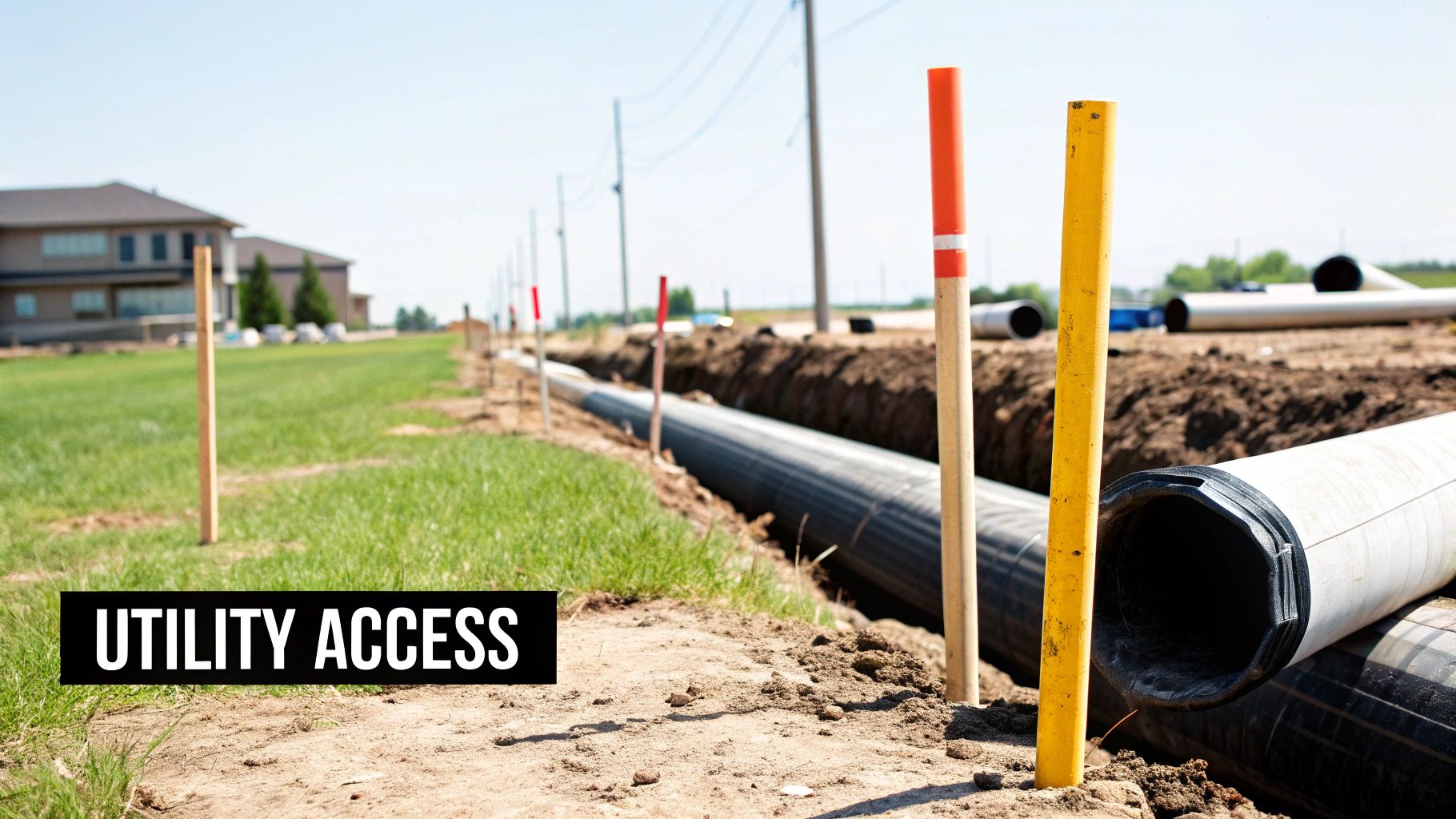
A legally recorded plat map gives you new parcels on paper, but let’s be blunt: without access to basic services, those lots are essentially worthless. This is where your subdivision moves from a legal concept to a tangible, buildable asset.
This phase requires a ton of coordination between your civil engineer and the local utility providers. Neglecting this part of the process is a classic—and extremely costly—mistake. The thrill of getting your plat approved fades fast when you’re hit with a six-figure estimate to run a water main a few hundred feet. Infrastructure planning isn’t something you do after the legal work; it has to happen right alongside it.
Municipal Services Versus Private Systems
The first big question your engineer will tackle is how your new lots will get water and handle wastewater. Your property’s location relative to existing municipal lines dictates the entire game plan.
If you’re close to public water and sewer mains, the municipality will almost certainly make you connect. This means paying “tap fees” for each new lot and footing the bill for construction to extend those lines. It’s a significant expense, no doubt, but it’s also the most straightforward and valuable solution for anyone who eventually buys the lots.
Out in a more rural spot? You’ll be looking at private wells and septic systems. This brings a whole different set of challenges and requires a green light from the local health department, not just the planning office.
The All Important Percolation Test
When you’re relying on septic systems, one test is king: the percolation test, or “perc test.” It’s a simple but vital evaluation that measures how quickly water drains through the soil on your property. Your soil has to have just the right absorption rate to safely filter wastewater.
A failed perc test can kill a project dead in its tracks. If the soil is too dense (like heavy clay) or drains too quickly (like sand or gravel), the health department will deny a septic permit. A lot without a septic permit is, for all practical purposes, unbuildable. You absolutely must get these tests done on each proposed lot before you finalize your plat.
A subdivision plan is only as good as the ground it’s built on. Don’t invest thousands in survey and legal fees until you’ve confirmed each lot can physically support a septic system. A failed perc test on one of your proposed lots is a clear signal to rethink your entire layout.
Ensuring Legal and Physical Access
Every single lot you create must have both legal and physical access to a public road. This is a non-negotiable requirement in any subdivision, anywhere.
- Legal Access: This is formally established on your subdivision plat. It shows a dedicated right-of-way or an access easement that connects each parcel to the road.
- Physical Access: This is the actual, on-the-ground construction of a driveway or road that meets municipal standards for width, grade, and surface material.
For a simple two-lot split, this might be as easy as getting a new driveway permit. But for a larger project, your civil engineer will be designing and overseeing the construction of a brand-new road—complete with proper drainage and maybe even curbs and gutters—all on your dime.
Environmental Due Diligence and Stormwater
Modern land development rightly puts a heavy emphasis on environmental stewardship. As the landowner, you’ll almost certainly need to address two key areas: environmental impact and stormwater management.
You may need to commission an environmental impact study to check for sensitive features like wetlands, endangered species habitats, or historical sites. Globally, the competing demands for land are a major challenge, with millions of hectares degraded each year. Sustainable planning is now a core part of the development process to ensure new projects don’t harm vital ecosystems. You can learn more about how land subdivision fits into the global picture by reviewing the 2025 Land Gap Report.
On top of that, your engineer will create a stormwater management plan. When you add roofs, driveways, and roads, you create “impervious surfaces” that dramatically increase water runoff. This plan will detail how you’ll manage that extra water using features like retention ponds or bioswales to prevent flooding and erosion on your property and your neighbors’.
Common Questions About Subdivriving Land
Even for seasoned developers, the land subdivision process is filled with nuance and potential pitfalls. It’s a venture where logistical questions and financial curveballs are part of the territory. Here, we address the most frequent queries we encounter, offering the kind of straightforward, experience-based answers that can keep your project on track and save you from costly surprises down the road.
How Long Does The Subdivision Process Usually Take?
This is always the first question, and the only honest answer is: it depends entirely on the complexity and jurisdiction. There’s a world of difference between a simple lot split and a multi-parcel development.
A straightforward “minor subdivision“—think splitting one lot into two with no new roads or major utility work—can often be completed in as little as 3 to 6 months. This faster track is usually possible when your plan already aligns perfectly with existing zoning and regulations.
A “major subdivision,” on the other hand, is a much more involved undertaking. If you’re creating new public roads, extending water and sewer mains, or seeking a rezoning, you need to budget for a timeline of 12 to 24 months. In municipalities with significant environmental reviews or vocal community opposition, it can stretch even longer. Your local planning department will always be your best source for a realistic estimate.
Can I Subdivide Land That Has A Mortgage?
Yes, but this requires immediate and transparent communication with your lender. Your mortgage agreement undoubtedly contains a “due-on-sale” clause, and the entire property is collateral for that loan. You can’t just sell off a piece of the bank’s collateral without their explicit permission.
The mechanism for this is called a “partial release” of the mortgage lien. In this negotiation, the lender agrees to remove its claim from the new lot you plan to sell, while the lien remains on the rest of the property.
Lenders don’t do this out of goodwill. Expect them to require a substantial pay-down of your outstanding mortgage balance in exchange for granting the release. It’s critical to have this conversation before you invest significant capital in surveys and applications to fully understand their terms.
What Are The Most Common Hidden Costs?
Most people budget for the obvious line items like surveyors and attorneys. The real financial risks, however, often hide in the infrastructure and municipal requirements—costs that can quickly erode your project’s profitability.
Keep a sharp eye out for these frequent budget-busters:
- Utility Extension Costs: The price to run water, sewer, and electrical lines to new lots can be shocking, easily running into tens of thousands of dollars depending on distance and terrain.
- Municipal Fees and Bonds: Cities often levy impact fees for schools or parks. They may also demand you post a sizable bond to guarantee the completion of required infrastructure like roads and drainage to their specifications.
- Unexpected Studies: A planning department can unilaterally require a traffic impact study, an environmental assessment, or a geotechnical report, each adding thousands of dollars to your project costs.
The smartest move any developer can make is to build a contingency fund of 15-20% on top of the initial budget. That financial cushion is your best defense against the unforeseen expenses inherent in any subdivision project.
How Will Subdividing Affect My Property Taxes?
Once your final subdivision plat is recorded, the original parcel ID is officially retired by the county assessor. It’s gone. In its place, new, unique parcel identification numbers are created for each lot.
From that moment forward, each lot is assessed and taxed as a separate entity. Initially, the combined assessed value of the new lots might hover near the value of the original, larger parcel.
But that equilibrium is temporary. The moment a new home is constructed or a lot is sold at market value, its assessed value will be adjusted—often dramatically upward. This inevitably leads to a much higher cumulative property tax burden across all the new parcels compared to what you paid on the single property. It’s a critical long-term carrying cost to factor into your financial models.
When navigating the legal complexities of land use and real estate transactions, having an elite attorney is not a luxury—it’s a necessity. The Haute Lawyer Network connects you with top-tier legal professionals who possess the expertise to guide you through intricate processes like land subdivision, ensuring your interests are protected at every turn. Elevate your legal strategy by exploring our curated network of distinguished attorneys at https://hauteliving.com/lawyernetwork.