Forget about just collecting business cards. To network effectively, you have to shift your focus to building genuine, long-term relationships. This means starting with a solid foundation: clear goals, a deep understanding of who you want to meet, and a personal brand that screams value.
It’s about turning a random handshake into a real opportunity.
Build Your Networking Foundation
Powerful networking doesn’t happen when you walk into an event; it begins long before with careful preparation. Without this groundwork, your efforts will feel scattered and, frankly, unproductive.
The objective here is to move past aimless socializing. You need a framework that directs every single interaction toward a specific, meaningful outcome. This ensures you connect with the right people for the right reasons—and leave an impression that actually opens doors.
Define Your Strategic Goals
Before you even think about attending an event, you need to know what a win looks like. A generic goal like “meeting new people” is useless. Get specific.
Your goals will dictate your entire strategy, from the galas you attend to the people you make a point to speak with. Are you looking to:
- Generate Referrals: This means identifying professionals who serve the same high-net-worth clientele but don’t compete with you, like financial advisors or accountants.
- Find a Mentor: Maybe you need to seek out a senior partner in a niche practice area who can offer real guidance on your career.
- Establish Partnerships: Connect with attorneys in different specializations to build a powerful cross-referral system.
- Secure New Clients: Pinpoint the exclusive events where you can directly engage with potential high-net-worth individuals. For a deeper dive, you can explore proven strategies on how to get clients as a lawyer and apply those principles to your networking.
When you have clear, measurable goals, networking transforms from a social chore into a targeted business development activity. It gives you a filter for your time and energy, making sure every conversation has a purpose.
Craft Your Compelling Personal Brand
Your personal brand is, simply, how people perceive your expertise and value. It’s the story you tell about yourself, both online and in person. For attorneys, a strong brand is built on credibility, specialized knowledge, and a clear value proposition.
It answers the critical question: “Why should someone work with me over anyone else?” Start by articulating your unique strengths and the specific, high-stakes problems you solve for your clients.
A powerful personal brand isn’t about being everything to everyone. It’s about being the undeniable expert for a select few. It transforms your introduction from a mere job title into a compelling solution.
To sharpen your brand, craft an elevator pitch—a concise, 30-second summary of who you are, what you do, and why it matters. A great pitch is never a sales script. It’s an invitation to a deeper conversation.
It should feel natural and confident, focusing entirely on the value you bring to the table. This is an essential tool for making a memorable first impression and ensuring your efforts lead to meaningful follow-up.
Mastering In-Person Networking

Walking into a room full of smart, driven people can feel overwhelming. Yet nothing beats the instant trust sparked by a face-to-face chat. Industry gatherings, charity dinners and small meetups all offer a chance to turn a handshake into something far more valuable.
Success here isn’t about showing up and hoping for the best. It starts long before you enter the venue—with a plan that helps you stand out and build genuine connections.
Prepare For Purposeful Conversations
Treat the guest list like your shortlist. Scan the roster and pick three to five individuals whose work or causes resonate with your own goals. That could be a firm partner you admire or a philanthropist whose charity aligns with your values.
Set a clear intention for each encounter. For example:
- Understand their biggest challenge right now
- Uncover a shared hobby or interest
- Pinpoint how you might help them down the road
With these in mind, you’ll steer clear of small talk and dive straight into meaningful dialogue.
Navigate The Room With Confidence
Your posture and pace speak before you even open your mouth. Stand tall, keep your shoulders relaxed and maintain eye contact. A warm smile goes a long way toward making you approachable.
To slip into a chat, look for:
- A gap in a circle of three or more people
- Someone standing solo near the refreshment table
Try a simple opener:
“Mind if I join you? I’m [Your Name].”
“Listening is your secret weapon. Don’t just wait for a pause—ask follow-up questions that show you’re truly interested.”
When it’s time to move on, have a few polite exit lines at the ready:
- “I’ve really enjoyed this—mind if I grab a quick coffee?”
- “I want to say hello to a colleague before they head out.”
- “Let’s reconnect later; can I follow up by email?”
Make Every Interaction Memorable
Surface-level questions get surface-level answers. Instead of “What do you do?” try asking, “What project has you most excited right now?” That shift invites a story.
Imagine you’re at a gala for a children’s hospital. You might say:
“The work here is inspiring—how did you first get involved?”
Suddenly you’re not a stranger; you’re someone who shares their passion.
Consider these industry insights:
- 79% of professionals say networking drives their career forward
- Only 48% actually keep those relationships alive
- Nearly 80% agree that in-person chats forge stronger bonds
Explore more in the impact of networking on career progression. By treating every live interaction as a chance to listen, connect and add value, you’ll join the few who truly master in-person networking.
Leveraging Digital Platforms for Strategic Connections
In today’s world, your online presence is your digital handshake. It’s the first impression that works for you 24/7, and for attorneys targeting high-net-worth clients, a platform like LinkedIn is far more than a digital Rolodex—it’s a stage.
Mastering networking today means moving beyond in-person events to strategically build and nurture connections online. This isn’t about passive scrolling; it’s about active engagement that keeps you top-of-mind with the people who matter most.
The infographic below illustrates this “digital handshake” concept, showing how your online profile introduces you long before you ever meet in person.
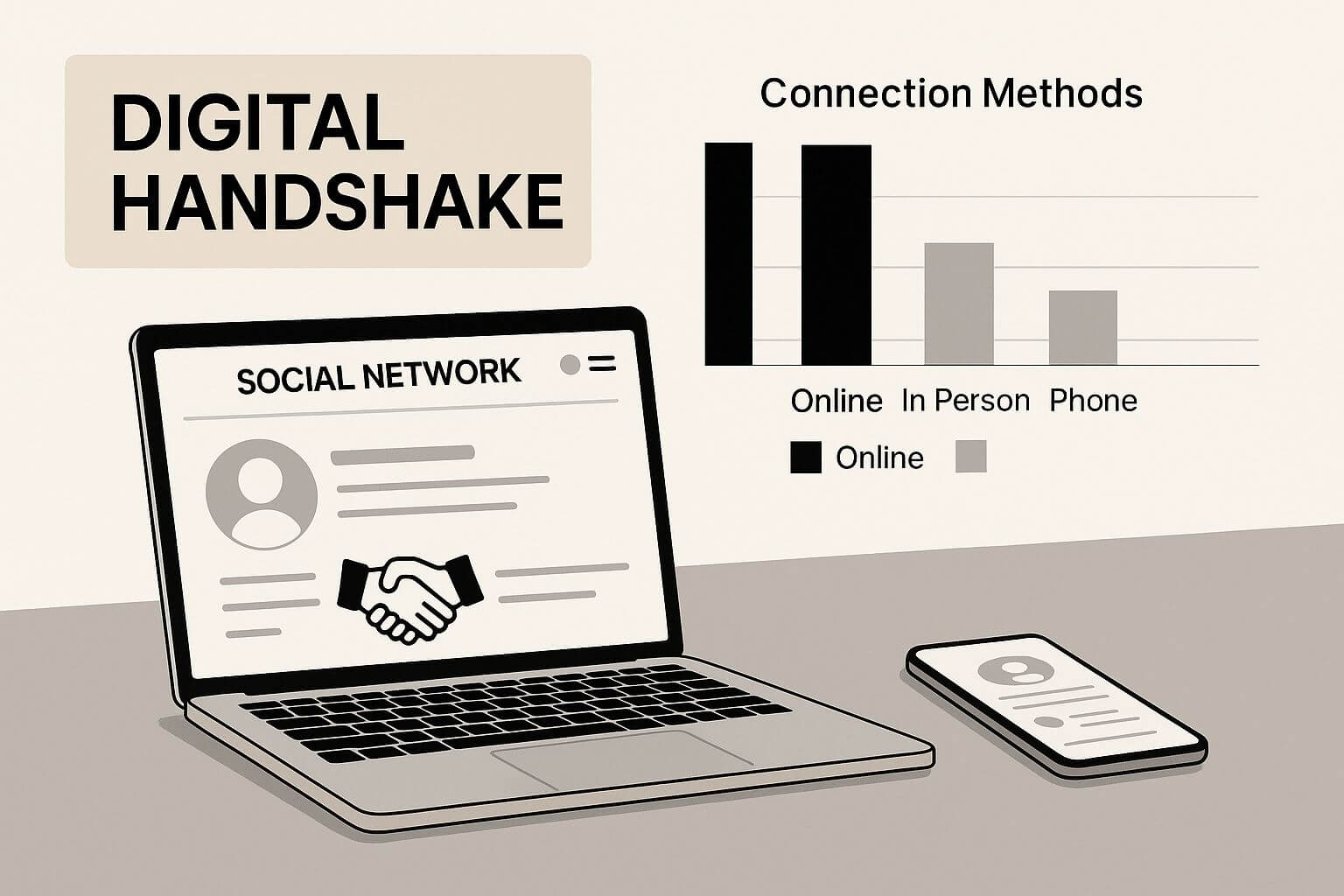
This visual shows how a well-crafted digital presence on a laptop or smartphone serves as the modern equivalent of a firm, confident handshake in the business world.
Optimize Your Profile for High-Caliber Connections
Your LinkedIn profile shouldn’t just be a resume. It needs to tell a compelling story about the value you deliver. High-net-worth individuals and top-tier professionals aren’t looking for generalists; they’re looking for specialists who solve complex problems.
Start with a professional headshot and a headline that immediately communicates your niche. Instead of a generic “Attorney at XYZ Law Firm,” try something specific like, “Estate Planning Attorney for High-Net-Worth Families | Asset Protection & Wealth Preservation.“
- About Section: This is where you articulate your professional philosophy. Share specific successes and use bullet points to make key practice areas easy to scan.
- Experience: Don’t just list your duties. Focus on the outcomes you achieved for clients. Quantify your results whenever possible to demonstrate real impact.
- Recommendations: Don’t be afraid to ask for recommendations from respected peers and clients. A profile with strong endorsements provides powerful social proof.
A thoughtfully optimized profile acts as a magnet for the exact connections you want to attract. For more specific ideas, our article on effective social media marketing tips for lawyers offers additional guidance.
Digital vs In-Person Networking Approaches
Choosing between digital and in-person networking depends on your specific goals. While digital platforms offer incredible scale and efficiency, the depth of connection from face-to-face interaction remains powerful. Understanding the strengths of each approach allows you to build a more effective, holistic strategy.
| Aspect | Digital Networking (e.g., LinkedIn) | In-Person Networking (e.g., Conferences) |
|---|---|---|
| Reach & Scale | Global reach; connect with hundreds of professionals without geographic limits. | Limited to event attendees; geographically constrained. |
| Initial Impression | Based on a curated professional profile, shared content, and written communication. | Based on personal presence, body language, and direct conversation. |
| Time Commitment | Flexible and ongoing; can be done in small increments of time. | Requires dedicated time blocks for travel and attendance. |
| Relationship Depth | Builds rapport over time through consistent, thoughtful engagement. | Can establish strong initial rapport and trust quickly through face-to-face interaction. |
| Follow-Up | Seamless transition to direct messaging or email; easy to maintain contact. | Requires deliberate follow-up (email, call, LinkedIn request) to continue the conversation. |
Ultimately, the most successful professionals don’t choose one over the other—they integrate both. Use digital platforms to identify and warm up connections before an event, and then use in-person meetings to solidify those relationships.
Craft Connection Requests That Get Responses
A generic connection request is the digital equivalent of a limp handshake. It shows a lack of effort and will be ignored by discerning professionals almost every time. Personalization is absolutely critical.
Before you click “connect,” take a minute to review the person’s profile. Find something you have in common—a mutual connection, a shared alma mater, an article they recently published, or an insightful comment they made.
Example: “Hi [Name], I saw your recent post on the complexities of cross-border trust litigation and found your insights on [specific point] particularly sharp. I specialize in a complementary area and would appreciate the opportunity to connect and follow your work.”
This approach shows you’ve done your homework and respect their expertise, dramatically increasing the chance they’ll accept and paving the way for a genuine conversation.
Engage Meaningfully to Build Authority
Getting the connection is just the start. Staying relevant means engaging with content in a way that establishes you as a credible authority. This requires moving beyond a simple “like.”
- Leave Insightful Comments: Don’t just agree. Add to the conversation on a post from an industry leader by asking a thoughtful question or offering a complementary perspective.
- Share Valuable Analysis: When you share an article, add two or three sentences of your own analysis. Explain why it’s important or what the key takeaway is for your network.
- Participate in Niche Groups: Join specialized professional groups and actively contribute. Answering questions here positions you as a go-to resource in your field.
Consistent, high-quality engagement builds your personal brand and nurtures relationships. It ensures you’re the professional people think of when an opportunity arises in your area of expertise.
The Art of Following Up and Nurturing Connections
Making a sharp first impression at an event is just the opening move. The real value in networking is unlocked in the follow-up, where a brief encounter evolves into a lasting professional relationship.
Without a thoughtful strategy for nurturing new contacts, even the most promising conversations will fade. This is where you shift from simply collecting contacts to building a community of genuine allies. It’s a process that requires promptness, personalization, and a commitment to providing value long after the initial handshake.
The Power of a Prompt and Personal Follow-Up
The 24-hour rule is your best friend here. Send a follow-up note within a day, while the memory of your conversation is still fresh for both of you. A delayed message feels like an afterthought, but a quick note shows you’re organized, intentional, and genuinely interested.
Of course, speed without personalization is just another form of spam. A generic “nice to meet you” email is instantly forgettable. To make your message resonate, you must anchor it to the specific conversation you had.
- Reference a specific detail: Mention a book they recommended, a project they were excited about, or a shared interest you discovered.
- Keep it concise: Respect their time. A few well-crafted sentences are far more powerful than a long, rambling email.
- Have a clear, but soft, call to action: Suggesting a brief coffee chat can work, but often, the best first step is simply opening the door for future dialogue.
For instance, if you connected with a financial advisor who mentioned their passion for impact investing, your follow-up could look like this:
“Hi [Name], it was a pleasure speaking with you at the charity gala last night. I particularly enjoyed our conversation about the growing interest in impact investing among our clients. I just came across an insightful article on that very topic and thought you might find it valuable. Looking forward to staying in touch.”
This approach is non-transactional. It immediately adds value and positions you as a thoughtful, helpful professional, setting the stage for a much stronger relationship.
Building a System to Nurture Your Network
Effective networking isn’t about random acts of outreach; it’s about systematic engagement. You need a simple system to track your connections and ensure no one falls through the cracks. This doesn’t require complex software—a basic spreadsheet or a dedicated tool in your CRM can work perfectly.
Your system should track key information for each high-value contact:
- Contact Information: Name, company, title, and email.
- Context: Where you met and the key points of your discussion.
- Key Interests: Personal or professional topics they are passionate about.
- Last Contact Date: The date of your last interaction.
- Next Action: Your planned next step (e.g., “Send article on Q2 market trends” or “Check in after their conference in July”).
This organized approach allows you to engage meaningfully over time. A simple check-in every few months, referencing a past conversation or sharing a relevant update, keeps the connection warm without feeling intrusive.
Adopt a Give-First Mentality
The most successful networkers operate with a “give-first” philosophy. They constantly look for opportunities to help their connections without any immediate expectation of return. This mindset fundamentally changes the dynamic of your interactions from transactional to relational.
Instead of thinking, “What can this person do for me?” ask yourself, “How can I help them?”
This could mean:
- Sharing a relevant resource: A report, article, or webinar that aligns with their professional interests.
- Making a helpful introduction: Connecting two people in your network who could benefit from knowing each other.
- Offering a useful insight: Sharing a piece of knowledge from your area of expertise that could help them solve a problem.
By consistently providing value, you build a reputation as a generous and resourceful professional. This fosters deep-seated trust and loyalty. When you genuinely invest in the success of others, they naturally become invested in yours, creating a powerful network of advocates ready to support you when you need it most.
Advanced Strategies for High-Value Relationships
Trying to connect with a senior partner or a high-net-worth individual using standard networking tactics is like trying to open a vault with a paperclip. It just doesn’t work. These professionals are fiercely protective of their time and are flooded with requests.
To build genuine rapport, you have to move beyond the usual outreach. This is about earning a place as a trusted peer by proving you understand their world long before you ever ask for anything.
The Power of Warm Introductions
A cold email to a managing partner is almost guaranteed to be deleted on sight. The single most effective way to get on the radar of high-caliber individuals is through a warm introduction from a mutual contact they trust. This simple act transfers a degree of credibility and bypasses the skepticism that greets every unsolicited message.
Think of it as borrowing trust. When a respected colleague makes an introduction, they are putting their own reputation on the line for you. That tells the new contact you’re worth their time.
- Identify Mutual Connections: Use LinkedIn to pinpoint shared contacts who have a genuine, strong relationship with the person you want to meet. A weak connection is useless.
- Make a Clear and Easy Ask: Don’t make your contact do the heavy lifting. Give them a short, forwardable email explaining why the connection would be valuable for all parties.
- Respect Their Relationship: Never pressure someone for an introduction. If they seem hesitant, that’s your cue to back off. Pushing it will only damage your relationship with them.
A thoughtful approach turns a cold call into a welcomed conversation.
Master Sophisticated Pre-Contact Research
Before you even think about reaching out—even with a warm intro—you need to do your homework. Influential people can spot a generic, copy-pasted message a mile away. They appreciate those who’ve taken the time to understand their work, their passions, and their recent activities.
This goes way beyond a quick glance at their LinkedIn profile. Dig deeper.
- Have they recently published an article or been quoted in a major publication?
- Do they sit on the board of a prominent charity or foundation?
- What are their professional passions or personal hobbies outside of work?
For example, discovering a potential client is an avid art collector allows you to reference a recent gallery opening or auction. This small detail shows genuine interest and creates a personal connection that immediately sets you apart. It proves you see them as a person, not just a business opportunity.
A well-researched approach communicates respect for their time and intellect. It proves you are not just seeking a transaction but are interested in building a real, substantive relationship.
Provide Significant Value Without Expectation
The most powerful way to build relationships with high-value contacts is to give first. Provide significant value with absolutely no expectation of getting something in return. This flips the entire networking script on its head. Instead of asking, you’re offering, positioning yourself as a generous peer and a valuable resource.
This could be an introduction to someone in your network, a piece of exclusive industry data they might find useful, or a thoughtful perspective on a challenge they’ve mentioned publicly.
This principle has become even more critical as networking shifts online. In fact, 40% of professionals now prefer virtual networking. Research from Novoresume about the rise of online networking shows that 35% of professionals have landed opportunities through casual messaging on platforms like LinkedIn. With engagement on the platform growing by 55% in a single year, it’s clear where the connections are being made.
This consistent, value-driven approach builds deep trust over time. When you become a source of valuable information and opportunities, you become indispensable. It’s a long-term strategy that cultivates powerful advocates for you and your practice. To see how top-tier professionals put this into practice, you can meet some of the new elite members of the Haute Lawyer Network and see how they position themselves as leaders in their field.
Answering Your Toughest Networking Questions
Even the most polished attorneys run into networking roadblocks. It’s perfectly normal to have questions, whether you’re building your first book of business or trying to connect with a more exclusive circle of clients. Let’s tackle some of the most common hurdles that get in the way of building a powerful professional network.
These aren’t just theories; they are practical answers designed to get you past the sticking points and turn every handshake or email into a genuine opportunity.
How Do I Get Past Networking Anxiety?
Walking into a room full of strangers can be daunting. The secret isn’t to eliminate the anxiety but to reframe it. Shift your focus from performing to being curious. Stop worrying about impressing people and start focusing on learning something interesting about them.
This simple mental switch changes the entire dynamic. It’s no longer a sales pitch; it’s a conversation.
Here’s how to put that into practice:
- Prepare Three Open-Ended Questions: Before you go, have a few conversation starters ready. Think beyond “What do you do?” Try something like, “What’s the most interesting challenge you’re working on right now?” or “What brought you to this event tonight?”
- Show Up Early: Arriving before the room is packed lets you get your bearings. It’s far less intimidating to strike up a conversation with one or two people than to try and break into a tight-knit group that has already formed.
- Set a Realistic Goal: Don’t pressure yourself to meet everyone. Your goal isn’t a stack of business cards; it’s meaningful connection. Aim for just two or three quality conversations. This makes the entire event feel more manageable and less overwhelming.
Having a simple game plan gives you something to fall back on, taking the pressure off and letting you be more present in the moment.
What’s the Best Way to Follow Up Without Seeming Desperate?
The difference between persistence and pushiness comes down to one thing: value. An effective follow-up is prompt, personal, and gives more than it asks. Your goal is to be a welcome sight in their inbox, not another chore on their to-do list.
Reach out within 24 hours of meeting. A quick, personalized message on LinkedIn or a brief email shows you’re organized and that you valued the conversation.
But the real art is in the substance. Ditch the generic “It was nice to meet you.” Instead, reference a specific topic you discussed and, more importantly, offer something of value.
A value-driven follow-up solidifies a new connection by demonstrating your insight and generosity. It moves the relationship forward naturally, positioning you as a helpful resource rather than someone seeking a favor.
Consider sharing something like:
- A link to an article or a recent court ruling related to your conversation.
- An introduction to someone in your network who could be a useful contact for them.
- A resource, like an industry report or webinar, that aligns with their professional interests.
This “give-first” approach keeps the dialogue going and immediately frames you as a thoughtful, well-connected expert.
How Can I Actually Measure My Networking ROI?
Real networking success isn’t about how many LinkedIn connections you have. While metrics matter, the true measure is the quality and depth of the relationships you are cultivating.
You need to look at both the hard numbers and the softer, qualitative signs of a healthy network.
Quantitative Metrics (The Numbers):
- How many new, relevant connections are you making each month?
- How many introductory calls or meetings resulted from your networking?
- How many referrals have you received from your network?
- How many joint ventures or collaborative opportunities have emerged?
Qualitative Indicators (The Relationship Strength):
- Are people in your network proactively reaching out to you for advice?
- Are you getting invited to smaller, more exclusive events or private dinners?
- Are your conversations moving past small talk into more substantive discussions about business challenges and opportunities?
Ultimately, you know you’ve succeeded when your network starts acting like a community of advocates—people who trust your judgment and are genuinely invested in your success because you’ve taken the time to invest in theirs.
How Much Time Should I Really Dedicate to This?
Effective networking is a marathon, not a sprint. Consistency beats intensity every single time. A frantic week of outreach before a major conference will never match the power of small, steady efforts over the long haul.
Aim for two to three focused hours per week. This doesn’t have to be one big block of time. Break it down into smaller, manageable activities that fit your calendar.
A sustainable weekly routine could be:
- Attend one high-value event, like an industry luncheon, a CLE webinar, or a local charity fundraiser.
- Schedule one “virtual coffee.” This is just a 15-minute video call to catch up with a new or existing contact.
- Spend 30 minutes on LinkedIn. Don’t just scroll—leave thoughtful comments on posts from key contacts or share a valuable piece of content yourself.
Block this time on your calendar as if it were a client meeting. When you treat networking as a core professional practice, you give relationships the space they need to grow, and the cumulative effect will build you a powerful and authentic network.
Elevate your brand and connect with an exclusive audience of high-net-worth individuals and industry leaders. The Haute Lawyer Network offers more than just a listing; it provides a powerful platform for visibility, authority, and strategic connections. Discover how our curated network can open doors for your practice.
Learn more and apply to join the Haute Lawyer Network.