Before you even type “how to find an attorney” into a search bar, there’s a critical first step that will save you time, money, and a whole lot of frustration. You need to get your house in order first. This means clearly defining your legal issue, pulling together every relevant document, and crafting a simple summary of your situation.
This initial groundwork is what separates a focused, productive search from a chaotic and expensive one.
Define What You Need Before You Start Searching

Jumping into a search without a clear roadmap is like driving without a destination—you’ll end up talking to a lot of lawyers who simply can’t help you. The goal here is to turn that vague feeling of a “problem” into a concise, organized case summary that a potential attorney can grasp in minutes.
Clarity is everything, especially in a legal market that’s not just large, but booming. The global legal services market was valued at roughly USD 0.99 trillion in 2024 and is projected to hit USD 1.55 trillion by 2034. With North America making up a 42% slice of that pie, the competition is fierce, and specialization is the name of the game. You can find more data on the expanding legal services sector on PrecedenceResearch.com.
This checklist can help you get organized before you make that first call.
Defining Your Legal Needs: A Quick Checklist
| Action Item | Why It Matters | Example |
|---|---|---|
| Pinpoint the Legal Area | Ensures you target attorneys with the right specialty. | Instead of “a business problem,” specify “a trademark infringement issue.” |
| Gather All Documents | Provides tangible evidence and context for your case. | Collect all emails, contracts, and payment records related to a vendor dispute. |
| Create a Timeline | Helps an attorney quickly understand the sequence of events. | List key dates: contract signed, work delivered, payment missed, first complaint. |
| Write a One-Page Summary | Forces you to clarify the facts and presents you as an organized client. | A brief narrative outlining who is involved, what happened, and what you want. |
Taking these steps transforms you from someone with a problem into a prepared client ready to find the right advocate.
Identify Your Specific Legal Category
First things first: you need to figure out exactly what area of law your issue falls under. The legal world is highly specialized. A top-tier real estate lawyer is probably the wrong person to handle a messy child custody dispute.
Think about the heart of your problem. Does it fit into one of these common buckets?
- Family Law: This is the world of divorce, child custody, adoption, and prenuptial agreements.
- Personal Injury: If you were hurt because of someone else’s carelessness—think a car wreck or a slip-and-fall—this is your category.
- Business Law: A massive field covering everything from contract disputes and starting a company to protecting intellectual property or sorting out partnership drama.
- Estate Planning: For anything involving wills, trusts, and navigating probate, you need an expert in this specific area.
Getting this right is crucial. For instance, a disagreement with a freelance designer over a logo might feel like a simple contract issue. But if the real fight is about who actually owns the design, you’ve just waded into the complex waters of intellectual property law. Knowing that difference helps you find the right specialist from day one.
Gather Your Documentation and Create a Timeline
Once you know the what, it’s time to organize the when and how. This means tracking down every scrap of paper and every digital file related to your case. We’re talking emails, contracts, text messages, invoices, medical records, photos—everything.
Key Takeaway: The single most powerful thing you can do is organize your documents into a chronological timeline. This gives an attorney an immediate, crystal-clear picture of your case during that first conversation.
Draft a simple, one-page summary that outlines the key events, dates, and people involved. This isn’t just for your benefit. Handing this to a potential lawyer makes that first meeting incredibly productive. It shows you’re organized and serious, and it lets them size up your case’s viability on the spot. This level of preparation is how you find not just any attorney, but the right one.
Build Your List of Potential Attorneys

With your case notes organized, it’s time to move from preparation to action. The objective now isn’t just to find any lawyer, but to build a shortlist of highly qualified candidates. This is where you separate the contenders from the pretenders.
Your best starting point is almost always the most reliable resource you have: your own network.
Start with Trusted Personal Referrals
Before you get lost in online searches, turn to the people you already know. A referral from a colleague, friend, or family member who has navigated a similar legal issue is worth its weight in gold. They offer something no website can: a firsthand account of an attorney’s temperament, responsiveness, and real-world effectiveness.
Be direct when asking. A generic “Know any good lawyers?” is useless. Instead, try, “I’m dealing with a commercial lease dispute. Do you know any sharp attorneys who specialize in business or real estate law?” Specificity gets you relevant names.
Also, think outside your immediate circle. Professionals in adjacent fields often have a front-row seat to legal battles. Your accountant likely knows a formidable business litigator, and your commercial real estate broker has probably worked with the best (and worst) property lawyers in town. Their perspective is unique and incredibly valuable.
Utilize State and Local Bar Associations
Every state has a bar association that licenses and regulates attorneys. These organizations aren’t just for lawyers; most run lawyer referral services, an excellent and often overlooked resource for the public.
These services do more than just hand out names. They act as a first-level screening process, typically verifying that an attorney is:
- In Good Standing: The lawyer has a clean disciplinary record and is actively licensed.
- Experienced in Your Area: They match you with counsel who have confirmed experience in your specific legal field.
- Properly Insured: They verify that the attorney carries malpractice insurance, giving you a crucial layer of protection.
Using a bar referral service usually involves a quick, confidential call to discuss your situation. It’s a structured way to find someone who has already met a baseline of credibility.
Expert Tip: Many bar referral programs offer a low-cost initial consultation—often for $50 or less. This gives you a budget-friendly way to get an initial case assessment and see if the attorney is the right fit before making a significant financial commitment.
Navigate Reputable Online Legal Directories
Once you have a few names from referrals, online directories are your next stop. They’re perfect for expanding your list and doing some preliminary due diligence. But be selective. Focus on well-established platforms that offer detailed profiles and, most importantly, verified client reviews.
Good directories let you filter your search by critical criteria. You should be able to narrow your options by practice area (“family law,” for example), location, and client ratings. The best platforms provide an attorney’s bio, educational background, and publications, giving you a much clearer picture of their expertise. When you need to find a lawyer in a curated network, specialized platforms that vet their members can be a game-changer.
When you’re reading reviews, look for themes. One bad review could be a fluke, but if you see multiple clients mentioning poor communication or missed deadlines, that’s a serious red flag. On the flip side, consistent praise for an attorney’s strategic thinking and clarity is a powerful positive signal. This disciplined approach ensures every candidate on your list is a genuine contender.
How to Properly Vet Your Shortlist
Having a list of potential attorneys is a solid starting point, but it’s just that—a start. Now the real work begins. Vetting is the critical filtering process that separates a good lawyer on paper from the right advocate for you in the real world. This is where you move beyond online profiles and referrals to dig into their credentials, track record, and professional standing.
This investigative stage is all about protecting yourself. You’re looking for competence, professionalism, and a clean history. Overlooking this step is a risk you can’t afford when your financial or personal well-being is on the line. Think of it as conducting a background check before making a crucial hire.
Verify Their License and Disciplinary Record
Before you do anything else, confirm that every attorney on your list is licensed and in good standing with their state bar association. This is a non-negotiable, foundational check. Every state bar has a public database where you can search for an attorney by name.
This search will instantly tell you:
- Whether their license is currently active.
- The date they were admitted to the bar.
- If they have any public record of disciplinary actions, such as a suspension or disbarment.
A clean record is the bare minimum. Any history of professional misconduct is a massive red flag that should prompt you to remove them from your list immediately, no questions asked. This simple check takes just a few minutes but provides essential peace of mind.
This due diligence process is your first line of defense. Taking the time now to properly investigate a candidate’s background can save you from future headaches and potential legal malpractice issues.
Read Between the Lines of Client Reviews
Next, turn your attention to online reviews and testimonials. While helpful, you have to approach them with a healthy dose of skepticism. Not all feedback is created equal, and you need to learn how to spot genuine insight versus curated marketing fluff.
Look for patterns. If multiple clients praise an attorney’s clear communication and strategic thinking, that’s a strong positive signal. Conversely, if several reviews mention the lawyer being unresponsive or disorganized, take that seriously.
Key Insight: Pay close attention to how a lawyer responds to negative reviews. A defensive or dismissive reply is a warning sign. A professional and constructive response shows accountability and a commitment to client service.
Also, consider the substance of the reviews. Vague, one-line compliments like “They were great!” aren’t nearly as valuable as detailed accounts that describe a specific challenge and how the attorney helped overcome it. Those narratives give you a much clearer window into what it’s actually like to work with them.
This visualization outlines the core sequence for vetting your potential attorneys effectively.
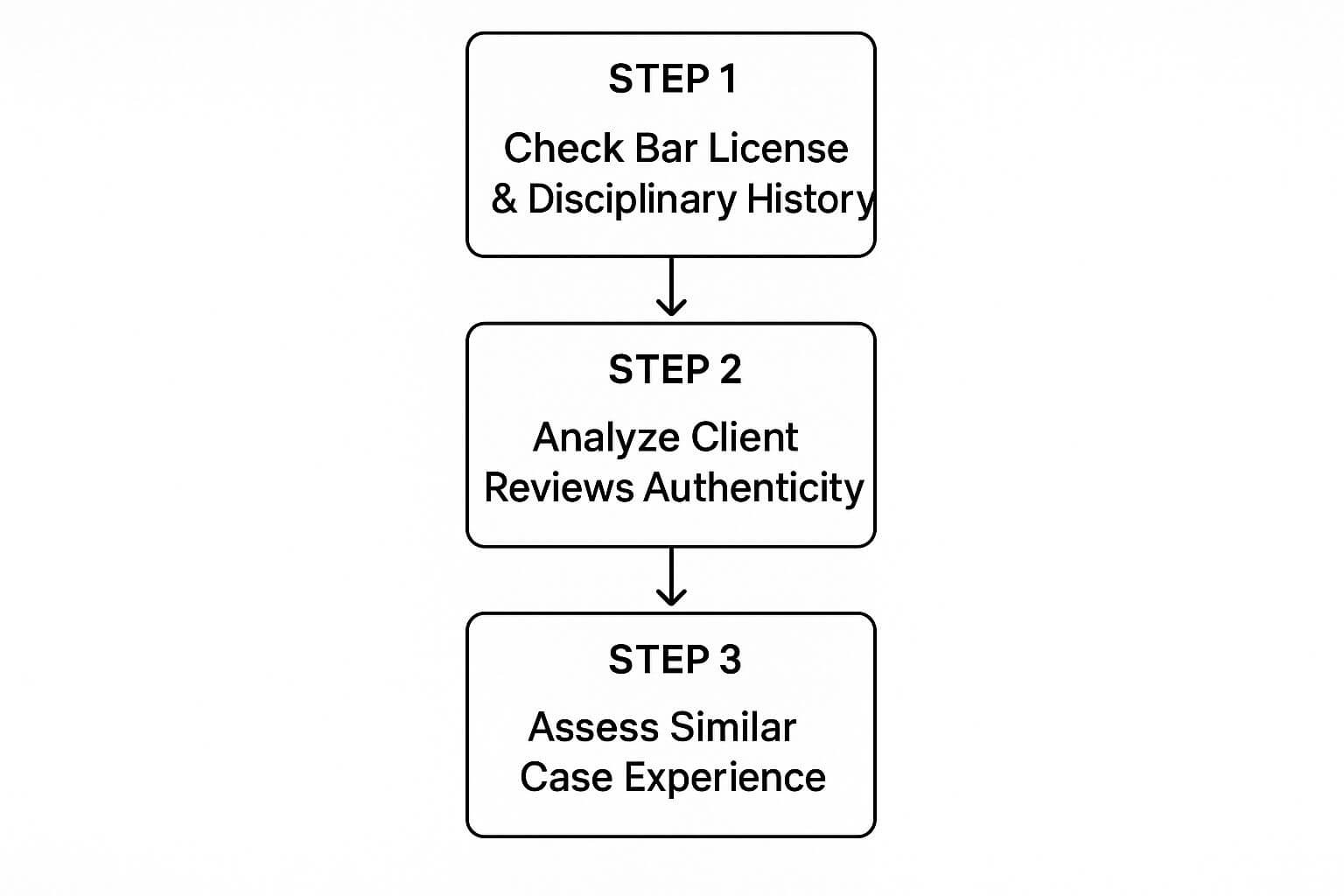
This process ensures you start with the most fundamental checks before moving on to more nuanced evaluations of their experience.
Assess Their Expertise and Communication Style
An attorney’s digital footprint is a rich source of information about their expertise and how they communicate. Go beyond their main website and look for a blog, published articles, or any videos they may have created. This is where you see how they think and explain complex legal concepts.
Ask yourself these questions as you review their materials:
- Is their writing clear and easy to understand? If their articles are filled with dense, impenetrable jargon, that’s likely how they’ll communicate with you.
- Do they demonstrate deep knowledge in your specific legal area? Look for content that directly addresses issues similar to yours.
- What is their professional tone? Are they aggressive, collaborative, academic? Their style should align with what you need for your case.
This shift toward digital engagement is reshaping how clients find legal help. Large law firms, which commanded nearly 69.2% of the global legal services market in 2024, often use sophisticated digital platforms to showcase their expertise. They use these tools to help potential clients sort through their services and find the right fit more quickly. You can discover more insights about the evolving legal services market on MordorIntelligence.com.
Ultimately, your goal is to find an attorney who is not only a skilled legal technician but also a clear and effective communicator. A lawyer who can break down your options in plain English is an invaluable partner. This thorough vetting process will help you narrow your list to only the most trustworthy and qualified candidates.
Get the Most from Your Initial Consultation

This meeting is where everything comes together. After all the background checks and online research, the initial consultation is your chance to size up a potential legal partner in person. This isn’t just about them hearing your story; it’s your opportunity to evaluate their experience, strategic mind, and even their personality to see if they’re the right person to fight for you.
You have to treat this meeting like the critical job interview it is. You’re hiring for an incredibly important role, and you need to walk away with absolute clarity on their skills and how they work. The key to making a confident decision is coming in prepared with the right questions.
Beyond the Basics: Asking Strategic Questions
You’ve already verified their license and read the reviews. Now it’s time to dig into the specifics of their experience as it relates directly to your situation. Asking generic questions will only get you generic answers. Sharp, focused inquiries are what reveal true expertise.
Don’t just ask, “Have you handled cases like this before?” The answer will almost always be “yes.” Get specific by framing your questions around the unique facts of your case.
- “My situation involves a dispute over a commercial lease’s force majeure clause due to supply chain disruptions. Can you walk me through a similar case you’ve handled, including the arguments you made and how it was resolved?”
- “I’m dealing with a complex shareholder dispute where one founder is trying to dilute the others’ equity. What are the most critical statutes in this state that you’d leverage in your initial strategy?”
Listen closely to how they respond. Are their answers confident and detailed, or do they retreat into vague legal jargon? If an attorney can’t explain their experience in plain English, that’s a major red flag. This first conversation really sets the tone for the entire relationship.
Gauging Their Proposed Legal Strategy
A sharp lawyer doesn’t just listen; they start thinking strategically the moment you start talking. Your goal is to get a peek inside their thought process. You want a proactive partner, not just a reactive one.
Ask them to sketch out a potential path forward. A question like, “Based on what I’ve told you, what would be the immediate next steps you’d recommend, and what could a rough timeline look like for the first 30-60 days?” can be incredibly revealing.
Key Takeaway: An experienced attorney should be able to give you a high-level roadmap of your case. This includes potential hurdles, key decision points, and a realistic look at possible outcomes—both good and bad. Be wary of anyone who guarantees you a certain result.
Their answer shows you how they solve problems. Do they lay out a clear, logical plan, or does it feel disorganized? This is also your chance to see if their strategic style fits what you’re looking for. Do you need an aggressive litigator or a masterful negotiator? Their proposed strategy will give you clues.
Understanding Communication and Rapport
Legal skill is paramount, but so is personal chemistry. You’ll be working closely with this person, often under very stressful conditions. You have to feel comfortable being open and honest with them.
Pay attention to the vibe during the consultation. Are they actually listening, or are they interrupting you? Do they make eye contact and seem genuinely invested? A lawyer who seems distracted or dismissive in the first meeting isn’t likely to become an attentive partner down the road.
Set clear communication expectations from the get-go with these questions:
- Will you be my main point of contact, or will I be working with a paralegal?
- What’s your typical turnaround time for returning calls and emails?
- How will you keep me in the loop on my case’s progress?
This isn’t just about finding an attorney; it’s about finding your attorney. Trust your instincts. If the conversation feels off or you just don’t feel a sense of confidence, it’s perfectly fine to keep looking.
Demystifying Fees and Billing Practices
Finally, never, ever leave a consultation without a crystal-clear picture of the costs. Any ambiguity around fees is a recipe for disaster later. You have to tackle this head-on.
Whether they charge an hourly rate, a flat fee, a contingency, or work on retainer, you need to know exactly how the billing works. To make sure you’re comparing apples to apples between different attorneys, a structured approach is best.
The table below outlines the essential questions you should be asking every single lawyer you meet with. This framework will help you organize your thoughts and directly compare your options.
Key Questions to Ask During Your Consultation
| Question Category | Sample Questions | What to Look For in the Answer |
|---|---|---|
| Direct Experience | “What percentage of your practice is dedicated to [my specific legal issue]?” | A high number shows they’re a true specialist, not just dabbling. |
| Case Strategy | “From what you’ve heard, what are the biggest weaknesses in my case right now?” | You want brutal honesty and a realistic assessment, not just what you want to hear. |
| Communication | “How often can I expect to receive updates, and in what format (email, phone call)?” | A clear, established process for keeping clients informed. Vague answers are a bad sign. |
| Fees & Billing | “Can you provide a written breakdown of your hourly rates for all staff who might work on my case?” | Complete transparency about who does the work and what it costs. No surprises. |
Always ask for a written fee agreement so you can review it without pressure. Make sure you understand what’s included and, more importantly, what isn’t. By getting these practical details sorted out upfront, you can move forward with confidence, knowing you’ve found the right partner to tackle the challenge ahead.
Making the Final Choice and Moving Forward
You’ve done the research, sat through the consultations, and vetted your top candidates. Now comes the moment of truth. You’re likely looking at two or three strong contenders, and the final decision requires a careful synthesis of everything you’ve learned, balanced with your own intuition.
This isn’t just about hiring a competent lawyer. It’s about selecting the right partner for a journey that could be complex and demanding. You need a balanced view of their expertise, their proposed strategy, and frankly, how they make you feel.
Creating a Decision Framework
Making this choice on a vague feeling alone is a mistake. Instead, give yourself some structure. A simple spreadsheet or even a handwritten pros-and-cons list can bring incredible clarity when comparing your top attorneys side-by-side.
Score each candidate on a few essential criteria:
- Relevant Experience: Did they demonstrate deep, specific experience with challenges just like yours?
- Proposed Strategy: Was their plan logical? Did it feel realistic and tailored to your goals, not just a generic template?
- Communication Style: Were they direct, clear, and did you feel genuinely heard during your conversation?
- Fee Structure: Is their billing completely transparent, and does it align with what you’re prepared to invest?
Laying it out this way grounds your decision in data. It stops a charming personality from overshadowing another candidate’s superior track record.
Trust Your Gut, But Verify with Facts Your intuition is a powerful tool. If an attorney inspires confidence and makes you feel understood, that’s a huge plus. But always back that feeling up with objective facts—their specific experience, a clear fee structure, and their professional standing.
Watching for Critical Red Flags
While you’re weighing your options, stay alert for any warning signs. A stellar resume can sometimes hide poor professional habits, and certain behaviors should immediately make you question if an attorney is the right advocate for you.
Be wary of any lawyer who:
- Guarantees a specific outcome. The legal system is inherently unpredictable. Ethical attorneys manage expectations; they don’t make promises they can’t possibly keep.
- Uses high-pressure tactics. You should never feel rushed or pressured into signing an agreement or paying a retainer right then and there.
- Is dismissive of your questions. A true partner will welcome your inquiries and make sure you understand every single step of the process.
These aren’t minor issues. They often point to a professional who prioritizes their own interests over their client’s.
Reviewing the Engagement Letter or Retainer Agreement
Once you’ve made your decision, the final step before the work begins is signing the engagement letter or retainer agreement. This is the legally binding contract that officially establishes your attorney-client relationship. Do not just skim this document.
Read it carefully, paying close attention to these key areas:
- Scope of Representation: This clearly defines what legal services the attorney will and, just as importantly, will not be providing.
- Fee Details: It must explicitly state the hourly rates, flat fees, or contingency percentage, along with how often you’ll be billed.
- Communication Policy: The agreement might outline how you’ll receive updates and who your primary point of contact will be.
The legal services market is massive and continues to expand. North America currently accounts for over 41% of the global legal services market revenue, and the United States alone is home to more than a million active lawyers. This huge talent pool is supported by bar associations and directories designed to help people find the right representation. To explore more data on how client demand is shaping an industry projected to hit USD 1.5 trillion by 2032, check out the report on CognitiveMarketResearch.com.
If a single sentence in that agreement is unclear, ask for clarification before you sign. This document is the foundation of your entire working relationship, and starting with total transparency is the only way to move forward with confidence.
Common Questions About Finding an Attorney
Finding the right attorney can feel like navigating a maze, often leaving you with more questions than answers. Getting clear on a few key points from the start is the best way to move forward with confidence. Below are straightforward answers to the questions we see most often from people starting their search.
What Is the Typical Cost of Hiring an Attorney
There’s no single price tag on legal help. The cost depends on the lawyer’s experience, where you’re located, and just how complicated your case is. The good news is that most legal fees fall into a few standard models. Once you understand them, you can start to budget accordingly.
Most attorneys bill using one of these common structures:
- Hourly Rates: This is the traditional model where you pay for each hour the attorney and their team spends on your case. These rates can vary dramatically between firms.
- Flat Fees: You pay a single, upfront price for a clearly defined service. Think things like drafting a simple will or handling an uncontested divorce. It gives you cost certainty from day one.
- Contingency Fees: Common in personal injury cases, the lawyer’s fee is a percentage—usually 30-40%—of whatever money you win in a settlement or court award. If you don’t win, you don’t owe them a fee.
- Retainers: This is an advance payment you make to the firm. They hold onto it and bill their time against that amount as they work on your case.
Always insist on a detailed conversation about fees during your initial consultation. Any reputable attorney will be transparent about their costs and will put everything in writing in a fee agreement.
Can I Get Legal Help If I Cannot Afford a Lawyer
Absolutely. The cost of legal services should not be a complete barrier to getting the help you need. If you’re dealing with financial constraints, there are several resources designed specifically to bridge that gap.
A great place to start is your local Legal Aid society. These are non-profit organizations that offer free or very low-cost legal services to low-income individuals who qualify. Your local bar association is another excellent resource; they often run pro bono programs that connect people with lawyers willing to volunteer their time for free.
Some attorneys also offer “unbundled” services. This allows you to hire them for a specific, limited task—like reviewing a contract or preparing a legal document—instead of full-scale representation, which can be a much more affordable path.
A consultation is just a meeting to discuss your situation and explore your options. It doesn’t lock you into a formal attorney-client relationship. You only officially hire a lawyer when you sign an engagement letter or retainer agreement that clearly outlines their work and your payment obligations.
How Important Is Attorney-Client Privilege
It’s not just important—it’s one of the absolute cornerstones of the U.S. legal system.
This privilege ensures that what you say to your attorney stays confidential and can’t be used against you. It’s a sacred trust that allows you to be completely honest with your lawyer, which is the only way they can give you the best possible advice and build the strongest case for you. Without it, the whole system would fall apart.
To truly understand this fundamental legal right, you can learn more about what attorney-client privilege is and how it protects you from the very first moment you seek legal advice, even in that initial consultation.
Finding the right attorney means connecting with a professional who not only has the right experience but also the visibility and reputation to back it up. The Haute Lawyer Network is a curated directory of the nation’s top legal professionals, showcased through a trusted luxury media brand. Explore our network to find an elite attorney who can guide you through your legal challenges with expertise and distinction. Visit us at https://hauteliving.com/lawyernetwork.