
When you’re facing a family law matter, the last thing you need is the added stress of finding the right lawyer. A methodical search, however, can make all the difference. It’s not just about a quick Google search; it’s about building a short, solid list of genuine professionals you can trust.
Building Your Initial List of Potential Lawyers
With nearly 56,970 family law and divorce lawyers practicing across the U.S. in 2025, the digital noise can be overwhelming. Some attorneys have slick marketing, but that doesn’t always translate to courtroom skill. You’re looking for substance, not just style.
The goal here isn’t to find dozens of names, but to identify three to five highly qualified candidates. From there, you can dig deeper.
Where to Start Your Search
A great search starts with reliable sources. Think of it like getting a recommendation for a doctor—you want trusted opinions, not just a random name from an ad.
Here’s a breakdown of the best places to start looking and what makes each one valuable:
Best Places to Start Your Lawyer Search
| Source | What It Offers | Key Benefit |
|---|---|---|
| State Bar Association | Official directory of all licensed attorneys. | Verified credentials and public disciplinary history. |
| Personal Referrals | Recommendations from friends, family, or colleagues. | Real-world insight into a lawyer’s style and effectiveness. |
| Professional Network | Suggestions from your accountant, therapist, or financial advisor. | Vetted recommendations based on professional experience. |
| Legal Directories | Platforms like Avvo, Martindale-Hubbell, or Super Lawyers. | Peer reviews, client ratings, and detailed profiles. |
Each of these channels provides a different piece of the puzzle, helping you build a well-rounded list of potential attorneys.
Tap Into Your Network for Referrals
Don’t underestimate the power of a personal referral. Talking to friends, family, or colleagues who have been through a divorce or custody issue can provide invaluable firsthand insight. They can tell you what it’s really like to work with a particular lawyer—their communication style, their demeanor under pressure, and how they treated them as a client.
Your professional network is another goldmine. Professionals like your accountant or financial advisor often work alongside family lawyers during divorce proceedings. Their recommendations come from a place of professional respect and observation, which can lead you to some of the most highly-regarded attorneys in your area. You can find more tips on this approach in our guide on how to find an attorney.
The infographic below offers a clear visual guide to the most effective ways to begin your search.
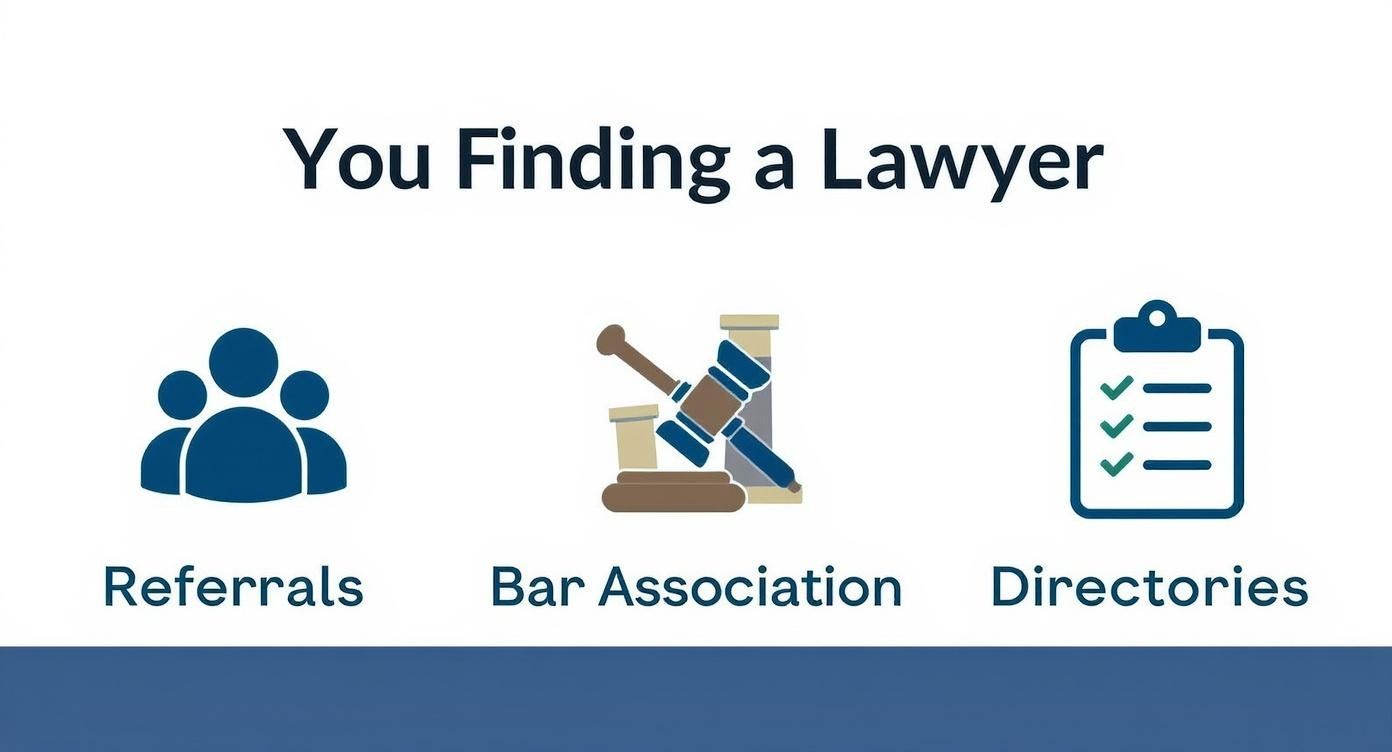
By combining recommendations from people you trust with official sources like the state bar, you move beyond the uncertainty of online searches and start building a list of lawyers truly worth considering.
How to Properly Vet Each Candidate

Once you have a shortlist of names, the real work begins. This is where you move beyond first impressions and start digging into each candidate’s professional background, reputation, and actual track record. This vetting process is absolutely critical—it ensures you don’t just hire a lawyer, but a true advocate who is both qualified and respected in their field.
Your first move should be to verify their credentials. Every state has an official bar association website where you can look up an attorney by name. This simple search will confirm they are licensed and in good standing.
More importantly, this is where you’ll find any public disciplinary actions filed against them. A disciplinary history is a massive red flag you can’t afford to ignore. This check is non-negotiable and gives you a baseline of professional integrity.
Analyze Their Digital Footprint
Next, turn your attention to their professional website and online reviews. While a few negative reviews are normal for any practicing attorney, you’re looking for recurring themes. Are multiple clients praising their responsiveness and clear communication? Or do you see a pattern of complaints about being left in the dark or feeling ignored?
A lawyer’s digital presence offers powerful clues about their practice. A well-maintained website focused specifically on family law—divorce, custody, adoption—shows specialization. In contrast, a site that lists ten different practice areas may signal a lack of deep expertise in any single one.
Their website should do more than just list services; it should reflect their professional philosophy. Look for articles, blog posts, or resources that showcase their knowledge. This kind of content shows they are engaged in their field and helps you understand their approach to sensitive family matters.
Beyond the Resume: What Really Matters
Credentials and a solid online reputation are vital, but so are the intangible qualities that separate a good lawyer from a great one. You’re looking for a strategic partner, not just a legal technician.
During your evaluation, consider these key traits:
- Communication Skills: Can they explain complex legal concepts in a way you actually understand? Their articles or client testimonials might offer hints.
- Empathy and Professionalism: Family law is deeply personal. Reviews often reveal whether an attorney is compassionate or comes across as dismissive toward clients.
- Negotiation vs. Litigation Focus: Does their website’s language suggest they favor aggressive courtroom battles, or do they also highlight collaborative approaches like mediation?
This deeper analysis helps build a complete picture of each candidate. Understanding what makes a good lawyer involves looking at their track record, client feedback, and professional focus. Ultimately, you want to hire someone whose skills and approach align perfectly with your case’s specific needs.
Making The Most Of Your Initial Consultation

That first meeting with a potential lawyer is much more than a meet-and-greet. It’s an interview—your chance to size up the person you might trust with one of the most critical challenges of your life. Walking in prepared can be the difference between finding a true advocate and making a very expensive mistake.
Your goal isn’t just to talk about fees. It’s to figure out if this person truly grasps your situation and has a credible plan to get you through it.
What To Bring To The Meeting
Show up organized. It signals that you’re serious and makes the conversation immediately more productive. You don’t need a filing cabinet, but a few key documents can shift the discussion from hypotheticals to specifics.
Try to gather these items:
- A written timeline: Just a brief outline of key dates and events. This keeps you focused and gives the attorney a clean, quick summary of your case.
- Key legal documents: Any existing court orders, prenuptial agreements, or legal notices you’ve already received.
- Basic financial snapshot: A simple summary of assets, debts, and income for both you and your spouse provides essential context.
Bringing this information allows a good lawyer to start giving you real advice, not just vague possibilities.
The initial consultation is absolutely a two-way street. You are assessing the lawyer’s competence and strategy just as much as they are assessing your case and whether you’re a client they can effectively represent.
Questions That Cut Through The Noise
You need to ask more than just, “What’s your hourly rate?” Your questions should dig into their actual experience, strategic thinking, and how they communicate. Vague, canned answers are a major red flag. For a detailed list of what to ask, a good family law attorney consultation guide is an excellent starting point.
Here are a few questions that reveal a lot:
- “Based on what I’ve told you, what do you see as the biggest strengths and weaknesses in my case?” This tests their analytical skills and willingness to give you an honest, unvarnished opinion.
- “Who will be my day-to-day contact, and what’s the turnaround time for responding to calls or emails?” This sets expectations on communication and responsiveness from the very beginning.
- “Can you walk me through a similar case you’ve handled and how it played out?” Their ability to discuss past work (without breaking confidentiality) shows their depth of relevant experience.
- “What’s your general philosophy—negotiation, mediation, or litigation—and why would you lean one way for my specific situation?” This uncovers their strategic mindset.
Pay attention to how they answer, not just what they say. A great lawyer makes complex legal issues understandable. They should leave you feeling informed and empowered, not confused and intimidated. If you walk out feeling unheard or even more anxious, they’re not the right fit. Period.
Decoding Legal Fees and Retainer Agreements

The last thing you need during a stressful family matter is a surprise legal bill. A reputable lawyer will be completely transparent about their costs from day one, making sure you know exactly what you’re paying for.
Before you can compare potential attorneys, you need to understand how they charge for their time. Knowing the language of legal billing helps you evaluate candidates on an even playing field.
Common Fee Structures
- Hourly Rates: This is the traditional model where you’re billed for every hour—or fraction of an hour—the legal team spends on your case. Rates can swing dramatically based on a lawyer’s experience and the firm’s location.
- Flat Fees: For more predictable matters like an uncontested divorce or a simple prenuptial agreement, some attorneys offer a single, all-inclusive price. This gives you cost certainty.
- Retainers: Think of this as a down payment. You provide an upfront sum of money, and the lawyer deducts their hourly fees from that balance as they work. You’ll likely need to replenish it if the initial amount runs out.
The demand for this kind of financial clarity is a major trend in the family law market, which is expected to be valued at $43.8 billion by 2025. Clients are increasingly insisting on clear communication about fees, a topic detailed in recent market reports on legal services.
A retainer agreement isn’t just a receipt—it’s your contract. It details the scope of the work, the fee structure, and the rules of the professional relationship. Never, ever sign one without reading every word.
Get specific with your questions before you sign anything. Will a paralegal or junior associate be working on your case? What are their rates? Ask how they bill for expenses like photocopies, court filing fees, or expert witnesses. Getting clarity on these details now prevents headaches and builds a strong foundation of trust for the road ahead.
Making Your Final Hiring Decision
You’ve done the interviews. Now it’s time to make the call. This decision goes far beyond comparing credentials or hourly rates; it’s about choosing a strategic partner who will navigate you through a deeply personal and often complex legal battle.
The best way to bring clarity to this choice is to put it on paper. Create a simple comparison chart with your top two or three candidates.
Compare Your Top Candidates
Lay out the critical factors for each lawyer: their proposed strategy, communication style, relevant case experience, and even their team’s responsiveness. Did one attorney outline a more logical and realistic path forward? Did another just seem to get it, making you feel heard and understood on a personal level?
These intangibles are just as crucial as legal acumen. You’re looking for the right fit, and that means finding an advocate whose approach aligns with your specific goals and comfort level.
Fortunately, technology is making this process more transparent. The family law software market is projected to hit $1.08 billion by 2025, a sign that firms are adopting tools that give clients better insight and communication. These advancements, detailed in insights on the legal tech market, empower you to make a more educated choice.
Ultimately, trust your gut. Once you’ve weighed all the logical points, step back and ask yourself one simple question: Who do I trust the most? This person will be your guide and champion during a challenging time. Hiring someone you have complete confidence in is non-negotiable.
Common Questions About Finding a Family Lawyer
Even with a roadmap, you’re bound to have questions. It’s completely normal. Getting clear answers to these common queries will help you move forward with confidence.
Divorce Lawyer vs. Family Lawyer: What’s the Difference?
People often use these terms as if they mean the same thing, but there’s a nuance that matters. A family lawyer has a broad practice covering everything from adoptions and paternity to prenuptial agreements.
A divorce lawyer, on the other hand, is a family lawyer who specializes in the dissolution of marriage. Think of it this way: most divorce lawyers are family lawyers, but not all family lawyers concentrate their practice on divorce. Your goal is to find the professional whose primary focus lines up perfectly with what you need.
How Much Will a Family Lawyer Cost?
This is the big question, and the honest answer is: it varies dramatically. The final cost depends on the attorney’s reputation, your location, and just how complicated your situation is.
Most lawyers use one of three billing structures:
- Hourly Rate: You’ll be billed for each hour of work. This can range from $150 to over $500 per hour.
- Flat Fee: For more predictable matters, like a simple, uncontested divorce, some attorneys offer a single, all-in price.
- Retainer: This is an upfront payment that the lawyer holds in a trust account. They’ll bill their time against this amount as they work on your case.
Don’t be shy about money. Always insist on a detailed fee schedule during your first meeting to make sure there are no surprises down the road.
It’s a huge myth that a “friendly” or uncontested divorce doesn’t need a lawyer. Even when you agree on everything, an attorney ensures the paperwork is flawless and your rights are protected, preventing devastating and expensive mistakes that are a nightmare to fix later.
When Is the Right Time to Hire a Lawyer?
The moment you think you might have a legal issue on the horizon.
Seriously. Whether you’re just starting to consider divorce, planning an adoption, or need to revisit a custody agreement, getting advice early is one of the smartest moves you can make. A consultation gives you a clear understanding of your rights and options before you’re forced to make a snap decision that could change everything.
Are you an attorney looking to increase your visibility and connect with high-net-worth clients? The Haute Lawyer Network is a curated platform designed to showcase the nation’s top legal professionals. Elevate your brand and stand out as a leader in your field. Join our exclusive network today.