
When entrepreneurs talk about small business legal services, they’re really talking about the professional shield every company needs to form, operate, and protect itself. This isn’t just about hiring a lawyer when you’re in trouble; it’s about having an expert guide you on everything from choosing the right business structure to drafting sound contracts and staying compliant. Think of it as a critical safeguard against future disputes and financial headaches.
Building Your Business on a Solid Legal Foundation
Launching a new business is a lot like constructing a building. You wouldn’t dream of erecting a skyscraper on a weak foundation, and the very same logic applies to your company. Proactive legal planning is the concrete and steel that ensures your business can handle challenges and grow without crumbling.
Too many entrepreneurs put off getting legal advice, treating it like a luxury expense instead of a core investment. This is a massive mistake.
The reality is, engaging with small business legal services from day one isn’t about planning for failure—it’s about strategically engineering success. A great lawyer is like your architect, helping you design a business structure that protects your personal assets, minimizes tax headaches, and sets you up for future growth. Every legal decision you make is another brick in that foundation, adding stability and value.
One of the most common—and avoidable—traps for new founders is neglecting the legal fundamentals. A simple oversight in a contract or an incorrect business filing can unravel years of hard work.
The Strategic Value of Early Legal Counsel
Think of your lawyer less as a firefighter and more as a strategic partner. They help you navigate the tangled web of regulations in your industry, making sure you’re compliant from the get-go. This forward-thinking approach lets you spot risks long before they blow up into expensive problems.
For instance, correctly setting up your business entity is a foundational step with massive long-term consequences, as detailed in this guide on the important steps for starting a business. From there, drafting ironclad contracts with vendors and protecting your brand’s intellectual property becomes the framework that lets you focus on innovation and growth with genuine peace of mind.
To see how these needs evolve, here’s a quick breakdown of what a new business requires right out of the gate.
Core Legal Needs for a New Small Business
| Business Stage | Key Legal Service Needed | Primary Goal |
|---|---|---|
| Idea & Formation | Entity Selection & Registration | Protect personal assets and optimize for tax efficiency. |
| Pre-Launch | Founder Agreements & IP Protection | Clarify ownership, roles, and protect brand identity. |
| Operational Launch | Contracts & Compliance | Create binding agreements and ensure regulatory adherence. |
| Initial Growth | Employment & Vendor Agreements | Hire talent legally and secure supply chain relationships. |
This table shows that legal needs aren’t a one-time event but a continuous part of your business journey, starting from the very first day.
A Growing Market for Specialized Expertise
The increasing demand for specialized legal support tells you everything you need to know about its importance. The global legal services market is expected to grow at a compound annual rate of 4.5% between 2025 and 2030, largely driven by complex areas like data privacy and regulatory compliance.
This growth highlights a major shift: businesses now see expert legal guidance as indispensable for navigating the modern commercial landscape. Ultimately, investing in the right legal services isn’t just an expense; it’s a direct investment in your company’s resilience and long-term success.
Choosing the Right Business Structure
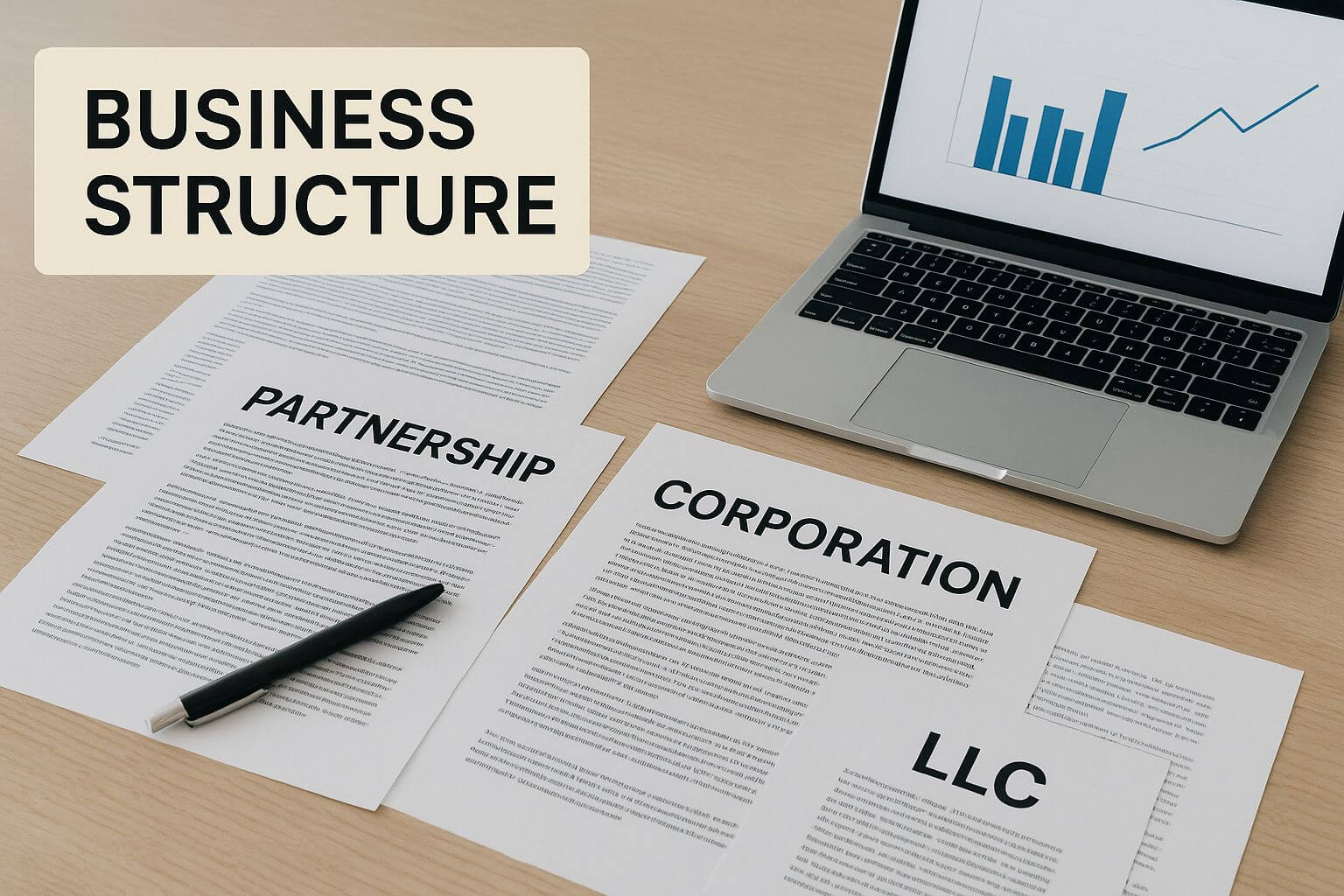
One of the very first decisions you’ll make as a founder is also one of the most critical: selecting your company’s legal structure. This goes far beyond just filing some paperwork. It’s a strategic choice that dictates your personal liability, how you’re taxed, and your ability to bring on investors down the road.
Think of it like choosing the chassis for a custom vehicle. A solo freelance photographer building a simple dragster has entirely different needs than a tech startup engineering a Formula 1 car designed for massive venture capital funding. Getting this right from day one is a cornerstone of smart small business legal services.
This infographic breaks down the core factors you need to weigh when making this decision.
As you can see, the two biggest battlegrounds are liability protection and tax treatment. These are the fault lines that separate one entity type from another. Let’s explore the most common options without the legal jargon.
The Default Structures: Sole Proprietorship and Partnership
A Sole Proprietorship isn’t something you form—it’s what you are the moment you start doing business alone. There’s absolutely no legal distinction between you and the company. This means you are personally on the hook for every debt and lawsuit. It’s simple, but it offers zero protection.
A General Partnership is the same concept, but for two or more owners. Like a sole proprietorship, all partners are personally liable for business debts. Critically, you can also be held responsible for the actions of your business partners. While easy to start, the lack of a liability shield makes these structures too risky for most modern companies.
The Go-To for Small Businesses: The LLC
For most entrepreneurs, the Limited Liability Company (LLC) hits the sweet spot. It’s a hybrid structure that cleverly combines the liability protection you get from a corporation with the tax simplicity of a partnership.
An LLC creates a legal wall between your personal assets—like your home, car, and savings—and your business. If the company gets sued or can’t pay its debts, your personal wealth is generally off-limits.
This protection is the number one reason LLCs have become the default choice for new small businesses. An e-commerce brand, for example, would almost certainly form an LLC to shield the owner’s personal assets from potential product liability claims. The flexibility in how an LLC can be taxed is another huge win, letting owners pick the most favorable tax scenario for their specific situation.
Built for Growth and Investment: The Corporation
Corporations are more formal legal entities, entirely separate from their owners. This is the required structure for any business planning to raise serious money from outside investors. There are two flavors to know.
- S Corporation (S-Corp): This structure avoids the dreaded “double taxation” by allowing profits and losses to pass through directly to the owners’ personal tax returns. It offers the same liability protection as a C-Corp but comes with strict rules, including a limit on the number of shareholders.
- C Corporation (C-Corp): This is the classic corporate structure. It’s taxed as a separate entity, and then shareholders are taxed again on any dividends they receive. While that sounds like a downside, this is the only structure most venture capitalists will invest in. It allows for unlimited shareholders, making it the non-negotiable choice for startups with high-growth ambitions.
A tech startup planning to raise millions in seed funding would have to form a C-Corp to even get a meeting with investors. It’s more complex to run, but it provides the essential framework for massive scaling and, eventually, a potential IPO. Your choice of entity isn’t just an administrative task; it’s a strategic move that sets the trajectory for your company’s entire future.
Crafting Ironclad Business Contracts
Think of every contract as the official rulebook for a business relationship. When it’s clear and professionally drafted, everyone understands their roles, expectations, and what to do when things don’t go as planned. But a vague agreement or a generic online template is just a ticking time bomb for disputes, lost revenue, and a tarnished reputation.
Too many entrepreneurs learn this lesson the hard way. A handshake deal or a fuzzy scope of work can spiral a promising project into a legal nightmare. Investing in professional small business legal services to draft and review your contracts isn’t just an expense—it’s one of the most critical defensive plays you can make.
Why Off-The-Shelf Templates Fail
Grabbing a free contract template online seems like a smart, frugal move. In reality, it often creates far more risk than it solves. These one-size-fits-all documents can’t possibly account for the nuances of your business, specific industry regulations, or the governing laws in your state.
For example, a generic client agreement might completely omit language that protects your intellectual property rights for the work you deliver. A standard vendor contract could lack a crucial clause on delivery deadlines and penalties, leaving you powerless when a critical shipment goes missing.
A contract is more than a formality; it’s a proactive risk management tool. Its primary job is to create clarity and provide a clear path forward when disagreements arise, preventing small misunderstandings from escalating into full-blown lawsuits.
Key Contracts Every Small Business Needs
While every business is different, a core set of agreements forms the operational backbone for most companies. Having an attorney draft these foundational documents ensures they are tailored to protect your specific interests from day one.
Here are the absolute essentials:
- Client Service Agreements: This is your shield. It must precisely define the scope of work, project deliverables, payment schedules, and how you’ll handle changes or additional requests.
- Vendor and Supplier Contracts: These agreements secure your supply chain. They need to clearly state quality standards, delivery terms, pricing, and the consequences if a vendor fails to deliver.
- Non-Disclosure Agreements (NDAs): An NDA is non-negotiable when sharing sensitive information with partners, contractors, or employees. It legally prevents them from walking away with your trade secrets.
- Employment and Independent Contractor Agreements: These documents define compensation, responsibilities, and the nature of the work relationship. Misclassifying workers can lead to devastating tax and labor law penalties.
The Anatomy of a Protective Clause
The real power of a contract is hidden in the details of its clauses. A single, well-written sentence can save you from a lawsuit, while an ambiguous one invites disaster. An experienced business lawyer knows exactly how to phrase these terms to shield you from common pitfalls.
Consider this scenario: A freelance graphic designer uses a template stating the project includes “three rounds of revisions.” The client, unhappy with the initial direction, demands ten completely different versions, arguing each is just a “revision.” The designer is now trapped in a cycle of unpaid work.
A sharp lawyer would have drafted a clause specifying that “revisions” are minor adjustments, while “new concepts” are billed separately at an hourly rate. That small change transforms a vague agreement into an ironclad one. Clauses covering scope of work, payment terms, intellectual property, and dispute resolution are where battles are won or lost—and professional legal help ensures they’re drafted in your favor.
Protecting Your Intellectual Property Assets

For most small businesses, the most valuable assets aren’t on the balance sheet. They’re the intangible things—your brand name, a proprietary software code, that secret family recipe, or your unique product designs. This is your intellectual property (IP), and it’s the very soul of your company.
Leaving your IP unprotected is like leaving the front door of your shop unlocked overnight. It’s an open invitation for competitors to copy your ideas and steal your market share. Comprehensive small business legal services build a fortress around these assets, ensuring your hard-earned innovations remain yours and yours alone.
The Four Pillars of IP Protection
Intellectual property isn’t a one-size-fits-all concept. Think of it as a security system with different tools for different jobs. Each type of IP protects a specific kind of asset, and understanding the distinctions is the first step toward a bulletproof strategy.
There are four main categories you need to know:
- Trademarks: These protect your brand identity—the names, logos, and slogans that tell customers, “This is us.”
- Copyrights: This covers your original creative works, like website copy, marketing videos, software code, and architectural plans.
- Patents: Patents give you exclusive rights to a new, useful, and non-obvious invention, stopping anyone else from making, using, or selling it.
- Trade Secrets: This protects the confidential information that gives you a competitive edge—think customer lists, manufacturing processes, or formulas.
Think of a trademark as the unique address for your brand in a crowded market. It tells customers exactly where to find you and assures them they’re getting the real deal, not a cheap knockoff from down the street.
Securing your IP isn’t just about filling out a form; it requires a strategic legal approach to be truly effective.
How to Lock Down Your Brand and Creations
Each type of IP has its own path to legal protection, and a misstep can invalidate your claim down the road. An IP attorney is your guide through this often-tricky process, ensuring your ownership is legally sound and defensible.
Trademarks: Claiming Your Brand Identity Before you can claim your brand name or logo, you need to be sure no one else already has. A lawyer starts with a comprehensive search, then files an application with the U.S. Patent and Trademark Office (USPTO). A registered trademark grants you nationwide rights and the legal muscle to shut down copycats. A new craft brewery, for example, would trademark its name and logo to stop another from opening with a confusingly similar brand.
Copyrights: Owning Your Creative Work Technically, copyright protection exists the moment you create something original. But that’s not enough. To truly enforce your rights, you must formally register your work with the U.S. Copyright Office. This registration is your official proof of ownership and is a mandatory prerequisite if you ever need to sue an infringer. A software company, for instance, registers the copyright for its code to prevent a competitor from stealing it.
Patents: Protecting Your Inventions Getting a patent is by far the most complex and expensive IP process. You have to prove your invention is genuinely new and non-obvious, which requires a highly technical and detailed application. A specialized patent attorney is almost always essential to navigate this successfully, but the reward is immense: up to 20 years of exclusive rights to your invention.
Trade Secrets: Guarding Your Competitive Edge Unlike other IP, trade secrets aren’t registered with a government agency. Their protection comes from one thing: secrecy. You have to actively keep the information confidential using tools like non-disclosure agreements (NDAs), restricted access for employees, and robust digital security. The formula for Coca-Cola is the world’s most famous trade secret, protected for over a century not by a patent, but by extreme confidentiality.
Navigating Employment Law and Compliance
Bringing on your first employee is a massive win. It marks the moment your solo hustle officially becomes a team. But with that milestone comes a dizzying new world of legal rules and responsibilities. Getting employment law right isn’t just about avoiding paperwork—it’s about protecting your business from the kind of fines and lawsuits that can shut a company down over one mistake.
This is where a sharp legal eye becomes essential. Ignoring federal, state, and local labor laws isn’t just bad management; it’s a direct threat to your business’s survival.
Employee vs. Independent Contractor: The Critical Distinction
One of the very first legal forks in the road you’ll face is how to classify the people who work for you. The difference between an independent contractor and an employee might seem small, but it carries huge financial and legal consequences. Misclassifying an employee as a contractor, even if you do it by accident, can trigger a cascade of back taxes, penalties, and benefit payments.
It really comes down to control. The IRS and Department of Labor look at how much say you have over what the worker does and, more importantly, how they do it. If you’re dictating the methods and details, they’re almost certainly an employee. This is hands-down one of the most common and expensive traps for new business owners.
An estimated 10% to 20% of employers misclassify at least one worker. It’s a costly mistake that can attract audits from the IRS, the Department of Labor, and state agencies all at once.
Building Your Legal Hiring and Management Framework
The moment you hire, you need a legally sound system for managing your people. This framework is your single best defense against claims of discrimination or unfair treatment, covering everything from the first interview to the day-to-day rules of the workplace.
A well-defined system doesn’t just shield you from liability; it creates a fair and productive environment where everyone knows what’s expected. Here’s what it must include:
- Legally Compliant Job Descriptions: These documents need to spell out the job’s duties without using language that could be seen as discriminatory based on age, gender, race, or disability.
- Fair Hiring Practices: Your interview and hiring process has to be consistent and based strictly on qualifications and merit to stay on the right side of anti-discrimination laws.
- Employee Handbooks: Think of this as the official rulebook for your company. It needs to clearly explain policies on everything from paid time off and workplace conduct to social media use and termination procedures.
That employee handbook is non-negotiable. It sets expectations and creates a documented record of your policies—something that proves invaluable if a dispute ever lands on your desk. To get the details right, you can learn how to master employment law for employers and ensure every policy is buttoned up.
Understanding Wage, Hour, and Termination Laws
Beyond hiring, you have strict rules to follow for pay and termination. The Fair Labor Standards Act (FLSA) dictates minimum wage, overtime pay, and how you keep records. A crucial part of this is correctly identifying which employees are “exempt” (usually salaried and not eligible for overtime) versus “non-exempt” (typically hourly and must be paid overtime).
Letting an employee go is another legal minefield. While most states have “at-will” employment—meaning you can terminate someone for any lawful reason—you absolutely cannot fire them for a discriminatory reason or as retaliation. Keeping detailed, objective records of performance issues is your strongest defense against a wrongful termination lawsuit. An attorney can help you build fair, consistent procedures that treat employees with respect while protecting your business.
Finding the Right Legal Partner for Your Business
Securing the right legal support isn’t just about hiring a lawyer—it’s about finding a strategic partner who gets your vision and can help you navigate the inevitable twists and turns of building a business. The reality is, not every attorney is the right fit for a dynamic, growing company. You’re looking for an advisor who feels like a core part of your team, not just someone you call when things go wrong.
The world of small business legal services has expanded far beyond the traditional downtown law firm. Your goal is to match the right service model to your specific needs, your industry, and where you plan to be in five years.
Comparing Legal Service Provider Models
To make the best choice, it helps to understand the landscape. From boutique firms specializing in startups to tech-driven online platforms, each model offers a different blend of expertise, cost, and personal attention.
| Provider Type | Best For | Typical Cost Structure | Key Advantage |
|---|---|---|---|
| Traditional Law Firm | Complex, high-stakes matters and ongoing advisory needs. | Hourly rates, retainers | Deep expertise, established reputation, and personal relationships. |
| Boutique/Specialized Firm | Businesses needing deep expertise in a specific area (e.g., tech, e-commerce, IP). | Mix of hourly, flat-fee, and retainers | Niche industry knowledge and more personalized service. |
| Online Legal Services | Standardized tasks like LLC formation, basic contracts, and trademark registration. | Flat-fee per service or monthly subscription | Affordability and convenience for routine legal work. |
| Fractional General Counsel | Growing businesses that need regular legal guidance but aren’t ready for a full-time hire. | Monthly retainer for a set number of hours | Consistent, high-level strategic advice at a predictable cost. |
Ultimately, the best choice aligns with your company’s current stage and complexity. A brand-new e-commerce store has very different legal needs than a biotech startup preparing for a Series A funding round.
One of the most powerful trends is the rise of specialized small law firms. These firms are experiencing explosive growth, now holding a massive 34.20% share of the U.S. legal services market as of 2024. Why? They offer competitive pricing and laser-focused expertise in the exact areas that matter most to small businesses.
Choosing a legal partner is like hiring a key executive. Their industry knowledge, communication style, and genuine interest in your business are just as important as their legal credentials.
Key Factors to Consider in Your Search
Once you start evaluating attorneys, look past the diplomas on the wall. You need someone who clicks with your business culture and operational pace. The perfect lawyer for a fast-moving tech startup is probably not the best fit for a family-owned restaurant.
Here’s what to zero in on:
- Industry Experience: Have they worked with businesses like yours before? An attorney who understands the specific regulatory hurdles and common pitfalls of your sector is worth their weight in gold.
- Fee Structure: Get crystal clear on how they bill. Do they charge by the hour? Offer flat-fee packages for things like incorporation? Or work on a monthly retainer for ongoing advice? There should be no surprises.
- Communication Style: You need an advisor who is responsive and can translate dense legal jargon into plain English. If you walk away from a conversation more confused than when you started, that’s a major red flag.
- Scalability: Can they grow with you? A great legal partner handles your startup needs today and has the chops to guide you through raising capital, expanding internationally, or negotiating a future exit.
How to Interview and Select Your Attorney
Once you have a shortlist, the interview is where you separate the good from the great. This is your chance to see how they think on their feet and whether you genuinely connect. Knowing how to find an attorney who truly aligns with your vision is a skill that will pay dividends for years.
Come prepared with pointed questions that get to the heart of their experience and problem-solving style.
- Drill Down on Their Experience: “Can you walk me through your experience with businesses in the [Your Industry] space? What are the top two or three legal landmines you see companies like mine step on?”
- Understand Their Process: “What’s your system for keeping clients in the loop? How often should I expect to hear from you, and what’s the best way to get a quick answer to a question?”
- Test with a Scenario: “Let’s say we’re facing [a realistic legal challenge]. What would be your first three steps in advising us?” This reveals their practical, real-world approach.
- Get Serious About Costs: “Could you explain your fee structure in detail? Beyond your hourly rate or flat fee, what other costs—like filing fees or administrative charges—should I anticipate?”
By being deliberate and strategic, you can find more than just a lawyer. You can find a long-term partner who will protect your business and actively contribute to its success.
Your Questions, Answered
Founders often have the same pressing questions when it comes to the law. The world of small business legal services can feel like a maze, but getting clear, direct answers is the first step toward building a solid foundation. Here are the most common questions we hear from entrepreneurs just like you.
When Is the Right Time for a Startup to Hire a Lawyer?
The simple answer? Before you sign anything that locks you in. The most critical moments to have a lawyer in your corner are when you’re forming the business, hashing out founder agreements, taking on investment, or signing a major contract like a commercial lease.
Think of it this way: engaging an attorney early isn’t a cost—it’s an investment. It’s about preventing catastrophic mistakes down the road. A great lawyer makes sure you’re set up for success from day one, helping you sidestep rookie errors like picking the wrong business structure or getting trapped in a bad long-term deal that stunts your growth.
Can I Use Online Legal Templates Instead of Hiring a Lawyer?
Online templates might look like an easy win for your budget, but they’re a huge gamble. They’re a one-size-fits-all solution for a problem that is deeply specific to your business, your industry, and your state.
A generic form can’t possibly account for the nuances of your situation or protect you from the specific risks you face. A skilled attorney, on the other hand, crafts documents designed to shield your interests, catching red flags a template would never see.
For mission-critical agreements—partnerships, intellectual property, or significant client contracts—custom legal advice isn’t a luxury. It’s an essential safeguard for everything you’re building.
Relying on a template for a complex deal is like trying to navigate a minefield with a tourist map. You might start off in the right direction, but you’re completely blind to the real dangers just ahead.
How Much Should I Budget for Legal Services?
Legal costs are not one-size-fits-all; they depend entirely on your business’s complexity and needs. For the initial setup—think LLC formation and basic contracts—a reasonable budget could be anywhere from $500 to $5,000.
To make things more predictable, many modern law firms have moved away from the billable hour for common tasks. Look for options like:
- Flat-Fee Packages: A fixed price for a specific service, like a trademark registration.
- Affordable Retainers: A recurring monthly fee that gives you ongoing access to a lawyer for day-to-day questions.
The smartest entrepreneurs don’t see legal fees as an expense. They see them as a critical investment in managing risk and protecting the future of their company.
What Is the Difference Between a Business Lawyer and a Corporate Lawyer?
While people often use these terms interchangeably, there’s a real difference in focus. A business lawyer is your go-to for the day-to-day legal life of a small or medium-sized company. They handle things like contracts, compliance, and employment matters.
A corporate lawyer typically operates in a different arena, handling massive, complex deals for large corporations—think mergers and acquisitions, securities law, or major corporate restructuring. For nearly every startup and growing business, a great general business lawyer is the strategic partner you need to guide you.
Finding an attorney with the right expertise is non-negotiable for success. The Haute Lawyer Network is a curated directory of premier legal experts, each selected for their track record of professional excellence. Elevate your business by connecting with a top-tier legal partner who can protect your vision and drive your growth. Explore the network and find your trusted advisor today.