Before you even start thinking about finding a personal injury lawyer, there are things you must do—right away—to protect yourself. The first few hours after an accident are always chaotic, but what you do in that critical window can make or break your entire case.
What to Do Immediately After an Injury

In the disorienting moments after an injury, your first priority is crystal clear: get medical attention immediately. Even if you think you’re fine, adrenaline is a powerful painkiller that can mask serious injuries for hours or even days.
Getting a formal medical evaluation creates an official record that connects your injuries directly to the incident. This documentation is absolutely vital. Without it, insurance companies will almost certainly argue your injuries happened later or aren’t related to the accident at all.
Document Everything at the Scene
If you’re physically able, your smartphone is your most important tool. The evidence you gather in the first few minutes is often the most powerful for proving fault and showing the true extent of the damage.
- Take Photos and Videos: Capture the scene from every possible angle. Get shots of property damage, any visible injuries, and contributing factors like a wet floor, poor lighting, or broken stairs.
- Exchange Information: Get names, phone numbers, and insurance details from everyone involved. If there are witnesses, get their contact info. An impartial account from a third party can be incredibly persuasive.
- Write It All Down: While the details are still fresh, write down everything you remember. Note the date, time, location, and a step-by-step account of exactly what happened.
After a car crash, for instance, the specific details are critical. You can learn more about what happens after a car crash and the key information to gather in our detailed guide.
Make an Official Report
You need an official paper trail. For a car accident, that means calling the police and making sure a report is filed. If you slip and fall at a business, notify the manager or owner on the spot and ask them to file an incident report. Always ask for a copy.
Key Takeaway: Whatever you do, don’t downplay your injuries or apologize. Simple statements like “I’m okay” or “I’m sorry” can be twisted into an admission of fault by insurance adjusters looking for any reason to deny your claim. Stick to the facts.
Finally, be extremely careful when speaking to the other party’s insurance company. You are under no obligation to give them a recorded statement right away. It’s much smarter to wait until you fully understand your injuries and have explored your legal options. These first steps are your shield, protecting your claim from the very beginning.
Building Your List of Potential Lawyers

After getting your immediate needs handled, the real work begins: identifying a roster of qualified legal professionals. The best place to start is often within your own trusted circle. Personal recommendations carry weight that online reviews simply can’t match.
Reach out to friends, family, or professional colleagues. Ask them if they’ve ever retained a personal injury attorney they’d confidently recommend. But don’t stop at just a name. Dig deeper. Ask about the lawyer’s communication style, how the firm managed the case, and if they felt valued as a client.
This kind of firsthand intelligence is invaluable. A strong endorsement from someone you trust is a powerful signal that an attorney is worth a closer look.
Expanding Your Search with Online Resources
Once you’ve tapped your personal network, it’s time to move your search online. This requires a discerning eye, as you need to sift through paid ads to find genuinely reputable legal directories and resources.
Your state’s official bar association website is a non-negotiable first stop. Here, you can verify that any lawyer you’re considering is licensed and in good standing, with no public disciplinary actions. Think of it as a fundamental background check.
From there, curated legal networks can provide pre-vetted lists of top-tier professionals. When you’re ready to find a lawyer, these platforms are designed to connect you with attorneys recognized for excellence in highly specific fields of law.
Expert Tip: Ignore the flashy TV commercials and highway billboards. While they build name recognition, they offer zero insight into a lawyer’s skill, case history, or client satisfaction. Focus your efforts on credentials and proven track records instead.
Focusing on Specialists, Not Generalists
Finding a lawyer who simply “practices” personal injury law isn’t enough. You need a true specialist whose experience aligns with the specifics of your case. Personal injury is a massive field, covering everything from catastrophic auto accidents to complex medical malpractice claims.
An attorney with a stellar record in car accident cases might not have the niche expertise required for a defective product lawsuit. You need to narrow your focus.
- Vehicle Accidents: Look for lawyers with a documented history of significant verdicts and settlements in car, truck, or motorcycle collision cases.
- Premises Liability: If you were injured due to a property owner’s negligence (a slip and fall, for example), you need an attorney who specializes in proving that specific type of liability.
- Workplace Injuries: These cases are a world of their own, often intersecting with complex workers’ compensation laws. A specialist is essential.
The legal environment also changes dramatically by location. Florida, for instance, leads the nation in personal injury cases per capita, with filings a staggering 1,237% above the U.S. average. In high-volume states like Florida, California, or New York, it takes extra diligence to separate the true specialists from the general practitioners. Focusing your search on attorneys with deep expertise in your specific type of injury is the most effective way to build a powerful shortlist of candidates.
How to Vet a Lawyer’s Real-World Experience
Once you have a focused shortlist, it’s time to look past the polished ads and dig into a lawyer’s actual track record. Marketing promises are one thing; proven success in the real world is something else entirely. A firm’s website is a good starting point, but you have to know what you’re looking for.
Start by digging into their case results or success stories. You’ll want to see more than just vague claims like “large settlement for a car accident client.” Look for detailed accounts that explain the specifics of the case, the actual challenges they ran into, and the strategies the firm used to win. That kind of transparency signals real confidence and genuine experience.
Look for Proof Beyond Numbers
Big numbers on a website can look impressive, but they don’t paint the whole picture. You need to verify an attorney’s reputation through objective, third-party validation to confirm their expertise is recognized by their peers, not just their marketing team.
- Authentic Client Testimonials: Look for video testimonials or detailed written reviews. Generic one-liners are easy to fake; genuine stories from past clients often include specific details about their situation and the attorney’s communication style.
- Peer-Reviewed Legal Awards: Accolades from organizations like Super Lawyers or Best Lawyers in America are a big deal. These awards are based on peer nominations and independent research, making them a reliable indicator of professional respect and skill.
- Bar Association Leadership: Active involvement in state or local bar associations often points to a lawyer who is deeply committed to their profession and held in high regard by other attorneys.
This process—reviewing case outcomes, client stories, and professional validation—helps you confirm an attorney’s true experience.
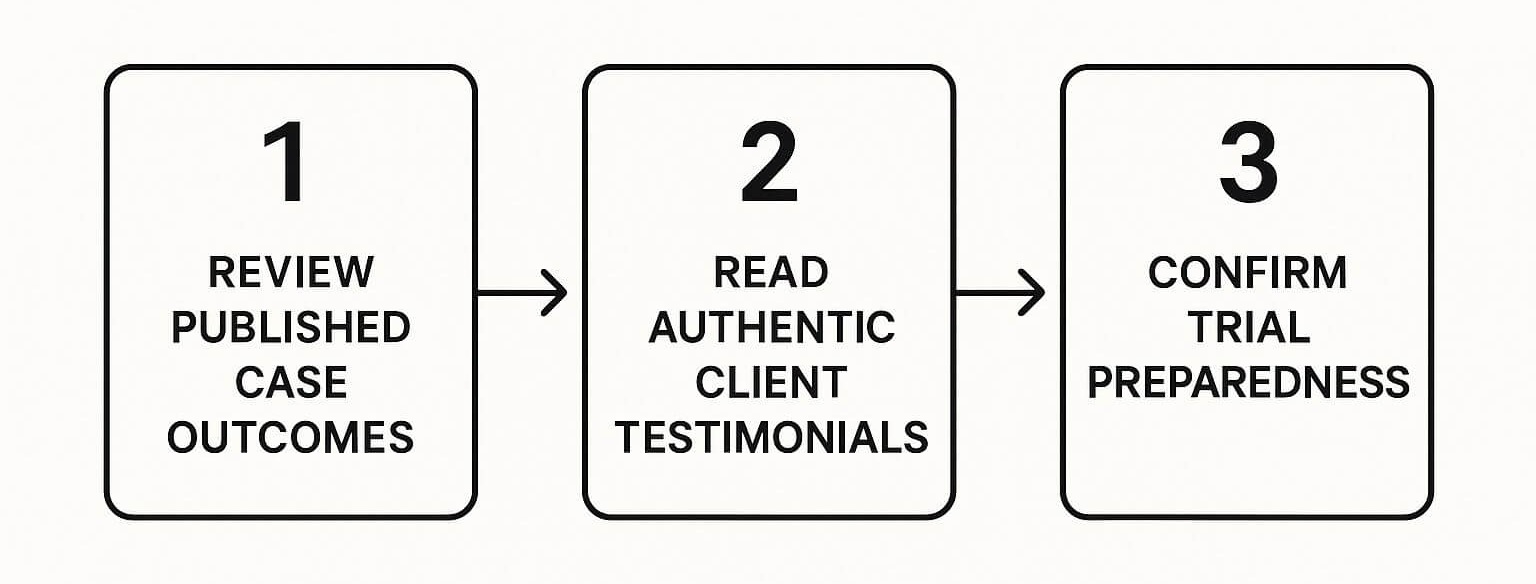
This visual shows the clear path from reviewing a lawyer’s past results to confirming they have the trial experience needed to handle a complex claim.
Distinguishing a Trial Lawyer From a “Settlement Mill”
One of the most critical distinctions you need to make is whether a personal injury lawyer is actually prepared to go to trial. Some firms, often called “settlement mills,” build their entire business on handling a massive volume of cases and settling them quickly—often for far less than their full value. They rarely, if ever, step foot in a courtroom.
Insurance companies know exactly which lawyers will fight and which ones will fold.
An attorney with a reputation for taking cases to trial and winning is a powerful threat. This willingness to litigate gives them immense leverage during negotiations, almost always resulting in much higher settlement offers for their clients.
Key Insight: You are hiring a litigator, not just a negotiator. Even if your case is likely to settle, the credible threat of a trial is what forces an insurance company to offer fair compensation. A lawyer who avoids court lacks the most powerful tool in their arsenal.
The United States is home to the world’s largest personal injury lawyer market, with nearly 60,000 law firms in this field. What’s telling is that only about 4–5% of personal injury cases ever actually go to trial. You can find more insights on personal injury statistics at casepeer.com.
This statistic highlights exactly why it’s so crucial to find a lawyer who isn’t afraid to be in that small percentage. A firm with the resources and willingness to go to court is your best defense against a lowball offer.
Use this checklist to systematically compare potential personal injury lawyers based on crucial qualifications and experience.
Key Lawyer Evaluation Checklist
| Evaluation Criteria | Lawyer A | Lawyer B | Lawyer C |
|---|---|---|---|
| Specialization in Your Case Type | |||
| Verifiable Trial Experience | |||
| Specific Case Results Published | |||
| Positive Peer Reviews/Awards | |||
| Detailed Client Testimonials | |||
| Clear Contingency Fee Structure | |||
| Manages a Reasonable Caseload |
By the end of your evaluation, you should have a clear picture of which attorney not only talks a good game but has the proven experience to back it up.
Making the Most of Your Initial Consultation

That first meeting with a potential lawyer is so much more than a simple “hello.” It’s your single best chance to interview a potential legal partner and it absolutely sets the tone for your entire case. Your mission is to get past the sales pitch and really understand if this firm’s approach is the right fit for you.
Think of it as a two-way street. The attorney is sizing up your case, sure, but you should be sizing them up right back. You need to evaluate their competence, their communication style, and their gut-level strategy for your situation. Walking in with sharp, specific questions is how you cut through the fluff.
Smart Questions That Reveal the Truth
Anyone can ask, “Do you have experience with cases like mine?” Of course they’ll say yes. Generic questions get you generic, useless answers. You need to ask questions that force a real, thoughtful response. The quality of their answers will tell you everything.
You’re trying to figure out what it will actually feel like to work with them.
Here are the kinds of questions that get to the heart of the matter:
- “Who will be my primary day-to-day contact?” Are you meeting the top partner only to be handed off to a junior associate or paralegal you’ve never met? You need to know who is fielding your calls.
- “How do you ensure each client gets personal attention with your current caseload?” This is a polite way of asking if they’re overloaded. You need to know if they have the bandwidth to give your case the focus it deserves.
- “What are the potential challenges you see in my case?” A good lawyer will be honest and upfront about weaknesses. An attorney just trying to get you to sign will gloss over the tough parts.
- “Can you walk me through your communication process?” Get specific. How often will you hear from them? Do they prefer email or phone calls? Set expectations from day one.
These questions are designed to get you past the canned responses and give you a genuine look at how the firm truly operates.
Key Takeaway: An attorney who gives you vague, evasive, or overly optimistic answers is a major red flag. Look for someone who is direct, transparent, and willing to discuss both the strengths and potential hurdles of your case.
Preparing for a Productive Meeting
Show up ready to go. To make this meeting count, you need to bring a neatly organized file with every relevant document. This isn’t just about saving time; it shows the attorney you’re serious and organized, which helps them give you a much more accurate initial assessment.
Here’s a quick checklist of what to bring:
- The official police or incident report.
- All medical records, bills, and receipts connected to your injury.
- Photos and videos of the scene, your injuries, and any property damage.
- Contact information for any witnesses.
- Any letters or emails from insurance companies.
Finally, be on guard for high-pressure sales tactics. Any lawyer who guarantees a win or pushes you to sign a contract on the spot is not the one you want. A reputable attorney will give you the time and space you need to make a decision that feels right. Your confidence in your legal team is everything.
Decoding Fee Structures and Client Agreements
Worries about legal bills should never be a barrier to seeking justice. The financial side of hiring a personal injury lawyer is surprisingly straightforward, thanks to a payment model designed specifically for these situations.
Most credible personal injury attorneys operate on a contingency fee basis. The concept is simple: you don’t pay a dime upfront. The lawyer’s payment is a predetermined percentage of the settlement or verdict they secure on your behalf. If they don’t win, you owe them nothing for their time.
This model instantly aligns your lawyer’s goals with yours. Their incentive is to get you the maximum possible compensation, since their payment is directly tied to that outcome. A typical contingency fee runs between 33% to 40% of the recovery, with the exact percentage often depending on whether the case settles early or proceeds to a full trial.
Understanding Case Expenses
While the attorney’s fee is contingent on winning, case expenses are a different animal. These are the direct, out-of-pocket costs necessary to build and prosecute your claim, and you need to know exactly how they are handled before signing anything.
Common case expenses often include:
- Filing Fees: The cost to officially file your lawsuit with the court system.
- Expert Witness Fees: Payments to medical professionals, accident reconstructionists, or financial experts needed to prove your case.
- Deposition Costs: Fees for court reporters and videographers who record official witness testimony.
- Evidence Gathering: Costs associated with obtaining medical records, police reports, and other vital documents.
Your client agreement must spell out who pays for these expenses. Most firms will front these costs and then deduct them from the final settlement amount after their contingency fee is calculated. But the crucial question to ask is: what happens if you lose? Some agreements could leave you responsible for these costs, creating a significant financial risk. A reputable firm will usually absorb these losses.
Key Takeaway: Always demand a client agreement written in plain English. You must be able to clearly see the contingency fee percentage, how case expenses are managed, and what your financial obligations are in every possible scenario. Never sign an agreement you don’t completely understand.
For a more detailed breakdown of what these costs can involve, it’s worth reading up on the hidden costs of personal injury cases. A transparent, easy-to-understand financial agreement is the cornerstone of a healthy and successful attorney-client partnership.
Lingering Questions About Finding the Right Lawyer
Even with a solid game plan, you’re bound to have questions pop up. It’s natural. Getting clear, straightforward answers is the best way to feel confident as you move forward. Let’s tackle some of the most common ones head-on.
What’s This Really Going to Cost Me?
Let’s get the biggest fear out of the way first: the cost. For most people, this is the number one thing holding them back from even making a call. But the good news is, you almost certainly won’t be paying anything out of your own pocket.
The overwhelming majority of personal injury lawyers operate on a contingency fee basis. In simple terms, this means they only get paid if you get paid. Their fee is a pre-agreed-upon percentage of the settlement or verdict they win for you.
If for some reason they don’t recover any money on your behalf, you owe them zero. It’s that simple. This structure completely aligns their interests with yours—they are deeply motivated to get you the absolute best result possible.
What Should I Bring to the First Meeting?
Walking into that initial consultation prepared can make a world of difference. When you bring organized documents, an attorney can give you a much sharper, more accurate assessment of your case right from the start. It signals that you’re serious and helps them get to the heart of the matter quickly.
Here’s a quick checklist of what to gather before you go:
- The official police or incident report.
- All medical records, bills, and treatment summaries related to the injury.
- Any photos or videos you have of the scene, your injuries, or property damage.
- Contact information for anyone who witnessed the incident.
- Any letters, emails, or other communications from insurance companies.
Pro Tip: Getting your documents in order doesn’t just help the lawyer—it helps you. It forces you to mentally walk through the timeline and facts again, making sure you don’t forget a critical detail when telling your story.
How Long Do I Actually Have to File a Claim?
This is a critical, non-negotiable question. Every state has a law known as the statute of limitations, which acts as a strict deadline for filing a lawsuit. If you miss this window, your right to seek compensation is likely gone forever, no matter how strong your case might be.
These timelines can vary dramatically depending on where you live and the specifics of your injury. To give you an idea of how serious this is, Florida recently shortened the statute of limitations for most personal injury cases, catching many people off guard. You absolutely must speak with an attorney as soon as possible to understand the exact deadline that applies to your situation.
Can I Still Have a Case if I Was Partially at Fault?
Yes, in many cases, you absolutely can. This is a huge misconception that prevents far too many people from getting the compensation they deserve.
Most states use a legal principle called comparative negligence (or comparative fault). Under this system, you can still recover damages even if you were partially responsible for what happened. A court will determine each party’s percentage of fault, and your final compensation is simply reduced by your share of the blame. For instance, if you were found to be 20% at fault, your award would be reduced by 20%.
Never assume you don’t have a case just because you might carry some of the responsibility.
When you need legal representation that stands apart, the Haute Lawyer Network connects you with a curated selection of the nation’s most respected attorneys. Find your expert advocate at https://hauteliving.com/lawyernetwork.