Let’s cut straight to the chase: Yes, in many situations, a DUI can be removed from your record. This isn’t some magic trick, though. It’s a formal legal process, and whether it’s an option for you depends entirely on the laws in your state and the specific circumstances of your case.
Understanding How to Clear Your Record

The idea of getting a DUI “off your record” can be a bit confusing because the legal world uses a lot of different terms. You’ll hear words like “expungement,” “sealing,” and “set-aside” thrown around. While they sound similar, their real-world impact can be vastly different.
Getting a handle on these distinctions is the first critical step. It helps set realistic expectations for what a “fresh start” actually looks like.
Expungement vs. Sealing
At its heart, expungement is the most complete form of relief. In many jurisdictions, it means a court orders the record of your arrest and conviction to be legally destroyed or removed from public view. For all practical purposes, it’s as if it never happened. This is a huge deal, as it typically allows you to legally answer “no” if a potential employer asks about prior convictions.
Record sealing, on the other hand, is a bit different. Think of it like putting the record in a locked file cabinet instead of shredding it. It’s hidden from the general public, which includes landlords and most private employers, but it still exists. Government agencies, law enforcement, and certain professional licensing boards can often still see sealed records.
The key takeaway is this: Both processes aim to remove a major barrier from your life, but the level of clearance depends entirely on your jurisdiction’s specific statutes.
To help clarify these options, here’s a quick breakdown of the most common legal avenues for clearing a DUI.
DUI Record Clearing Options At a Glance
| Method | What It Does | Common Availability |
|---|---|---|
| Expungement | Essentially erases the conviction from public records. | Often available for first-time offenses after a waiting period. |
| Sealing | Hides the record from public view but not from law enforcement. | A common alternative in states that don’t offer full expungement. |
| Set-Aside | The court dismisses the conviction, but the arrest may remain visible. | Varies by state; sometimes used when expungement isn’t an option. |
Keep in mind that the availability of these options and their specific effects can vary significantly from one state to another.
Why Does Clearing Your Record Matter?
A DUI conviction can cast a long shadow, creating serious obstacles years after you’ve paid your fines and served your time. Successfully clearing your record can have a profound, positive impact on your life.
- Improving Employment Prospects: A huge number of employers run background checks. A DUI can be an automatic deal-breaker for many roles.
- Opening Housing Opportunities: Landlords almost always screen applicants, and a criminal record can easily lead to a denied rental application.
- Restoring Peace of Mind: Simply moving forward without the constant weight of a past mistake is an incredibly powerful emotional relief.
This process is about so much more than paperwork; it’s about reclaiming your future. While not every state allows for DUI expungement, many have created pathways for first-time offenders who have stayed out of trouble. Exploring whether you can get a DUI off your record is a worthwhile first step for anyone looking for a true second chance.
Navigating the Maze of State DUI Expungement Laws

The single most common question I hear is, “Can I get this DUI off my record?” And the honest answer is always, “It depends entirely on where you were convicted.” There’s no national expungement law, which means we’re dealing with a complex patchwork of state-specific rules.
What’s a straightforward process in one state could be completely impossible just a few miles across the border.
This variability is the first and most critical factor in your journey. For instance, a state like Utah has one of the longest mandatory waiting periods in the country—a full 10 years after you’ve finished every part of your sentence. Meanwhile, other states might offer a much faster path for first-time offenders. This is why your very first step has to be digging into the specific laws of the state where the conviction happened.
Common Hurdles You Can Expect to Face
While the details vary wildly, most states have a core set of criteria you must meet before a court will even consider your petition. These hurdles are designed to prove you’ve been rehabilitated and are no longer a risk to public safety.
You can almost always count on running into these requirements:
- Completion of Your Full Sentence: This means all jail time, probation, community service, and any court-ordered classes or treatment programs.
- Payment of All Fines and Restitution: Courts won’t even look at your petition if you still owe money related to the case.
- A Clean Record Since the DUI: Nearly every state requires a significant period of time to pass without any new arrests or convictions.
- A Mandatory Waiting Period: This clock, which can run anywhere from three to ten years (or more), typically doesn’t start ticking until after you’ve completed your sentence.
That last point is a classic trip-up. Many people assume the waiting period starts from the date they were convicted, but in nearly all cases, it begins only after every single term of your probation is satisfied.
The Stark Contrast Between State Laws
Let’s look at a couple of real-world examples to see just how different the legal landscapes can be. Take Florida, for instance. A DUI conviction there is notoriously difficult to clear; for all practical purposes, it’s permanent. However, if your charge was negotiated down to reckless driving and the judge withheld adjudication (meaning no formal conviction was entered), you might be able to get that lesser offense sealed.
Now, shift your focus to other states. In places like Georgia or Montana, there are provisions that can lead to record sealing or expungement for certain misdemeanors, which can include a first-offense DUI. But you’re still looking at a waiting period of 3 to 10 years post-sentence, and you must have kept your record clean. To get a better sense of the national picture, you can explore a detailed 50-state comparison of expungement laws and see exactly where your state falls.
This stark difference drives home a critical point: Local knowledge is everything. A lawyer who navigates your specific county’s court system daily can offer insights and guidance you’ll never find in a generic online search.
At the end of the day, understanding these disparate laws is the first major challenge. It requires patience, meticulous attention to detail, and a clear-eyed view of the specific rules that apply to your unique situation.
A Practical Guide to the Expungement Process
Getting a DUI off your record can feel like a maze, but it’s a journey you can navigate with the right map. The process isn’t just about filling out a single form; it’s a methodical approach that begins long before you ever step into a courthouse, starting with a deep dive into your own case history.
The first move is pure investigation. You need to get your hands on official court records and your full criminal history report. This isn’t just a suggestion—it’s the only way to confirm the critical dates and details that determine your eligibility, like the exact day your probation ended or proof that every last fine was paid. These documents are the foundation of your entire case.
Gathering Your Essential Paperwork
Once you’ve confirmed you meet your state’s eligibility rules, it’s time to build your petition packet. This is where attention to detail is everything. A single missing document can stall your case for months or even lead to an outright denial.
Your packet will almost always require these key items:
- The Formal Petition: This is the official court document where you formally request that a judge expunge or seal your record.
- Proof of Sentence Completion: You’ll need documentation proving you finished probation, completed any mandated classes (like alcohol education), and settled all court-ordered fines.
- A Certificate of Eligibility: Many states require a preliminary step where a state agency, like the department of justice, reviews your record and issues a certificate confirming you meet the basic criteria for expungement.
- Character References (Optional but Recommended): Letters from employers, mentors, or community leaders can add a powerful, personal touch that shows the court who you are today, not who you were at the time of the offense.
This visual shows the typical flow once your paperwork is submitted.
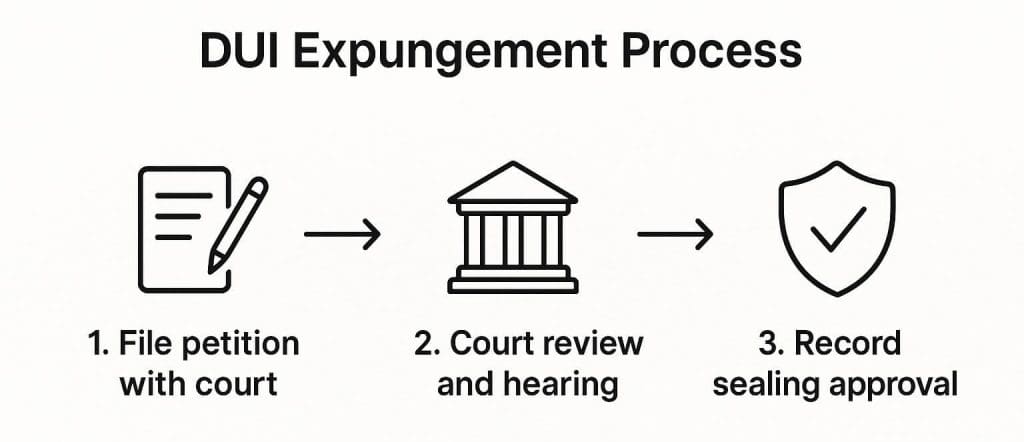
As the chart shows, filing the petition is just the kickoff. The court’s review and a potential hearing are the crucial next phases before you get a final decision.
Filing and Facing the Court
With your documents perfectly in order, the next step is to file the petition with the correct court—almost always the same one that handled your original DUI case. You are also required to formally “serve” the prosecutor’s office with a copy, which gives them the opportunity to object.
In many straightforward cases, a hearing isn’t even necessary. This is especially true for first-time misdemeanors where you clearly meet every single requirement. A judge might simply review the paperwork and grant the expungement on the merits of your petition alone.
However, if the prosecutor files an objection or if the judge has questions about your case, you may need to appear in court. This is your chance to explain why you deserve a clean slate and demonstrate how you’ve grown since the offense.
This stage can be the most intimidating part of the whole process. Having an experienced attorney in your corner can make all the difference, as they can anticipate the prosecutor’s arguments and frame your story in the most compelling way. If you need representation, you can find a lawyer who specializes in this field to guide you. Be prepared for the process to take several months—in some jurisdictions, it can be 6 to 12 months from filing to a final order, so patience is absolutely essential.
Common Roadblocks in the DUI Expungement Process

While the path to clearing your record is paved with good intentions, it’s often filled with unexpected hurdles. Answering the question “can you get a DUI off your record?” involves more than just meeting the basic criteria; it requires navigating the real-world challenges that can derail an otherwise solid petition.
One of the most common surprises is an old, unpaid fine or a restitution balance you thought was settled long ago. Courts are meticulous. Any outstanding financial obligation tied to your case—no matter how small—is an automatic disqualifier until it’s paid in full.
Simple procedural mistakes are just as damaging. Filing in the wrong courthouse or improperly serving the prosecutor’s office can lead to an immediate dismissal, sending you right back to square one. These administrative tripwires are frustratingly common.
Navigating Prosecutorial Objections
Even with a flawless petition, the district attorney’s office has the right to object. This is a significant roadblock that can turn what should be a straightforward administrative review into a contested court hearing.
A prosecutor might object for several reasons:
- Severity of the Original Offense: If your DUI involved a high blood alcohol content (BAC), an accident, or injuries, the state will likely argue that expungement isn’t in the public’s best interest.
- Subsequent Encounters with Law Enforcement: Even without a new conviction, any negative contact with the police during your waiting period can be used against you.
- Perceived Lack of Remorse: This is subjective, but a prosecutor may argue that your actions since the conviction don’t show sufficient rehabilitation.
Facing an objection requires a strategic response. This is where professional guidance from an experienced criminal defense lawyer becomes invaluable, as they are accustomed to countering these arguments in court.
It’s a sobering reality that while millions are eligible for record clearing, very few succeed. The path is often more complex and costly than people anticipate, causing many to abandon the process.
This complexity helps explain why so few people complete the process, even when they are legally eligible. One landmark study revealed that only 6.5% of eligible individuals managed to get their records cleared within five years, citing barriers like cost, confusion, and a lack of legal support.
You can explore the findings of this in-depth research on expungement barriers to understand the scale of the challenge.
Being prepared for these potential roadblocks isn’t meant to discourage you. Instead, it’s about setting realistic expectations. Persistence, patience, and often, professional legal support are essential components for successfully getting that DUI off your record.
What Really Changes After a DUI Expungement
Getting a DUI expunged is a monumental achievement. The weight is finally lifted, and doors that were once firmly shut begin to creak open. For many, this is the fresh start they’ve worked so hard for.
The most immediate and powerful impact is on background checks. When a potential employer, landlord, or university screens your history, that conviction simply won’t be there anymore. This single change can completely transform your prospects for better jobs, housing, and even educational programs.
We’ve seen this make a huge difference for people pursuing licensed professions. Many licensing boards that might have denied an application for nursing, real estate, or other careers may now view your record as clean.
The Victories of a Clean Slate
Let’s be clear about the wins, because they are significant. A successful expungement means you can legally and honestly move forward without the stigma of a past mistake shadowing your every move.
- Employment: You can confidently check “no” on that dreaded conviction question and apply for jobs without fearing an automatic rejection.
- Housing: Rental applications become far less stressful. Landlords will see a clear background check, removing a major barrier to finding a good place to live.
- Personal Peace: The emotional relief of finally putting a major life obstacle behind you is immeasurable. It’s a true turning point.
The legal process is designed to restore your status and allow for genuine rehabilitation. However, it’s just as important to understand what expungement doesn’t do.
While expungement clears your criminal record for most public purposes, it’s not a universal reset button. Certain records, particularly those held by administrative agencies like the DMV, are often unaffected.
Setting Realistic Expectations
It’s absolutely crucial to have a balanced perspective on this. A common misconception is that an expungement will magically lower your car insurance rates. Unfortunately, this is almost never the case.
Your driving record, managed by the DMV, is entirely separate from your criminal record. That DUI will likely remain on your DMV record for years, keeping your insurance premiums high regardless of the expungement.
Similarly, international travel can remain complicated. Some countries, like Canada, have incredibly strict entry requirements regarding past criminal offenses—even expunged ones. To guarantee entry into Canada after a DUI, you often need to apply for a special “criminal rehabilitation” certificate, a process that can’t even begin until 10 years have passed.
Understanding these limitations helps you navigate life after expungement without unpleasant surprises. And as laws continue to evolve, staying informed is key. For example, learning about the new DUI laws of 2025 can help you see how upcoming changes might affect your situation.
Ultimately, while it isn’t a complete erasure of the past, expungement is an incredibly powerful tool for building a much better future.
Answers to Your Top DUI Record Clearing Questions
When you start looking into DUI expungement, a flood of specific, practical questions always comes up. The details can feel overwhelming, and getting straight answers is the only way to manage your expectations and figure out what to do next.
Let’s break down some of the most common questions people have when they want to get a DUI off their record for good. These are the real-world concerns that often determine whether you succeed in getting a clean slate.
How Much Does It Cost to Get a DUI Expunged?
For most people, the financial commitment is a major factor. The costs can swing pretty wildly depending on your state and how complicated your case is, but you’re generally looking at two main expenses.
First, you have the court filing fees. These are non-negotiable costs paid directly to the court when you submit your petition, and they typically run anywhere from $100 to $500.
Second, there are legal fees if you decide to hire an attorney—and I highly recommend you do. This is where the cost can vary the most, from $1,000 to $4,000. While it’s tempting to save money by handling it yourself, the legal nuances are tricky, and the risk of getting denied is high. Professional help is often a smart investment.
Do I Have to Disclose an Expunged DUI on Job Applications?
This is the big one—the reason most people go through this process in the first place. For the vast majority of private-sector jobs, a successful expungement means you can legally and truthfully answer “no” if you’re asked about prior criminal convictions.
An expungement legally nullifies the conviction for most public purposes. This is the key takeaway, but you need to understand this protection isn’t absolute.
There are important exceptions. If you’re applying for government jobs, law enforcement roles, or any position that requires a federal security clearance, the disclosure rules are much stricter. You have to read the application question very carefully to see exactly what they’re asking.
What Happens If My Expungement Request Is Denied?
A denial can feel like a gut punch, but it’s not always the end of the line. The first thing you need to do is understand exactly why the judge said no. A denial typically comes in one of two forms:
- Without Prejudice: This is the better outcome. It usually means there was a simple, fixable error, like you forgot some paperwork or didn’t pay a final fine. You can correct the mistake and file the petition again.
- With Prejudice: This is a final decision on the merits of your case, and it means you generally cannot refile.
This is another area where an attorney is invaluable. They can interpret the court’s decision and tell you if there are any grounds for an appeal or other next steps.
Does Expungement Also Clear My Driving Record?
This is a critical distinction that trips up a lot of people. Expungement clears your criminal record, but in almost every state, it does absolutely nothing to your driving record held by the DMV.
What does that mean in practice? While future employers won’t see the conviction on a background check, your insurance companies and state licensing agencies still can. That DUI will likely continue to impact your insurance premiums and license status for years, all based on the DMV’s separate policies.
Navigating the legal system to clear your record is a complex and high-stakes process. Connecting with a top-tier attorney who understands your local laws is the most effective way to secure your future. The Haute Lawyer Network is a curated directory of the nation’s most respected legal professionals, selected for their excellence and proven results. Find an elite attorney on the Haute Lawyer Network who can provide the expert guidance you need.