
Most people don’t think about hiring an estate planning lawyer until they absolutely have to. That’s why successful marketing in this field isn’t about chasing leads—it’s about building digital trust and authority long before a potential client ever needs your services.
The goal is to educate and reassure people during intensely personal, often stressful, moments. A credible, empathetic online presence is what turns their uncertainty into a scheduled consultation. This all starts with a professional website, razor-sharp messaging, and providing genuine value right from the first click.
Your Digital Foundation: Building a Practice on Trust
Before you spend a single dollar on ads, your firm needs a digital presence that screams credibility and empathy. This is far more than just a website. It’s about crafting a brand that connects with your ideal client, whether that’s a high-net-worth family navigating complex assets or a small business owner planning their succession.
Think of your digital foundation as your 24/7 client intake specialist. The first impression it makes is everything.
The process starts with defining what makes your firm the right choice. Is it your deep expertise in high-asset estates? Your compassionate approach to messy family dynamics? Or your battle-tested experience in complex probate litigation? This unique value needs to be crystal clear across every inch of your website.
Crafting a Website That Converts Visitors into Clients
Your website is the cornerstone of your entire marketing strategy. It has to work flawlessly and build immediate confidence from the moment a potential client lands on your homepage.
- Professional Attorney Bios: Ditch the dry list of credentials. Tell a story. Share why you practice estate law and highlight experiences that prove your expertise while making you relatable. Your photo should look professional, but also approachable.
- A Seamless User Experience: Someone in distress won’t stick around for a slow, confusing website. Your site absolutely must be mobile-friendly, load in under three seconds, and have dead-simple navigation. Key information—like wills, trusts, and probate services—should be incredibly easy to find.
- Crystal-Clear Calls-to-Action (CTAs): Don’t make visitors hunt for the next step. Use clear, direct buttons like “Schedule a Free Consultation” or “Download Our Estate Planning Checklist” on every relevant page. A well-placed CTA is often the only thing separating a curious visitor from a new client.
The market for estate attorneys is surprisingly wide open. The U.S. market hit an estimated $18.2 billion in 2025, yet no single firm commands more than a 5% market share. This creates a massive opportunity for firms that get their digital marketing right to capture significant local and regional business. You can find more insights about the estate law market from IBISWorld.
Key Takeaway: Your website isn’t just a digital brochure; it’s your primary tool for building trust. It has to answer questions, calm anxieties, and provide a clear, simple path for potential clients to connect. A thoughtful, user-focused design shows you care about their experience long before they ever sign a retainer.
Dominating Search with Local and Organic SEO
For an estate planning lawyer, your best marketing happens the moment a potential client starts searching online. This is where Search Engine Optimization (SEO) comes in. It’s the engine that puts your firm front and center when someone types “estate planning attorney near me” into Google. Forget the technical jargon—at its core, SEO is about building digital trust and proving your authority.
This process really boils down to two key efforts that have to work together. First is local SEO, which is your ticket to capturing clients right in your backyard. Then there’s organic SEO, which establishes your firm as a go-to resource for people across a wider area who are looking for answers to complex estate questions.
Winning with Local SEO and Your Google Business Profile
When someone searches for a local service, Google almost always shows a “map pack” at the top of the results. This little box with three business listings, a map, and reviews is pure marketing gold. Getting your firm in that box is non-negotiable, and your primary tool to make that happen is your Google Business Profile (GBP).
Think of your GBP as a digital storefront. It’s often the very first impression a potential client has of your practice.
- Gather Positive Reviews: Don’t be shy about ethically asking satisfied clients for a review. A steady stream of recent, positive feedback is a massive signal to both Google and prospective clients that you’re the real deal.
- Detail Your Services: Don’t just put “estate planning.” Get specific. List out services like “Will & Trust Creation,” “Probate Administration,” “Special Needs Planning,” and “Elder Law Counsel.”
- Use High-Quality Photos: Show, don’t just tell. Include professional photos of your office, your team, and yourself. This puts a human face to your firm and builds instant familiarity.
Your Google Business Profile is far more than a simple listing; it’s a client’s first handshake with your firm. A profile filled with five-star reviews, detailed services, and professional photos tells a story of a trustworthy, established practice before they even click through to your website.
Answering Client Questions with Organic SEO
Local search is crucial, but what about clients who aren’t quite ready to hire a lawyer? They’re in the research phase, looking for answers, not a consultation. This is where your estate planning lawyer marketing strategy can really connect by directly addressing their most pressing concerns.
Instead of just targeting broad terms, your focus should be on long-tail keywords that sound like real questions. Think “how to create a trust in California” or “what is the probate process for a small estate?” By creating high-quality blog posts or service pages that answer these queries, you position your firm as an indispensable guide. This content-first approach is central to many essential attorney marketing strategies that build long-term authority.
To help you get started, here’s a quick breakdown of the core SEO activities you should be focusing on.
Core SEO Activities for Estate Planning Attorneys
| SEO Category | Key Activity | Impact on Marketing |
|---|---|---|
| On-Page SEO | Create service pages for each practice area (e.g., Trusts, Wills, Probate). | Directly targets clients searching for specific services, improving relevance. |
| On-Page SEO | Publish blog posts answering common client questions. | Establishes your firm as a knowledgeable authority, attracting organic traffic. |
| Local SEO | Fully optimize your Google Business Profile with services, photos, and Q&As. | Increases visibility in the local “map pack” for “near me” searches. |
| Local SEO | Build citations in legal directories like Avvo, Justia, and FindLaw. | Reinforces your location and practice areas to search engines, boosting local rank. |
| Off-Page SEO | Earn backlinks by guest posting on finance or real estate blogs. | Builds your site’s authority, signaling to Google that you are a trusted resource. |
These activities work together to create a powerful online presence that not only attracts but also converts potential clients by demonstrating your expertise from their very first search.
The infographic below shows how to structure this kind of audience-first content strategy.
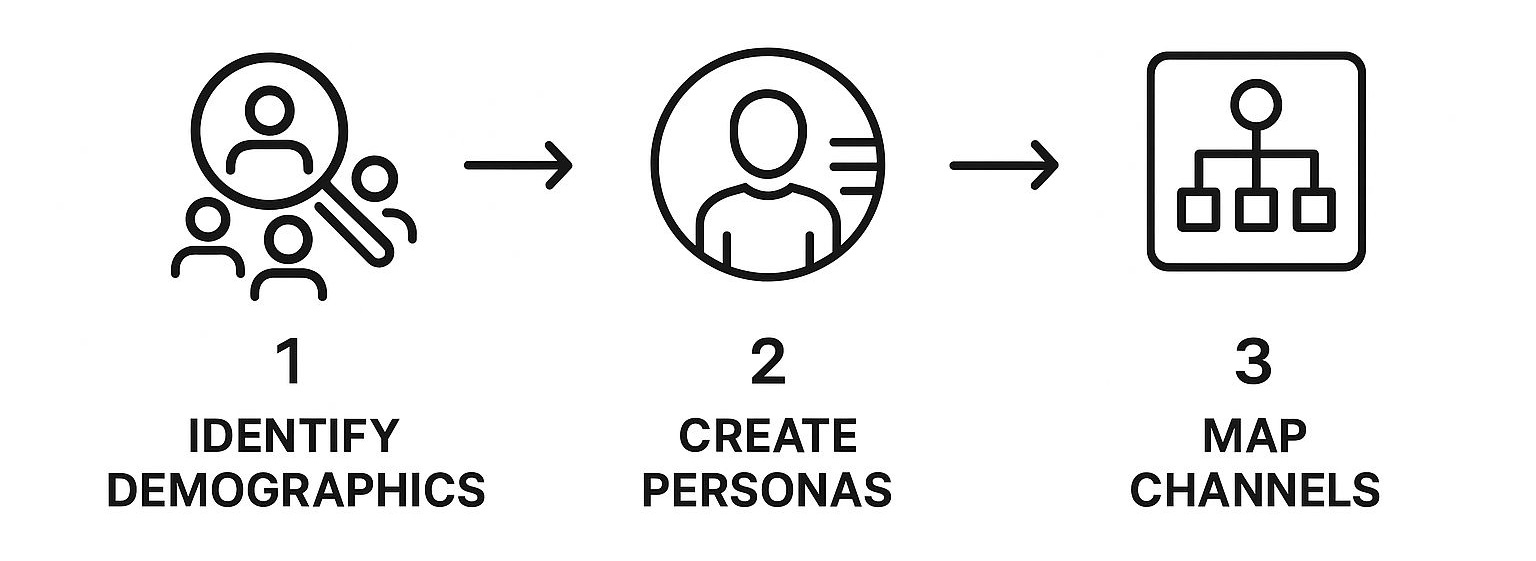
As you can see, effective content always starts with a deep understanding of who your clients are, what they need to know, and where they’re looking for information. This ensures every article you write and every page you build is relevant and genuinely helpful.
Creating Content That Educates and Engages

In estate planning, trust isn’t built with a sales pitch. It’s earned long before a prospective client even considers picking up the phone. Your content is where that relationship begins.
Effective estate planning lawyer marketing is all about providing immense value upfront. It’s about calming anxieties and positioning your firm as the definitive educational resource in your community. When you do this right, your website stops being a brochure and becomes a library of answers for people navigating some of life’s most significant decisions.
The key is to move past generic, bland articles. Your entire content strategy should be built around the real, often unspoken, questions and fears your ideal clients are grappling with. This requires creating materials that are not only informative but also deeply empathetic and reassuring.
Building Pillar Content Around Core Services
Start by mapping out your firm’s core services—think wills, trusts, probate, and guardianship. For each one, you’ll build a comprehensive “pillar” page. These aren’t just service pages; they’re detailed, authoritative guides that cover the topic from every conceivable angle. Think of it as the single resource a client would ever need on that subject.
Once your pillar content is in place, you can flesh it out with a cluster of related blog posts, articles, and FAQs. These smaller pieces tackle more specific, niche questions that branch off from your main services.
Here’s what that looks like in practice:
- Pillar Page: “The Ultimate Guide to Creating a Revocable Living Trust in [Your State]”
- Supporting Blog Post: “What Is the Difference Between a Trustee and an Executor?”
- Supporting FAQ: “How Much Does It Cost to Set Up a Trust?”
- Supporting Niche Article: “Creating a Special Needs Trust for a Disabled Child”
This “pillar and cluster” model does more than just organize your content. It signals to Google that you’re an authority on these topics, which boosts your SEO, and it creates clear pathways for potential clients to find the exact information they need.
Exploring Formats That Convert
Don’t box yourself into just writing blog posts. Different people absorb information in different ways, and varying your formats can be far more effective at generating leads. Put yourself in the shoes of someone feeling overwhelmed by the estate planning process—what would truly help them?
Remember, there’s a huge untapped market out there. Over 60% of American adults still don’t have a will or any kind of estate plan. And 43% of individuals only start the process after a major life event, like a health diagnosis or buying a home. This makes timely, accessible content absolutely critical for grabbing their attention when they need it most. You can explore more of these insightful estate planning marketing statistics from Rankings.io.
Creating practical, downloadable resources is one of the most powerful ways to capture leads. A simple checklist or guide can provide immediate value and start a relationship with a potential client long before they are ready to schedule a consultation.
Consider developing these kinds of high-value assets:
- Downloadable Checklists: “10 Key Documents for Your First Estate Planning Meeting”
- Informative Webinars: A live or recorded session on “Probate 101: What Every Family Needs to Know”
- Short Explainer Videos: Break down complex topics like the difference between a will and a trust into a quick two-minute video. These are perfect for your website and social media, aligning with many effective attorney social media marketing tips.
By offering a mix of content formats, you cater to different learning styles and open up multiple doors for potential clients to find and engage with your firm. This isn’t just marketing; it’s about serving your community with knowledge they desperately need.
Using Paid Ads to Capture High-Intent Leads

While organic SEO is your long game, paid advertising puts your firm in front of people who need legal help right now. It’s the fast track. A sharp pay-per-click (PPC) campaign can become your most powerful engine for generating high-quality leads, but you have to be smart about it to avoid burning through your budget.
Unlike SEO, where you’re waiting for rankings to climb, PPC delivers instant visibility. Your firm can show up at the very top of Google the moment someone searches for the exact phrases that signal they’re ready to hire an attorney. This is where your estate planning lawyer marketing can really pay off by zeroing in on high-intent keywords.
Building Campaigns Around Action-Oriented Keywords
The secret to a profitable ad campaign isn’t just getting clicks; it’s getting the right clicks. You need to target keywords that show a user is past the research phase and ready to make a call. Your budget should be laser-focused on terms that scream “I need to hire someone.”
So, instead of bidding on broad, informational terms like “what is a trust,” you go after the money phrases:
- “Hire probate lawyer near me”
- “Attorney for living will”
- “Set up a trust for my parents”
- “Best estate planning attorney in [Your City]”
These aren’t casual researchers. These are people who know what they need and are actively looking for a solution. When you bid on these terms, you position your firm as the immediate answer to their problem.
The Critical Role of Dedicated Landing Pages
Here’s one of the most common—and costly—mistakes I see firms make: sending paid traffic to their website’s homepage. Don’t do it. A visitor who clicks your ad for a “probate lawyer” shouldn’t have to hunt through your site to find what they’re looking for.
For every ad campaign, you need a dedicated landing page. Think of it as a standalone page with one single, solitary goal: converting that visitor into a lead.
Key Takeaway: The message on your landing page must perfectly mirror the promise you made in your ad. This concept, called “message match,” is non-negotiable. It instantly reassures visitors they’re in the right place and makes it dead simple for them to take the next step, dramatically boosting your conversion rates.
Your landing page needs a strong headline, concise copy about the specific service, trust signals like client testimonials, and a big, obvious contact form or phone number. No distractions, no navigation menu, no links to other parts of your site. Just a clear path to becoming a client.
Leveraging Social Media Ads for Proactive Outreach
Search ads are great for capturing existing demand, but platforms like Facebook allow you to create it. Here, the strategy shifts to targeting users based on specific life events that are known triggers for needing estate planning.
You can get incredibly specific, targeting people like:
- Recently married couples
- New parents
- Individuals who just bought a home
- Users nearing retirement age
This lets you get in front of potential clients proactively, introducing your services before they’ve even started searching. It’s a proven strategy, with more firms catching on. By 2025, it’s projected that 37% of law firms will have adopted PPC campaigns. Firms that do it right are seeing a 39% increase in qualified leads and a 21% reduction in cost per lead. If you want to dive deeper, you can discover more insights about estate planning PPC and see how it can work for you.
Building a Powerful Referral Network

While digital marketing can cast a wide net, the best leads in estate planning almost always come from a source your clients already know and trust. In a field built on personal confidence, a strong referral network isn’t just a nice-to-have—it’s a foundational pillar of a thriving practice.
The goal is to build a referral engine that works for you behind the scenes.
The smartest estate planning lawyer marketing taps into the established relationships of adjacent professionals. Your ideal clients are already having conversations about their finances, taxes, and long-term security. By positioning yourself as an indispensable resource to their existing advisors, you become the natural choice when a legal need arises.
Identifying and Engaging Key Referral Partners
Think about who your clients turn to for major life and financial decisions. These professionals aren’t your competitors; they are your collaborators in delivering holistic service.
Your target list of partners should include:
- Financial Advisors and Planners: They are on the front lines of wealth management and retirement planning, making estate law a natural extension of their client conversations.
- Certified Public Accountants (CPAs): CPAs handle complex tax planning and often uncover the need for trusts, business succession plans, and advanced asset protection strategies.
- Insurance Agents: Life insurance specialists are perfectly positioned to recommend an attorney who can ensure a new policy integrates properly into a client’s broader estate plan.
- Family Law Attorneys: Colleagues in family law frequently encounter situations like divorce or adoption that require immediate updates to wills and trusts.
Key Takeaway: A successful referral relationship is never one-sided. Approach these professionals with a value-first mindset. Offer to co-host a webinar, provide a guest article for their newsletter, or simply be a reliable resource they can call with a quick question.
Nurturing Your Network for Consistent Growth
Making the initial connection is just the beginning. Nurturing the network is what generates a consistent flow of high-quality leads, and that requires a system.
Don’t leave it to chance. After an initial meeting, set a reminder to follow up quarterly. A simple check-in or sharing a valuable piece of content is often all it takes to stay top-of-mind. Engaging with a CPA’s content on LinkedIn or sharing an article about recent tax law changes shows you’re paying attention and adds value without a direct ask.
Finally, never underestimate the power of your past clients. A satisfied client is your best ambassador. A simple, automated email sent six months after their case concludes asking if they have any questions can be incredibly effective.
It’s a personal touch that reinforces your excellent service and often prompts the word-of-mouth recommendations that bring in your best new cases. This blend of professional outreach and client care is critical for learning how to attract clients and grow your business for the long haul.
Measuring What Matters for Firm Growth
Marketing without measurement is just guesswork. Pouring money into campaigns without knowing what actually works is like navigating a complex legal case blindfolded—it’s expensive and rarely ends well.
This final, critical phase of your estate planning lawyer marketing strategy is where you connect every action to a tangible result for your firm.
The key is to cut through the noise of “vanity metrics.” Things like impressions, page views, and social media likes might feel good, but they don’t pay the bills. They are often poor indicators of genuine business growth. Your focus must shift to the Key Performance Indicators (KPIs) that directly impact your bottom line.
Identifying Your Core Growth Metrics
To truly understand your marketing’s effectiveness, you need to track a handful of crucial numbers. These are the metrics that tell the real story of your return on investment and guide every future decision you make about your budget and effort.
Your essential KPIs should include:
- Cost Per Qualified Lead (CPQL): This shows you exactly how much you’re spending to get a real potential client to contact you—someone who fits your ideal profile and has a legitimate need for your services.
- Lead-to-Client Conversion Rate: Of all the qualified leads you generate, what percentage actually sign an engagement letter? This metric reveals how effective your intake process really is.
- Lifetime Value (LTV) of a Client: What is the total revenue an average client generates for your firm over the years? Understanding this number is what justifies your marketing spend in the first place.
Tracking these core metrics is the difference between simply being busy and strategically building a profitable practice. When you know a new client is worth an average of $5,000 to your firm, you can confidently decide how much you’re willing to invest to acquire them.
Essential Tools for Tracking Success
You don’t need a complex or expensive software suite to get started. Two free, powerful tools from Google provide all the data you need to make informed decisions.
First, Google Analytics is your website’s command center. It shows you precisely where your traffic is coming from (organic search, paid ads, social media) and, just as importantly, how visitors behave once they arrive on your site.
Next, Google Search Console offers invaluable insights into your SEO performance. It reveals which search queries are actually bringing people to your site and helps you spot technical issues that might be holding you back in the rankings.
The most critical step, however, is setting up conversion tracking. This allows you to see precisely which channels and campaigns are driving the actions that matter most: phone calls and contact form submissions. By connecting these conversions to their source, you can stop guessing and start investing in the strategies that deliver real, measurable growth for your practice.
Elevate your firm’s brand and connect with a high-net-worth clientele through the Haute Lawyer Network. Our curated platform offers unparalleled visibility and credibility, positioning you as a leader in your field. Stand out from the competition and invest in your firm’s growth by joining our exclusive network. Discover the benefits at Haute Lawyer.