Dr. David Cangello on Piezo Ultrasonic Rhinoplasty: The Technology Changing How Surgeons Reshape the Nasal Bridge
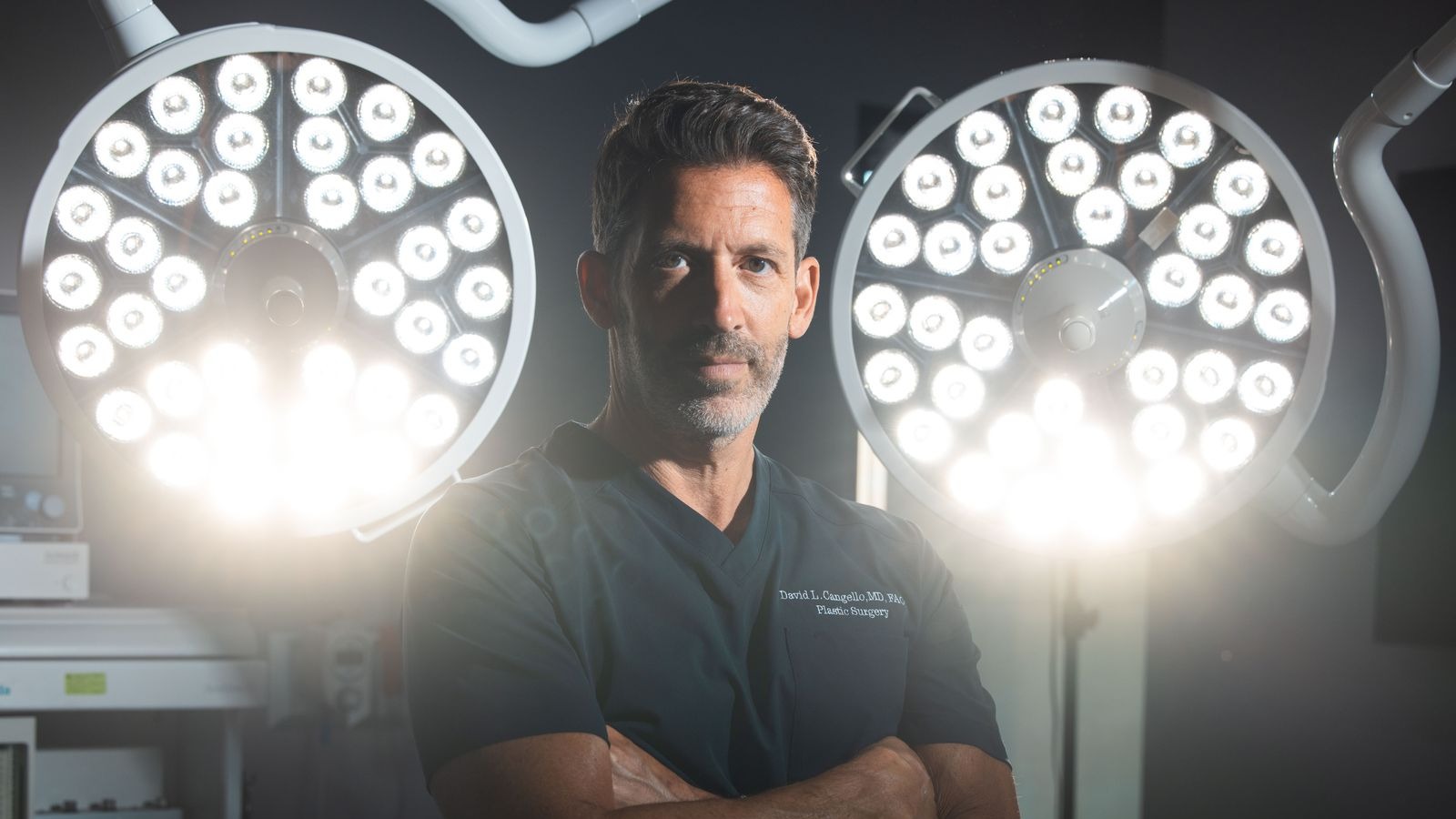
New York plastic surgeon Dr. David Cangello explains how piezo ultrasonic instruments reshape nasal bone under direct vision — and where the technology still has limits.
For most of rhinoplasty’s history, reshaping the bony part of the nose relied on a combination of instruments: an osteotome, essentially a surgical chisel, and a mallet to make the cuts, and a rasp, which functions like a file for bone, to shape and smooth the surface. Each of these tools has a long track record, but used together they carry a real margin for imprecision and less predictable outcomes. Piezo ultrasonic rhinoplasty was built to close that margin and do it with precision. As one of the earliest surgeons in New York City to adopt preservation rhinoplasty, Dr. David Cangello has spent years integrating piezo technology into his practice specifically because it aligns with that same foundational philosophy: take only what needs to come out, and preserve everything else.
What a Piezotome Actually Does
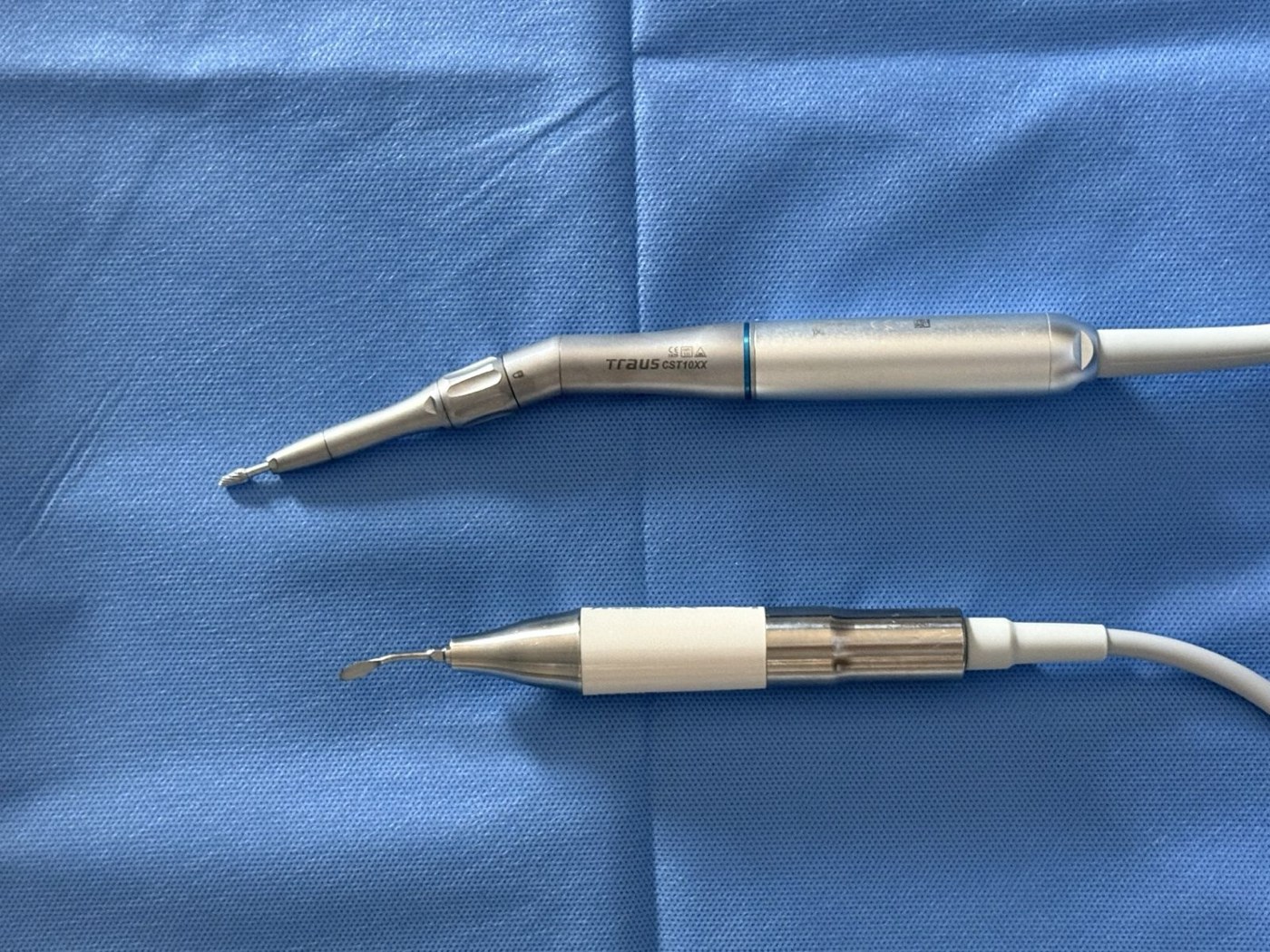
The technology at the center of the technique is a piezotome, a device that uses high-frequency ultrasonic vibrations to cut and shave bone with a level of control traditional instruments were never built to offer. “I pair this technology with preservation rhinoplasty principles,” Cangello says. “Rather than removing more structure than necessary, piezo instruments let me reshape bone with millimeter-level precision while leaving surrounding soft tissue, blood vessels, and nerves untouched.” To refine bone contours further, he combines piezo ultrasonic cutting with a powered cylindrical burr, a two-step approach that allows for smoother sculpting than either tool could achieve on its own.
The technology’s real advantage is selectivity. Because the ultrasonic vibrations are calibrated to affect hard tissue specifically, the device can reshape bone without cutting into the surrounding soft tissue the way traditional rasps and osteotomes can. It also operates at a lower temperature than conventional surgical instruments, which further reduces trauma to the delicate structures surrounding the nasal bones.
Why That Precision Matters for Results
One of the most significant and least discussed advantages of piezo and burr technology is that everything is done under direct vision. With traditional rasps and osteotomes, the surgeon is working blind. The instruments are driven under the skin, and the bone being cut or shaped cannot be seen as the work is being done. “With piezo and the burr, I see the bone as I am sculpting it. I see the cut being made in real time, as it is being made,” Cangello says. That direct visualization is what makes the technique genuinely more accurate, and accuracy of those cuts is critical because it determines how precisely the nasal bones can be repositioned and reshaped after they are separated.
When bone repositioning is imprecise, the consequences can show up long after surgery. Irregularities in the nasal bones, the kind that result from cuts and shaping done without direct vision, can become visible over time. When that same work is done under direct vision, the margin for that kind of imprecision is dramatically reduced.
There is a second mechanical advantage worth understanding. The force generated by driving a chisel through the nasal bone carries a real risk of inadvertent fracture. The nasal bones are delicate, and a chisel driven through them can crack or fracture the bone in ways the surgeon did not intend, creating the same irregularities and repositioning problems described above. Piezo cannot and does not inadvertently fracture bone. It makes only surgically precise cuts, controlled entirely by the surgeon’s hand and line of sight, and nothing else.
Preserving the structural integrity of the nose is central to a rhinoplasty result that holds up over time. The gentler mechanical action of ultrasonic vibration helps preserve bone tissue itself, reducing the risk of bone resorption, a long-term thinning or loss of bone that can subtly change a nasal contour years after the original surgery. For patients undergoing more complex nasal reshaping, that preservation translates into results built to look natural and hold their shape well past the initial healing period.
The technique’s applications extend beyond dorsal hump reduction. Cangello uses piezo instruments for osteotomies, the controlled bone cuts required to narrow or reposition the nasal bones after a dorsal hump is removed, as well as septoplasty and general bone contouring throughout the bridge. It is the kind of technical decision-making that separates the leading rhinoplasty surgeons in New York from the field.
What Recovery Actually Looks Like
Reduced tissue trauma has a direct downstream effect on recovery. Patients undergoing piezo ultrasonic rhinoplasty at Cangello Plastic Surgery typically experience less bruising and swelling than with traditional techniques, and many return to normal activity within one to two weeks, with the nose continuing to refine gradually over the following months as residual swelling resolves.
What the Technology Cannot Do
Piezo instruments are built specifically for bone, the firm, immobile upper portion of the nose, not the softer cartilage that shapes the nasal tip and lower structure. Reshaping cartilage still relies on suture and grafting techniques entirely separate from ultrasonic technology. That distinction matters for setting expectations: a patient seeking tip refinement alongside bridge reshaping is still looking at a procedure built on two different technical approaches within the same surgery, not one device doing the entire job.
It is also worth being direct about what the technology is not: a substitute for surgical judgment. Piezo ultrasonic rhinoplasty is a sophisticated tool, but the decision of where, how much, and whether to use it at all still depends entirely on a surgeon’s experience, anatomical understanding, and aesthetic judgment. The device changes how precisely a plan can be executed. It does not create the plan itself. “What I have found in my practice is that piezo technology is most valuable when it is in the hands of a surgeon who would already be making conservative, preservation-oriented decisions without it,” Cangello says. “The tool amplifies good judgment. It cannot replace it.” For patients weighing their options, that is the case for starting with the surgeon rather than the device — a principle that holds across the roster of top plastic surgeons in New York.
Frequently Asked Questions
What is piezo ultrasonic rhinoplasty?
Piezo ultrasonic rhinoplasty uses a piezotome, a device delivering high-frequency ultrasonic vibrations, to reshape nasal bone with greater precision than traditional hammer-and-chisel osteotomes, while reducing trauma to surrounding soft tissue.
Is piezo rhinoplasty better than traditional rhinoplasty?
It offers specific advantages for bone reshaping, including more controlled cuts, reduced soft tissue trauma, and typically faster recovery. It is not a replacement for traditional technique across the entire procedure, since cartilage reshaping still requires separate suture and grafting methods.
What parts of the nose can piezo technology treat?
Piezo instruments are used specifically on nasal bone, including dorsal hump reduction, osteotomies to narrow or reposition the nasal bones, and general bridge contouring. They are not used for cartilage or nasal tip refinement.
How long is recovery after piezo ultrasonic rhinoplasty?
Many patients experience reduced bruising and swelling compared to traditional rhinoplasty and return to normal activities within one to two weeks, though full refinement of the results continues over several months.
Does piezo rhinoplasty reduce the risk of complications?
The precision and reduced tissue trauma associated with piezo technology are generally associated with fewer bone contour irregularities and a lower risk of certain complications, though outcomes still depend significantly on surgeon experience and individual patient anatomy.
Can piezo rhinoplasty address breathing problems as well as appearance?
Yes, when combined with appropriate technique. Ultrasonic instruments can be used alongside functional correction of issues like a deviated septum, allowing cosmetic and functional goals to be addressed within the same procedure.
Explore more physician-authored features in Haute MD Cosmetic Treatments.