


When we talk about residential architecture, we’re talking about the art and science of designing homes. But it’s so much more than just putting up walls and a roof. It’s about crafting living spaces that are built around the specific needs, lifestyles, and even the dreams of the people who will live there. This discipline aims to create environments that are not only functional and beautiful but also deeply personal.
Understanding Residential Architecture Beyond Four Walls And A Roof
Most people associate “architecture” with iconic skyscrapers or grand museums, but its most intimate and relatable expression is found in the places we call home. Unlike commercial architecture, which is driven by business goals and public traffic flow, residential architecture is an intensely personal journey. It’s a specialized field focused on translating an individual’s story, daily habits, and aspirations into a physical form.
A great way to think of a residential architect is as a skilled interpreter. They listen carefully to your vision—a sun-drenched kitchen for morning coffee, a quiet reading nook tucked away from the noise, a great room designed for family gatherings—and translate those desires into a coherent language of space, light, and materials. This process is so much more than just drawing up blueprints; it’s a true creative partnership.
The Art of Personalization
At its heart, residential design is all about its bespoke nature. A home isn’t just a building; it’s the stage for our daily lives and our most precious memories. An expertly designed home reflects this in several key ways:
- Responsive: It’s designed in harmony with its surroundings. The architect considers everything from the path of the sun to the prevailing breeze, creating a home that feels naturally connected to its site.
- Functional: The layout is thoughtfully planned to support the occupants’ daily routines. It’s about creating a natural flow that makes life simpler and more enjoyable.
- Expressive: It uses form, texture, and materials to create a specific feeling—whether that’s the cozy security of a stone fireplace or the liberating openness of floor-to-ceiling windows.
A home should be a portrait of the people who live within it. Every design choice, from the grandest gesture to the smallest detail, contributes to telling their unique story and enhancing their quality of life.
A Significant Economic Driver
This intense focus on creating personal spaces has made residential architecture a powerful and expanding segment of the global economy. Architectural services worldwide were valued between $360–$376 billion in 2022–2023. The residential sector makes up a huge piece of this pie, accounting for an estimated 25.1% share in 2021 and becoming the second-fastest-growing segment after industrial projects. You can discover more insights about the architectural services market on Business Wire.
Ultimately, understanding residential architecture means seeing it not as a product you buy off a shelf, but as a deeply collaborative service that crafts a sanctuary tailored perfectly to you.
The Blueprint For A Bespoke Home Design
Bringing a client’s vision to life is about so much more than just drawing floor plans. True residential architecture is a delicate balance of deep listening, sharp analysis, and artistic vision. These core pillars ensure a home isn’t merely a structure, but a seamless extension of the people who live within its walls.
Think of it like getting a custom suit made. A master tailor doesn’t just ask for your size. They take dozens of precise measurements and want to know how you move, where you’ll wear it, and the impression you want to make. An architect starts in the exact same way—with a process of discovery, ensuring the final design fits your life as perfectly as that suit.
These foundational elements are what separate a generic house from a truly bespoke home, turning abstract ideas into a tangible, beautiful reality. Once you understand them, you gain an insider’s appreciation for the craft and thought poured into every world-class residence.
Programming: Understanding Your Lifestyle DNA
The first and most critical step is something we in the industry call programming. This is far more than a simple questionnaire; it’s an in-depth investigation into your life—your daily routines, family dynamics, hobbies, future dreams, and even your little pet peeves. It’s a structured conversation that deciphers your lifestyle’s unique DNA.
An architect might ask questions you’ve never even thought to ask yourself:
- Where does the morning sun need to fall to get your day started right?
- How do you entertain—is it intimate dinners or large-scale parties?
- Do you need a quiet, secluded space for deep work, or a vibrant, open area for creative flow?
- How will your family’s needs evolve over the next 10 or 20 years?
This information becomes the “problem” that the architectural design is engineered to “solve.” It creates a highly detailed brief that guides every single decision that follows, ensuring the home functions as a direct response to your personal needs. Without it, a house is just a collection of rooms; with it, it truly becomes a home.
Site Analysis: Listening To The Land
Once we have that personal blueprint, we turn our attention to the canvas—the land itself. Site analysis is the art of “listening” to the property to understand its inherent gifts and its challenges. This isn’t just about noting the property lines; it’s a deep dive into the natural environment.
Key factors include the sun’s path throughout the day and the seasons, prevailing wind patterns, the slope of the land (topography), and what’s already growing there. The goal is to orient the home to maximize natural light, frame the most stunning views, create sheltered outdoor living spaces, and work with the landscape rather than fighting it. A well-sited home simply feels like it belongs.
A great design harnesses the site’s best features. A window isn’t just an opening; it’s a perfectly framed view of a mature oak tree. A patio isn’t just a slab of concrete; it’s a sun-drenched nook protected from the wind.
This step ensures the home is in constant, harmonious dialogue with its surroundings. It creates a living experience that feels both grounded and expansive. For a deeper look at how this fits into the bigger picture, this guide on the key architectural design process steps lays out the entire journey from start to finish.
Form And Materiality: Shaping Emotion And Experience
With a deep understanding of both you and your land, the architect finally begins to give the home its physical shape (form) and texture (materiality). This is where the artistic and emotional heart of residential architecture truly comes alive.
Form refers to the building’s overall shape, its massing, and its silhouette against the sky. A low-slung, horizontal form might evoke a sense of calm and connection to the earth. In contrast, a series of soaring vertical elements can create a feeling of aspiration and drama.
Materiality is the palette of materials used to build and finish the home. The choices here have a profound impact on how a space feels:
- Wood: Can bring warmth, nature, and a sense of history.
- Stone: Conveys permanence, security, and a powerful link to the land.
- Glass: Creates transparency, openness, and a seamless connection between inside and out.
- Concrete: Can offer a minimalist, sculptural quality and an undeniable feeling of solidity.
Together, form and materiality define the home’s character. They determine whether a space feels cozy and intimate or open and inspiring the moment you walk in. This thoughtful selection process is what elevates a structure from a simple building to an immersive sensory experience.
A Field Guide to Timeless Residential Architectural Styles
Understanding the building blocks of design is one thing, but seeing them brought to life in established architectural styles is where the magic really happens. Think of these styles as distinct design languages, each with its own grammar of shapes, materials, and deeply held beliefs that have evolved over time. This isn’t just a history lesson; it’s a way to find the aesthetic that speaks directly to you and the way you want to live.
It’s a bit like developing a taste for wine. At first, you might just know you like red or white. But over time, you start to recognize the bold notes of a Cabernet or the subtle complexity of a Pinot Noir. Similarly, knowing whether you’re drawn to the clean lines of Modernism or the handcrafted warmth of a Craftsman gives your architect a powerful starting point—a clear vision to build upon.
This exploration allows you to borrow, mix, and reinterpret ideas, ensuring the final design feels both rooted in history and entirely your own.
The Enduring Harmony of Classicism
Grounded in the principles of ancient Greek and Roman design, Classicism is all about symmetry, order, and proportion. These homes feel substantial and timeless, often featuring stately columns, intricate moldings, and a balanced, formal presence. The entire philosophy is built around creating a sense of harmony and unwavering elegance.
In the luxury market today, top architects adapt these classical rules to design homes that feel grand without being intimidating. A perfectly symmetrical facade might create a powerful sense of arrival, while classical proportions can make a room feel inherently calm and pleasing. It’s about channeling a spirit of permanence, not just recreating a museum piece.
The Functional Beauty of Modernism
Modernism, which burst onto the scene in the early 20th century, was a dramatic departure from the ornate styles that came before it. Its guiding principle is famously captured in the phrase, “form follows function.” This approach strips design down to its essentials, championing clean lines, simple geometry, and a complete rejection of anything purely decorative.
Modernist homes are instantly recognizable for a few key traits:
- Open Floor Plans: Interior walls practically disappear, creating a fluid, interconnected feeling between spaces.
- Walls of Glass: Massive windows and sliding doors dissolve the barrier between inside and out.
- Honest Materials: You’ll see a lot of exposed steel, raw concrete, and plate glass, celebrated for what they are.
This style creates spaces that feel expansive, light-filled, and deeply connected to their landscape. One of its most popular evolutions, Mid-Century Modern, softened the edges with warmer woods and more organic shapes. You can explore a deeper dive into the distinct characteristics of Mid-Century Modern architecture here to see how these ideas produced some of the most coveted homes today.
The Handcrafted Warmth of Craftsman Design
The Craftsman movement was born as a direct response to the impersonal nature of the Industrial Revolution. It put the focus back on hand-craftsmanship, natural materials, and honest, sturdy design. These homes feel grounded and welcoming, radiating a sense of warmth and substance.
A Craftsman home is built on the belief that a house should be functional, durable, and beautiful in its simplicity. It celebrates the skill of the artisan and the natural beauty of the materials used.
You can typically spot a Craftsman by its signature features:
- Low-pitched roofs with deep, overhanging eaves.
- Exposed rafters and decorative brackets under the roofline.
- A generous front porch supported by thick, tapered columns.
- A rich palette of natural wood used for everything from trim to built-in cabinetry.
Today’s high-end Craftsman homes carry on this legacy of quality with bespoke millwork, artisanal tile, and locally sourced materials that create a rich, tactile living experience.
The Daring Forms of Contemporary Architecture
While often mistaken for Modernism, Contemporary architecture is fundamentally different: it’s the architecture of right now. It isn’t a single, defined style but rather a dynamic reflection of current ideas, technologies, and values. It’s defined by its creative freedom, which leads to daring shapes, innovative materials, and a strong emphasis on sustainability.
A contemporary home might feature dramatic curves, asymmetrical layouts, or an eclectic mix of reclaimed wood next to polished metal. Smart home technology is often woven into the very fabric of the design, and energy efficiency is a top priority. This is the style for a client who wants to build something truly of the moment—a home that makes a bold, forward-thinking statement.
Bringing Your Architectural Vision To Life
Knowing your favorite architectural styles is one thing, but turning that inspiration into a physical home is an entirely different adventure. It’s a detailed, collaborative journey that can seem intimidating from the outside. The key is to see it not as a source of stress, but as a guided process where experts help you translate your vision into reality, step by step.
This is a structured partnership between you, your architect, and your builder. Each phase has a distinct purpose, moving your project from a simple idea to a beautifully finished home. When built on a foundation of open communication and trust, the entire experience can be incredibly rewarding.
You can see how different design philosophies have influenced one another over the centuries, with each major style often emerging as a response to what came before it.
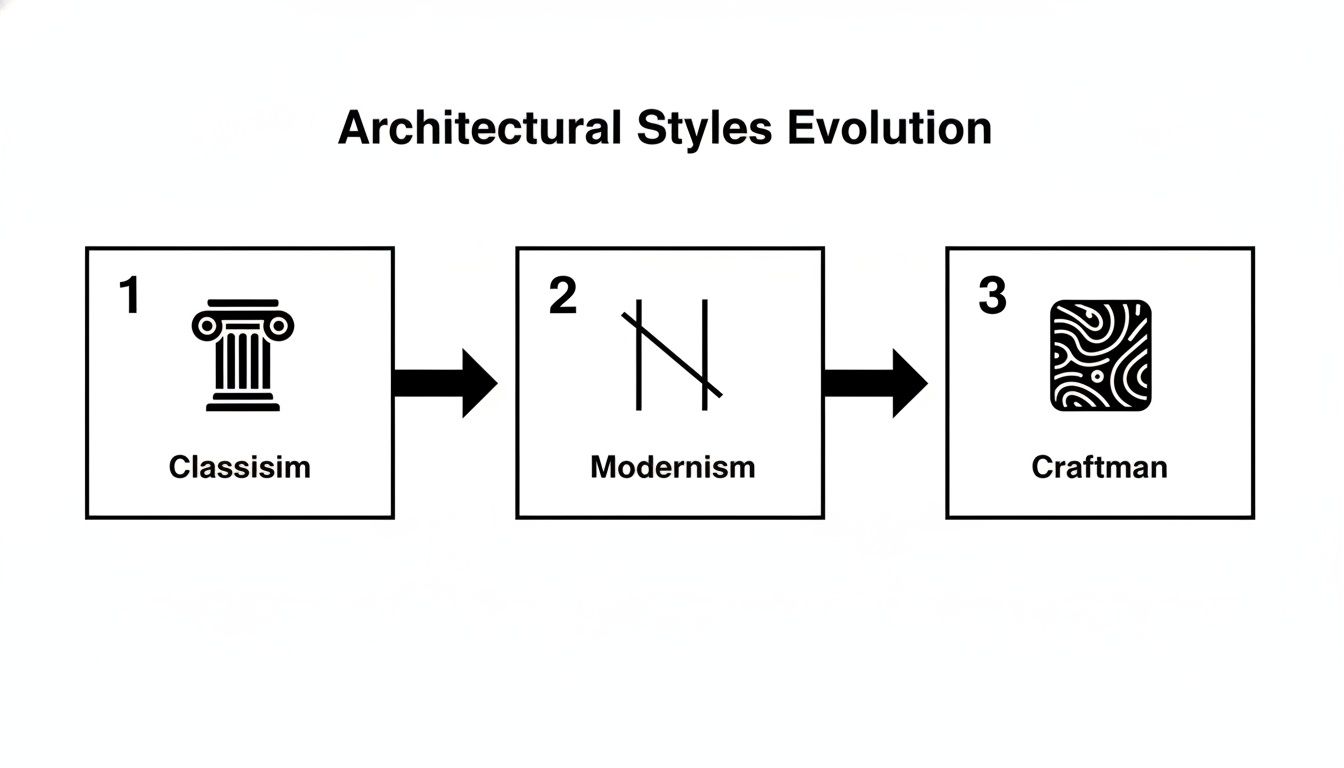
This constant push and pull is what keeps architecture so dynamic and interesting.
The Schematic Design Phase
Every great home begins with Schematic Design. This is the creative, “big picture” stage where the initial brainstorming takes shape. Your architect will take everything they’ve learned about your lifestyle, needs, and the site itself and begin translating it into rough sketches, bubble diagrams, and preliminary floor plans.
The goal here isn’t to nail down every last detail. Instead, it’s about establishing the fundamental scope, scale, and flow of the home. We explore different ways to arrange rooms, position the house to capture the best views and light, and define the overall feeling you want to create. It’s a highly interactive, back-and-forth conversation to ensure the core concept is exactly right before we move forward.
The Design Development Phase
Once a schematic design is approved, the project moves into Design Development. This is where we start adding layers of detail, refining the concept and making firm decisions about materials and systems. The early sketches begin to transform into precise drawings with real-world dimensions.
During this phase, we lock in key elements:
- Material Selection: We’ll choose the specific types of stone for the fireplace, the wood for the floors, and the metal for the roof.
- Window and Door Placement: The exact locations, styles, and sizes of all openings are finalized.
- Major Systems: The framework for the home’s essential systems—HVAC, plumbing, and electrical—is integrated into the design.
Think of this stage as the bridge connecting the initial dream to the technical reality. By the end, you’ll have a very clear picture of what your home will look and feel like, both inside and out.
The Construction Documents Phase
Next comes the most technical and intensive part of the process: creating the Construction Documents. Your architect and their team will produce a comprehensive set of highly detailed drawings and specifications. This isn’t just a floor plan; it’s the official instruction manual the builder will use to construct your home.
These blueprints are the legal and technical foundation of your project. They leave no room for ambiguity, ensuring every beam, wire, and finish is executed exactly as intended to meet building codes and design standards.
This set of documents is incredibly thorough, covering everything from complex structural engineering to the exact type of grout to be used in the guest bathroom. Meticulous planning at this stage is what prevents costly mistakes and frustrating delays during the build. These are also the documents submitted to your local municipality to secure the necessary building permits.
Construction Administration: The Final Step
Finally, with permits in hand and a builder on board, construction can begin. The architect’s role now shifts to Construction Administration. They become your advocate and expert eye on-site, making regular visits to observe progress, answer the builder’s questions, and confirm that the work is being done according to the plans.
This oversight is absolutely critical. An experienced architect can spot potential issues long before they become expensive problems, review payment requests from the contractor to ensure they align with the work completed, and help navigate any challenges that pop up. Their continued involvement guarantees that the design’s quality and integrity are upheld from the first day of excavation to the final walkthrough, ensuring your vision is executed to perfection.
How Modern Trends Are Redefining Luxury Homes
The very definition of a luxury home is changing. We’re witnessing a major shift—not just in fleeting design fads, but in the fundamental purpose of our living spaces. Forward-thinking architects are looking past pure aesthetics to create high-performance environments that actively improve our well-being and simplify our lives.
These homes are more than just beautiful structures; they are intelligent, responsive sanctuaries designed for a better way of living. This evolution is happening on three main fronts: wellness architecture, advanced sustainability, and the seamless integration of smart home technology.
The Rise of Wellness Architecture
Wellness architecture starts with a simple but powerful idea: our homes should make us healthier. This design philosophy places human well-being at the absolute center of every decision, recognizing that our surroundings directly impact our mental, physical, and emotional health.
This is a far more holistic approach than just adding a home gym. It’s about thoughtfully shaping every aspect of the home to support its inhabitants.
- Biophilic Design: This is all about weaving nature into the architectural fabric of the home. Imagine living green walls that purify the air, the calming sound of an indoor water feature, or massive windows that erase the line between your living room and the landscape outside.
- Optimized Natural Light: The design works to capture as much daylight as possible. It’s a proven way to regulate our circadian rhythms, boost our mood, and improve focus. This is achieved through clever building orientation and sophisticated glazing solutions.
- Air and Water Quality: High-end homes now incorporate state-of-the-art filtration systems, ensuring the air you breathe and the water you drink are as pure as possible.
A home designed with wellness in mind becomes a restorative retreat. It’s a space that doesn’t just shelter you from the outside world but actively helps you recharge, focus, and thrive within its walls.
Advanced Sustainability and Performance
In the luxury market, sustainability has moved well beyond simply choosing energy-efficient appliances. The new standard is creating high-performance buildings that have a minimal environmental footprint while delivering maximum operational efficiency. The goal is a home that’s not only eco-conscious but also more resilient, comfortable, and less expensive to run.
This commitment is becoming a benchmark of quality. The American Institute of Architects’ 2030 Commitment initiative, for instance, tracked nearly 9,000 whole-building projects in 2023. The data shows that design teams are hitting major milestones in energy reduction, with many aiming for a 70% or greater reduction by 2030. You can learn more about these sustainability findings directly from the report.
So, what does this look like in practice?
- Net-Zero and Net-Positive Energy: These homes are designed to produce as much energy as they use—or even more. This is accomplished through a combination of a super-insulated building shell, high-performance windows, and on-site renewable energy like solar panels.
- Sustainable Material Sourcing: There’s a huge emphasis on using locally sourced, reclaimed, or recycled materials. This not only lowers the home’s carbon footprint but also infuses it with a unique character and a compelling story.
- Water Conservation: Advanced systems for rainwater harvesting and greywater recycling are being integrated to dramatically reduce the home’s dependence on municipal water supplies.
Seamless Smart Home Integration
The final piece of the puzzle is smart home technology that feels completely effortless. The aim is no longer just controlling things with an app; it’s about creating a home that is truly intuitive and anticipates your needs. When an architect designs this technology in from the very beginning, it becomes an invisible, seamless part of the experience.
Forget clunky, tacked-on gadgets. Instead, systems for lighting, climate, security, and entertainment are woven directly into the home’s infrastructure. Imagine lighting that automatically adjusts its color and intensity throughout the day to support your body’s natural rhythm, or a climate system that learns your preferences to optimize both comfort and energy use. This deep integration is what separates a truly “smart” home from one that is merely “connected,” offering a level of convenience and control that redefines modern luxury.
The Lasting Value Of Great Architectural Design
So, what’s the real point of investing in exceptional residential architecture? It’s a fair question. The answer goes far deeper than just getting a beautiful house; it’s about tangible financial returns and the kind of intangible benefits that genuinely shape your day-to-day life.
Think of it as an investment in your well-being, a legacy for your family, and a smart financial move that pays dividends for years to come.
A thoughtfully designed home isn’t merely a place to live—it becomes the backdrop for your family’s most cherished memories. It’s designed around your routines, built to foster connection, and crafted to be a personal sanctuary from the outside world. This is the ultimate value proposition: a space that actively improves your quality of life.
More Than An Expense, It’s An Investment
Let’s talk numbers. Exceptional design delivers measurable returns. A home conceived by a talented architect almost always commands a higher resale value, standing out in a crowded market as a unique, high-quality asset. Its appeal is timeless, attracting discerning buyers who recognize and are willing to pay a premium for superior design and craftsmanship.
But the financial upside isn’t just about appreciation. Smart design can save you money right now. Homes designed with sustainable principles, for example, often have dramatically lower operating costs. Through strategic orientation, high-performance insulation, and energy-efficient systems, these homes slash utility bills every single month. You can explore the fundamentals of what is sustainable architecture to see exactly how these strategies translate into long-term savings.
An architect doesn’t just design a house; they help you create a life. Their work is an investment in daily joy, functional ease, and lasting financial value, transforming a simple structure into a personal legacy.
The Power Of Curated Design
The demand for this level of expertise is a major driver in the design industry. High-end clients consistently prioritize investing in top-tier talent to bring their vision to life.
In a recent survey, Interior Design’s Top 100 Giants reported that residential projects accounted for a staggering 235 million square feet of their work. That figure isn’t just a number; it shows the incredible resilience and scale of a market that values curated, high-caliber design above all else. You can discover more about these industry findings and see just how important this sector has become.
Ultimately, bringing in an architect is about creating a home that is a true extension of you—one that functions flawlessly, inspires you daily, and stands as a testament to what thoughtful design can achieve. It’s an investment not just in a piece of property, but in the very quality of your life.
Your Top Questions About Residential Architecture, Answered
Venturing into a custom home project naturally brings up a lot of questions. Getting a handle on timelines, professional roles, and how fees work is the best way to move forward with confidence, turning a bold vision into a beautiful reality.
Think of it as building a foundation of knowledge before you ever break ground. It helps demystify the entire process, ensuring you and your team are on the same page from the very beginning.
How Long Does a Custom Home Project Typically Take?
While every project is unique, a good rule of thumb for the design phase—from initial sketches to permit-ready construction documents—is anywhere from 6 to 12 months. This is where the deep thinking, creativity, and detailed planning happens.
Once the design is locked in and the permits are approved, the actual construction phase can take another 12 to 24 months. Any seasoned architect will provide a detailed project schedule upfront, which is crucial for setting realistic expectations and tracking progress along the way.
Is an Architect Different From a Home Designer?
Yes, and it’s an important distinction, especially when you’re building a high-value home. A licensed architect has gone through years of formal education, completed a demanding apprenticeship, and passed a series of grueling state board exams. They carry the legal authority, insurance, and responsibility for a building’s design and public safety.
A home designer, by contrast, isn’t required to hold a state license and their training can vary widely. For a luxury home where you’re dealing with complex structural issues, creative problem-solving, and significant investment, the comprehensive expertise and legal accountability of an architect is essential.
How Do Architects Usually Structure Their Fees?
Architectural fees are typically handled in one of three ways, and the right approach usually depends on the scope and complexity of your project.
- Percentage of Construction Cost: This is a common model for high-end residential work, often falling between 8% and 15% of the final construction cost.
- Fixed Fee: A single, all-inclusive fee for the entire scope of design services is agreed upon before work begins.
- Hourly Rate: The architect bills for their time as it’s spent, sometimes with a “not-to-exceed” cap to provide a budget ceiling.
Having a completely transparent conversation about fees and what’s included is one of the most important first steps. It ensures everyone has a crystal-clear understanding before the partnership officially kicks off.
Ready to connect with the visionaries who can bring your dream home to life? Haute Design is the premier network for finding the nation’s most distinguished architects, interior designers, and builders, curated for an affluent clientele.
Explore our exclusive network of top-tier professionals and begin your journey to creating an extraordinary living space.