


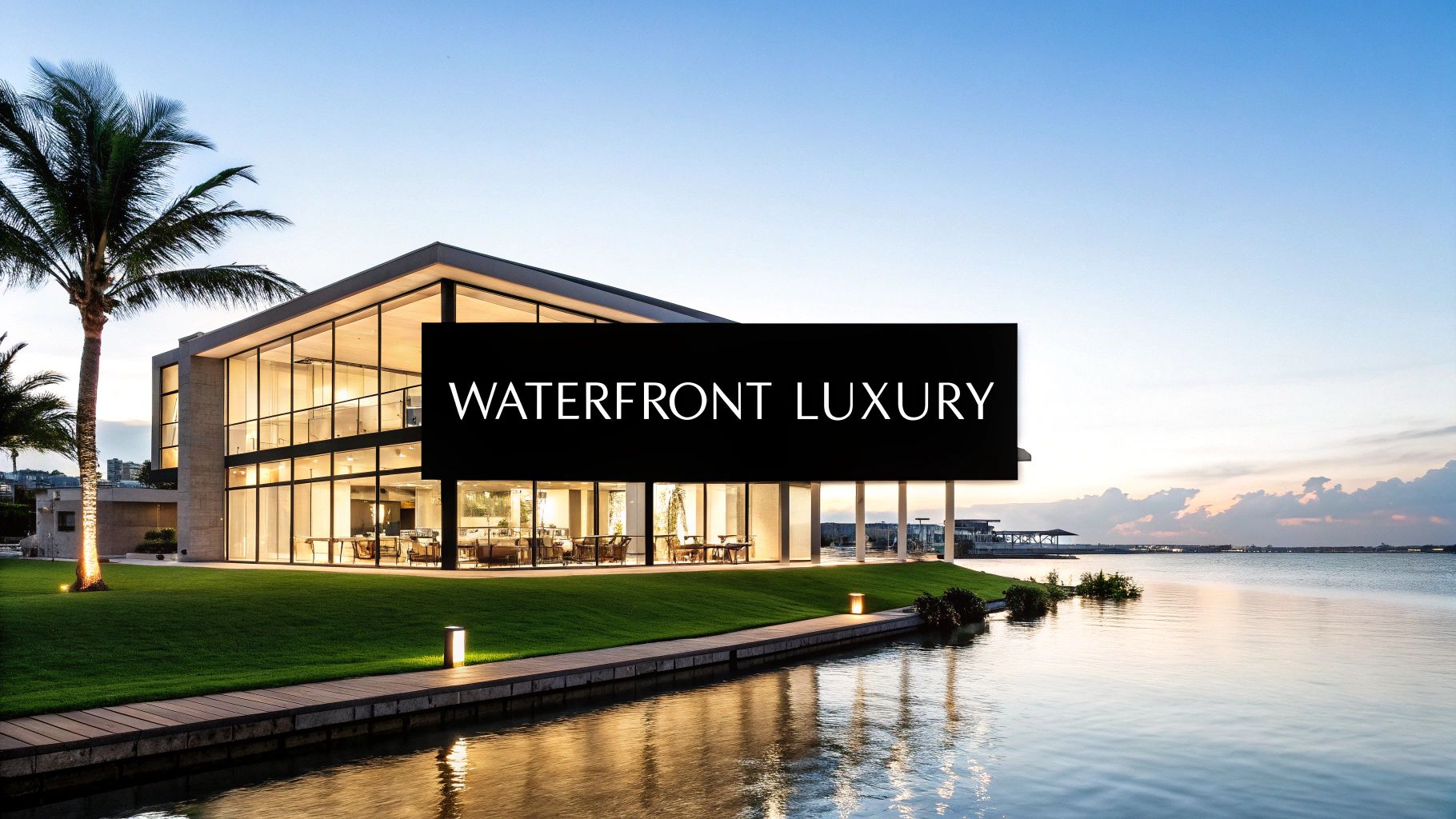
A prime waterfront location offers more than just a view; it presents a unique canvas for architectural innovation and lifestyle design. For the discerning homeowner, a waterfront property is the ultimate expression of personal taste, blending sophisticated design with the serene power of nature. However, creating a home that is both beautiful and resilient in a coastal or lakeside environment requires a nuanced understanding of materials, orientation, and spatial dynamics.
In this detailed exploration, we move beyond beautiful imagery to dissect 10 distinct approaches to luxury waterfront home designs. We will uncover the strategic decisions, innovative techniques, and actionable insights that define world-class waterfront living. This guide is crafted for affluent homeowners, architects, and designers seeking not just inspiration, but a practical blueprint for creating truly extraordinary properties.
Our analysis will cover a diverse range of styles, including:
- Modern Minimalist and Mid-Century Modern Revivals
- Transitional Coastal Elegance and Luxury Resort-Style Estates
- Sustainable Architecture and Japanese-Inspired Zen Sanctuaries
Each example provides a masterclass in responding to the unique challenges and opportunities of a waterside setting. We break down the core principles behind these successful projects, offering replicable strategies for maximizing views, ensuring durability against the elements, and achieving seamless indoor-outdoor integration. This is your essential resource for mastering the art and strategy of premier waterfront home designs.
1. Modern Minimalist Waterfront Architecture
Modern minimalist architecture is one of the most sought-after waterfront home designs, prized for its ability to make the natural landscape the undisputed focal point. This approach prioritizes clean lines, uncluttered spaces, and a neutral color palette, creating a serene and sophisticated environment. The philosophy is simple: remove visual distractions to enhance the connection between the interior and the stunning water views outside.
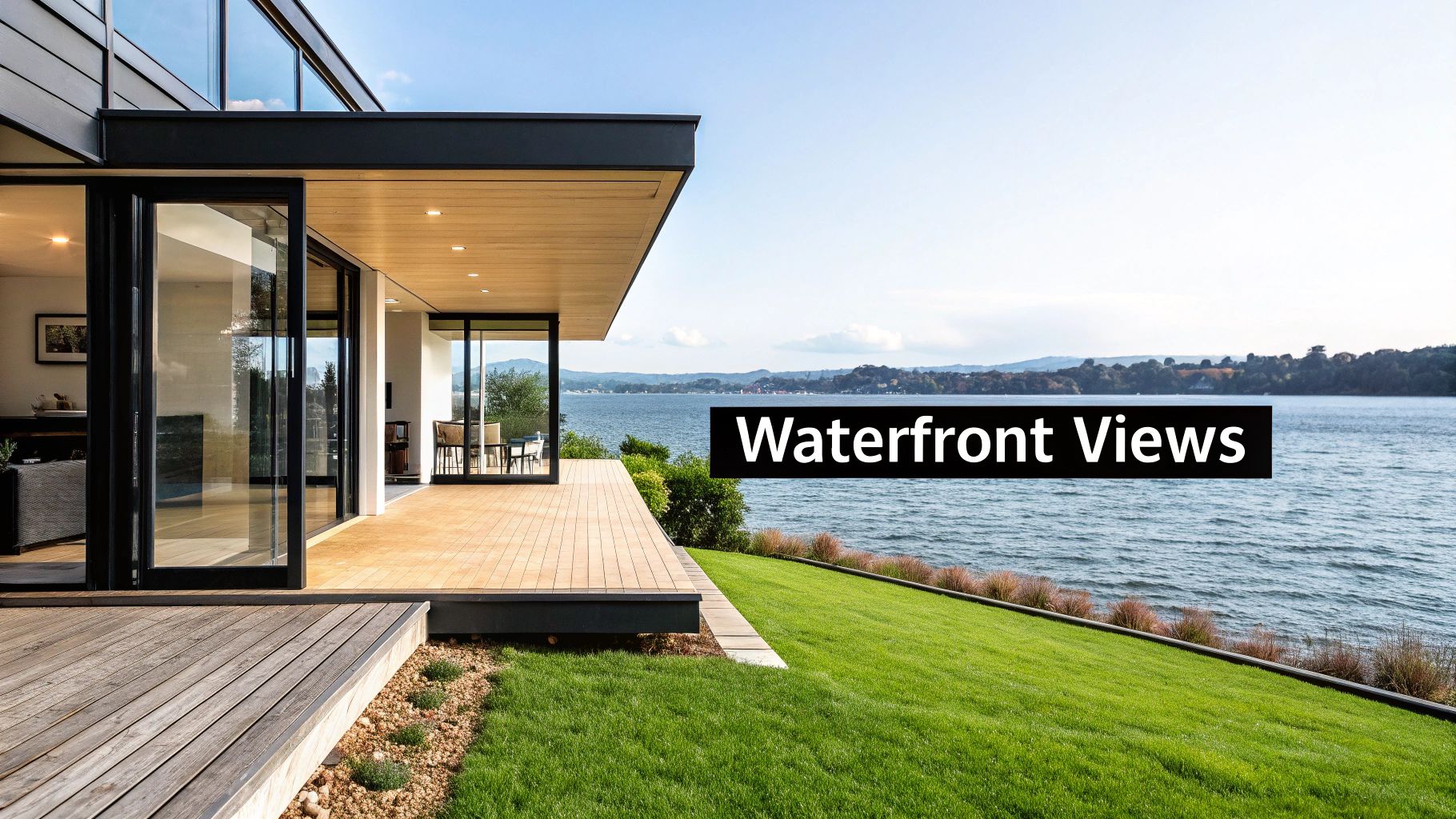
This design is defined by its expansive use of glass, often in the form of floor-to-ceiling windows and retractable glass walls. These elements dissolve the boundaries between inside and out, allowing for seamless transitions and panoramic sightlines. Open-concept floor plans further enhance this effect, creating a feeling of spaciousness and light that mirrors the vastness of the water.
Strategic Analysis
The power of minimalism in a waterfront setting lies in its restraint. By simplifying the architectural form and interior decor, the design amplifies the dynamic beauty of the water, sky, and surrounding terrain. It’s a strategy of “less is more,” where the home becomes a quiet, elegant frame for the ever-changing natural masterpiece. This approach is particularly effective in locations with dramatic scenery, such as the coastal cliffs of Malibu or the serene shores of Lake Michigan.
Actionable Takeaways
For homeowners and designers looking to implement this style, consider these tactical insights:
- Prioritize High-Performance Glazing: Invest in floor-to-ceiling windows with UV-protective coatings and high thermal performance. This protects interiors from sun damage and maintains energy efficiency without compromising the view.
- Balance with Natural Materials: To prevent a minimalist space from feeling cold or sterile, introduce warm, organic materials. Natural wood for decking and ceilings, stone accent walls, and soft linen textiles can add texture and warmth.
- Integrate Smart Technology: Incorporate smart glass that can tint for privacy or motorized sun shades that can be deployed during peak sun hours. This provides functional control over light and privacy while maintaining a clean aesthetic.
- Frame the View: Use landscaping and architectural elements strategically. A cantilevered roofline or carefully placed trees can frame specific vistas, turning a beautiful view into a breathtaking, composed scene.
2. Transitional Coastal Elegance
Transitional coastal elegance offers a sophisticated blend of classic comfort and modern simplicity, creating waterfront homes that feel both timeless and current. This design approach marries the stately, enduring forms of traditional architecture with the clean, airy feel of contemporary design. The result is a refined yet relaxed environment, perfect for luxury living where comfort is as important as style.
The style is characterized by a soft, neutral color palette inspired by the coast: sandy beiges, gentle whites, and muted blues and grays. Furnishings combine classic silhouettes with modern, streamlined pieces, creating a look that is layered and curated. Unlike purely modern waterfront home designs, this approach embraces texture and subtle architectural details like coffered ceilings or refined millwork to add depth and character without overwhelming the space.
Strategic Analysis
The strategic genius of transitional design lies in its broad appeal and enduring quality. It avoids the starkness of pure modernism and the fussiness of traditional decor, creating a balanced aesthetic that feels sophisticated and welcoming. This style is exceptionally effective in established luxury communities, such as those in Nantucket or along the Chesapeake Bay, where it respects historical context while providing modern functionality and an open, light-filled connection to the water.
Actionable Takeaways
For designers and homeowners aiming to achieve this elegant balance, consider these specific tactics:
- Establish a Curated Color Palette: Start with a base of 3-4 primary coastal colors (e.g., off-white, soft gray, sea blue). Use these consistently across walls, textiles, and major furniture pieces to create a cohesive and calming atmosphere.
- Mix Traditional Forms with Modern Art: Pair a classic, high-quality sofa with bold, contemporary art or a sleek, modern coffee table. This juxtaposition creates visual interest and prevents the design from feeling dated or predictable.
- Incorporate Statement Lighting: Select lighting fixtures that act as sculptural centerpieces bridging both styles. A chandelier with a classic shape but crafted from modern materials can perfectly encapsulate the transitional aesthetic.
- Focus on Natural, Refined Materials: Use materials like light oak flooring, marble countertops, and linen upholstery. These elements add authentic texture and warmth without resorting to rustic clichés, maintaining an air of polished elegance.
3. Mid-Century Modern Waterfront Revival
The Mid-Century Modern Revival is a sophisticated approach to waterfront home designs, reinterpreting the iconic principles of the 1950s and 60s for contemporary living. This style champions organic forms, clean horizontal lines, and a deep, intrinsic connection to nature. Its philosophy centers on integrating the home into its landscape, making it an ideal choice for properties where the water is a dominant feature.
This design is characterized by post-and-beam construction that allows for expansive walls of glass, clerestory windows, and open-plan interiors. These elements work together to erase visual barriers, invite natural light deep into the home, and frame deliberate, curated views of the water and surrounding terrain. The result is a home that feels both expansive and intimately connected to the outdoors.
Strategic Analysis
The strategic appeal of a Mid-Century Modern revival lies in its timeless character and its inherent focus on site-specific design. Unlike more generic styles, this approach forces a thoughtful dialogue between the architecture and the environment. By emphasizing horizontal planes and natural materials like wood and stone, the structure complements the waterfront rather than competing with it. This creates a property with enduring aesthetic value and a powerful sense of place, resonating with design-savvy clients seeking authenticity and style.
Actionable Takeaways
For architects and homeowners aiming to capture this classic aesthetic, consider these tactical approaches:
- Embrace Post-and-Beam Construction: Use exposed beams and structural posts to create large, open living spaces and support extensive glazing. This is fundamental to achieving the style’s signature indoor-outdoor flow.
- Curate Authentic Furnishings: Source authentic mid-century pieces or high-quality reproductions from designers like Eames, Saarinen, or Noguchi. These elements are crucial for creating a cohesive and historically respectful interior.
- Integrate Modern Systems Discreetly: Weave modern technology, such as smart home systems and energy-efficient HVAC, into the design without disrupting the clean, period-correct lines. For a deeper dive into the style’s core tenets, explore the fundamentals of Mid-Century Modern architecture.
- Use a Material Palette True to the Era: Combine warm woods like teak and walnut with natural stone, cork floors, and bold, period-appropriate accent colors. This palette reinforces the connection to nature and provides visual warmth.
4. Luxury Resort-Style Living
Luxury resort-style living transforms a waterfront home into a private, five-star retreat, blurring the line between a primary residence and an exclusive vacation destination. This design philosophy focuses on creating an environment of ultimate comfort, leisure, and entertainment. It integrates hospitality-inspired amenities, such as spa-like bathrooms, infinity pools, and expansive outdoor entertainment areas, to deliver a daily resort experience.
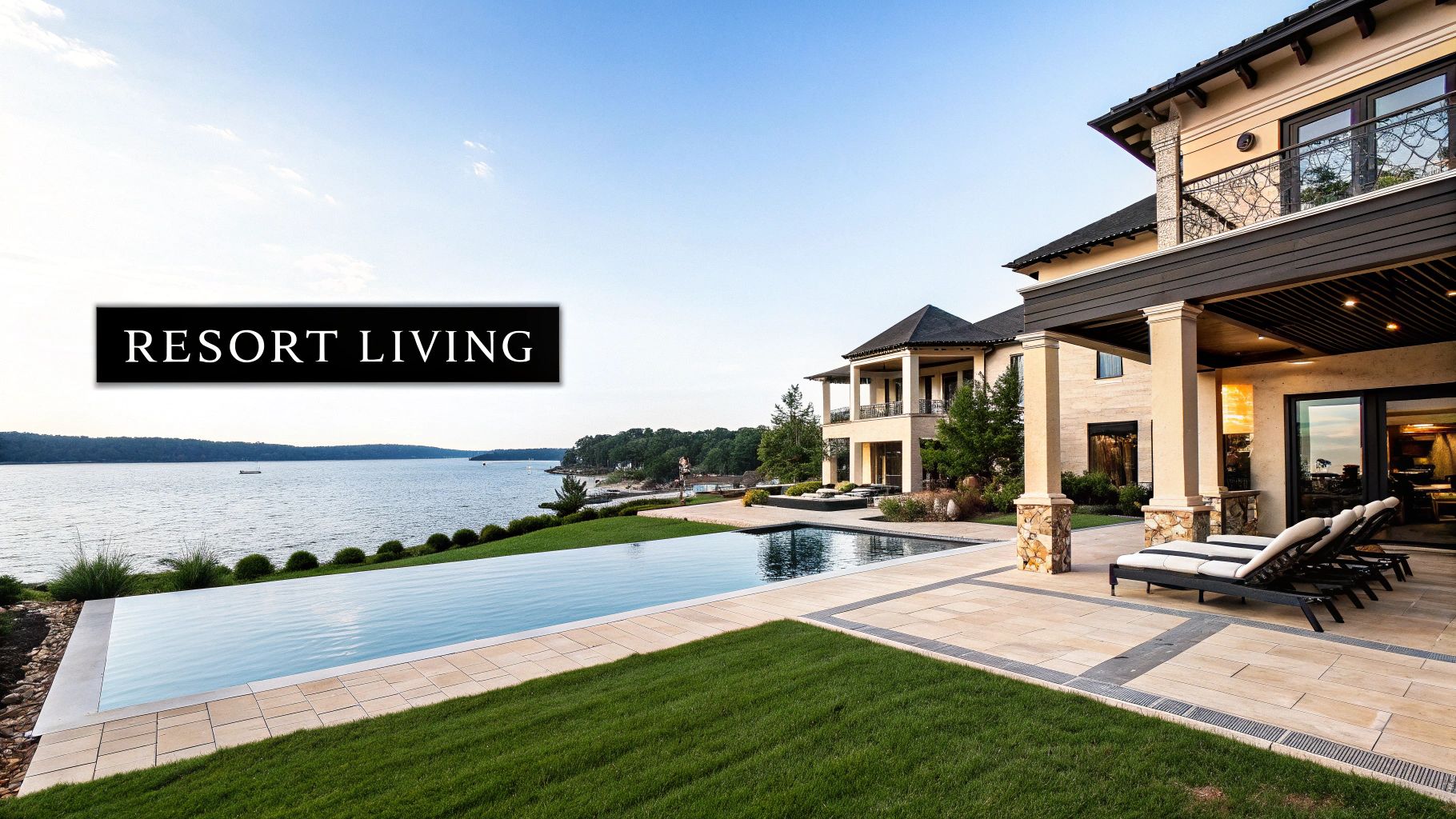
This approach is characterized by its emphasis on seamless indoor-outdoor transitions, meticulously planned landscapes, and an abundance of high-end features designed for relaxation and social gatherings. Homes in this style, often seen in locales like Miami Beach or Turks and Caicos, are not just places to live but curated destinations that cater to every need, from private wellness facilities to professional-grade kitchens and bars.
Strategic Analysis
The strategy behind resort-style waterfront home designs is to create a self-contained sanctuary that eliminates the need to travel for a luxury escape. By centralizing world-class amenities within the property, the design maximizes convenience and exclusivity. This approach is highly effective for property owners who value privacy, host frequently, or desire a perpetual vacation lifestyle. The design often requires sophisticated infrastructure, including staff quarters and commercial-grade systems, to maintain its high standard of service and comfort.
Actionable Takeaways
For those aiming to craft a personal resort, these tactical insights are crucial for success:
- Design for Hospitality: Partner with architects and designers who specialize in luxury hospitality. Their expertise in flow, ambiance, and service infrastructure is invaluable for creating an authentic resort feel.
- Integrate Advanced Amenities: Go beyond a standard pool. Consider adding a cold plunge, sauna, steam room, private gym, or a swim-up bar to elevate the wellness and entertainment offerings.
- Master Indoor-Outdoor Flow: Use pocketing glass doors and cohesive flooring to merge interior living spaces with outdoor terraces and pool decks. For more on creating this seamless connection, explore the principles of indoor and outdoor living.
- Plan for Operations: A true resort-style home requires operational planning. Incorporate discreet service entrances, staff quarters, and robust, energy-efficient utility systems to support the property’s extensive amenities without excessive operational costs.
5. Sustainable Waterfront Architecture
Sustainable waterfront architecture represents a paradigm shift where luxury design and environmental responsibility converge. This approach prioritizes eco-conscious building practices, renewable energy, and healthy materials to create homes that are as good for the planet as they are for their inhabitants. The core philosophy is to minimize environmental impact while maximizing comfort, beauty, and resilience in a sensitive coastal or lakeside setting.
This design strategy integrates systems like solar panels, geothermal heating, and rainwater harvesting directly into the home’s aesthetic. It goes beyond technology, influencing site selection, building orientation for passive solar gain, and the use of locally sourced, non-toxic materials. The result is a high-performance home that operates efficiently, promotes wellness, and exists in harmony with its natural surroundings.
Strategic Analysis
The strategic power of sustainable design in the luxury waterfront market lies in its forward-thinking value proposition. It reframes opulence not just as aesthetic grandeur but as intelligent, responsible living. By building a home that generates its own energy or restores its surrounding landscape, the design creates a powerful narrative of stewardship and innovation. This approach is highly effective for clients who value long-term performance and wish to align their investments with their environmental principles, making it a key differentiator in high-end markets like Martha’s Vineyard and the eco-conscious enclaves of coastal California.
Actionable Takeaways
For those looking to build or renovate with sustainability in mind, consider these tactical insights:
- Integrate Systems Architecturally: Design renewable energy systems, such as solar panels or green roofs, to be an integral part of the architectural form. This ensures they enhance the design’s visual appeal rather than appearing as an afterthought.
- Specify Healthy Materials: Prioritize the use of materials with low or zero volatile organic compounds (VOCs). This improves indoor air quality, a significant health benefit that adds tangible value for occupants.
- Design for Ecological Restoration: Use native plantings in landscaping to create habitats for local wildlife, reduce water consumption, and prevent erosion. Permeable hardscapes can help manage stormwater runoff, protecting water quality.
- Pursue Green Certifications: Obtaining certifications like LEED or from the Living Building Challenge formally validates the home’s sustainable features. This not only provides third-party verification but can significantly enhance its market value and appeal. Learn more about the core principles of what is sustainable architecture to inform your design choices.
6. Mediterranean Villa Waterfront Estates
Inspired by the sun-drenched coasts of Spain, Italy, and Greece, Mediterranean Villa waterfront estates offer a timeless blend of Old World elegance and relaxed coastal living. This architectural style is characterized by its warm, earthy color palettes, stucco exteriors, terracotta roof tiles, and graceful archways. The design ethos centers on creating a seamless connection to the outdoors, with lush courtyards, grand loggias, and sprawling terraces that invite alfresco living.
These homes are designed to feel like private European resorts, where every detail, from wrought-iron balconies to hand-painted tiles, contributes to an atmosphere of sophisticated charm. Large, strategically placed windows and arched doorways frame picturesque water views, while interior spaces often feature natural stone floors, exposed wooden beams, and textured plaster walls. This approach creates a rich, layered environment that feels both grand and intimately connected to the waterfront setting.
Strategic Analysis
The strategic genius of Mediterranean waterfront home designs lies in their masterful blend of romance and resilience. The style inherently celebrates outdoor living, making it a natural fit for waterfront properties where life revolves around the water. Thick stucco walls and terracotta roofs are not just aesthetically pleasing; they are historically proven to provide excellent thermal mass, keeping interiors cool in warm, sun-drenched climates like those in Montecito or Sarasota, Florida. The focus on courtyards and loggias creates sheltered outdoor rooms that offer respite from direct sun and wind while still embracing the coastal breeze and views.
Actionable Takeaways
For those aiming to capture this classic European coastal aesthetic, consider these tactical approaches:
- Source Authentic Materials: Invest in genuine terracotta tiles for roofing, hand-painted ceramic tiles for accents, and natural stone like travertine or limestone for flooring and patios. Authenticity is key to achieving an elevated, timeless look.
- Layered Landscaping and Water Features: Integrate lush, romantic landscaping with bougainvillea, olive trees, and cypress. Incorporate water features like tiered fountains or reflecting pools to enhance the serene, resort-like atmosphere and complement the nearby body of water.
- Master the Art of the Arch: Use arches deliberately to frame key views of the water, create elegant transitions between indoor and outdoor spaces, and add architectural character to windows and loggias.
- Emphasize Outdoor Living Rooms: Design extensive, well-appointed outdoor spaces. Create distinct zones for dining, lounging, and entertaining, complete with comfortable furnishings, outdoor kitchens, and fireplaces to extend usability into the evenings.
7. Industrial Loft Waterfront Conversions
Industrial loft waterfront conversions merge historical authenticity with contemporary luxury by transforming old warehouses, factories, and mill buildings into sophisticated residential spaces. This approach celebrates the raw, structural beauty of the original architecture, showcasing elements like exposed brick, weathered timber beams, and large steel-frame windows. It offers a unique living experience that honors the industrial heritage of the waterfront while providing all the comforts of modern design.
This design style is prevalent in revitalized urban districts like DUMBO in Brooklyn or along the Chicago River, where historic industrial buildings are given a new purpose. The core appeal lies in the dramatic scale of these spaces, with high ceilings and open floor plans that are difficult to replicate in new construction. The juxtaposition of rugged industrial character with refined modern finishes creates a powerful and dynamic aesthetic.
Strategic Analysis
The strategic genius of an industrial conversion lies in its narrative power. These homes are not just structures; they are pieces of history, telling the story of a location’s commercial past. By preserving original elements, the design creates a deep sense of place and authenticity that resonates with buyers seeking character over conformity. This approach leverages the building’s inherent “bones” as the central design feature, turning structural necessities into compelling architectural art.
Actionable Takeaways
For developers and homeowners pursuing an industrial loft conversion, consider these key tactics:
- Preserve Key Architectural Features: Identify and protect signature elements like original brickwork, large trusses, and vintage factory windows. These features are irreplaceable and provide the core character of the space.
- Juxtapose Old and New: Use modern, high-end finishes to contrast with the raw industrial shell. A sleek, minimalist kitchen or a polished concrete floor can highlight the texture and age of the original materials beautifully.
- Consult Structural and Environmental Experts: Engage engineers familiar with historic buildings to ensure structural integrity. A thorough environmental assessment is also critical to address any legacy contaminants from the building’s past industrial use.
- Leverage Historic Preservation Incentives: Investigate federal, state, and local tax credits for the rehabilitation of historic structures. These programs can provide significant financial benefits while promoting responsible preservation.
8. Japanese-Inspired Zen Waterfront Homes
Japanese-inspired design offers a profound approach to waterfront living, emphasizing harmony, tranquility, and a deep connection with the natural environment. This philosophy, rooted in Zen principles, transcends mere aesthetics to create spaces that promote spiritual wellness and meditative calm. It prioritizes natural materials, minimalist layouts, and the seamless integration of indoor and outdoor realms, making it an exceptional choice for sophisticated waterfront home designs.
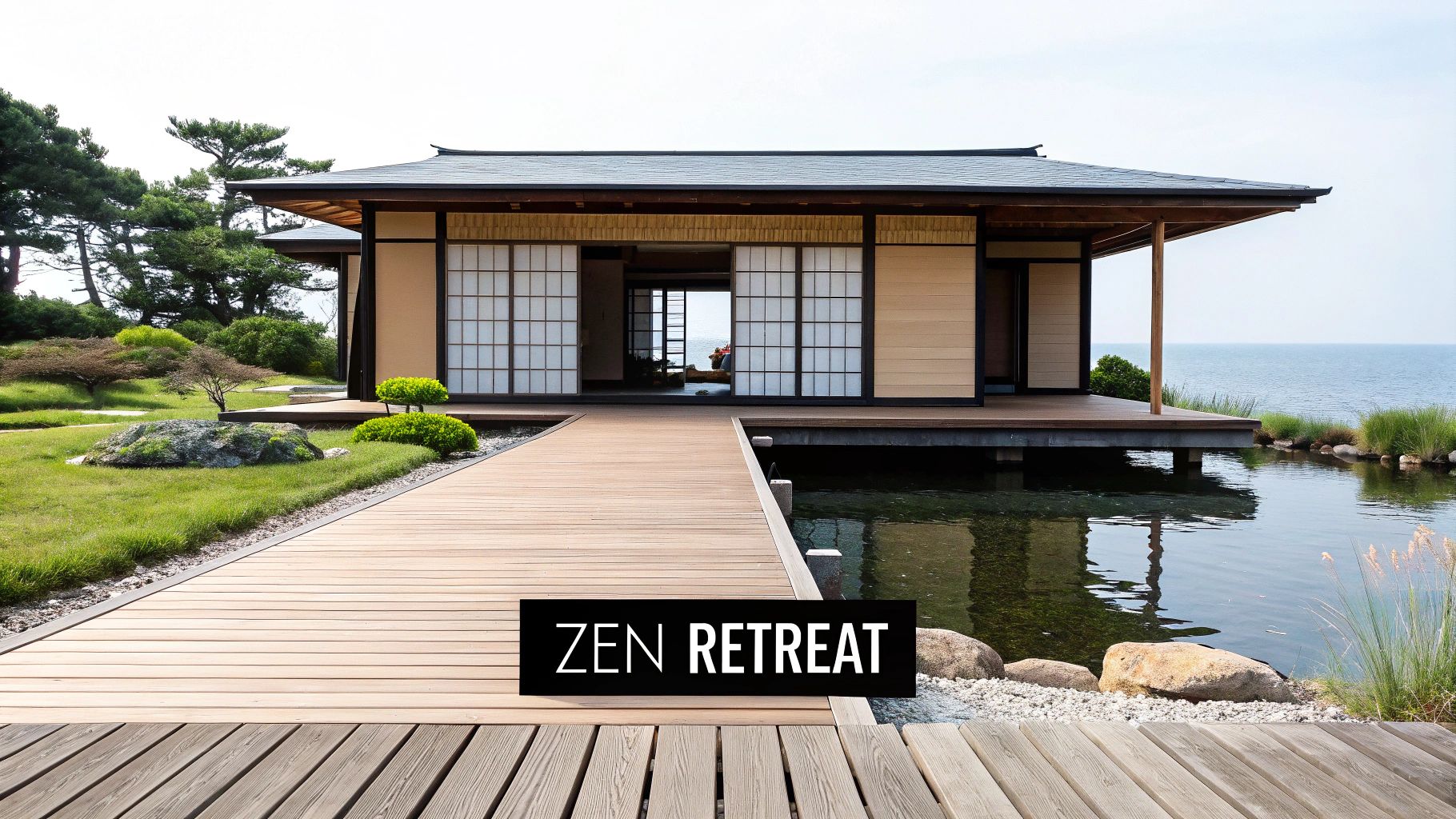
This design style is characterized by its use of wood, stone, and water as core architectural elements. Features like shoji screens, wide verandas (engawa), and meticulously planned gardens are not just decorative but functional, shaping light and framing views. The home itself becomes a sanctuary, a quiet counterpoint to the dynamic energy of the water, as seen in contemporary Zen residences from the Pacific Northwest to the shores of Hawaii.
Strategic Analysis
The strategic genius of Japanese-inspired waterfront architecture lies in its philosophy of “borrowed scenery” (shakkei). Instead of simply presenting a view, the design actively incorporates the surrounding landscape into the home’s composition. Every window, pathway, and transition is deliberately crafted to create a series of layered, immersive experiences. The home doesn’t just sit by the water; it engages in a thoughtful dialogue with it, fostering a unique sense of place and belonging. This approach turns a property into a restorative retreat, enhancing both its spiritual and market value.
Actionable Takeaways
For clients and designers aiming to create a genuine Zen-inspired waterfront home, consider these tactical insights:
- Prioritize Material Authenticity: Source high-quality natural materials like cedar, bamboo, and slate. The texture, scent, and aging process of these materials are integral to the sensory experience of the home.
- Integrate Water Meaningfully: Use water features not just for aesthetics but to guide movement, create soothing sounds, and reflect the sky and landscape. A still reflecting pool or a gentle stream can link the home to the larger body of water beyond.
- Master Indoor-Outdoor Transitions: Design seamless transitions using sliding glass panels, level thresholds, and continuous flooring materials that extend from inside to an outdoor deck or veranda. This blurs the line between built and natural environments.
- Embrace Asymmetry and Simplicity: Arrange elements according to the Japanese principle of fukinsei (asymmetry) to create a more natural and dynamic balance. Keep interiors uncluttered to allow the craftsmanship and the views to be the central focus.
9. Scandinavian Modern Waterfront Living
Scandinavian modern design offers a compelling approach to waterfront living by blending minimalism with organic warmth and functionality. Inspired by Nordic principles of simplicity, sustainability, and understated elegance, this style creates light-filled, inviting homes that feel deeply connected to their natural surroundings. It emphasizes natural light, clean lines, and a cozy atmosphere often referred to as “hygge.”
This design is characterized by its use of light-toned woods like ash, birch, and pine, paired with a neutral color palette of whites, grays, and soft blues. Large, unadorned windows are essential for maximizing natural light, a precious commodity in Nordic regions. The result is a waterfront home that feels both sophisticated and profoundly comfortable, making it an ideal choice for serene settings from the Norwegian fjords to the lakes of North America.
Strategic Analysis
The genius of Scandinavian design in waterfront settings lies in its ability to create warmth and shelter without sacrificing the view. While modern minimalism can sometimes feel stark, the Scandinavian approach introduces texture and natural materials to foster a sense of coziness. This balance is critical in cooler climates, where the home must serve as a comfortable refuge while still celebrating the dramatic, often moody, waterfront landscape. It’s a design philosophy that prioritizes human comfort and well-being, making the home a sanctuary that complements its environment.
Actionable Takeaways
For homeowners and designers aiming to capture the essence of this style, consider these specific tactics:
- Embrace Light Wood Tones: Use light-colored woods for flooring, wall paneling, and cabinetry. This reflects natural light, making spaces feel larger and brighter, which is a hallmark of Scandinavian waterfront home designs.
- Layer Textures for Warmth: Introduce a variety of textures to add depth and prevent a neutral palette from feeling flat. Think wool throws, sheepskin rugs, linen curtains, and natural stone fireplaces to create a tactile and inviting atmosphere.
- Prioritize Functional Furnishings: Select furniture that is both beautiful and practical, following the principle of “form follows function.” Authentic pieces from designers like Hans Wegner or Arne Jacobsen can serve as functional art that anchors the space.
- Incorporate a Cozy Focal Point: Designate a “hyggekrog” or cozy nook. This could be a window seat with plush cushions overlooking the water or a comfortable armchair next to a modern, efficient fireplace, providing a perfect spot for relaxation.
10. Maximalist Luxury Waterfront Estates
In stark contrast to minimalist designs, maximalist luxury waterfront estates embrace opulence, abundance, and bold artistic expression. This approach is a celebration of more: more color, more texture, more pattern, and more personality. It rejects stark simplicity in favor of rich, layered interiors that tell a story, often reflecting the owner’s extensive travels, art collections, and sophisticated tastes.
Maximalism in a waterfront setting creates a dynamic dialogue between the curated interior and the natural world outside. Rather than letting the view stand alone, this design philosophy frames it with jewel-toned palettes, sumptuous fabrics like velvet and silk, and intricate architectural details. These homes are personal galleries, designed to stimulate the senses and showcase world-class art and bespoke furnishings.
Strategic Analysis
The strategic genius of maximalism is its ability to create an immersive, deeply personal world that complements, rather than competes with, the waterfront view. While a minimalist home acts as a quiet frame, a maximalist estate is a destination in itself. The design ensures every room offers a unique visual experience, making the home feel curated and culturally significant. This approach thrives in vibrant locations like Miami or along the Mediterranean, where a bold interior can match the energy of the locale.
Actionable Takeaways
For those aiming to create a richly layered waterfront home, consider these expert tactics:
- Establish a Cohesive Color Story: To prevent visual chaos, anchor the design with a strong, unifying color palette. Use a primary color in various tones and complement it with two or three bold accent hues to guide the eye through different spaces.
- Invest in World-Class Expertise: Maximalism requires a masterful hand to look curated, not cluttered. Partnering with renowned interior designers like Martyn Lawrence Bullard or firms specializing in opulent styles is crucial for achieving a harmonious result.
- Balance Patterns with Scale: Combine large-scale patterns with smaller, more intricate ones. For example, pair a bold, oversized floral wallpaper with a subtle geometric print on upholstery to create visual interest without overwhelming the space.
- Curate, Don’t Decorate: Build collections over time. A maximalist interior feels authentic when it incorporates meaningful art, antiques, and travel mementos. This slow curation process results in a space that is both luxurious and deeply personal.
10 Waterfront Home Design Comparison
| Style | Implementation Complexity 🔄 | Resource Requirements ⚡ | Expected Outcomes ⭐ | Ideal Use Cases 💡 | Key Advantages 📊 |
|---|---|---|---|---|---|
| Modern Minimalist Waterfront Architecture | Moderate–High; structural glazing and cantilevers require careful detailing | High: specialty glazing, smart-home tech, precision contractors | ⭐⭐⭐⭐ — Maximized views, bright open plans; risk of heat/privacy issues | Contemporary buyers, scenic lots, modern developments | Clean sightlines, low visual clutter, strong contemporary market appeal |
| Transitional Coastal Elegance | Medium; demands balanced design judgment to blend styles | Medium–High: custom millwork, mixed materials, skilled designers | ⭐⭐⭐⭐ — Timeless, broadly appealing interiors with longevity | Luxury resale markets, clients wanting refined but flexible homes | Versatile aesthetic, resilient to trends, comfortable luxury |
| Mid-Century Modern Waterfront Revival | Medium–High; structural forms and authentic detailing must be preserved | High: quality woodwork, authentic/reproduction furnishings, specialized trades | ⭐⭐⭐⭐ — Distinctive, photogenic homes with collector cachet | Design‑savvy buyers, marketing-focused listings, revival projects | Strong visual identity, investment appeal, celebrates craftsmanship |
| Luxury Resort-Style Living | Very High; complex MEP, hospitality systems, extensive landscaping | Very High: pools/spas, high‑end finishes, operational staff and management | ⭐⭐⭐⭐⭐ — Five‑star lifestyle; high hosting and rental potential | Ultra‑wealthy estates, event/entertainment venues, resort locales | Differentiates in market, premium guest experience, revenue generation |
| Sustainable Waterfront Architecture | High; integrated systems and certification add coordination overhead | High upfront; renewable tech, specialized consultants, possible incentives | ⭐⭐⭐⭐ — Lower operating costs, strong ESG appeal and long‑term value | Eco-conscious buyers, sites with regulatory/offset incentives | Reduced carbon footprint, potential incentives, healthier indoor environments |
| Mediterranean Villa Waterfront Estates | High; artisan craftsmanship and complex detailing required | High: terracotta/stone materials, skilled artisans, extensive landscaping | ⭐⭐⭐⭐ — Timeless, vacation-like ambiance well suited to warm climates | Warm‑climate waterfronts, buyers seeking Old‑World elegance | Strong regional appeal, integrated outdoor living, classic aesthetic |
| Industrial Loft Waterfront Conversions | Very High; structural upgrades, code compliance, remediation risks | Variable: lower acquisition but high retrofit and engineering costs | ⭐⭐⭐ — Unique character and urban cachet; longer timelines | Urban revitalization, historic preservation, creative buyers | Distinctive spaces, tax credits/incentives, cultural authenticity |
| Japanese-Inspired Zen Waterfront Homes | Medium–High; requires cultural design knowledge and subtle detailing | Medium: natural materials, precise craftsmanship, water‑feature specialists | ⭐⭐⭐⭐ — Tranquil, wellness‑oriented environments with seamless nature integration | Mindfulness/wellness clients, serene waterfront settings | Promotes wellbeing, harmonious indoor‑outdoor flow, timeless simplicity |
| Scandinavian Modern Waterfront Living | Medium; focuses on daylighting, proportion, and high craftsmanship | Medium: quality light woods, insulation, curated furnishings | ⭐⭐⭐⭐ — Warm minimalist homes optimized for light and function | Cooler climates, buyers valuing functionality and longevity | Functional efficiency, cozy (hygge) appeal, durable materials |
| Maximalist Luxury Waterfront Estates | High; intensive curation and detailing to avoid visual chaos | Very High: custom art, bespoke finishes, top-tier designers | ⭐⭐⭐⭐ — Highly personalized, visually impactful estates for collectors | Collectors, social hosts, clientele seeking statement properties | Distinctive branding, art-forward environments, memorable entertaining spaces |
Synthesizing Style and Substance in Your Waterfront Vision
Crafting the perfect waterfront home is an exercise in balancing grand ambition with environmental respect. Throughout this exploration of ten distinct waterfront home designs, from the austere elegance of Scandinavian Modern to the opulent layers of Maximalist estates, a set of core truths has emerged. The most successful projects are not just buildings placed by the water; they are sophisticated ecosystems designed in dialogue with their surroundings. They demonstrate that true luxury is found at the intersection of stunning aesthetics, intelligent functionality, and profound resilience.
Our journey has revealed that while styles may vary dramatically, the foundational principles of exceptional waterfront design remain constant. The strategic orientation to maximize views and natural light, the seamless integration of indoor and outdoor living spaces, and the meticulous selection of durable, site-appropriate materials are the non-negotiable pillars that support every great design. These are not mere checklist items but the very essence of creating a home that feels both expansive and intimate, impressive yet deeply personal.
Core Takeaways for Your Waterfront Masterpiece
As you move from inspiration to implementation, it’s crucial to distill these examples into a clear, actionable strategy. The difference between a good project and a timeless one lies in the synthesis of vision and execution.
- Prioritize the Dialogue with Nature: The most compelling waterfront home designs we’ve examined treat the view as the primary design element. Your architectural plans should frame, celebrate, and integrate the landscape, not compete with it. This involves more than just large windows; it requires a thoughtful approach to sightlines from every key area of the home.
- Embrace Resilient Materiality: Waterfront environments are harsh. The strategic use of materials like architectural concrete, Ipe wood, marine-grade stainless steel, and specialized glazing is not just an aesthetic choice; it is a long-term investment in the home’s longevity and value. Durability must be woven into the design from the very beginning.
- Master the Indoor-Outdoor Transition: The ultimate luxury of waterfront living is the effortless flow between inside and out. Success here is measured in the details: floor-to-ceiling retractable glass walls, level thresholds that eliminate barriers, and outdoor living spaces designed with the same care and attention as the home’s interior.
Turning Vision into a Tangible Reality
The final and most critical step is assembling a team that can translate your unique vision into a structurally sound and exquisitely finished reality. The complexity of waterfront home designs, involving intricate permitting, specialized engineering for foundations and storm resistance, and a deep understanding of environmental regulations, demands a level of expertise that goes far beyond conventional residential construction.
The investment in a waterfront property is significant, and the potential for a truly extraordinary living experience is immense. Realizing that potential hinges on collaborating with architects, designers, and builders who possess a proven portfolio of success in this specialized niche. They bring not only creative ingenuity but also the technical acumen to navigate challenges and deliver a home that is not only beautiful today but will stand as a legacy for generations to come. This is where inspiration meets mastery, creating a home that is a true sanctuary and a lasting asset.
Are you ready to build your legacy? The journey from a dream to a breathtaking waterfront reality begins with the right team. Connect with the industry’s leading architects, interior designers, and builders who specialize in luxury waterfront home designs through the exclusive Haute Design network. Explore the network of vetted professionals at Haute Design and find the perfect partner to bring your vision to life.