



Unique backsplash tiles are far more than just a practical choice anymore; they’ve become the artistic heart of high-end kitchen design. We’re seeing materials that can turn a simple wall into a powerful statement of style, using everything from the earthy, imperfect beauty of hand-glazed Zellige to the precise elegance of custom-cut stone. It’s arguably the single most impactful element for defining a room’s character.
The Backsplash as a Canvas for Design
The kitchen backsplash has officially left its purely utilitarian past behind. Once its job was simply to protect walls from splatters, but today it’s the primary canvas for creativity and personal expression in luxury interiors. For discerning homeowners and design professionals, this is a fundamental shift in how we approach a kitchen’s entire design.
Think of your backsplash less as a background feature and more as a commissioned piece of art. This is where color, texture, and pattern come together to tell a story. This one feature has the power to set the emotional tone of the entire room—a core concept in mastering interior design color psychology. Opting for a unique tile is a clear declaration that the space is curated, not just constructed.
From Functional to Foundational
This evolution means the selection process has become far more deliberate. We’ve moved beyond asking, “What’s durable?” to asking, “What story do we want this space to tell?” The answer to that question now guides every decision that follows, from the material itself to the final installation.
The modern backsplash is the aesthetic anchor of the kitchen. It’s the element that ties cabinetry, countertops, and lighting together into a cohesive and compelling narrative. Choosing a generic tile is a missed opportunity to create something extraordinary.
This guide is designed to help you seize that opportunity. We’ll push past the standard options and dive into the realm of the exceptional, covering the core ideas you need to make bold, informed decisions.
Key Concepts to Master
To truly use the backsplash as a design centerpiece, you need a solid grasp of three foundational pillars:
- Material and Finish: This is the tactile and visual soul of your design. We’ll explore how different materials, like handmade ceramics, dramatic natural stone slabs, or shimmering mother-of-pearl, each bring their own distinct personality to a room.
- Pattern and Scale: The way the tile is arranged is just as important as the tile itself. You’ll discover how classic layouts can be given a modern twist and how the size of your tile can completely change the perception of a space.
- Artisan Craftsmanship: For a result that is truly yours and yours alone, nothing compares to bespoke tile. We will get into the process of commissioning custom work, ensuring your design is genuinely one of a kind.
Discovering High-End Materials and Finishes
The heart and soul of a truly unique backsplash lie in its material. When you venture beyond the predictable, you unlock a world of texture, light, and personality that can turn a simple wall into the defining statement of a room. This is where a luxury design truly begins, with each material telling its own distinct story.
Handmade ceramics are at the forefront of this shift. We’re not talking about the uniform, mass-produced tiles you see everywhere. Instead, each piece is a small testament to an artisan’s skill, carrying a character and depth that no machine can replicate. It’s this human touch that brings an immediate warmth and soul to a space.
The diagram below illustrates how material, pattern, and craftsmanship are the foundational pillars of any exceptional backsplash design.
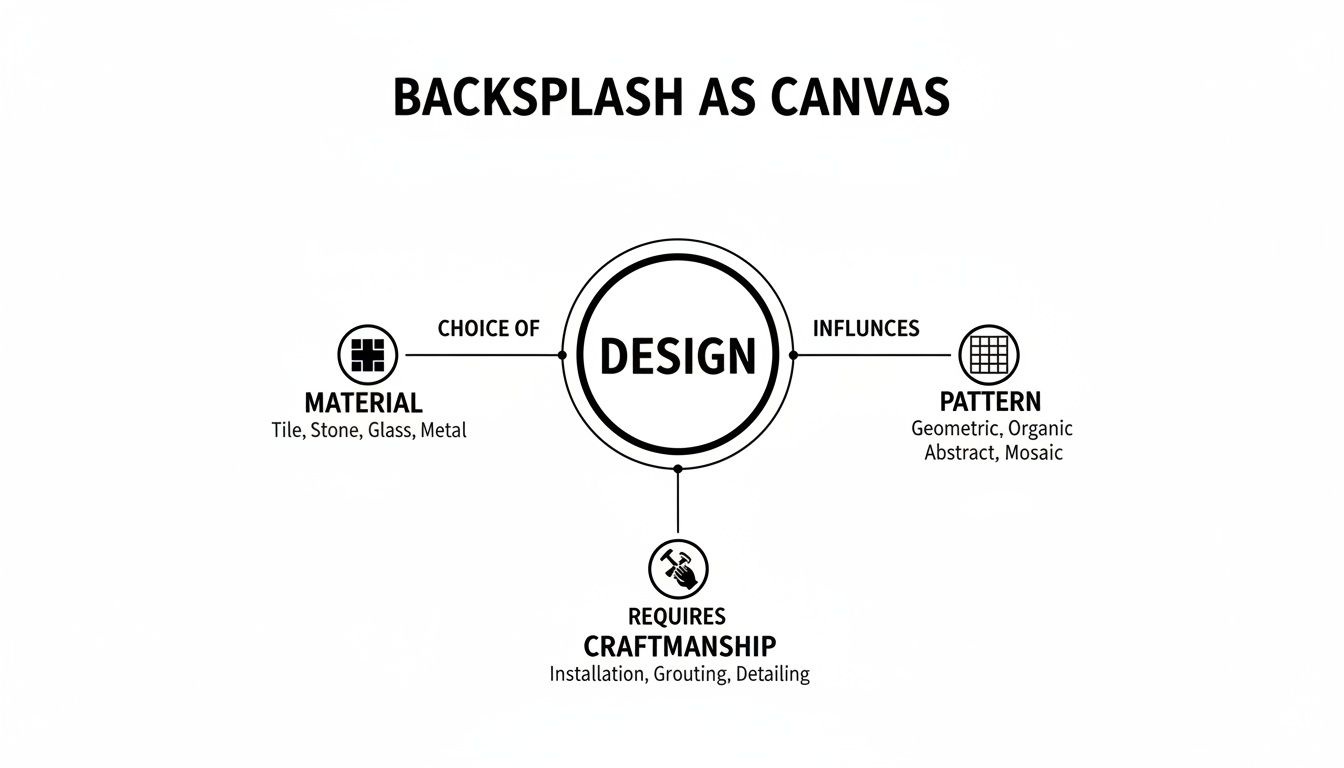
As you can see, the material choice is the crucial starting point. It’s the decision from which all other design choices flow, directly shaping the final aesthetic and feel of the kitchen.
The Allure of Artisanal Ceramics
Within the world of handmade options, Moroccan Zellige tiles have captured the imagination of designers and homeowners alike. Crafted using techniques passed down through centuries, every tile is hand-cut and glazed, resulting in perfectly imperfect surfaces. Their subtle variations in color and texture create a living wall that plays with light as it changes throughout the day.
In fact, the demand for Zellige and similar handmade styles has surged, marking a significant turn in high-end kitchen design. It now stands as the second most requested luxury backsplash trend, right behind full-slab installations.
The beauty of a handmade tile lies in its story. Each subtle imperfection—a slight variation in glaze, an uneven edge—is a mark of the artisan’s hand, embedding a sense of soul and history directly into your walls.
This embrace of imperfection is a deliberate move away from sterile, cookie-cutter design. It’s about creating spaces that feel personal, curated, and alive. The result is a backsplash with a dynamic, almost liquid appearance that adds incredible visual depth.
The Enduring Power of Natural Stone
For a statement of timeless elegance and gravity, natural stone is still the premier choice. A full-height slab backsplash, fashioned from a single piece of marble, quartzite, or granite, creates a seamless and breathtaking focal point. The continuous, uninterrupted veining forms a singular work of art from nature itself, all while eliminating grout lines for a clean, monolithic look.
This approach is especially powerful when the slab is thoughtfully coordinated with the kitchen island or countertops. When selecting your stone, it’s vital to consider how its natural patterns will interact with the other elements in the room. For designers aiming to achieve this harmony, understanding the nuances of a contemporary kitchen countertop is absolutely crucial for a cohesive vision.
The finish you select for the stone will fundamentally change its character:
- Polished: A high-gloss, reflective finish that makes the stone’s color and depth pop. It creates a formal, brilliant look.
- Honed: A matte, satin-smooth finish that feels softer and more contemporary. It’s less reflective and much better at hiding minor scratches.
- Leathered: A textured finish that brings a tactile dimension to the stone, giving it a subtle, organic feel that just begs to be touched.
To help guide your selection, the following table breaks down the key attributes of popular high-end materials.
Luxury Backsplash Material Comparison
| Material | Key Aesthetic Qualities | Durability & Maintenance | Best Suited For |
|---|---|---|---|
| Zellige | Iridescent glaze, subtle color variation, handmade texture. Each tile is unique. | Durable but can be prone to chipping during install. Requires sealing if unglazed. | Projects seeking artisanal, soulful character and a surface that beautifully interacts with light. |
| Marble Slab | Dramatic, unique veining, timeless elegance, seamless and monolithic appearance. | Prone to etching and staining; requires regular sealing and careful cleaning. | Statement kitchens where a dramatic, artistic focal point is desired. High-end, classic designs. |
| Quartzite Slab | Often mimics marble but with greater durability. Striking, natural patterns. | Very durable, resistant to scratching and etching. Less porous than marble. | Luxury kitchens needing the beauty of natural stone without the high maintenance of marble. |
| Textured Glass | Sleek, modern, and luminous. Can be back-painted, frosted, or cast for texture. | Non-porous and easy to clean. Can be susceptible to scratching from abrasives. | Contemporary, minimalist, or coastal designs where light reflection and cleanliness are key. |
| Mother-of-Pearl | Iridescent, shimmering, and opulent. Adds a subtle, luxurious glow. | Delicate and can be scratched. Best in low-impact areas. Requires non-abrasive cleaners. | Accent areas, wet bars, or powder rooms where an element of glamour and quiet luxury is needed. |
This comparison highlights the trade-offs between beauty, resilience, and upkeep, allowing for a more informed decision that aligns with both the project’s aesthetic goals and the client’s lifestyle.
Exploring Other Unique Tile Materials
Beyond ceramic and stone, several other materials offer exciting avenues for creating a truly distinctive backsplash. Each brings its own unique aesthetic and practical considerations to the table.
Textured Glass Glass tiles deliver a sleek, contemporary feel and are exceptionally easy to maintain. Unique options range from back-painted glass, which provides a solid block of modern color, to frosted finishes for a softer look, or even textured cast glass that plays with light in captivating ways.
Mother-of-Pearl For pure, unadulterated opulence, few materials can rival the iridescent shimmer of mother-of-pearl. Typically found in small mosaic formats, these tiles capture and reflect light with a luminous glow, adding a layer of quiet luxury and glamour. They are perfect for smaller feature areas where their delicate beauty can be appreciated up close.
Mastering Pattern Layout and Scale
Choosing a beautiful, unique tile is only half the battle; the real magic begins with the layout. The pattern and scale you select are incredibly powerful design tools, shaping not just the look but the entire feel of a room. A simple, unassuming tile can become the star of the show with a thoughtful arrangement, while an already bold tile can be grounded and refined with a classic layout.
Think of it as choreography for your walls. A designer arranges tiles to create a specific visual story, guiding the eye and establishing a rhythm. This is where you move beyond simply covering a surface and start creating a deliberate, high-impact feature.

It all comes down to understanding how different arrangements create movement, define character, and ultimately, bring the space to life.
Reimagining Classic Tile Patterns
Timeless patterns like herringbone and chevron are mainstays in high-end design for a good reason—they bring an immediate sense of structure and elegance. But their true potential is unlocked when you pair them with modern, unique tiles. This interplay between a classic layout and a contemporary material creates a design that feels both fresh and enduringly stylish.
It’s all about creating a compelling contrast:
- Herringbone with Zellige: The strict, angular geometry of a herringbone layout is the perfect counterpoint to the soft, undulating surfaces of handmade Zellige tiles. This pairing highlights the tile’s artisanal imperfections while maintaining a sophisticated sense of order.
- Chevron with Textured Glass: Imagine the crisp, V-shaped lines of a chevron pattern executed in sleek, textured glass. The layout’s dynamic energy is amplified by the way light plays across the glass, creating a look that is both kinetic and refined.
By rethinking these combinations, you can breathe new life into established patterns, proving that “classic” doesn’t have to mean “conventional.”
Exploring Modern Layouts for Unique Tiles
Beyond the classics, more adventurous layouts can make an even bolder statement. These arrangements often lean into simplicity and strong lines, which allows the inherent beauty of the tile itself to take center stage. They’re especially effective for achieving a clean, architectural look.
A tile’s layout is its language. A vertical stack speaks of height and modernity, while an intricate mosaic whispers of artistry and detail. The key is to choose the language that best tells your home’s unique story.
Simple yet powerful modern options include:
- Vertical Stack: Laying rectangular tiles in straight, vertical columns instinctively draws the eye upward. It’s a simple trick that can make ceilings feel higher and a space feel more expansive and airy. This is a clean, minimalist choice that feels distinctly contemporary.
- Grid Layout (Stacked Horizontally): Stacking tiles in a simple grid pattern imparts a sense of calm and order. With square tiles, it can deliver a classic, almost retro vibe. With rectangular tiles, it feels purely modern and streamlined.
While ceramic tile remains the most popular backsplash material—with 34% of American homeowners choosing it—the luxury market is shifting toward specialized variants like handmade Zellige and textured ceramics. It’s in these applications where modern layouts truly shine. You can find more insights on kitchen material trends in the full report from Statista.com.
The Critical Role of Scale
Scale—the size of the tile relative to the backsplash area—is one of the most impactful, yet frequently overlooked, aspects of design. The right scale can dramatically alter a room’s perceived dimensions. Get it wrong, and you risk creating visual noise.
Large-Format Tiles: Using large tiles, or even a single seamless slab, means fewer grout lines. This creates an uncluttered, expansive look that feels incredibly clean and luxurious. It’s an excellent strategy for making smaller kitchens feel larger and more open.
Small-Format Tiles: On the other hand, smaller tiles like mosaics or petite subways introduce more texture, detail, and pattern. They are perfect for creating intricate designs and adding a layer of visual richness. In a large, open-concept kitchen, a small-format tile can bring a sense of intimacy and keep a vast wall from feeling cold or impersonal.
Ultimately, it’s all about balance. You have to consider how the pattern’s complexity and the tile’s scale will interact with surrounding elements like cabinetry, countertops, and hardware. A busy, small-scale mosaic, for instance, is often best balanced with simple, flat-panel cabinets and solid-color countertops to avoid overwhelming the eye. Mastering this interplay is the secret to a truly sophisticated and cohesive design.
Commissioning Custom and Artisanal Tiles
When you’re aiming for a space that is genuinely yours, nothing speaks more eloquently than custom artisanal tile. This isn’t about picking something out of a catalog; it’s about stepping into the role of a patron, collaborating directly with a skilled artist to bring a vision to life. A bespoke backsplash becomes more than just a functional surface—it’s a story, a one-of-a-kind piece of art embedded into the very walls of your home.
Think of it this way: you are acquiring a soul for your space. Every hand-painted stroke, every uniquely mixed glaze, carries the artisan’s touch. That human element transforms a simple kitchen wall into a deeply personal focal point, a feature that simply cannot be replicated.

Finding and Collaborating with Tile Artisans
The first, and arguably most important, step is finding the right artist. You’re looking for more than just a skilled technician; you need a creative partner whose style connects with your own and who has a solid history of successful commissions.
Here are a few trusted avenues for your search:
- Boutique Tile Showrooms: These curated spaces are fantastic resources. They often represent independent artists and small studios, allowing you to see and feel the work in person while getting a direct introduction.
- Interior Design Networks: Professionals in your network are invaluable. Platforms like Haute Design can connect you with designers who already have a rolodex of trusted craftspeople.
- Online Galleries and Social Media: Don’t underestimate the power of platforms like Instagram or even Etsy for discovering talent. Many artisans use these as their primary portfolios, giving you a direct line to them and a deep look at their work.
Once you’ve found an artist you admire, the real collaboration starts. This partnership thrives on clear communication. Be prepared to share everything from inspiration photos and color swatches to architectural drawings. In return, the artisan should provide sketches, glaze samples, and honest guidance on what their medium can achieve.
The Commissioning Process Demystified
Bringing a custom tile from idea to installation is a journey with several distinct phases. While each artisan has their own method, the path generally follows a predictable and structured course to ensure the final result is exactly what you envisioned.
Commissioning tile is a dialogue between client and creator. The most successful projects happen when there is a shared passion for the craft and a clear, collaborative vision from the very beginning.
Here’s a typical breakdown of what to expect:
- Initial Consultation and Concept Development: This is the kickoff. You’ll sit down with the artisan to discuss your goals, timeline, and budget. You bring the inspiration, and they bring the expertise, proposing initial concepts that meld both.
- Design and Sample Approval: The vision starts to take shape. The artist will create sketches, mockups, or even physical prototypes and glaze samples for you to review. This is an iterative step; you’ll provide feedback until the design is perfect.
- Production: With the design approved, the hands-on work begins. This is the longest part of the process, as every single tile is shaped, glazed, and fired by hand. Be prepared for this—lead times can easily range from 8 to 20 weeks, sometimes more for very complex designs.
- Delivery and Installation: Your tiles are finally ready. They will be meticulously packed and shipped. The final step is crucial: hire an installer who has experience with artisanal tiles. Their slight irregularities are part of their charm, but they require a skilled hand for a flawless installation.
This deliberate, careful process ensures every detail is perfect, culminating in a backsplash that is a true testament to fine craftsmanship.
Expanding the Vision to Bathrooms and Beyond
For years, the kitchen has been the undisputed star of the show when it came to statement backsplashes. But the spotlight is shifting. Today, we’re seeing that same creative energy flow into the bathroom, transforming it from a purely functional room into a personal sanctuary.
This isn’t just a fleeting trend. It’s a real change in how we think about luxury home design as a whole. The numbers back this up, with search interest for bathroom backsplash tiles showing triple-digit percentage growth year-over-year. While kitchens still account for the most installations, this explosion in interest signals a new creative frontier. You can discover more insights about this tile trend at accio.com.
Adapting Materials for Humid Environments
Of course, you can’t just take a tile from a kitchen and drop it into a bathroom without a little thought. Humidity and direct water contact demand materials that are not only gorgeous but also built to last. They need to be resilient and perfectly sealed.
The good news is that many of the most beautiful high-end materials are more than up to the task.
- Glazed Ceramics: Think of hand-crafted Zellige tiles. Their glossy, water-resistant glaze makes them a fantastic choice for shower walls or behind a vanity, where they can play with light and add incredible texture.
- Porcelain Slabs: If you’re after a seamless, modern look with almost no grout lines, a large-format porcelain slab is the answer. It’s a dream to clean and creates a powerful, full-height feature wall in a shower.
- Glass Mosaics: Naturally non-porous and luminous, glass tiles are born for wet environments. They reflect light beautifully, adding a sense of depth and bringing that coveted spa-like quality to the space.
The bathroom is where you can really be adventurous. It’s a more intimate, personal space, which gives you permission to play with bolder colors, more complex patterns, or even materials with a precious quality—like mother-of-pearl—that might feel like too much in a large, open kitchen.
This idea of creating a personal retreat is at the very heart of modern luxury. It’s about building an immersive experience from the ground up, and the right tile is the foundation. If you’re aiming for that ultimate sense of calm, exploring the elements of serene, spa-inspired bathrooms is a great place to start.
Creating a Complete Aesthetic Narrative
Using unique tile in the bathroom is about so much more than a 6-inch strip above the sink. It’s an opportunity to tell a complete design story that flows through the entire room and feels connected to the rest of the home.
Imagine extending a bold, geometric tile from behind the vanity all the way to the ceiling, creating an undeniable focal point. Or turning the shower into a piece of art with a gemstone-infused tile or a custom-designed mosaic. When you select and place these materials with intention, you elevate the bathroom from a necessity to a luxurious, deeply personal escape.
6. Protecting Your Investment with Proper Installation
You’ve found the perfect tile—the one that will define your kitchen’s character. But the journey isn’t over. A breathtaking tile can fall flat without masterful installation. Think of it this way: the tile is the masterpiece, but the installer is the final artist whose work determines how it’s displayed for years to come.https://www.youtube.com/embed/Way5bMh-eYg
Cutting corners on installation is a mistake that can completely undermine your design vision and your financial investment. The right professional isn’t just a tile setter; they’re a craftsperson who understands the unique personality of high-end materials.
Take handmade Zellige tiles, for instance. Their charm lies in their subtle irregularities—the slight variations in thickness and size that give them a living, breathing quality. A seasoned pro knows how to work with these imperfections, blending them into a fluid, cohesive surface. An installer without that experience might see them as flaws, creating an uneven wall that looks jarring instead of soulful.
The Non-Negotiable Value of a Specialist
Hiring someone with a proven track record in your specific material isn’t just a good idea; it’s essential. Before you even think about signing a contract, ask to see a portfolio with projects just like yours. This is your insurance policy.
Different materials demand different kinds of expertise:
- Natural Stone Slabs: These heavy, fragile pieces require an expert hand for precision cutting around outlets and creating nearly invisible seams. One wrong move can lead to a costly crack.
- Glass Tiles: A delicate touch is paramount. An experienced installer knows how to cut glass without chipping it and which adhesive to use so it doesn’t create strange shadows behind the tile.
- Artisanal Ceramics: This is where an artistic eye becomes critical. The installer must patiently blend color variations and manage irregular shapes to achieve a harmonious, intentional design.
The installer is the final artist in your design process. Their skill, or lack thereof, will be permanently displayed on your walls. Investing in a true specialist is the best insurance policy for your design vision.
Grout: The Detail That Defines the Look
Beyond the installer’s skill, a few seemingly minor details can completely transform the final look. Grout color and joint size are two of the most powerful—and surprisingly overlooked—elements in your design toolkit.
Grout is the frame for your tile. A contrasting grout color, like a dark charcoal against a white tile, makes each individual shape pop. It creates a bold, graphic statement that highlights the pattern. On the flip side, a matching grout color practically disappears, allowing the tiles to merge into a single, seamless textured surface.
The width of the grout line also plays a huge role. Thin grout joints, sometimes as narrow as 1/16 inch, deliver a clean, modern aesthetic. This approach is perfect for letting the subtle beauty of handmade tiles shine without distraction. Wider joints can feel more traditional or rustic. It’s crucial to have this conversation with your designer and installer early on to ensure the final result is exactly what you envisioned.
A Guide to Long-Term Care and Preservation
Your stunning backsplash is in, but the work isn’t quite done. Protecting your investment continues long after the grout has dried. Thankfully, proper maintenance is fairly simple.
Daily and Weekly Cleaning: For most tiles, all you need is a soft cloth and a pH-neutral cleaner. Stay away from abrasive scrubbers or harsh chemicals like bleach and ammonia, which can easily etch natural stone or strip the glaze from delicate ceramics.
Sealing and Prevention: If you’ve chosen a porous material like marble, travertine, or unglazed terracotta, sealing is non-negotiable. A quality sealer creates an invisible barrier that stops spills from becoming permanent stains. How often? A good rule of thumb is to reseal every 1-2 years. An easy test is to splash a little water on the surface; if it beads up, you’re protected. If it soaks in, it’s time to reseal.
These simple habits will keep your unique backsplash looking as perfect as the day it was installed.
Common Questions About Unique Backsplash Tiles
Even the most well-thought-out vision can hit a few practical snags. When you’re working with high-end, unique tiles, a few key questions almost always come up. Getting these details right is what separates a good project from a truly exceptional one.
Here are some of the most common queries I hear from clients and fellow designers, along with straightforward, experience-based answers to guide your decisions.
How Do I Balance a Bold Backsplash with Other Kitchen Elements?
Think of it like casting a play. Your kitchen needs a star, but not everyone can be the lead. If your backsplash is the main character—say, a vibrant, hand-painted mosaic or a tile with a dramatic pattern—then everything else needs to play a supporting role.
This means pairing that showstopper tile with quieter elements, like simple Shaker or flat-panel cabinets and countertops with minimal veining or pattern. For instance, if you fall in love with a stunning custom mosaic, let it shine against a backdrop of clean, solid-color quartz countertops. On the flip side, if you’ve chosen a Calacatta marble slab with dramatic, sweeping veins for your island, a simpler, textural backsplash—like a handmade subway tile in a single, nuanced color—is the perfect companion.
The goal is to create a clear focal point. When too many elements compete for attention, the entire design can feel chaotic. Harmony is achieved by letting one star shine.
What Is the Real Difference Between Handmade and Machine-Made Tiles?
This is a question I get all the time, and it really comes down to one thing: character.
Machine-made tiles are all about precision. They are engineered to be perfectly identical, with straight edges and consistent color. This uniformity creates a very clean, sleek, and modern aesthetic where every line is crisp and predictable.
Handmade tiles, like classic Zellige or Cuerda Seca, are celebrated for their “perfect imperfections.” No two tiles are exactly alike. You’ll find subtle variations in size, texture, and glaze that a machine could never replicate.
The core difference is character versus uniformity. Machine-made tiles are engineered for precision, offering perfectly straight edges and consistent color for a clean, modern look. Handmade tiles, such as Zellige, are celebrated for their ‘perfect imperfections.’
When installed, these slight differences create a surface with incredible depth and movement. The way light plays across a handmade tile backsplash is something you just don’t get with a machine-made product. It’s a soulful, living finish that brings warmth and a unique story to the space.
Is a Full-Slab Backsplash a Better Investment Than Unique Tiles?
This is less about which is “better” and more about which choice tells the right story for your home. In the luxury market, both full-slab backsplashes and artisanal tiles are highly valued. The superior investment is the one that aligns with your home’s architecture and your design narrative.
Let’s break down the two paths:
- The Full-Slab Backsplash: This is your go-to for a seamless, monolithic statement. With no grout lines, it delivers an incredibly clean, luxurious look that is also exceptionally easy to maintain. It’s the perfect way to showcase the uninterrupted, natural beauty of a dramatic stone slab. The trade-off? It can be more expensive and offers zero opportunity for custom patterns.
- Unique Tiles for a Backsplash: Tiles are all about artistic expression. They give you limitless freedom to play with color, texture, scale, and pattern. From an intricate, custom-designed mosaic to a classic herringbone layout with a modern twist, tiles allow for a deeply personal and detailed design statement.
Ultimately, both are fantastic, value-adding choices. The decision comes down to your primary goal: do you want a bold, seamless canvas or a customized, artistic composition?
Are you an interior designer, architect, or builder looking to connect with an affluent clientele? Join the Haute Design network to showcase your work, gain credibility with our exclusive badge, and access unparalleled networking opportunities. Elevate your brand by becoming part of a curated community of the nation’s top design professionals. Learn more and apply to join Haute Design today.