


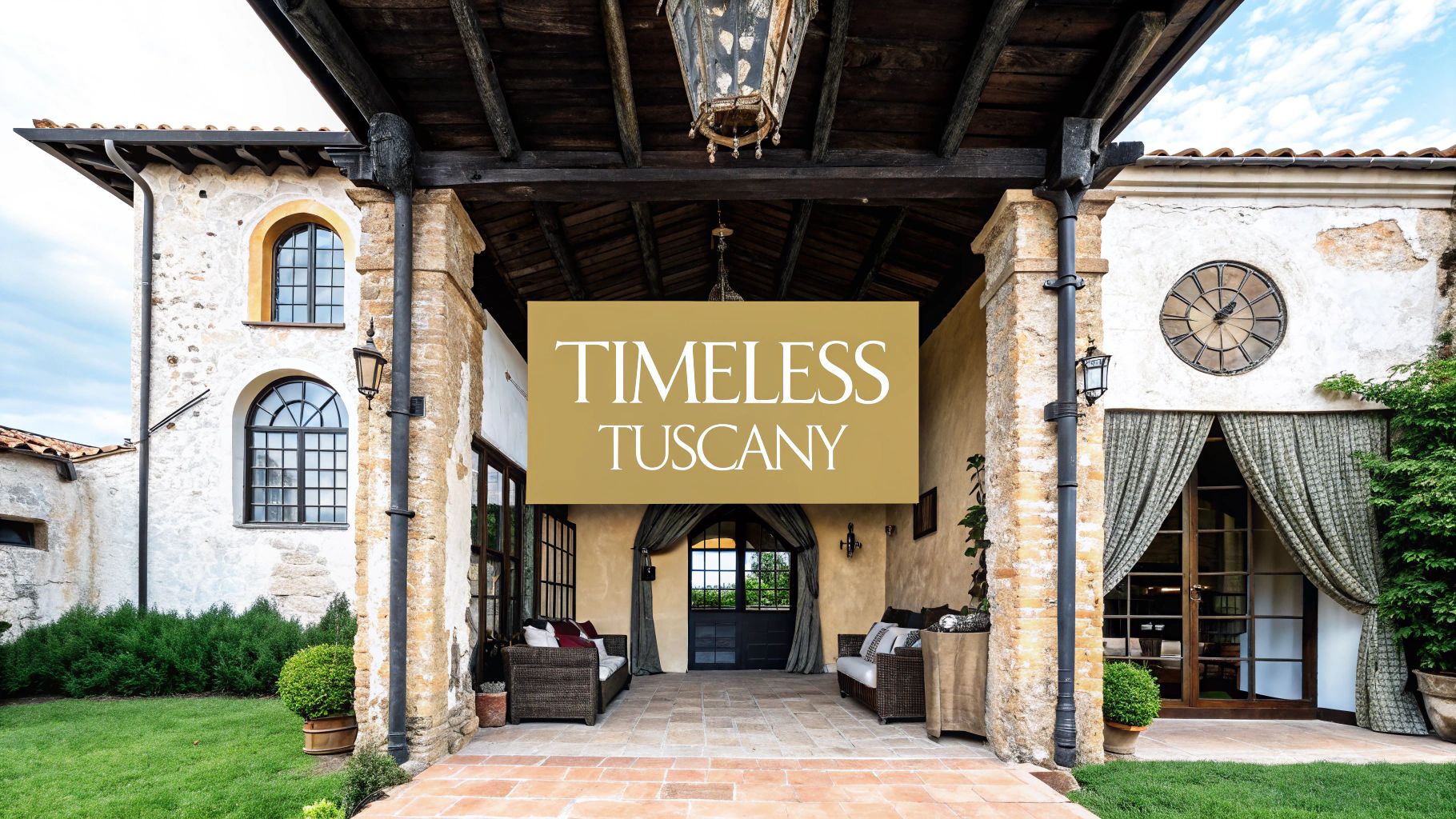
Tuscan interior design is far more than just a style; it’s an experience. It captures the very essence of a sun-drenched Italian villa, blending a rustic, earthy sensibility with an undercurrent of effortless elegance. Think of it as a design language that speaks of history, nature, and the simple joy of a life well-lived.
At its heart, this aesthetic is about creating a sanctuary that feels both substantial and deeply inviting, using a palette of natural materials like stone, wood, and terracotta to craft a warm, lived-in atmosphere.
The Enduring Allure of Tuscan Interior Design
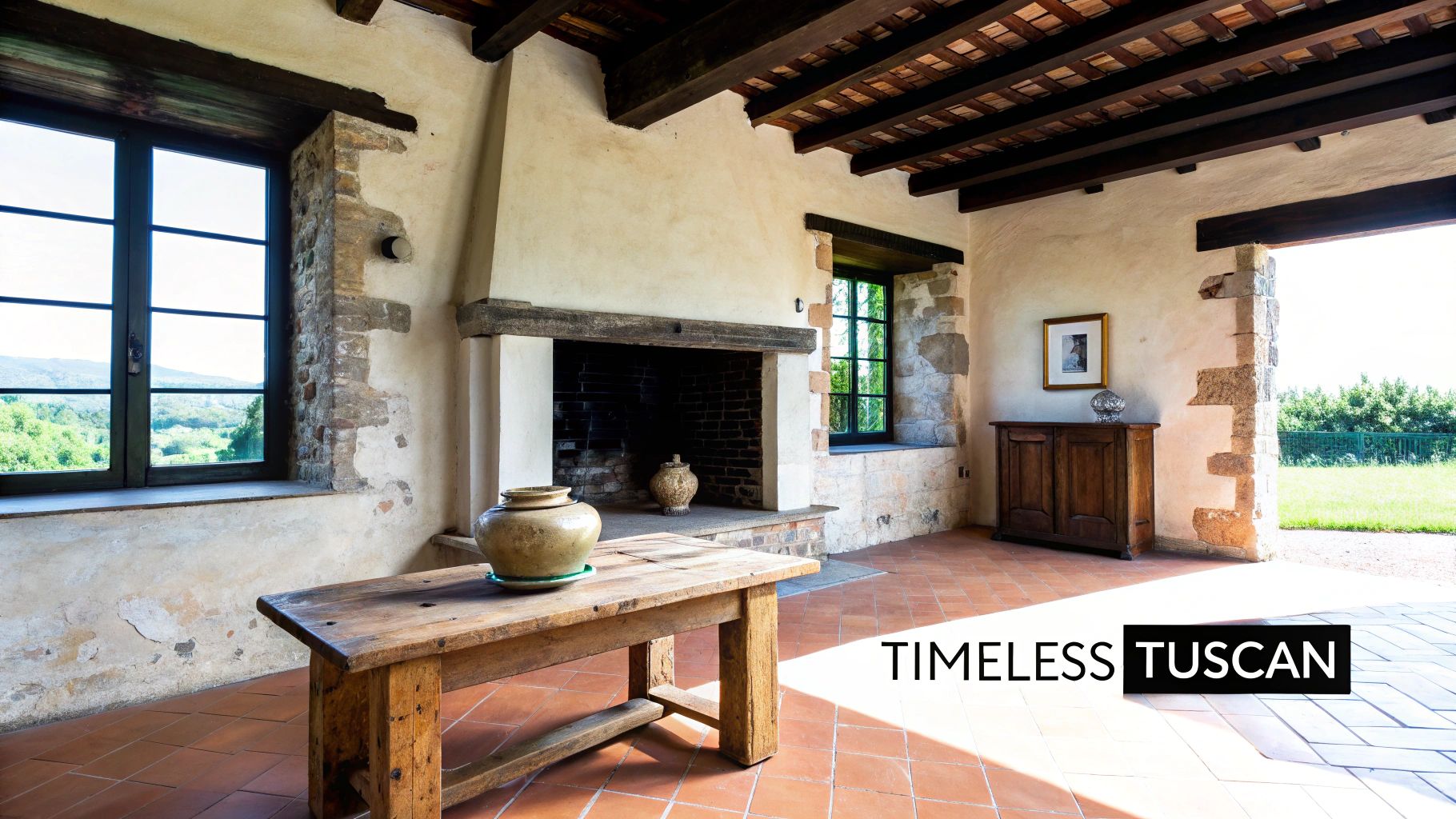
Picture an old farmhouse tucked away in the rolling hills of Tuscany. You can almost feel the warmth of the sun as it filters through an arched window, illuminating the rich terracotta tiles underfoot and the textured, hand-plastered walls. That feeling—of timeless comfort and effortless luxury—is the soul of Tuscan design.
This style grew organically from a profound respect for the land and for history. It beautifully balances the practical, sturdy needs of agrarian life with the refined artistic spirit of the Renaissance. The result is a home that feels both grounded and graceful, substantial yet incredibly welcoming.
Why This Style Resonates
The incredible appeal of Tuscan design comes down to its authenticity and warmth. In a world of fleeting trends, it offers a sense of permanence, a connection to something real and lasting. Its popularity boomed in the early 2000s, especially in North America, becoming a benchmark for high-end residential design.
In fact, one survey revealed that 62% of homeowners looking for luxury design inspiration pointed to Italian styles, with Tuscan elements being a major influence. You can find more details on interior design history and how American trends reflect our culture.
Tuscan design is an invitation to slow down. It encourages us to appreciate the simple beauty of natural materials, the character of aged surfaces, and the joy of a home built for gathering family and friends.
A Framework for Understanding
To truly grasp the Tuscan aesthetic, it helps to understand the core elements that work together to create its signature feel. These foundational components are the building blocks for creating an authentic space.
Here’s a quick overview of the essential ingredients that define this timeless style.
Core Elements of Tuscan Interior Design at a Glance
| Element | Description | Key Materials |
|---|---|---|
| Earthy Palette | Colors are drawn directly from the Italian landscape, creating a warm and cohesive base. | Sun-baked ochre, terracotta, olive green, creamy whites, deep cypress. |
| Natural Textures | Surfaces are tactile and imperfect, adding depth, character, and a sense of history. | Hand-troweled plaster, rough-hewn wood, wrought iron, weathered stone. |
| Durable Materials | Emphasis is on materials from the earth, chosen for their longevity and organic beauty. | Stone, travertine, marble, hardwood, terracotta, copper. |
| Architectural Character | Structural features provide a rustic yet grand framework that defines the space. | Arched doorways, exposed beams, stone accent walls, deep-set windows. |
Think of these elements not as a strict checklist, but as a painter’s palette. The art of Tuscan design lies in how you combine them to create a home that feels like it has been evolving beautifully for generations.
Tracing the Roots from Farmhouse to Modern Villa
To truly understand Tuscan style, you have to look past the beautiful finishes and get to its soul. This isn’t an aesthetic that was dreamed up in a design studio; it was born directly from the rolling hills and sun-baked earth of central Italy, refined over centuries of history. The story doesn’t start with grand palaces, but with the humble, practical stone farmhouses—the casa colonica—that dot the countryside.
These were, first and foremost, working homes. Their thick stone walls were a brilliant, low-tech form of insulation, keeping families cool in the searing summer heat and warm through the winter. Terracotta roof tiles offered a durable, reliable shield from the elements. Everything inside served a purpose, from the massive open hearth at the center of the home for cooking and gathering, to the simple, sturdy wooden furniture built to be passed down through generations. This is where Tuscan design gets its honesty and its deep connection to the land.
The Renaissance Influence
As Tuscany’s fortunes grew, especially during the Renaissance, a new layer of artistry began to settle over this rustic foundation. The explosion of creativity that swept through the region introduced a taste for refinement and elegance. Wealthy merchants and nobles started building villas that, while still tied to the agricultural landscape, were designed to showcase a newfound appreciation for beauty, symmetry, and artistic flair.
They looked back to their own history, reinterpreting the grand arches, columns, and sense of order from ancient Etruscan and Roman architecture. This period brought in decorative frescoes, intricate wood carvings, and more finely crafted furniture, blending a new artistic grandeur with the existing rustic charm.
The real genius of Tuscan design is this incredible balance. It’s where the humble farmhouse and the elegant villa meet, creating a space that feels both deeply comfortable and quietly cultured, grounded yet graceful.
The Evolution into a Global Style
While its roots stretch back centuries, what we recognize today as Tuscan interior design really began to formalize in the 1840s, and it’s held a certain magic for homeowners ever since. The style is a masterful blend of influences from the Etruscans, the Romans, the medieval period, and the Renaissance, giving it a truly timeless quality. Craftsmanship was always at the heart of the region; historical records show that by 1500, Venice alone had over 100 workshops dedicated to producing luxury furniture. This tradition profoundly shaped how Italian and Tuscan interiors developed. You can discover more insights about the history of Italian interior design.
This rich lineage is what makes a Tuscan interior so much more than a decorating trend. It’s a cultural expression. Every single element, from a rough-hewn stone wall to a hand-carved chest, tells a piece of this story.
Distinguishing Tuscan Design Today
Knowing this history is key to separating authentic Tuscan design from other, more generic rustic styles. It’s the unique combination of these threads that truly sets it apart:
- Agrarian Practicality: A deep respect for durable, natural materials and functional layouts that comes straight from its farmhouse origins.
- Classical Elegance: The graceful inclusion of arches, columns, and a sense of symmetry drawn from Roman and Renaissance architecture.
- Artisanal Craftsmanship: A genuine appreciation for anything made by hand, from wrought iron light fixtures to hand-painted ceramics.
This heritage is also why you see such a seamless connection between inside and out—a hallmark of Mediterranean life. The central courtyard or sun-drenched patio is just as vital to the home as the living room. For more on this, explore our guide on designing for indoor-outdoor living. Ultimately, creating a Tuscan-style home isn’t just about getting the look right; it’s about stepping into a legacy of culture, art, and a life lived in harmony with the land.
Building Your Tuscan Material and Color Palette
The soul of a Tuscan home isn’t found in a rulebook. It’s felt in the materials and colors, each chosen to tell a story of the land itself. Think of it less like decorating and more like composing music. Each material is an instrument, every color a note, and when brought together, they create a harmony that feels warm, authentic, and deeply resonant.
At its heart, the Tuscan palette is a direct reflection of the Italian countryside. It’s about bringing the raw, organic beauty of the earth indoors to create a space that feels grounded, timeless, and completely connected to nature.
The Foundational Textures of Tuscany
Before you even think about paint chips, the first step is to focus on textures—the elements that give the walls, floors, and architectural details their distinct, historic character. This is where the real depth comes from, preventing the style from ever feeling flat or staged.
The evolution of these material choices is a story in itself, drawing from Roman, Renaissance, and farmhouse traditions.
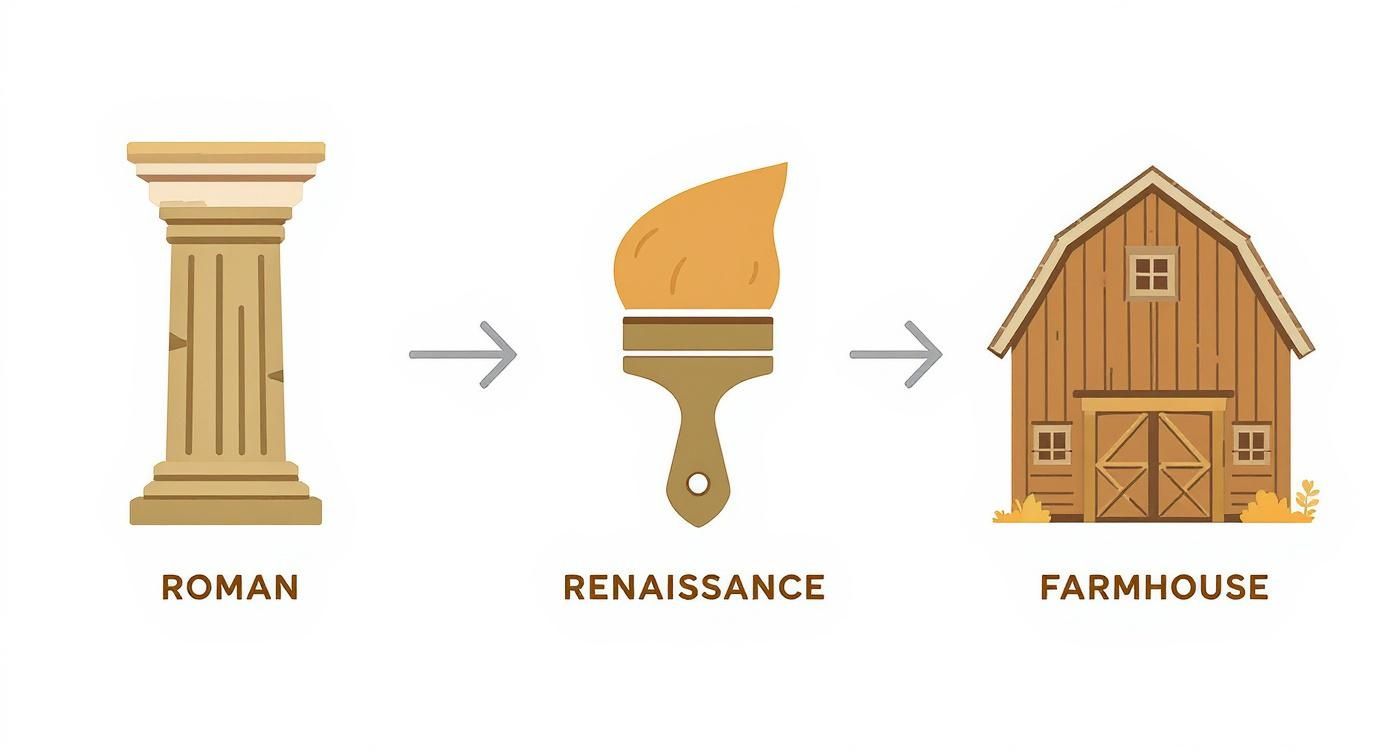
This visual journey shows how each era layered its own influence onto the style, from classical structure and artistic expression to rustic practicality.
The key is synergy. A weathered plaster wall doesn’t just look old; it feels like it has absorbed generations of sunlight. A terracotta floor radiates a warmth that modern materials simply cannot replicate.
A few key textural elements form the backbone of the design:
- Weathered Plaster & Stucco: Forget perfectly smooth drywall. Tuscan walls have a soft, slightly uneven texture that gives them life. Finishes like Venetian plaster or a traditional limewash add a subtle luminosity, catching the light in a way that feels organic and dynamic.
- Aged Wood: You want wood with visible grain, knots, and a story to tell. Think rough-hewn ceiling beams, a reclaimed wood farmhouse table, or wide-plank flooring. These pieces contribute to the rustic, enduring quality of the space.
- Wrought Iron: From chandeliers and stair railings to simple curtain rods, wrought iron provides a necessary artistic contrast. Its dark, sturdy presence grounds the softness of the plaster and the warmth of the wood, adding a touch of handcrafted elegance.
Weaving a Color Story from the Landscape
While the Tuscan color palette is famously warm and earthy, it’s far more nuanced than just using shades of brown. The goal is to layer colors so they feel as though they’ve been gently bleached by the sun over many years.
Today’s most sophisticated interpretations lean into a lighter, airier feel. Using creamy whites as a base allows the richer, earthier tones to stand out without overwhelming the space. This approach is the perfect antidote to the heavy, dated look that was common in the 1990s, making the entire home feel more expansive and sunlit. Understanding the emotional weight of these shades is critical, and you can learn more by mastering interior design color psychology.
Core Hues and Their Application
Each color in the Tuscan palette plays a specific role, pulled directly from the natural landscape.
- Sun-Baked Ochres and Terracottas: These are the signature warm tones. Terracotta—which literally means “baked earth”—is ideal for flooring, while a golden or yellow ochre on an accent wall can mimic the feel of pure Tuscan sunshine.
- Deep Olive and Cypress Greens: Pulled from the region’s iconic trees, these greens bring life and a cooling counterpoint to the warmer hues. Use them on cabinetry, interior doors, or in textiles to ground the space.
- Creamy Whites and Soft Beiges: These aren’t just fillers; they are essential neutrals that give the design room to breathe. Instead of a stark, clinical white, choose warmer, creamier tones for the main walls to create a soft, inviting backdrop that beautifully enhances natural light.
By thoughtfully layering these natural materials and sun-drenched colors, you create something far more profound than just a beautiful room. You craft an environment that resonates with history, comfort, and the timeless allure of the Italian countryside. This careful composition is the true foundation of an authentic and luxurious Tuscan home.
Crafting Authentic Tuscan Spaces, Room by Room
Bringing the soul of Tuscany into a home is where the real design magic happens. It’s about translating those core principles into spaces that aren’t just beautiful, but are genuinely livable. The goal isn’t to create a static museum piece, but a warm, breathing environment where life unfolds.
This goes far beyond just picking the right furniture. It’s about understanding the unique purpose of each room and layering in that authentic Tuscan spirit, creating a cohesive story that flows from one space to the next.
The Kitchen: The True Heart of the Home
In any Italian home, life orbits around the kitchen. It’s where food is made, stories are shared, and family gathers, so the design has to be warm, functional, and deeply inviting. A modern Tuscan kitchen honors this tradition by grounding the space with natural materials and hardworking features that feel like they’ve been there for generations.
A large, rustic wooden island often becomes the room’s command center, perfect for prepping a meal or lingering over a glass of wine. This piece should feel more like cherished furniture than a clinical built-in. Pair it with sturdy, comfortable stools that encourage people to pull up a seat and stay a while.
A few key elements bring it all together:
- Farmhouse Sinks: Deep, apron-front sinks in fireclay or stone are non-negotiable. They’re practical, yes, but they also add a timeless, agrarian character.
- Copper Accents: Whether it’s a dramatic range hood, a rack of hanging pots, or simple sink fixtures, copper is essential. Its warm glow patinas beautifully over time, adding a visible layer of history to the room.
- Open Shelving: Ditch some of the upper cabinets in favor of simple, open wooden shelves. Displaying your hand-painted ceramics and everyday glassware enhances the room’s lived-in charm and makes it feel incredibly personal.
The Living Room: A Sanctuary for Connection
The Tuscan living room is designed for unwinding and connecting with others. It should feel like a true sanctuary, a place where you can curl up by a crackling fire or settle in for a long conversation. The entire focus is on creating an atmosphere of profound comfort through substantial furniture and grounding architectural details.
Exposed wooden ceiling beams are a signature feature, immediately adding rustic character and a sense of history. They draw the eye upward, creating a beautiful, textural contrast against soft, hand-plastered walls. This kind of architectural honesty is what the style is all about.
The real art of a Tuscan living room is making it feel both grand and intimate at the same time. You achieve this by balancing strong, structural elements with soft, inviting furnishings that beckon people to gather.
The fireplace is, without a doubt, the soul of the room. It’s often crafted from massive pieces of natural stone like travertine or fieldstone, creating a powerful focal point that anchors the entire seating area. There are so many ways to approach this, including creating a stunning floor-to-ceiling fireplace that makes an unforgettable statement.
The Bedroom: A Simple and Serene Retreat
Tuscan bedrooms are all about tranquility. They are designed to be restful, uncluttered havens. The aesthetic here is more restrained than in the public spaces of the home, prioritizing high-quality natural materials and a serene color palette to create an environment that encourages deep, restorative rest.
The bed is the clear focal point, usually with a simple but elegant frame made from dark wood or wrought iron. This isn’t the place for overly ornate or heavy furniture; instead, choose pieces with clean, timeless lines that speak to quality craftsmanship.
Textiles are what truly complete the atmosphere. Layer the bed with beautiful natural fabrics like linen, cotton, and soft wool in muted, earthy tones. Simple, flowing curtains that let soft light filter through are always a better choice than heavy, formal draperies.
The Bathroom: A Spa-Like Escape with Natural Materials
A Tuscan-style bathroom transforms a purely functional space into a personal, spa-like retreat. The design leans heavily on the inherent beauty of natural stone—especially travertine—for floors, countertops, and shower walls. Its warm tones and subtle texture create an instant sense of calm and organic elegance.
A freestanding tub often serves as a gorgeous centerpiece, an open invitation for a long, relaxing soak. This pairs beautifully with a rustic wooden vanity, which adds warmth and provides a pleasing contrast to the cool stone. Finish the look with fixtures in oil-rubbed bronze or aged brass to add a touch of old-world charm to the space.
Choosing the Right Tuscan Flooring
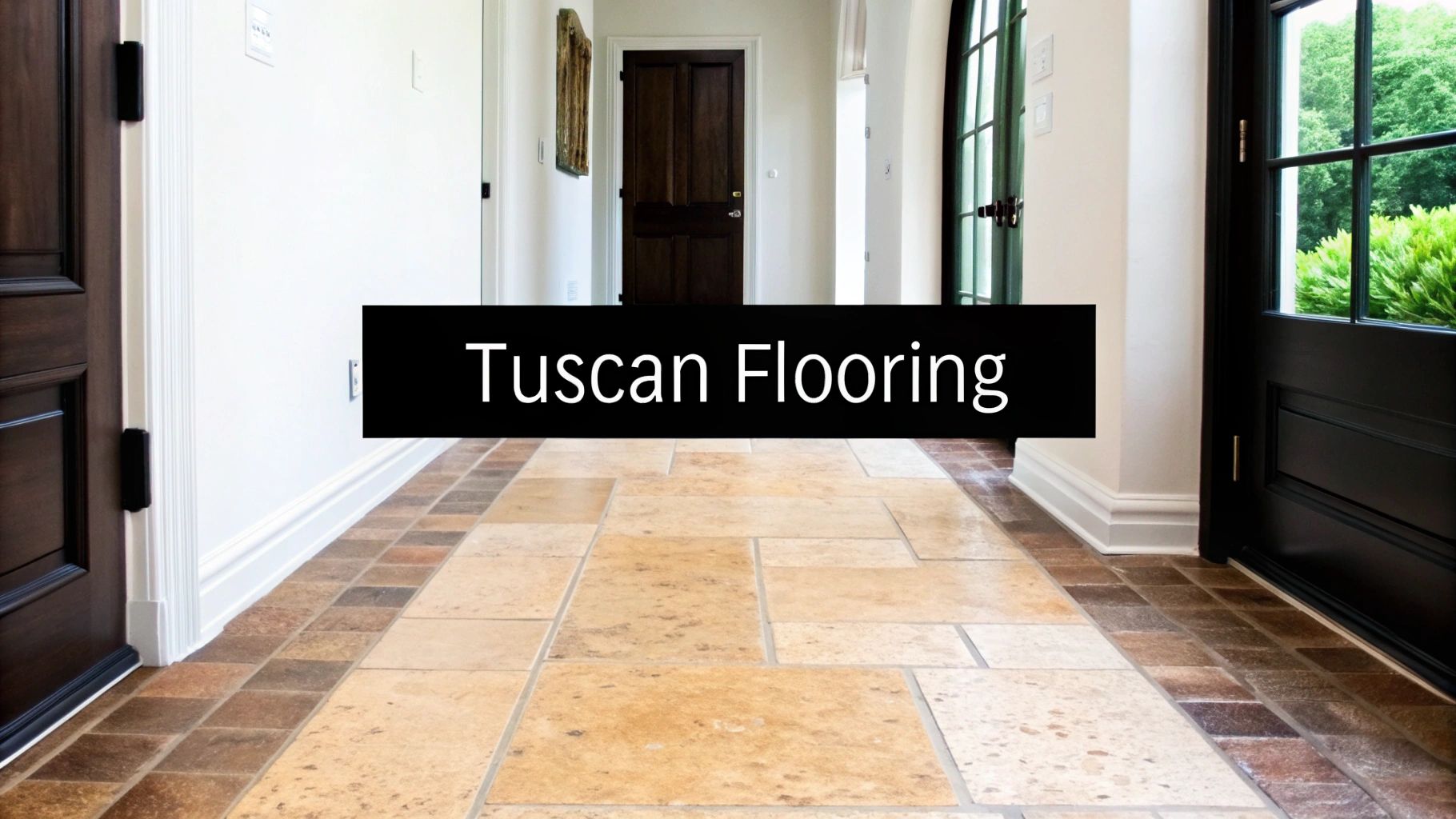
Flooring is the foundational canvas upon which the entire narrative of a Tuscan home is built. It’s far more than a surface to walk on; it sets the tone for warmth, texture, and authenticity, anchoring every other element in the room. This decision is critical, influencing everything from the visual temperature to the acoustic quality of the entire space.
Think of your flooring as the grounding force of the design. Just as a sturdy foundation supports a home, the right flooring supports the aesthetic integrity of your Tuscan-style homes interior. The choice you make underfoot will dictate the flow, mood, and historical resonance of each room.
The Timeless Appeal of Terracotta
Close your eyes and picture an authentic Tuscan villa. Chances are, the first thing you see is an iconic terracotta tile floor. Meaning “baked earth,” terracotta is the quintessential material, celebrated for its rich, warm tones that range from pale apricot to deep sienna. These tiles aren’t just a design choice; they are a piece of history, connecting a modern home to centuries of Italian tradition.
Historically, this material was the bedrock of Tuscan homes. By the year 1600, over 70% of homes in Tuscany featured terracotta floors, a testament to its durability and local availability. While this legacy remains a powerful influence, contemporary interpretations have seen hardwood and natural stone emerge as popular alternatives in the United States, alongside intricate mosaic work. You can explore more about the evolution of Italian design traditions on fairportlighthouse.com.
Over time, high-quality terracotta develops a beautiful patina—a soft, lived-in sheen that simply cannot be replicated. This gentle aging process adds character and depth, making the floor feel like an organic part of the home’s story. It provides a rustic yet elegant foundation perfect for entryways, kitchens, and living areas that open out to patios and gardens.
Modern Interpretations for Luxury Homes
While terracotta holds a special place, today’s luxury Tuscan interiors often embrace a wider range of materials to suit diverse tastes, climates, and room functions. These alternatives maintain the style’s core principles of natural beauty and durability while offering a different aesthetic.
- Wide-Plank Hardwood: A superb choice for bedrooms and living areas, wide-plank wood floors in warmer, aged finishes add a layer of rustic sophistication. They provide a softer, quieter underfoot experience than tile and pair beautifully with stone accents.
- Natural Stone: Materials like travertine and limestone are excellent alternatives that offer a more neutral, muted palette. Travertine, in particular, is a hallmark of both ancient Roman and modern Mediterranean design, known for its subtle texture and creamy tones that complement the style perfectly.
- Artistic Mosaic Work: To add a layer of bespoke craftsmanship, consider incorporating mosaic tile. Used as a decorative border, an entryway medallion, or a custom “rug” inlay, mosaic work introduces intricate patterns and a touch of Renaissance-inspired artistry.
The most successful Tuscan flooring choices feel as though they were sourced from the surrounding landscape. Whether you select the earthy warmth of terracotta, the quiet elegance of travertine, or the rich grain of aged wood, the material should feel natural, durable, and timeless.
Sourcing Authentic Materials and Artisans
A truly luxurious Tuscan interior lives and dies by the quality of its execution. This isn’t a style you can approximate; it’s built on the integrity of its materials and the skill of the hands that shape them. Transitioning your vision from a mood board to a breathtaking reality means committing to authentic components and master craftspeople who feel the soul of this aesthetic in their bones.
This is the part of the journey where your Tuscan style homes interior transforms from a thoughtful replica into a living, breathing work of art. The aim is to find pieces and finishes that feel like they have a past, creating a space that is both deeply personal and completely timeless.
Finding and Commissioning Artisanal Work
Connecting with the right artisans is like casting a film. Each one brings a vital character to the overall story, and the most memorable elements in a Tuscan home are often bespoke, created by specialists who have poured their lives into a single craft.
Start your search locally or regionally for artisans who still practice traditional techniques.
- Blacksmiths: For custom wrought iron, you need a blacksmith who forges by hand. Have them create one-of-a-kind stair railings, chandeliers, or window grilles. You’re looking for that subtle, imperfect texture that mass-produced items could never hope to achieve.
- Stonemasons & Plasterers: A truly authentic wall finish is a specialist’s game. Find masons or plaster artisans who are masters of traditional Venetian plaster or limewash. Their technique creates a soft, luminous depth that simple paint just can’t touch.
- Carpenters and Cabinetmakers: Bespoke cabinetry is the heart of a Tuscan kitchen. You’ll want to find a carpenter who works with solid, reclaimed wood to build pieces that feel more like heirloom furniture, complete with hand-carved details and time-honored joinery.
The most authentic Tuscan spaces are a testament to human skill. Investing in artisanal work is not just about acquiring an object; it’s about embedding a story of craftsmanship directly into the structure and soul of your home.
The Art of Sourcing Reclaimed Materials
Beyond newly commissioned work, reclaimed materials add a layer of history and gravitas that is simply impossible to fake. These elements bring a genuine patina and a sense of permanence, making the home feel as though it has gracefully evolved over generations.
Sourcing these items is a hunt that requires both patience and a discerning eye. Architectural salvage yards, specialty importers, and trusted antique dealers will become your best friends. You’re looking for materials that show their age with grace—their imperfections are precisely what make them so beautiful.
Here are a few key materials to keep an eye out for:
- Antique Terracotta Tiles: Finding tiles salvaged from an old European farmhouse or villa guarantees an authentic color variation and worn texture that new tiles can only imitate.
- Old-Growth Wood Beams: Pulled from historic barns or industrial buildings, these beams add instant architectural character to ceilings or fireplace mantels. Their dense grain and rich, deep color are unparalleled.
- Vintage Stone Troughs: A repurposed stone trough makes for a stunningly unique farmhouse sink in a kitchen or powder room, grounding the space with a beautiful piece of agrarian history.
By thoughtfully weaving together the work of skilled artisans with the soul of reclaimed materials, you ensure your vision is realized to its highest potential. The result is an environment that feels not just luxurious, but profoundly and genuinely authentic.
Common Questions About Tuscan Interior Design
When you start exploring a design style as rich and layered as Tuscan, a few questions are bound to come up. Getting these details right is what separates a truly authentic space from a pale imitation. It’s all about moving past the clichés to grasp the heart of the style.
Let’s walk through some of the most common queries I hear from clients, so you can approach your own project with real clarity and confidence.
How Can I Create a Tuscan Look Without It Feeling Dated?
This is probably the number one concern, and a valid one. Nobody wants their home to feel like a themed restaurant from the 1990s. The secret is to think “modern Tuscan”—an approach that’s less about historical reenactment and more about capturing the style’s soulful, organic spirit.
Instead of a heavy-handed application, aim for a sophisticated dialogue between rustic and refined. Here’s how you can strike that perfect balance:
- Lighten Your Base: Ditch the heavy, saturated ochres and golds for your main walls. A foundation of creamy whites, soft taupes, or warm greiges immediately modernizes the entire space, making it feel airy and bright.
- Simplify the Silhouettes: Choose furniture with cleaner, more streamlined forms. Imagine a beautifully crafted, solid wood dining table, but instead of matching heavy chairs, pair it with something more contemporary. A comfortable sofa in a high-quality natural linen will always feel more current than a bulky, dark leather behemoth.
- Edit Your Accents: Wrought iron is a classic Tuscan element, but the execution is everything. Look for minimalist forms—a simple, sculptural chandelier or sleek hardware—instead of the ornate, heavy scrollwork of decades past.
This isn’t about erasing the style’s character; it’s about refining it. You’re aiming for the feeling of a sun-drenched Italian villa, not a literal copy.
The new Tuscan style is a masterful edit. It keeps the soul—the natural materials, the warmth, the connection to the earth—but presents it with a clean, contemporary confidence.
Is Tuscan Design Only for Large Villa-Style Homes?
Not at all. While the style certainly has room to breathe in a sprawling estate, its core principles are surprisingly versatile. The warmth, texture, and natural elegance can be beautifully translated into smaller, more intimate spaces.
The key is to be selective. In a smaller home or apartment, you can’t throw every element at the wall and see what sticks. Instead, you focus on a few high-impact gestures that tell the story. For instance, you don’t need to plaster every wall; a single, beautifully executed accent wall with a Venetian or limewash finish can provide all the texture and depth a room needs.
Think in terms of quality over quantity. A few well-placed terracotta pots holding fragrant rosemary or a miniature olive tree connect the space to the outdoors. A stunning travertine coffee table can serve as the room’s anchor, while a simple, high-quality linen throw introduces that essential tactile element. It’s about creating a jewel-box version of the style, where every detail is chosen with intention.
Finding the right professionals to bring your vision to life is the most critical step. Haute Design connects discerning homeowners with the nation’s most acclaimed interior designers and architects who specialize in creating luxurious, authentic living spaces. Explore our network of top-tier design professionals to find the perfect partner for your project.