


Hiring an interior designer for a significant home project is more than a transaction; it’s the beginning of a deeply personal and collaborative partnership. The right professional will not only translate your vision into a breathtaking reality but will also navigate the complexities of budgeting, timelines, and unforeseen challenges with expertise. To ensure you find the perfect match, it’s essential to move beyond the portfolio and engage in a strategic, in-depth dialogue. The success of your project hinges on this initial alignment of vision, communication style, and professional process.
This comprehensive guide outlines the critical questions to ask interior designers, organized by the key phases of your engagement. From initial compatibility checks and discussions on design philosophy to financial transparency and problem-solving protocols, these questions are designed to empower you. As a discerning homeowner embarking on a luxury project, this framework will help you make a confident and informed decision.
Think of this list not as an interrogation, but as a blueprint for a successful collaboration. By asking the right questions upfront, you can identify a true partner who can elevate your space while respecting your investment and personal aesthetic. This due diligence ensures your design journey is as exceptional and meticulously planned as the final, stunning result. We will explore everything from understanding their creative process to clarifying their fee structure, providing you with the clarity needed to proceed with the ideal design professional for your unique project.
1. Tell me about your design philosophy and style
This foundational question moves beyond surface-level aesthetics to reveal a designer’s core principles and creative worldview. Understanding their philosophy is crucial for ensuring a deep-seated alignment between their approach and your ultimate vision for a home that feels both luxurious and personal. It’s one of the most important questions to ask an interior designer because it sets the stage for the entire creative partnership.
Why This Question is Crucial
A designer’s philosophy dictates how they approach everything from space planning to material selection. It’s the “why” behind their “what.” A designer who prioritizes biophilic design will approach a project differently than one whose philosophy is rooted in historical preservation or stark minimalism. This initial conversation helps you gauge whether their intrinsic approach resonates with your lifestyle and goals.
What to Listen For
Pay close attention to the language they use. Do they speak about creating “experiences,” “functional art,” or “serene sanctuaries”? Their answer should provide a clear window into their creative process.
- Example 1: The Modern Minimalist: “My philosophy centers on ‘warm minimalism.’ I believe luxury is found in simplicity, exceptional materials, and impeccable craftsmanship. We focus on clean lines, a neutral palette, and uncluttered spaces that evoke a sense of calm and sophistication.”
- Example 2: The Eclectic Storyteller: “I see every home as a narrative. My philosophy is about layering textures, periods, and personal artifacts to tell the client’s unique story. We blend contemporary art with vintage finds to create spaces that feel collected and deeply authentic, not decorated.”
Actionable Follow-Up Questions
To dig deeper, use their response as a launchpad for more specific inquiries:
- “Could you show me two projects in your portfolio that best exemplify this philosophy?”
- “How do you adapt your core style when a client’s vision differs from your signature aesthetic?”
- “How does your design philosophy influence your approach to sourcing sustainable or artisanal materials?”
A designer’s ability to articulate their philosophy and demonstrate its application consistently across their portfolio is a strong indicator of their professionalism and creative integrity. If you’re still defining your own preferences, exploring an essential interior design style guide can provide valuable clarity before your meeting.
2. Can you walk me through your design process from start to finish?
While a designer’s philosophy is the creative “why,” their process is the logistical “how.” This question is essential for understanding the practical journey from initial concept to final installation. A well-defined, transparent process is the hallmark of a professional who can manage complex luxury projects, ensuring clarity, efficiency, and alignment at every milestone.
Why This Question is Crucial
Understanding a designer’s methodology allows you to set realistic expectations for timelines, deliverables, and your own involvement. It demystifies the entire project, revealing key checkpoints for decisions, approvals, and financial commitments. A designer with a clear, systematic process is better equipped to manage budgets, coordinate with trades, and navigate the inevitable challenges that arise during a large-scale renovation or build.
What to Listen For
A confident and experienced designer will be able to articulate their process with precision. They should describe a structured, multi-phase approach that clearly outlines client touchpoints and project deliverables.
- Example 1: The Phased Approach: “Our process is built on six distinct phases: Discovery and Programming, Schematic Design with mood boards and floor plans, Design Development with 3D renderings and material selections, Procurement and Project Management, Installation, and finally, Final Styling and Reveal.”
- Example 2: The Tech-Forward Method: “We begin with a virtual reality walkthrough of the proposed design after initial CAD drawings are approved. We use a cloud-based project management portal where you can see real-time updates on procurement, timelines, and budget, ensuring full transparency from start to finish.”
Actionable Follow-Up Questions
Use their overview as a foundation to clarify the finer details of the working relationship:
- “How many revision rounds are included within each design phase?”
- “At what specific milestones are payments due, and how do they align with project progress?”
- “What is the protocol if we want to make a significant change after a phase has been approved?”
A detailed, client-centric process demonstrates a designer’s commitment to organization and communication, which are just as critical as their creative vision when executing a high-end project.
3. What is your experience with my specific style/room type/space?
While a designer’s philosophy provides a high-level view, this question drills down into their practical, hands-on experience with projects like yours. A great designer can adapt, but one with a proven track record in your desired aesthetic or with similar architectural challenges brings invaluable, specific expertise. This is one of the most practical questions to ask an interior designer to gauge their direct suitability for your project.
Why This Question is Crucial
The nuances of a gut kitchen renovation involving bespoke cabinetry and integrated smart appliances are vastly different from those of designing a serene primary suite. You want to ensure the designer isn’t learning on your dime. Their familiarity with specific vendors, building codes, common pitfalls, and the unique opportunities related to your project type can significantly streamline the process and improve the final outcome.
What to Listen For
A confident and experienced designer will be able to speak fluently about similar past projects. They should move beyond a simple “yes” and provide specific, compelling details that demonstrate their mastery.
- Example 1: The Kitchen Specialist: “Absolutely. We recently completed a kitchen renovation in a historic home that required integrating a professional-grade La Cornue range with custom-milled cabinetry to match the home’s original trim. We can show you how we navigated the complex ventilation requirements and sourced the period-appropriate hardware.”
- Example 2: The Small-Space Optimizer: “We specialize in maximizing luxury in smaller urban footprints. In a recent penthouse project, we designed multi-functional, built-in furniture and used strategic lighting and mirror placement to create an expansive feel. I can walk you through the 3D models and final photos.”
Actionable Follow-Up Questions
Use their initial answer to probe for tangible proof of their expertise and problem-solving skills:
- “Could you share a case study or before-and-after photos of a project with a similar scope and budget?”
- “What were the biggest challenges you faced on that project, and how did you resolve them?”
- “Can you provide a reference from a client whose project was similar to mine?”
A designer’s ability to provide detailed, relevant examples and articulate the solutions they implemented is a strong indicator that they have the specialized experience your project demands. Their portfolio should not just be beautiful; it should be directly relevant.
4. How do you approach budgeting and cost management?
This critical question transitions the conversation from creative vision to financial reality. A designer’s approach to budgeting is a direct reflection of their professionalism, transparency, and business acumen. For luxury projects, where complexity and costs can escalate quickly, understanding how a designer manages your investment is paramount to a successful and stress-free partnership.
Why This Question is Crucial
Financial misalignment is one of the most common sources of friction in a designer-client relationship. A vague or disorganized answer to this question can be a major red flag. A top-tier designer will have a systematic, transparent process for estimating costs, tracking expenses, and communicating financial updates. Their ability to manage a budget effectively ensures your project stays on track without unexpected and costly surprises.
What to Listen For
A confident and detailed response indicates experience and fiscal responsibility. The designer should clearly articulate their fee structure, how they handle procurement costs, and their methods for cost control.
- Example 1: The Transparent Partner: “We begin with a detailed, itemized budget proposal that separates our design fees from the estimated costs for furnishings, materials, and labor. We charge a fixed design fee and pass our trade discounts on furniture directly to you, with a transparent 20% procurement fee on the net cost. You’ll receive monthly budget reports and approve every purchase order.”
- Example 2: The Value-Oriented Manager: “My approach is to maximize the impact of your budget. We establish a total project investment figure, then allocate funds to different areas. I have strong relationships with vendors, which allows me to secure preferential pricing. We also include a 15% contingency line item from the start to handle any unforeseen issues without derailing the project.”
Actionable Follow-Up Questions
Probe deeper into their financial processes to ensure you are completely comfortable with their approach:
- “Could you provide a sample budget from a past project with a similar scope?”
- “How do you handle budget adjustments if I request a change or an unexpected issue arises?”
- “What is your process for purchase approvals and payment schedules?”
A designer’s clear, structured approach to financial management is as important as their creative talent. This is one of the most vital questions to ask an interior designer to protect your investment and ensure a smooth project execution.
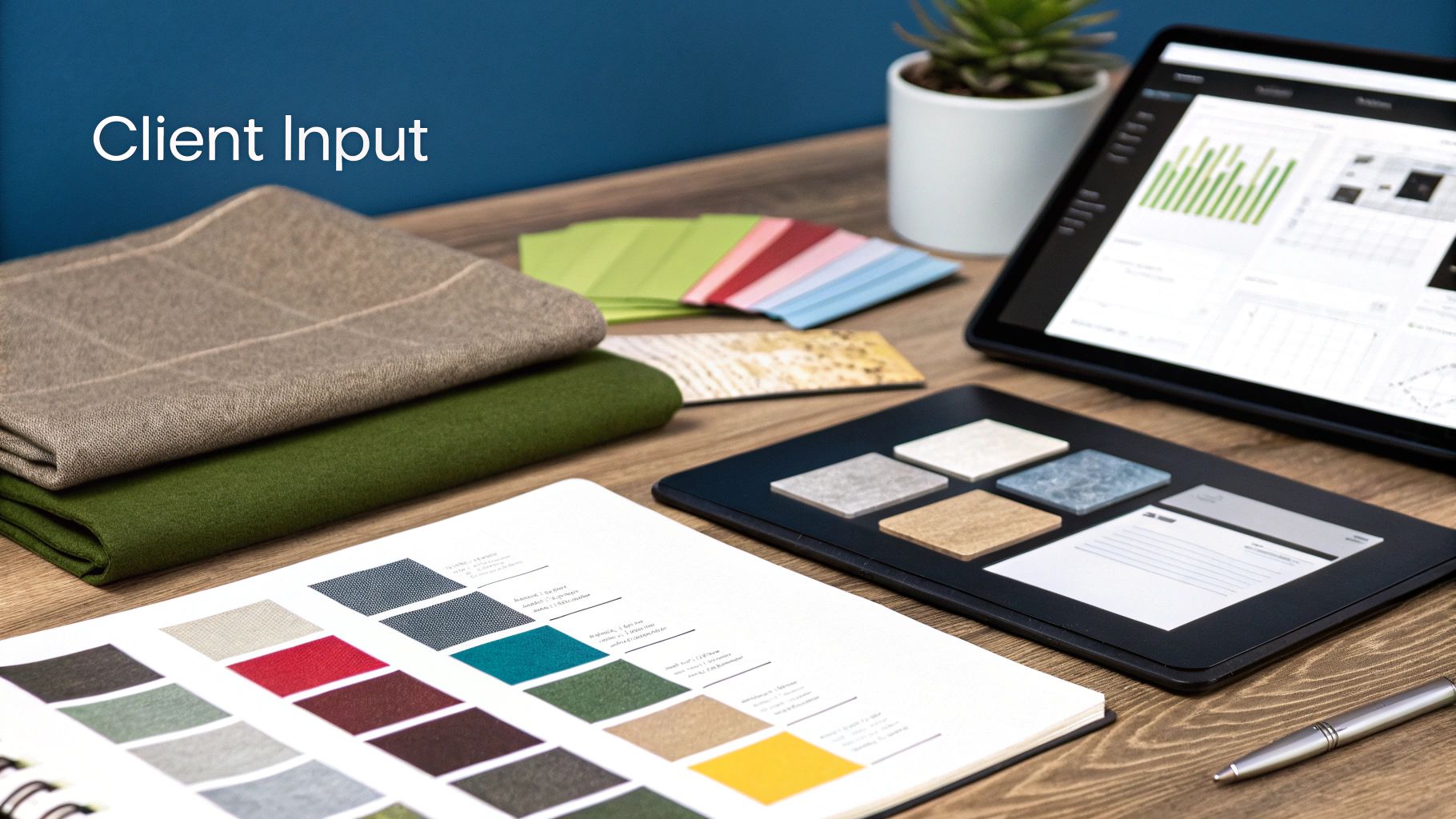
5. How do you incorporate the client’s input and preferences?
This question probes the heart of the designer-client dynamic, revealing how your vision and their expertise will merge. The answer clarifies their collaboration style, their process for gathering and integrating feedback, and how they navigate creative differences. It’s one of the most critical questions to ask an interior designer to ensure your voice is not just heard, but is a foundational element of the final design.
Why This Question is Crucial
A successful luxury project is a co-creation, not a dictatorship. You need a partner who can expertly guide you while honoring your personal taste, lifestyle, and non-negotiables. This question helps you understand whether the designer views the process as a strict execution of their vision or a collaborative journey. Their response will tell you if they are a good listener, adaptable, and respectful of your role as the homeowner.
What to Listen For
A confident and client-centric designer will have a well-defined, structured process for collaboration. Their answer should outline specific tools, touchpoints, and methodologies for ensuring your preferences are woven into every stage of the project.
- Example 1: The Structured Collaborator: “We begin with an intensive discovery phase, including a detailed questionnaire and collaborative Pinterest or mood boards. From there, we present two to three initial concepts for your review. We then refine your chosen direction through scheduled feedback sessions, using 3D renderings to ensure you can visualize every detail before signing off.”
- Example 2: The Educative Partner: “My role is to translate your desires into a cohesive design language. I present options and always explain the ‘why’ behind my recommendations, from scale to material durability. If your preference conflicts with a design principle, we’ll discuss the potential trade-offs and explore alternative solutions together to achieve your desired feel without compromising the outcome.”
Actionable Follow-Up Questions
To ensure the collaborative process fits your expectations, ask for more specific details:
- “How many rounds of revisions are typically included in your design fee for key spaces?”
- “What digital tools do you use for sharing concepts and collecting feedback between meetings?”
- “Can you describe a time you and a client had a strong difference of opinion and how you resolved it?”
6. How do you stay current with design trends while ensuring timeless appeal?
This essential question tests a designer’s ability to balance contemporary relevance with enduring style. For a significant investment like a luxury home, you want a design that feels fresh and current but won’t appear dated in a few years. It reveals their strategy for creating spaces that possess longevity, protecting your investment and ensuring your home remains a source of pride for decades.
Why This Question is Crucial
The design world is constantly evolving, influenced by everything from technology to global culture. A great designer is well-versed in these shifts but also has the wisdom to distinguish fleeting fads from meaningful innovations. Their answer demonstrates foresight and a commitment to creating a classic foundation, which is a critical skill when considering questions to ask an interior designer for a high-value project.
What to Listen For
A strong answer will showcase a clear, strategic approach rather than a simple passion for trends. Look for a methodology that grounds the design in timeless principles while allowing for modern expression.
- Example 1: The 70/30 Rule Strategist: “I adhere to a 70/30 principle. Seventy percent of the investment-heavy elements, like architectural details, flooring, and major upholstery, are rooted in classic, timeless design. The remaining thirty percent is where we play with trends through more accessible items like accent pillows, art, and decorative objects that can be easily updated.”
- Example 2: The Material Innovator: “I stay current by attending key industry events like Salone del Mobile and following material science. My focus is on integrating innovative, sustainable materials that offer timeless appeal, like recycled terrazzo or advanced porcelain slabs. We can achieve a very modern look that is built on a foundation of durability and classic composition.”
Actionable Follow-Up Questions
Probe deeper into their methodology to understand their practical application of this balance:
- “Which specific design publications or trade shows, like Architectural Digest or ICFF, do you find most influential?”
- “Can you point to a project from five years ago that still feels current today and explain why it has aged well?”
- “How do you advise clients on incorporating a trend they love, such as bouclé fabric or curved furniture, in a way that won’t quickly date the room?”
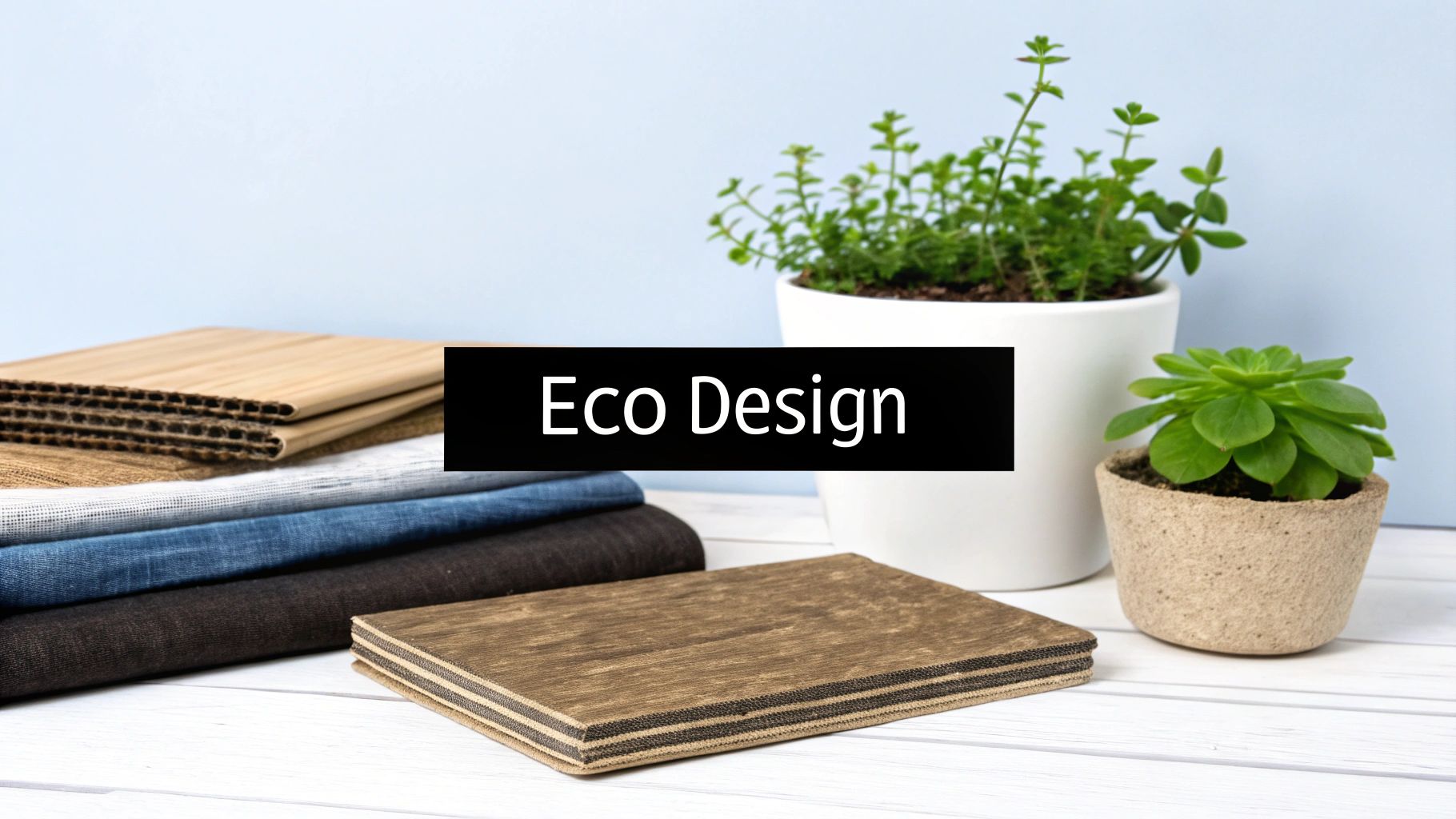
7. What is your experience with sustainable and eco-friendly design?
This question assesses a designer’s commitment to creating spaces that are not only beautiful and functional but also healthy and environmentally responsible. For clients who value wellness and ecological stewardship, understanding a designer’s expertise in sustainable practices is non-negotiable. It reveals their ability to source responsibly, reduce waste, and design for long-term efficiency and well-being.
Why This Question is Crucial
A designer’s knowledge of sustainability impacts material health, indoor air quality, energy consumption, and the project’s overall environmental footprint. A designer well-versed in eco-friendly design can guide you through the complexities of certifications like LEED or Cradle to Cradle, ensuring your home aligns with your values. This goes beyond recycled materials; it’s a holistic approach to creating a healthier living environment.
What to Listen For
A knowledgeable designer will speak with specificity about materials, suppliers, and measurable outcomes. They should be able to discuss the nuances of green design beyond just the basics, demonstrating a deep and practical understanding.
- Example 1: The Materials Specialist: “We prioritize materials with low VOCs (volatile organic compounds) and high recycled content. For instance, in a recent project, we used recycled glass countertops, FSC-certified hardwoods, and natural wool carpeting to significantly improve indoor air quality.”
- Example 2: The Systems Thinker: “Our approach to sustainability is integrated from the start. We focus on maximizing natural light to reduce energy needs, specifying energy-efficient appliances and lighting, and implementing smart home systems that can reduce consumption by up to 40%. We also have experience navigating the requirements for LEED certification.”
Actionable Follow-Up Questions
Probe deeper to verify their expertise and see how it applies to your specific project goals:
- “Can you provide examples of eco-friendly projects you’ve completed and discuss any cost implications?”
- “What are your go-to resources or suppliers for sustainable and ethically sourced materials?”
- “How do you balance aesthetic goals with sustainability priorities, especially when sourcing luxury finishes?”
A designer’s ability to confidently answer these questions to ask an interior designer demonstrates a genuine commitment to responsible design, ensuring your home is a sanctuary for both you and the planet.
8. How do you handle project challenges, unexpected issues, or design problems?
A luxury interior design project is a complex undertaking with many moving parts, making occasional challenges almost inevitable. This question tests a designer’s resilience, problem-solving skills, and professionalism under pressure. It moves beyond their creative portfolio to reveal their operational competence and crisis management capabilities, which are just as crucial for a successful outcome.
Why This Question is Crucial
The true measure of a top-tier designer isn’t just their ability to execute a flawless plan, but how they navigate the unexpected. Whether it’s a supply chain disruption, a contractor error, or a hidden structural issue, their response protocol directly impacts your budget, timeline, and stress level. Understanding their approach to problem-solving is a key part of evaluating them as a project partner.
What to Listen For
A strong answer will be transparent, systematic, and client-focused. They should demonstrate ownership and a clear process, not shift blame. Look for a proactive rather than a reactive mindset. Vague assurances are a red flag; you want to hear about specific methodologies.
- Example 1: The Strategic Problem-Solver: “When an issue arises, our first step is to immediately inform the client with a clear assessment of the situation, the potential impact, and a preliminary set of solutions. For instance, when a custom furniture piece was delayed by six weeks, we immediately sourced three high-quality, in-stock alternatives and also negotiated a discount with the original vendor to compensate for the inconvenience.”
- Example 2: The Proactive Planner: “We anticipate potential issues from the start. For example, if we discover a structural limitation during demolition, we have our trusted engineer on standby to consult. We would present you with a revised design plan, a transparent breakdown of any cost adjustments, and a clear path forward, ensuring you are always in control of the decisions.”
Actionable Follow-Up Questions
Probe deeper into their experience and processes to gain confidence in their ability to manage adversity:
- “Can you describe a time a project went over budget and explain how you communicated this to the client and managed the situation?”
- “What is your protocol for quality control with trades and vendors to minimize errors from the start?”
- “How do you balance protecting the project timeline, budget, and original design integrity when a significant problem occurs?”
9. What is your fee structure and what services are included?
This essential business question moves the conversation from creative vision to financial reality. Understanding precisely how a designer charges for their time, expertise, and procurement is fundamental to establishing a transparent and trusting relationship. Asking about fee structures is one of the most critical questions to ask an interior designer to prevent scope creep, avoid billing disputes, and ensure the project aligns with your budget from day one.
Why This Question is Crucial
Ambiguity around fees is a significant source of friction in client-designer relationships. A clear, upfront discussion about compensation methods, markups, and included services ensures both parties have the same expectations. This financial clarity allows you to budget effectively for the entire scope of a luxury project, including design, furnishings, and installation, without any unwelcome surprises down the line.
What to Listen For
A professional designer will have a well-defined fee structure and should be able to explain it clearly and confidently. Look for transparency and a willingness to detail exactly what each cost covers.
- Example 1: The Percentage Model: “Our design fee is 18% of the total project cost, which includes furnishings, fixtures, and construction management. This fee covers all design development, procurement, and project oversight from concept to final installation.”
- Example 2: The Flat-Fee Model: “For a project of this scale, we propose a flat design fee of $45,000. This encompasses the complete design package, including drawings, renderings, and finish selections. All furniture and materials are billed separately at our cost plus a 25% procurement fee.”
- Example 3: The Hybrid Model: “We charge an hourly rate of $250 for all design and consultation work, billed against an initial retainer. We also have a procurement fee of 20% on all furnishings and materials we source and manage on your behalf.”
Actionable Follow-Up Questions
To ensure you have a complete financial picture, use their initial answer to probe further into the specifics:
- “Could you provide a detailed written proposal outlining all fees and the specific services included?”
- “How are additional costs, such as shipping, storage, and contractor fees, handled and billed?”
- “What is your payment schedule? Do you require an upfront retainer, and are payments tied to project milestones?”
A designer’s ability to present a clear and comprehensive fee schedule is a hallmark of their professionalism. For a deeper understanding of what to expect in a formal agreement, reviewing a guide on what’s inside a professional interior design contract can provide invaluable insight before you sign.
10. Can you provide references and a portfolio of completed work?
This practical question moves from abstract concepts to concrete proof of a designer’s capabilities and professional track record. While a designer’s philosophy is aspirational, their portfolio and references are the tangible evidence that they can execute a vision successfully. Requesting this information is a standard and essential part of your due diligence, validating their claims and offering a window into past client experiences.
Why This Question is Crucial
A designer’s portfolio demonstrates their aesthetic range, quality of work, and ability to manage projects from concept to completion. References, on the other hand, provide candid insight into their professionalism, communication style, and problem-solving skills. Together, they create a comprehensive picture of what it’s like to partner with the firm, which is a critical piece of the puzzle when considering who to hire.
What to Look For
A strong response will be confident and transparent. The designer should be eager to share their successes and provide you with the resources needed to verify their expertise.
- Example 1: The Established Professional: “Of course. Our digital portfolio showcases over 20 recent projects, complete with before-and-after galleries and project timelines. I can also provide you with a list of five references from clients with projects similar in scope to yours, all completed within the last 18 months.”
- Example 2: The Published Expert: “I’d be happy to. In addition to our online portfolio, our work has been featured in Architectural Digest and Elle Decor, which I can share with you. I can also connect you with two recent clients who can speak to our process, from initial budgeting to the final installation.”
Actionable Follow-Up Questions
Use their portfolio and references to gather specific, relevant information for your project:
- “Could you walk me through a project in your portfolio that faced unexpected challenges and explain how you resolved them?”
- “May I contact references whose projects had a similar budget and timeline to what we are proposing?”
- When speaking to a reference: “Was the project completed on time and on budget? How did the designer handle communication throughout the process, and would you hire them again?”
A well-curated portfolio is a testament to a designer’s skill. Exploring various interior designer portfolio examples can help you identify the level of quality and detail you should expect from a top-tier professional.
10 Essential Questions to Ask Interior Designers — Comparison
| Question | 🔄 Complexity | ⚡ Resources & timeline | 📊 Expected outcomes | 💡 Ideal use cases & tips | ⭐ Key advantages |
|---|---|---|---|---|---|
| Tell me about your design philosophy and style | Low — conversational, subjective review | Minimal: short meeting + portfolio review | Clear sense of aesthetic alignment | Initial screening; ask for portfolio pieces that exemplify their philosophy | Reveals authentic style and fit |
| Can you walk me through your design process from start to finish? | Moderate — structured, process-driven explanation | Moderate: project plans, tools (CAD/mood boards), timeline per phase | Defined milestones, communication points, deliverables | Project planning; clarify revision rounds and timeline estimates | Establishes professionalism and project predictability |
| What is your experience with my specific style/room type/space? | Moderate — requires targeted examples | Moderate: portfolio review, possible site visits or case studies | Confidence in applicability and reduced learning curve | Specialized projects (kitchens, small spaces); request case studies and references | Higher probability of successful outcome with proven solutions |
| How do you approach budgeting and cost management? | Moderate–High — detailed financial procedures | Significant: itemized estimates, spreadsheets, vendor quotes; contingency planning | Budget clarity, risk mitigation, transparent cost breakdowns | Any budget-constrained project; ask for written itemized estimates and contingency policy | Prevents surprises; demonstrates financial responsibility |
| How do you incorporate the client’s input and preferences? | Variable — depends on collaboration model | Low–Moderate: mood boards, meetings, documented decisions | Final design reflects client taste with professional guidance | Client-centered projects; clarify communication frequency and revision limits | Increases satisfaction and sense of ownership |
| How do you stay current with design trends while ensuring timeless appeal? | Low–Moderate — ongoing practice and judgment | Ongoing: publications, trade shows, continued education | Balanced designs that feel current but age well | Long-term investments; ask which sources and examples they follow/use | Keeps work fresh while protecting long-term value |
| What is your experience with sustainable and eco-friendly design? | Moderate–High — technical knowledge and sourcing | Higher: certified materials, vendor sourcing, possible longer lead times | Reduced environmental impact, better health outcomes, lifecycle cost awareness | Eco-conscious clients or certified projects; request certifications and sample budgets | Aligns projects with sustainability goals and can improve resale/value |
| How do you handle project challenges, unexpected issues, or design problems? | High — requires examples of problem-solving | Moderate–High: contingency plans, backup vendors, documentation | Minimized disruption, clear resolution paths, maintained client communication | Complex renovations or tight schedules; ask for specific past examples and protocols | Demonstrates resilience and effective crisis management |
| What is your fee structure and what services are included? | Moderate — contractual and financial clarity needed | Moderate: written fee schedules, contract terms, payment milestones | Clear scope, predictable costs, reduced billing disputes | Contract negotiation and budgeting; request itemized fee breakdown and markup policy | Ensures financial transparency and scope control |
| Can you provide references and a portfolio of completed work? | Low — verification-focused | Low–Moderate: portfolio review and reference checks | Verifiable proof of quality, consistency, and client satisfaction | Final due diligence before hiring; ask for recent, similar-project references | Builds confidence and uncovers potential red flags |
From Questions to Confidence: Partnering with Your Ideal Designer
Embarking on a luxury interior design project is an investment not just of capital, but of trust, time, and vision. The comprehensive list of questions you’ve explored throughout this article is more than a simple checklist; it is a strategic framework designed to build a foundation of confidence and clarity from your very first conversation with a potential designer. Moving beyond the surface-level review of a portfolio, this process empowers you to delve into the core of what makes a designer-client relationship truly successful.
The journey to transform a space into a bespoke sanctuary requires a partner who is not only a talented artist but also a meticulous project manager, a clear communicator, and a trusted steward of your investment. By asking pointed questions about design philosophy, process, budgeting, and problem-solving, you are actively filtering for these essential qualities. You are not just hiring a decorator; you are engaging a professional who will navigate a complex network of vendors, artisans, and contractors to bring a shared vision to life.
The Power of Informed Inquiry
Think of this interview process as the first collaborative step in your project. A truly exceptional designer will not be intimidated by your detailed inquiry. Instead, they will welcome it as a sign of a serious, engaged client. Their ability to provide thoughtful, transparent, and comprehensive answers is a direct reflection of their professionalism and experience.
Key Takeaway: The quality of a designer’s answers is often more revealing than the content of their portfolio. Look for clarity, honesty, and a genuine enthusiasm for collaboration. The goal is to find someone whose professional process aligns perfectly with your personal expectations.
The most critical takeaway is that the right questions do more than just gather information; they establish the very tone and expectations for the entire project. When you ask how a designer handles unforeseen challenges or manages budget deviations, you are preemptively building a framework for transparent communication should those situations arise. This diligence upfront mitigates risk and prevents the misunderstandings that can derail a project or sour a relationship down the line.
Actionable Next Steps: From Checklist to Shortlist
With this powerful set of questions to ask interior designers, you are now equipped to move forward with a clear plan. Your next steps should be methodical and purposeful, ensuring you leverage this knowledge effectively.
- Refine Your Vision: Before you schedule any interviews, revisit your own project goals, desired aesthetic, and functional needs. Having a clear vision for yourself makes it easier to evaluate a designer’s alignment and expertise.
- Curate Your Shortlist: Use your initial research to identify three to five designers whose portfolios resonate with you. Focus on professionals who have demonstrable experience with projects of your scope, style, and budget.
- Conduct Structured Interviews: Treat each consultation as a formal interview. Have your list of questions ready, take detailed notes, and listen not just to what they say, but how they say it. Pay close attention to their communication style and professional demeanor.
- Trust Your Instincts: After evaluating the practical answers regarding fees, timelines, and processes, take a moment to consider the personal connection. This will be an intimate, long-term partnership. You must feel a genuine sense of rapport, trust, and mutual respect.
Ultimately, this rigorous selection process ensures that your final decision is based on a holistic understanding of a designer’s capabilities, not just a fleeting impression of their style. You are choosing a creative partner who can translate your abstract desires into a tangible, breathtaking reality while providing a seamless and enjoyable experience. This investment in due diligence is the single most important step you can take to guarantee an outcome that not only meets but dramatically exceeds your expectations.
Ready to connect with professionals who are accustomed to this level of detailed inquiry? The curated network at Haute Design features the nation’s most acclaimed interior designers, vetted for their expertise in luxury projects and their commitment to client collaboration. Explore our network to find a partner who is perfectly equipped to answer your questions and bring your vision to life. Haute Design