


Building a custom luxury home is one of life’s most significant investments, a process where every detail contributes to the final masterpiece. The foundation of a successful project isn’t just concrete and steel; it’s the clarity, trust, and expertise of your home builder. Choosing the right partner is the single most critical decision you’ll make, transforming a complex undertaking into a rewarding journey. This requires a discerning approach, moving beyond surface-level inquiries to uncover a builder’s true capabilities, financial stability, and commitment to quality.
This comprehensive guide provides the essential questions to ask home builder to thoroughly vet their experience, process, and dedication to excellence. We’ve structured this resource to be a practical tool, not just a simple list. For each critical question, you will find:
- Why It Matters: The strategic importance behind the inquiry.
- Follow-Up Prompts: Specific, probing questions to dig deeper.
- Red Flags: Warning signs to watch for in a builder’s response.
- Sample Documentation: A checklist of documents to request for verification.
This framework is designed to empower you with the knowledge needed to select a construction partner who can execute a sophisticated architectural vision with precision and professionalism. For those with exacting standards, platforms like Haute Design curate vetted professionals who meet these rigorous criteria, connecting affluent clients with builders who specialize in turning extraordinary concepts into reality. Use this checklist to build not just a house, but a legacy, with absolute confidence and control.
1. What is Your Experience with Luxury Home Construction?
Asking a potential builder about their specific experience with luxury home construction is a foundational step in the vetting process. This question moves beyond general residential building to uncover their expertise in managing the unique demands of high-end projects. Luxury homes involve intricate designs, premium and often rare materials, sophisticated systems like home automation and advanced HVAC, and a much higher standard for fit and finish. A builder’s answer reveals their capacity to handle the complexity and scale your vision requires.
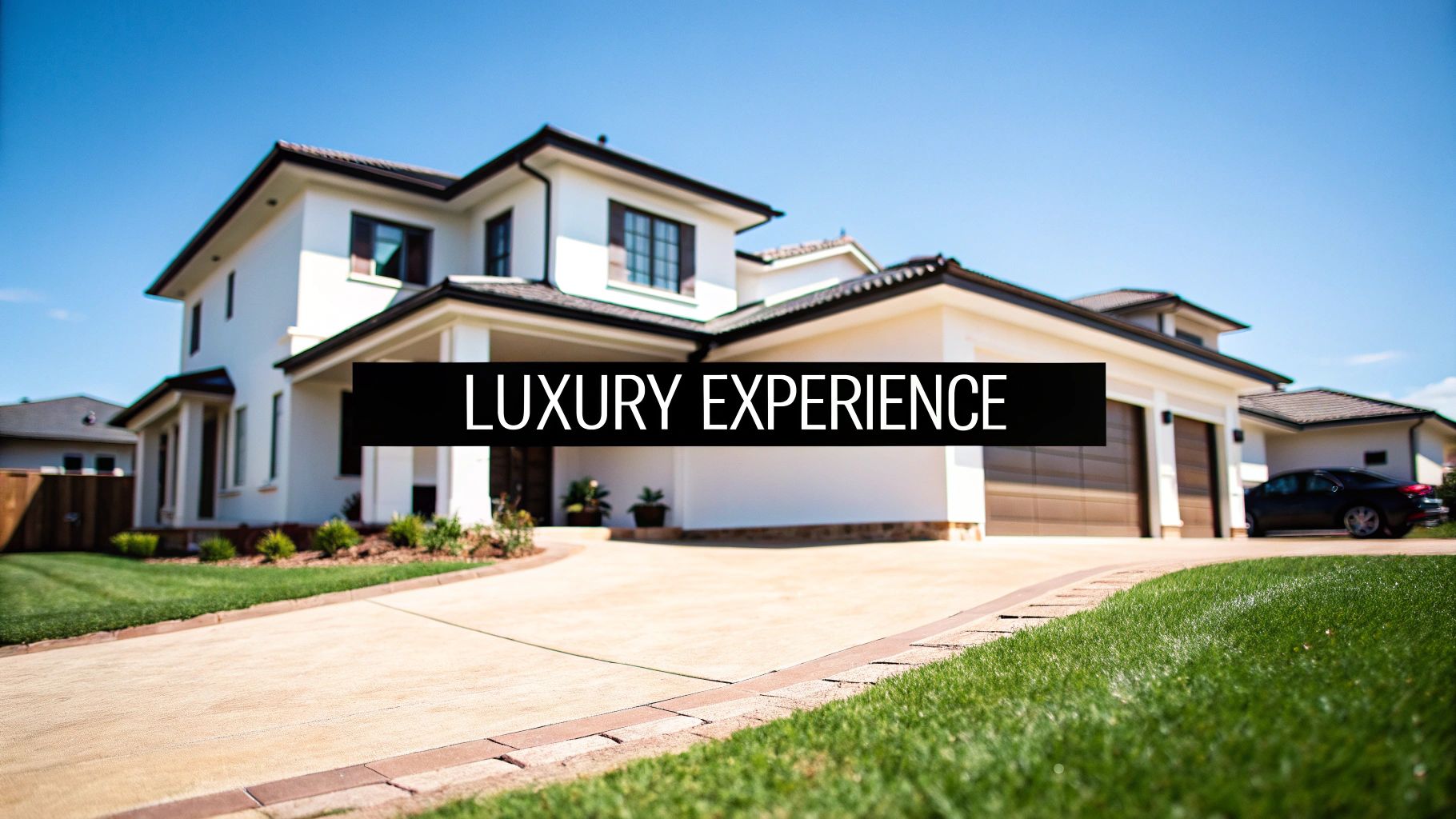
A builder with a portfolio of luxury homes, such as those featured in publications like Architectural Digest or on platforms like Haute Design, demonstrates a proven track record. They understand the nuances of working with affluent clients, architects, and interior designers, ensuring a seamless and collaborative process. This experience is critical for anticipating challenges and delivering the exceptional quality that defines a luxury residence.
Why This Question Matters
- Quality Assurance: Ensures the builder is familiar with the high standards and meticulous craftsmanship expected in a luxury build.
- Material Expertise: Verifies they have experience sourcing and working with premium, custom, and often imported materials.
- Complex Project Management: Confirms their ability to manage intricate architectural plans, subcontractor coordination, and advanced technological integrations.
- Client Discretion: Experienced luxury builders understand the importance of privacy and professionalism when working with high-net-worth individuals.
Actionable Follow-Up Questions
- “Can you provide a portfolio of 3-5 luxury homes you’ve completed that are similar in scope and style to our project?”
- “What is the most complex custom feature you have installed, such as a home theater, wine cellar, or integrated smart home system?”
- “How do you collaborate with architects and interior designers on high-end projects?”
Red Flag: Be cautious if a builder’s portfolio consists solely of standard tract homes or minor renovations. A hesitation to provide references from previous luxury clients or a lack of familiarity with high-end brands and materials can also be a significant warning sign.
Documentation to Request
- Portfolio: A detailed visual portfolio with high-resolution photos and project descriptions.
- References: Contact information for at least three recent luxury homeowners and their architects.
- Certifications: Proof of memberships or certifications, like those from the National Association of Home Builders (NAHB) Luxury Council.
2. Can You Provide References from Recent High-End Projects?
While a builder’s portfolio showcases the final product, references from past clients reveal the journey. This question is a crucial step to verify a builder’s claims of quality, professionalism, and client satisfaction directly from those who have experienced their process firsthand. For luxury home construction, where projects are intensely personal and complex, direct feedback provides invaluable insight into how the builder navigates challenges, manages budgets and timelines, and maintains communication.

Speaking with former clients allows you to move beyond the polished marketing materials and understand the builder’s true work ethic and problem-solving abilities. You can ask about their experience with award-winning homes or custom estates in high-end neighborhoods. This peer-to-peer verification is one of the most reliable indicators of what you can expect when entrusting a builder with your significant investment and vision.
Why This Question Matters
- Verifies Reputation: Confirms the builder’s ability to deliver on promises and maintain positive client relationships.
- Reveals Process: Offers a transparent look into their communication style, responsiveness, and project management from a client’s perspective.
- Builds Trust: Demonstrates the builder’s confidence in their work and their history of satisfying discerning clientele.
- Quality Assessment: Allows you to inquire about the long-term quality and durability of the construction, post-completion support, and how warranty items were handled.
Actionable Follow-Up Questions
- “Could you provide contact information for 3-5 clients whose projects were completed within the last two years?”
- “How did the builder handle unexpected issues or changes to the plan during construction?”
- “Was the project completed on time and within the agreed-upon budget? If not, how were discrepancies communicated and managed?”
Red Flag: A builder who is reluctant, makes excuses, or provides only outdated references is a major cause for concern. This could indicate a history of dissatisfied clients, poor project outcomes, or a lack of recent relevant experience.
Documentation to Request
- Reference List: A formal list with names, contact information, project addresses, and completion dates for at least three recent high-end projects.
- Architect/Designer Contacts: Request references from the design professionals on past projects to gauge collaboration effectiveness.
- Permission to Visit: Ask if any previous clients are willing to allow a brief walkthrough of their completed home to assess craftsmanship firsthand.
3. How Do You Handle Customization and Design Changes?
The nature of a luxury home build is fluid; evolving visions and unique requests are standard. Asking a potential home builder how they manage customization and mid-project design changes is crucial. This question probes their operational flexibility, communication protocols, and overall attitude toward collaborative design. An elite builder sees customization not as an inconvenience but as an essential part of delivering a truly bespoke residence. Their process for handling changes should be transparent, efficient, and clearly documented.
A builder adept at high-end customization will have a formalized change order process that outlines cost implications, schedule adjustments, and approval steps. They embrace collaboration with architects and interior designers to integrate features like custom millwork, specialty architectural elements, or a state-of-the-art home theater. Their experience ensures that modifications are executed flawlessly without compromising the project’s integrity or timeline unnecessarily.
Why This Question Matters
- Flexibility and Adaptability: Confirms the builder can pivot and accommodate new ideas as the project progresses.
- Cost Transparency: Ensures you understand the financial impact of any change before it is implemented, preventing budget overruns.
- Schedule Management: Reveals their process for integrating changes while minimizing delays to the overall construction timeline.
- Collaborative Spirit: Shows whether the builder values client and designer input or prefers to stick rigidly to the initial plan.
Actionable Follow-Up Questions
- “Can you walk me through your change order process, from initial request to final approval?”
- “How do you communicate the cost and schedule impacts associated with a design modification?”
- “Describe a time a client requested a significant mid-construction change. How did you manage it?”
Red Flag: A builder who seems annoyed by the idea of changes or lacks a formal change order process is a major concern. Vague answers about costs or an inability to provide examples of past customizations suggest inexperience with the dynamic nature of luxury projects.
Documentation to Request
- Sample Change Order Form: A template document they use for detailing changes, costs, and signatures.
- Project Management Software Access: A demonstration of the tool they use to track changes and communicate updates.
- Written Communication Policy: A document outlining their preferred methods and response times for client communication.
4. What Are Your Warranty and Quality Guarantee Offerings?
A comprehensive warranty is not just a document; it’s a builder’s promise of quality and a critical safety net for your significant investment. When asking this question to ask a home builder, you are assessing their confidence in their own craftsmanship and their commitment to post-construction support. In the luxury market, where systems and finishes are complex and costly, a robust warranty provides essential peace of mind, ensuring any defects in materials or workmanship will be addressed promptly and professionally.
Reputable luxury builders often offer multi-tiered warranties that exceed industry standards, such as a 10-year structural warranty or a 2-10 Home Buyers Warranty (HBW) program. These guarantees demonstrate a builder’s financial stability and long-term accountability. Understanding the specifics, from coverage duration to the claims process, is crucial for protecting a high-value property where even minor repairs can be substantial.
Why This Question Matters
- Investment Protection: Safeguards your home against costly structural, mechanical, or workmanship defects after completion.
- Quality Assurance: A strong warranty signals the builder’s confidence in their materials and construction quality.
- Post-Closing Support: Establishes a clear process for addressing issues, ensuring the builder remains accountable after you move in.
- Resale Value: A transferable builder’s warranty can be a significant selling point for future buyers.
Actionable Follow-Up Questions
- “Can you detail the different coverage tiers of your warranty, such as for workmanship, systems, and structural components?”
- “What is your specific process for submitting a warranty claim, and what is your typical response time?”
- “Does the warranty cover custom or high-end features like smart home systems, wine cellars, and premium appliances, or are those covered only by manufacturer warranties?”
Red Flag: Be wary of a builder who offers only a minimal, one-year warranty or is vague about what is covered. A reluctance to provide warranty documents upfront or a disorganized claims process are major indicators of potential post-construction problems.
Documentation to Request
- Sample Warranty Document: A complete, detailed copy of the warranty you will be asked to sign.
- Third-Party Warranty Information: If applicable, details and proof of enrollment in a program like 2-10 HBW.
- Maintenance Schedule: A document outlining homeowner maintenance responsibilities required to keep the warranty valid.
5. What is Your Construction Timeline and Project Management Approach?
Understanding a builder’s project management methodology and scheduling practices is vital, as it reveals their organizational capability and reliability. This question helps you gauge how they handle the immense complexity of a luxury build, from coordinating dozens of specialized trades to managing the procurement of custom materials. A premier builder uses sophisticated project management systems to ensure every phase of construction is meticulously planned, tracked, and executed, providing transparency and accountability.
Top-tier builders leverage construction management software like Touchplan or Procore to create detailed, phased schedules and provide clients with real-time updates. This approach demonstrates a commitment to on-time delivery and proactive communication. A clear and realistic timeline, with built-in contingencies for unforeseen delays, prevents misunderstandings and ensures your project stays on track, respecting your move-in date and financial planning. For more information on this topic, you can explore some construction project management best practices.
Why This Question Matters
- Predictability and Planning: A detailed timeline allows you to plan other critical aspects, such as financing, selling your current home, and ordering furnishings.
- Accountability: It establishes a clear benchmark for progress, holding the builder accountable for meeting key milestones.
- Transparency: Modern project management tools provide insight into daily progress, potential delays, and decision-making processes.
- Risk Management: It confirms the builder has a proactive strategy for handling supply chain issues, weather delays, and other common construction hurdles.
Actionable Follow-Up Questions
- “Can you provide a sample project schedule from a similar build, showing key phases and milestones?”
- “What project management software do you use to communicate updates and track progress?”
- “How do you build contingencies into your timeline for potential delays, and how are these communicated to the client?”
Red Flag: A builder who provides a vague, overly optimistic timeline without detailed phases is a major concern. Be wary if they cannot explain their process for managing delays or lack a systematic approach to client communication and progress reporting.
Documentation to Request
- Sample Project Timeline: A detailed, phased construction schedule from a previous project.
- Communication Plan: A document outlining the frequency and method of client updates (e.g., weekly progress reports, bi-weekly site meetings).
- Sample Change Order Form: Review their process for documenting and approving changes that may impact the schedule or budget.
6. What Sustainable and Smart Home Technologies Do You Implement?
Modern luxury homes are defined by more than just aesthetics; they integrate sustainable practices and smart technologies that enhance comfort, efficiency, and long-term value. Asking a potential home builder about their expertise in this area is crucial for creating a future-ready residence. This question reveals their ability to incorporate energy-efficient systems, environmentally responsible materials, and sophisticated home automation, which are now standard expectations for high-end properties.
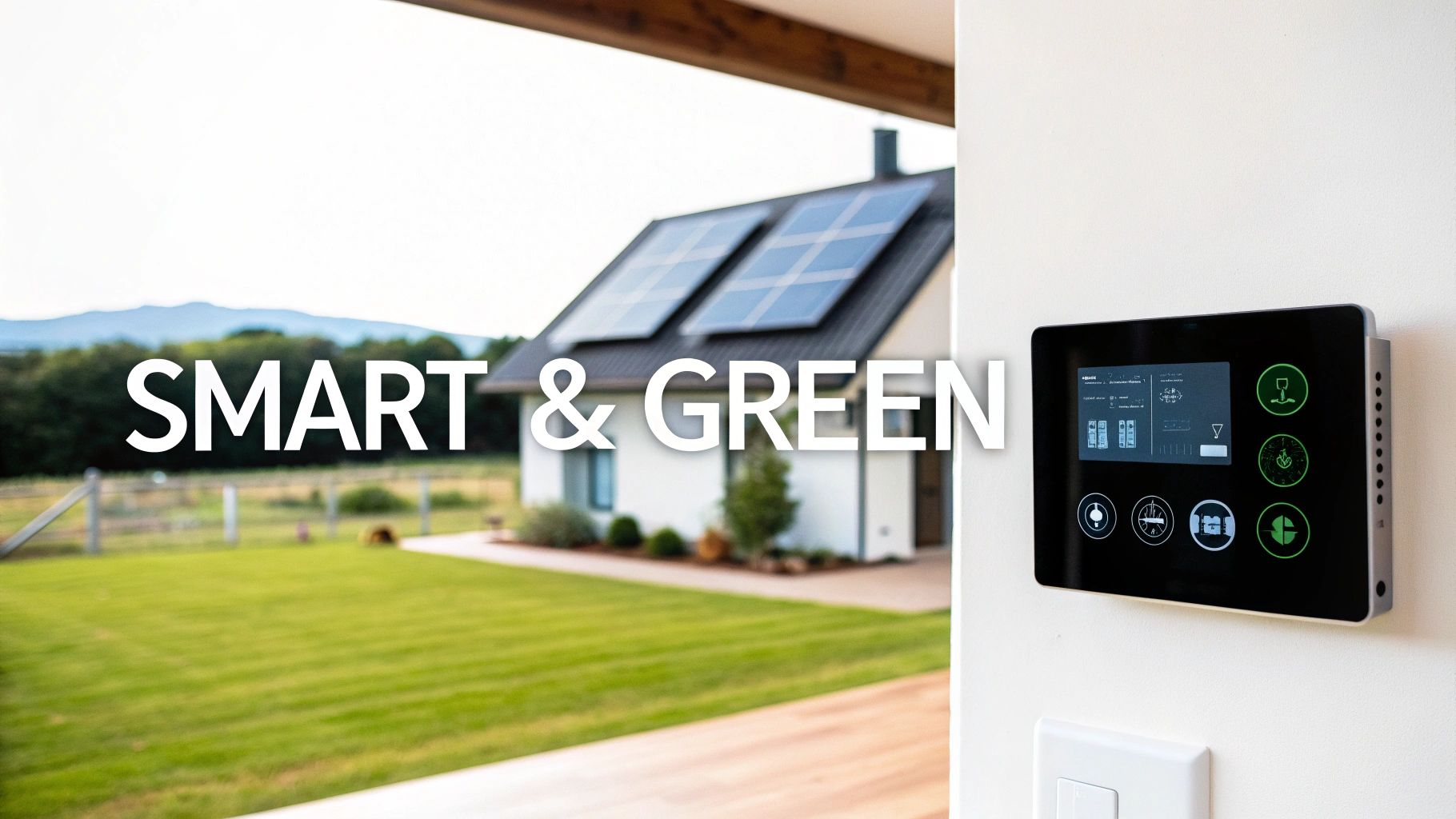
A builder well-versed in green building and smart home integration can guide you through options like LEED or ENERGY STAR certifications, renewable energy sources such as solar panels, and high-performance building envelopes. Their experience with platforms like Control4 or Savant ensures seamless integration of lighting, climate, security, and entertainment systems. This proficiency demonstrates a commitment to innovation and delivering a home that is not only luxurious but also intelligent and conscientious.
Why This Question Matters
- Future-Proofing: Ensures your home is equipped with current technology and sustainable features that increase resale value.
- Energy Efficiency: A builder’s knowledge directly impacts your home’s long-term operational costs and environmental footprint.
- Enhanced Lifestyle: Confirms their ability to create a seamlessly automated living environment tailored to your preferences.
- Quality and Health: Sustainable practices often lead to better indoor air quality and a healthier living space through the use of non-toxic materials.
Actionable Follow-Up Questions
- “Which smart home platforms, like Lutron or Crestron, do you have the most experience installing and integrating?”
- “Can you share examples of homes you’ve built that achieved specific green certifications, such as LEED for Homes?”
- “What measures do you take to ensure superior indoor air quality and a high-performance building envelope?”
Red Flag: A builder who dismisses the importance of green building or is unfamiliar with major smart home brands may not be up-to-date with modern luxury construction standards. Be wary if they cannot provide specific examples or energy performance data from past projects.
Documentation to Request
- System Specifications: Detailed spec sheets for HVAC, smart home systems, and renewable energy components.
- Certifications: Copies of any green building certifications (e.g., LEED, ENERGY STAR) from previous projects.
- Energy Audits: Examples of post-construction energy performance reports or HERS Index scores for homes they have built.
7. How Do You Manage Project Costs and Budget Control?
In luxury home construction, where budgets can be substantial, a builder’s approach to financial management is as crucial as their construction skill. This question is designed to reveal the systems and transparency a builder applies to project costs, from initial estimates to final billing. A top-tier builder will have a sophisticated process for tracking expenses, managing contingencies, and communicating financial updates clearly and proactively, ensuring there are no costly surprises.
Effective budget control goes beyond simply providing a number; it involves detailed line-item estimates, transparent supplier pricing, and a formal change order process. Elite builders often use advanced project management software to provide clients with real-time access to budget reports and expense tracking. This financial discipline is a hallmark of a professional who respects your investment and is committed to delivering value without compromising on quality.
Why This Question Matters
- Financial Transparency: Ensures you have a clear, ongoing understanding of where your money is being spent throughout the project.
- Cost Overrun Prevention: A structured process for managing change orders and unforeseen costs helps prevent the budget from spiraling out of control.
- Informed Decision-Making: Detailed cost breakdowns allow you to make educated decisions about materials, finishes, and design modifications.
- Builder Accountability: Establishes a framework for holding the builder financially accountable for the project’s budget.
Actionable Follow-Up Questions
- “Can you provide a sample of an itemized budget from a previous project?”
- “What is your process for documenting and approving change orders, and how do they impact the budget and schedule?”
- “How do you handle unexpected costs or material price fluctuations during construction?”
Red Flag: Be wary of a builder who provides a vague, lump-sum estimate without a detailed breakdown. A resistance to regular financial reporting or an unclear process for change orders signals a lack of transparency and could lead to significant budget issues later.
Documentation to Request
- Sample Budget Proposal: A detailed, line-item budget from a comparable past project.
- Change Order Form: A sample of their official change order document that outlines cost and schedule adjustments.
- Financial Reporting Schedule: A clear schedule outlining when and how you will receive budget updates (e.g., monthly reconciliation reports).
8. What is Your Process for Selecting Quality Subcontractors and Suppliers?
The quality of a luxury home is a direct reflection of the craftspeople who build it and the materials used. A general contractor is essentially the conductor of an orchestra, and the subcontractors (electricians, plumbers, masons, etc.) and suppliers are the musicians. Asking a potential home builder about their selection process for these key partners is crucial for understanding their commitment to excellence beyond their own immediate team.
Elite builders cultivate long-standing relationships with a trusted network of artisans and suppliers who specialize in high-end residential work. They don’t simply choose the lowest bidder; they select partners based on a proven history of reliability, skill, and familiarity with luxury standards. This established rapport ensures seamless collaboration, consistent quality, and accountability throughout the project, minimizing delays and costly mistakes.
Why This Question Matters
- Craftsmanship Guarantee: Ensures that every aspect of your home, from the foundation to the final finishes, is handled by vetted professionals.
- Material Integrity: Confirms the builder has access to and experience with premium, rare, and high-performance materials from reputable suppliers.
- Project Cohesion: A builder with a consistent team of subcontractors ensures a smoother workflow and a unified standard of quality.
- Accountability: Established relationships mean the builder can vouch for the reliability and professionalism of every person working on your property.
Actionable Follow-Up Questions
- “Can you provide a list of your primary subcontractors for trades like electrical, plumbing, and HVAC?”
- “How long have you been working with your key trade partners and suppliers?”
- “What is your vetting process for a new subcontractor you haven’t worked with before?”
- “Do you have exclusive relationships with any luxury material suppliers or brands?”
Red Flag: A builder who frequently changes subcontractors or consistently chooses the lowest bid may be prioritizing cost-cutting over quality. Vagueness about their vetting process or an inability to name their core trade partners is a significant concern.
Documentation to Request
- List of Key Subcontractors: Contact information for their preferred electricians, plumbers, and finishing carpenters.
- Proof of Insurance: Certificates of insurance (COI) for their main subcontractors to verify they are adequately covered.
- Supplier References: A list of their primary suppliers for critical components like windows, cabinetry, and flooring.
9. How Will You Collaborate with Our Architect and Interior Designer?
Luxury homes are the product of a collaborative symphony between the builder, architect, and interior designer. This question is designed to gauge a builder’s ability to be a productive member of this creative team rather than a siloed contractor. A builder’s response will reveal their process for integrating complex designs, their communication style with creative professionals, and their respect for the established aesthetic vision. The best builders act as implementation partners, translating architectural and design intent into physical reality with precision.
A builder experienced in these collaborations will have established protocols for communication and problem-solving. They will appreciate the architect’s structural and spatial intent and the interior designer’s focus on materials, finishes, and custom features like bespoke millwork. This synergy is essential for a seamless project flow, preventing costly rework and ensuring the final home is a true reflection of the design team’s detailed plans.
Why This Question Matters
- Design Integrity: Ensures the builder is committed to executing the architect’s and designer’s vision without unauthorized changes.
- Effective Communication: Verifies that a clear system for communication and decision-making exists between all key parties.
- Problem Resolution: Confirms the builder has a collaborative approach to resolving the inevitable design and construction conflicts that arise.
- Efficiency and Quality: A harmonious relationship between the build and design teams leads to a smoother, faster, and higher-quality construction process.
Actionable Follow-Up Questions
- “Can you describe a situation where you disagreed with a design specification and how you resolved it with the architect?”
- “What is your process for reviewing architectural drawings and shop drawings from vendors before implementation?”
- “How often do you schedule site meetings with the architect and interior designer during key construction phases?”
Red Flag: A builder who speaks dismissively of architects or designers, suggests they know better, or lacks a clear process for collaboration is a major concern. This attitude often leads to conflict, compromises on design, and a frustrating experience for the entire team.
Documentation to Request
- Communication Plan: A sample communication protocol or plan from a previous project.
- Project Team References: Contact information for architects and designers they have worked with on past luxury builds.
- Meeting Agendas/Minutes: Examples of how they structure and document coordination meetings.
10. What Are Your Credentials, Licenses, and Professional Certifications?
Verifying a builder’s credentials, licenses, and certifications is a non-negotiable step in your due diligence. This question confirms their legitimacy and competence, ensuring they operate within legal and professional standards. For a luxury build, this goes beyond a basic contractor’s license; you’re looking for proof of specialized expertise, ongoing education, and industry recognition that aligns with the high-stakes nature of your project.
A top-tier luxury builder will proudly present their documentation, as it validates their commitment to professionalism and excellence. Credentials like a Master Builder certification from the National Association of Home Builders (NAHB) or a LEED AP designation signal a dedication to quality and advanced knowledge. These qualifications are not just pieces of paper; they represent a builder’s investment in their craft and their ability to protect your investment.
Why This Question Matters
- Legal Protection: Ensures the builder is legally authorized to work in your state, protecting you from liability and ensuring the project is code-compliant.
- Competency Benchmark: Certifications act as a third-party endorsement of the builder’s skills and knowledge in specialized areas like green building or luxury design.
- Risk Mitigation: Proper licensing is often tied to requirements for bonding and insurance, which safeguard your financial investment against unforeseen issues.
- Professional Commitment: Active memberships in industry associations demonstrate a builder’s commitment to staying current with best practices, trends, and technologies.
Actionable Follow-Up Questions
- “Can you provide a copy of your current state general contractor’s license and proof of general liability and workers’ compensation insurance?”
- “What professional development or continuing education have you or your team completed in the last year?”
- “Are you bonded for projects of this scale, and do you carry Errors and Omissions (E&O) insurance?”
Red Flag: A builder who is evasive about providing license numbers, cannot produce proof of insurance, or dismisses the importance of professional certifications should be avoided. Check your state’s licensing board website to verify their status and look for any disciplinary actions.
Documentation to Request
- State Contractor’s License: A current, valid copy of their license.
- Certificates of Insurance: Proof of general liability, workers’ compensation, and E&O insurance.
- Professional Certifications: Copies of certificates such as LEED AP, Certified Green Builder, or Certified Luxury Home Specialist.
- Proof of Bonding: Documentation outlining their bonding capacity for the project.
Top 10 Home Builder Questions Comparison
| Topic | 🔄 Complexity | ⚡ Resource Needs | ⭐📊 Expected Outcomes | 💡 Ideal Use Cases | Key Advantages |
|---|---|---|---|---|---|
| What is Your Experience with Luxury Home Construction? | 🔄 Moderate — review portfolio and past projects | ⚡ Time for portfolio review, site visits, credential checks | ⭐ High confidence in capability, 📊 proven luxury track record | 💡 Selecting primary builder for a bespoke high-end residence | Established expertise, premium supplier networks |
| Can You Provide References from Recent High-End Projects? | 🔄 Low–Moderate — coordinate reference calls/visits | ⚡ Time to contact clients, arrange visits, verify testimonials | ⭐ Real-world verification of workmanship, 📊 insight into client satisfaction | 💡 Final validation before contract signing | Direct client feedback, on-site quality confirmation |
| How Do You Handle Customization and Design Changes? | 🔄 High — formal change-order and approval processes | ⚡ Design collaboration, change-order documentation, supplier flexibility | ⭐ Bespoke outcomes, 📊 variable cost/timeline impacts | 💡 Projects requiring heavy personalization or iterative design | Flexibility for bespoke features, strong designer coordination |
| What Are Your Warranty and Quality Guarantee Offerings? | 🔄 Low — review contract terms and warranty documents | ⚡ Documentation review, possible third-party warranty fees | ⭐ Post-close protection, 📊 reduced long-term repair risk | 💡 High-value investments where post-warranty support matters | Builder accountability, third-party warranty backing |
| What is Your Construction Timeline and Project Management Approach? | 🔄 High — scheduling, milestone tracking, contingency planning | ⚡ Project management software, dedicated PM, regular reporting | ⭐ Predictable delivery, 📊 clearer milestone visibility | 💡 Time-sensitive move-ins or phased luxury builds | Organized coordination, earlier detection of delays |
| What Sustainable and Smart Home Technologies Do You Implement? | 🔄 High — systems integration and certification processes | ⚡ Specialist trades, tech integration, higher upfront costs | ⭐ Lower operating costs long-term, 📊 increased resale and efficiency | 💡 Buyers prioritizing energy efficiency and smart automation | Future-proofing, tax incentives, enhanced comfort |
| How Do You Manage Project Costs and Budget Control? | 🔄 Moderate — ongoing cost tracking and change management | ⚡ Detailed estimates, accounting, contingency funds (5–10%) | ⭐ Predictable budgeting, 📊 transparency on spend | 💡 Strict-budget projects or when controlling overruns is critical | Itemized costs, formal change-order control |
| What is Your Process for Selecting Quality Subcontractors and Suppliers? | 🔄 Moderate — vetting, performance reviews, quality checks | ⚡ Time to vet trades, maintain supplier relationships | ⭐ Consistent high craftsmanship, 📊 superior finish quality | 💡 Projects demanding premium finishes and specialist trades | Established vetted trades, reliable premium materials |
| How Will You Collaborate with Our Architect and Interior Designer? | 🔄 Moderate — regular coordination and integrated reviews | ⚡ Meeting schedules, shared documentation, single point of contact | ⭐ Accurate design execution, 📊 fewer design-construction conflicts | 💡 Design-driven projects with complex architectural details | Cohesive implementation, collaborative problem-solving |
| What Are Your Credentials, Licenses, and Professional Certifications? | 🔄 Low — verify licenses and certifications | ⚡ Time to check licensing boards, insurance, certificates | ⭐ Legal compliance and credibility, 📊 reduced regulatory risk | 💡 Basic vetting for legitimacy and risk mitigation | Proof of licensure, insurance, and professional standing |
Building Your Dream with Confidence
The journey from architectural blueprint to a tangible, breathtaking home is one of the most significant investments you will ever undertake. This comprehensive guide was designed not just to provide a list of questions to ask a home builder, but to arm you with a strategic framework for due diligence. By moving through the critical areas of experience, financial transparency, project management, and quality assurance, you are no longer just a client; you become an empowered, informed partner in the creation of your legacy.
The right builder will not be intimidated by your detailed inquiries. In fact, they will welcome them. A confident, reputable builder sees these questions as an opportunity to demonstrate their expertise, showcase their commitment to transparency, and build the foundation of a strong, collaborative relationship. They understand that a project of this magnitude requires absolute clarity and mutual trust from day one.
From Inquiry to Insight: The Power of Informed Questions
Reflect on the key themes we’ve explored. Each question serves a distinct purpose, moving beyond surface-level qualifications to uncover the very essence of a builder’s operation.
- Verifying Expertise: Asking about experience with luxury projects, requesting detailed references, and examining credentials isn’t about checking boxes. It’s about confirming a builder’s ability to navigate the unique complexities, material sourcing, and artisan craftsmanship that high-end construction demands.
- Aligning Vision: Inquiring about their process for handling customizations, collaborating with your design team, and integrating smart home technology ensures the builder is a facilitator of your vision, not a barrier to it. Their answers reveal their flexibility, communication style, and commitment to realizing your specific aesthetic and functional goals.
- Protecting Your Investment: The most critical questions to ask a home builder often revolve around the business side of the build. Deep dives into budget management, subcontractor selection, insurance coverage, and warranty specifics are non-negotiable. These conversations protect your financial interests and provide a safety net, ensuring the project is as structurally sound as it is financially secure.
Ultimately, your goal is to find a partner who values precision, communication, and quality as much as you do. This process is your first and best opportunity to gauge whether a potential builder’s operational philosophy aligns with your expectations for excellence. A builder’s response to this rigorous vetting process speaks volumes. Hesitation or vague answers are clear red flags, while open, detailed responses accompanied by thorough documentation are the hallmarks of a true professional.
The Final Step: Forging a Partnership Built on Trust
Choosing a home builder is more than a transactional decision; it is the beginning of a long-term partnership responsible for bringing your most ambitious aspirations to life. The dialogue you initiate with these questions sets the tone for the entire project. It establishes a precedent for open communication, mutual respect, and a shared commitment to achieving an extraordinary outcome.
You are now equipped with the knowledge to dissect proposals, interview candidates with precision, and select a builder with unwavering confidence. This diligence ensures that the excitement of breaking ground is matched by the peace of mind that comes from knowing you have the right team in place. Your future home deserves nothing less than a foundation built on meticulous planning and absolute trust. Armed with this strategic approach, you are ready to move forward and transform your vision into a stunning reality.
Finding a pre-vetted professional who welcomes this level of scrutiny can be the most challenging first step. Haute Design simplifies this process by connecting discerning clients with an exclusive network of the nation’s premier home builders, architects, and designers. Explore our curated list of industry leaders who have already met the highest standards of excellence at Haute Design.