


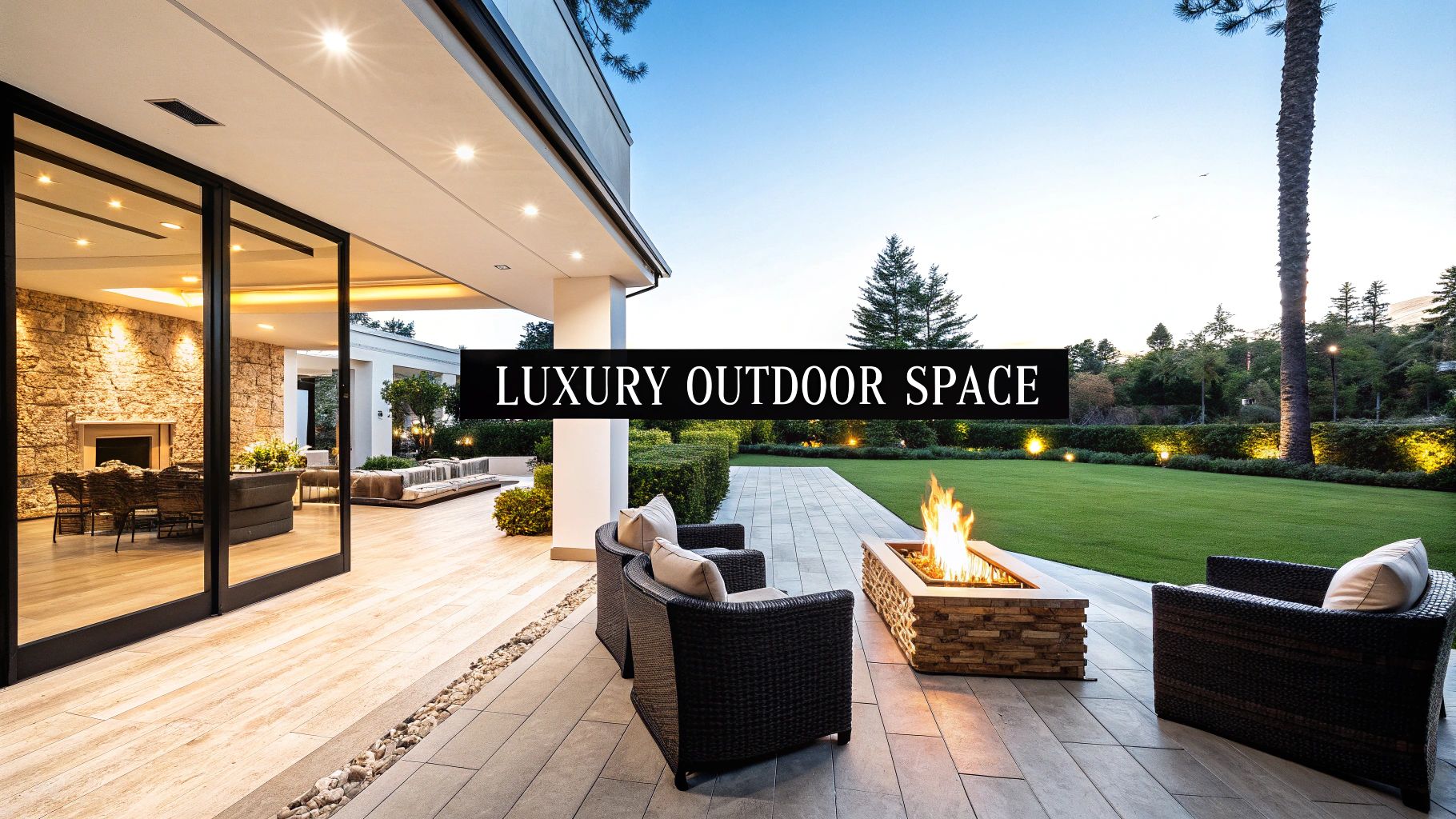
An outdoor living space is so much more than a deck or patio. Think of it as a genuine extension of your home’s interior, a place where the lines between indoors and out completely dissolve. A true luxury space weaves together sophisticated design, premium materials, and dedicated zones for everything from five-star cooking to quiet reflection. It’s not just an add-on; it’s another room—or a series of them—without walls, designed to fundamentally elevate how you live.
The Evolution of the Backyard Sanctuary
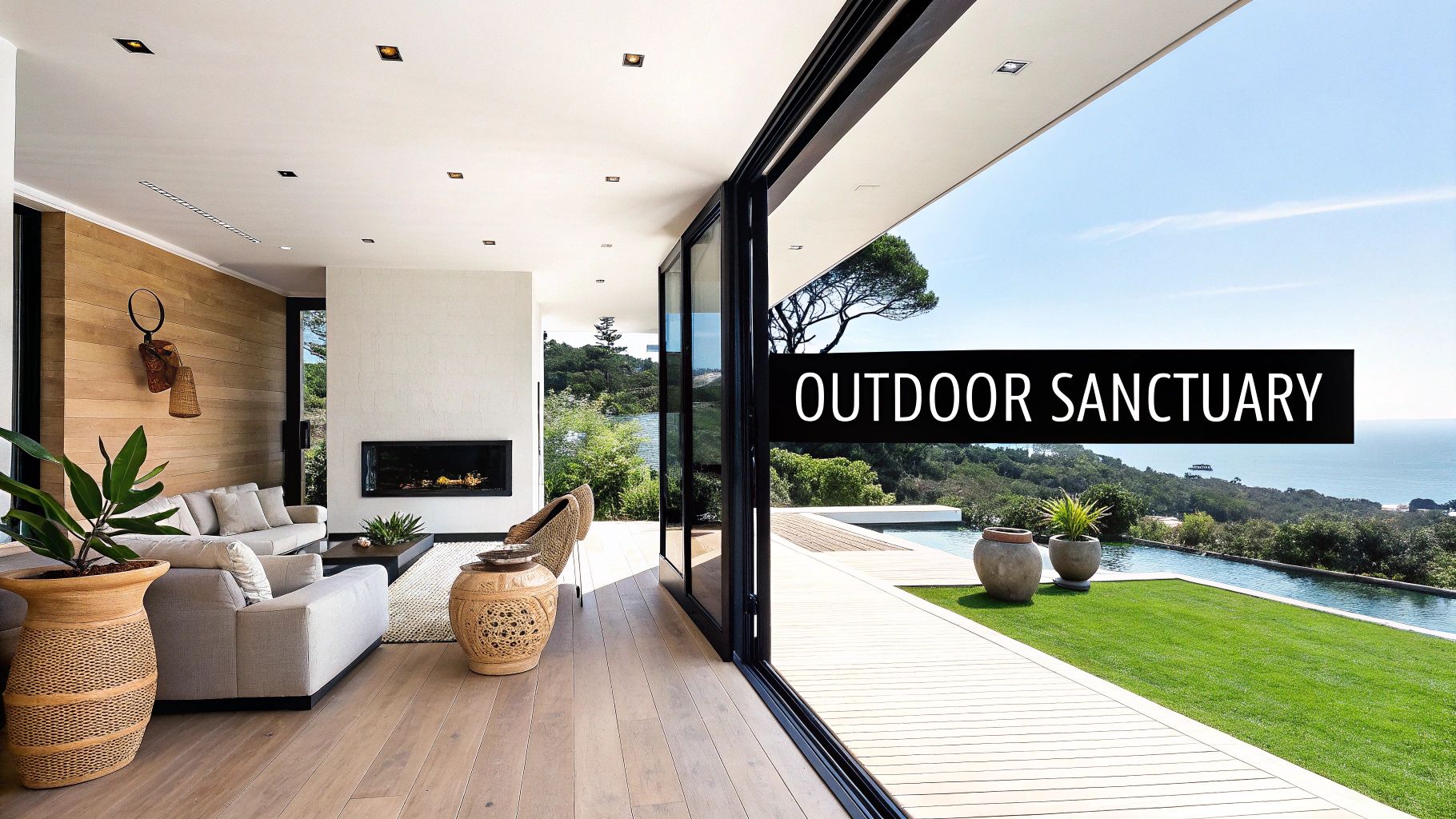
The very idea of a “backyard” has changed dramatically. What was once just a patch of grass with a grill is now a bespoke environment, meticulously crafted for wellness, entertainment, and personal escape. Today’s outdoor living space is a seamless architectural continuation of the home, mirroring the same comfort, style, and thoughtfulness you find inside.
Here’s a good way to think about it: your indoor great room is designed for gathering, dining, and relaxing. A modern outdoor sanctuary applies that same logic, creating distinct yet connected “rooms” under an open sky.
Beyond Recreation to Restoration
The focus has shifted from a place for pure recreation to one of personal restoration. A high-end outdoor living space is engineered to enhance your daily life, giving you a private haven from the pressures of the outside world. This is accomplished through a thoughtful blend of elements designed to engage the senses and promote well-being.
This new standard is defined by a few key characteristics:
- Architectural Integration: The space feels like it was always part of the home’s original blueprint, not bolted on later. This is done with matching floor levels, cohesive materials, and massive glass doors that erase the boundary between inside and out.
- Bespoke Functionality: Every feature is built around your specific lifestyle. This could mean a chef-grade kitchen for ambitious entertaining, a quiet meditation garden with a tranquil water feature, or even a poolside cabana that doubles as a remote office.
- Aesthetic Cohesion: The design language—from the color palette to the furniture choices—perfectly complements the home’s interior, creating a single, unified experience.
“We’re not just creating patios; we are composing experiences. A luxury outdoor living space should feel like a destination, a personal resort just steps from your door. It’s about crafting an emotional response through design, light, and nature.”
The Role of Elite Design Collaboration
Bringing a space of this caliber to life requires a unified vision executed by top-tier professionals. Architects, landscape designers, and builders must work in lockstep to turn a homeowner’s dreams into a functional, beautiful reality.
Their collective expertise ensures every detail, from proper drainage and layered lighting to the longevity of the materials, is handled with precision. This professional touch is what elevates a standard backyard into an extraordinary outdoor living space. As highlighted in a feature on one of the industry’s premier designers, this new era in outdoor luxury is defined by expert curation and visionary design. When you invest in this level of expertise, you’re not just improving your lifestyle—you’re adding significant, lasting value to your property.
The Guiding Principles of Exceptional Outdoor Design
A world-class outdoor living space doesn’t happen by chance. It’s the product of very deliberate choices, all rooted in foundational design principles. These concepts are the secret sauce, guiding a designer’s hand to create a space that feels both spectacular and completely natural. It’s what separates a nice backyard from a true personal sanctuary.
1. Seamless Indoor-Outdoor Flow
The first and most important principle is achieving a seamless indoor-outdoor flow. The goal is to make the boundary between your home and your garden simply disappear. This is so much more than just putting in a big sliding glass door; it’s about engineering a transition so smooth you barely notice it’s there.
This effect comes from intentionally erasing any visual or physical barriers. Top architects achieve this with massive floor-to-ceiling glass walls or fully retractable door systems that can open up an entire side of a room to the elements. The outdoor space becomes a genuine, functional extension of the room it adjoins, not just something you look at.
2. Creating Purpose-Driven Zones
Just like the inside of your home has a kitchen, a dining room, and a living room, a truly exceptional outdoor space is organized with zone-based functionality. This is all about creating distinct “rooms” without walls, where each area has a clear and defined purpose within a single, unified landscape.
Think of it as an open-concept floor plan for the outdoors. Each zone is thoughtfully laid out to support a specific activity, which keeps the entire area feeling organized, efficient, and wonderfully uncluttered.
This approach is critical because it directs the flow of activity and makes the space far more usable. A well-designed property might feature:
- The Culinary Zone: Built around a high-performance outdoor kitchen, this area is all about efficient prep and cooking.
- The Dining Zone: Set near the kitchen for convenience, this space is designed for comfortable meals, from a casual family lunch to a sophisticated dinner party.
- The Lounge Zone: This is the heart of relaxation, often anchored by deep, comfortable seating, a fire feature, and soft lighting perfect for conversation.
- The Recreation Zone: This might include a pool, a spa, or even a small lawn for games, often set slightly apart to contain energy and sound.
By defining these zones, you’re essentially writing a story for how the space will be lived in. It guides movement, encourages different kinds of gatherings, and stops the area from feeling like one big, undefined patio.
3. Harmony with Architecture and Nature
An outdoor living space never exists in a vacuum. For it to feel truly right, its design has to be in conversation with both the architecture of the home and the natural landscape surrounding it. This ensures the new space feels like it has always been there.
This sense of harmony is created by thoughtfully echoing architectural details from the main house. For instance, the same stone used on an indoor fireplace might be repeated on an outdoor feature wall. The roofline of a new pergola might mirror the exact pitch of the home’s roof. These subtle cues create a powerful and cohesive visual link.
At the same time, the design must respect and celebrate the natural setting. This means preserving mature trees and weaving them into the plan, choosing plants that are native to the region, and carefully orienting seating to capture the best views or afternoon sun. The ultimate goal is a space that feels both architecturally integrated and completely at home in its environment.
4. Mastering Ambiance with Strategic Lighting
Finally, a truly remarkable outdoor space is designed to be just as captivating after the sun goes down. Strategic lighting is what transforms the atmosphere at night, extending its usability for hours while adding layers of drama and beauty. This isn’t just about making sure you can see; it’s about crafting an emotional experience.
A layered lighting scheme is the key. This involves combining different kinds of light to create a rich, balanced effect:
- Task Lighting: Bright, focused light for functional areas like grill stations and countertops.
- Ambient Lighting: Soft, general light from sources like wall sconces or overhead fixtures that cast a comfortable glow.
- Accent Lighting: Carefully aimed directional lights used to highlight focal points, like a striking tree, a sculpture, or a beautifully textured stone wall.
This multi-layered approach makes the space safe and functional, but it also creates depth, mood, and visual intrigue. With well-placed, low-voltage landscape lighting, the garden itself can feel magical at night, turning your outdoor living space into an enchanting retreat long after dark.
Choosing Premium Materials and Smart Technology
The soul of a luxury outdoor living space lies in the things you can touch and feel—the cool stone under your feet, the rich grain of a wooden deck, the effortless way technology bends to your will. Selecting the right materials isn’t just a practical decision; it’s like an artist choosing their palette. These choices define the entire sensory experience, dictating not only the look of your sanctuary but also its longevity and how you’ll enjoy it through the seasons.
Think of it as an investment in both beauty and resilience. The best materials are designed to weather the elements with grace, developing a richer character over time instead of just wearing out. It’s the difference between something disposable and a true heirloom piece.
The design principles that guide these choices are all about creating a seamless experience, ensuring every element works together.
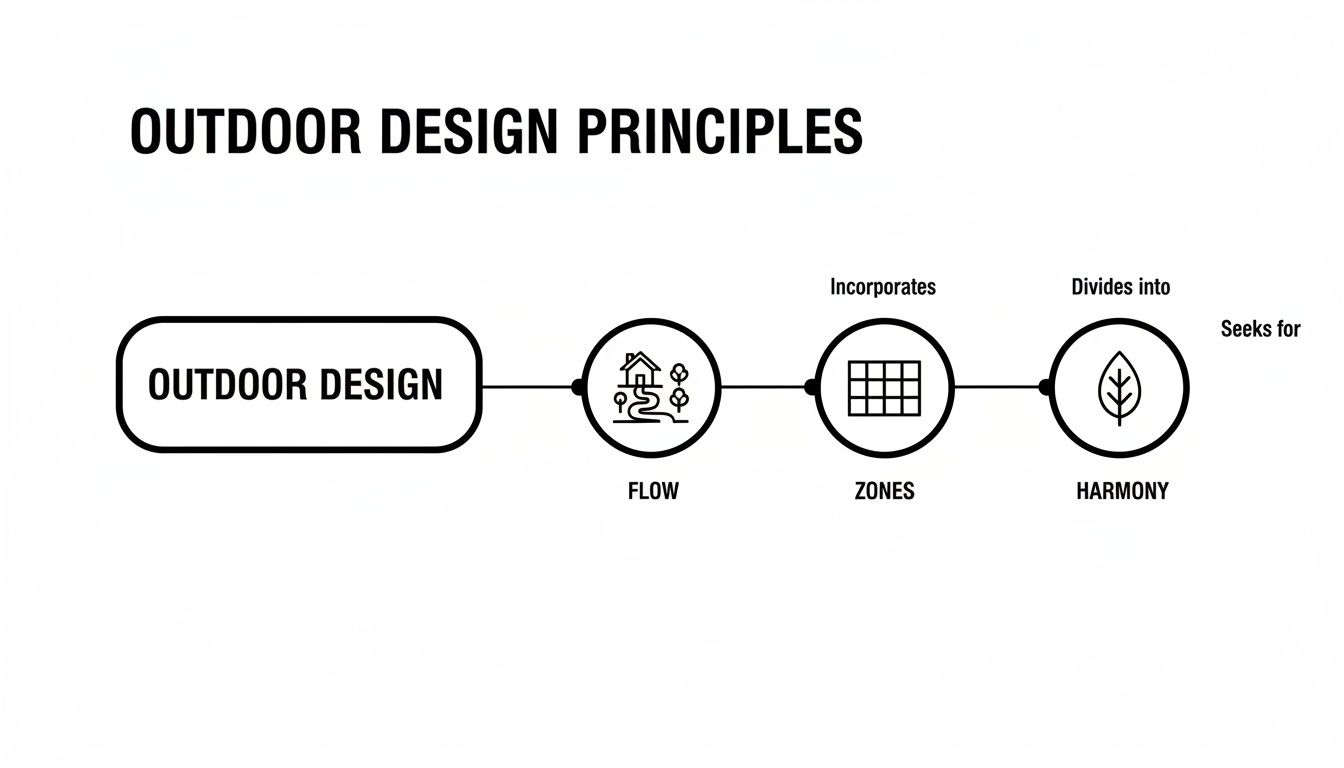
This kind of thoughtful flow connects the home to the garden, carving out distinct zones for dining, relaxing, and entertaining, all while being unified by a harmonious material palette.
Selecting Enduring and Elegant Materials
The foundation of any great outdoor space is its hardscaping. The patios, walkways, and retaining walls are the bones of the design, and the materials you choose here will set the tone for everything else.
High-end projects lean on a handful of trusted options that deliver both incredible durability and a distinct personality:
- Natural Stone (Travertine & Bluestone): You can’t replicate the organic, timeless elegance of real stone. Travertine is a fantastic choice for sunny climates as it stays remarkably cool to the touch, while bluestone offers that classic, sophisticated East Coast feel.
- Porcelain Pavers: A triumph of modern engineering, porcelain gives you the look of natural stone or even wood without the demanding upkeep. It’s incredibly dense, resisting stains, frost, and fading with ease.
- Hardwoods (Ipe & Teak): For decking, pergolas, and furniture, nothing beats the warmth of real wood. Dense tropical hardwoods like Ipe are legendary for their resistance to rot and insects, and when cared for, they can last for decades.
This push for quality is reshaping the entire industry. The outdoor living market is on track to become a USD 26.8 billion industry by 2027, propelled by a demand for sustainability and durability. In fact, the global outdoor kitchen market alone hit USD 24.45 billion in 2024, as more people want to cook and entertain outside year-round. With 60% of consumers actively prioritizing eco-friendly materials, the focus has shifted to creating spaces that are both beautiful and responsible. You can discover more insights from recent industry reports on these trends.
The best material choices are those that feel like a natural extension of the home’s interior and the surrounding landscape. Cohesion is the hallmark of truly exceptional design.
Choosing materials is a crucial step, and each one comes with its own set of trade-offs in terms of look, feel, and long-term care.
Comparison of High-End Outdoor Materials
This table breaks down the most popular luxury materials to help you weigh your options.
| Material | Best For | Durability | Maintenance | Aesthetic |
|---|---|---|---|---|
| Natural Stone | Patios, walkways, pool surrounds, and wall cladding | Extremely high; can last a lifetime | Requires periodic sealing to prevent stains | Timeless, organic, and unique; no two pieces are identical |
| Porcelain Pavers | Modern patios, rooftop decks, and high-traffic areas | Exceptional; resistant to stains, scratches, and fading | Very low; occasional cleaning is all that’s needed | Sleek, uniform, and versatile with many finishes |
| Ipe & Teak Hardwood | Decks, pergolas, and custom outdoor furniture | Very high; naturally resistant to rot and insects | Requires annual oiling to maintain color or can be left to weather to a silver-gray patina | Warm, rich, and naturally beautiful |
| Architectural Concrete | Patios, fire pits, and custom-formed features | High; can be prone to cracking if not installed correctly | Requires sealing to protect against stains and weather | Modern, minimalist, and highly customizable in color and texture |
Ultimately, the right material marries your home’s architectural style with your lifestyle and the local climate, ensuring your outdoor space is a lasting source of enjoyment.
Integrating Smart Technology for Ultimate Comfort
Beyond the static beauty of stone and wood, smart technology is what brings an outdoor space to life. This is where your sanctuary becomes truly responsive, adapting to the time of day, the weather, or the mood you want to create with just the tap of a button.
This integration is what shifts the space from a passive backdrop to an active environment. It’s about anticipating your needs—whether for perfect lighting, background music, or a bit of warmth on a cool evening—and extending your time outdoors across all four seasons.
Key Technologies for a Modern Outdoor Space
A thoughtfully automated outdoor area elevates the experience from simply being outside to living luxuriously outdoors.
- Automated Lighting Systems: Forget a simple on/off switch. Smart lighting lets you create customized “scenes”—a bright, vibrant setting for a party, a soft, romantic glow for dinner, or a subtle, moonlit wash for late-night conversations. You can even program lights to adjust with the sunset.
- High-Fidelity Audio: The best outdoor audio is heard, not seen. Discreet, weatherproof speakers integrated directly into the landscape or architecture provide immersive, crystal-clear sound without a single visible wire. A multi-zone system means you can have a relaxing playlist by the spa while something more upbeat plays on the dining terrace.
- Climate Control Solutions: Push the boundaries of the seasons. Built-in radiant heaters tucked into a pergola’s ceiling can take the chill off a cool evening, while automated misting systems offer a refreshing escape on a hot summer day. For the ultimate in control, bioclimatic pergolas with adjustable louvers let you dial in the perfect amount of sun or shade.
- Motorized Screens and Roofs: True luxury is effortless convenience. With the touch of a button, retractable screens can descend to protect you from insects or a sudden breeze. Automated roofs can close at the first hint of rain, saving your furniture—and your party.
By weaving these technologies into the blueprint from the very beginning, you create an outdoor living space that is not only built to last but is also intuitive, comfortable, and an absolute joy to use. This synergy of premium materials and smart functionality is what truly defines the modern luxury experience.
Signature Features of a High-End Outdoor Space
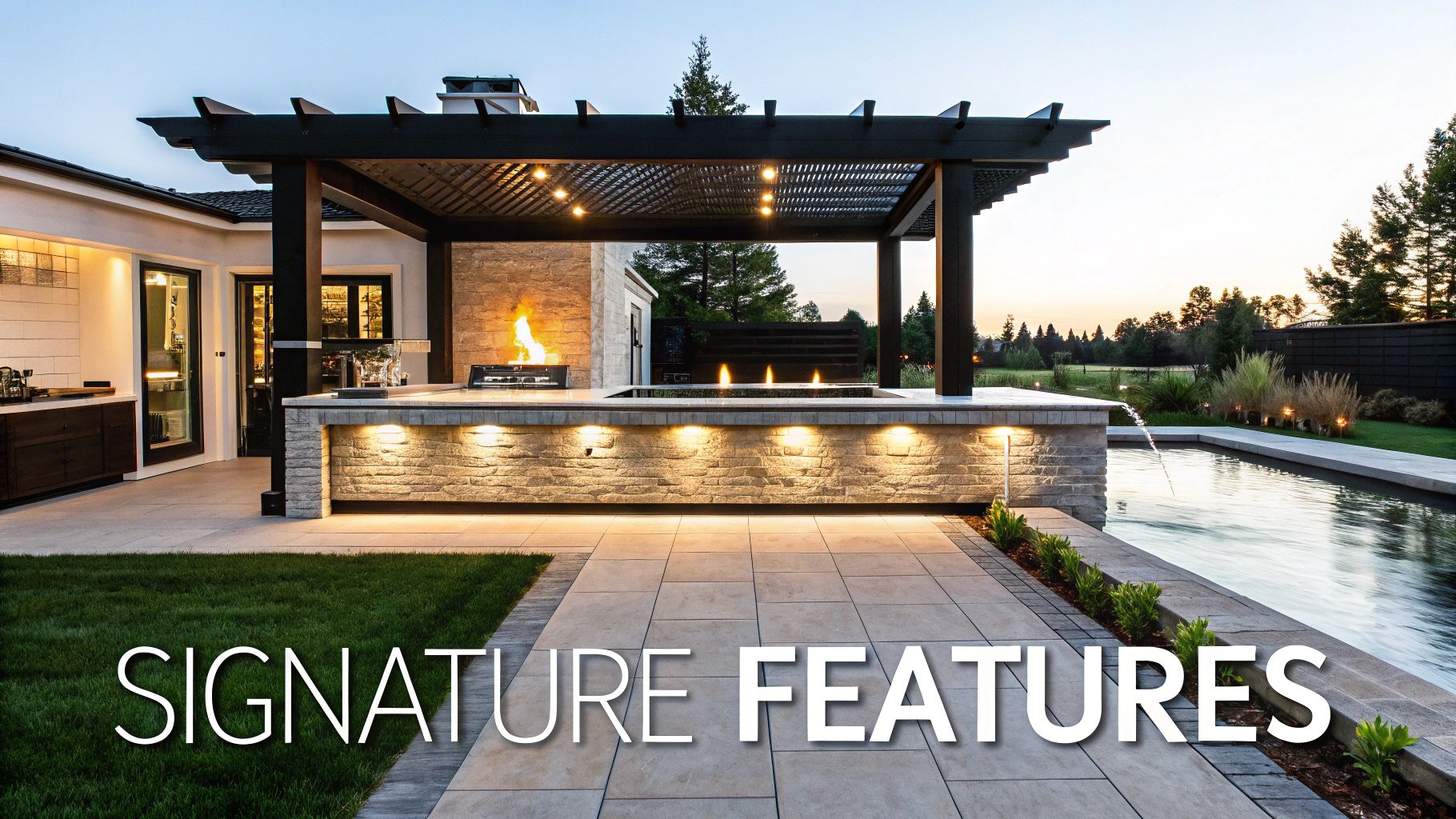
So, what takes a pleasant patio and makes it truly spectacular? While the core principles of flow and harmony lay the groundwork, it’s the signature features that really make the space sing. These are the showstoppers that define modern luxury, turning a well-designed backyard into an unforgettable destination.
Think of it this way: if your hardscaping is the skeleton and your layout is the floor plan, these features are the heart and soul of your outdoor living space. They create the focal points, deliver incredible functionality, and provide that “wow” factor that guests remember long after they’ve left.
These aren’t just add-ons; they are thoughtfully integrated components designed for a specific purpose—whether that’s enabling culinary excellence, creating atmospheric warmth, or adding architectural beauty. Let’s look at the key elements that elevate a backyard into a bespoke sanctuary.
The Gourmet Outdoor Kitchen
We’ve come a long way from the humble backyard grill. A true gourmet outdoor kitchen is a command center for culinary creativity, easily rivaling its indoor counterpart in both performance and style. Crucially, it’s designed for entertaining, bringing the chef into the heart of the party instead of isolating them over a smoky grill.
A high-end setup is a suite of integrated, all-weather appliances built to perform and last.
- High-Performance Grills: This is the centerpiece. The best often feature multiple fuel types (gas, charcoal, pellets) and infrared searing zones for restaurant-quality results.
- Functional Countertops: You need generous surfaces for prep and serving. Durable materials like granite, architectural concrete, or porcelain are ideal.
- Essential Amenities: A complete kitchen also includes a sink, an outdoor-rated refrigerator, ice makers, and specialized storage to keep everything you need right at your fingertips.
By creating a fully functional culinary hub, you make dining al fresco an effortless, central part of your home life. For some great visual examples, our guide to luxury back patio design ideas shows how beautifully these kitchens can be integrated.
Sophisticated Fire Features
Fire has a primal, magnetic pull that draws people together. In a luxury outdoor space, a fire feature becomes a stunning focal point, creating an irresistible ambiance for conversation and relaxation long after the sun goes down. It’s the modern hearth, providing both literal and figurative warmth.
Forget about portable fire pits. We’re talking about architectural statements.
A well-designed fire feature is more than just a source of heat; it’s a living sculpture. It anchors the primary seating area, dictates the flow of the space, and transforms the atmosphere with its dynamic light and movement.
Popular choices include custom-built fireplaces that echo the home’s architecture or sleek, linear fire tables that create a contemporary, social centerpiece. These elements extend the usability of your outdoor space into the cooler months, effectively making it a true four-season retreat.
Bespoke Architectural Structures
To really define an outdoor “room,” you need a sense of enclosure and vertical interest. Bespoke structures like pergolas, pavilions, and bioclimatic roofs provide this crucial element. They create shade, offer protection from the elements, and add a third dimension to the landscape, making the area feel more intimate and complete.
These aren’t off-the-shelf kits. They are custom-designed extensions of the home’s architecture, crafted from premium materials like Ipe hardwood, powder-coated aluminum, or heavy timber. A bioclimatic pergola with adjustable louvers, for instance, offers the ultimate in control, letting you dial in the perfect amount of sun or shade with the touch of a button.
This trend is a significant driver in the luxury market. The global outdoor living structure market is projected to grow from USD 3.3 billion in 2025 to USD 6.2 billion by 2035. Homes with these premium structures often see their resale values jump by 10-15%, as discerning buyers are actively seeking properties with versatile, well-appointed outdoor spaces.
Serene Water Elements
Finally, there’s nothing quite like the gentle sound and sight of moving water to bring tranquility to a setting. A water feature introduces a serene, restorative quality that offers a peaceful counterpoint to the social energy of the dining and lounging zones. It engages the senses and helps mask unwanted background noise, creating a more private and immersive escape.
The options are endless, from minimalist sheer-descent waterfalls cascading down a feature wall to bubbling fountains or a reflective infinity-edge spa. When thoughtfully integrated, a water element can become the subtle, soothing heartbeat of your entire outdoor living space.
How to Partner with Elite Design Professionals
A brilliant idea is one thing, but bringing a truly exceptional outdoor space to life? That takes an exceptional team. The single most important decision you’ll make is assembling the right group of professionals to turn your vision into a breathtaking, tangible reality. When you partner with elite talent, every detail is executed with precision, artistry, and an intuitive grasp of what luxury construction demands.
Think of it as conducting an orchestra. You need specialists—a landscape architect to compose the master plan, a master builder to bring it to life, and perhaps an interior designer to harmonize the finishes—all working from the same sheet of music. A unified team prevents the kind of expensive missteps that can derail a project, ensuring the final space feels completely cohesive and flawlessly connected to your home.
Vetting and Selecting Your Creative Team
Finding the right people can feel overwhelming, but it doesn’t have to be. The first step is to clarify what kind of expertise your project truly needs.
For anything involving complex site challenges like grading, drainage, or major structures, a licensed landscape architect is absolutely essential. If your project is more focused on planting schemes and aesthetic touches, a gifted landscape designer might be the perfect fit.
Once you know the roles you need to fill, it’s time to find the right individuals.
- Scrutinize Their Portfolio: Don’t just browse—critically analyze their past work. Does their style resonate with your own? Look closely at the quality of the craftsmanship and the scale of their projects. Have they successfully built the specific features you’re dreaming of, like a professional-grade outdoor kitchen or a vanishing-edge pool?
- Verify Credentials and Talk to Past Clients: Check licenses and certifications, of course. But the real insight comes from speaking with former clients. Ask about their experience. How was the communication? Was the budget respected? How did the team handle inevitable, unexpected challenges?
- Gauge the Personal Connection: You’ll be spending a lot of time with these professionals. It’s crucial that you feel a sense of trust and rapport. The best partnerships are built on clear dialogue and mutual respect.
Understanding the Design-Build Process
The most seamless, successful projects are born from a collaborative design-build approach. This model brings the designer and builder together from the very beginning, ensuring the creative vision is always tethered to the practical realities of construction. This synergy eliminates the all-too-common scenario where a stunning design proves impossibly expensive or complex to actually build.
Your role in all of this is to be the visionary. The more clearly you can articulate your goals, lifestyle, and aesthetic tastes, the better your team can translate them. Collect images that inspire you and be specific about how you imagine using the space. This becomes the roadmap for the entire project. For a deeper dive into this part of the journey, our guide on how to hire an interior designer has fantastic advice that’s relevant to finding any creative professional.
“The true value of a top-tier design professional lies not just in their creative vision, but in their ability to foresee challenges and navigate the complexities of a project. They are your advocate, your problem-solver, and the guardian of your investment.”
Investing in a premier outdoor living space is a significant financial decision, and the market reflects its value. North America is the leading force in this industry, accounting for over 45% of the global ‘outdoor deck and patio’ market. In fact, the U.S. construction sector for these projects is on track to hit USD 1.3 billion by 2025.
For luxury homes, a professionally realized outdoor space isn’t just an expense; it’s a smart investment, capable of increasing property values by 12-20%. It’s a booming industry, and using a curated network like Haute Design connects you directly with pre-vetted experts who are ready to help you realize that potential.
Your Top Questions About Luxury Outdoor Projects, Answered
Stepping into the world of luxury outdoor design is thrilling, but it naturally comes with a lot of questions. Getting clear, straightforward answers is the first step toward a brilliant result. Here’s a look at what clients most often ask, along with some expert guidance to help you move forward with confidence.
How Much Should I Really Budget for a Luxury Outdoor Space?
It’s helpful to think of your budget in relation to your home’s value. As a general rule of thumb, a great starting point for a high-end outdoor project is anywhere from 10% to 25% of your property’s total worth. Of course, this isn’t a hard-and-fast rule, but it provides a realistic frame of reference.
For a truly comprehensive build—think a chef-grade kitchen, a custom-built pergola, premium finishes, and smart home technology—you should anticipate costs starting around $100,000. More elaborate projects can easily climb past $500,000. The key is working closely with your design team to align your vision with a practical budget, making sure every dollar is invested in the elements you’ll value the most.
What’s a Realistic Timeline for the Design and Build?
Patience is a virtue in luxury construction. A high-quality result simply can’t be rushed. The final timeline will always depend on the project’s scale, how complex local permitting is, and the lead time for any specialty materials.
A well-managed timeline is your best defense against rush fees and corner-cutting. Quality craftsmanship should always be the priority, not speed.
Here’s what you can generally expect:
- Design Phase (2-4 months): This is where the magic begins. It covers initial discovery meetings, developing concepts, selecting materials, and drafting detailed architectural plans.
- Construction Phase (3-9+ months): The actual build time can vary significantly. A project involving major hardscaping, a new pool, and custom structures will naturally be on the longer end of that spectrum compared to a more focused patio and kitchen setup.
The best way to get an accurate schedule from the start is to partner with a seasoned design-build firm that has a solid track record.
How Can I Make My Outdoor Space Usable All Year?
This is where true luxury design shines: creating a space that feels just as inviting in October as it does in July. The secret lies in a smart blend of clever architecture and sophisticated climate control.
We achieve this by integrating elements like bioclimatic pergolas, whose adjustable louvers can block harsh sun or seal out rain. Built-in radiant heaters are a game-changer for cool evenings, and layered, professional lighting is essential for making the space functional and beautiful after dark. For ultimate year-round use, consider an enclosed or semi-enclosed structure, like a pool house or cabana with its own heating and cooling, turning your backyard into a genuine four-season retreat.
Ready to connect with the visionaries who can bring your dream outdoor living space to life? Haute Design curates a network of the nation’s most distinguished architects and builders. Find your perfect design professional on Haute Design Network.