


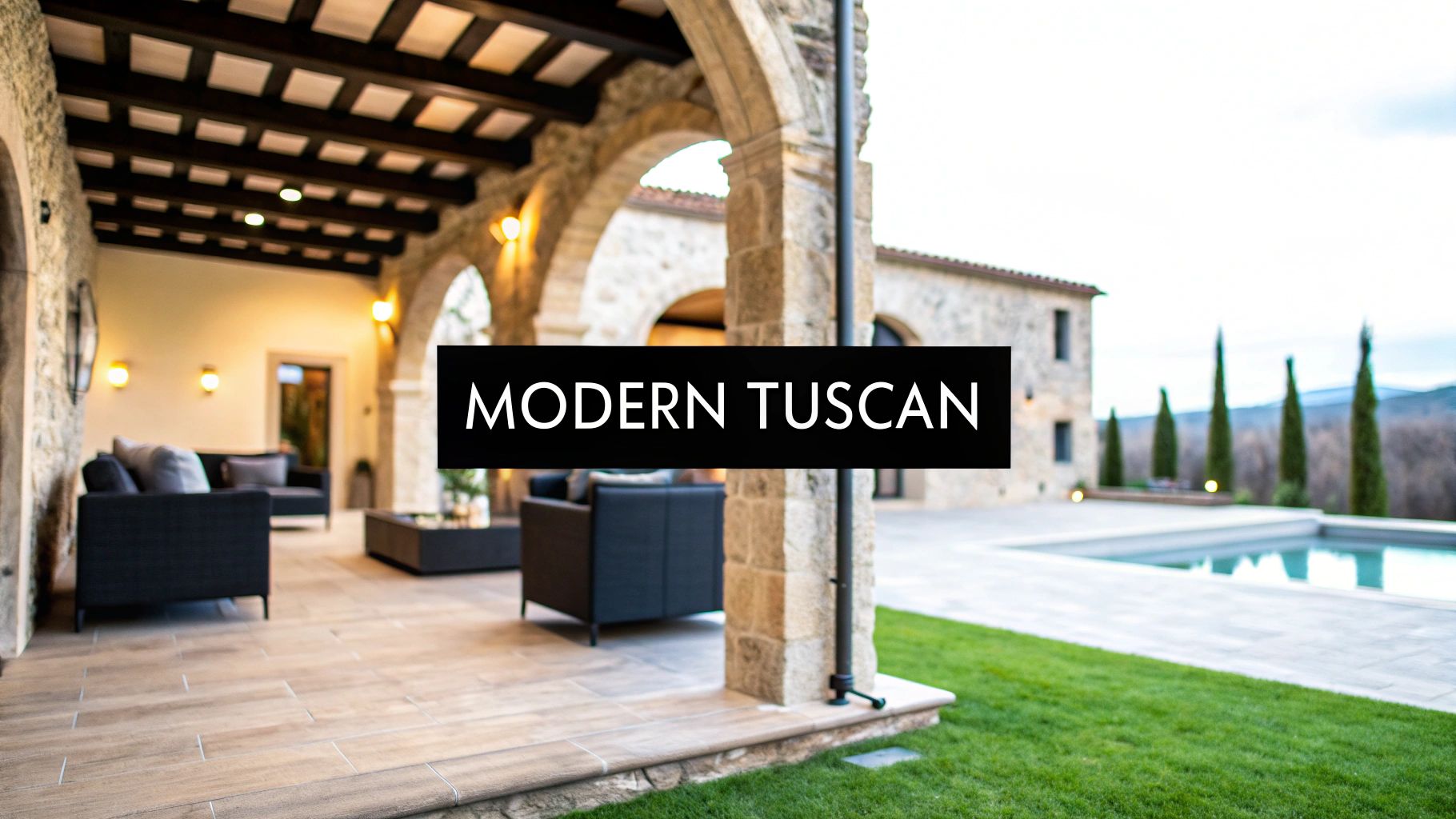
Modern Tuscan interior design is a beautiful evolution, taking the rustic, sun-baked warmth of Italian country villas and refining it with the clean lines and understated elegance of contemporary living. It’s a sophisticated style that trades heavy, dark elements for light-filled spaces, natural textures, and a more curated, minimalist sensibility.
The Soul of Modern Tuscan Interior Design
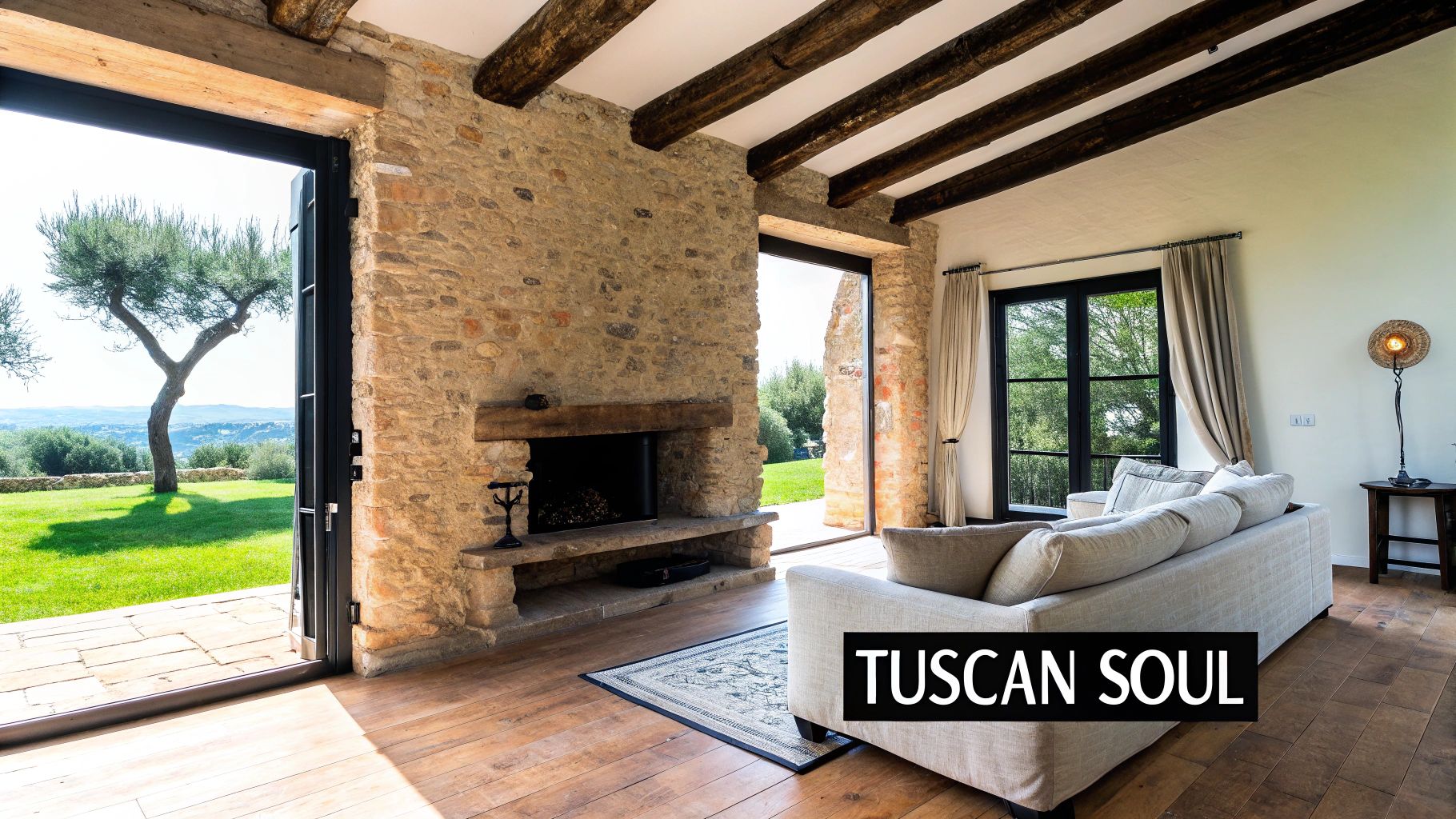
This isn’t just another passing trend. Modern Tuscan design is a thoughtful reimagining of a timeless aesthetic, a conversation between old-world charm and modern sophistication. It expertly marries the earthy, sun-drenched soul of a classic Tuscan farmhouse with the crisp, functional principles of contemporary design.
Picture a space that feels both deeply inviting and refreshingly airy. It’s an environment where the rugged texture of an ancient stone wall creates the perfect backdrop for a sleek, modern sofa in natural linen. That’s the core idea: creating a compelling dialogue between past and present.
A Balance of Heritage and Innovation
The true artistry of modern Tuscan design is its ability to honor heritage while fully embracing innovation. It’s a deliberate departure from the ornate, heavy-handed interpretations popular in the 1990s and early 2000s, which often felt dark and almost theatrical. Today’s approach is all about authenticity and restraint.
This modern interpretation is about capturing the feeling of Tuscany—the warmth, the connection to nature, the effortless elegance—without creating a caricature. It’s a curated experience, not a historical reenactment.
This updated style is defined by a clear shift in several key areas, all working together to create spaces that feel both luxurious and truly livable. The foundational principles include:
- A Lighter, Brighter Palette: The once-dominant dark browns and deep golds have been replaced by soft creams, warm whites, and muted earth tones that amplify natural light.
- Clean Lines and Simplified Forms: Heavy, oversized furniture with intricate carvings gives way to pieces with much simpler silhouettes and a more streamlined profile.
- Emphasis on Natural Materials: The style still celebrates organic elements like stone, wood, and metal, but they’re now presented in a more refined, less overtly rustic way.
- Open and Uncluttered Spaces: The goal is an atmosphere of breezy elegance. This means prioritizing open floor plans and minimizing unnecessary decor to let the home’s architecture and high-quality materials take center stage.
In this guide, we’ll explore how these principles blend to form a cohesive, high-end look. We’ll get into the specific materials, color palettes, and room-by-room applications that define modern Tuscan interiors, giving you a clear roadmap for bringing this coveted style into your own luxury home. Think of it as a journey toward creating a sanctuary that is both timeless and perfectly attuned to contemporary life.
The Journey From Rustic Charm to Contemporary Elegance
To really get a feel for the sophisticated grace of modern Tuscan interior design, it helps to know where it came from. This style wasn’t born overnight; it’s a direct and very intentional evolution away from the heavier, more ornate look that once defined so many luxury homes. Its soul, of course, is rooted in the sun-drenched landscapes of Tuscany—drawing from the region’s rustic farmhouses, rolling hills, and ancient stone villas.
The original Tuscan style was all about celebrating the land with a simple, honest palette. Picture the deep, earthy reds of terracotta floors, the solid feel of rough-hewn wooden beams overhead, and the cool, imperfect texture of natural stone walls. These elements created spaces that felt grounded, timeless, and deeply connected to their agricultural past. It was a style built from the earth, reflecting a life of substance.
The Shift From Ornate to Understated
But then came the popular interpretation of the 1990s and early 2000s, which took these rustic roots and dialed them up to eleven, often with theatrical results. This era was defined by a much darker, heavier hand.
- Dark and Heavy Woods: Furniture became massive, almost monumental, crafted from dark-stained woods loaded with intricate carvings.
- Wrought Iron Overload: Decorative wrought iron was absolutely everywhere—from elaborate scrolling chandeliers and staircase railings to chunky wine racks and wall decor.
- Deep, Saturated Colors: Walls were often slathered in dark faux finishes, deep golds, and heavy burgundies. The effect was often cave-like, absorbing light instead of reflecting it.
This popular version, while it had its moment, often missed the breezy, sunlit soul of a true Italian villa. As our design sensibilities started leaning towards brighter, more open-concept spaces, this heavy look began to feel dated and claustrophobic.
The evolution into modern Tuscan design wasn’t about rejecting its past, but rather rediscovering its core. Designers began to peel back the layers of excess to get to the style’s authentic heart—its warmth, its texture, and its love affair with natural light.
Embracing Light and Simplicity
The contemporary take on Tuscan style is a conscious turn towards clarity and refinement. The foundational materials are still there, but how they’re used has been completely rethought to create spaces that feel both luxurious and effortlessly livable. It’s all about balance now, making sure those rustic elements complement the clean lines of modern architecture instead of overwhelming them.
The single biggest change? A move away from the darkness. Heavy, light-blocking draperies were swapped for simple linen panels or windows were left bare to flood rooms with sunlight. Walled-off rooms were opened up to create a sense of flow and airiness, allowing the entire home to breathe.
If you want to dive deeper into this shift, our overview of classic and modern interpretations offers more great insights into bringing authentic Tuscan style home interiors to life.
Redefining the Core Elements
This movement also put a fresh spin on the style’s signature elements, drawing a clear line between the old and the new.
| Design Element | Traditional Tuscan Interpretation | Modern Tuscan Interpretation |
|---|---|---|
| Wood Finishes | Dark, heavy stains with a glossy finish. | Light, natural woods like oak or reclaimed timber with matte or clear coats. |
| Metalwork | Ornate, scrolling wrought iron in black. | Sleek, minimalist metals like matte black steel or subtle bronze. |
| Wall Textures | Dark, heavy Venetian plaster or faux glazing. | Light, subtle limewash or smooth plaster in warm whites and soft beiges. |
At the end of the day, modern Tuscan design is a story of refinement. It has elegantly shed its heavier, more dated layers to reveal a sophisticated, light-filled identity. It pays homage to its rustic history while fully embracing the clean, uncluttered principles of modern luxury, creating a timeless look that feels both authentic and perfectly in step with the high-end homes of today.
Core Elements of Modern Tuscan Design
To create a Modern Tuscan interior that feels genuine, you have to start with the foundational ingredients. This isn’t a style defined by superficial decor; it’s a deeply textural, material-driven experience that strikes a perfect balance between rustic soul and contemporary elegance. The secret to a space that feels both authentic and perfectly suited for a luxury lifestyle is getting the core elements right—the stone, the wood, the plaster, and the metals.
Think of these materials as the essential flavors in a classic Italian recipe. Each one brings its own distinct character, and the real magic happens in how you combine them. The goal is to layer these materials to build a sense of history and warmth without sacrificing the clean, open feeling of a modern home.
The Foundation of Earth and Stone
Natural stone is the very bedrock of Tuscan design, a direct connection to the sun-drenched Italian landscape. While traditional homes often featured heavy, rough-hewn stone, the modern interpretation is far more polished and intentional. Travertine remains a quintessential choice, prized for its warm, creamy tones and subtle, porous texture. In today’s high-end homes, it’s often honed or filled to achieve a smoother, more sophisticated finish on floors, countertops, or as a commanding feature wall.
Limestone and marble are also fantastic options, especially in lighter shades like soft beige or muted grey. Instead of blanketing a room in stone, the modern approach is strategic. A single, monolithic stone fireplace or a waterfall island in the kitchen makes a powerful statement while allowing the other elements in the room to breathe.
The infographic below shows just how the style’s core principles have evolved from their rustic farmhouse origins to the refined look we see today.
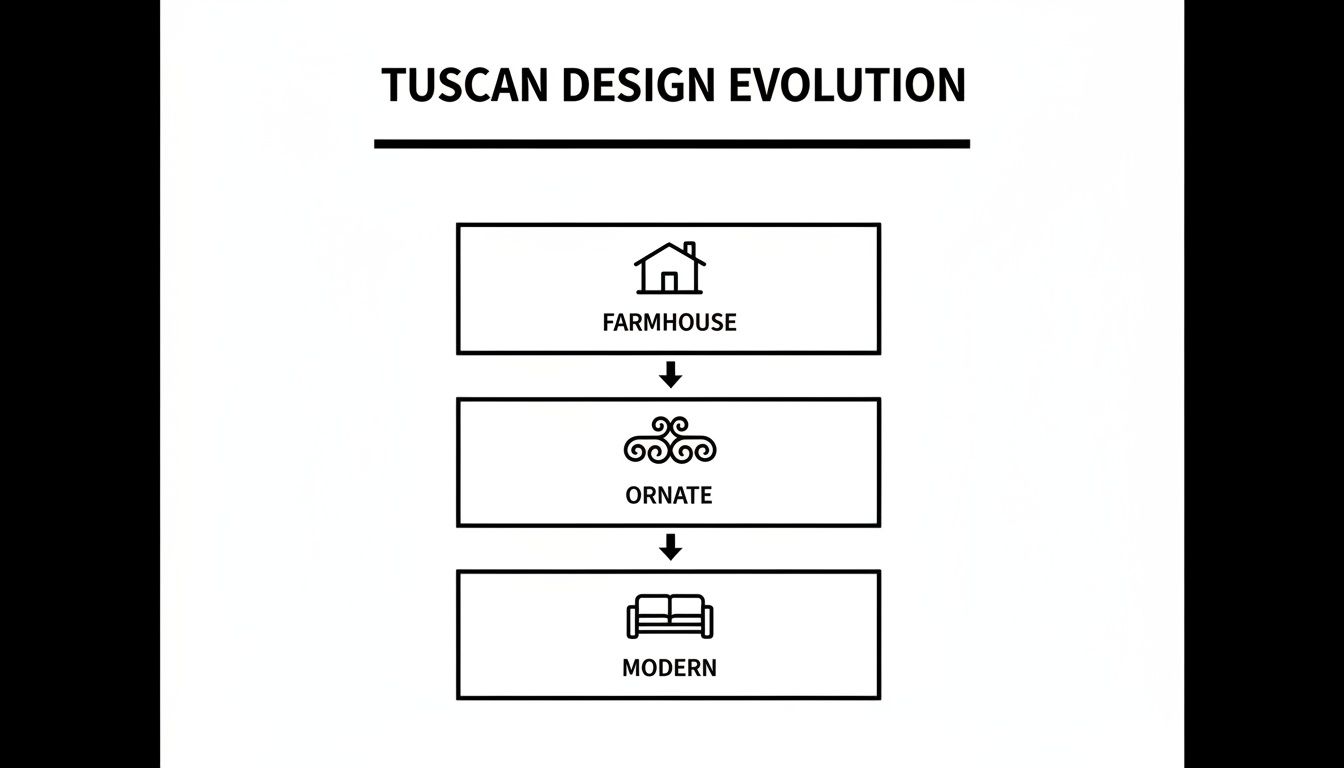
This visual journey highlights a clear progression toward simplification and elegance, a shift that is directly reflected in how these foundational materials are now used.
The Warmth of Reclaimed and Natural Wood
Wood brings an essential warmth and organic quality to the design, preventing stone-clad spaces from ever feeling cold or austere. The key to nailing the modern Tuscan look is stepping away from the dark, glossy woods of the past. Instead, the focus is on woods with visible character and a much lighter, more natural presence.
- Reclaimed Wood Beams: A true hallmark of the style, these add incredible architectural interest and an immediate sense of history to ceilings. Modern applications favor beams with a natural, weathered patina over a dark, heavy stain.
- Light Oak and Walnut: For flooring, cabinetry, and furniture, lighter woods like European oak or warm walnut are perfect. A matte or satin finish is preferred to preserve the wood’s natural grain and texture.
- Subtle Integration: Wood is used to soften and complement. Imagine wide-plank wood floors providing a warm foundation for a room with Venetian plaster walls, or light-stained wood cabinetry creating a gentle contrast against a stone backsplash.
Textural Walls with Venetian Plaster and Limewash
The walls in a modern Tuscan home are never flat or boring. They have a soft, tactile depth that adds immense character and plays beautifully with natural light. This is achieved through artisanal finishes that have been used for centuries but are now applied with a much lighter, more refined touch.
Venetian plaster and limewash are the go-to choices. Unlike the heavy, dark faux finishes popular in previous decades, today’s applications are subtle and sophisticated. They create a soft, matte, and slightly varied surface that adds visual interest without ever being distracting. The color palette for these walls is crucial; warm whites, soft creams, and muted greiges create an airy, luminous backdrop. A well-executed wall finish can completely alter a room’s emotional tone, a concept that’s vital when you’re mastering interior design color psychology.
This approach to wall texture is all about creating a subtle, luminous depth. The goal is a surface that catches the light in different ways throughout the day, making the space feel alive and dynamic.
Traditional Versus Modern Tuscan Elements
The shift from traditional to modern Tuscan is best understood by looking at how these core materials are actually used. The ingredients haven’t changed, but their application has been completely reimagined for a contemporary eye.
This table breaks down the evolution of key design elements, showing the clear shift from rustic origins to modern refinement.
| Design Element | Traditional Tuscan Application | Modern Tuscan Application |
|---|---|---|
| Natural Stone | Rough, rustic stone on multiple walls; dark terracotta floors. | Honed travertine or light limestone used for feature walls or floors; clean lines. |
| Wood Finishes | Dark-stained, heavy wood beams and ornate, carved furniture. | Reclaimed wood beams with natural finish; light oak or walnut with matte finishes. |
| Wall Textures | Heavy, dark Venetian plaster or colored faux finishes. | Subtle, light-toned limewash or smooth plaster for a soft, textural effect. |
| Metals | Ornate, scrolling wrought iron for lighting and railings. | Minimalist matte black steel or oil-rubbed bronze for window frames and fixtures. |
As you can see, the central theme of modern Tuscan interior design is a confident move toward simplification, brightness, and curated elegance. It’s about honoring the rustic materials of the past while presenting them with clean lines and an uncluttered, sophisticated sensibility.
Crafting Your Modern Tuscan Sanctuary Room by Room
Bringing the modern Tuscan aesthetic into a home is about more than just picking the right materials; it’s about telling a cohesive story from one room to the next. The real art is in curating each space to embody the style’s signature warmth, texture, and refined simplicity. Let’s explore how this design philosophy unfolds in the key areas of a luxury home.
Every room presents a fresh canvas for layering textures and creating moments of quiet, understated elegance. By keeping functionality and a deep connection to the natural world at the forefront, you can craft a home where every corner feels both intentional and intimately personal.
The Kitchen: The Heart of the Tuscan Home
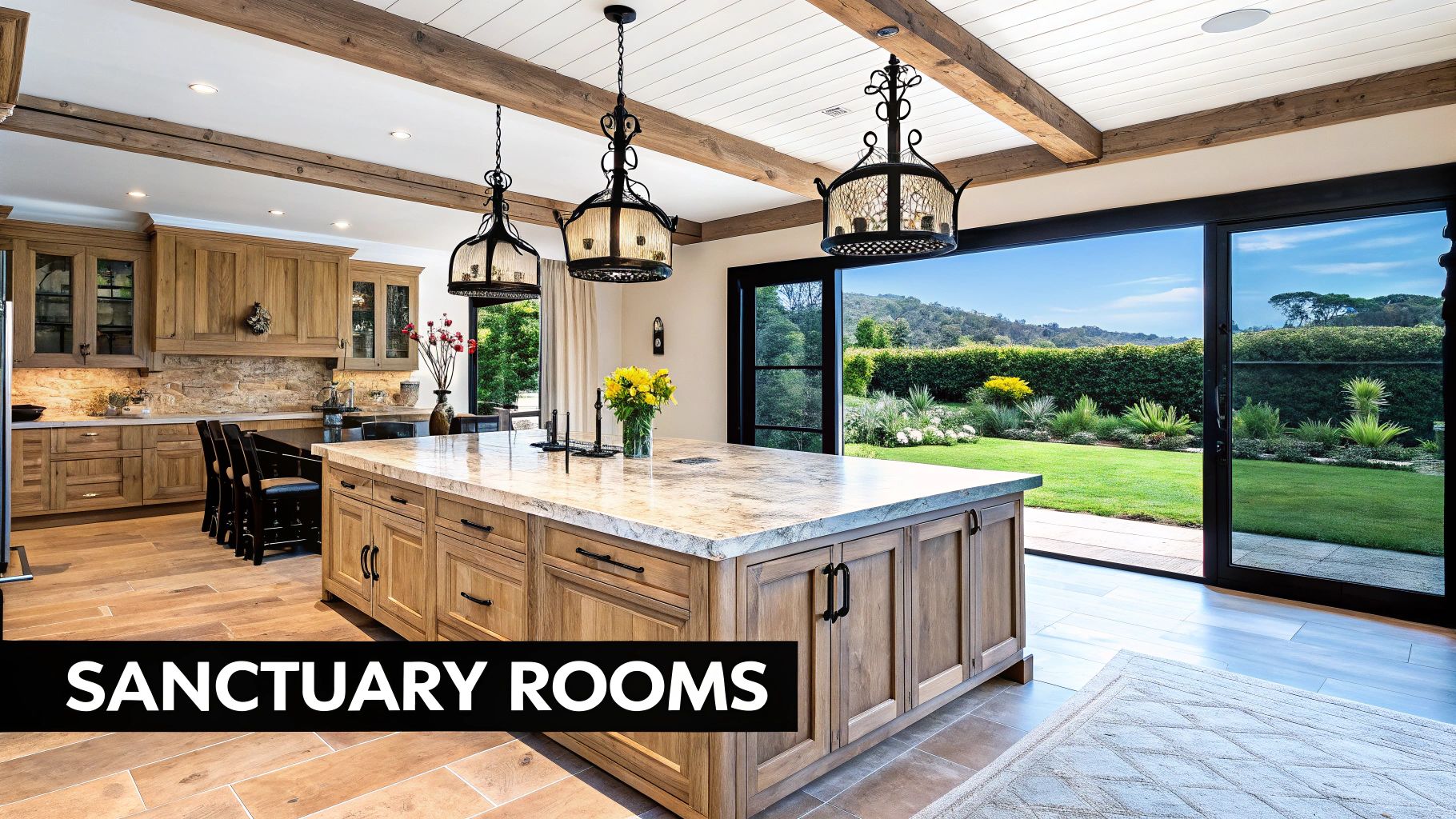
In any Italian home, life revolves around the kitchen. A modern Tuscan kitchen respects this heritage, creating a space designed for gathering, cooking, and savoring life, all while showcasing exceptional materials. Gone are the dark, heavy cabinets of old-world Tuscan style; today’s interpretation is all about light, air, and seamless entertaining.
The undisputed star of the room is often a grand, functional island, typically topped with a thick slab of honed travertine or a soft, light-veined marble. It’s a powerful statement piece that works just as hard for meal prep as it does for hosting an impromptu wine tasting.
Cabinetry skews toward natural woods like light oak or warm walnut, defined by clean, simple profiles and little to no hardware. The organic grain of the wood provides a beautiful counterpoint to the cool, smooth stone countertops and perhaps a subtle plaster backsplash. We often incorporate open shelving from reclaimed wood to display artisanal ceramics or glassware, adding a personal touch of curated character.
The Living Room: An Airy and Inviting Gathering Space
The modern Tuscan living room is an exercise in restraint, designed to feel open and uncluttered while radiating a deep sense of comfort. The challenge is to create a space that feels both expansive and intimate, a place that encourages you to unwind and connect. We typically achieve this by grounding the room with comfortable, contemporary furniture and a strong architectural anchor.
A statement fireplace, perhaps clad in a single piece of limestone or finished with the silky touch of Venetian plaster, often serves as the focal point. Its clean, minimalist form is a world away from the ornate mantels found in traditional Tuscan homes.
Furniture choice is everything here. Think low-profile sofas and armchairs wrapped in natural textiles—linen, wool, or performance boucle in a palette of soft neutrals. These pieces deliver modern comfort, while their inherent textures add layers of warmth. A large, hand-knotted wool rug can define the seating area, and simple matte black curtain rods with sheer linen panels let natural light pour in, keeping the whole space bright and welcoming.
The essence of the modern Tuscan living area lies in its balance. It masterfully pairs the ruggedness of a stone feature wall or exposed wood beams with the softness of contemporary furnishings, creating a space that is both grounding and uplifting.
This thoughtful balance ensures the room feels genuinely livable and luxurious—a sophisticated backdrop for modern life, not a static museum display.
The Master Bedroom: A Serene and Textural Retreat
A bedroom should be your personal sanctuary, a place to truly rest and recharge. The modern Tuscan approach champions this by focusing on soft textures, a muted color palette, and, whenever possible, a seamless link to the outdoors. The goal is a calm, restorative environment from the moment you step through the door.
Walls finished in a light limewash or a soft plaster create a gorgeous, textural backdrop that plays beautifully with the light as it shifts throughout the day. The bed itself becomes a gentle focal point, perhaps with a simple upholstered or light wood headboard, layered with high-quality natural bedding in shades of cream, oatmeal, and soft olive green.
To truly cultivate that feeling of a private retreat, we pay attention to these details:
- Flooring: Wide-plank light oak floors lend an immediate sense of warmth and nature. We’ll often place a soft, low-pile wool rug under the bed for comfort underfoot.
- Lighting: Layering is key. Instead of one harsh overhead light, we use sculptural wall sconces or minimalist pendant lights on either side of the bed for a soft, ambient glow.
- Connection to Nature: If the architecture allows for it, large glass doors opening onto a private balcony or garden are the ultimate luxury. This simple move blurs the line between inside and out, flooding the room with natural light and fresh air.
The Bathroom: A Spa-Like Haven of Natural Stone
Finally, we reimagine the modern Tuscan bathroom as a private, spa-like haven. This is where natural stone can truly shine, used immersively to create a space that feels both elemental and incredibly refined.
Walk-in, zero-entry showers are a signature of this style, often clad from floor to ceiling in large-format travertine or limestone tiles. This creates a seamless, monolithic look that’s as breathtaking as it is easy to clean. A freestanding soaking tub with clean, elegant lines can add a beautiful sculptural element to the room.
Fixtures are kept modern and minimal, often in a matte black or oil-rubbed bronze finish to offer a subtle, grounding contrast against the light stone. A floating wood vanity adds organic warmth and prevents the space from feeling cold, while integrated lighting underneath can cast a soft, ambient glow. The result is a bathroom that feels like a personal escape, perfectly marrying rustic materials with clean, contemporary design.
Bringing Authenticity Home with a Designer’s Touch
The real heart of modern tuscan interior design lies in its authenticity. You can have all the right elements—the stone, the wood, the plaster—but the magic truly happens when you curate pieces that feel genuine and intentional, not like they came straight off a showroom floor. This is where a discerning eye becomes your most important asset in crafting a space that feels both luxurious and lived-in.
To get that authentic feel, you have to look beyond the usual retail channels. It’s about seeking out artisans and craftspeople who truly get the subtle spirit of the style. The mission is to find pieces that tell a story, adding a layer of irreplaceable character to your home.
Sourcing Unique and Artisanal Pieces
Finding genuine materials and furnishings is a hunt, but a rewarding one. Think about the difference between a generic terracotta pot from a big-box store and a hand-thrown vessel from a local artist. One is just an object; the other is a piece of art that instantly elevates the entire room.
The most captivating modern Tuscan interiors look as though they’ve been collected over time, not decorated in a weekend. Every single piece, from the hand-painted tiles to the custom-forged hardware, adds to a larger story of quality and quiet elegance.
To build a space that feels truly authentic, focus your search on more specialized sources:
- Artisanal Tiles: Forget mass-produced perfection. Look for studios that specialize in hand-painted or Zellige tiles. Their beautiful imperfections and subtle color variations add a depth that machine-made tiles just can’t touch.
- Custom Furniture: Imagine commissioning a dining table or console from a local woodworker who uses reclaimed timber. You’re not just buying furniture; you’re getting a one-of-a-kind centerpiece that is perfectly scaled to your space and tailored to your vision.
- Handcrafted Ceramics: Seek out local potters and ceramicists for unique vases, bowls, and serving pieces. These smaller touches bring a human element and a wonderful pop of organic texture to shelves and tabletops.
The Value of a Professional Eye
Navigating the world of custom and artisanal sourcing can be overwhelming. This is exactly why bringing in a skilled interior designer is often the surest way to achieve a flawless modern Tuscan home. Top-tier designers, like those you’ll find on the Haute Design network, don’t just have a trained eye—they have a little black book filled with trusted suppliers.
Their experience is priceless. They know which quarries have the most stunning travertine, which artisans craft the most exquisite light fixtures, and how to commission furniture that strikes the perfect balance between beauty and usability. A great designer acts as your personal curator, ensuring every single element works together in harmony. Ultimately, they save you countless hours and help you avoid expensive missteps, making their expertise an investment that truly pays off in the final result.
Integrating Technology Seamlessly
Let’s be honest: a truly modern home has to be a smart one. A common worry is how to fold in smart home technology without it clashing with the rustic, luxurious vibe. The secret is to make it felt, not seen.
Designers are masters of this kind of integration. Think speakers hidden behind plaster walls, smart lighting controls disguised as minimalist keypads, or motorized shades that disappear completely into the window frames. The result is a home that offers all the latest conveniences while preserving that timeless, organic feeling that defines modern Tuscan interior design. It’s the perfect proof that authenticity and innovation can, and should, coexist beautifully.
Bringing Your Vision to Life with Top Designers
This is where the magic really happens—when the ideas and principles of Modern Tuscan design move off the page and into a real, breathing home. Seeing how the best designers interpret this style in actual luxury projects is more than just inspiring; it’s a masterclass in turning a concept into an unforgettable space.
These projects are all about striking that perfect, sophisticated balance between earthy, rustic warmth and clean, contemporary polish. Each one tells a story of thoughtful material choices, intelligent layouts, and an obsession with curated details, showing how a designer’s expert hand elevates a home from merely beautiful to truly exceptional.
Curated Case Studies in Modern Tuscan Living
Looking at completed homes lets you see the design philosophy in action. It’s one thing to talk about the soft, chalky texture of a limewash wall or the grounding presence of a travertine fireplace. It’s something else entirely to see them woven together into a space that feels both cohesive and alive.
Think of a kitchen where massive, reclaimed oak beams overhead provide a stunning contrast to the sleek, handleless cabinetry and a monolithic marble island below. Or picture a living room where a minimalist Italian sofa, upholstered in soft linen, sits against the rugged, centuries-old stone of a feature wall. These aren’t just pretty pictures; they’re lessons in contrast and harmony.
What you’ll notice in these real-world applications is that they go far beyond aesthetics. They reveal a deep understanding of how a modern family actually lives. These spaces are designed for flow, for function, and for feeling, proving this timeless style is perfectly in tune with a contemporary lifestyle.
The Power of Professional Partnership
To reach this level of refinement, you need more than just a good eye. A professional interior designer brings a creative vision, of course, but just as importantly, they bring an invaluable network of artisans, unique suppliers, and skilled craftspeople. They know exactly where to find that perfect hand-thrown pottery or who to call to commission a custom-forged iron light fixture.
This kind of expertise is what ensures every single element feels authentic and works seamlessly with everything else. A designer’s guidance is the key to navigating the complexities of a high-end project and achieving a result that feels deeply personal and impeccably polished. If you’re just starting out, learning how to find an interior designer who truly gets your vision is the most important first step you can take.
The stunning projects that follow are a testament to the level of talent out there. Let them spark your imagination and show you just how boundless the possibilities are for your own home.
Your Questions About Modern Tuscan Design Answered
It’s natural to have questions when you’re exploring a style as nuanced as modern Tuscan. We’ve gathered some of the most common ones we hear from clients to give you the clarity and confidence you need to bring this look into your own high-end home.
How Can I Add Modern Tuscan Style Without a Full Renovation?
You don’t need to tear down walls to invite the Tuscan spirit in. Start with high-impact textural changes. Think about swapping out synthetic fabrics for breezy linen curtains, laying down a hand-knotted wool rug, or bringing in a single piece of raw wood furniture, like a beautiful console table.
Another simple but powerful move is to introduce authentic, rustic accessories. A couple of oversized terracotta pots planted with olive trees or a carefully chosen display of artisanal ceramics on an open shelf can instantly shift the feeling of a room.
Also, look at your hardware. Switching out chrome or polished nickel fixtures for matte black or a warm, oil-rubbed bronze is a classic designer trick. This small update on cabinet pulls, light fixtures, and faucets can ground the space in that earthy, modern Tuscan aesthetic without the commitment of a major renovation.
What Is the Main Difference Between Traditional and Modern Tuscan?
The simplest answer is editing. Think of it as a process of refinement. Traditional Tuscan interiors can feel quite heavy, often characterized by dark, chunky wood furniture, ornate wrought iron, and deep, light-absorbing colors. It’s beautiful, but it carries a very distinct historical weight.
Modern Tuscan design takes that rich foundation and lightens it up.
The modern approach is all about capturing the essence of Tuscan warmth and soul, but in a way that feels uncluttered, airy, and more suited to contemporary life. It favors a brighter palette, cleaner furniture lines, and an overall sense of open, breathable space.
Can Modern Tuscan Style Work in a City Apartment?
Absolutely. In fact, its adaptability is one of its greatest strengths. The key to making it work in an urban setting is to focus on its core principles: a warm, earthy color palette, a thoughtful mix of natural materials, and an emphasis on texture.
For apartment walls, a limewash or plaster-effect paint can add incredible depth and that soft, chalky finish without taking up any physical space. Stick to lighter-toned wood furniture to keep the atmosphere airy, and bring in stone through smaller accents, like a marble coffee table or travertine decorative objects. When you prioritize natural light and invest in a few high-quality, beautifully crafted pieces, you can create that perfect rustic-meets-refined balance, even in the heart of the city.
Ready to bring your vision to life with an expert touch? The designers at Haute Design specialize in creating breathtaking, authentic interiors. Connect with a top-tier designer today and begin your journey toward a truly exceptional home.