


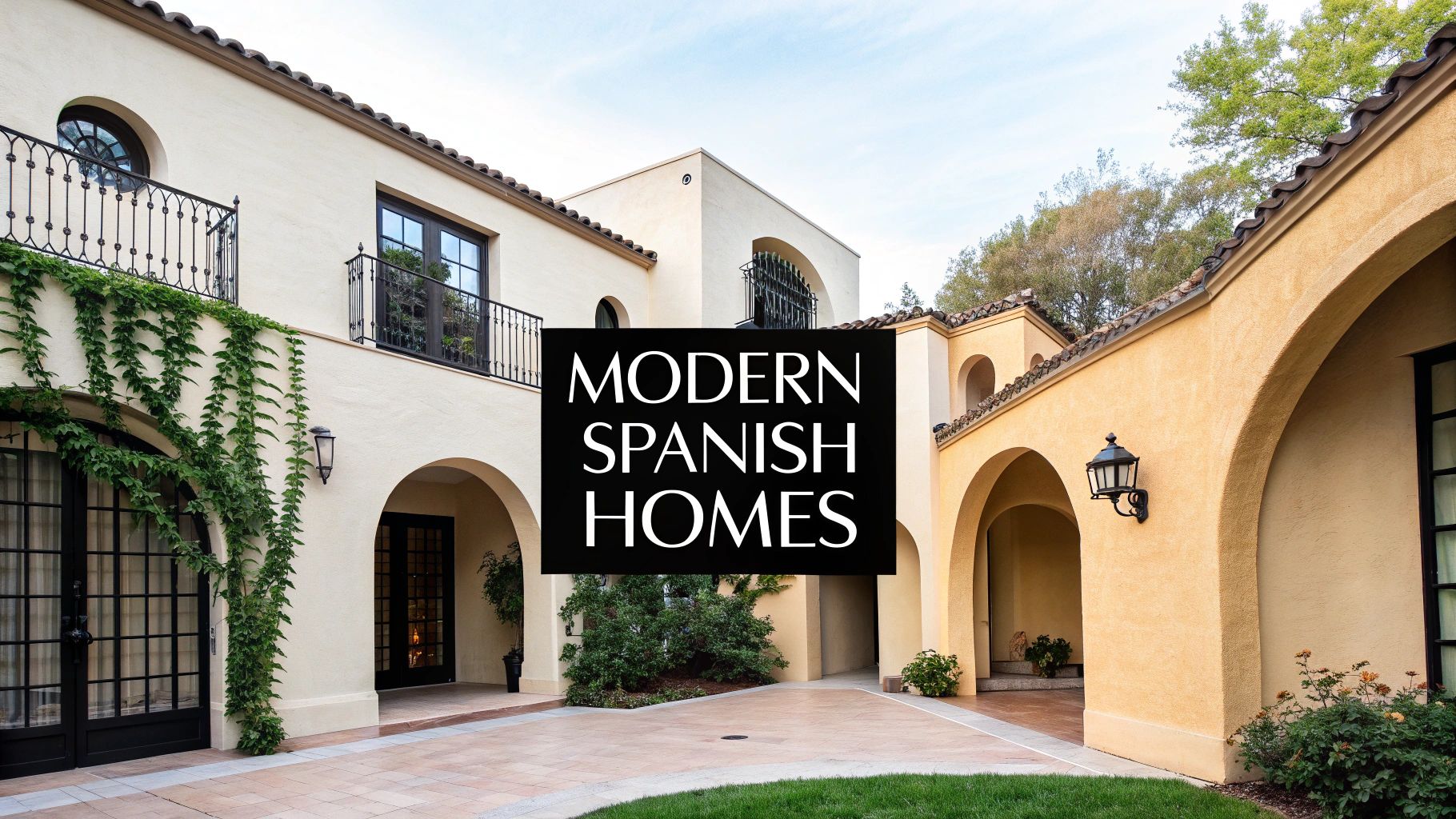
Modern Spanish-style houses are a beautiful study in contrasts, blending the timeless warmth of Mediterranean design with the clean, crisp lines of contemporary architecture. This isn’t just about slapping a terracotta roof on a modern box. It’s a thoughtful approach that honors its rustic heritage—think stucco walls and classic tile—while fully embracing modern must-haves like wide-open interiors and a seamless connection to the outdoors.
The result is a home that feels both deeply rooted in history and perfectly in sync with a sophisticated, modern lifestyle.
The Allure of Modern Spanish Architecture
The magnetic pull of modern Spanish architecture comes from its ability to tell two stories at once. This isn’t a simple copy-paste of an old-world hacienda; it’s a complete re-imagining. Picture the soul of a centuries-old Spanish villa brought to life with the sleek function and minimalist grace you’d expect in a brand-new custom home. It’s this marriage of styles that creates a space that’s inviting, serene, and undeniably elegant.
This architectural revival is about more than just looks. It’s a design philosophy that puts a premium on connecting with nature, flooding interiors with natural light, and creating spaces that are just as suited for quiet reflection as they are for hosting a crowd. The aim is to craft a home that feels like a private sanctuary—a retreat that offers every modern comfort without losing its soul.
Bridging Heritage and Modernity
At its heart, this style is all about striking a very specific balance. It’s about holding onto the foundational elements that give Spanish architecture its character while thoughtfully stripping away the fuss and ornamentation in favor of clean lines and uncluttered spaces. It’s a curated process that ensures the final design feels both authentic and refreshingly new.
You’ll see this blend come to life in several key ways:
- Historical Roots: The design keeps iconic features like low-pitched tile roofs, graceful arched doorways, and hand-troweled plaster walls that give the home a sense of permanence and history.
- Contemporary Vision: These classic elements are paired with massive glass panels, flowing open floor plans, and a soft, neutral color palette to create an atmosphere that feels airy and filled with light.
- Material Honesty: There’s a beautiful interplay between organic materials like wood and stone and modern industrial finishes, such as slim-profile steel windows or polished concrete floors.
This concept map helps visualize how these historical and modern threads are woven together to create the signature style.
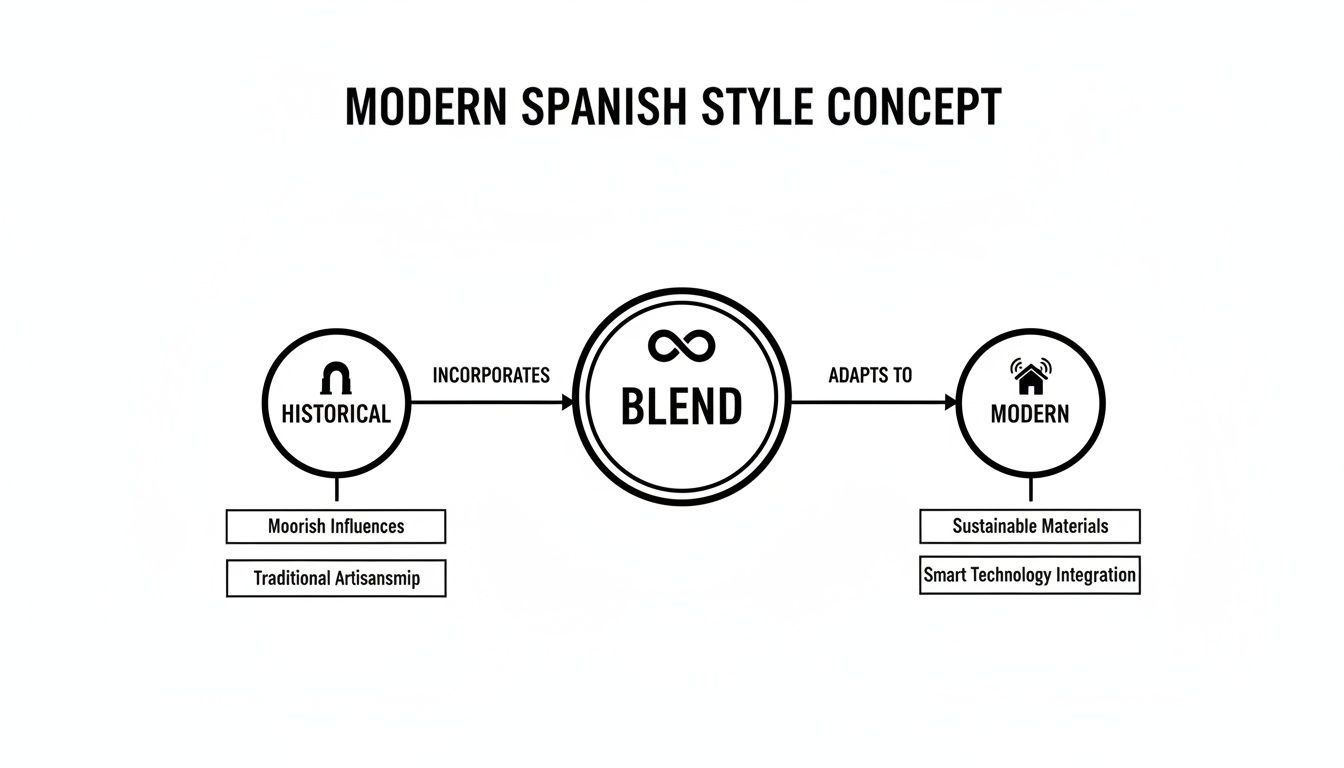
As you can see, the real magic happens in the middle—where classic forms are given a new voice through modern materials and forward-thinking design.
This table breaks down how traditional Spanish elements are thoughtfully updated for today’s homes.
Key Characteristics of Modern Spanish Design
| Traditional Element | Modern Interpretation |
|---|---|
| Terracotta Roof Tiles | Sleek, flat, or low-pitched rooflines using clay tiles in modern profiles or monochromatic colors. |
| Arched Windows/Doorways | Simplified, clean-lined arches or dramatic, oversized steel-and-glass arched entryways. |
| Thick Stucco Walls | Smooth, hand-finished plaster or stucco in crisp white, warm off-white, or soft earth tones. |
| Ornate Wrought Iron | Minimalist iron or steel accents on railings, window grilles, and light fixtures with simple geometry. |
| Enclosed Courtyards | Open-concept floor plans that flow seamlessly into outdoor living rooms, pools, and loggias. |
| Small, Punched Windows | Expansive walls of glass, pocketing doors, and large picture windows to maximize light and views. |
| Heavy Wood Beams | Lighter-toned wood beams with clean, simple profiles or the use of reclaimed wood for character. |
This evolution shows a deep respect for the past while confidently looking toward the future of residential design.
Why This Style Resonates Today
The rising popularity of modern Spanish-style houses is no accident. It’s a direct answer to our collective desire for homes that have real character and warmth but don’t force us to compromise on modern luxury. In an age of mass-produced designs, this style offers something genuinely unique—a connection to artisanal craftsmanship and a story to tell.
This architectural approach is more than a trend; it’s a movement towards creating living spaces that are both beautiful and deeply personal, blending the romance of the past with the clarity of the present.
Ultimately, discerning homeowners and top-tier designers are drawn to the style for its sophisticated yet understated elegance. It provides the perfect canvas for luxury living, effortlessly integrating everything from smart home technology to curated art collections within a framework of timeless architectural beauty.
Signature Architectural and Exterior Elements
The soul of a modern Spanish home is most powerfully expressed on its exterior. It’s a story told through clean lines, honest materials, and a deep, almost reverential respect for light and shadow. Where older Spanish homes might have leaned into ornate details, today’s interpretation makes a powerful statement through minimalism. The result is a silhouette that’s both strikingly modern and peacefully serene.
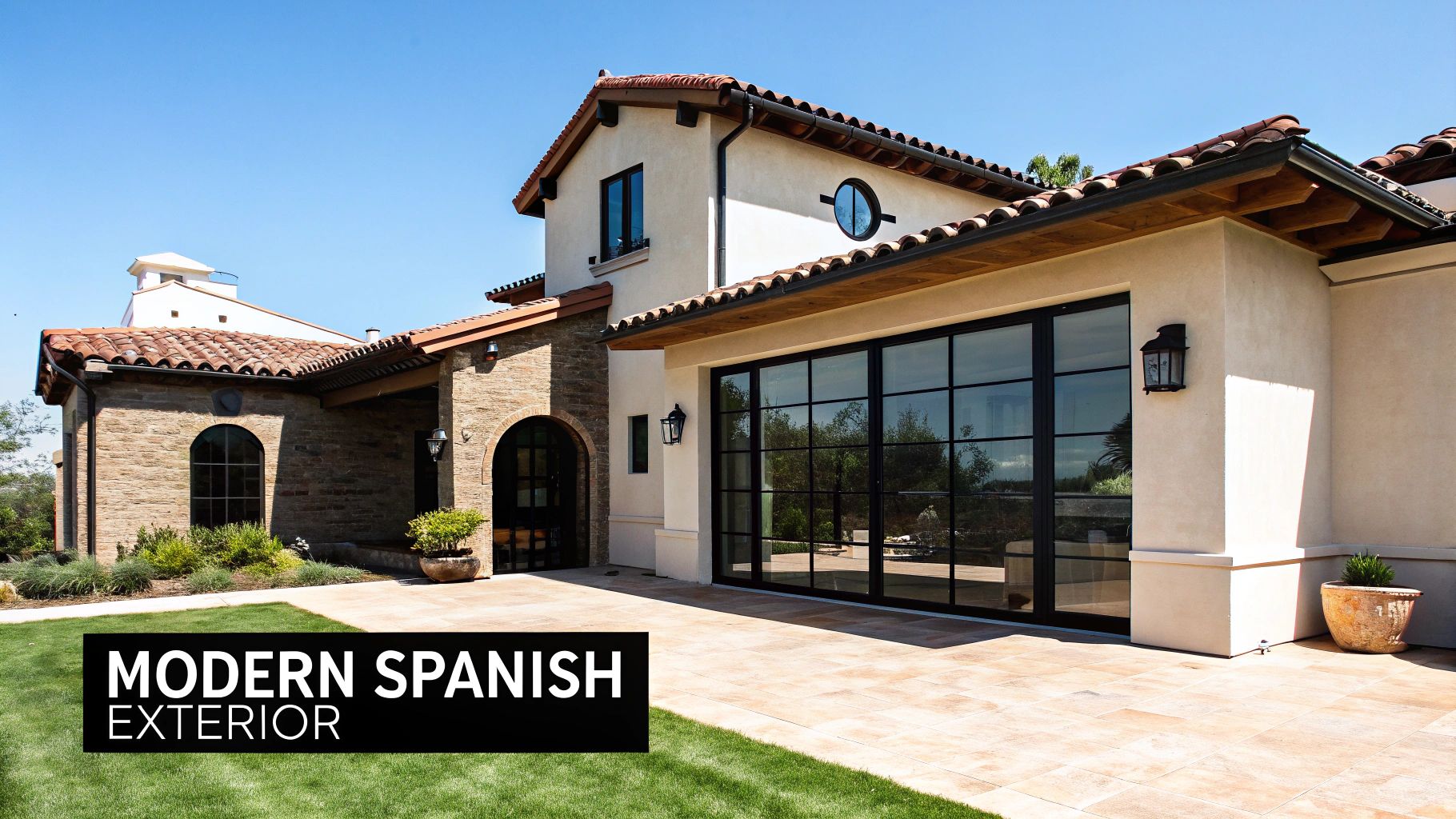
The canvas for this aesthetic is almost always the iconic white stucco wall. When finished with a smooth, hand-troweled texture, these crisp white surfaces brilliantly reflect sunlight, giving the home a bright, magnetic presence. This is more than just a style choice; it’s a brilliant, functional nod to Mediterranean heritage, helping to keep the interior cool in sun-drenched climates.
Reimagining Classic Forms
Think of traditional Spanish architecture, and you probably picture graceful arches and heavy, dark wood. In the modern context, these beloved elements are carefully edited and simplified, giving them even greater impact. An archway, for example, is stripped of its decorative trim, emerging as a clean, bold opening. Or it’s reimagined entirely as a dramatic steel-and-glass entryway that pulls natural light deep into the home.
Dark wood and wrought iron still have a place, but they’re used with deliberate restraint. You’ll find them in specific, high-impact spots:
- Garage Doors and Entryways: A solid, dark-stained wood door offers a warm, organic counterpoint to the cool white stucco.
- Window Frames and Railings: Heavy, ornate wrought iron has given way to slim-profile black or bronze steel, lending a sleek, graphic quality that feels entirely contemporary.
- Beams and Pergolas: Exposed rafter tails or streamlined pergolas in dark, contrasting tones add architectural definition without feeling heavy.
This curated approach creates a beautiful tension between old and new—a design conversation that honors history while speaking a modern language.
The Modern Red Tile Roof
The classic red tile roof is non-negotiable; it’s the signature of Spanish architecture. But today’s version is far more sophisticated. The chunky, S-shaped barrel tiles you see on historic homes are often swapped for sleeker, flatter profiles that create a much cleaner, more uniform roofline. In some of the most forward-thinking designs, architects even opt for monochromatic tiles in charcoal or black for a stark, contemporary edge.
These updated materials don’t just look good. They offer major upgrades in durability and energy efficiency, meeting the high standards of modern luxury construction. The roof is no longer just a cap on the house; it’s a critical design element that completes the home’s refined aesthetic.
A Seamless Indoor-Outdoor Connection
If there’s one defining feature of a modern Spanish home, it’s the profound, almost seamless connection to the outdoors. This is where the architecture truly comes alive, blurring the line between the built environment and the natural landscape.
The modern Spanish home is designed not as a fortress against the elements, but as a porous structure that invites nature in. It’s a philosophy where courtyards are rooms, and patios are extensions of the living space.
Achieving this effortless flow involves some clever architectural moves. Expansive glass walls and pocketing doors can slide away completely, transforming an entire wall of a living room into an open-air pavilion. Courtyards, once hidden away, are now often central, light-filled atriums visible from multiple rooms. And streamlined loggias—those gorgeous covered outdoor galleries—provide shaded, comfortable spots for dining and relaxing, effectively doubling the usable living space.
This focus on integrated living is a major reason for the style’s popularity in luxury markets. The Spanish luxury real estate sector has seen explosive growth, with Madrid now considered the world’s top destination for ultra-high-net-worth individuals. The demand for homes that blend smart technology with this indoor-outdoor lifestyle is fueling the trend. You can explore more about Spain’s luxury real estate boom and its global appeal.
This approach brings to mind the thoughtful layouts found in Santa Barbara style homes, which also put courtyards and garden connections at the heart of the design. It’s all about fostering a lifestyle of effortless elegance and constant engagement with the world outside your walls, turning the home into a holistic, tranquil sanctuary.
Crafting the Interior with Materials and Textures
While the exterior of a modern Spanish home sings a song of clean lines and sun-drenched simplicity, the interior tells a much richer story—one of warmth, texture, and a quiet, lived-in luxury. The entire goal is to create a tactile experience, a space that feels as good as it looks. This isn’t about fussy decoration; it’s achieved through a masterful blend of organic, honest materials that anchor the home in its rustic heritage.
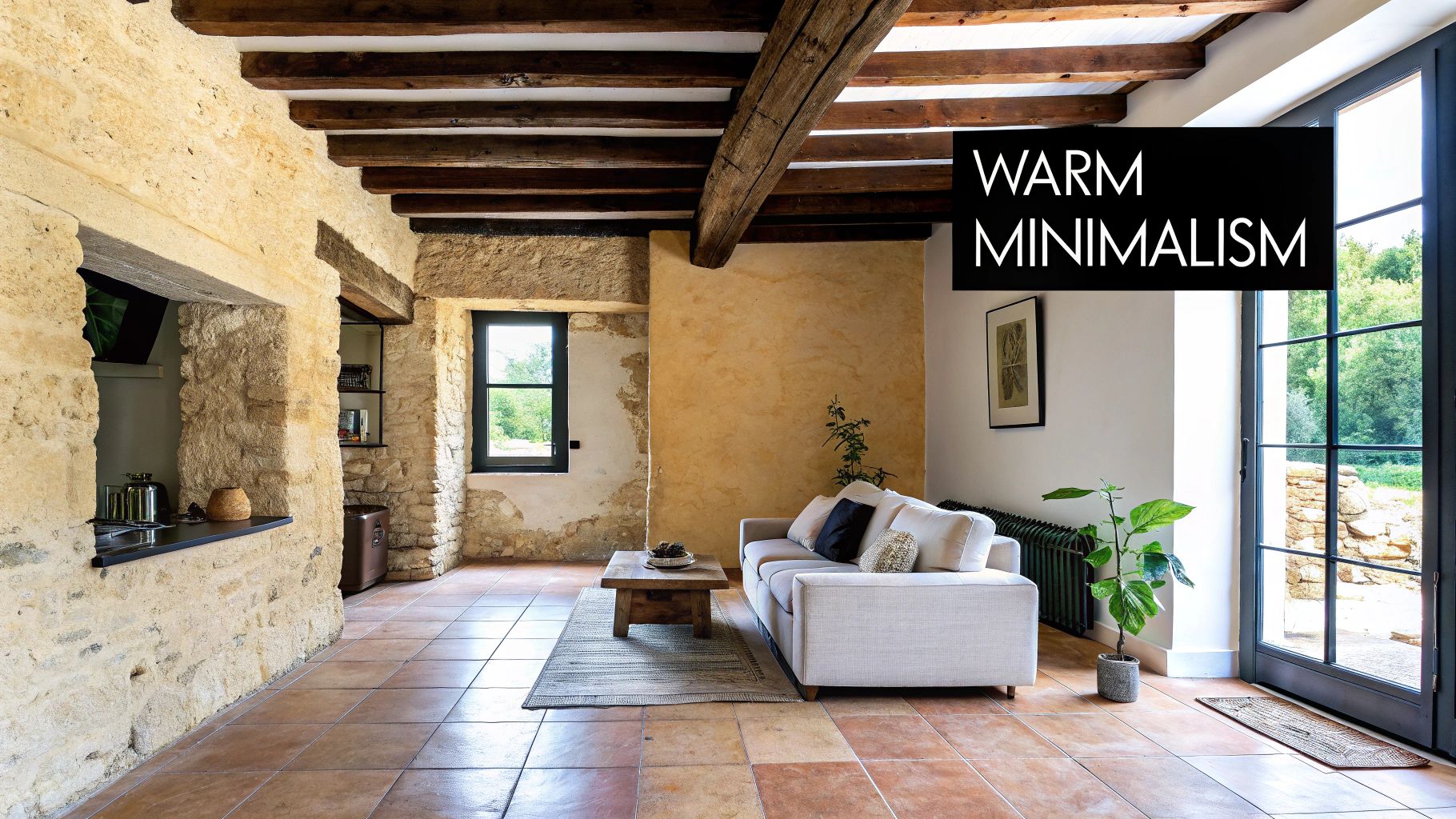
Often, the foundation of this aesthetic starts right under your feet. Natural stone floors, like travertine or limestone, lay down a cool, incredibly durable base that’s full of subtle tonal shifts and texture. These materials feel permanent, almost ancient, connecting the home to the earth while their lighter, neutral colors make the entire space feel bigger and brighter.
The Art of the Wall and Ceiling
Forget about perfectly flat, sterile drywall. In a modern Spanish home, the walls themselves are a key textural element. Hand-troweled plaster or Venetian plaster is a signature of the style, giving surfaces a soft, almost luminous quality. This artisanal finish creates subtle imperfections and a gentle sense of movement, catching the light in a way that gives even the most minimalist rooms a surprising amount of depth and character.
Look up, and you’ll often find exposed wooden beams introducing a powerful rustic counterpoint. But these aren’t the heavy, dark-stained timbers you might picture in a traditional hacienda. Today’s approach is much more refined:
- Lighter in Tone: Reclaimed oak or Douglas fir in natural or light-washed finishes keep the space from feeling heavy, contributing to that airy vibe.
- Simpler in Profile: Beams now feature clean, squared-off edges instead of ornate carvings, which feels much more in sync with the home’s modern sensibilities.
- Strategically Placed: They’re used to add architectural definition in just the right spots, like a great room or kitchen, drawing the eye upward and highlighting the volume of the space.
This combination of rough-hewn wood set against smooth, velvety plaster creates a dynamic interplay of textures that is absolutely central to the style’s appeal. It feels both ancient and completely contemporary at the same time.
The essence of the modern Spanish interior is creating a serene canvas. The neutral palette of whites, creams, and earthy tones isn’t meant to be boring; it’s designed to be the quiet, sophisticated backdrop for life, art, and light.
Building a Layered, Tactile Experience
With the architectural shell defined by stone, plaster, and wood, the next step is to layer in softer textures. This is where the home truly comes alive and gains its personality and warmth. The focus stays firmly on natural, high-quality materials that feel authentic and inviting.
- Textiles: Think of a Belgian linen sofa you can sink into, a chunky wool rug underfoot, or a soft leather accent chair. These materials add immediate comfort and a touch of organic softness.
- Wood Furniture: Substantial pieces crafted from solid wood—like a thick, monolithic dining table or a hand-carved sideboard—add a grounding sense of history and craftsmanship.
- Metal Accents: Just like on the exterior, wrought iron or bronze shows up, but in a more refined form. You’ll see it in minimalist light fixtures, simple cabinet hardware, or the delicate frame of a coffee table.
The secret is maintaining a sense of balance. For every rough, rustic element, there should be a smooth, refined one to play against it. This approach of blending contrasting textures creates a rich, layered environment that feels like it has been thoughtfully curated over time. While unique, this philosophy shares common ground with other Mediterranean aesthetics. For anyone interested in similar design principles, exploring how materials shape a space is also a core tenet of modern Tuscan interior design.
Ultimately, the material and textural palette of a modern Spanish home is a carefully orchestrated composition. It’s a design language that puts feeling and atmosphere first, crafting sophisticated interiors that are both visually stunning and deeply comforting—a true sanctuary for modern living.
Designing Living Spaces with Soul and Function
Walk into a well-designed modern Spanish home, and you feel it instantly: a sense of calm sophistication that’s both luxurious and incredibly comfortable. It’s not just about what’s in the room, but how the space itself makes you feel. The real art lies in crafting an atmosphere, turning everything from a grand, open-concept living area to a quiet master bedroom into a personal sanctuary.
At the heart of it all is smart spatial planning. The old, formal divisions of rooms are gone. Instead, we embrace the open-concept layout that has come to define modern living. The kitchen, dining area, and living room bleed into one another, creating a single, cohesive space that feels expansive and full of light—perfect for family gatherings and easy entertaining.
This shift isn’t happening in a vacuum; it reflects a broader trend. Modern Spanish residential design is evolving fast to meet new buyer demands. In fact, new home sales in Spain recently jumped by 23.2%, the highest figure since 2013. This surge shows a real hunger for contemporary homes that blend timeless aesthetics with modern needs like energy efficiency and sustainable materials. You can explore more about Spain’s dynamic property market and the innovations driving it.
Curating Furniture with Purpose and Contrast
Furnishing a modern Spanish interior is all about creating a beautiful tension between different elements. It’s a dialogue between substantial, rustic pieces and clean, modern forms. Imagine a massive dining table made from a single slab of reclaimed wood, but surround it with sleek, minimalist chairs. Or picture a deep, low-slung linen sofa paired with a rough-hewn, hand-carved side table.
This balance is what makes the style feel authentic and layered. The layout should always feel open and intentional, with every piece chosen for its shape, texture, and utility.
- Anchor Pieces: Begin with the big, grounding elements. A deep, comfortable sofa in a neutral tone or a monolithic coffee table carved from stone or wood will immediately set the room’s character.
- Textural Layers: Now, bring in the warmth. Add accent chairs in buttery leather, chunky knit blankets, and handwoven rugs to give the space depth and a welcoming, tactile quality.
- The Power of Negative Space: What you don’t put in a room is just as important as what you do. Leaving plenty of “negative space”—or open areas—is critical for maintaining the clean, airy vibe of modern spanish style houses. It gives the architecture and key furniture pieces room to breathe.
This approach ensures the space feels thoughtfully curated, not just decorated. Every item has a reason for being there, contributing to an overall sense of sophisticated calm.
The real magic in furnishing a modern Spanish home is in the conversation between the rustic and the refined. Each piece should feel like it has a story, whether it’s a hundred-year-old heirloom or a brand-new sculptural armchair.
Mastering Light and Atmosphere
In a modern Spanish interior, light is everything. It’s the silent partner that shapes the mood of every room. The objective is to build a layered lighting scheme that’s practical for everyday life but can also dial up the warmth and intimacy when the sun goes down. This means thinking far beyond a single light fixture in the center of the ceiling.
Forget the heavy, ornate chandeliers of the past. Here, they’re replaced with more artistic, sculptural alternatives. A striking pendant light in brass or blackened steel can become a dramatic focal point over a dining table, while discreet recessed lights provide clean, ambient light without adding any visual noise.
Think about lighting in three distinct layers:
- Ambient Lighting: This is your foundation—the general, overall light from recessed fixtures or a central pendant that sets the room’s base brightness.
- Task Lighting: This is focused, functional light for specific activities. Think of under-cabinet LEDs in the kitchen for chopping vegetables or an elegant floor lamp placed perfectly beside an armchair for reading.
- Accent Lighting: This is the room’s jewelry. It’s the soft glow from wall sconces washing over a textured plaster wall or a spotlight highlighting a favorite piece of art.
By weaving these three layers together, you create a versatile lighting plan that can shift with your needs—bright and energizing for a busy morning, soft and intimate for a quiet evening. It’s this meticulous attention to detail that elevates a house into a truly luxurious home.
Inspiring Examples of Modern Spanish Homes
You can talk about theory all day, but to really understand the soul of modern Spanish architecture, you have to see it in action. The real story is told in how architects and designers are taking its core principles and adapting them to totally different landscapes and lifestyles. These examples show just how brilliantly the style’s rustic warmth and clean minimalism can come together to create homes that are not just beautiful, but completely unique.
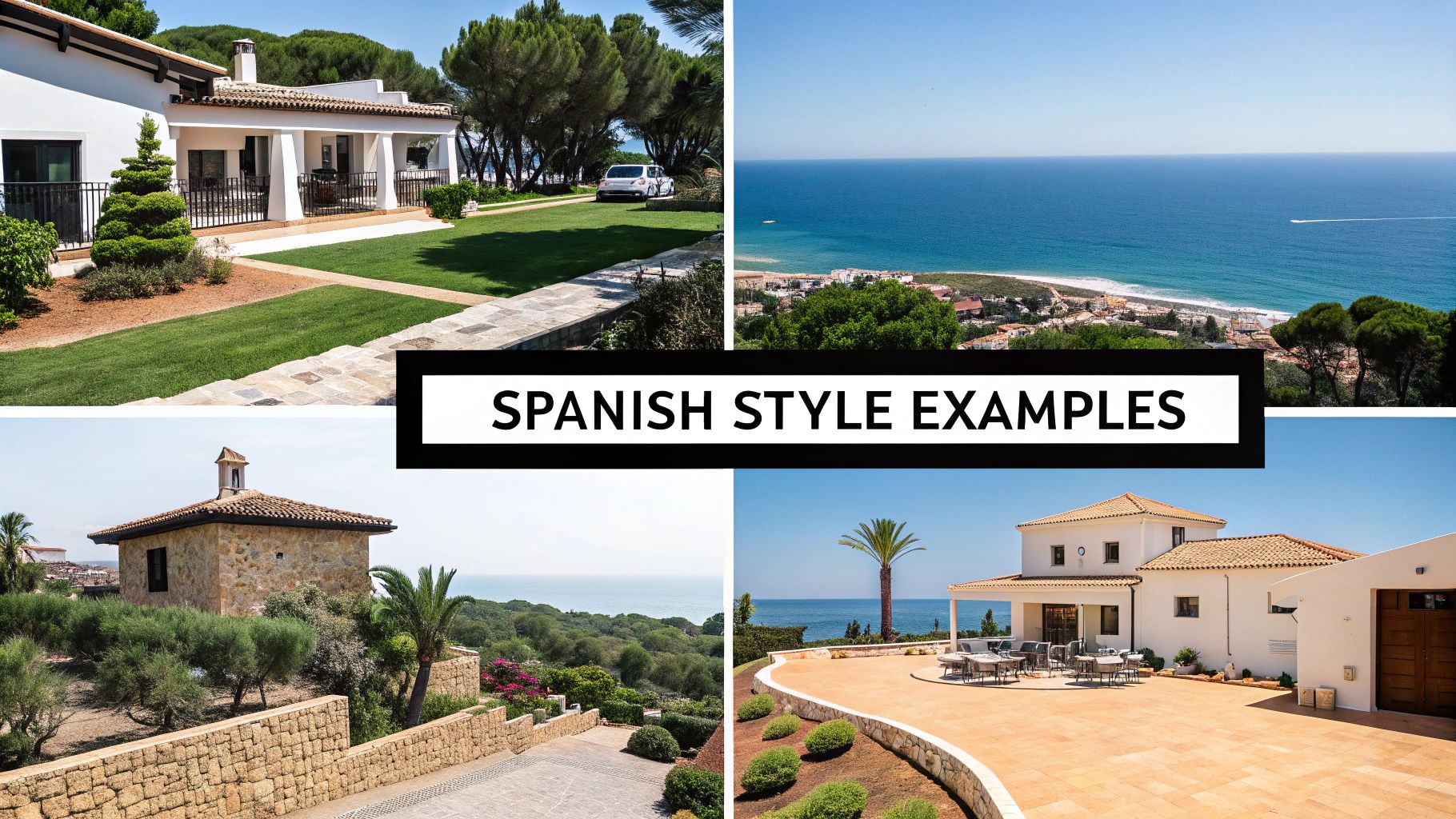
From sun-bleached coastlines to dense city blocks, modern Spanish style houses are being reimagined in truly inspiring ways. They prove this isn’t just a static, historical look; it’s a living architectural language that continues to evolve.
The Coastal Villa Reimagined
Imagine a modern villa perched on a cliff, overlooking the Pacific. Here, the entire design ethos is about framing that incredible view. The architecture becomes almost transparent, a bridge between the home and the water. Forget small, punched-out windows; we’re talking about floor-to-ceiling glass walls and pocketing doors that completely dissolve the line between inside and out.
That classic white stucco exterior is a must. It acts as a brilliant canvas, reflecting the intense coastal sun and creating a stunning contrast against the deep blue of the sea. Inside, the material palette is kept intentionally light and organic so it never competes with the natural drama outside.
- Flooring: Polished concrete or light limestone floors flow uninterrupted from the great room right out onto the terrace, making it all feel like one enormous living space.
- Accents: Ceiling beams and custom cabinetry are often crafted from weathered, light-wash woods, giving you a subtle hint of driftwood and adding a soft, organic touch.
- Color Palette: The interior is a study in neutrals—soft whites, sand, and cream. This allows the vibrant blues and greens of the ocean to become the real “color” in the home.
In this setting, the design prioritizes absolute serenity. The architecture gracefully steps back, allowing the power and beauty of the landscape to take center stage.
The Sophisticated Urban Residence
Bringing the Spanish style into a tight urban lot is a whole different challenge. The focus shifts from outward views to creating a private, inward-looking sanctuary. In cities like Austin or Los Angeles, you’ll see architects using the style’s signature elements to craft homes that feel like secluded compounds, completely shielded from the noise of the street.
Here, the courtyard isn’t just a feature; it’s the heart of the home. It’s non-negotiable. The layout is often U-shaped, literally wrapping the home around this central outdoor room. This means every primary living space opens onto it, flooding the interior with light and nature while maintaining total privacy.
In an urban context, the modern Spanish home turns inward, using courtyards and high walls to create a serene world of its own, proving that tranquility and city life can coexist beautifully.
The global appeal of this architectural style is impossible to ignore. International investment in properties like these has soared, making Spain Europe’s top destination for luxury real estate. In fact, foreign buyers were behind nearly 50,000 home purchases in the first half of 2025 alone, making up 14.1% of all sales. This trend is having a massive impact on luxury design, as you can see in Spain’s expanding housing market.
The Sustainable Desert Retreat
Now, take this style and drop it into an arid landscape like Palm Springs or Scottsdale. The design adapts again, this time with a sharp focus on sustainability and living in harmony with the desert. The architecture starts to echo the rugged terrain, embracing earthier tones and materials that feel like they were pulled directly from the land.
The crisp white stucco might be swapped for a warmer, sand-colored plaster that blends seamlessly with the desert floor. You’ll also see deep overhangs and covered loggias used not just for aesthetics, but as a critical passive cooling strategy to provide life-saving shade from the intense sun.
Sustainability is woven into the very fabric of the design:
- Material Choices: Rammed earth or locally sourced stone is often used for feature walls, providing excellent thermal mass to keep the home cool.
- Water Conservation: The landscaping is all about drought-tolerant native plants, often paired with sophisticated rainwater harvesting systems.
- Energy Efficiency: Windows are placed strategically to capture the winter sun while blocking summer heat, and you’ll frequently find solar panels integrated onto the flat roof sections.
This desert interpretation of modern Spanish style houses is a perfect example of how timeless design can meet modern environmental awareness. It creates a home that isn’t just stunning, but one that shows a deep respect for its place in the world.
Building Your Dream Modern Spanish Home
Bringing a modern Spanish home from a dream to reality is all about putting together the right team. This isn’t a job for generalists; it demands specialists who are fluent in this unique architectural language. The success of your entire project depends on finding experts who can translate your vision into a home that feels both authentic and personal.
The journey starts with the architect. You’re not just looking for someone who can draw a floor plan; you need a firm with a portfolio that shows a deep understanding of Mediterranean and Spanish Revival principles, but reinterpreted through a modern lens. Look for a command of clean lines, a sophisticated use of materials like stucco and stone, and a real feel for creating that seamless indoor-outdoor connection.
Assembling Your Expert Team
With your architect in place, the next crucial hire is the builder. While your architect likely has preferred partners, you need to find a builder with proven experience in the high-end finishes and artisanal details this style requires. This is about more than just construction; it’s about craftsmanship—from achieving that perfect hand-troweled plaster finish to installing massive glass walls without a flaw.
An interior designer is just as vital for bringing the home’s soul to life. You’ll want someone who excels at creating spaces that are warm yet minimalist, layering textures to build character. Their past work should show an eye for balancing rustic, earthy elements with sleek, contemporary furniture to achieve that signature understated luxury.
Assembling the right team is the single most important investment you’ll make. It’s a partnership built on a shared vision, clear communication, and a mutual commitment to exceptional quality from the ground up.
Vetting Professionals and Ensuring Success
When you start interviewing architects, builders, and designers, dig into a few key areas:
- Style-Specific Portfolio: They absolutely must have a track record of building modern Spanish homes or very similar architectural styles.
- Strong Local Network: A top-tier team has deep roots in the community and knows exactly which local craftspeople—from stonemasons to custom cabinet makers—are the best in the business.
- Transparent Communication: Get a clear picture of their process. How do they handle client updates, manage the budget, and guide you through big decisions?
Frankly, clear and consistent communication is the bedrock of a successful build. To arm yourself with the right knowledge, it helps to understand the full scope of the project. You can learn more about the intricacies of the custom home building process in this guide. This will prepare you to ask the right questions and ensure your dream modern Spanish home stays perfectly aligned with your vision and budget from day one.
Answering Your Questions About Modern Spanish Design
Diving into the world of modern Spanish architecture often raises a few key questions. It’s a style with deep historical roots, but its contemporary form speaks a language all its own. Let’s clear up some of the most common points of curiosity for anyone dreaming of building one of these stunning homes.
What’s the Real Difference Between Traditional and Modern Spanish Houses?
The biggest shift is a move toward simplicity and openness. Think of it as a thoughtful edit. Traditional Spanish homes are beautiful but can feel heavier, with intricate details, ornate ironwork, smaller, shuttered windows, and a collection of separate, defined rooms. Their thick walls were designed to create a cool, private sanctuary.
Modern Spanish design takes the soul of that tradition and strips it back to its most elegant essentials. It’s all about clean lines, expansive open-concept living areas, and massive walls of glass that dissolve the barrier between indoors and out. The goal is no longer to hide from the sun, but to welcome it in.
At its heart, the modern version celebrates the same things: warmth, texture, and a deep connection to the landscape. It just says it with a quieter, more confident voice where the focus is on pure form and the play of natural light, not elaborate decoration.
What Are the Go-To Exterior Colors for This Style?
You really can’t go wrong with a brilliant, clean white or a soft, warm off-white for the stucco. This has become the signature of the modern Spanish home for a reason—it beautifully reflects sunlight, making the house feel like a living sculpture. It’s also a smart, practical choice that harkens back to the style’s Mediterranean origins, helping to keep the interior cool.
This crisp white backdrop then serves as a canvas for a few carefully chosen, high-contrast accents:
- Dark Wood Tones: Rich, dark stains on garage doors, the main entry door, and any exposed beams add instant warmth and character.
- Black or Bronze: These are the preferred finishes for the sleek, thin-profile steel window frames and any understated ironwork, lending a sharp, graphic quality.
- Terracotta Red: The classic clay roof tile remains a staple, providing that essential touch of earthy, traditional color against the sky.
Can I Blend Smart Home Tech into a Modern Spanish Design?
Absolutely, and it’s a perfect fit. The minimalist nature of modern Spanish architecture is actually ideal for integrating smart home technology. Because the style is all about clean surfaces and uncluttered spaces, things like automated lighting, climate control, security, and entertainment systems can be seamlessly built-in, almost disappearing into the architecture itself.
You get all the convenience of a state-of-the-art home without any of the visual clutter. This allows the organic materials and beautiful light to remain the stars of the show, making it a natural match for today’s luxury lifestyle.
Ready to find the perfect architect or designer for your dream home? Haute Design connects you with an exclusive network of the nation’s top-tier professionals who specialize in creating extraordinary living spaces.
Discover visionary talent by visiting the Haute Design Network.