


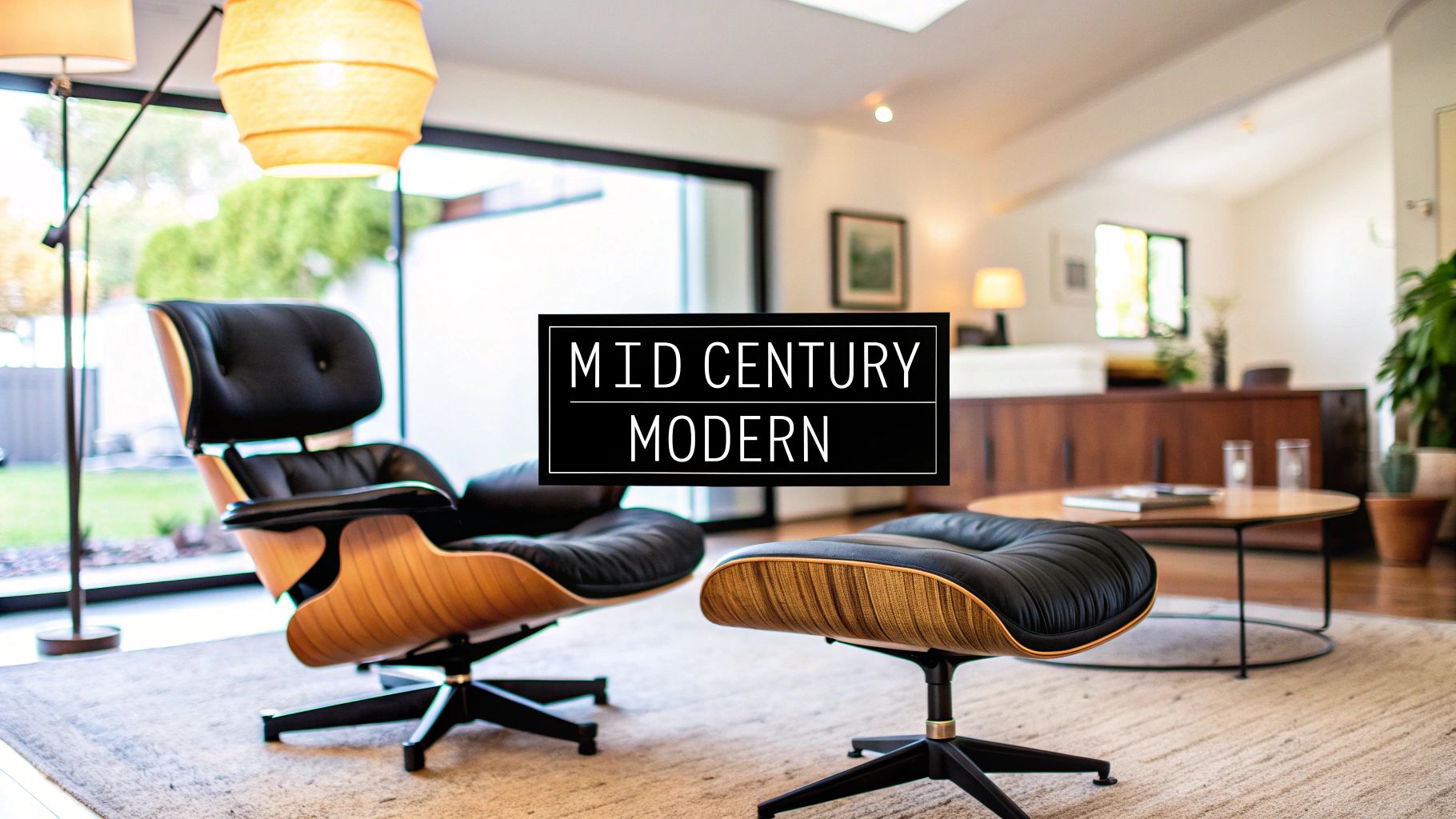
Mid-century modern isn’t just a look; it’s a design philosophy grounded in simplicity, functionality, and a profound connection to the natural world. It’s about creating living spaces that feel clean, uncluttered, and deeply comfortable, moving past fleeting trends to establish something truly timeless. At its core, the goal is to weave sophisticated aesthetics into the fabric of everyday life.
The Enduring Appeal of Mid-Century Modern Design
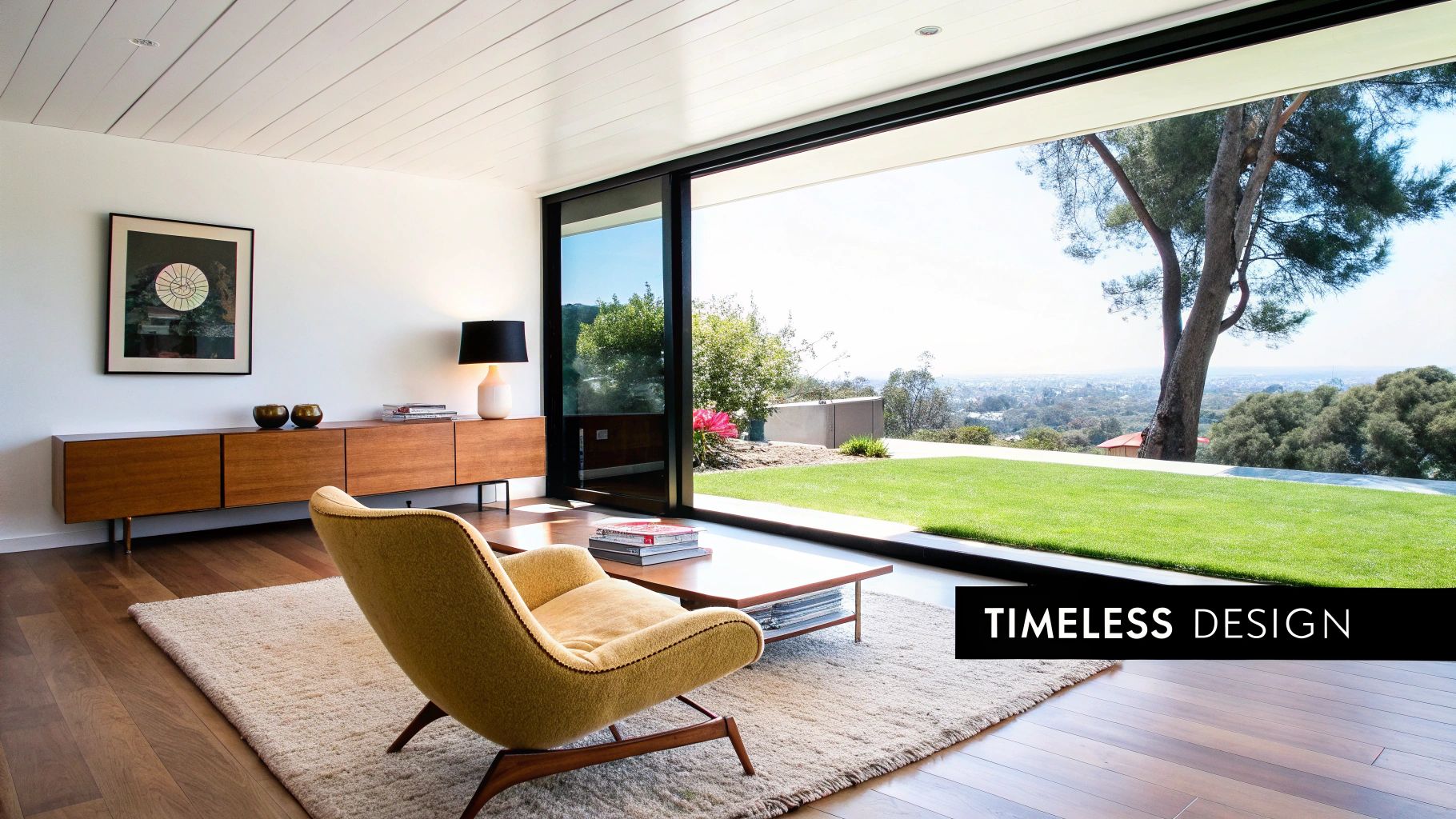
Picture a room where every single object has a purpose, where beauty emerges from clean lines and organic forms. That’s the heart of a mid-century modern interior. It remains a powerful influence in home design decades after it first appeared because it’s more than just a retro fad—it’s a complete design language built on a handful of very clear, very effective principles.
This style was born from the post-World War II era of optimism and innovation, flourishing from roughly 1945 to the late 1960s. Designers and homeowners alike were eager for brighter, more open homes. This, combined with new manufacturing techniques, gave rise to an aesthetic that feels just as fresh and relevant today. It was a forward-looking movement, a deliberate break from the ornate, heavy styles of the past in favor of something more honest and accessible.
Core Principles of the Style
At its heart, the MCM philosophy is guided by a few key ideas. Once you grasp these concepts, you’re on your way to creating an authentic and sophisticated space.
- Function Over Form: Every piece of furniture, every lighting fixture, every layout choice must serve a practical purpose. Decoration is used sparingly, allowing the integrity of the design and the quality of the craftsmanship to take center stage.
- Connection to Nature: Large panes of glass, sliding doors, and a palette of natural materials are used to intentionally blur the lines between indoors and out. This integration fosters a sense of tranquility and makes any space feel larger.
- Organic and Geometric Shapes: The style masterfully plays with contrast, pairing sleek, man-made geometric lines with soft, organic curves found in nature. Imagine the crisp rectangle of a low-slung credenza set against the gentle scoop of a sculptural armchair.
The ultimate goal of mid-century modern interior design is to create an environment that is uncluttered, calming, and deeply connected to its surroundings. It prioritizes human comfort and logical flow above all else.
In this guide, we’ll explore how these foundational ideas translate into real-world applications throughout your home. We’ll go beyond simply pointing out iconic furniture pieces and dig into the strategy behind crafting a cohesive, high-end MCM interior. From its optimistic roots to its place in today’s luxury homes, you’ll get the expert insight needed to bring this celebrated style to life with confidence and precision.
A Look Back: The Origins and Philosophy of Mid-Century Modern
To truly understand and execute a mid-century modern interior, we have to go back to where it all began. The style wasn’t born in a vacuum; it was a direct response to the immense optimism and change that swept the world after World War II, a period stretching roughly from 1945 to 1970.
This was an era of incredible technological leaps and social shifts, and design was right there in the mix. People were ready to shed the dark, ornate, and compartmentalized homes of the past. There was a collective craving for something new—for living spaces that were brighter, more open, and better suited for a forward-thinking, modern family. This wasn’t just about looks; it was a fundamental shift in how people wanted to live.
The Visionaries Who Shaped a Movement
A new generation of designers stepped up to answer this call, viewing architecture and furniture as tools to create a better, more streamlined way of life. Names like Charles and Ray Eames, Eero Saarinen, and George Nelson became legends, not by crafting fussy, opulent pieces, but by solving everyday problems with remarkable elegance.
They drew heavily from earlier European movements, especially the German Bauhaus school, which championed function over pure form and saw the potential in mass production. The goal was democratic: good design should be for everyone. This mindset pushed them to explore new materials and manufacturing techniques that came to define the entire era.
A true mid-century modern interior is more than just a room with specific furniture; it’s a cohesive ecosystem built around human comfort and ease. You can feel this intent in every iconic creation, from the inviting, sculptural shell of an Eames Lounge Chair to the clean, gravity-defying pedestal of Saarinen’s Tulip Table.
A Brave New World of Materials and Form
Nothing fueled the MCM aesthetic quite like the postwar boom in new materials. Designers suddenly had access to industrial-grade plywood, fiberglass, plastics, and metals, freeing them from the rigid constraints of traditional craftsmanship. This material liberation is what allowed for the organic curves, slim profiles, and sculptural forms that we instantly recognize today.
Molded plywood, for example, let the Eameses create ergonomic chairs that were both strong and lightweight on a massive scale. Their success was staggering; by the late 1950s, more than 1.5 million of their lounge chairs were in homes across the globe. Meanwhile, Scandinavian designers made their mark with teak, so much so that Denmark’s furniture exports hit a value of $120 million by 1965, demonstrating the style’s immense global appeal.
“The role of the designer is that of a good, thoughtful host anticipating the needs of his guests.” – Charles Eames
This simple statement from Charles Eames perfectly captures the ethos of the time. The focus was always on the end-user—how people would actually live in and interact with these designs day-to-day. This deep-seated practicality is a huge reason the style feels just as relevant now as it did then. For a wider look at how different eras approached design, see our essential interior design style guide.
The Core Principles of MCM Design
When you distill this rich history, you’re left with a handful of guiding principles. Getting these right is the key to creating a mid-century modern interior that feels authentic, not like a stage set.
- Clean Lines and Simplicity: Form is king. The style shuns clutter and unnecessary decoration, finding its beauty in sleek lines and uncluttered surfaces.
- Organic and Geometric Shapes: You’ll see a beautiful tension between soft, biomorphic curves inspired by nature and the crisp, clean geometry of the architecture itself.
- Function Over Form: Every piece in the room should have a job to do. This commitment to function ensures these spaces aren’t just stunning to look at, but are genuinely a pleasure to live in.
- A Connection to the Outdoors: Expansive glass walls, sliding doors, and a palette of natural materials like wood, leather, and stone work to dissolve the barrier between inside and out.
Grasping these foundational ideas is the first step. It allows you to move beyond simple replication and toward creating a space that is a living, breathing tribute to one of history’s most enduring design philosophies.
A Room-by-Room Guide to the MCM Aesthetic
Bringing the mid-century modern aesthetic to life is about so much more than just dropping a few iconic pieces into a room. It’s a holistic approach, a room-by-room strategy that carefully balances function, form, and the natural flow of your home. Think of this as your practical playbook for applying the MCM look to your key living spaces, ensuring every corner feels both authentic to the style and deeply personal to you.
The real magic happens when you treat each room not as an isolated exhibit, but as a connected part of a harmonious whole. With a consistent hand in materials, color, and layout, you can craft an environment that’s as livable as it is visually striking.
The Living Room: An Open and Inviting Hub
More than any other space, the living room is the heart of a mid-century modern home. It’s designed to be a social hub, a place for connection and relaxation. The first move is to create an open, airy feel that practically begs for conversation and movement.
This starts with furniture that’s characteristically low-profile, raised off the floor on slender, often tapered, legs. It’s a simple but brilliant design choice that creates visual space underneath, making the entire room feel larger and lighter.
An iconic Eames Lounge Chair and Ottoman is the ultimate anchor piece, a masterpiece of sculptural beauty and incredible comfort. To complement it, look for a low-slung sofa with clean lines, tight upholstery in a textured fabric like tweed or bouclé, and an exposed solid wood frame. To break up the geometry, an organic, kidney-bean-shaped coffee table—like Isamu Noguchi’s famous design—can introduce a beautiful, soft curve.
At its best, a mid-century modern living room feels like a sophisticated yet comfortable retreat. It’s a space where every element is carefully chosen to support a lifestyle of ease and elegance, without a hint of stuffiness.
Don’t forget to layer in materials for warmth and texture. A rich walnut or teak credenza set against a neutral wall provides essential storage while doubling as a stunning display surface. Weave in textiles through a geometric-patterned area rug and throw pillows in signature MCM accent colors—think mustard yellow, burnt orange, or deep teal. These pops of color are crucial; they keep the space from feeling sterile and inject a dose of personality.
The Dining Room: Functional Elegance
The mid-century modern dining room is a masterclass in functional elegance. It’s a space built for gathering, where the furniture itself is a work of art. The goal here is a clean, uncluttered setting that keeps the focus exactly where it should be: on the food and the company.
A Saarinen Tulip Table is a quintessential choice. Its single, graceful pedestal base completely eliminates the visual clutter of traditional table legs, creating an immediate sense of openness and making seating far more flexible. You can surround it with chairs that are both comfortable and visually lightweight, like the iconic Wishbone Chair by Hans Wegner or the molded plastic side chairs from the Eameses.
To complete the look, consider these key elements:
- Statement Lighting: A sculptural pendant light, like a George Nelson Bubble Lamp, hung low over the table is a must. It defines the dining zone and serves as a piece of functional art.
- Minimalist Storage: A long, low sideboard is the perfect solution for storing dinnerware. It also provides a sleek surface for a simple floral arrangement or a curated collection of ceramics.
- Natural Textures: Ground the space with a simple area rug and lean into natural materials like wood and leather to add warmth and tactile interest.
The Bedroom: A Tranquil Sanctuary
Your bedroom should be a serene, uncluttered sanctuary, and this is where the MCM philosophy of simplicity and a connection to nature really shines. The entire focus is on clean lines, warm materials, and creating a calm, restorative atmosphere.
Start with a platform bed that features a simple, unadorned wooden headboard. This low-profile design keeps the room feeling open and expansive. Flank the bed with minimalist nightstands, perhaps with a single drawer and those signature slim legs. For storage, a tallboy dresser in teak or walnut adds a bit of verticality without overwhelming the space.
Lighting is absolutely key to setting the right mood. Instead of bulky table lamps, consider sleek, wall-mounted sconces with brass or black metal finishes. This frees up precious nightstand space and adds a touch of hotel-like sophistication. A single, comfortable accent chair in a corner, perhaps in a soft leather or textured fabric, carves out the perfect reading nook. Finally, keep window treatments simple—sheer curtains that allow natural light to filter through are perfect for reinforcing that all-important connection to the outdoors.
The Home Office: A Focus on Function
The home office is where the MCM principle of “function before form” truly proves its worth. This space needs to be organized, efficient, and inspiring, with hardworking furniture that never sacrifices on style.
A classic George Nelson Swag Leg Desk makes for a perfect centerpiece; it’s visually light but offers a generous work surface. Pair it with an ergonomic yet incredibly stylish chair, like an Eames Aluminum Group Management Chair, to ensure comfort during long work sessions. For storage, open shelving or a simple credenza keeps supplies organized and within easy reach. The whole point is to eliminate visual clutter so your mind can stay focused. A touch of color can be introduced through accessories, like a vintage desk lamp or a bold piece of abstract art on the wall.
Applying these principles throughout the home creates a cohesive and thoughtful environment. The table below offers a quick-reference guide to bringing the mid-century modern aesthetic to each key area.
| Room | Iconic Furniture Pieces | Key Materials | Signature Color Accents |
|---|---|---|---|
| Living Room | Eames Lounge Chair, Noguchi Coffee Table, Low-Slung Sofa | Teak, Walnut, Tweed, Bouclé, Glass | Burnt Orange, Mustard Yellow, Avocado Green |
| Dining Room | Saarinen Tulip Table, Eames Molded Chairs, Wishbone Chair | Molded Plywood, Fiberglass, Walnut, Marble | Teal, Deep Blue, Red |
| Bedroom | Platform Bed, Low Dresser, Minimalist Nightstands | Walnut, Teak, Leather, Brass | Olive Green, Terracotta, Navy Blue |
| Home Office | George Nelson Desk, Eames Aluminum Group Chair | Rosewood, Chrome, Aluminum, Leather | Primary colors (Red, Yellow, Blue) in small doses |
By selecting the right combination of furniture, materials, and color, you can ensure each room not only stands on its own but also contributes to a unified, beautifully designed home.
Selecting Iconic Furniture and Premium Materials
To elevate a space from simply decorated to a masterfully designed mid-century modern interior, the focus must shift to investment pieces. These are the foundational elements—the furniture, lighting, and materials—that truly anchor a room, telling a story of quality, craftsmanship, and deliberate choice. It’s about curating objects that aren’t just beautiful today but are built to become the heirlooms of tomorrow.
Right away, you’re faced with a critical decision: do you hunt for authentic vintage treasures or invest in licensed, brand-new reproductions from the original, revered manufacturers? There’s a strong case for both. Sourcing a vintage piece brings an irreplaceable sense of history and a unique patina that speaks to its past life. On the other hand, purchasing a new classic from a legendary brand like Knoll or Herman Miller guarantees immaculate condition and directly supports the designer’s legacy.
The Art of Choosing Statement Furniture
The soul of a mid-century modern room is almost always found in its statement furniture. These pieces aren’t just functional; they are sculptural forms that command attention and set the tone for the entire space. Think of an Eames Lounge Chair—it’s far more than a place to sit. It’s a globally recognized icon of sophisticated comfort and brilliant design.
When selecting these key players, pay close attention to their visual weight and silhouette. The goal is to find furniture that feels substantial yet looks visually light, a feat often achieved with slender, tapered legs and clean, uncluttered lines. For a truly exceptional seating arrangement, think about how different iconic forms can play off one another. You can explore a world of inspiration in these luxury living room seating ideas that masterfully blend comfort with high-end style.
The core elements of furniture, materials, and color are the true foundation of any well-executed mid-century modern interior.
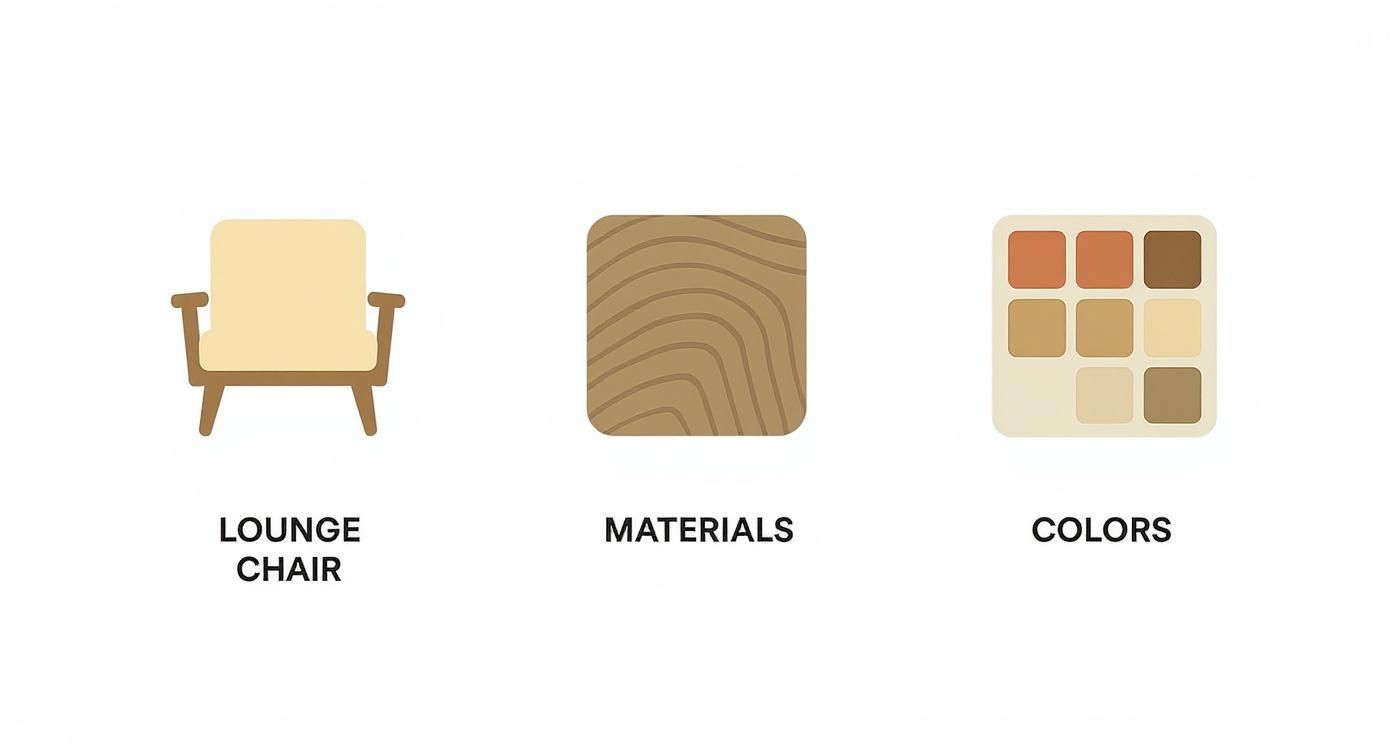
This visual trio highlights the powerful synergy between iconic shapes, the inherent warmth of natural materials, and a deliberate color palette—all working together to create a space that feels both cohesive and authentic.
Iconic Lighting as Functional Sculpture
In mid-century modern design, lighting is never an afterthought. It’s a primary design element, treated with the same reverence as the furniture itself. Iconic fixtures are chosen not just for the light they cast, but for their powerful sculptural presence. They act as functional art, capable of dramatically shifting the entire mood of a room.
An iconic light fixture does more than illuminate a room; it serves as a central focal point, drawing the eye upward and adding a layer of architectural interest. Its form is just as important as its function.
Take the Arco Floor Lamp, designed by Achille and Pier Giacomo Castiglioni. Its dramatic, sweeping arc is a brilliant solution for providing overhead light without any ceiling installation, making it perfect for defining a seating area within a larger open-concept space. In the same vein, a George Nelson Bubble Lamp introduces a soft, diffused glow and an organic form that provides a beautiful contrast to the clean, geometric lines of the surrounding architecture.
A Deeper Dive Into Premium Materials
The tactile quality and visual depth of the materials are what truly complete a high-end mid-century modern interior. The style is a celebration of the inherent beauty of natural elements, and wood is the undisputed star of the show.
- Teak vs. Rosewood: While both are classic MCM choices, they offer very different aesthetics. Teak is prized for its warm, golden-brown hue and straight grain, creating a look that is both durable and timeless. Rosewood, by contrast, is darker and richer, often featuring dramatic, swirling grain patterns that make it a show-stopping luxury material for high-end credenzas or lounge chairs.
- The Feel of Quality Leather: You simply cannot replicate the experience of genuine, full-grain leather. It develops a beautiful patina over the years, lending character and a sense of history to pieces like an Arne Jacobsen Egg Chair or a classic sofa. The supple texture and rich aroma of quality leather create a multisensory experience of pure luxury.
- Modern Textiles for a Contemporary Layer: To keep the aesthetic feeling fresh and prevent it from becoming a museum piece, it’s crucial to integrate modern textiles. Plush materials like velvet or bouclé add a contemporary layer of softness and texture. Imagine an accent chair in a deep jewel-toned velvet—it can introduce a touch of modern glamour while still honoring the clean, iconic lines of the mid-century form. By artfully balancing classic materials with these modern touches, you create a space that is authentic to its roots yet perfectly suited for living today.
Integrating MCM Design in Modern Homes
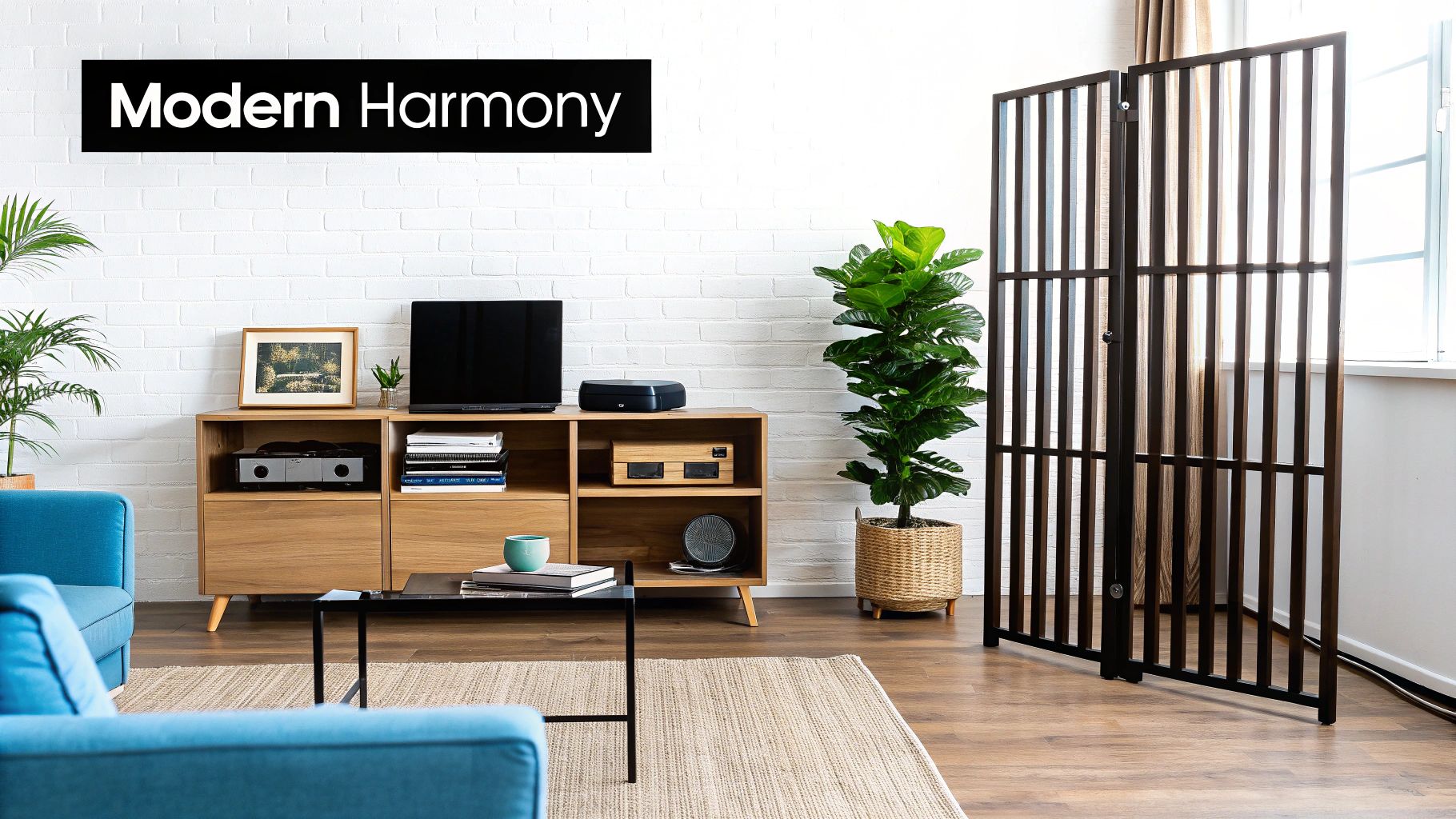
The mid-century modern interior was born in an era of smaller homes with clearly defined rooms. So, how does this post-war design philosophy work in the grand, open-concept spaces and tech-driven lifestyles of today? It’s a fair question. The answer lies in adapting its core principles—human scale and intentionality—which prove this timeless style is more relevant than ever.
In a large, open-plan room, the greatest risk is having your furniture feel lost, like little islands in a vast sea. Mid-century modern design, at its heart, thrives on creating intimate, functional zones. This isn’t about putting up walls; it’s about using design elements to subtly define areas for conversation, dining, or quiet reflection, all while maintaining a comfortable, human-centric scale.
Defining Space in Open Concepts
The trick is to create visual anchors that ground different parts of the room. This approach keeps that airy, open feeling we love but makes sure each zone feels purposeful and inviting. You’re essentially crafting rooms within a room, using furniture and layout to guide the flow and feel of the space.
- Strategic Area Rugs: A large, well-placed rug is your best friend here. It’s the simplest and most effective way to define a living area, acting as a visual foundation that instantly pulls a sofa, chairs, and a coffee table into a cohesive conversational group.
- Architectural Dividers: Think about elements like slatted wood partitions or open-backed shelving units. They can delineate space without killing the light or blocking sightlines, adding architectural interest and texture that aligns perfectly with the MCM love for natural wood.
- Furniture Groupings: Cluster furniture into purposeful arrangements. A seating area might be a sofa and two armchairs facing each other, creating a natural boundary that encourages connection. These intentional groupings foster intimacy even in the largest of spaces.
By applying these techniques, you can enjoy the freedom of an open floor plan while keeping the cozy, well-defined feel that is so central to the mid-century modern aesthetic.
Seamlessly Integrating Smart Home Technology
A common worry is that modern tech will clash with the clean, uncluttered ethos of MCM design. But when you think about it, the style’s focus on simplicity and function makes it a perfect partner for today’s minimalist technology. The goal is concealment and seamless integration, ensuring your tech serves you without disrupting the visual harmony.
The original MCM designers celebrated innovation in materials and manufacturing. Integrating today’s technology is simply a modern extension of that same forward-thinking spirit. It’s all about making life easier and more beautiful through smart design.
The essence of a mid-century modern interior is its clean, uncluttered feel. Integrating technology successfully means making it invisible or so aesthetically pleasing that it becomes a deliberate part of the design, not a distraction.
Here’s how to merge high-tech convenience with timeless style:
- Conceal the Clutter: Wires are the enemy of a clean aesthetic. Invest in smart cable management, run cords behind baseboards or within walls, and choose furniture like credenzas that have built-in cutouts for electronics.
- Choose Minimalist Tech: Opt for devices with simple, unobtrusive designs. We’re talking about sleek, frame-style televisions that look like art, low-profile smart speakers, and minimalist charging pads that almost disappear on a wood surface.
- Smart Lighting That Complements: Smart lighting is a natural fit. You can use smart bulbs in iconic MCM fixtures to control brightness and color temperature, setting the perfect mood. Look for smart switches with a simple, classic design to replace those bulky, dated plastic ones.
By thoughtfully planning for technology from the very beginning, you can create a high-functioning smart home that fully honors the clean lines and sophisticated simplicity of a true mid-century modern interior. It’s how the style not only survives but thrives in today’s world.
Collaborating with an Interior Design Expert
Bringing a true mid-century modern vision to life is about more than just knowing the rules. It’s one thing to appreciate the aesthetic, but it’s another thing entirely to execute it with the precision and artistry it deserves. This is where a professional interior designer becomes your most valuable asset—the final, crucial step in turning a beautiful idea into a living, breathing space.
Think of an expert in this style as a unique blend of historian, curator, and project lead. They have a deep, almost intuitive, grasp of the iconic designers, can spot the subtle differences between a rich teak and a warm rosewood from a mile away, and understand the fine line between a thoughtful homage and a flat-out replica. It’s this trained eye that ensures every last detail, from the scale of a sectional to the drop of a pendant light, works in perfect harmony.
Finding the Right Design Partner
When you start your search, let a designer’s portfolio be your guide. You’re looking for more than just a surface-level application of trendy MCM elements. Look for a genuine understanding of its core principles. Ask yourself: Do these spaces feel balanced? Functional? Do they have that characteristic warmth? It’s also important to see if they can skillfully weave in modern necessities, like smart home tech, without disrupting the style’s clean, uncluttered soul.
The initial consultation is where you’ll really get a feel for a potential partnership. This is your chance to see how well they listen and if they can truly connect with and interpret your vision. Come prepared with a few pointed questions to see if they’re the right fit:
- What’s your approach to sourcing? Do you focus on authentic vintage pieces, licensed reproductions, or a mix?
- Can you show me how you’ve translated mid-century modern principles for a home with large, open-concept spaces?
- How do you develop a color and material palette that feels both classic to the era and fresh for today?
The Collaborative Process
Working with a designer is a true partnership, one built on a foundation of clear communication and mutual trust. They open doors you simply can’t on your own, offering access to to-the-trade-only showrooms, incredible artisans who can craft custom pieces, and a private network of dealers for tracking down those rare, must-have vintage finds. This kind of access is often what it takes to find that one perfect piece that makes the entire room sing.
An experienced designer isn’t just bringing a vision to life; they are safeguarding your investment. They make sure every choice is intentional, every piece is of impeccable quality, and the finished space is a timeless sanctuary you’ll love for decades.
Ultimately, bringing in the right professional makes the entire journey—from the first sketch to the final throw pillow—feel effortless. For a complete walkthrough of this process, our guide on how to hire an interior designer provides a detailed roadmap. A great designer doesn’t just decorate a room; they create an experience that thoughtfully reflects both the style’s incredible legacy and your own personal story.
Answering Your Mid-Century Modern Questions
As you start pulling your vision together, you’ll likely run into a few common questions. Let’s tackle some of the most frequent ones to help you move forward with confidence.
Can I Mix Mid-Century Modern with Other Styles?
Absolutely—in fact, I often encourage it. The beauty of Mid-Century Modern (MCM) lies in its clean lines and timeless silhouettes, which makes it a fantastic team player. It partners beautifully with Scandinavian simplicity, the clean slate of Minimalism, and even the eclectic warmth of a Bohemian space.
The secret is to create a common thread, usually through a unified color palette and a thoughtful sense of balance. Think of an iconic Eames Lounge Chair as a piece of sculpture in a contemporary living room. Just be careful not to create chaos; one or two complementary styles are usually enough to keep the look intentional and sophisticated.
Is This Style a Good Fit for Smaller Apartments?
It’s an outstanding choice. Many original MCM designs were created for the more modest post-war homes of the 1950s and ’60s. The furniture often features slender legs that lift it off the floor, which creates a wonderful sense of airiness and makes a room feel larger.
The entire philosophy of MCM—functional, beautiful, and uncluttered—is tailor-made for maximizing compact spaces. Lean into multi-functional pieces and a light color scheme to really open things up.
How Can I Add Color Without Making It Look Dated?
This is all about strategic placement. To keep your space feeling current, think of those classic MCM colors as your accent players, not the main stars. Start with a sophisticated neutral foundation—think warm whites, soft grays, and plenty of natural wood.
Then, layer in those pops of personality with a few carefully chosen items:
- A set of velvet throw pillows in a deep teal or mustard yellow.
- A large-scale abstract painting that pulls in some vibrant tones.
- A single statement armchair in a rich, saturated hue like burnt orange.
- A geometric rug that anchors the space with a dash of color.
Using these iconic shades thoughtfully adds character and energy, ensuring your home feels inspired by the era, not stuck in it.
Ready to bring your vision to life with an expert eye? The Haute Design network is your connection to the industry’s leading interior designers, experts who specialize in crafting authentic, breathtaking spaces. Find your perfect design partner today.