


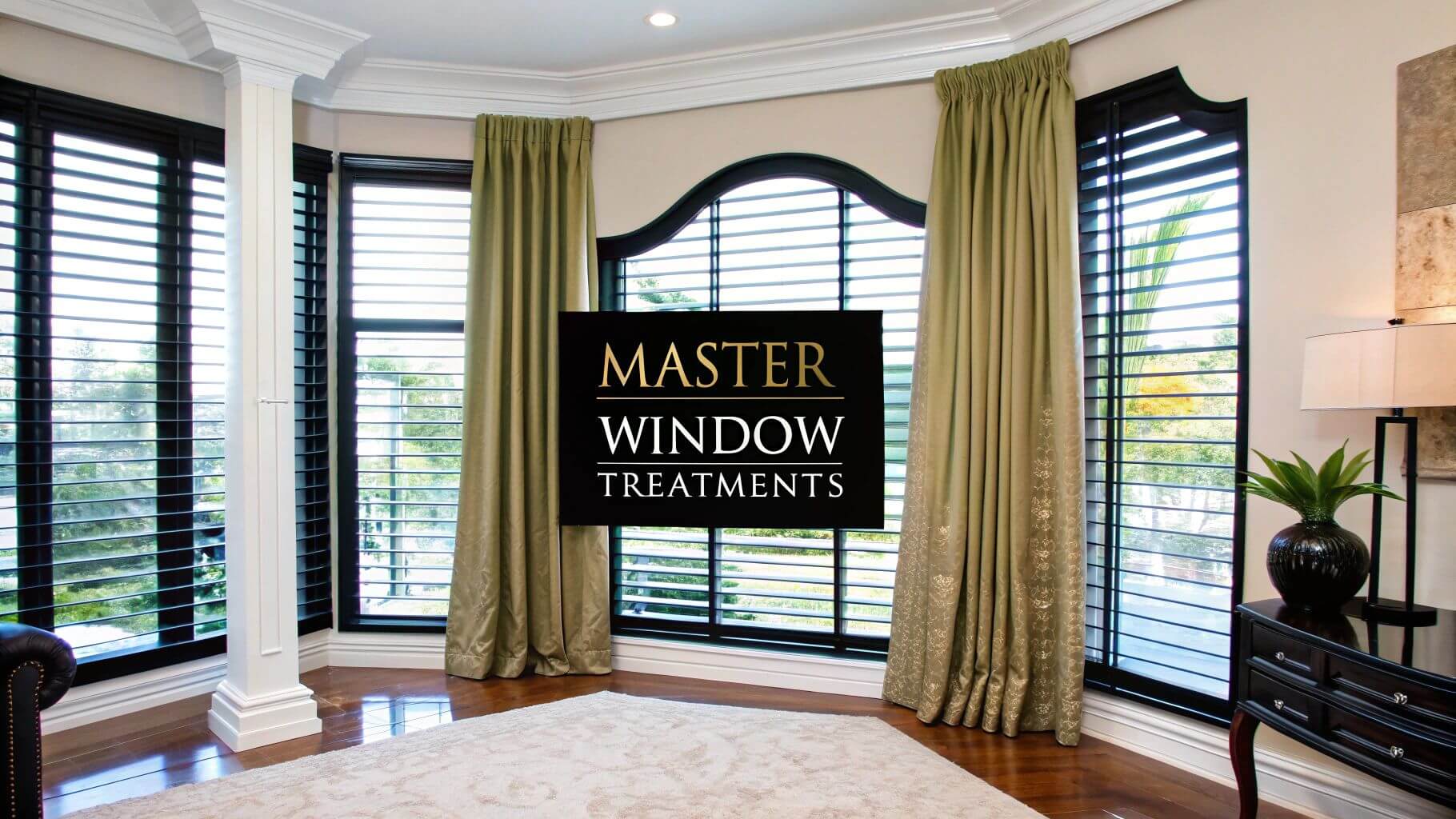
Interior design window treatments aren’t just functional afterthoughts; they’re critical design elements that control light, ensure privacy, and truly complete the look and feel of a room. Think of them less as simple coverings and more as architectural features that set the mood and shape how you experience a space.
The Secret Language of Window Treatments
If you think about it, window treatments are the final punctuation on a well-designed room. They’re the element that pulls everything together, defining the tone and finishing the story. More than just a necessity, they are a powerful tool for dictating mood, sculpting light, and even altering the perception of a room’s size. The right choice can make a cozy room feel airy and open or a vast, grand space feel intimate and welcoming.
This isn’t just a niche detail, either. The architectural voice of a room is getting serious attention. The global window coverings market is on track to grow from USD 25.5 billion in 2025 to a massive USD 43.8 billion by 2035. This surge is largely fueled by a growing interest in energy efficiency and smart home integration. You can explore more about the window coverings market and its future trends to see where the industry is heading.
The Core Pillars of Window Design
When you get down to it, mastering window treatments is a balancing act between three key aspects. It’s all about creating a solution that is as practical as it is beautiful, addressing the core needs of the space without making any compromises.
- Mood and Perception: The style, fabric, and color you choose have a huge impact on a room’s atmosphere. Imagine flowing linen drapes; they create a breezy, relaxed feel. Now picture structured plantation shutters—they bring a sense of timeless formality.
- Light and Privacy: This is where function really comes into play. Sheer curtains can gently filter daylight, casting a soft, ethereal glow, while blackout shades are perfect for a bedroom or home theater where you need absolute darkness. The real art is in managing light, not just blocking it out.
- Energy Savings: High-performance window treatments are serious players in home insulation. Cellular shades, for example, are designed with distinct pockets that trap air. This simple but brilliant design can significantly reduce heat loss in the winter and keep heat out during the summer, which you’ll notice on your energy bills.
This diagram helps visualize how these functional and aesthetic roles come together.
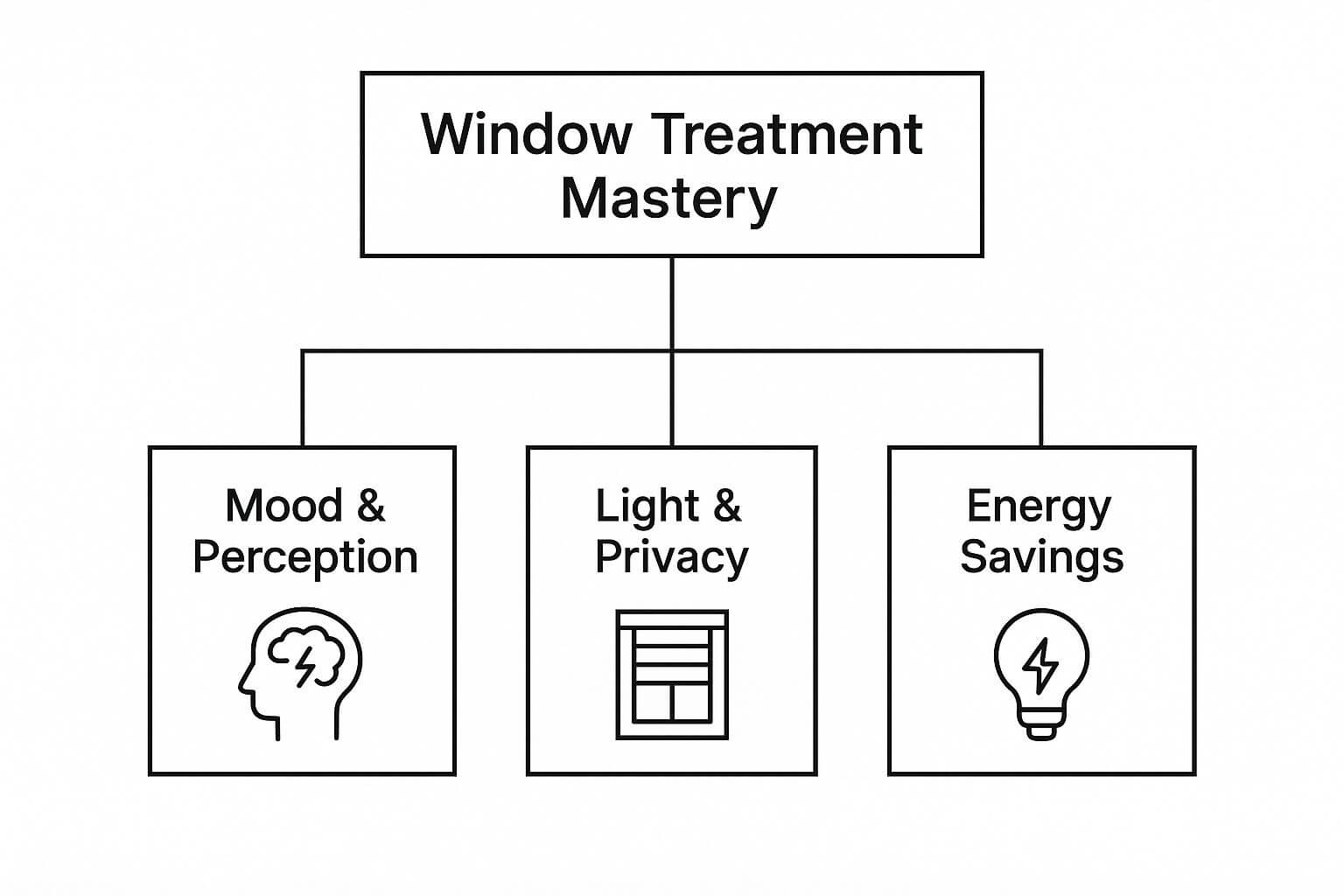
As you can see, true mastery is found at the intersection where aesthetics (Mood & Perception) blend seamlessly with function (Light & Privacy) and performance (Energy Savings).
Beyond Fabric and Slats
The world of interior design window treatments today goes far beyond simple fabric and slats. We’re seeing a huge move toward smart technology and sustainable materials. Motorized shades can be programmed to open and close with the sun’s position, boosting both convenience and energy efficiency. At the same time, eco-friendly fabrics made from recycled or renewable sources give us a way to design more responsibly.
By understanding the interplay of these elements, you can transform your windows from mere openings into powerful design statements that elevate your entire home.
Ultimately, choosing the right treatment is about much more than just covering a window—it’s about crafting an experience. It demands a thoughtful approach that considers the room’s purpose, its architectural style, and, of course, your personal lifestyle. This guide will walk you through everything you need to know to make choices that are both intelligent and stylish, ensuring a polished, cohesive result.
Navigating Your Window Treatment Options
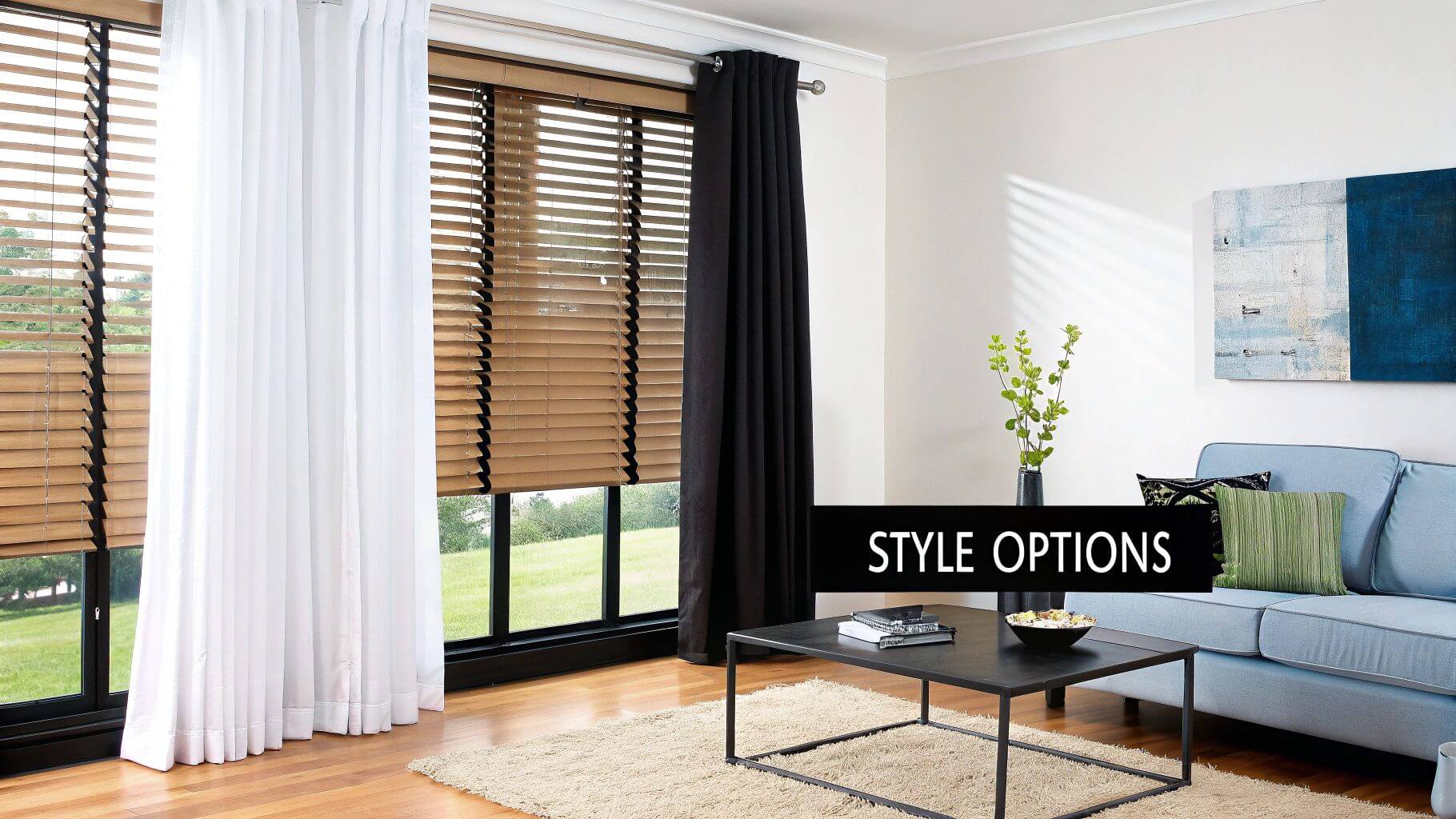
Choosing the right window treatment can feel overwhelming. With so many styles, materials, and mechanisms, it’s easy to get lost. The best way to start is by simplifying things. At their core, most window coverings fall into one of two families: hard treatments and soft treatments.
Hard treatments, like blinds and shutters, are all about structure. They bring clean, architectural lines to a space. Soft treatments, like curtains and shades, are made from textiles, introducing texture, color, and a sense of warmth.
Thinking in these broad strokes is the first step. It helps you zero in on the function you need and the feeling you want to create before getting lost in the details.
H3: Exploring Hard Window Treatments
Hard treatments are the workhorses of window design. Think of them as the finely tailored suit in a wardrobe—crisp, classic, and always in control. Their rigid structure gives them a sharp, defined look that works beautifully in modern, minimalist, and even traditional spaces.
Their real strength lies in light management. With a quick tilt of a slat or louver, you can redirect the sun, cut down on glare, and paint beautiful patterns of light and shadow across your room. They offer a level of precision that’s hard to beat.
Here are the main players in this category:
- Blinds: Made of individual slats that tilt, raise, and lower, blinds are champions of light control. Wood blinds offer a natural warmth, while faux wood versions provide the same look with superior durability—perfect for high-humidity spots like kitchens and bathrooms.
- Shutters: These are more of a permanent architectural feature, and they can genuinely add value to your home. Plantation shutters, with their iconic wide louvers, lend a stately, classic feel. For a more charming look, café-style shutters cover just the bottom half of the window, giving you privacy while letting the sunlight pour in.
H3: Embracing Soft Window Treatments
If hard treatments are the suit, soft treatments are the luxurious cashmere sweater. They’re all about texture, flow, and that cozy, lived-in feeling. Made from fabric, their job is to soften the hard edges of a room, adding a layer of elegance, drama, or casual comfort.
This is where you can really play with personality. The sheer variety of colors, patterns, and materials is nearly endless, allowing you to find the perfect complement for any design vision.
Let’s look at the most popular soft options:
- Curtains and Drapes: People often use these terms interchangeably, but there’s a slight difference. Drapes are typically lined—often with blackout fabric—giving them a heavier, more formal presence. Curtains are usually unlined and lighter, which creates a more casual, airy vibe.
- Shades: A shade is essentially a single piece of fabric that raises and lowers. Roman shades are a favorite for their tailored look, stacking into neat horizontal folds. Roller shades offer a clean, minimalist profile, while cellular (or honeycomb) shades are a fantastic choice for energy efficiency, thanks to their insulating air pockets.
The magic of soft treatments is their ability to completely transform a room’s atmosphere.
The choice between hard and soft treatments often comes down to the feeling you want to create. Do you need the crisp, architectural control of shutters, or the flowing, textural warmth of drapes? Often, the best solution is a combination of both.
Window Treatment Styles at a Glance
To make the decision a bit easier, here’s a quick comparison of the most common window treatment styles. This table breaks down what each type does best, helping you match the right option to your room’s needs and your personal style.
| Treatment Type | Primary Function | Light Control Level | Best For |
|---|---|---|---|
| Drapery/Curtains | Aesthetics, insulation, light filtering | Variable to Blackout | Adding softness, color, and height to living rooms and bedrooms. |
| Blinds | Precise light control, privacy | High | Kitchens, bathrooms, and offices where light management is key. |
| Shutters | Architectural detail, value, privacy | High | Formal living areas, traditional homes, and adding curb appeal. |
| Roman Shades | Decorative, light filtering, privacy | Medium to Blackout | Dining rooms and bedrooms where a tailored, elegant look is desired. |
| Roller Shades | Simplicity, UV protection, privacy | Variable to Blackout | Minimalist spaces, home offices, and as a base layer. |
| Cellular Shades | Insulation, energy efficiency | Variable to Blackout | Bedrooms and any room where temperature control is a priority. |
Ultimately, the best choice is one that feels right for the space. Think of this table as a starting point to narrow down the vast field of options to the few that will truly work for you.
H3: Matching Treatments to Your Room
The real art of choosing interior design window treatments is understanding that every room has a different job to do. A gorgeous silk drape that looks stunning in a formal living room would be a disaster in a steamy master bathroom.
Let’s walk through a few real-world examples:
- The Serene Bedroom: Here, light control is everything. The goal is to create a dark, restful sanctuary. A fantastic solution is to layer treatments: start with blackout roller shades for pure function, then frame them with decorative curtain panels to add softness and color.
- The High-Traffic Family Room: You need durability. This room sees it all. Woven wood shades add beautiful natural texture and can stand up to daily use. For a softer look, consider curtains made from performance fabrics that are stain-resistant and a breeze to clean.
- The Moisture-Prone Bathroom: Wood is a no-go here, as it can warp over time. Faux wood blinds or shutters are ideal; they’re completely unfazed by moisture and can be wiped clean in seconds. Vinyl roller shades are another great, no-fuss option.
When you think about function first, the right form naturally follows. This practical approach ensures your window treatments won’t just look beautiful on day one—they’ll perform flawlessly for years to come.
Choosing Materials That Tell a Story
The material you choose for your window treatments does far more than just cover a window—it sets a tone, it tells a story. Think of fabric as the vocabulary of the room. Is this a story of breezy, casual comfort, or one of dramatic, formal elegance? The feel of a material, its texture and weight, has a huge impact on a room’s atmosphere.
For instance, picture sunlight filtering through sheer linen curtains. The effect is soft, airy, and relaxed, instantly creating a sun-drenched, coastal vibe. Now, swap those out for heavy velvet drapes. The room becomes quieter, more intimate, and undeniably luxurious. That heavy fabric absorbs both sound and light, creating a dramatic, cocooning effect.
This choice is a powerful narrative tool. Your material selection is a direct reflection of the room’s purpose and the lifestyle of the people who live there.
The Great Divide: Soft Treatment Fabrics
When you’re looking at fabrics for curtains, drapes, or shades, you’re always balancing aesthetics with practicality. The best material is usually a thoughtful compromise between the two, picked specifically to suit the demands of the room.
- Natural Fibers: There’s an unmatched look of quality to materials like linen, cotton, and silk. Linen brings a textured, organic feel, while cotton is a workhorse—versatile and easy to clean. Silk is the absolute pinnacle of luxury, but it’s delicate. It’s best kept for formal spaces without a lot of direct sun, as UV exposure can cause it to degrade over time.
- Synthetic Blends: Don’t write off synthetics like polyester or rayon blends. These are the unsung heroes of high-traffic family rooms. They often resist wrinkles, fading, and stains far better than their natural cousins, offering real durability without sacrificing too much style. A well-made polyester blend can absolutely mimic the look of silk or velvet while being a breeze to maintain.
The right material is an investment in both the beauty and the longevity of your design. It’s about finding a fabric that not only looks the part but can also stand up to the rigors of daily life.
We’re also seeing a major shift in what clients are asking for. Homeowners are increasingly interested in solar-reflective coatings and eco-friendly fabrics, which points to a much larger trend toward sustainability. These new developments in fabric tech are opening the door for custom solutions that hit every mark, from function to design. You can see more about these evolving trends in the window coverings market and how they’re shaping our design choices.
Hard Treatment Materials: A Study in Form
For hard treatments like blinds and shutters, the material decision is just as critical and really helps define the architectural character of your windows. Here, the choice usually comes down to wood, faux wood, and various composite materials.
The material and color you land on can deeply influence the room’s emotional tone. Our guide to mastering interior design color psychology digs into how different hues and textures can shape the mood of your space.
- Real Wood: There’s a classic warmth and richness to real wood that’s almost impossible to replicate. Wood blinds or shutters bring a natural, organic element indoors and can be stained or painted to match any decor imaginable. They’re a fantastic choice for living rooms, dining rooms, and bedrooms where you want to add a touch of timeless elegance.
- Faux Wood and Composites: In rooms with high humidity, like bathrooms or kitchens, real wood can warp over time. This is where faux wood and composite materials really shine. They give you the classic look of wood but are built to withstand moisture and are incredibly easy to clean, making them a smart, resilient choice for those more demanding environments.
Ultimately, picking a material is about lining up your aesthetic vision with your real-life needs. Whether it’s the rugged durability of a composite shutter for a busy kitchen or the delicate grace of silk drapes in a formal sitting room, the right material ensures your window treatments don’t just complete the room—they tell its story perfectly.
Professional Secrets for Hanging and Styling
Choosing the perfect interior design window treatments is only the first step. The real art—the secret that elevates a room from “nice” to truly breathtaking—is all in the execution. Professional installation isn’t just about securing fabric to a wall; it’s a design strategy that can completely reshape a room’s architecture.
You’ve probably seen the common mistakes: a curtain rod mounted right on the window frame, or drapes that stop awkwardly short of the floor. These small missteps can make a space feel cramped and diminish the impact of your beautiful fabrics. But by mastering a few professional techniques, you can ensure your investment looks flawless and enhances the entire room.
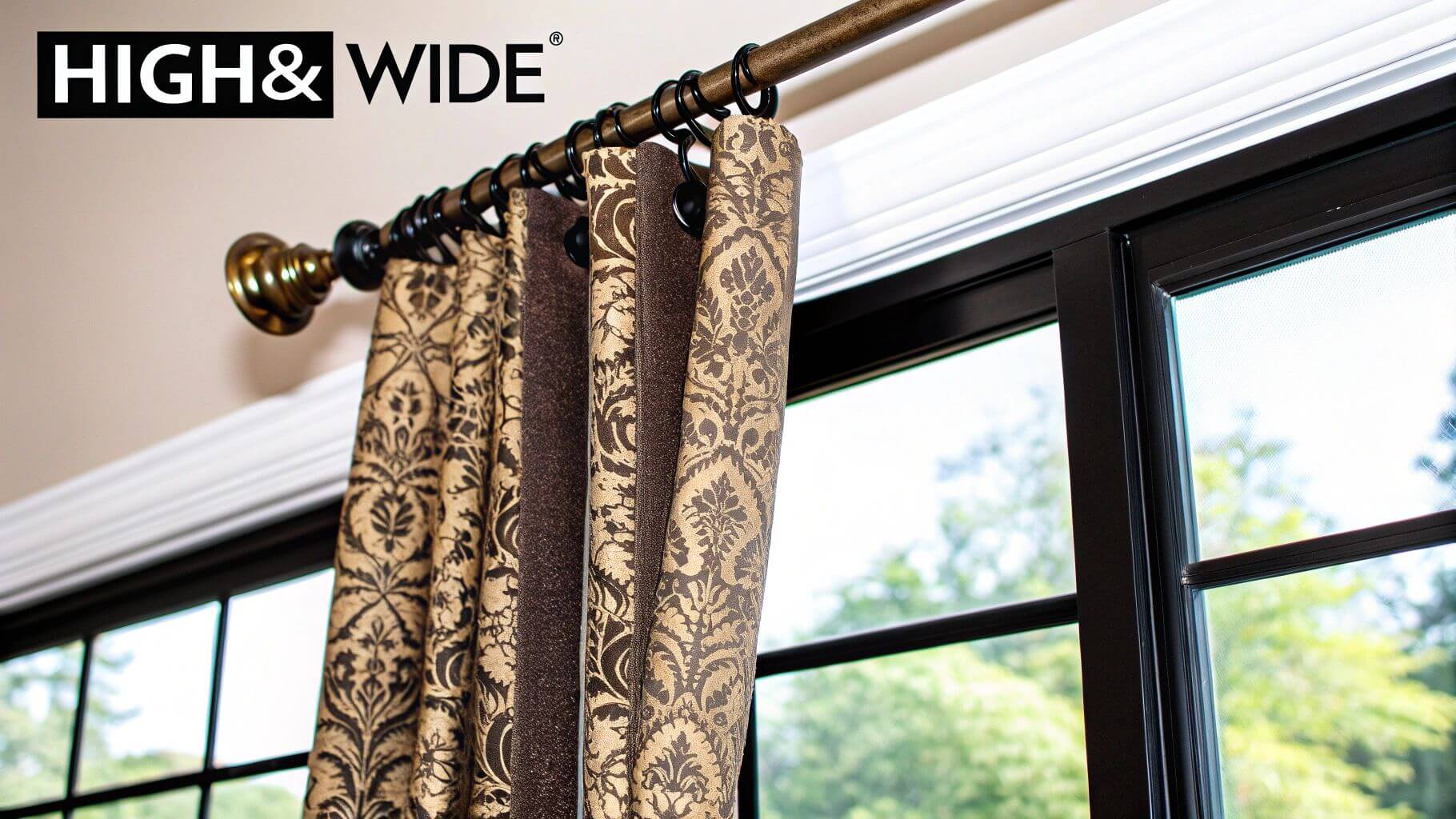
The High and Wide Mounting Technique
If there’s one trick every designer has up their sleeve, it’s the “high and wide” mounting method. This simple adjustment is incredibly powerful, creating an illusion of height and space that makes ceilings feel taller and windows grander. It’s the foundation for achieving that polished, custom-designed look.
Here’s how to do it right:
- Go High: Mount the curtain rod 4 to 6 inches above the top of the window frame. A great rule of thumb for standard ceilings is to place the rod about halfway between the window frame and the ceiling. Got soaring ceilings? You can push that measurement even higher.
- Go Wide: Extend the rod 3 to 6 inches beyond the window frame on each side. When the curtains are open, they’ll hang against the wall instead of blocking the glass. This simple move makes the window itself appear much larger and, more importantly, lets the maximum amount of natural light pour in.
This strategic placement creates long, elegant vertical lines that draw the eye upward, giving any room an instant dose of architectural grace without a single structural change.
When you hang curtains this way, you stop just covering a window and start sculpting the room’s proportions.
Selecting Hardware The Right Way
Think of window treatment hardware as the jewelry for your windows. It’s a final detail that can either pull the entire design together or become a distracting eyesore. The key is to get the scale, finish, and function just right.
The diameter of the curtain rod itself is critical. A flimsy rod will look cheap and can even start to bow under the weight of heavier drapes. As a general guide, a rod with a diameter of at least 1 inch is a solid choice for most windows and fabric weights.
Beyond the rod, don’t forget these finishing touches:
- Finials: These are the decorative caps on the ends of the rod, and they’re a perfect place to inject personality. A simple, clean cap works for a modern aesthetic, while an ornate crystal finial might suit a more traditional space. Just be sure their size is proportional to the rod and the room.
- Rings and Clips: Using rings not only looks classic and tailored but also makes opening and closing your drapes a breeze. They help create those beautiful, uniform pleats that you just can’t get with grommet-style curtains.
The hardware’s finish—whether it’s brushed nickel, matte black, or warm brass—should feel connected to the other metals in the room, like your light fixtures or cabinet pulls. If you’re looking for more ideas on creating a cohesive space, especially with a lighter color scheme, you might find some inspiration in this guide to designing a modern white living room.
The Art of Layering Treatments
Layering window treatments is a signature of sophisticated design. It’s about more than just aesthetics; this approach delivers the ultimate flexibility for light control, privacy, and insulation while adding incredible depth and texture to your walls.
The most popular strategy is to pair a functional base layer with a decorative outer layer. For instance, you could install sleek roller shades or natural woven blinds right inside the window frame. This “hard” treatment does the practical work of filtering light and ensuring privacy.
Then, you frame it all with beautiful stationary curtain panels hung high and wide. These outer drapes don’t even need to be functional—their job is to introduce color, pattern, and softness to finish the look. This layered approach feels rich and custom, turning a simple window into a stunning focal point.
Integrating Smart Window Treatments Seamlessly
Moving into the next era of home design is all about embracing technology that marries elegance with effortless living. Smart interior design window treatments aren’t just a novelty anymore; they’re a key feature in a modern, responsive home. This is where real convenience meets sophisticated design, creating spaces that adapt to your life.
Picture this: your shades glide down on their own during the hottest part of the day, acting as a passive cooling system that cuts down your air conditioning usage. It’s a simple, automated move that makes a real difference in energy efficiency. Smart treatments also give your home security a boost by creating a convincing “lived-in” illusion, with shades adjusting on a schedule even when you’re thousands of miles away.
The real magic is in the effortless control. Whether it’s a quick voice command to your smart assistant, a tap on a smartphone app, or a schedule you set once and forget, your window coverings move in tune with your lifestyle. This kind of automation simplifies daily routines and weaves a quiet layer of luxury into your home.
Powering Your Smart Window Treatments
Making this technology feel approachable begins with understanding the power options. Each method is built for different situations, from simple retrofits to fully integrated new builds, so there’s a smart solution for every project.
- Battery Packs: If you’re working with an existing home, battery-powered motors are a brilliant choice. They’re easy to install without calling an electrician, and the sleek, long-lasting battery wands are tucked away neatly behind the headrail.
- Hardwired Systems: For new construction or a major renovation, a hardwired system is the ultimate “set it and forget it” solution. Wires run directly to the window frame, delivering constant power so you never have to think about a battery again.
Smart integration is about so much more than just a motor. It’s about creating a home that anticipates your needs, quietly enhancing your comfort and peace of mind from morning to night.
This growing preference for smart home environments is fueling serious market growth. The global window shade market, valued around USD 4.65 billion in 2025, is expected to surge to USD 7.76 billion by 2032. Much of that growth is coming from the rising demand for automated shades with IoT capabilities. You can find more details in this report on the expanding window shade market.
The Future of Automated Interiors
The integration of smart systems is about more than just opening and closing blinds on command. Today’s platforms can link your window treatments to other smart devices in your home—like your thermostat and lighting—to create a truly connected ecosystem. This allows you to create complex “scenes,” like a “movie night” mode that dims the lights and lowers the blackout shades with a single word.
As technology pushes forward, the potential for automated interiors is only getting bigger. To dive deeper into this, you might enjoy our article on how AI is reshaping luxury interior architecture. After all, seamlessly integrated smart treatments are a hallmark of a thoughtfully designed, forward-thinking home.
A Guide to Installation and Upkeep
You’ve chosen the perfect interior design window treatments. The vision is there, but the journey isn’t quite over. Bringing that vision to life—and keeping it looking pristine for years—comes down to two crucial steps: flawless installation and smart upkeep.
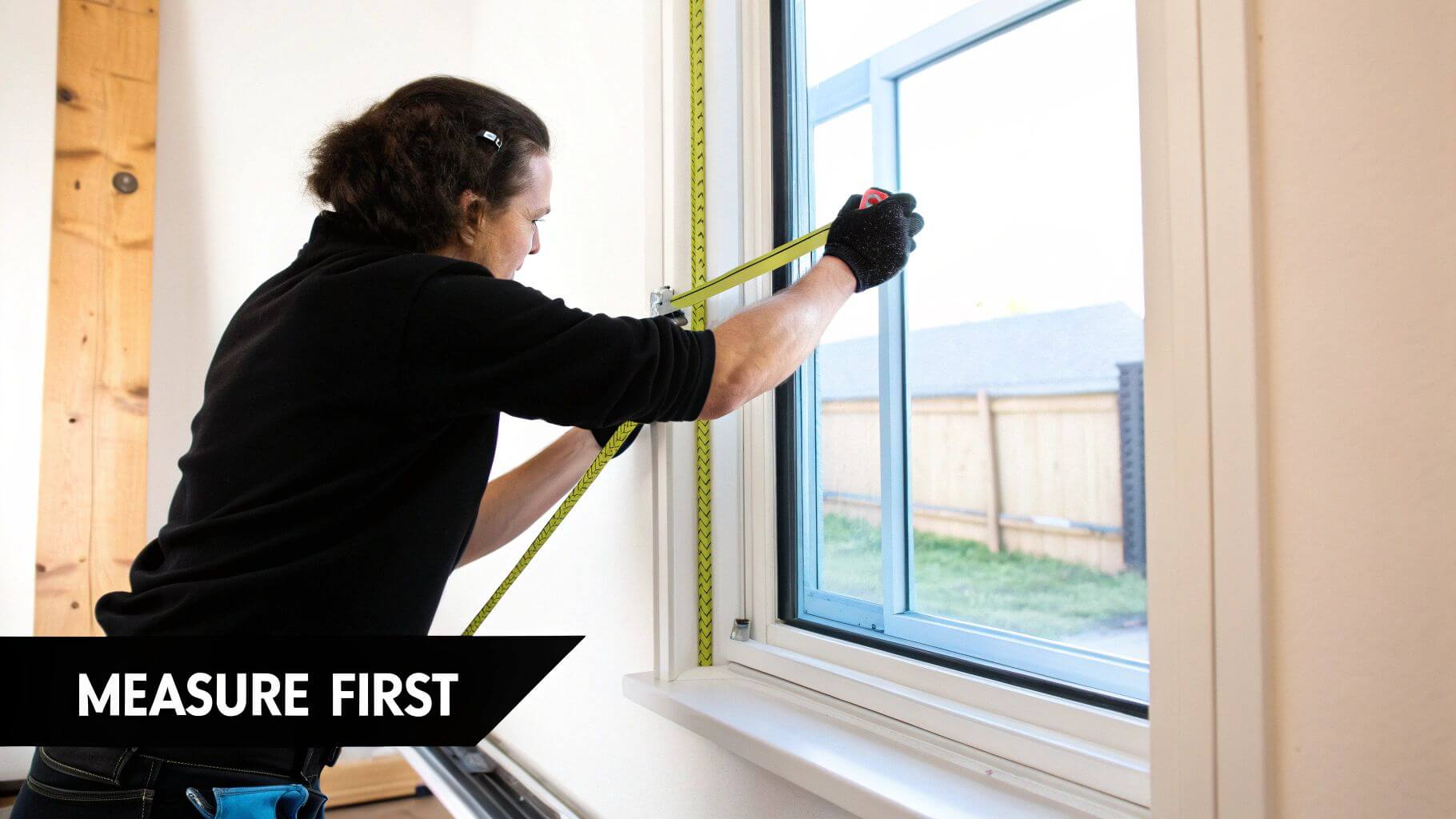
It all starts with something deceptively simple: measuring correctly. An error of even a quarter-inch can turn a bespoke design into an expensive mistake. Think of meticulous measuring as the foundation—get it right, and everything else falls perfectly into place.
The Foundation: Accurate Measurement
Before a single bracket is installed, you need exact dimensions. I always recommend a soft fabric tape measure for this task; it’s flexible and won’t risk scratching your frames or sills.
To get foolproof results every time, follow this simple process:
- Measure Width First: Take three width measurements—one at the top, one in the middle, and one at the bottom of the window frame. For treatments that fit inside the frame, you’ll want to use the narrowest of these three numbers.
- Then Measure Height: Repeat the process for the height, measuring on the left, in the center, and on the right. Just like with the width, the shortest measurement is your key to a clean fit.
- Check for Squareness: An old pro’s trick is to measure the window diagonally from corner to corner. If the two diagonal measurements match, your window is square. If they don’t, an outside-mounted treatment will be far more forgiving.
Taking a few extra moments here is what separates an amateur look from a professional one, whether you’re doing it yourself or handing the numbers off to an installer.
DIY Installation vs. Professional Help
Next, you have to decide: will you hang these yourself or call in an expert? If you’re working with a single roller shade or a standard set of curtain panels, a DIY approach can be straightforward and budget-friendly.
However, once the project gets more complex, hiring a professional is the smart move. Think motorized systems, enormous bay windows, or precision-fit treatments like plantation shutters. A seasoned installer brings more than just the right tools; they have the experience to navigate uneven walls, tricky mounting surfaces, and any other curveball your home might throw at them.
A professional installation is more than just a service; it’s peace of mind. It guarantees that your beautiful new window treatments will function smoothly and look exactly as intended, without the risk of costly DIY errors.
A Guide to Long-Term Upkeep
Keeping your window treatments looking brand new is all about a simple, consistent maintenance routine. The key is to match your cleaning method to the material—what works for durable faux wood could easily ruin delicate silk.
Here’s a quick breakdown for common materials:
- Wood and Faux Wood (Blinds/Shutters): A weekly dusting with a microfiber cloth is usually all you need. For a deeper clean, wipe them down with a slightly damp cloth, but never saturate real wood with water.
- Fabric Shades and Drapery: The brush attachment on your vacuum, set to low suction, is your best friend for removing dust. If you get a spot or a stain, check the manufacturer’s care instructions first. Many modern performance fabrics can be spot-cleaned with a mild detergent.
- Delicate Fabrics (Silk/Linen): These require a very gentle touch. Light, regular dusting is the safest approach. For anything more serious, I strongly recommend calling a professional cleaning service to avoid any risk of damage.
A little bit of care goes a long way. It’s what preserves the beauty and function of your treatments, ensuring they remain a celebrated part of your home’s story for years to come.
Answering Your Window Treatment Questions
Even the most well-thought-out design plan can hit a snag when it comes to the finer details of window treatments. A few common questions always seem to pop up, and getting them sorted can be the difference between a good result and a truly stunning one.
Let’s walk through some of the practical dilemmas I see most often. Think of this as the final layer of polish for your vision, turning potential headaches into features you’ll love.
How Do I Handle Unusually Shaped Windows?
When you’re faced with an arched, bay, or otherwise unique window, the golden rule is simple: enhance the architecture, don’t fight it. The window is a statement piece, and your treatment should act as the perfect frame.
- Arched Windows: The last thing you want to do is hide that beautiful curve. I often recommend custom-fitted plantation shutters because they can be crafted to match the arc perfectly, giving you light control without sacrificing the window’s elegant shape.
- Bay Windows: The key here is to honor the angles. You can treat each section of the bay individually with something sleek like cellular or Roman shades. This approach keeps the lines crisp and unified. For a softer look, a custom-bent curtain rod that follows the bay’s curve allows drapes to flow beautifully around the entire space.
Ultimately, you’re looking for a solution that feels like it was always meant to be there.
What’s the Secret to Layering Window Treatments?
Great layering is all about combining a practical, hardworking base with a beautiful decorative finish. It’s a one-two punch of function and style. The most effective strategy I’ve seen is to start with a functional shade—like a roller or cellular shade—mounted inside the window frame. This is your tool for privacy and light control.
Next, you add the decorative element. Think stationary curtain panels on a gorgeous rod mounted high and wide outside the frame. This is where you bring in color, pattern, and texture to soften the room. It creates a polished, dimensional look that feels incredibly intentional. A double curtain rod is another fantastic trick, letting you hang both sheers and heavier curtains for total versatility.
This layered approach is what gives a room that sense of depth and luxury. It’s how you seamlessly blend what you need with the aesthetic you want for a truly finished appearance.
Are Custom Window Treatments Really Worth the Investment?
I get this question all the time. While off-the-shelf options are certainly easier on the wallet, custom treatments are an investment in a superior fit, better quality, and a far more refined look. They’re built to the exact measurements of your windows, which means no awkward gaps or ill-fitting lengths. It’s that tailored, high-end finish that ready-made solutions just can’t replicate.
Going custom also opens up a whole world of premium fabrics, unique materials, and advanced control systems that you won’t find on a store shelf. If you have non-standard windows or simply want a cohesive, professionally designed space, the investment pays for itself in long-term value and the daily satisfaction of a job done right.
Are you an interior designer, architect, or builder looking to connect with a discerning clientele? Join the Haute Design network to showcase your work, gain visibility among high-net-worth individuals, and elevate your brand. Discover exclusive opportunities and join a community of the nation’s top design professionals at Haute Design.