


Luxury modern interior design isn’t about slapping on a high price tag or showing off with over-the-top opulence. Far from it. It’s an experience—one defined by a quiet confidence, impeccable craftsmanship, and a deep sense of personal meaning.
This aesthetic thoughtfully marries the clean, uncluttered lines of modernism with the rich textures of high-end materials and discreetly integrated technology. The result is a home that feels calm, harmonious, and deeply resonant with the people who live there.
Defining Today’s Luxury Modern Interior Design
True luxury modern design is less about how a space looks and more about how it feels. It goes beyond pure visual appeal to create an environment that actively supports and enhances a particular lifestyle. Every single element, from the grand architectural strokes down to the smallest tactile detail, is there for a reason.
This intentional approach has clearly struck a chord. The global luxury interior design market was valued at an impressive USD 52.26 billion in 2024. It’s projected to nearly double, reaching USD 104.73 billion by 2033, growing at a steady clip of 9.08% annually. This boom is fueled by discerning clients who understand the value of investing in personalized, exclusive living spaces. For a deeper dive into market trends, you can explore more insights on the growth of luxury home interior projects.
The Core Pillars of Sophistication
At its core, this design language is built on three fundamental pillars: scale, materiality, and personalization. These aren’t just buzzwords; they are the interlocking concepts that create spaces that are both visually stunning and emotionally fulfilling. Getting a handle on these is the first step toward crafting an authentically luxurious home.
- Scale and Proportion: This isn’t about making a space feel intimidatingly large. It’s about using generous dimensions to cultivate a sense of openness, freedom, and tranquility. Think of soaring ceilings that draw the eye upward, oversized art that commands attention without overwhelming, and furniture that is perfectly balanced within the room’s volume.
- Materiality and Texture: The very soul of luxury modern design is found in its materials. The focus is always on authentic, high-quality elements—natural stone with its unique veining, solid hardwoods that feel warm to the touch, and handcrafted metals that add a subtle gleam. These choices create a tangible sense of permanence and quality you can literally feel.
- Personalization and Bespoke Elements: A truly luxurious space is a mirror, reflecting the lives and passions of its inhabitants. This pillar is all about the details that make a house a home: custom-built furniture designed for a specific nook, smart technology that anticipates your needs, and curated art that tells a personal story.
The diagram below breaks down how these pillars work together to form the foundation of this sophisticated design approach.
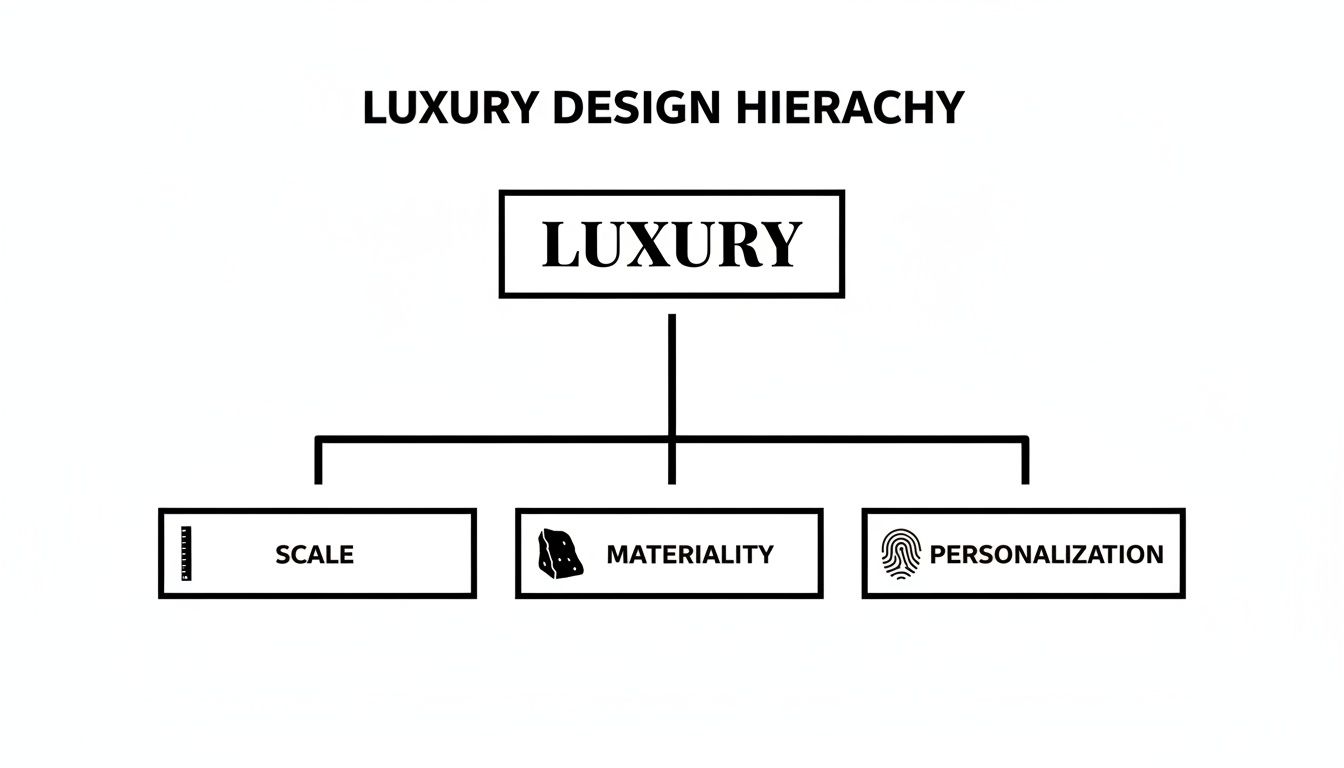
As this hierarchy shows, true luxury isn’t a single ingredient you can add. It’s the sophisticated outcome achieved through the masterful integration of grand scale, authentic materials, and deep personalization.
To crystallize these concepts, the table below summarizes the core tenets that distinguish luxury modern interiors.
Core Tenets of Luxury Modern Interior Design
A summary of the fundamental pillars that differentiate luxury modern design, highlighting the fusion of aesthetics and experience.
| Pillar | Description | Key Outcome |
|---|---|---|
| Scale & Proportion | Using generous dimensions and spatial planning to create a sense of openness and tranquility, rather than opulence. | A harmonious and balanced environment that feels both expansive and inviting. |
| Materiality & Finishes | Prioritizing authentic, high-quality materials like natural stone, solid wood, and handcrafted metals for their tactile and visual appeal. | A tangible sense of permanence, craftsmanship, and sensory richness. |
| Personalization & Craft | Integrating bespoke furniture, curated art, and custom solutions that reflect the owner’s identity and lifestyle. | A unique and deeply personal space that tells a story and feels genuinely lived-in. |
By understanding how these principles come together, you can start to see what truly elevates a space from simply “modern” to genuinely luxurious.
The Art of Scale, Proportion, and Flow
Beyond the choice of stone or wood, the real magic of luxury modern interior design lies in the invisible principles that shape a space: scale, proportion, and flow.
Think of it like a bespoke suit. What makes it drape so perfectly isn’t just the fabric; it’s the masterful relationship between every seam, cut, and line. The same is true for a high-end interior. These concepts are the silent architects that turn a room full of beautiful things into a cohesive, immersive experience. They quietly dictate how we perceive a room’s size, how our eyes move through it, and how we physically navigate the space.
When a designer gets this right, the home feels both grand and intimate, expansive yet comfortable. That’s the hallmark of true sophistication.
Harnessing a Generous Scale
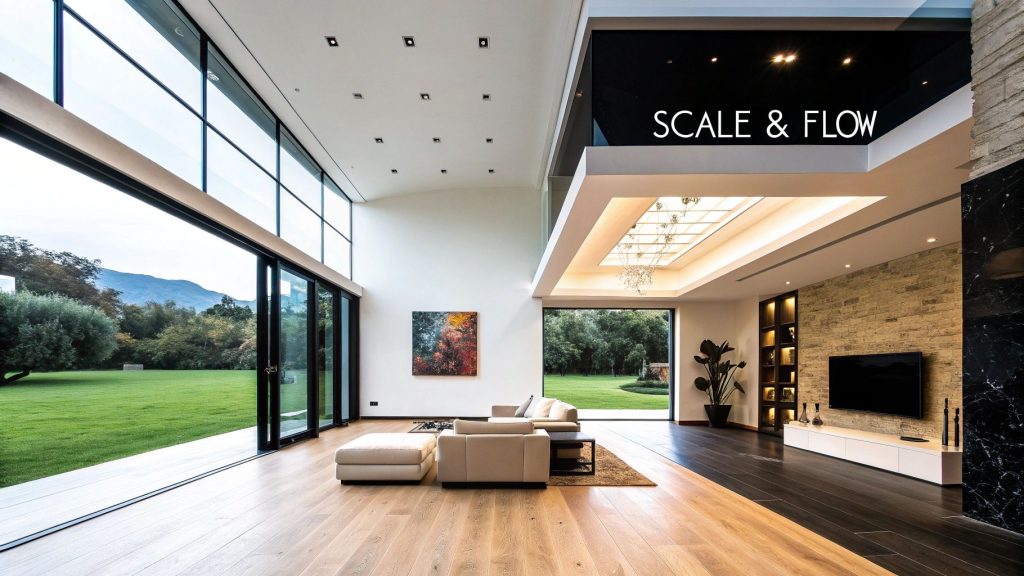
In luxury design, scale isn’t about showing off or intimidating; it’s about creating a sense of freedom and breathing room. You see this in grand architectural gestures—soaring double-height ceilings, oversized pivot doors, or massive floor-to-ceiling windows that practically erase the boundary between inside and out.
These large-scale elements pull the eye upward and outward, making the space feel almost limitless. The same idea applies to what you put inside. A single, monumental piece of contemporary art can command a wall with more quiet confidence than a dozen smaller pictures ever could. A monolithic kitchen island becomes a sculptural anchor, its sheer size making it both a functional workspace and a powerful statement.
The goal isn’t just to fill a room with big things. It’s about using scale to evoke a feeling—whether that’s awe, serenity, or calm. The right scale makes a room feel intentional, not accidental.
Achieving Harmony Through Proportion
While scale is about the size of individual objects, proportion is about how those objects relate to each other and to the room itself. It’s the subtle art of visual balance.
A designer might pair a low-slung, minimalist sofa with a tall, delicate floor lamp to create a pleasing contrast in vertical and horizontal lines. The width of a grand fireplace is carefully considered in relation to the wall it sits on, ensuring it feels like a natural focal point, not something forced into the space.
Many designers instinctively use classical principles like the Golden Ratio (roughly 1.618) as a subconscious guide. This mathematical harmony is often why a room just feels right, even if you can’t quite put your finger on why.
A few things to consider for proportion:
- Furniture to Room Size: Is the furniture appropriately sized for the room’s footprint, or does it feel like it’s shrinking or overwhelming the space?
- Object to Object: How does the visual weight of different items play off each other? A heavy, solid coffee table might need lighter armchairs with visible legs to feel balanced.
- Negative Space: The empty space is just as critical as the furnished areas. It gives key pieces room to breathe and creates a sense of uncluttered calm.
Designing Intuitive Flow
Finally, flow is the invisible current that guides you through a home. A well-designed luxury interior should feel completely intuitive, allowing you to move from one area to another without a second thought. This is about more than just an open floor plan; it’s about creating a logical and graceful path. For a deeper dive into this crucial first step, our interior design space planning guide is an excellent resource.
Designers create this effortless movement by:
- Establishing clear sightlines: Being able to see from one space to the next creates a visual connection that naturally draws you forward.
- Using architectural cues: A subtle drop in ceiling height, a shift in flooring material, or a wide archway can signal a transition between zones without needing a single wall.
- Arranging furniture with purpose: Furniture should guide movement, not block it. Pathways should be wide and clear, so you never feel like you’re navigating an obstacle course.
Ultimately, mastering the interplay of scale, proportion, and flow is what elevates a project from simply good to truly exceptional. It’s a complex balancing act that results in a home that doesn’t just look stunning, but feels fundamentally, instinctively right.
Mastering Materials, Textures, and Finishes
If scale and proportion give a room its structure, then materials, textures, and finishes provide its soul. This is where a space truly comes alive—it’s the difference between a room you simply look at and one you genuinely feel. The careful selection of materials is what speaks to our senses, creating a tactile experience that cheap imitations can never hope to match. This isn’t about just picking expensive things; it’s about understanding the story behind each choice and how it weaves into the home’s larger narrative.
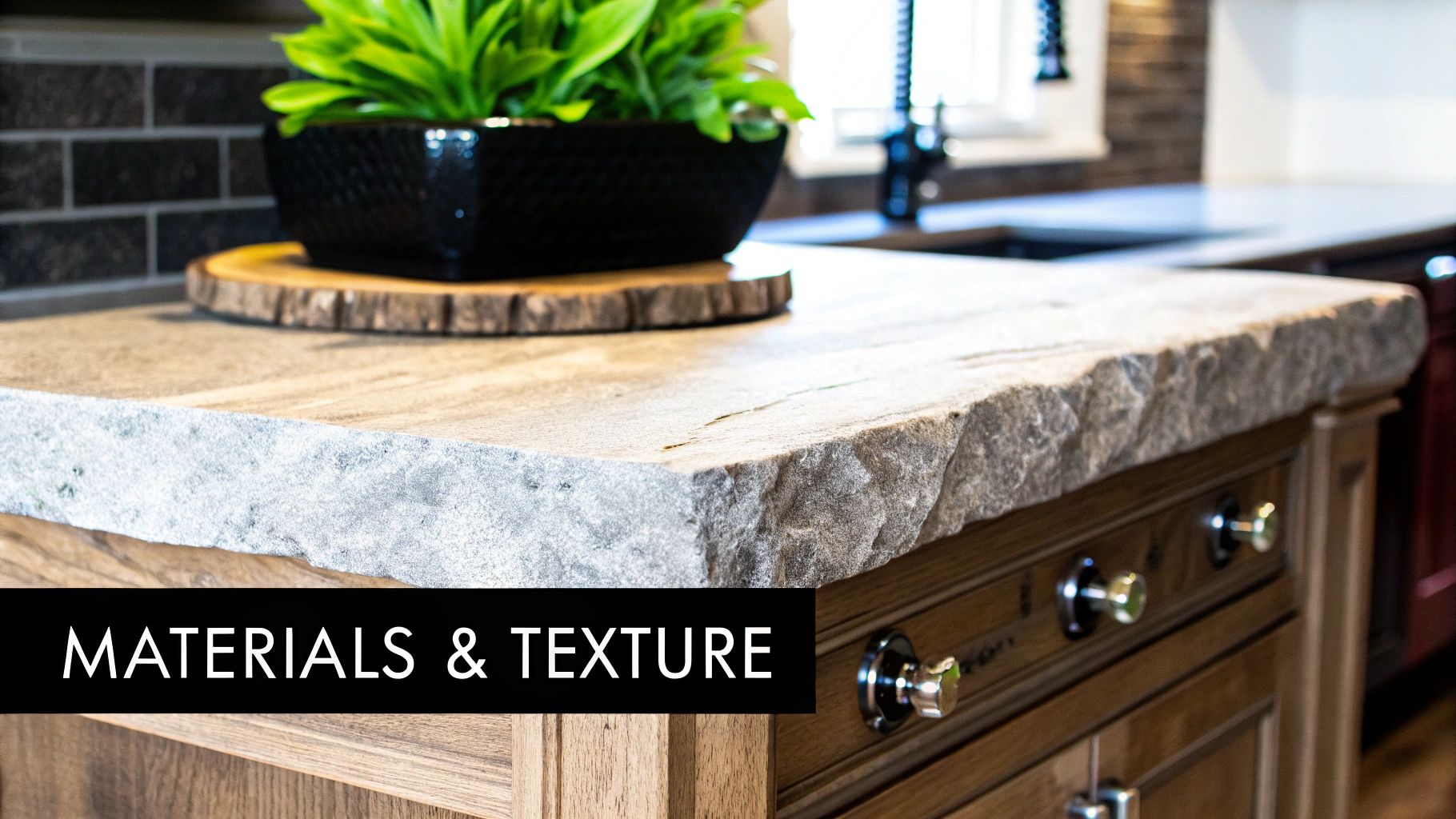
The focus here is always on authenticity and permanence. Think of the cool, solid feel of a Calacatta marble countertop, the organic warmth of a solid white oak floor, or the subtle gleam of hand-forged bronze hardware. These materials have a history and a visual weight that grounds a room in quality, creating a tangible sense of lasting value.
The Power of Textural Contrast
One of the most powerful techniques in any designer’s arsenal is the artful use of textural contrast. It’s the deliberate interplay between different surfaces that makes each one pop. By placing rough against smooth, matte against polished, or hard against soft, we create a dynamic and sensorially rich environment that is anything but flat.
This is the secret to preventing a minimalist space from feeling cold or sterile. It adds depth and character, inviting you to touch and take a closer look.
Just imagine these compelling pairings:
- Rough-Hewn Wood and Polished Concrete: A live-edge dining table set against a smooth, polished concrete floor creates a stunning dialogue. The wood’s organic, untamed nature is amplified by the sleek, industrial quality of the concrete.
- Soft Bouclé and Sleek Metal: Picture a plush bouclé armchair next to a slender, brushed-brass floor lamp. The combination is a beautiful conversation between softness and structure, comfort and sophistication.
- Natural Stone and Sheer Fabric: A rugged, split-face stone feature wall, softened by the delicate transparency of sheer linen curtains, strikes a perfect balance between raw strength and ethereal lightness.
The core idea is simple: each material helps the other shine. This contrast creates a visual and tactile journey through the space, making the design far more engaging and memorable.
This commitment to quality is driving huge market growth. North America leads the luxury interior design sector, and the U.S. industry alone is projected to hit $27.2 billion in revenue by 2025. Remodeling is the fastest-growing segment, with high-net-worth individuals spending 20-30% more on the personalized elements that make their homes truly their own. You can explore more insights on the booming interior design market on IBISWorld.
How Finishes Shape the Mood
Beyond the raw material, its finish is absolutely critical in shaping a room’s atmosphere. The same piece of wood or stone can evoke completely different feelings based purely on how its surface is treated. Finishes are that final, crucial layer of detail that elevates a design from simply modern to genuinely luxurious.
High-gloss finishes, for example—like lacquered cabinetry or polished chrome fixtures—bounce light around a room. This creates a sense of drama, energy, and glamour, making spaces feel brighter and more expansive. It’s a perfect choice for making a high-impact statement.
On the other hand, matte finishes—such as honed marble, flat-paint walls, or oiled wood—absorb light. The effect is much softer, creating a subtle and tranquil mood. Matte surfaces feel understated and sophisticated, allowing the material’s inherent texture to become the star of the show. You can dive deeper into how custom finishes are applied in our article on what architectural millwork is and the role it plays in luxury homes.
Ultimately, mastering materials in luxury modern interior design is an exercise in intentionality. It’s about curating a palette of authentic, high-quality elements and orchestrating their textures and finishes to build a cohesive, emotionally resonant environment. The result is a space that doesn’t just look luxurious—it feels it in every surface you touch and every detail you see.
Crafting Atmosphere with Strategic Illumination
If materials are the soul of a room, then lighting is its voice. In the world of luxury modern interior design, light is so much more than a utility—it’s an invisible architectural tool used to sculpt space, guide the eye, and shape emotion. A truly exceptional lighting plan is like a musical score for the room; it sets the tempo, builds drama, and creates an atmosphere you can feel.
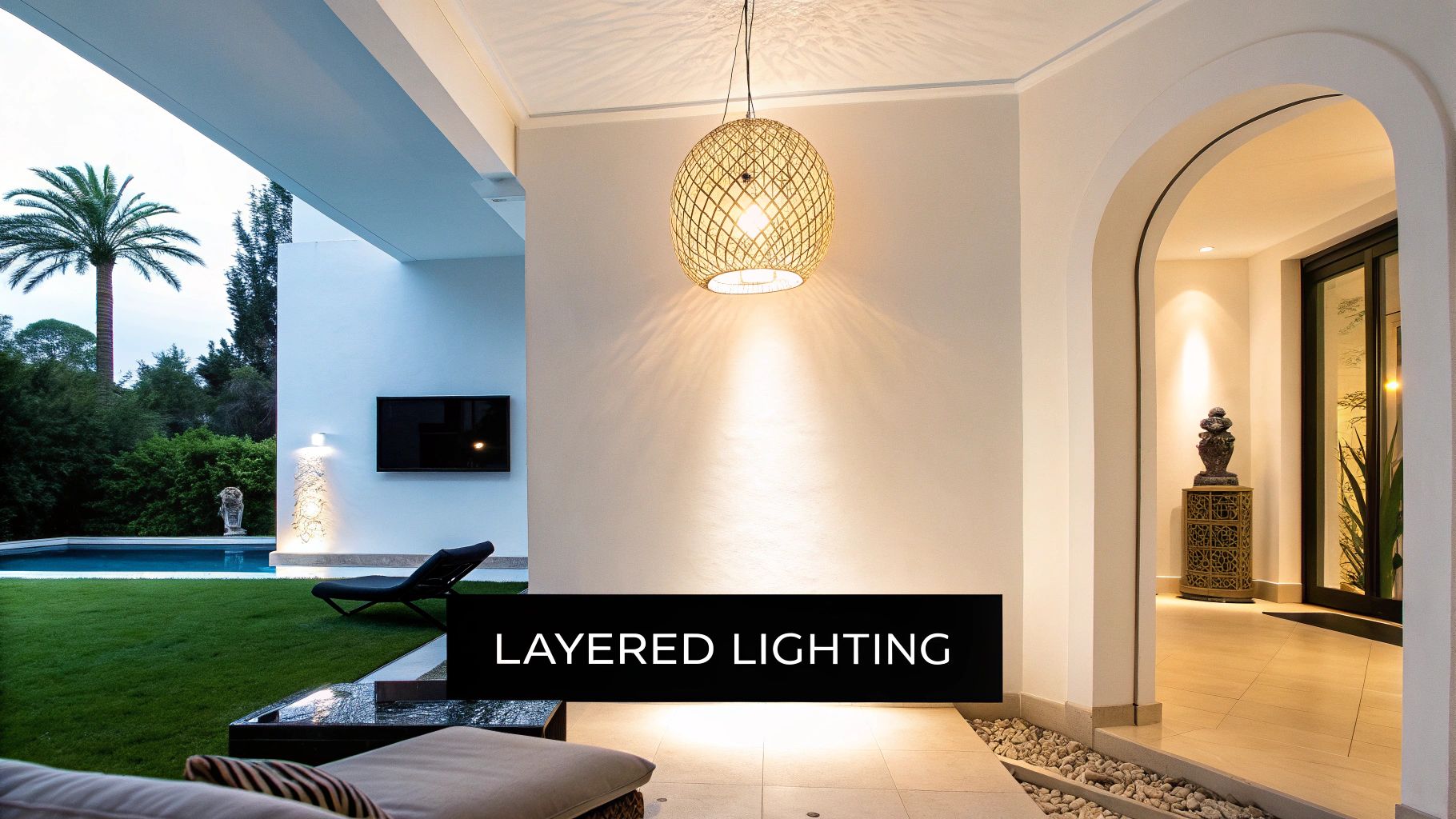
This mastery is achieved through a technique known as layered lighting. It’s a sophisticated approach that weaves together three distinct types of illumination. Each layer has a specific job, and when combined, they produce a flexible, dynamic, and visually rich environment that can adapt to any moment.
The Three Layers of Light
To create an immersive space, designers think about light in three distinct categories. The magic happens when these layers are blended so seamlessly that you don’t notice the individual sources, only the beautiful effect.
- Ambient Lighting: This is your foundation—the room’s overall glow. It provides general illumination, making a space comfortable and easy to navigate. Think of recessed downlights, soft cove lighting hidden in architectural details, or a stunning central fixture.
- Task Lighting: Just as it sounds, this is targeted light for getting things done. A sleek pendant over a kitchen island, an adjustable reading lamp by a favorite chair, or under-cabinet strips for chopping vegetables are all perfect examples. It’s all about providing clear, focused light right where you need it.
- Accent Lighting: This is where the drama comes in. Accent lighting is used to draw attention to the things that make a space unique—a piece of art, a textured wall, or a striking architectural feature. Imagine a spotlight grazing a rough stone fireplace to bring out its texture, or an uplight placed behind a tall sculpture to cast dramatic shadows.
By weaving these three layers together, a designer can change a room’s entire mood with the touch of a button—shifting from bright and energizing for a party to soft and intimate for a quiet evening at home.
Lighting Fixtures as Sculptural Art
In luxury modern design, the light fixtures themselves are often statement pieces. A breathtaking chandelier or a series of sculptural pendants can become the primary focal point of a room, looking just as incredible when the lights are off.
These fixtures are selected for their form, material, and craftsmanship just as much as for the light they produce. A piece crafted from hand-blown glass, forged bronze, or intricately welded metal adds another layer of bespoke detail that speaks to the home’s quality. It becomes a conversation starter, an object of beauty that elevates the entire design.
The Rise of Integrated Smart Systems
The final element of a truly modern lighting plan is intelligent control. High-end homes now feature seamlessly integrated smart systems that offer a level of convenience and customization that was once unimaginable. These systems let homeowners create and save specific “scenes” for different activities. A “dinner party” scene might dim the ambient lights while spotlighting the dining table, while a “movie night” scene instantly lowers everything to a subtle glow.
This level of control goes far beyond a simple dimmer. It allows for fine-tuning brightness and even color temperature to perfectly match the desired mood. Light becomes a responsive, intuitive part of the home, adapting to the lives of those inside it. It’s this strategic, multi-layered, and intelligent approach that truly brings a luxury modern interior to life.
Injecting Personality with Bespoke Elements
True luxury modern interior design is where we move beyond trends and catalogs. It’s about crafting a home that tells a story—your story—through custom craftsmanship, intuitive technology, and carefully chosen art. This is the moment a beautifully designed house truly becomes a home, a genuine reflection of the lives, passions, and sensibilities of the people who live there.
While high-end retail furniture certainly offers quality, bespoke—or custom-made—elements bring an unmatched level of harmony to a space. Think of it like the difference between a designer suit off the rack and one that’s made-to-measure. The first is excellent, but the second is crafted for one person, fitting every contour perfectly. Bespoke design applies that very same principle to your home.
The Unmatched Value of Custom Furniture
Custom furniture isn’t just about picking a different fabric. It’s a creative process, one that results in pieces perfectly proportioned to the unique scale of a room and precisely tailored to the owner’s lifestyle.
Imagine a sprawling, curved sofa built to follow the exact arc of a bay window. Or a dining table milled from a single slab of wood, designed to seat exactly twelve guests. These are pieces that aren’t found—they are conceived and created. This approach not only solves spatial challenges with elegance but also ensures every piece feels like an integral part of the home’s architecture, not just an object placed within it.
It’s no surprise that this level of customization is a significant driver in the luxury market. Clients often increase their spending by 15-20% for bespoke pieces because they get a unique blend of perfect fit, personal expression, and superior craftsmanship that mass-produced items simply can’t match.
Bespoke design is the ultimate expression of purpose. Every element is present because it serves a specific function or reflects a personal story, creating a home that is as unique as a fingerprint.
Seamlessly Integrated Smart Home Technology
In a luxury modern home, technology should be felt, not seen. The goal is to get rid of visible gadgets and cluttered controls, instead weaving smart systems into the very fabric of the house. This isn’t about chasing the latest tech for its own sake; it’s about creating an environment that intuitively makes life more comfortable and convenient.
This kind of silent integration can look like:
- Automated Window Treatments: Shades that silently lower and rise with the time of day, managing natural light and maintaining privacy without a second thought.
- Climate Control That Learns: Systems that adapt to your daily routines, ensuring the temperature is always perfect without anyone touching a thermostat.
- Invisible Audio: Speakers concealed within walls or ceilings, delivering immersive sound throughout the home without any visual clutter.
The demand for this subtle, integrated tech is soaring, with smart home systems now expected in 70% of new luxury builds across North America. This shift proves that the ultimate luxury is a home that anticipates and responds to your needs effortlessly.
Art as a Core Narrative Element
The final layer of personalization comes from the curation of art. In luxury modern interior design, art is never just decoration. It’s a core narrative element that establishes powerful focal points and expresses a profound sense of individuality. It’s the soul of the space, offering a window into the owner’s perspective.
A single, monumental painting can anchor a living room, its colors influencing the entire palette of the space. A thought-provoking sculpture placed at the end of a hallway can create a moment of pause and reflection. Selecting art is a deeply personal journey, one that transforms walls into conversation starters and rooms into galleries of personal expression.
This approach is part of a larger movement where sustainability and technology are reshaping the industry, with eco-friendly practices now influencing 40-60% of high-end projects. You can discover more data about the evolving trends in luxury interior design on Stats Market Research.
By bringing together bespoke furniture, invisible technology, and meaningful art, a home becomes far more than a collection of beautiful objects. It becomes a living, breathing extension of its owner—a space that is truly one of a kind.
How to Find and Hire an Elite Interior Designer
Bringing a truly luxurious modern interior to life is about more than just knowing the rules of design—it’s about knowing how to break them with intention and artistry. While you might grasp the concepts of scale, materiality, and lighting, a seasoned professional knows how to orchestrate them into something truly breathtaking.
This is why partnering with an elite interior designer is less a luxury and more a crucial investment. It’s the difference between a beautiful room and a space that fundamentally enhances how you live.
A top-tier designer is the conductor of your project’s symphony. They bring together architects, artisans, contractors, and craftspeople, ensuring every single element works in harmony. Their little black book is filled with contacts for exclusive materials and custom furniture makers that you simply can’t find on your own. Most importantly, they save you from the expensive missteps and the sheer exhaustion of managing a complex project.
Begin with a Clear Vision
Before you even think about interviewing designers, you need to get clear on your own vision. The best designer-client relationships are built on a shared aesthetic language. So, start collecting images. Create a mood board—digital or physical—that captures the feeling you’re after.
Is it the clean, almost monumental scale of a minimalist masterpiece that speaks to you? Or do you lean toward the warmth of rich, layered textures and materials? Nailing this down helps you communicate your desires and allows a designer to see if their style is the right fit for your dream.
Finding the Right Professional
Searching for the perfect designer can feel like looking for a needle in a haystack. Thankfully, curated networks have emerged to do the heavy lifting for you. Platforms like Haute Design act as a filter, connecting discerning clients with a pre-vetted roster of the country’s top talent. It takes the guesswork out of the equation, so you know you’re only meeting with designers who have a proven history of delivering exceptional work.
A great designer doesn’t just decorate; they solve invisible problems with elegance and creativity. Their true value is in seeing the hidden potential of a space and executing a vision you never could have imagined on your own.
When you start meeting with potential designers, look past the beautiful photos in their portfolio. The right fit is as much about chemistry and communication as it is about style.
- Ask about their process. How do they run their projects? What’s their system for updates, budgets, and handling the inevitable hiccups along the way? A clear, transparent process is a sign of a real pro.
- Talk about communication. Do you need a weekly email, or do you prefer quick texts as things happen? Make sure their style works with yours to keep things running smoothly.
- Check their references. Always talk to past clients. Ask them about the designer’s creativity, their ability to solve problems, and whether they kept the project on track and on budget.
In the end, hiring an elite interior designer means finding an expert you trust to take your vision and elevate it. By using a curated network like Haute Design, you bypass the noise and connect directly with the masters of luxury modern design. You’re not just hiring someone to pick out furniture; you’re setting the stage for an extraordinary home that will enrich your life for years to come.
A Few Common Questions
When you’re considering a luxury modern design project, a few practical questions almost always come up. Thinking about the budget, the timeline, and whether the style will last is completely normal. Let’s walk through some clear answers to help you plan your project with confidence.
What Should I Expect to Invest in a Luxury Project?
Budgeting for a high-end modern interior isn’t about hitting a magic number; it’s about understanding where the value lies. As a starting point, many clients allocate 10-20% of their property’s value toward the interior design, furnishings, and finishes. But honestly, that figure can shift dramatically depending on the scale of the project and how much custom work is involved.
In luxury design, a huge part of the budget is dedicated to craftsmanship and rare materials. You’re not just buying a high price tag. You’re investing in a one-of-a-kind furniture piece built by a master artisan or securing that perfect slab of Calacatta marble. The focus is on quality that stands the test of time, not something that will feel dated in a few years.
How Long Does a Project Like This Typically Take?
Great design takes time, and patience is truly a virtue in the world of luxury interiors. A single room can take anywhere from 3 to 6 months to complete, while a full-home renovation can easily stretch from 12 to 24 months, sometimes longer. The timeline is all about prioritizing quality over speed.
Here’s why it takes as long as it does:
- Bespoke Creations: Custom furniture and cabinetry aren’t pulled off a shelf. They are meticulously crafted by hand to fit your space perfectly, and that process has its own schedule.
- Material Sourcing: Finding unique materials, whether it’s a specific type of wood or a rare stone from a quarry overseas, can be a time-consuming hunt.
- Artisan Schedules: The very best craftspeople—the ones you want working in your home—are in high demand and often have waiting lists.
True luxury cannot be rushed. The timeline reflects a deep commitment to thoughtful planning and impeccable craftsmanship. It’s about getting every last detail right to ensure the final result is nothing short of flawless.
Is Luxury Modern Design a Style That Will Last?
Absolutely. Trends will always come and go, but the foundational principles of luxury modern design—exceptional materials, clean lines, and perfect proportions—are enduring. When a design is built around natural, authentic materials like stone, metal, and wood, the space doesn’t just age; it evolves, often gaining character and beauty over the years.
This approach sidesteps fleeting fads by rooting itself in classic design theory and architectural honesty. By investing in a serene, uncluttered aesthetic built on a foundation of quality, you’re creating a home with true staying power. It’s an investment in a style that will feel just as sophisticated and relevant decades from now as it does today.
Ready to find a designer who can translate your vision into a breathtaking reality? Explore the premier network of vetted professionals at Haute Design. Begin your journey and find your perfect design match today.