


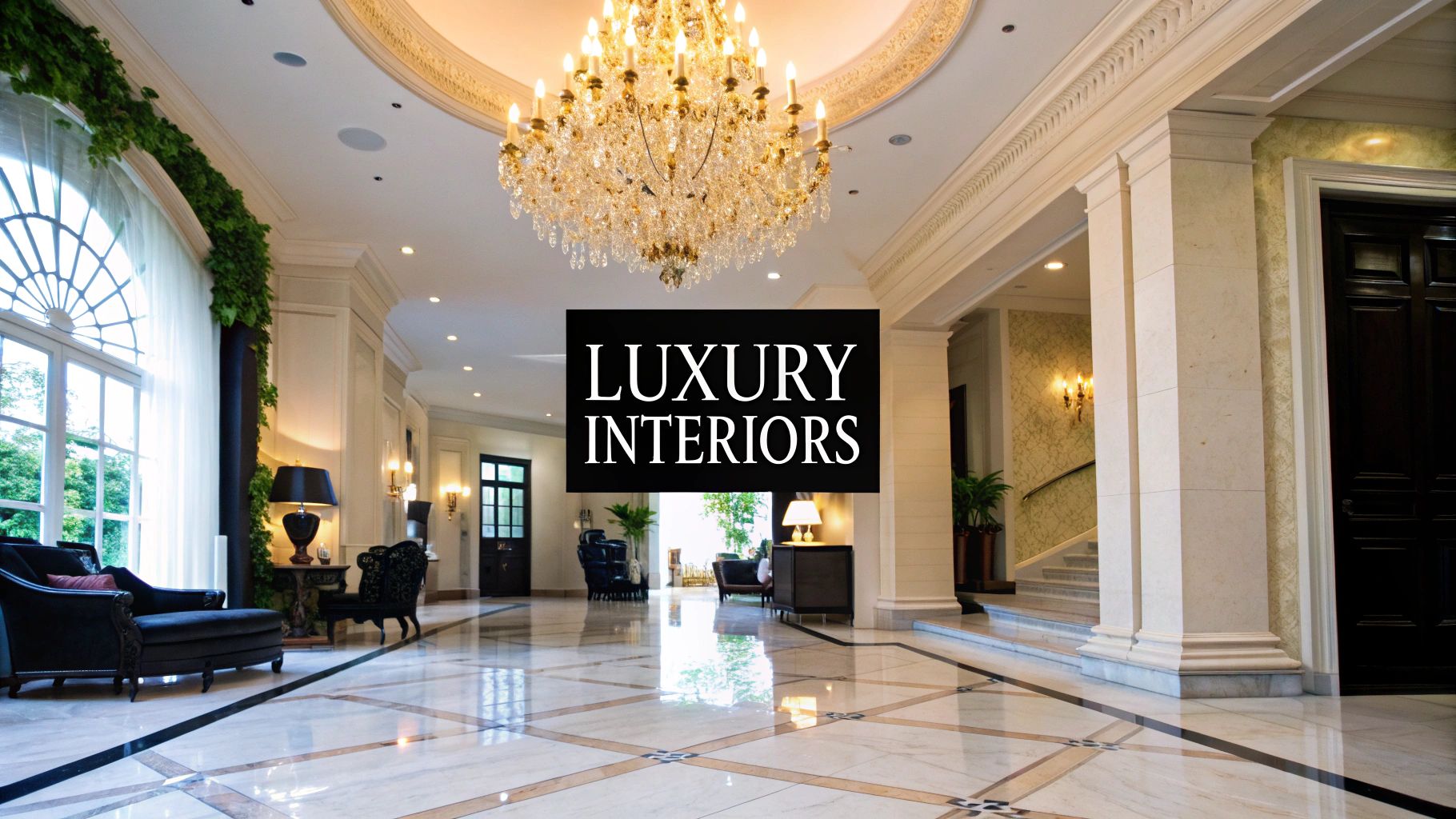
When you step into a truly luxurious mansion, you’re not just entering a house filled with expensive things. You’re stepping into a story. This is the real art of grand-scale interior design: creating a bespoke world that perfectly mirrors the life and vision of its owner.
It’s a delicate dance, balancing immense scale with intimate comfort. The core tools aren’t just fabric swatches and paint chips; they’re light, space, and materiality. This philosophy is what transforms a magnificent structure into a deeply personal statement.
The Guiding Philosophy of Grand Design
At its core, designing a luxury mansion is a narrative craft. It deliberately sidesteps fleeting trends to focus on something far more enduring: timeless elegance and profound personal meaning.
Think of it like this: a master painter doesn’t just start throwing color onto a canvas. They study its size, texture, and potential. Similarly, a designer sees a mansion’s architecture not as a collection of rooms to be filled, but as the foundation for a single, cohesive, and emotionally resonant experience. The ultimate goal is to craft a home that feels both awe-inspiring and profoundly personal—a sanctuary that genuinely enhances the owner’s life.
This approach goes far beyond mere decoration. It’s the difference between buying a high-end suit off the rack and having one custom-tailored. The former is beautiful, but the latter is a true extension of yourself. Every single decision, from positioning a window to perfectly capture the morning sun to selecting a hand-woven rug for its specific texture, is driven by intention.
Core Pillars of Luxury Interiors
To bring this vision to life, designers rely on a handful of foundational principles. These aren’t just checklist items; they work together in harmony, creating a symphony of design that feels both effortless and authentic. Understanding these pillars is the key to appreciating the incredible complexity behind a beautifully simple space.
- Spatial Harmony: This is the mastery of scale. It’s about designing vast, impressive areas for entertaining while also carving out smaller, intimate nooks for quiet moments. Every single room must have a clear purpose and feel comfortable on a human level, avoiding the “empty museum” trap.
- Material Integrity: Real luxury is built on authentic, high-quality materials. This means choosing elements not just for their aesthetic, but for their story, their craftsmanship, and the way they feel—the cool, smooth touch of Italian marble, the rich aroma of cedar, or the soft give of pure silk underfoot.
- Bespoke Artistry: Customization is everything. Whether it’s a commissioned piece of furniture built by a master craftsman or a carefully curated art collection, these unique elements give a home its soul. They tell the story of the people who live there, making the space utterly impossible to replicate.
A mansion should be a portrait of the person who lives within it. The design is the language used to articulate their passions, history, and aspirations, creating a legacy that is both beautiful and deeply meaningful.
In the end, this philosophy is about much more than decorating. It’s about crafting a lasting legacy—an investment in a quality of life where comfort, beauty, and personal expression are valued far above any temporary style.
2. Mastering Grandeur Through Space and Scale
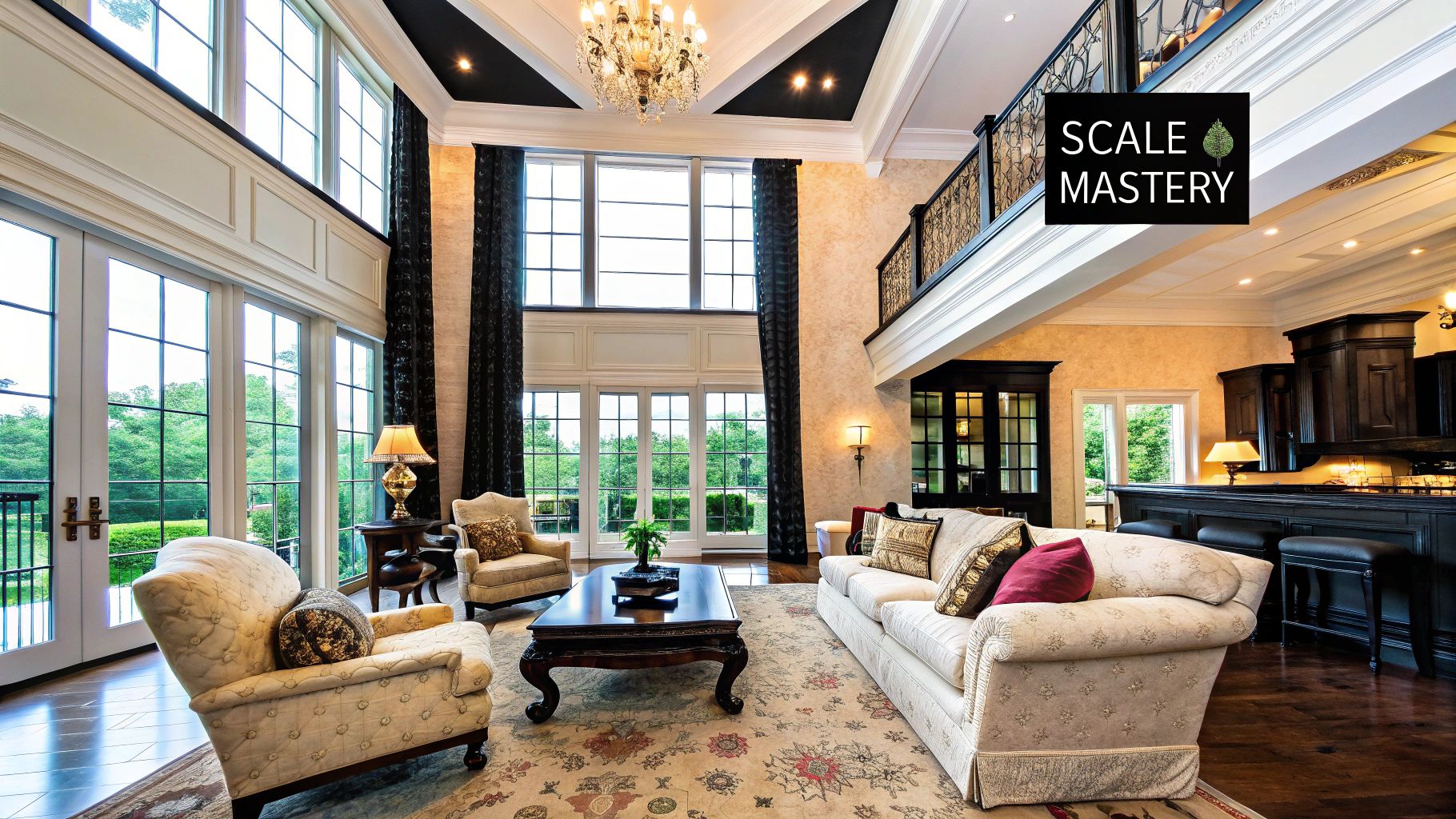
A luxury mansion’s greatest feature is also its trickiest challenge: its sheer, cavernous space. Left unchecked, a grand room can feel more like a sterile museum hall than an inviting home. The real artistry isn’t just filling the space, but commanding it—crafting an environment that feels awe-inspiring when you walk in, yet perfectly intimate for everyday living.
This is where the discipline of spatial planning truly shines. Picture a massive, open-plan great room as an empty stage. The designer’s job is to direct the scene, creating distinct zones for different activities without ever putting up a wall. We call this zoning, and it’s the secret to making vast areas feel both functional and comfortable.
Defining Spaces Without Walls
Zoning isn’t about physical barriers; it’s about visual suggestion. As designers, we use clever cues to outline different areas, guiding people through the space intuitively. This simple act gives every corner a purpose and stops that feeling of being adrift in a sea of emptiness.
A sprawling living area, for instance, can be cleverly divided into several distinct vignettes:
- A primary seating area might be anchored by a grand fireplace, with its boundaries clearly defined by a large, custom area rug.
- An intimate conversation nook, perfect for reading, could be tucked by a window with just two plush armchairs and a small side table.
- A subtle entertainment zone can be established with a discreetly integrated media console and comfortable, low-profile seating.
This approach makes sure every square foot is working. Architectural details are also part of our toolkit. Something as simple as a dropped ceiling, a shift in flooring from wood to stone, or an ornate archway can signal a transition between zones, adding visual structure and depth.
The ultimate success of a grand interior is measured not by its size, but by how it makes you feel. The goal is to design a space that can host a hundred guests for a gala yet still feel like a cozy retreat for two.
Achieving Flow and Proportion
After zoning, we focus on flow—the way people naturally move through a home. In a mansion, this means carving out clear, unobstructed pathways that connect rooms and zones gracefully. Good flow feels effortless, guiding you from one space to the next without creating awkward bottlenecks or moments of confusion. Professionals hone this skill over years, and digging into an interior design space planning guide reveals just how much thought goes into it.
Proportion is the final piece of the spatial puzzle. In a room with soaring ceilings and a sprawling footprint, standard furniture looks comically small, almost like dollhouse pieces. Every single element, from the sofa and chandelier to the artwork on the walls, has to be selected to match the home’s architectural volume.
Getting the scale right requires a practiced eye:
- Furniture: We always lean towards oversized, substantial pieces—think deep-seated sofas, massive coffee tables, and tall, commanding cabinets that hold their own.
- Lighting: Statement chandeliers and large pendant lights do more than just illuminate. They act as sculptural elements that fill vertical space and draw the eye upward, celebrating the height of the room.
- Artwork: Grand walls cry out for equally grand art. A single, enormous painting or a curated gallery wall of large-scale pieces creates a powerful impact where smaller works would simply get lost.
By mastering zoning, flow, and proportion, a designer turns a mansion’s imposing scale from a daunting challenge into its most powerful asset. The result is a home that feels both majestic and deeply personal, a space that celebrates its own grandeur while never forgetting the human at its heart.
The Signature Palette of Luxury Materials
In a luxury home, materials aren’t just the finishing touch—they are the soul of the space. While a mansion’s grand scale provides the canvas, it’s the rich, tactile palette of materials that truly brings the design to life. This is where a designer’s expertise shines, orchestrating a symphony of textures and finishes that feel both timeless and deeply personal.
This process goes far beyond just picking expensive items from a catalog. It’s about understanding a material’s provenance—its origin story—and appreciating its inherent character. Think of the breathtaking drama of book-matched Calacatta Gold marble, where two adjoining slabs are polished to mirror each other’s veining perfectly. It’s a technique that turns a natural stone into a singular work of art, telling a geological story millions of years in the making.
The same philosophy applies underfoot. We move past standard options and into the realm of hand-scraped, wide-plank oak or walnut. Those subtle, intentional imperfections in the wood’s surface catch the light in a way that machine-finished floors just can’t match, adding a handcrafted warmth that feels authentic and lived-in. Every material is chosen for the unique chapter it adds to the home’s narrative.
Creating a Symphony of Textures
The secret to a visually stunning space is layering. Without it, even the most expensive rooms can feel flat and one-dimensional. A great design effortlessly weaves together hard and soft, rough and smooth, matte and reflective surfaces. It’s this constant interplay that creates a dynamic, engaging, and incredibly inviting environment.
Think of it like composing music. A single note is just a sound, but combining different notes creates a beautiful melody. The same holds true for materials.
- Natural Stone: Marble, granite, and travertine offer a cool, solid foundation with an elegance that never goes out of style.
- Exotic Woods: Woods like zebrawood or ebony introduce warmth and intricate grain patterns, often used for bespoke cabinetry or a stunning feature wall.
- Bespoke Metalwork: Accents of bronze, brass, or blackened steel in custom light fixtures and hardware add a touch of industrial refinement.
- Sumptuous Textiles: The softness of silk drapery, the rich pile of a velvet sofa, or a cashmere throw provides that crucial layer of comfort.
This infographic shows just how beautifully these distinct elements can come together.
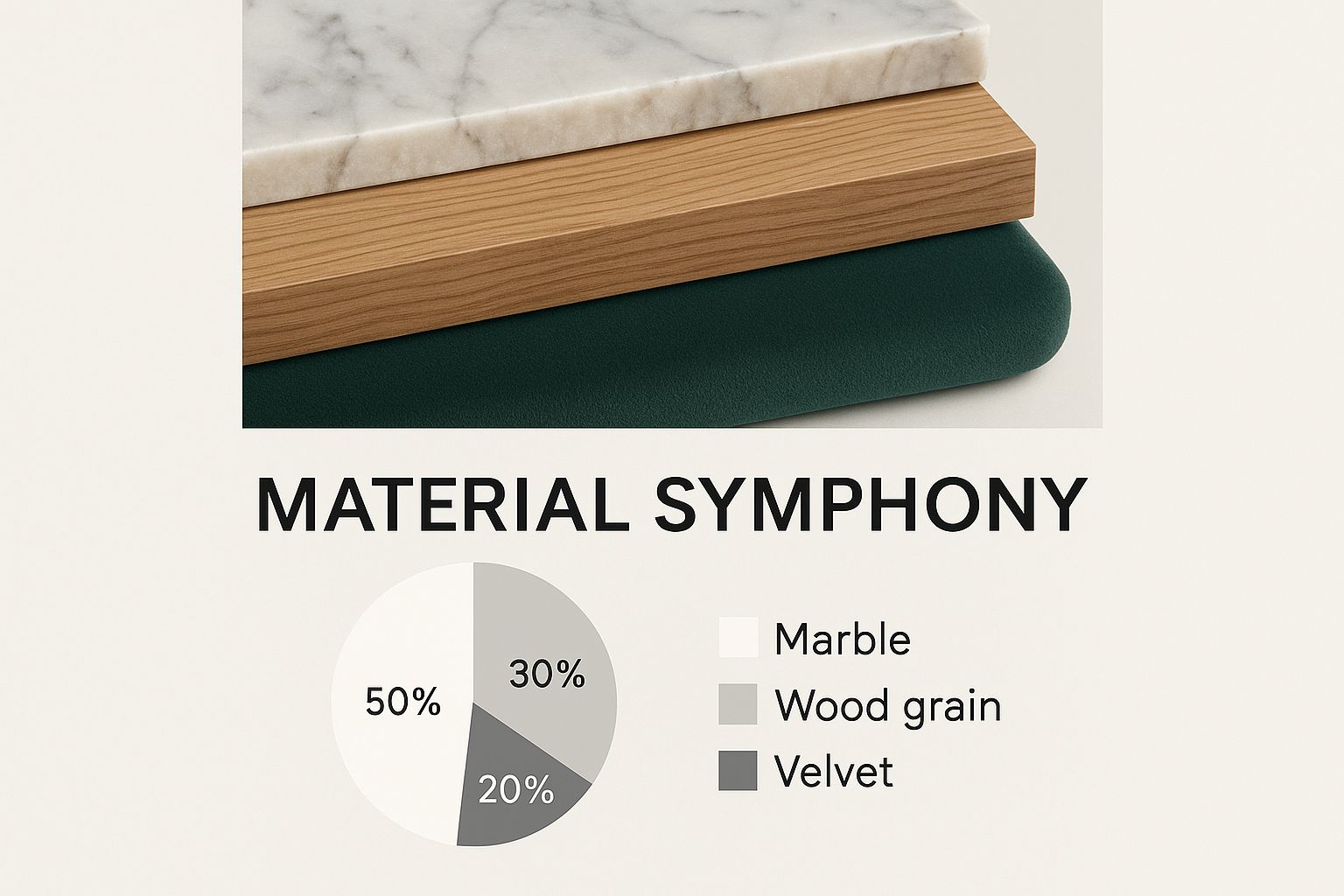
You can see how the contrasting textures—the smooth coolness of the stone, the organic warmth of the wood, and the plush softness of the fabric—work in harmony to create a balanced and sophisticated composition.
The Rise of Sustainable Luxury
One of the most significant shifts we’re seeing in high-end design is the move toward sustainability without compromise. Today’s definition of luxury includes a deep respect for the environment, focusing on materials that are not only beautiful but also responsibly sourced and thoughtfully crafted.
This trend is a major force in the market, which is projected to grow to USD 238.98 billion by 2034. This growth isn’t just about aesthetics; it’s driven by discerning clients who value eco-friendly materials and ethical craftsmanship just as much as they value beauty.
This conscious approach brings a whole new set of materials into the designer’s palette:
- Reclaimed Woods: Sourced from old barns and forgotten buildings, this timber carries a rich history and a unique patina that simply can’t be faked.
- Recycled Glass and Metal: These are being transformed into stunning countertops, tiles, and decorative elements that are both beautiful and responsible.
- Natural Fiber Fabrics: Organic linen, bamboo silk, and ethically sourced wool offer incredible texture with a much smaller environmental footprint.
The most luxurious material is authenticity. Whether it comes from a centuries-old quarry or a sustainably managed forest, a material’s true value lies in its integrity and its ability to tell an honest, compelling story.
Ultimately, the materials define the character of a luxury home. It’s about the careful layering of textures, the story behind each element, and the emotional response they evoke. The colors and textures used have a profound impact on mood and perception; you can delve deeper into mastering interior design color psychology to truly understand this connection. By orchestrating this material symphony, a designer transforms a grand house into a breathtaking and deeply personal home.
Integrating Technology for Smart Luxury Living
In the world of high-end design, true luxury isn’t just about what you see; it’s about how you feel and the ease with which you live. This is where technology steps in, not as a clunky add-on, but as a silent partner woven into the very fabric of the home.
The goal is to build an intelligent, responsive environment that anticipates your needs without you ever having to think about it. We call this ‘smart luxury’—the art of making incredibly sophisticated systems disappear, leaving only their benefits behind. Think of walking into a room where the lights softly brighten to your favorite setting, the temperature settles at a perfect 72 degrees, and your go-to playlist fades in from invisible speakers. This isn’t a far-off concept; it’s the new standard.
The Principle of Invisible Integration
The most impressive smart homes are the ones where you can’t spot the tech. The magic is in the concealment. From the initial architectural drawings, we work hand-in-hand with A/V specialists and engineers to hide every wire, speaker, and sensor, making sure nothing compromises the home’s aesthetic integrity.
This is about creating a central nervous system for the house, a unified system that manages everything from security and climate to entertainment and lighting with flawless precision. It’s what transforms a beautiful building into an intelligent sanctuary.
Key areas where we make technology disappear include:
- Invisible Audio: Imagine speakers plastered directly into the drywall and painted over, becoming completely unseen while filling the space with immersive, high-fidelity sound.
- Motorized Art and Panels: With a single touch, a treasured painting can slide aside to reveal a large-screen television, or a section of a wood-paneled wall can retract to unveil a full home cinema.
- Automated Window Treatments: Custom draperies and shades glide silently from recessed pockets in the ceiling, controlled by timers or even light sensors that react to the sun’s position throughout the day.
Crafting Personalized and Responsive Environments
Beyond the hardware, the real power of smart luxury is its ability to create hyper-personalized experiences. A well-designed system learns the rhythms of your life, allowing us to program custom “scenes” for any occasion. A “Dinner Party” scene, for instance, might dim the dining room chandeliers to the perfect glow, cue a specific music playlist, and lower the shades for an intimate atmosphere.
A truly smart home doesn’t just respond to commands; it anticipates desires. The design should make life simpler and more beautiful, with technology serving as a silent partner in creating perfect moments.
This focus on intelligent living is quickly becoming a top priority for high-net-worth buyers. A 2025 forecast found that 30% of luxury property specialists now see ‘smart luxury’—where convenience is the ultimate value—as a key driver in purchasing decisions. The report also pointed to a rise in multigenerational living, with clients requesting flexible layouts like in-law suites and dual kitchens. You can see more of the emerging luxury real estate trends on Veranda.com.
To better understand what goes into these systems, here’s a look at the core components that define a modern smart mansion.
Core Components of a Smart Luxury Mansion
This table breaks down the key technology integrations that define a modern smart luxury home, showing how they enhance different aspects of daily life.
| Technology System | Primary Function | Impact on Luxury Living |
|---|---|---|
| Integrated Control System | Centralizes command of all home subsystems (lighting, HVAC, audio, security) into a single, intuitive interface. | Provides effortless, one-touch control via wall panels, remotes, or mobile devices, eliminating clutter and complexity. |
| Automated Lighting | Manages indoor and outdoor lighting based on time of day, occupancy, or pre-set scenes. | Creates perfect ambiance for any activity, enhances security, and improves energy efficiency without any manual input. |
| Distributed Audio/Video | Delivers high-quality sound and video to any room in the house from a centralized source. | Allows for a seamless entertainment experience, with hidden speakers and screens maintaining a clean, minimalist aesthetic. |
| Climate Control | Intelligently manages heating, ventilation, and air conditioning for optimal comfort and efficiency. | Learns occupant preferences to maintain the perfect temperature in different zones of the house, often saving on energy costs. |
| Advanced Security | Combines smart locks, surveillance cameras, and alarm systems into one monitored network. | Offers peace of mind with remote access, real-time alerts, and integration with other home systems (e.g., lights flashing during an alarm). |
These elements work together to create a home that is not just beautiful, but also intuitive and profoundly comfortable.
The Future of Smart Luxury and AI
Looking ahead, artificial intelligence is poised to take this integration to an entirely new level. AI-powered systems can analyze patterns in energy use, occupancy, and even local weather forecasts to make proactive adjustments that optimize both comfort and efficiency. For example, your home could learn that you prefer it a little warmer on cloudy mornings and adjust the thermostat for you before you even wake up.
This kind of predictive automation is the next frontier of luxury living. As these systems grow more intuitive, the line between the physical home and the digital intelligence running it will continue to dissolve. Reading about how AI is reshaping luxury interior architecture offers a compelling look into a future where our homes are not just smart, but truly perceptive.
The Art of Curation and Personalization
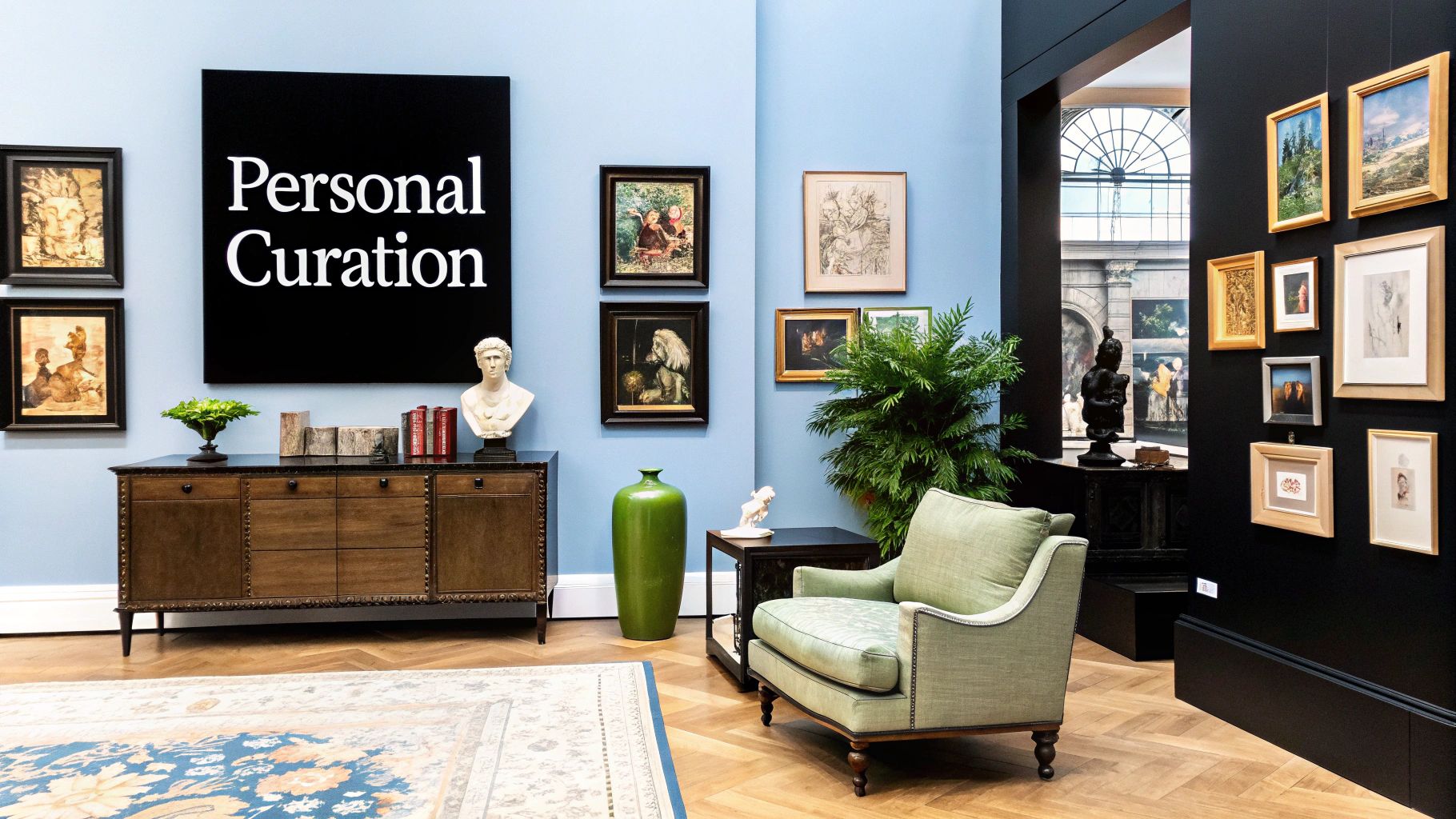
Grand spaces and incredible materials are just the beginning. The real soul of a luxury home is found in its ability to tell a deeply personal story. This is where we move beyond simple decoration and into the world of thoughtful curation.
A truly exceptional home isn’t just a collection of expensive things; it’s a living gallery—a physical expression of the owner’s life, passions, and unique journey. This bespoke narrative is what makes a space feel authentic and impossible to replicate. It’s about building an interior around key, meaningful pieces, not just filling rooms from a catalog.
From Collection to Connection
Every collection, whether it’s rare books or vintage watches, holds a story. A designer’s job is to become that storyteller, creating custom displays that elevate these items from mere possessions into vital parts of the home’s character. The way these objects are displayed is just as important as the objects themselves.
This requires designing with true intention:
- Integrated Shelving: Think of custom millwork with museum-quality lighting turning a simple hallway into a private gallery for treasured artifacts.
- Strategic Pedestals: Placing a significant sculpture at the end of a long corridor or in a grand foyer creates an immediate, powerful focal point that pulls you into the space.
- Curio Cabinets Reimagined: We can seamlessly build modern, climate-controlled vitrines into the architecture to protect and feature delicate items, from antique porcelain to rare minerals.
The goal is always to weave these personal narratives into the fabric of daily life, making them natural points of conversation and constant inspiration.
The most luxurious element in any home is the owner’s story. Our job is to give that story a voice through a curated environment, where every object and every corner reflects a life well-lived.
The Impact of Commissioned Art and Furniture
Nothing says personalization quite like a piece created specifically for a space and its owner. Commissioning art or furniture is a deeply collaborative process that infuses a room with an identity all its own. A large-scale abstract painting can set the tone for an entire formal living room, just as a custom dining table can become the heart of family gatherings for generations to come.
This desire for one-of-a-kind design is a huge driver in the high-end market. In fact, the global luxury interior design market is projected to hit around USD 174.2 billion by 2034. This growth is fueled by a demand for unique spaces that reflect individual lifestyles and values. You can read more about the growth of the luxury interior design market on businessresearchinsights.com.
Curating the Perfect Gallery Wall
In a mansion, a gallery wall is far more than a cluster of pictures; it’s a curated exhibition. It demands a skilled eye for scale, subject matter, and framing to create a statement that feels cohesive and powerful. Instead of a random jumble, a designer might group pieces by theme, color story, or artistic period to build a unified visual narrative.
Here are a few principles we follow to create an impactful gallery wall:
- Establish a Theme: First, decide on a focus. Will it be family portraits, abstract art, travel photography, or an eclectic mix? A clear theme is what keeps a collection from feeling cluttered.
- Mind the Scale: Grand spaces require bold statements. Use larger pieces and more substantial frames to ensure the display can hold its own on a vast wall.
- Create a Layout: Always lay the pieces out on the floor first. This allows you to play with arrangements and visualize the final composition before a single nail goes in the wall.
- Unify with Framing: Using a consistent frame color or style is a classic technique for tying disparate pieces together, giving the entire collection a polished, intentional feel.
Ultimately, the art of curation is what transforms an impressive house into an authentic home. It’s a meticulous process of choosing and placing objects that resonate on an emotional level, creating an environment that is not just beautiful, but truly meaningful to live in.
Crafting a Legacy of Timeless Elegance
At the end of the day, designing a luxury mansion isn’t just about decorating a grand space. It’s about crafting a legacy. We’re creating an environment that will outlast fleeting trends and feel just as relevant and valuable decades from now. This is where all the threads we’ve discussed—spatial harmony, authentic materials, smart technology, and personal art collections—all come together.
True luxury is a complete sensory experience. It’s when every single element, from the texture of a hand-carved door to the warmth of the morning light, works in perfect harmony. This is how a house becomes a sanctuary, a place that genuinely enhances the lives of those who live there. It’s less about a show of wealth and more about building a finely tuned instrument for living an exceptional life.
The Future of Mansion Design
Looking ahead, two ideas are taking center stage in high-end design: wellness and sustainability. These aren’t just buzzwords or afterthoughts anymore; they are being integrated into the very foundation of what it means to build a modern luxury home. The focus is shifting dramatically toward creating spaces that actively improve physical and mental health.
This shift translates into tangible design choices that elevate the quality of life:
- Biophilic Design: We’re not just putting a plant in the corner. We’re intentionally blurring the lines between indoors and out with features like living walls, internal courtyards, and massive glass installations that flood spaces with natural light and frame breathtaking views.
- Circadian Lighting Systems: This is a game-changer. Imagine lighting that automatically mimics the natural rhythm of the sun, helping regulate your sleep-wake cycles, improve your mood, and boost your energy levels throughout the day.
- Sustainable Materials: The new standard is a commitment to materials that are non-toxic, renewable, and ethically sourced. This ensures superior indoor air quality and proves that luxury doesn’t have to come at the expense of the environment.
The new benchmark for luxury is a home that not only looks spectacular but also feels restorative. It’s a space that nurtures its occupants, offering a genuine retreat from the outside world and promoting a sense of peace and balance.
By embracing these forward-thinking principles, the art of luxury mansion interior design is evolving. It’s moving past pure aesthetics to create a lasting framework for a life filled with comfort, meaning, and well-being. The result is more than just a beautiful home—it’s a timeless legacy that will continue to inspire for generations.
Answering Your Questions About Mansion Design
Stepping into the world of luxury interior design can feel as vast and intricate as the properties themselves. Whether you’re a homeowner or an aspiring designer, approaching a project of this scale often brings up a few key questions. Let’s break down some of the most common ones.
Think of this as a candid conversation about the realities of budgeting, what makes a design last for generations, and why a professional partner is so crucial in creating a home that’s truly extraordinary.
How Should I Budget for a Mansion Interior Design Project?
Budgeting for a mansion isn’t like budgeting for a typical home. A good rule of thumb that we use in the industry is to set aside 15-25% of the property’s total value for the interior design, furnishings, and art curation. But honestly, that’s just a starting point.
The real cost is driven by the vision. A project filled with bespoke millwork, commissioned art installations, and major architectural modifications will obviously require a much larger investment than one focused on updating furnishings and finishes. It’s a mistake to think of it as a simple price-per-square-foot game; the soul of the project dictates the budget.
The smartest way to approach this is to decide on a clear “all-in” number with your designer from day one. This empowers them to be strategic, balancing the budget across construction, custom pieces, and décor to bring the full vision to life without cutting corners.
What Makes a Mansion’s Design Truly Timeless?
In the world of luxury design, “timeless” doesn’t mean trend-proof. It means anchoring a home in principles so strong that they outlast any passing fad. It’s a deep-seated focus on quality, proportion, and authenticity.
Here’s what truly creates that lasting appeal:
- Architectural Integrity: The design should respect and elevate the home’s existing style, whether it’s a sleek modern build or a historic estate. It’s about working with the bones of the house, not against them.
- Authentic Materials: We lean on materials that get better with age. Think real marble that develops a patina, solid hardwoods, and genuine metals. These elements tell a story and add character over the years.
- Proportional Scale: Everything from the sofa to the chandelier has to feel right in the room. When furniture, art, and lighting are perfectly scaled to the grandeur of the space, you create a natural, effortless sense of harmony.
It’s like building a classic wardrobe. You invest in beautifully tailored foundation pieces, not fast fashion. The core of the home remains elegant and relevant for decades to come.
Is Hiring a Professional Designer Really Necessary?
For a project of this magnitude, bringing in a professional designer isn’t a luxury—it’s an absolute necessity. A seasoned designer is so much more than a decorator who picks out pretty fabrics. They are the creative director and logistical quarterback of the entire project.
Their job is immense. They handle everything from the initial space planning and collaborating with architects to managing an army of contractors and sourcing unique pieces from their exclusive network of global artisans. More importantly, they prevent incredibly costly mistakes, ensure a cohesive vision from room to room, and save you an immense amount of time and stress. A great designer turns what could be a chaotic undertaking into a seamless, and even enjoyable, creative process.
Ready to find a professional who can translate your vision into a breathtaking reality? Explore the curated network of elite architects and interior designers at Haute Design and discover the perfect partner for your project. Visit Haute Design to begin.