


Luxury interior design is about so much more than just filling a room with expensive furniture. It’s the art of crafting a deeply personal environment where comfort, exceptional craftsmanship, and day-to-day function merge into one seamless experience. At its core, real luxury isn’t just about how a space looks, but how it feels and works for the people who live there.
Think of it as an investment in your quality of life, brought to life through a close, collaborative partnership between you and your designer.
What Truly Defines Luxury in Home Design
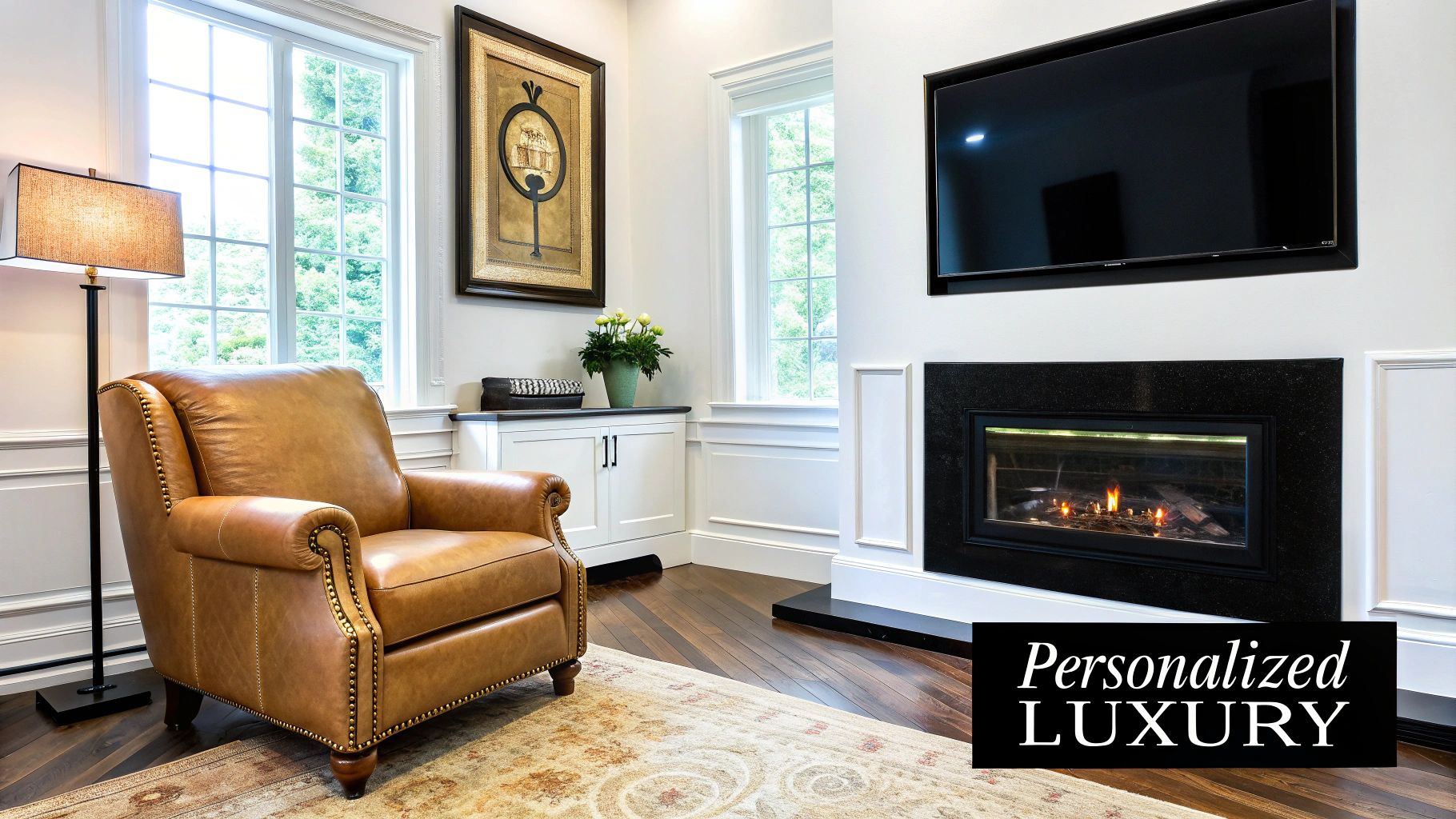
It’s like the difference between a high-performance grand touring car and a standard sedan. Sure, both get you from A to B, but one is meticulously engineered for an entirely different kind of journey. The feel of the materials, the precision of the handling, the way it responds to the driver—it’s all part of a completely bespoke experience. Luxury interior design works on the very same principle; it’s tailored perfectly to the client’s lifestyle.
This mindset transforms a house into a sanctuary. It’s about creating spaces that aren’t just beautiful, but are also intelligently designed to support and elevate your daily routines. This is where the true value of luxury interior design really shines.
The Core Philosophy of Bespoke Living
At its heart, high-end design is about commissioning a one-of-a-kind environment. It’s a complete rejection of the off-the-shelf mentality, championing custom solutions that are a true reflection of individuality. Every single element, from the architectural details down to the smallest finishing touches, is chosen with purpose.
True luxury is the ultimate form of personalization. It’s when your home becomes an authentic extension of who you are, what you value, and how you want to live.
The whole process is a dialogue, a creative conversation between client and designer that translates personal stories and tastes into a tangible, functional art form. This philosophy is built on a few key pillars:
- A Client-Centric Approach: The design revolves entirely around your unique needs, whether that means creating a tranquil, spa-like retreat for relaxation or a dynamic, impressive space for entertaining.
- Uncompromising Quality: Every material and piece of furniture is hand-picked for its superior craftsmanship, longevity, and aesthetic excellence. There are no shortcuts.
- Seamless Integration: Technology, art, and architecture are masterfully woven together, creating a cohesive living experience that feels completely effortless.
A Distinct Niche in a Growing Market
To really appreciate the world of luxury design, it helps to see where it fits within the broader industry. Globally, the interior design market was recently valued between USD 137.9–145.9 billion, with forecasts showing it could grow to somewhere around USD 175.7–222.2 billion by the end of the decade.
Within this massive and expanding universe, luxury commissions make up a smaller volume of projects but command a disproportionately high share of total spending. This makes it a highly specialized field, one that demands exceptional skill and vision. For more inspiration on this topic, our guide on elite luxury home decor ideas for opulent spaces is a great place to start.
Next, we’ll dive into the tangible hallmarks that set these incredible spaces apart.
The Foundational Elements of a Luxury Space
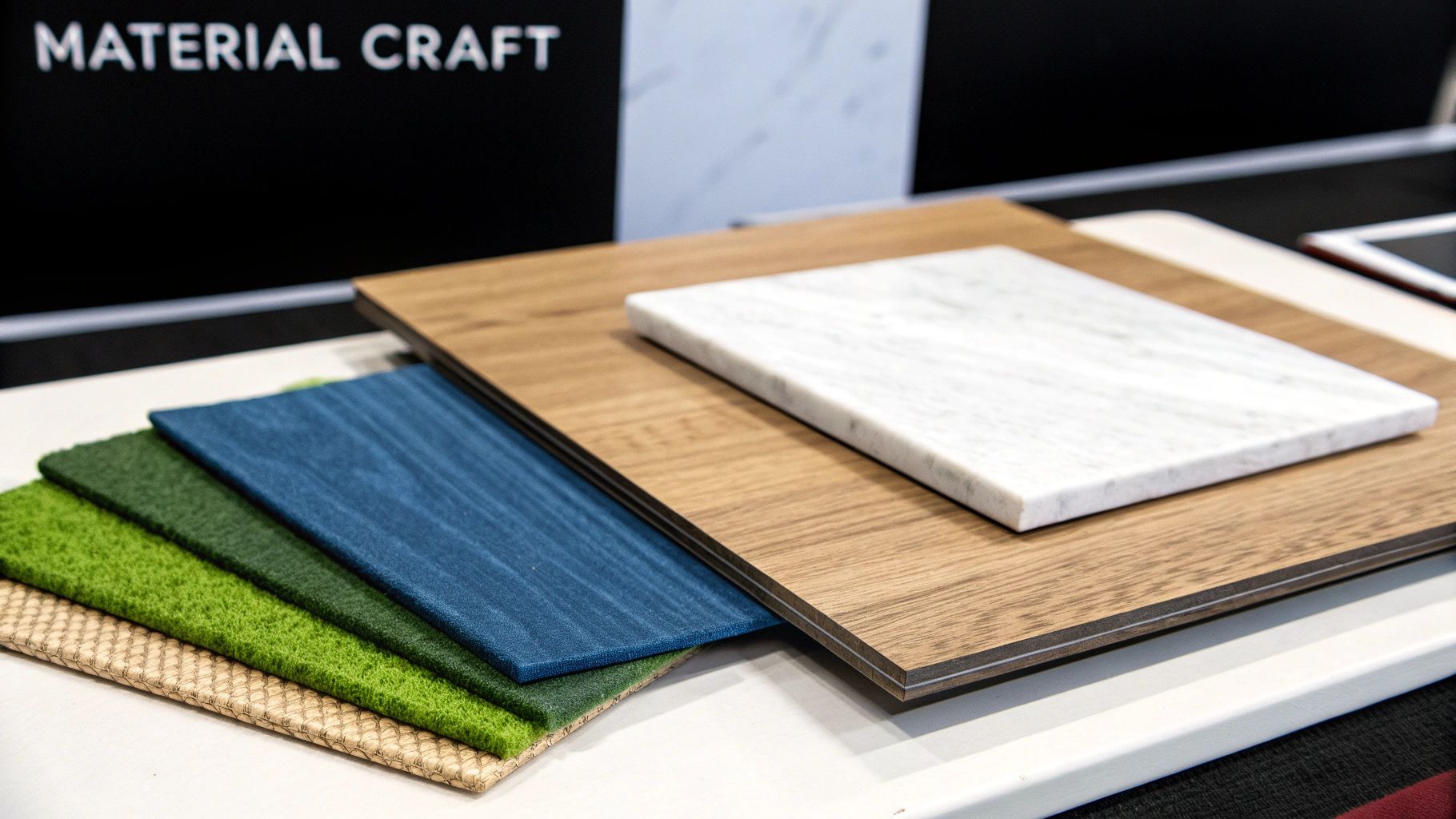
While the idea of bespoke living is the “why” behind high-end design, a handful of core elements are the “how.” These are the tangible building blocks designers use to craft an atmosphere of profound quality and comfort.
They are the details that separate a merely expensive room from a truly luxurious one. Understanding them reveals the immense artistry and technical skill that goes into luxury interior design. It’s never just about picking beautiful things; it’s about composing them into a harmonious whole that engages the senses and elevates daily life.
The Language of Exquisite Materials
In a luxury space, materials are the primary vocabulary. They communicate quality through both sight and touch. While standard design often settles for convincing imitations, high-end interiors are defined by authenticity and superior craftsmanship.
Think of book-matched marble, where a single slab is sliced open like a book to create a breathtaking, symmetrical pattern across a fireplace or feature wall. It’s a technique that turns a natural stone into a singular work of art. The same principle applies to rare hardwoods, custom-woven textiles, and hand-forged metals—each choice adds another layer of depth and story to the design.
In luxury design, materials are never an afterthought. They are the primary storytellers, creating a tactile experience that conveys permanence, quality, and a connection to the natural world.
This commitment to authenticity favors materials that age gracefully. A solid oak floor develops a rich patina over the years, and a well-made leather chair becomes more supple and inviting with use. These aren’t just decorative choices; they are long-term investments in a space that will endure for decades.
Mastering Scale and Proportion
One of the most powerful—and subtle—tools in a designer’s arsenal is the masterful use of scale and proportion. This isn’t just about filling a large room with large furniture. It’s about creating a specific emotional response through the relationship between objects, architecture, and the human body.
An oversized chandelier in a grand foyer inspires awe, while a perfectly scaled reading nook creates an immediate sense of intimacy and comfort. This same principle extends to the architecture itself. A double-height ceiling can feel grand and open, but without careful planning, it can also feel cold and impersonal. A skilled designer knows how to balance that verticality with strategic furniture placement, custom millwork, or artistic lighting to make the space feel both impressive and welcoming.
For a deeper dive into the technical side of arranging a room, our detailed guide on interior design space planning explores this critical skill further. The goal is always to find that perfect equilibrium where no single element shouts over the others. Every piece, from a towering bookshelf to a delicate side table, has a distinct role to play in the room’s overall composition.
The table below breaks down the difference between a standard and a luxury approach to these core design elements.
Key Elements of Luxury Design
| Element | Standard Approach | Luxury Approach |
|---|---|---|
| Materials | Uses laminates, veneers, and mass-produced textiles. | Prioritizes authentic, natural materials like solid wood, quarried stone, and hand-woven fabrics. |
| Scale & Proportion | Follows conventional rules, often resulting in predictable layouts. | Manipulates scale to evoke emotion—grandeur with high ceilings, intimacy with cozy nooks. |
| Furnishings | Relies on off-the-shelf, ready-made furniture. | Features bespoke, custom-made pieces designed for a specific space and person. |
| Art & Décor | Art is often a decorative afterthought chosen to match the color scheme. | Art is an integral part of the design, often serving as the inspiration for the entire room. |
Ultimately, these luxury approaches work together to create an environment that feels cohesive, personal, and timeless.
Bespoke Furnishings and Custom Millwork
Nothing says luxury quite like a piece created for one person, for one specific space. Bespoke furnishings and custom millwork are the cornerstones of a truly personalized home. Instead of trying to make a room fit mass-produced furniture, the furniture and built-ins are designed to perfectly fit the room and the client’s way of life.
This could mean a dining table crafted to the exact dimensions needed for grand-scale entertaining, or a wall of custom cabinetry designed to discreetly house technology while showcasing a curated collection of art. These one-of-a-kind creations offer solutions you simply can’t find in a showroom.
Here’s how custom pieces truly elevate a space:
- Perfect Fit and Function: Customization ensures every inch is used effectively, solving unique storage or functional challenges with elegance.
- Unmatched Quality: Bespoke items are typically built by master artisans using superior materials and techniques, resulting in heirloom-quality pieces.
- Unique Identity: A custom-designed piece is a powerful statement of personal style, transforming a room from standard to singular.
The Soul of the Space: Curated Art
If materials are the language and scale is the composition, then art is the soul of a luxury interior. A thoughtfully curated art collection infuses a home with personality, culture, and a distinct point of view. It is the final, essential layer that turns a beautifully designed house into a deeply personal home.
In luxury interior design, art is never just an accessory chosen to match the sofa. It is a foundational element, often serving as the inspiration for an entire room’s color palette and design direction. A significant painting, sculpture, or photograph can anchor a space, provide a powerful focal point, and spark conversation for years to come.
The selection process is a collaborative journey between the designer and the client, reflecting personal tastes, travels, and passions. Whether it’s a collection from emerging local artists or a single piece from a world-renowned master, the art tells a story. It completes the home’s narrative, ensuring the space is not just visually stunning but also emotionally resonant.
Exploring Different High-End Design Styles
It’s a common misconception that “luxury” is a single, monolithic style—usually something ornate, gilded, and dripping with opulence. But that’s a very narrow view. In reality, luxury interior design isn’t a style at all; it’s a philosophy that can be expressed across a huge spectrum of aesthetics, from razor-sharp minimalism to richly layered historicism.
The real goal of any high-end project is to create a home that is a perfect, almost cellular, reflection of its owner’s life and taste. Whether that means a serene coastal escape or a dramatic urban penthouse, the foundation is always the same: bespoke craftsmanship, exceptional materials, and an unwavering focus on the client. The beauty of luxury interior design is just how adaptable it is.
Let’s walk through three distinct design narratives to see how this philosophy comes to life through completely different stylistic lenses.
The Minimalist Penthouse: A Study in Precision
Picture a sprawling penthouse, floating high above the city. Here, the ultimate luxury isn’t about more; it’s about tranquility and precision. This approach to high-end design is an exercise in masterful restraint, focusing not on what’s been added, but on what has been perfectly edited away.
This is where luxury whispers instead of shouts. You’ll find it in:
- Architectural Purity: Walls are seamless planes, floors are vast, unbroken expanses of honed limestone, and all storage vanishes into custom, invisible millwork. The architecture itself is the art.
- Material Honesty: The palette is deceptively simple—stone, glass, brushed metal. But the quality is everything. The subtle veining in a single slab of marble or the deep grain of book-matched oak provides all the pattern and texture needed.
- Integrated Technology: Smart home systems are completely concealed. Lighting, climate, and sound can be controlled with a touch, but there isn’t a single visible wire or clunky interface to disrupt the calm.
This is luxury for the purist. It’s a powerful testament to the idea that less is more, but only when that “less” is executed to an extraordinary standard. Every joint, surface, and sightline is considered and perfected, creating an environment of profound order and clarity.
The Modern Coastal Home: An Embrace of Nature
Now, let’s head to the coast, to a modern home where the line between indoors and out simply dissolves. In this setting, luxury is defined by a deep, sensory connection to the natural world—the endless ocean views, the shifting light, and the raw textures of the landscape. It’s a relaxed, organic kind of luxury that puts comfort and serenity first.
True luxury in a coastal setting isn’t about competing with the view; it’s about framing it. The design becomes a quiet backdrop that enhances the natural beauty surrounding the home.
The entire focus here is on creating a tactile experience. Wide-plank bleached oak floors feel soft and warm underfoot. Hand-plastered walls have a chalky texture that diffuses the coastal light beautifully. Furnishings are generous and inviting, upholstered in natural linens, cottons, and nubby bouclés.
This aesthetic delivers luxury through:
- Expansive Glazing: Floor-to-ceiling windows and massive sliding glass walls are engineered to disappear, turning living spaces into open-air pavilions at a moment’s notice.
- Organic Materials: Natural stone, weathered woods, and handwoven textiles are used everywhere to create a seamless harmony with the home’s surroundings.
- Effortless Flow: The entire layout is designed for easy living, with fluid transitions from indoor lounges to outdoor terraces, pools, and gardens.
The Restored Historic Residence: A Dialogue with the Past
Finally, imagine a meticulously restored historic brownstone or a grand country estate. Here, luxury interior design is a delicate dance between past and present. The goal isn’t to create a stuffy museum piece, but to honor the building’s soul while making it perfectly suited for contemporary life.
This requires a special kind of expertise—a blend of historical knowledge and a modern eye. The first step is to painstakingly restore original architectural details like intricate crown moldings, carved fireplace mantels, or old-growth herringbone floors. Then, those historic elements are put into conversation with modern art, contemporary furnishings, and state-of-the-art conveniences.
You might see a sleek, minimalist kitchen standing in elegant contrast to the home’s 19th-century bones, or a bold abstract sculpture holding its own in a formal drawing-room. This interplay creates a dynamic tension that makes the whole space feel layered, personal, and timeless. Luxury here is about storytelling—preserving the home’s incredible history while adding a vibrant new chapter for the family that lives there today.
The Journey of Crafting a Bespoke Interior
Bringing a luxury interior to life is so much more than a simple redecoration project. It’s a meticulous, multi-phased journey—a true collaboration between client and designer to translate deep-seated aspirations into a tangible, beautiful reality. This methodical approach is the secret behind not only an extraordinary result but an experience that feels as seamless and enjoyable as the finished space itself.
Think of it like commissioning a bespoke suit from a Savile Row tailor. The process doesn’t start with picking out fabric; it begins with a deep conversation about your lifestyle, where you’ll wear it, and your personal sense of style. In the same way, a high-end design project starts with getting to know you.
This structured, expert-led process has turned luxury interior design into a booming global industry. The market is currently valued at around USD 35 billion and is projected to more than double, hitting nearly USD 77 billion within the next decade. This incredible growth highlights just how much clients value a well-managed creative journey. You can explore more data on this expanding market to see its trajectory.
Phase One: Discovery and Vision
Every great project begins with discovery. This is, without a doubt, the most crucial phase, as it sets the foundation for everything that follows. Here, the designer’s main job is to listen—to ask the right questions to understand not just what you like, but the subtle rhythms of your daily life.
They’ll want to know how you unwind, whether you love hosting big parties or prefer quiet evenings, and what “comfort” truly means to you. It’s an immersive process, aimed at building a psychological and functional brief that goes miles beyond a simple wish list.
A great designer wears two hats in the discovery phase: part investigator, part psychologist. Their goal is to uncover the unstated needs and unspoken desires that will ultimately make a house feel like your home.
This initial deep dive is what ensures the final design isn’t just a beautiful shell. It becomes a perfectly calibrated environment that actively supports and enhances your lifestyle. That’s the real difference between a house that looks good in a magazine and a home that feels incredible to live in.
Phase Two: Concept and Detailed Design
With a clear vision in hand, the designer begins translating those abstract ideas into something you can see and feel. This is where the magic really starts, brought to life through mood boards, preliminary sketches, and palettes of textures and materials. The goal is to develop a cohesive design language that captures the soul of the home.
Once you’ve signed off on the overarching concept, the project moves into the detailed design stage. This is the technical heart of the process, and it involves getting incredibly specific:
- Precise Floor Plans: These aren’t just outlines. They map out furniture placement, traffic flow, and how every inch of space will be used.
- Material Specifications: Every single finish is finalized, from the exact slab of marble for the kitchen island to the specific weave of linen for the curtains.
- Custom Commissions: This is when bespoke furnishings, cabinetry, and one-of-a-kind lighting fixtures are designed and commissioned from trusted artisans and makers.
This flow chart shows how different style goals—whether it’s modern minimalism or a faithful historic restoration—are all built on the same foundation of a rigorous, thoughtful process.
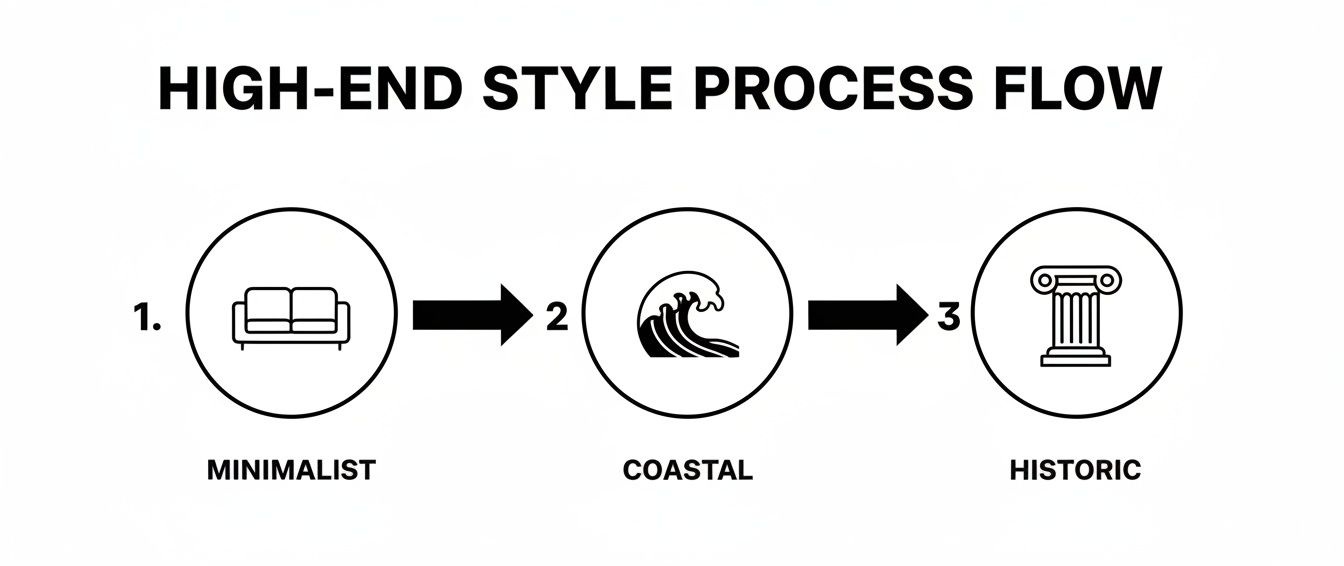
While the aesthetic outcomes might look worlds apart, the underlying method of meticulous planning and execution is a constant in every high-end project.
Phase Three: Management and Flawless Installation
The final phase is where the vision becomes a physical reality. An elite designer is also an expert project manager, orchestrating a complex symphony of contractors, artisans, suppliers, and installers. They handle the thousands of logistical details—from procurement and scheduling to quality control—shielding you from the day-to-day headaches of the build.
This white-glove service culminates in the installation and the final reveal. Furniture is perfectly placed, art is hung, and every last accessory is styled. It’s a turnkey experience where you walk into a completed home that is not only flawless but is the perfect reflection of the dream you started with, brought to life through a journey of true craft and care.
How to Find and Hire an Elite Interior Designer
A luxury interior design project lives and dies by the strength of the partnership between you and your designer. This isn’t like hiring a contractor; it’s more like choosing a creative co-pilot for a deeply personal journey. The goal is to find a professional whose vision not only resonates with yours but who also has the technical skill and business savvy to bring it to life without a hitch.
The search can feel overwhelming, but it sharpens into focus once you know what to look for. You need someone with a distinctive portfolio, impeccable communication, and a completely transparent business process. Your investment demands a partner who is both a gifted artist and a consummate professional—someone who can manage a complex, multi-layered project with grace and precision.
Vetting Potential Design Partners
Before you even pick up the phone, a designer’s portfolio is your best source of intelligence. Look past the beautiful photography and try to decipher their design philosophy. Do their projects tell a story? Can you see a consistent thread of quality and obsessive detail, even when they work in different styles? You’re searching for a sensibility that clicks with your own aesthetic goals.
But a great portfolio is just the first filter. Next, you need to assess their professional standing and how they operate.
Here are a few key areas to investigate:
- Credentials and Affiliations: Look for professional qualifications, like certifications from respected industry organizations. Being part of these groups usually signals a real commitment to ongoing education and high ethical standards.
- Client Testimonials and References: Don’t just rely on website blurbs. Ask for references from past clients whose projects were similar in scope to yours. You’ll want to ask about their experience with communication, budget management, and, of course, the final result.
- Understanding Their Process: During an initial chat, a top-tier designer should be able to walk you through their approach, from discovery and concept development all the way to project management and final installation.
This groundwork helps you build a shortlist of designers who not only have the right eye but also the proven expertise to make your vision a reality.
The Importance of a Shared Philosophy
Beyond portfolios and processes, the very best collaborations are built on a foundation of shared philosophy and personal chemistry. You’ll be working closely with this person for months, maybe even years, so a comfortable, trusting relationship is absolutely essential. During your initial meetings, ask questions that reveal how they think and solve problems.
The ideal designer-client relationship is a true creative alliance. Your designer should feel like a trusted confidant who can translate your unspoken desires into a functional, beautiful reality, guiding you while honoring your ultimate vision.
Does the designer listen more than they talk? Do they ask thoughtful questions about your lifestyle, not just your favorite colors? The right partner will be more interested in understanding how you live than in stamping their signature style all over your home. That mutual respect is the bedrock of a project that doesn’t just meet your expectations but completely surpasses them.
Leveraging Curated Networks to Find Excellence
As the appetite for luxury interior design grows, finding the perfect designer is getting easier. Regional data shows just how much high-net-worth clients are shaping this demand, particularly in North America. One study puts the North American luxury interior design market at a staggering USD 21.4 billion in recent years, which is over 40% of the global total. With residential projects leading the charge, the need for the right professional match is more critical than ever. You can explore more about the luxury interior design market in North America and its drivers to understand the landscape.
This is where premier platforms like Haute Design become indispensable. Instead of trying to navigate an overwhelming sea of options on your own, Haute Design cuts through the noise. It connects you directly with a curated, pre-vetted network of the nation’s most celebrated designers, architects, and builders, effectively taking the guesswork out of the entire process.
Being featured on the Haute Design network is a mark of verified excellence. Every professional is hand-picked, ensuring you are only connected with firms capable of executing a vision at the absolute highest level. For those looking to explore more, our guide on the top platforms to find luxury interior design firms offers some great additional perspectives. By starting with a trusted network, you begin your design journey with the confidence that you’re choosing from the very best in the business.
Common Questions About Luxury Design
If you’re considering a high-end design project, you likely have a few questions. That’s completely normal. Understanding the process, the people involved, and the financial commitment is the first step toward creating a home you’ll love.
Think of this as your starting point. Just as you’d map out a route before a long journey, these answers will help clarify the landscape of bespoke home design, making sure you feel confident and prepared for the road ahead.
What’s the Difference Between a Decorator and a Luxury Interior Designer?
While people often use the terms interchangeably, their roles are fundamentally different. It’s a critical distinction to understand before you begin any major home project.
An interior decorator focuses on the surface. They are masters of aesthetics—selecting furniture, choosing paint colors, and arranging accessories to make a space beautiful. A luxury interior designer, on the other hand, is a trained professional who re-imagines the entire environment, starting from its very structure.
A designer’s work is far more technical and comprehensive. It often includes:
- Architectural Planning: Working with architects on floor plans to improve flow and spatial logic.
- Technical Design: Developing detailed drawings for custom cabinetry, lighting schemes, and electrical layouts.
- Project Management: Coordinating and overseeing contractors, artisans, and vendors to bring the vision to life seamlessly.
Simply put, a designer builds the very foundation and function of a room; a decorator furnishes and styles it.
How Long Does a Luxury Interior Design Project Take?
True craftsmanship takes time, so patience is essential in the world of luxury design. There’s no one-size-fits-all timeline, as every project’s complexity and scale are unique.
For a single-room redesign, you might be looking at 4-6 months. A gut renovation or a new build, however, can easily take 1-3 years, sometimes longer. This accounts for long lead times on custom furnishings from artisans around the world, the unpredictable nature of local permitting, and the time required for any significant construction. A seasoned designer will always provide a detailed project timeline upfront to set realistic expectations from day one.
What Is a Realistic Budget for a High-End Project?
Budgeting for a luxury project isn’t about finding a simple price per square foot. The investment is deeply personal, shaped by the quality of materials, the level of bespoke craftsmanship, the designer’s reputation, and the integration of fine art or smart home technology.
A luxury interior design budget is not an expense, but a curated investment in quality of life. It reflects a commitment to enduring materials, unparalleled craftsmanship, and a home that is perfectly tailored to its inhabitants.
As a general guideline, clients often allocate a significant percentage of their property’s value toward the interiors, furnishings, and execution. A transparent designer will work with you to develop a detailed, line-item budget that aligns with your vision and financial parameters. This document breaks everything down—from design fees to furniture and construction—before any commitments are made, ensuring complete clarity.
How Does Sustainability Fit into Luxury Design?
Sustainability is no longer an add-on; it’s become a cornerstone of modern luxury interior design. Today, the very idea of luxury is intertwined with wellness, longevity, and ethical sourcing, making eco-conscious choices a natural fit for high-end projects.
This shows up in a few key ways. Designers are prioritizing natural, non-toxic materials, specifying energy-efficient appliances and lighting, and commissioning pieces from local artisans to reduce the project’s carbon footprint. The “healthy home” concept is also a major driver, with a growing demand for advanced air and water purification systems. At its heart, contemporary luxury is about timeless quality and mindful creation—and sustainable practices are central to that philosophy.
Are you ready to transform your space into an extraordinary environment? Connect with the nation’s top vetted professionals on Haute Design. Discover your perfect design partner today.