


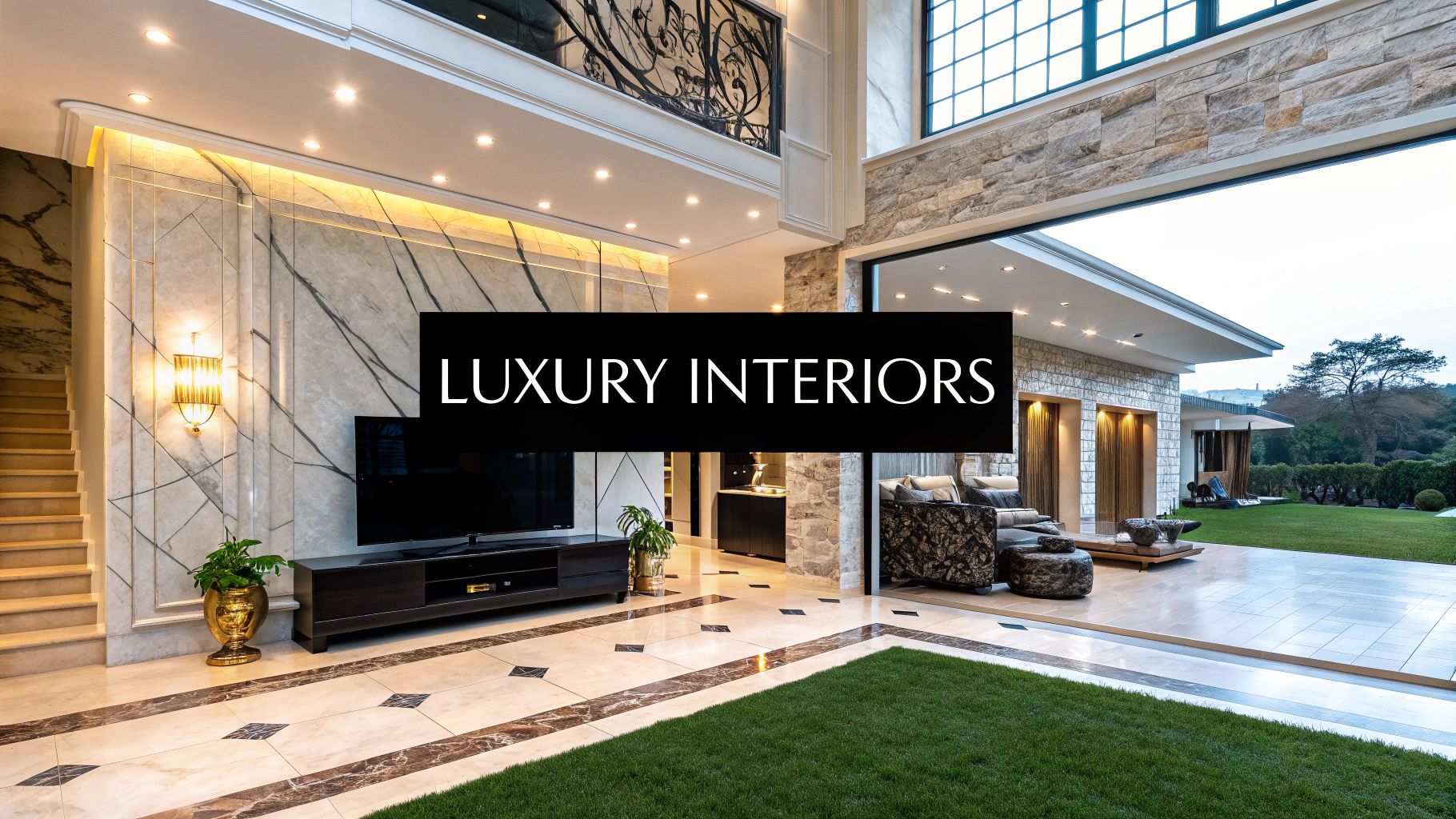
A true luxury home interior isn’t just about filling a space with expensive things. It’s about creating a personalized sanctuary, a place defined by exceptional quality, masterful craftsmanship, and a deep, unspoken connection to the people who live there. It’s a complete sensory experience, designed to reflect who you are and how you truly want to live.
What Truly Defines a Luxury Home Interior
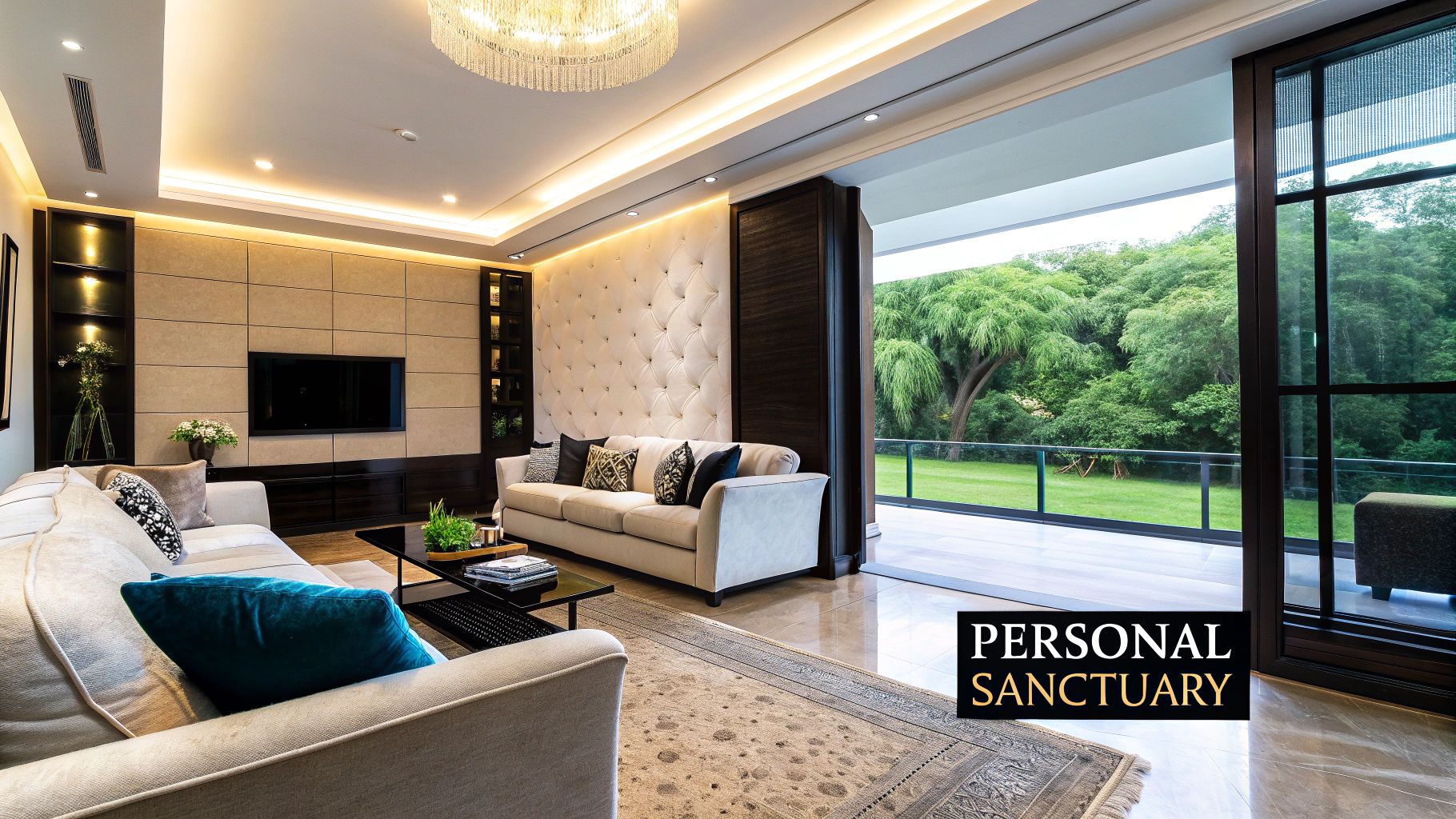
It’s easy to confuse “expensive” with “luxury,” but they’re not the same thing. While quality certainly has a price, genuine luxury is rooted in bespoke design and intention. Think of it like this: a high-end, off-the-rack suit is impressive, but a custom-tailored suit that fits you perfectly is in another league entirely. One is a beautiful product; the other is a true extension of you.
A luxury interior tells your story. Every material, every texture, and every piece of furniture is hand-selected not just for its aesthetic appeal, but for how it contributes to a cohesive narrative about your life, passions, and values. It’s about creating an environment that supports your lifestyle without you ever having to think about it.
The Four Pillars of Luxury Interior Design
To understand what elevates a space from simply “high-end” to genuinely luxurious, it helps to look at the foundational principles that guide every decision. These four pillars work in concert to create an atmosphere of unparalleled comfort, sophistication, and personal meaning.
| Pillar | Core Concept | Real-World Example |
|---|---|---|
| Bespoke Personalization | The space is a direct reflection of its owner—unique and irreplaceable. | Commissioning a dining table built to the exact dimensions of a room, or designing a custom closet system that anticipates a specific wardrobe. |
| Sensory Engagement | Luxury is felt, not just seen. It appeals to touch, sound, sight, and even scent. | The cool, smooth feel of a Calacatta marble countertop; the satisfying, solid sound of a custom door closing; the layered glow of a multi-source lighting scheme. |
| Masterful Craftsmanship | A deep appreciation for human skill and the integrity of time-honored techniques. | Flawlessly book-matched stone slabs where the veining aligns perfectly, or the intricate detail of hand-stitched upholstery on a custom sofa. |
| Emotional Connection | The home is more than a structure; it’s a sanctuary that evokes a sense of belonging and peace. | Sourcing a piece of art that recalls a meaningful memory, or designing a reading nook that becomes a cherished spot for quiet reflection. |
These principles are not just abstract ideals; they are the driving force behind a significant global industry. The luxury interior design market was valued at approximately USD 53.5 billion in 2023, with North America accounting for over 40% of global revenue. This incredible growth highlights a clear and growing appreciation for living spaces created with this level of thought and care. You can explore more data in this luxury interior design market report.
At its core, luxury design is the art of creating a personal sanctuary. It’s about building an environment where every element is not only beautiful and functional but also deeply meaningful to the people who inhabit it.
Ultimately, bringing a vision like this to life requires a visionary partner. This is where platforms like Haute Design come in, connecting discerning clients with elite designers who specialize in translating personal stories into extraordinary homes. They ensure your space is not just decorated, but is a true masterpiece of form, function, and personal expression.
The Hallmarks of High-End Design
So, what separates a merely expensive home from a truly luxurious one? It’s not just about a high price tag. True luxury design is a conversation between tangible, masterfully chosen elements that, together, create a feeling and tell a story.
We’re moving beyond “premium” and into a world of rarity, bespoke craftsmanship, and genuine artistry. These are the building blocks, and understanding them is the key to seeing the difference between a well-decorated room and a genuinely curated space. From the stone under your feet to the light that fills the room, every detail is a deliberate choice.
Exquisite and Rare Materials
The foundation of any high-end interior is built with materials that are exceptional—in their quality, their origin, and how they’re used. This isn’t simply about picking out a slab of marble; it’s about sourcing a specific, rare vein of Calacatta Gold with dramatic, sweeping patterns that speak directly to the homeowner.
The real difference is in the details. Instead of standard hardwood, an expert designer might track down reclaimed French oak, its grain telling a story a century in the making. The focus is always on materials with character, a unique history, and a level of quality that requires masterful skill to handle.
The ultimate luxury is when an object of exceptional quality is also deeply personal. This could be a slab of quartzite with veining that reminds you of a coastline you love, or a hand-forged metal railing created by a local artisan. It’s the story that elevates the material.
How these materials are applied is an art form in itself. Take the technique of book-matching, where a stone or wood slab is cut and opened up like a book, creating a perfectly symmetrical, mirrored pattern. It’s a painstaking process that turns a natural material into a large-scale work of art, creating an unforgettable focal point on a fireplace or kitchen island.
The Art of Layered Lighting
In a luxury home, lighting is never an afterthought. It’s a critical design layer that sculpts the space, shapes the mood, and highlights the architecture. We’re not talking about a single, central fixture. Great designers use a multi-layered strategy, blending different light sources to create a rich, dynamic atmosphere.
This approach almost always involves three key types of light:
- Ambient Lighting: This is the room’s overall illumination, setting the base level of brightness. Think recessed lighting or a grand chandelier.
- Task Lighting: This is focused, functional light for specific activities, like the under-cabinet lights in a kitchen or an elegant reading lamp by a favorite chair.
- Accent Lighting: This is where the magic happens. It’s the dramatic layer used to highlight art, an architectural feature, or a beautifully textured wall. Picture a perfectly aimed spotlight on a sculpture.
The fixtures themselves are often pieces of functional art. A hand-blown glass pendant from Murano, a bronze chandelier from a renowned artisan, or a custom installation that becomes the room’s centerpiece. When paired with smart home controls, this system allows you to set “scenes” with a single touch, transforming a room from bright and energetic to intimate and relaxing in an instant.
Custom Furnishings and Artisanal Quality
Walk into a truly high-end interior, and you’ll notice the furniture just fits. That’s because it’s rarely selected off a showroom floor. It’s almost always bespoke—custom-designed and built to the exact specifications of the space and the client. This guarantees perfect scale and proportion while ensuring the piece is one-of-a-kind.
This dedication to custom work is a celebration of artisanal quality. It means working with master craftspeople who use time-honored techniques, from hand-tied upholstery to intricate wood joinery. The result isn’t just a beautiful piece of furniture; it’s a future heirloom, built to last for generations.
This is a huge driver in the high-end market. The global luxury furniture market was valued at USD 31.06 billion in 2024, and the indoor segment is expected to grow by a staggering 8.35% CAGR to hit USD 45.55 billion by 2031. It’s clear proof of the powerful demand for pieces that offer both impeccable quality and deep personalization. You can explore more luxury furniture market trends at GrandViewResearch.com.
The Final Touch of Curated Art
Finally, art is what gives a luxury home its soul. A thoughtfully curated collection is the most intimate expression of a homeowner’s passions, history, and taste. This isn’t about finding a decorative print that matches the sofa. It’s about acquiring original works from established or emerging artists, powerful photography, unique sculptures, or meaningful objects collected over a lifetime.
A great designer often acts as an art advisor, helping clients source pieces from galleries, art fairs, and private dealers to build a collection that truly resonates. In the end, the art becomes far more than decoration. It’s an investment, a daily source of inspiration, and the final, essential chapter in the story of the luxury home interior.
Navigating The Luxury Interior Design Process
Creating a truly bespoke luxury home interior isn’t just a transaction; it’s a meticulous, collaborative journey. Think of it as a structured process that carefully transforms abstract ideas into a tangible, livable work of art. Understanding this workflow helps demystify the experience and really shows the incredible value a professional designer brings to the table.
From day one, the entire process is built on a foundation of clear communication and trust between you and your design partner. Each phase builds logically on the last, moving from broad concepts to the finest details with precision and care. It’s less like shopping for furniture and more like commissioning a masterpiece, where your life and personal tastes are the primary inspiration.
The Initial Vision And Consultation
It all starts with a conversation. The initial consultation is arguably the most critical phase, as it sets the entire direction for the project. This isn’t just about picking out color palettes or furniture styles; it’s a deep dive into your lifestyle, your aspirations, your daily habits, and what “home” truly means to you. A great designer will ask questions you might not have even considered.
For instance, they won’t just ask if you like to entertain—they’ll want to know how you entertain. Are we talking about large, formal dinner parties or intimate, casual get-togethers? That single detail influences everything from the dining room layout to the durability of the fabrics we select. This stage is all about translating your personality into a design brief that becomes the project’s north star.
This foundational step, often called “vision casting,” is where a designer’s expertise really shines. They act as both a guide and an interpreter, helping you articulate a feeling or an atmosphere you may not have the words for, then translating that into a concrete design language.
From these conversations, the designer crafts a conceptual framework. This usually includes mood boards, initial sketches, and inspirational images that capture the desired aesthetic and emotional tone. It’s the very first tangible step in seeing your vision begin to take shape, making sure everyone is on the same page before moving forward.
Concept Development And Spatial Planning
With a clear vision locked in, the focus shifts to the more technical and spatial aspects of the design. This is where those beautiful ideas meet the architectural reality of your home. Spatial planning is the art and science of arranging a room to maximize both its function and its flow. For a closer look at this crucial step, you can review our comprehensive interior design space planning guide, which details how professionals optimize layouts for modern living.
During this phase, designers create detailed floor plans, furniture layouts, and lighting schemes. They often use advanced software to generate photorealistic 3D renderings, which allow you to virtually walk through your future home. This technology is invaluable. It helps you visualize scale, proportion, and how different materials play off each other before a single purchase is made. It’s the ultimate “try before you buy” for your home, preventing costly mistakes and giving you complete confidence in the final design.
This process visualizes how foundational elements like materials, furnishings, and art will be selected and layered.
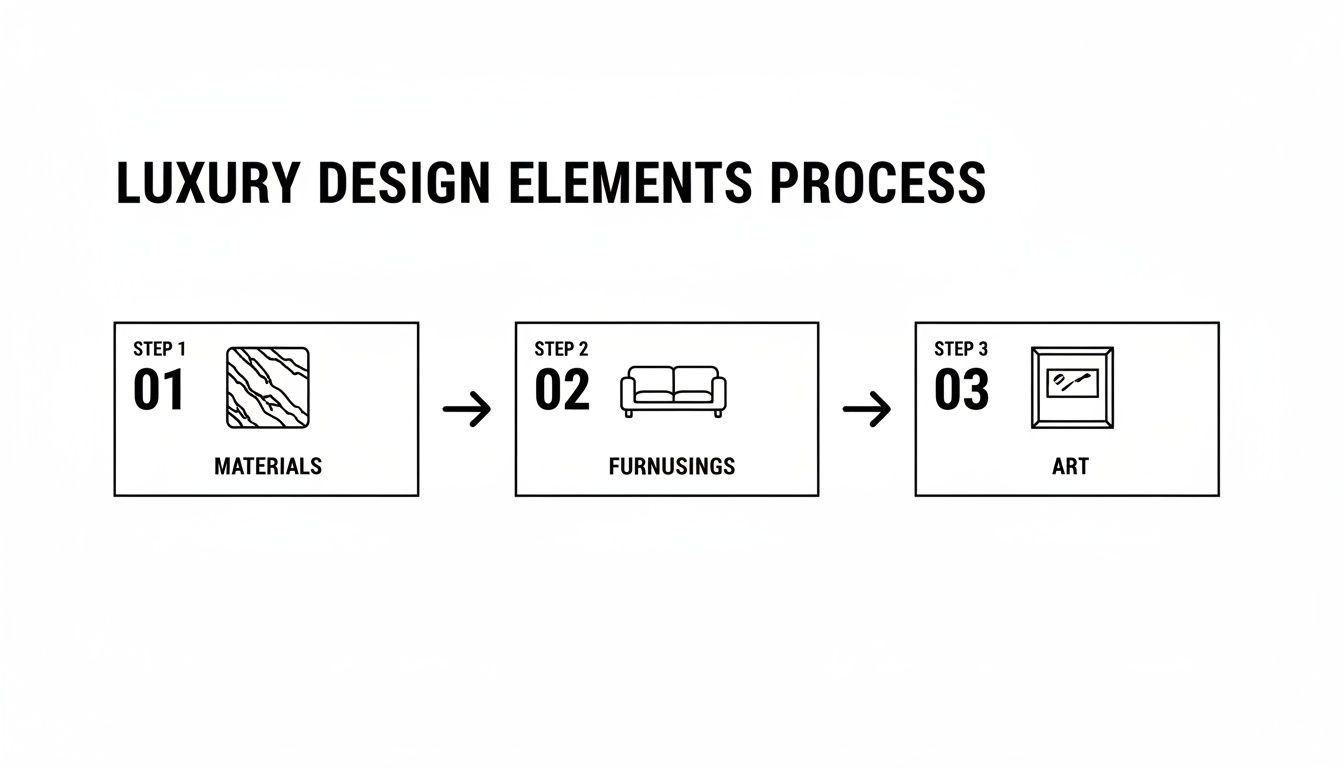
This approach shows that the selection of core materials forms the essential base upon which all other design choices are built.
Sourcing, Management, And Installation
The final phase is where the vision truly becomes reality. Here, the designer taps into their extensive network to source every single element specified in the design plan. This includes everything from rare marble slabs and bespoke furniture to custom textiles and curated art pieces. They manage all the procurement, track orders, and coordinate with a trusted team of artisans, architects, and builders.
Project management is a full-time job in itself. Your designer will oversee schedules, handle all the complicated logistics, and conduct regular site visits to ensure the execution meets their exacting standards. This meticulous oversight is what guarantees a flawless result, free from the stress and headaches that can derail a complex project.
Finally, there’s the installation, or “the reveal”—the moment it all comes together. The design team manages the delivery and placement of every item, styling each room down to the last accessory. This white-glove service transforms an empty house into your fully realized home, ready for you to walk in and start living immediately.
Understanding the Value of Your Design Investment
It’s easy to look at a luxury home interior project and see only the expense column. But that’s like calling a bespoke suit just another piece of clothing. A better way to think of it is as a strategic investment—one with returns you can see on a balance sheet and feel every single day.
This mindset changes the entire conversation. The question shifts from, “How much is this going to cost me?” to “What long-term value will this create?” Suddenly, the budget isn’t a list of expenses to be minimized; it’s a carefully planned allocation of capital toward lasting quality, personal comfort, and an aesthetic that will pay you back for years.
Decoding the Budget Structure
A luxury design budget is a lot like a well-diversified portfolio. Every line item has a specific job to do, and they all work in concert to deliver that flawless, cohesive result. Knowing where the money goes is the first step to understanding its true value.
Typically, your investment will be distributed across a few key areas:
- Design Fees: This is for the brainpower behind the project. It covers everything from the initial creative vision and detailed 3D renderings to the day-to-day project management that keeps everything on track. Think of it as the cost of insurance against expensive mistakes.
- Furnishings and Art: This is where the personality of the home comes to life. It includes all the bespoke furniture, custom textiles, and one-of-a-kind art and objects sourced from a designer’s global network of artisans and galleries.
- Materials and Finishes: These are the bones of the design—the rare stone, custom millwork, specialty wallcoverings, and premium flooring that create the foundational layer of luxury.
- Artisan Labor and Construction: This bucket funds the masters of their craft. It’s for the skilled carpenters, meticulous installers, and expert finishers who bring the design to life with absolute precision. For a more detailed breakdown, our guide on decoding luxury home construction costs is a must-read.
The Dual Return on Investment
The ROI from a great interior design project comes in two forms: one you can take to the bank, and one you live with every day.
1. Tangible Property Value Let’s be blunt: a professionally designed luxury home sells faster and for more money. It’s that simple. When discerning buyers walk into a space that feels cohesive, well-appointed, and move-in ready, they’re willing to pay a premium. That powerful first impression, built on quality materials and a timeless aesthetic, translates directly into a higher valuation.
2. Intangible Lifestyle Enhancement This is the part of the return you can’t put a number on, but it might be the most valuable. It’s the quiet satisfaction of living in a home that just works—a space that supports your routines, reflects who you are, and serves as a genuine sanctuary from the outside world. This is what transforms a house from an asset into a home.
The Designer as a Value Multiplier
An elite designer isn’t just an artist; they’re a fiduciary for your investment. Their experience is your best defense against costly errors, like ordering a sofa that won’t fit through the door or choosing a finish that can’t stand up to your lifestyle. Their deep industry connections also unlock access to exclusive, to-the-trade-only pieces and preferred pricing the public simply can’t get.
An experienced designer’s greatest value is not just in what they create, but in the problems they prevent. Their foresight and management protect your budget, timeline, and peace of mind, ensuring the final result exceeds expectations without costly diversions.
This value is exactly what platforms like Haute Design are built to deliver, connecting you with a pre-vetted network of top-tier professionals. It ensures your investment is in the hands of an expert who knows how to maximize its potential. The numbers back this up—the broader luxury home décor market was valued at a massive USD 144.36 billion in 2024 and is projected to hit USD 238.98 billion by 2034, showing a sustained hunger for premium living. You can discover more insights about the luxury home decor market on Custom Market Insights. When you partner with the right talent, you’re not just participating in this market; you’re setting the standard.
Mastering the Art of Curation and Sourcing
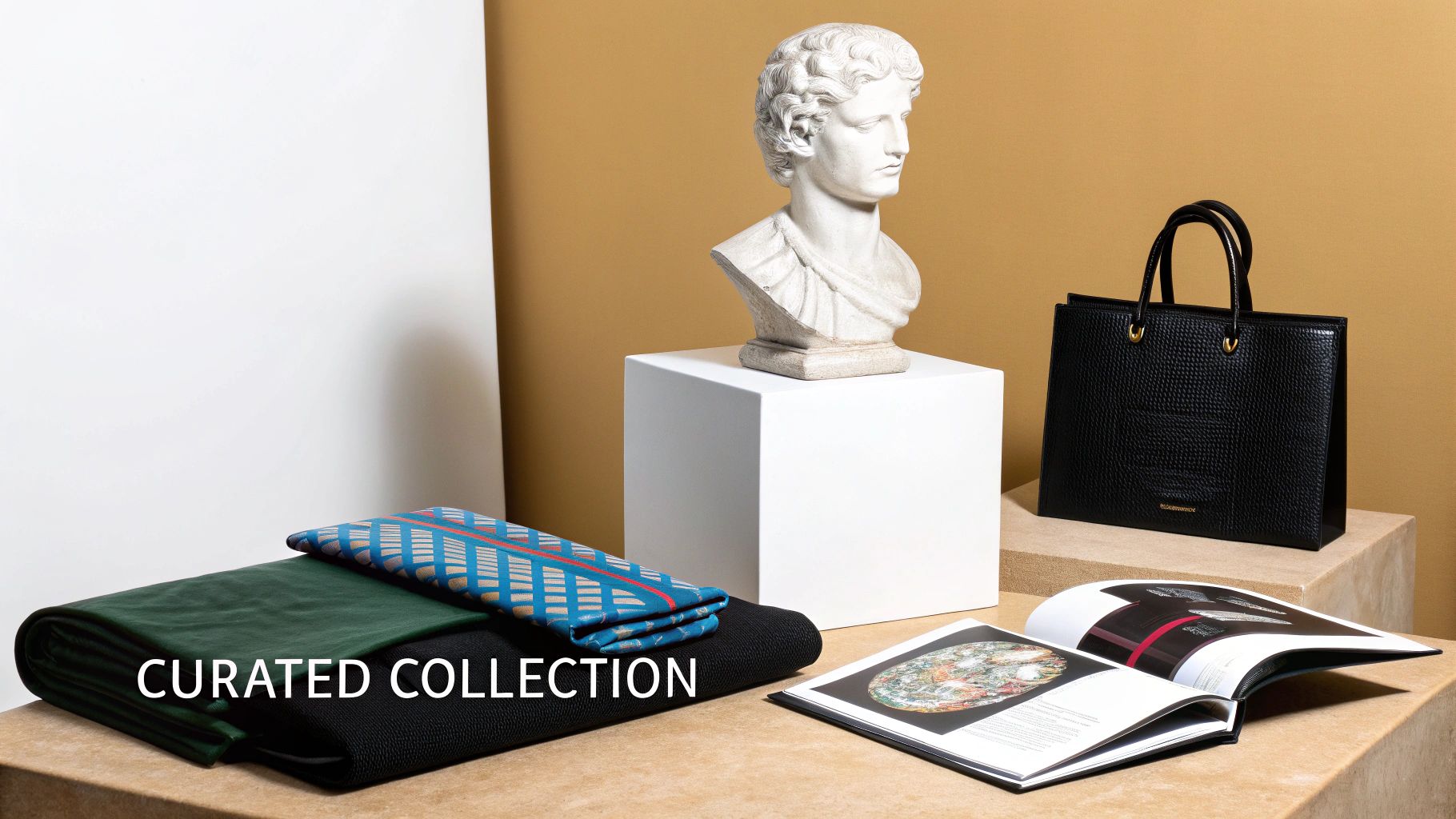
The real magic behind a truly breathtaking luxury home interior isn’t just about buying expensive things. It’s about the art of curation—the thoughtful, painstaking process of sourcing and assembling furnishings, art, and objects that tell a single, cohesive story. It’s the difference between filling a room and building a narrative.
This is where the seasoned eye of an elite designer becomes so critical. They are, first and foremost, a curator. Their most valuable tool is a global network of contacts, a web of trusted relationships built over decades with artisans, galleries, and exclusive suppliers. This isn’t something you can Google; it’s a closed-door world of unique, one-of-a-kind pieces.
The Global Hunt for Unique Pieces
An exceptional designer doesn’t just shop from a catalog; they embark on a global hunt. Their work takes them to the world’s most prestigious design fairs, like Salone del Mobile in Milan or Maison&Objet in Paris. Here, they get a firsthand look at emerging trends, discover up-and-coming artisans, and source pieces long before they ever hit the mainstream market.
This proactive approach gives them a serious edge. They can secure items with long lead times or commission bespoke variations straight from the maker. It’s this dedication to sourcing that ensures a project feels fresh, deeply personal, and utterly unique, setting it miles apart from interiors that simply rely on locally available “luxury” goods.
True luxury is found in the story behind an object. It’s the hand-carved detail on a chair from a small Italian workshop or the unique glaze on a vase sourced from a Japanese ceramicist. A well-connected designer is a storyteller who finds these pieces for you.
This global reach turns a home from a collection of beautiful things into a personal gallery. Every object has a history, a provenance. The entire environment becomes not just beautiful, but rich with meaning and character.
Bespoke Commissions and Artisan Collaborations
Beyond finding existing treasures, the absolute pinnacle of luxury design is commissioning bespoke pieces. This is where a designer collaborates directly with master craftspeople—true artists in their own right—to create furnishings and fixtures tailored to the exact needs of your space. Think of a hand-knotted rug woven to match a specific hue from a painting, or a dining table built to a precise dimension that perfectly anchors the room.
These collaborations are built on a foundation of mutual respect and a shared obsession with quality. The designer must be able to articulate a vision with perfect clarity, and the artisan must possess the skill to bring it to life flawlessly. This synergy is what produces heirloom-quality pieces that elevate an entire luxury home interior.
This specialized sourcing involves a diverse cast of experts:
- Furniture Makers: For custom sofas, tables, and casegoods with impeccable joinery and finishes.
- Textile Weavers: To design custom fabrics, draperies, and rugs that are completely unique to the project.
- Metalworkers: Who forge custom light fixtures, hardware, and one-of-a-kind architectural details.
- Art Consultants and Gallerists: To navigate the complex art market and acquire investment-grade pieces that speak to the client’s taste.
The Value of a Curated Network
Ultimately, the ability to source and curate at this level is one of the most significant values a top-tier designer brings to the table. Their network is their most prized asset, opening doors to a world of exclusive craftsmanship that would otherwise be completely inaccessible.
Platforms like Haute Design are so important because they act as that crucial bridge, connecting clients with designers who possess these vetted, world-class networks. It’s the best way to ensure your vision is realized not with off-the-shelf items, but with a thoughtfully curated collection that makes your home a true original.
Finding Your Perfect Design Partner on Haute Design
Taking on a luxury home interior project is a huge commitment—of your time, your money, and your emotional energy. The single most critical decision you’ll make is choosing the right designer. This person isn’t just a creative professional; they become your advocate, your interpreter, and the steadfast guardian of your vision from the first sketch to the final, breathtaking reveal.
The right partner is about more than just a beautiful portfolio. You need to find someone whose aesthetic resonates with you, of course, but just as importantly, their communication style and process should give you complete confidence. The relationship between a client and a designer is intensely collaborative, and it absolutely must be built on a foundation of trust and shared understanding.
Key Questions to Guide Your Search
Before you sign on the dotted line, a thorough interview is essential. A truly great designer will welcome your questions and give you transparent, thoughtful answers. How they respond will give you a clear window into their working style, depth of experience, and whether they’re the right fit for your specific project.
To help you navigate this crucial step, here are a few things you should absolutely ask:
- Process and Communication: “Can you walk me through your typical design process, from concept all the way to installation? How will you keep me in the loop about progress and decisions?”
- Budget Management: “How do you build and manage a project budget? What happens if unexpected costs come up?”
- Collaboration Style: “How do you handle creative differences or feedback? Can you share an example of how you’ve woven a client’s personal item into a design?”
- Network and Sourcing: “What’s your process for sourcing custom furniture and art? What kind of relationships do you have with artisans and builders in the area?”
The answers to these questions will reveal far more than just their creative talent. They’ll show you their business acumen and project management skills—both of which are absolutely vital for a successful outcome.
The Haute Design Advantage
Finding this ideal partner in a sea of options can feel overwhelming. That’s exactly why Haute Design exists. We aren’t just another directory; we are a carefully curated network of the nation’s most distinguished talent in interior design, architecture, and home building. Every single professional is rigorously vetted to ensure they meet the highest standards of quality, creativity, and professionalism.
The Haute Design badge is a symbol of trust and distinction. It means a designer has a proven history of creating extraordinary spaces and delivering an impeccable client experience. This pre-vetted credibility saves you invaluable time and removes the guesswork from your search. Our platform gives you exclusive access to an elite community, making it easy to connect with a visionary who truly gets the nuances of luxury living.
Partnering with a designer from the Haute Design network means you are not just hiring an individual; you are gaining access to their entire ecosystem of trusted artisans, exclusive suppliers, and industry connections built over a lifetime.
Ready to meet the professionals who can turn your vision into a stunning reality? Our curated platform is the perfect place to find a designer whose expertise and aesthetic align perfectly with your dream for a remarkable luxury home interior.
Common Questions About Luxury Interior Design
Stepping into the world of a luxury interior design project always brings up a few practical questions. It’s completely normal to wonder about timelines, who to hire, and what to do with your existing treasures. Getting clear on these details from the start is what sets the stage for a smooth, confident journey.
Think of this section as your field guide to the logistics behind the beauty. Just like a master painter knows their brushes and pigments inside and out, knowing the process helps you collaborate effectively and ensures a stunning final result.
How Long Does a Luxury Home Interior Project Take?
This is probably the most common question, and the honest answer is: it depends entirely on the scope. A high-end project is a marathon of precision, not a sprint.
For a single-room redesign—say, a primary suite or a living room—you’re typically looking at a timeline of four to six months. That window covers everything from the initial design concepts to sourcing custom furnishings and handling the final installation. But for a full-home renovation, especially one involving architectural changes, it’s not unusual for the project to span 12 to 24 months, or even longer. That timeline has to account for permitting, complex construction, and coordinating a small army of specialized artisans.
The biggest factors that stretch a timeline are the lead times for bespoke furniture and rare materials, which can take several months to arrive. A good designer builds this into the schedule, but patience is always part of the secret ingredient for a flawless outcome.
Designer vs. Decorator: What Is the Difference?
These titles are often tossed around as if they mean the same thing, but in the world of high-end homes, their roles are fundamentally different. Knowing which professional you need is the first step to success.
- An Interior Designer is a trained, and often licensed, professional who works with the very bones of a space. They handle the spatial planning, architectural integrity, lighting design, structural modifications, and hard material selections. They think three-dimensionally.
- An Interior Decorator, on the other hand, focuses on the aesthetic layer. They work within the existing structure to choose furniture, fabrics, color palettes, and accessories that bring a room to life.
If your project involves moving walls, reconfiguring a floor plan, or anything structural, you need an interior designer. For a purely cosmetic refresh, a talented decorator might be the perfect fit.
Can I Use My Existing Furniture and Art?
Absolutely! In fact, a truly personal and luxurious home should feel like a collection of your life’s stories, not a sterile showroom. Integrating cherished pieces is what gives a space its soul.
A skilled designer will see your existing furniture and art not as obstacles, but as opportunities. They are masters at creating a beautiful dialogue between old and new. This could mean reupholstering a beloved family heirloom in a bold, modern fabric, re-framing a piece of art to give it new life, or strategically placing an antique piece to create a stunning focal point. This thoughtful layering ensures the finished space is a genuine reflection of who you are.
At Haute Design, we specialize in connecting clients with pre-vetted, elite professionals who can answer all these questions and more. They have the experience and vision to navigate every detail and bring your dream home to life. Explore our network to find the perfect partner for your project.