


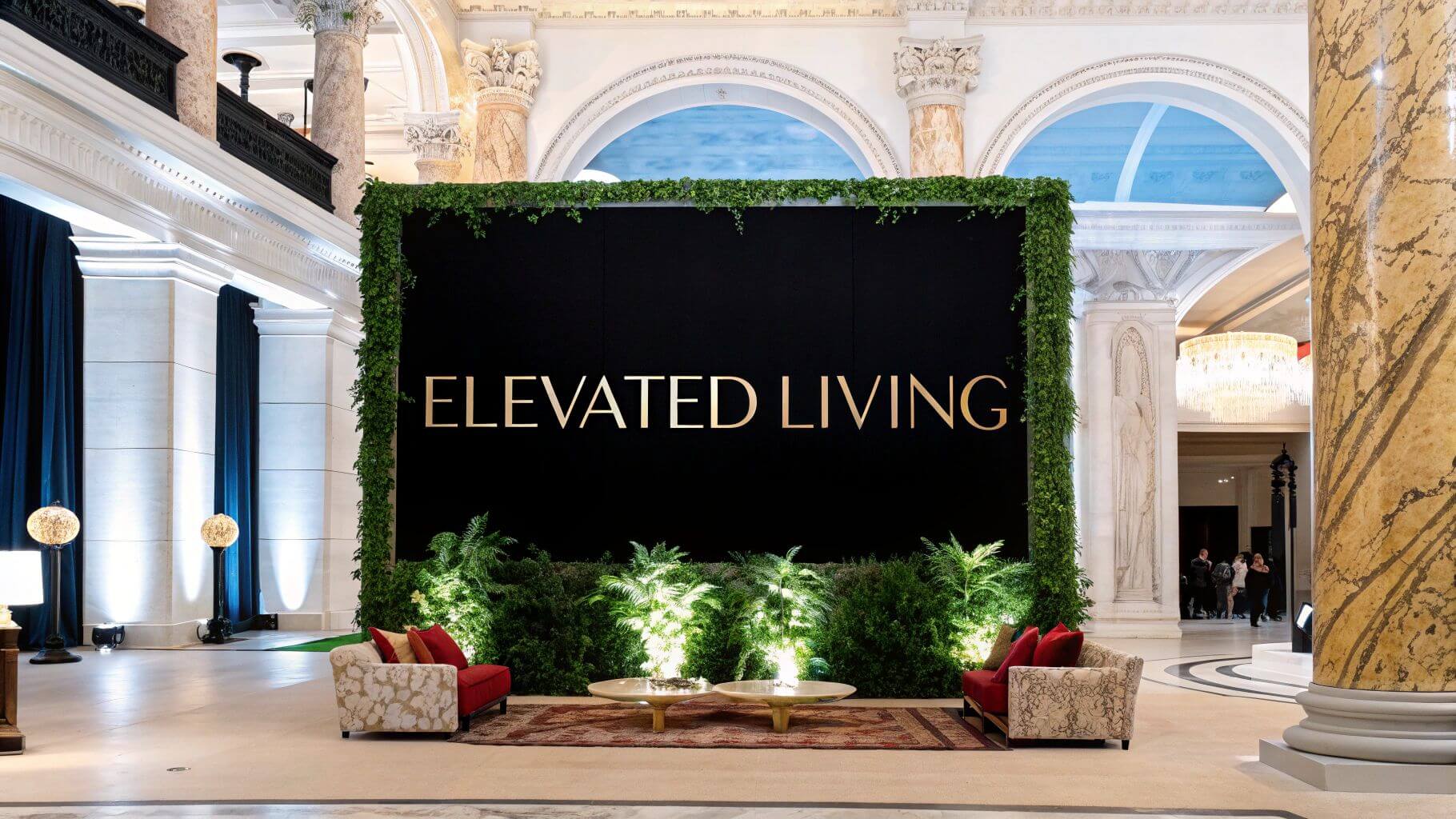
True luxury in home design transcends mere aesthetics; it’s about crafting an environment that seamlessly integrates sophisticated functionality, profound comfort, and personal expression into a cohesive, elevated experience. The most sought-after spaces today are intelligent, intrinsically connected to nature, and deeply personalized. They serve not just as residences, but as private sanctuaries that cater to every facet of modern life, from wellness and entertainment to professional pursuits and quiet contemplation.
This article moves beyond fleeting trends to explore ten definitive luxury home design ideas that are shaping the future of high-end interiors and architecture. We will delve into the practical implementation of concepts that redefine what it means to live well, transforming a house into a bespoke haven. Each idea is presented with actionable insights and specific examples to guide your vision, whether you are embarking on a new build, planning a significant renovation, or simply seeking inspiration for your next project.
From the seamless integration of smart home automation to the creation of immersive spa-like bathrooms and expansive indoor-outdoor living areas, these concepts offer a blueprint for creating a home that is not just visually stunning, but truly extraordinary. For affluent homeowners, designers, and architects aiming to execute these ambitious designs, this curated list provides the essential framework for turning visionary concepts into tangible, breathtaking realities.
Consider this your guide to the new era of elevated living, where every detail is an opportunity for unparalleled refinement and personal enjoyment.
1. Smart Home Automation Integration
True luxury in modern home design is no longer just about aesthetics; it’s about creating an environment that is intuitive, responsive, and effortlessly convenient. Smart home automation is a cornerstone of this philosophy, transforming a residence into a cohesive, intelligent ecosystem. This goes far beyond voice-activated speakers; it involves a comprehensive network of connected devices controlling everything from lighting and climate to security and entertainment.
In a truly integrated luxury home, systems learn your preferences and anticipate your needs. Imagine your shades automatically adjusting to the time of day to optimize natural light, or your home’s climate system preparing for your arrival based on your location. This level of personalized control, once the realm of futuristic concepts like Bill Gates’ Xanadu 2.0, is now a defining feature of high-end properties, popularized by innovators like Control4 and Crestron.
Key Benefits of Smart Home Automation
The value of integrating these systems extends across multiple facets of home life, enhancing comfort, efficiency, and safety.
This infographic summarizes the core advantages of adopting a fully integrated smart home system.
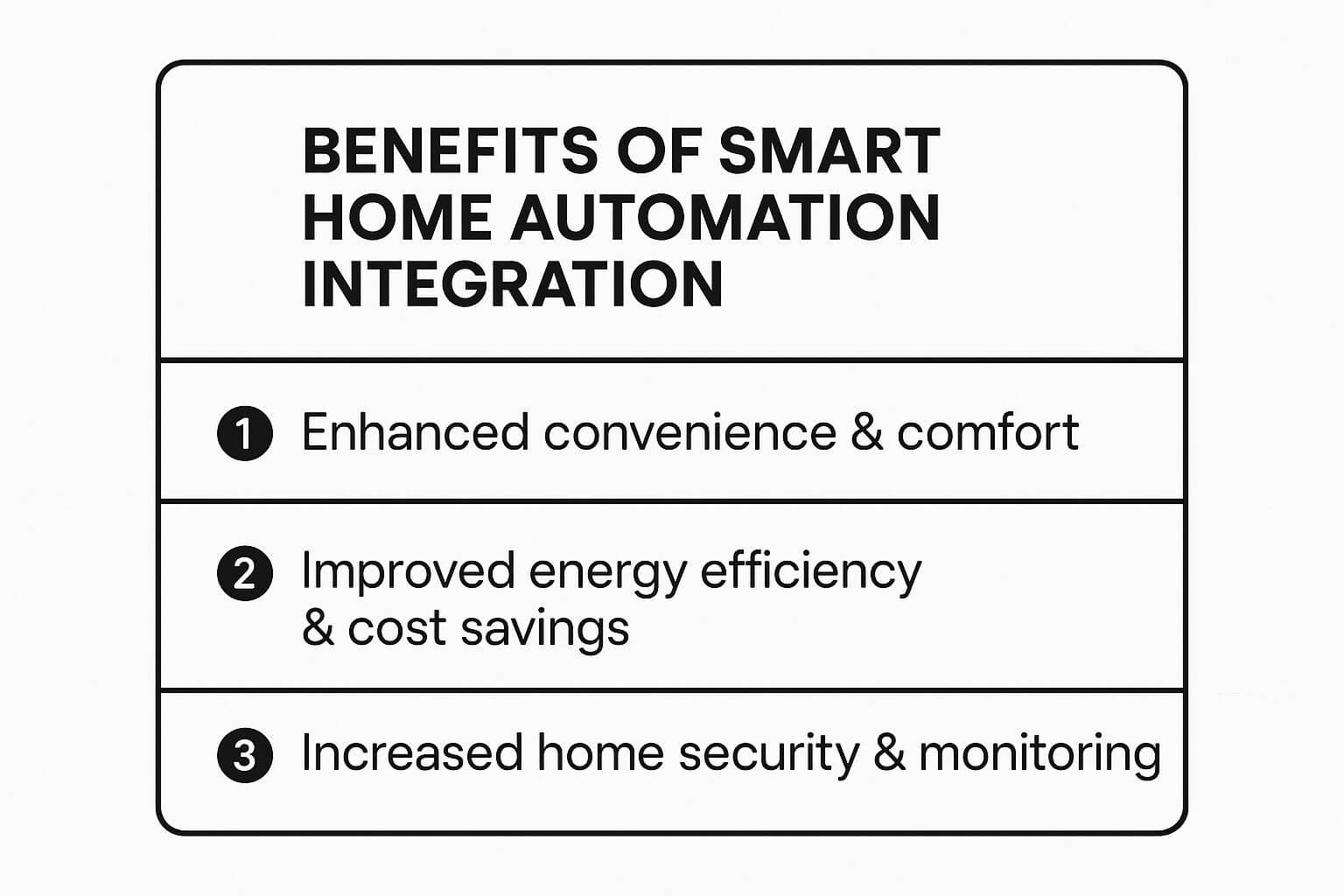
As the data highlights, the primary drivers for this luxury home design idea are tangible improvements in daily living, financial savings, and peace of mind.
Implementation and Best Practices
Achieving a seamless smart home requires careful planning and professional execution.
- Start with Core Systems: Begin with foundational elements like lighting (Lutron), climate control (Nest), and security. This creates a solid base you can expand upon later.
- Prioritize Platform Integration: Choose a central control system like Savant, Control4, or Crestron that works well with a wide range of devices to avoid compatibility issues.
- Invest in Professional Installation: A professionally designed and installed system ensures reliability and optimal performance, preventing the frustrations of a poorly configured DIY setup.
- Plan for Future Scalability: Technology evolves rapidly. Work with your installer to ensure the system’s infrastructure can accommodate future upgrades and new devices.
This approach ensures your smart home is not just a collection of gadgets but a sophisticated, future-proof asset that enhances your lifestyle.
2. Indoor-Outdoor Living Spaces
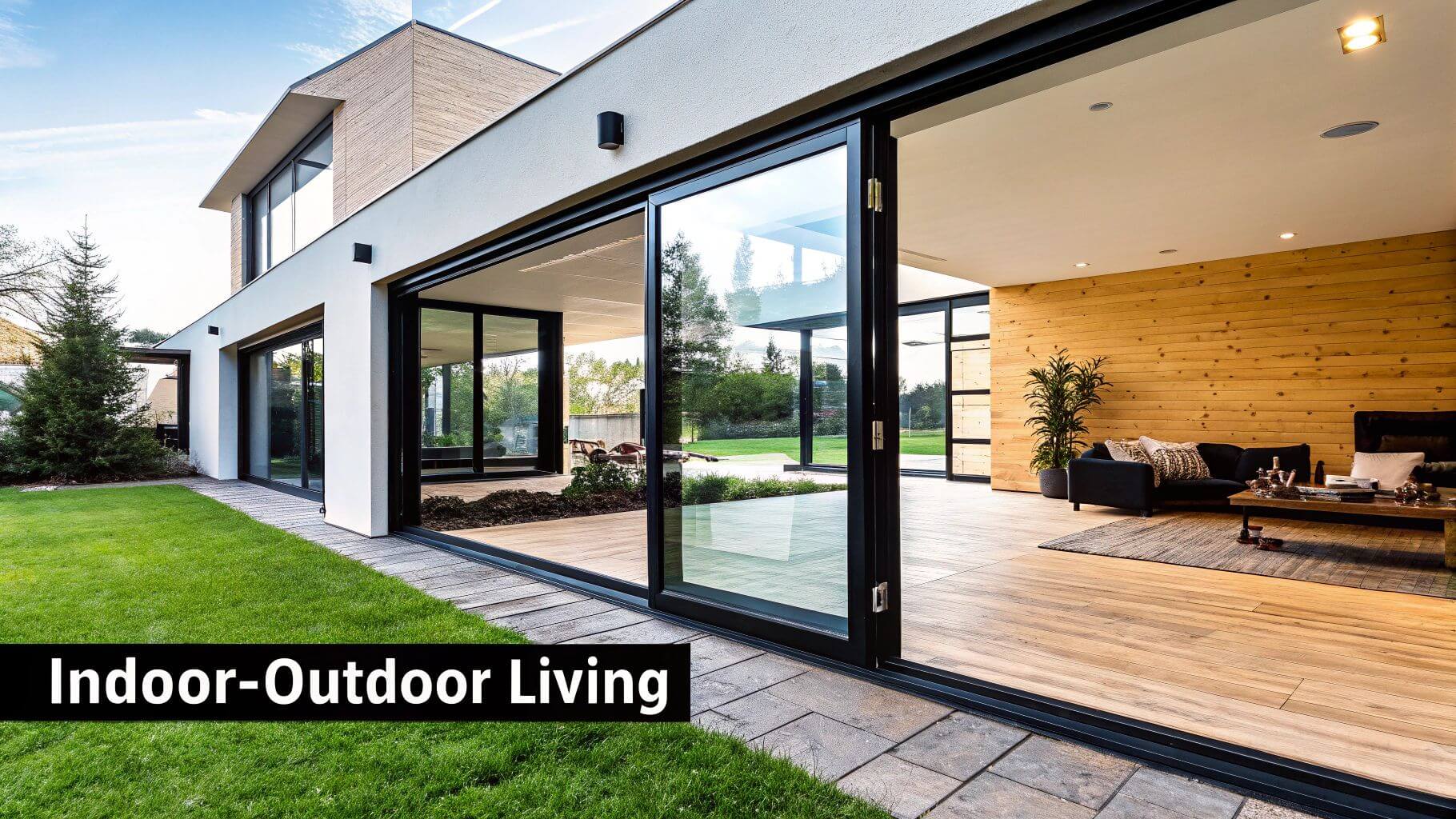
Modern luxury is defined by the seamless dissolution of boundaries, particularly the one between a home’s interior and its natural surroundings. Indoor-outdoor living spaces epitomize this concept, creating a fluid, expansive environment that extends living areas beyond traditional walls. This design philosophy uses architectural elements like retractable glass walls, large sliding doors, and cohesive design to merge the comfort of the indoors with the beauty and openness of the outdoors.
This integration transforms how a home is experienced, promoting a lifestyle that is more connected to nature and ideal for both relaxation and entertainment. Iconic examples like Philip Johnson’s Glass House pioneered this concept, while contemporary architects like Richard Neutra and John Lautner perfected it in resort-style homes from Malibu to Miami. Today, this is one of the most sought-after luxury home design ideas, made possible by innovators like Fleetwood and NanaWall Systems.
Key Benefits of Indoor-Outdoor Integration
The appeal of blending these spaces goes far beyond aesthetics, offering tangible improvements to lifestyle, well-being, and property value. The core advantages include an expanded living area for entertaining, increased natural light and ventilation which can improve health, and a stronger connection to the surrounding landscape, providing a sense of tranquility and escape. These benefits collectively enhance the daily living experience, making the home feel larger and more dynamic. For a deeper dive, explore these expert tips on how to design an outdoor space.
Implementation and Best Practices
Creating a successful indoor-outdoor space requires meticulous planning to ensure a flawless transition and long-term durability.
- Maintain Material Consistency: Use the same or complementary flooring materials, like natural stone or hardwood, both inside and out to create a visual and physical link.
- Invest in High-Performance Doors: Select high-quality retractable or sliding glass wall systems from specialists like LaCantina Doors. This ensures smooth operation, weather resistance, and thermal efficiency.
- Unify Design Elements: Extend your interior color palette and furnishing style to the outdoor area. Use high-quality, weather-resistant furniture that mirrors the comfort and sophistication of your indoor pieces.
- Consider Climate and Environment: Design with sun patterns and prevailing winds in mind to maximize comfort. Integrate covered areas like pergolas or loggias for shade and protection from the elements.
This strategic approach guarantees the space is not just visually stunning but also a functional and inviting extension of your home.
3. Wine Cellars and Tasting Rooms
For the oenophile, a dedicated wine cellar is the ultimate expression of passion and a sophisticated luxury home design idea. This feature transcends simple storage, evolving into a bespoke space for preservation, collection, and appreciation. A true luxury wine cellar is a meticulously engineered environment, blending advanced climate-control technology with architectural beauty to protect and showcase a valuable collection.
These spaces range from intimate, temperature-controlled closets to sprawling underground grottos that double as entertainment lounges, like those found in Napa Valley estates. The modern trend often treats the collection as a piece of art, with glass-walled cellars becoming dramatic focal points in dining rooms or living areas. Innovators such as Revel Custom Wine Cellars have elevated this concept, transforming wine storage into a stunning display of craftsmanship and personal taste.
Key Benefits of a Dedicated Wine Space
Integrating a custom wine cellar or tasting room offers more than just proper storage; it enhances the home’s value and the owner’s lifestyle.
- Optimal Preservation: Precise control over temperature, humidity, light, and vibration ensures every bottle matures perfectly, protecting significant investments.
- Enhanced Entertainment: A tasting room creates a unique, sophisticated venue for hosting guests, offering an experience that goes far beyond a typical dinner party.
- Increased Property Value: A professionally designed and installed wine cellar is a highly desirable amenity that can significantly increase a luxury property’s market value and appeal.
This dedicated space serves as both a functional asset for protecting a collection and a centerpiece for social engagement.
Implementation and Best Practices
Creating the perfect environment for wine requires specialized knowledge and meticulous planning to avoid costly mistakes.
- Consult with Specialists: Partner with experts in wine cellar construction who understand the technical requirements for insulation, vapor barriers, and climate control.
- Invest in Redundant Systems: For invaluable collections, install backup cooling and humidity systems to protect against equipment failure. This is a critical, non-negotiable feature for serious collectors.
- Plan for Collection Growth: Design the cellar with future acquisitions in mind. A common mistake is building a space that only accommodates your current collection, leaving no room for expansion.
- Incorporate Inventory Management: For large collections, integrate a digital inventory system to track each bottle, its location, tasting notes, and optimal drinking window.
By following these best practices, you can create a space that is not only beautiful but also functions as a professional-grade facility for your collection. If you are considering a smaller, integrated feature, you can learn more about how to build a wine cabinet to start your journey.
4. Home Theaters and Media Rooms
Ultimate luxury is about creating experiences within the home that surpass public offerings, and a professionally designed media room or home theater is a prime example. This involves much more than just a large screen and comfortable chairs; it is the creation of a dedicated, acoustically optimized space that delivers an immersive audiovisual experience rivaling commercial cinemas. The goal is to build an environment where technology, comfort, and design converge seamlessly.
These dedicated entertainment spaces are meticulously engineered for performance. Think of George Lucas’s legendary THX-certified theater at Skywalker Ranch, a benchmark for private cinema quality. This level of design involves precise calculations for sound and light, integrating high-fidelity audio from brands like Meridian Audio and state-of-the-art projection systems. The result is a bespoke sanctuary for film, gaming, or watching live sports, making it one of the most desirable luxury home design ideas.
Key Benefits of Dedicated Entertainment Spaces
The value of a custom home theater lies in its ability to provide unparalleled convenience, quality, and a unique social hub for family and guests. It transforms home entertainment from a passive activity into an extraordinary, shared event.
This infographic summarizes the core advantages of installing a professionally designed home theater or media room.
As the data illustrates, the investment is driven by a desire for superior quality, privacy, and creating a versatile entertainment asset within the property.
Implementation and Best Practices
Designing an effective home theater requires a blend of technical expertise and interior design sensibility to achieve both performance and aesthetic harmony.
- Prioritize Acoustic Treatment: The room’s sound quality is paramount. Invest in professional acoustic design, including soundproofing, absorption panels, and diffusers, to control reverberation and ensure audio clarity.
- Plan for Equipment and Cooling: High-performance electronics generate significant heat. A dedicated, well-ventilated closet or rack system is essential to protect your investment and maintain equipment longevity.
- Select Scalable Technology: Choose a central control system like Crestron and components that can be upgraded. This future-proofs the room, allowing for easy integration of new formats like 8K video or next-generation audio.
- Integrate Lighting Control: A sophisticated lighting system with pre-programmed scenes for different activities (e.g., “Movie Mode,” “Intermission”) is crucial for creating the right ambiance and enhancing the viewing experience.
This strategic approach ensures the space is not just a room with a big screen, but a true cinematic destination within your own home.
5. Spa-Like Master Bathrooms
The modern luxury bathroom has evolved far beyond a purely functional space; it is now a private sanctuary dedicated to wellness, relaxation, and rejuvenation. A spa-like master bathroom is a meticulously designed retreat that borrows principles from the world’s most exclusive wellness centers. This luxury home design idea is about creating an immersive experience that soothes the senses, incorporating elements like oversized soaking tubs, steam showers, heated flooring, and premium, natural materials.
This concept transforms the daily routine into a ritual of self-care. Imagine a bathroom where chromotherapy lighting sets the mood, a rainfall showerhead mimics a tropical downpour, and integrated audio systems play calming sounds. This level of intentional design, popularized by high-end brands like Kohler and Waterworks, is no longer confined to five-star resorts; it is a defining feature of opulent residences, seen in everything from Oprah Winfrey’s Montecito estate to serene penthouse bathrooms with expansive city views.
Key Benefits of a Spa-Inspired Bathroom
Creating a personal spa offers more than just aesthetic appeal; it provides tangible benefits for well-being and enhances the home’s overall value.
- Stress Reduction: Features like steam showers, hydrotherapy tubs, and aromatherapy diffusers are designed to alleviate stress and promote mental clarity.
- Enhanced Property Value: A luxurious, well-appointed master bathroom is a significant selling point and can provide a strong return on investment in the high-end real estate market.
- Daily Indulgence: It brings the experience of a luxury spa into the home, making daily pampering an accessible and routine part of life.
This approach focuses on crafting an environment that supports a holistic and restorative lifestyle.
Implementation and Best Practices
Designing a successful spa-like bathroom requires a blend of sophisticated technology and timeless design principles.
- Prioritize Natural Elements: Incorporate materials like marble, travertine, and natural wood to create a serene, organic atmosphere. Maximize natural light and, where possible, frame views of nature.
- Invest in High-Performance Fixtures: Select top-tier fixtures such as multi-function rainfall showers, freestanding soaking tubs from brands like Duravit, and smart toilets from TOTO.
- Focus on Ambient Layers: Integrate layered lighting with dimmers, including task, accent, and ambient sources. Heated floors and towel warmers are essential for ultimate comfort.
- Plan for Seamless Integration: Ensure ample storage is built-in to keep surfaces uncluttered. Proper ventilation and waterproofing are critical for longevity, as detailed in any comprehensive bathroom renovation checklist.
By focusing on these details, you can transform a standard master bath into a truly exceptional private retreat.
6. Chef’s Kitchens with Premium Appliances
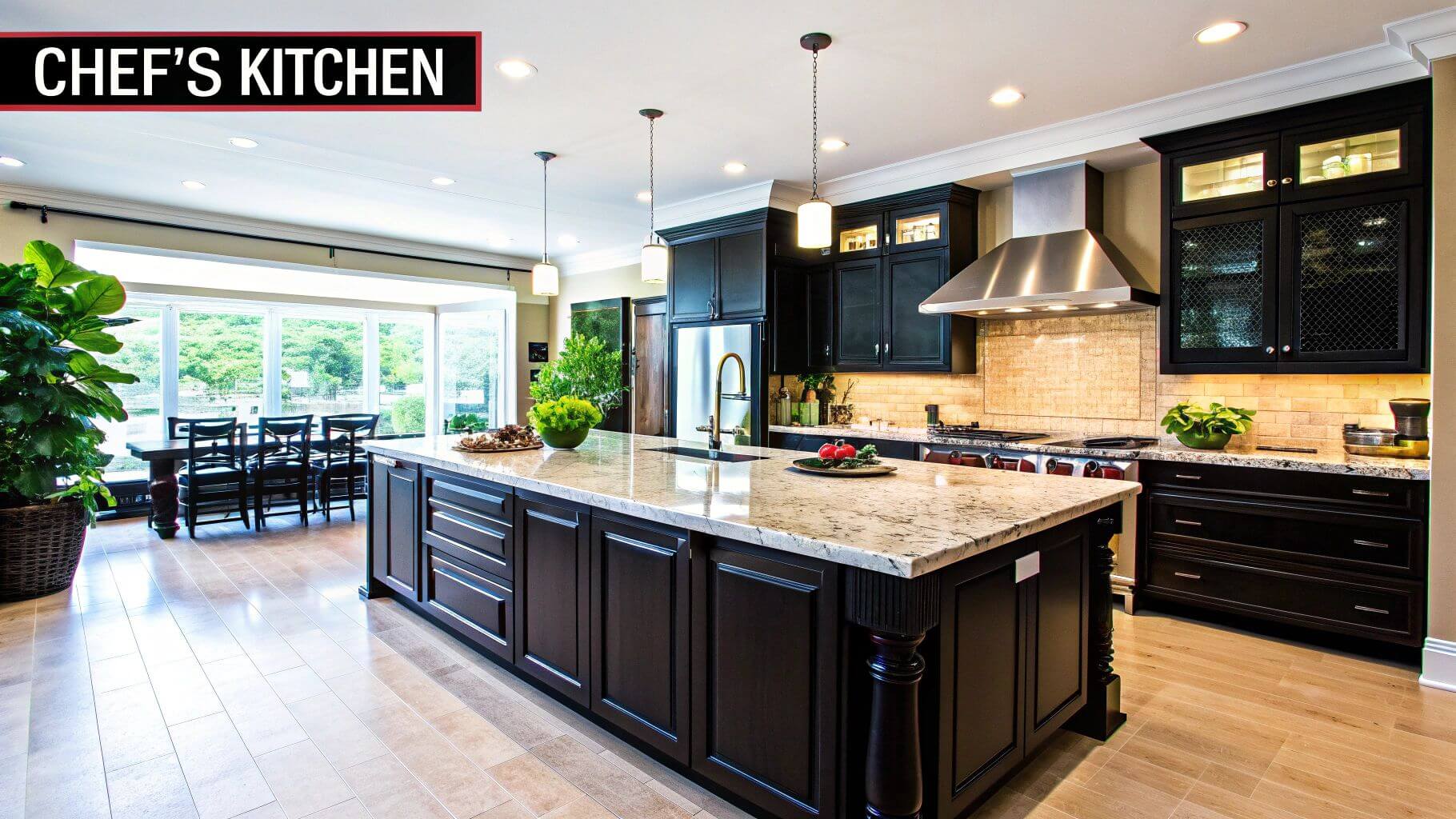
The modern luxury kitchen has transcended its purely functional role to become the heart of the home: a space for culinary creation, social gathering, and sophisticated entertainment. A chef’s kitchen embodies this evolution, integrating professional-grade appliances and ergonomic design into a residential setting. This concept is about more than just expensive equipment; it’s a holistic approach to creating a high-performance environment that caters to both passionate home cooks and professional chefs.
These spaces are defined by their commercial-quality appliances, expansive preparation zones, and durable, premium materials. Inspired by the efficiency of professional kitchens and popularized by culinary icons like Gordon Ramsay and brands such as Wolf, Sub-Zero, and La Cornue, this luxury home design idea transforms cooking from a chore into a refined experience. The layout is meticulously planned for an optimal workflow, blending serious culinary capability with elegant aesthetics suitable for hosting guests.
Key Benefits of a Chef-Inspired Kitchen
Investing in a professional-grade kitchen offers significant advantages that enhance both the culinary process and the home’s overall value and appeal. It creates a central hub that is as functional for daily use as it is impressive for entertaining.
The primary drivers for this trend are a desire for superior performance, durability, and a seamless blend of form and function. This infographic highlights the core advantages of designing a chef’s kitchen.
Implementation and Best Practices
Designing a successful chef’s kitchen requires a balance of high-tech appliances, smart layout, and robust materials. Careful planning is essential to ensure the space is both beautiful and highly practical.
- Plan for Powerful Appliances: Professional appliances from brands like Viking or Wolf require significant electrical and gas service. Consult with contractors early to ensure your home’s infrastructure can support them.
- Design for Workflow: Incorporate multiple prep stations, such as a large island and dedicated counter space, to allow for an efficient “kitchen triangle” and accommodate multiple cooks.
- Invest in Superior Ventilation: Commercial-style cooking produces more heat and smoke. A powerful, properly sized ventilation hood is non-negotiable to maintain air quality and protect finishes.
- Choose Resilient Materials: Select countertops like quartzite or stainless steel and durable flooring that can withstand heavy use, high heat, and frequent cleaning.
- Integrate Entertaining and Cooking: Consider an open-concept layout with features like a breakfast bar or adjacent seating area to ensure the space works for both cooking and socializing.
This strategic approach ensures your kitchen is not just equipped with premium appliances but is a fully optimized environment for any culinary challenge.
7. Infinity Pools and Water Features
An infinity pool, or vanishing edge pool, is the pinnacle of exterior luxury home design ideas, creating a breathtaking visual effect where water appears to merge seamlessly with the horizon. This architectural marvel transforms a simple swimming area into a dramatic and serene focal point, offering an uninterrupted view that connects the home to its surrounding landscape. Often integrated with complementary water features like cascading waterfalls, elegant fountains, or adjoining spas, these installations elevate the entire property into a private resort-like oasis.
This concept, popularized by visionaries like architect John Lautner and now a staple in high-end resorts and exclusive residences, moves beyond recreation to become a living piece of art. Whether overlooking an ocean in Malibu, the mountains in Scottsdale, or a city skyline, the infinity edge provides a powerful sense of tranquility and boundless space, turning the poolside experience into an immersive escape.
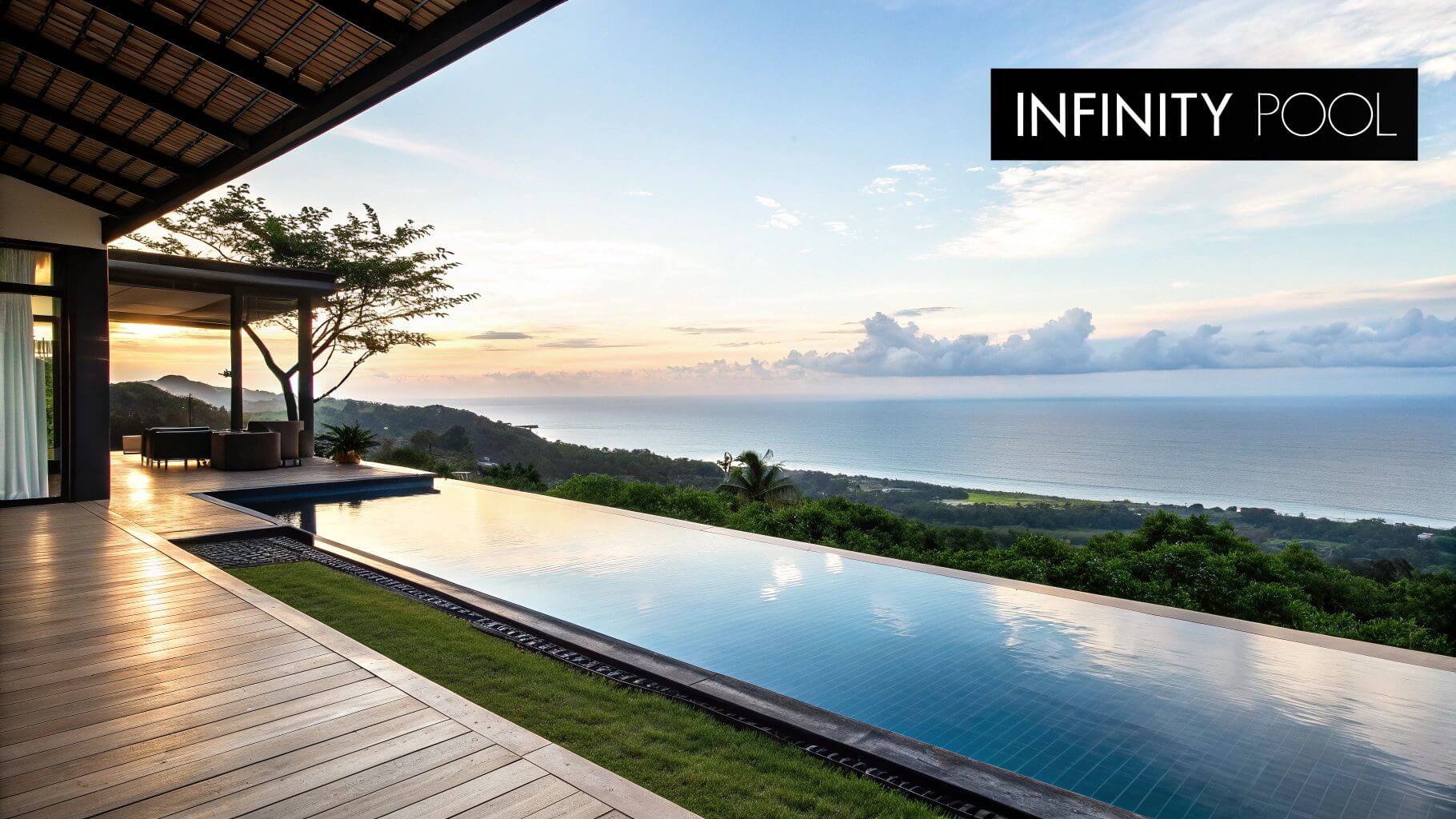
Key Benefits of Infinity Pools and Water Features
The appeal of an infinity pool lies in its stunning aesthetics and its ability to enhance the connection between a home and its environment. This feature is more than just a pool; it’s a statement of architectural elegance and landscape integration.
The primary advantages are the creation of unparalleled views, increased property value, and a unique, resort-style ambiance that encourages relaxation and sophisticated entertaining. The sound of flowing water also contributes to a tranquil and calming atmosphere.
Implementation and Best Practices
Executing a successful infinity pool design requires meticulous engineering and thoughtful planning to ensure both beauty and functionality.
- Prioritize Structural Engineering: The “vanishing edge” requires a complex system of a catch basin, pumps, and filtration. A qualified engineer must design the structure to handle the weight and flow of water, especially on hillsides or rooftops.
- Integrate Landscaping: Use strategic landscaping to frame the view and conceal the catch basin. Low-profile plants and seamless decking materials like stone or Ipe wood can enhance the illusion of the water extending into the landscape.
- Consider Site-Specific Factors: Wind patterns can increase water evaporation and affect the smoothness of the water’s surface. Your design team should account for prevailing winds to maintain the flawless infinity effect.
- Incorporate Unobtrusive Safety: Safety features are crucial but shouldn’t compromise the aesthetic. Consider options like submerged ledges, discreet fencing set back from the edge, or advanced perimeter alarm systems.
By focusing on these details, the infinity pool becomes a flawlessly integrated element that defines the home’s luxury and connection to its stunning surroundings.
8. Walk-In Closets and Dressing Rooms
The modern luxury home elevates the concept of storage from a mere utility to a personalized, boutique-like experience. Walk-in closets and dressing rooms are no longer just oversized cupboards; they are thoughtfully designed sanctuaries dedicated to personal style and organization. This design idea transforms the daily ritual of getting dressed into a moment of curated indulgence, blending functionality with high-end aesthetics.
These spaces are custom-built to reflect the owner’s wardrobe and lifestyle, featuring bespoke cabinetry, jewelry displays, and dedicated zones for different types of apparel. Imagine a space reminiscent of a high-end fashion boutique, where every item is beautifully showcased and easily accessible. This level of organization and display, once reserved for celebrity homes like Mariah Carey’s renowned closet, is now a sought-after standard in luxury properties, championed by specialists like Poliform and California Closets.
Key Benefits of a Custom Dressing Room
A well-designed dressing room provides far more than just storage; it introduces order, preserves valuable garments, and adds significant value to a property.
This commitment to bespoke organization summarizes the core advantages of integrating a dedicated dressing room into your home’s design.
- Garment Preservation: Custom storage with proper spacing, cedar lining, and climate control protects delicate fabrics and high-value pieces from damage.
- Enhanced Organization: A meticulously planned layout saves time and reduces stress by making your entire wardrobe visible and accessible.
- Increased Property Value: A luxurious and functional walk-in closet is a powerful selling feature that appeals directly to the high-end market.
As these benefits highlight, a custom dressing room is a strategic investment in both lifestyle and property equity, making it a quintessential luxury home design idea.
Implementation and Best Practices
Creating the perfect dressing room requires a detailed understanding of your personal collection and daily routines.
- Conduct a Wardrobe Inventory: Before designing, assess your entire collection. Plan for your current items plus at least 30-50% extra space for future acquisitions.
- Incorporate Layered Lighting: Combine ambient, task, and accent lighting. LED-lit clothing rods and backlit shelving ensure you can see true colors and find items easily.
- Integrate a Central Island and Seating: A central island with drawers for accessories adds both storage and a functional surface. Including a comfortable ottoman or bench provides a place to sit while dressing.
- Choose High-Quality Materials: Select finishes like fine wood veneers, custom hardware, and soft-close drawers to create a truly premium feel that matches the quality of your wardrobe.
This strategic approach ensures your dressing room is not just a storage space but a sophisticated and highly functional extension of your master suite.
9. Multi-Level Outdoor Terraces and Rooftop Gardens
Luxury living is no longer confined within four walls; it extends upward and outward, blurring the lines between indoor and outdoor spaces. Multi-level terraces and rooftop gardens represent the pinnacle of this concept, transforming unused vertical space into sophisticated, functional extensions of the home. This approach moves beyond a simple patio, creating a series of interconnected outdoor rooms with distinct purposes, from serene private gardens to grand entertainment venues with city views.
These vertical landscapes are a hallmark of high-end urban and hillside properties, where space is at a premium. Imagine a Manhattan penthouse with a dining terrace, a separate lounging area, and a private garden sanctuary, all stacked vertically. This design philosophy, popularized by landscape architects who specialize in vertical design and seen in world-class luxury hotels, maximizes both footprint and function, offering a resort-like experience at home.
Key Benefits of Vertical Outdoor Living
The value of designing vertically extends far beyond aesthetics, enhancing lifestyle, property value, and connection to nature.
This infographic summarizes the core advantages of adopting multi-level outdoor spaces.
As the data highlights, these luxury home design ideas create new functional areas, improve well-being, and offer a significant return on investment through increased usable square footage and curb appeal.
Implementation and Best Practices
Developing a successful multi-level outdoor space requires meticulous planning and a deep understanding of structural and horticultural principles.
- Prioritize Structural Integrity: Ensure each level is engineered to support the weight of soil, planters, furniture, and people. Proper waterproofing and drainage are non-negotiable to protect the building’s structure.
- Create Cohesive Design Flow: Use consistent materials, color palettes, and plant types across different levels to create a unified aesthetic. Connect spaces with elegant stairways and well-lit pathways.
- Incorporate Environmental Buffers: For rooftop or high-level terraces, integrate glass windscreens, pergolas, or strategically placed plantings to provide protection from wind and harsh sun.
- Plan for Utilities and Maintenance: Integrate irrigation, lighting, and electrical outlets into the design from the start. Plan clear access routes for gardening, cleaning, and general upkeep.
This strategic approach ensures your terraced garden is not just beautiful but also a durable, functional, and enduring asset.
10. Art Galleries and Display Spaces
In the world of high-end real estate, a home is more than a living space; it is a vessel for personal expression and a sanctuary for prized possessions. For the avid collector, this philosophy extends to creating dedicated art galleries and display spaces. This luxury home design idea transforms parts of a residence into museum-quality environments, designed not just to showcase art but to preserve and honor it. This involves far more than simply hanging a painting; it requires a sophisticated integration of lighting, climate control, and architectural design.
These spaces move beyond a simple feature wall, becoming integral to the home’s identity. Imagine a hallway designed as a sculpture walk with recessed niche lighting or a double-height living area built around a large-scale commissioned piece. The concept, popularized by renowned art collectors and philanthropists who bring museum-level curation into their private domains, elevates the home into a living gallery, offering a deeply personal and immersive artistic experience.
Key Benefits of Dedicated Art Spaces
Creating a purpose-built space for art provides functional and aesthetic advantages that protect and enhance a valuable collection.
This approach ensures that each piece is not only displayed to its best advantage but is also protected from environmental damage, securing its long-term value and integrity.
As the data illustrates, the primary motivations are asset protection, enhanced viewing experience, and the seamless integration of art into the home’s architectural narrative.
Implementation and Best Practices
Designing a successful home gallery requires a blend of artistic sensibility and technical precision.
- Consult with Specialists: Work with art conservation experts to establish the correct temperature, humidity, and UV protection levels for your specific collection.
- Install Museum-Quality Lighting: Use a layered lighting system with adjustable, low-UV fixtures like those from ERCO or Lumenture. This allows you to highlight textures and colors without causing damage.
- Plan for Flexibility: Incorporate gallery-style hanging systems and adaptable lighting tracks to easily rotate and reconfigure artworks of varying sizes and mediums.
- Integrate Environmental Controls: A dedicated HVAC system with humidity control is crucial for preserving delicate materials like paper, canvas, and wood from degradation.
By following these practices, a homeowner can create a dynamic and secure environment that celebrates their collection and enriches their daily life.
Luxury Home Design Ideas Feature Comparison
| Item | Implementation Complexity 🔄 | Resource Requirements ⚡ | Expected Outcomes 📊 | Ideal Use Cases 💡 | Key Advantages ⭐ |
|---|---|---|---|---|---|
| Smart Home Automation Integration | High – complex systems and integrations | High – devices, professional installation, maintenance | Enhanced convenience, energy efficiency, security | Luxury tech-savvy homes needing automation | Customizable, future-proof, improves comfort |
| Indoor-Outdoor Living Spaces | Moderate – architectural and material work | Moderate – quality materials, landscaping, furniture | Increased living space, natural light, nature connection | Temperate/warm climates, entertaining spaces | Fluid indoor-outdoor flow, openness, property value |
| Wine Cellars and Tasting Rooms | High – precise climate control & design | Moderate to high – climate systems, storage, space | Proper wine preservation, entertainment, investment | Wine collectors, entertainment-focused homes | Wine aging, unique aesthetic, cultural appeal |
| Home Theaters and Media Rooms | High – advanced AV setup and acoustics | High – equipment, room treatment, space | Immersive entertainment, privacy, social hub | Audiophiles, movie lovers, home entertainers | Ultimate cinema experience, customizable setups |
| Spa-Like Master Bathrooms | Moderate to High – plumbing, premium finishes | Moderate to high – fixtures, materials, space | Wellness, relaxation, luxury appeal | Master suites emphasizing wellness | Daily spa experience, timeless luxury, value add |
| Chef’s Kitchens with Premium Appliances | High – specialized utilities and layout | High – commercial-grade appliances, ventilation | Exceptional cooking, entertaining, durability | Serious cooks, gourmet entertainers | Professional performance, visual impact |
| Infinity Pools and Water Features | High – engineering, site-specific | Very high – construction, maintenance, landscaping | Visual luxury, entertainment, resort atmosphere | Scenic locations, luxury resorts, entertainment | Stunning views, property value, resort feel |
| Walk-In Closets and Dressing Rooms | Moderate – custom cabinetry and climate | Moderate – storage systems, lighting, space | Organization, garment preservation, luxury experience | Fashion-focused homeowners, large wardrobes | Exceptional organization, personalized luxury |
| Multi-Level Outdoor Terraces | High – engineering, waterproofing | High – structural work, irrigation, landscaping | Maximized outdoor living, privacy, entertaining zones | Urban and hillside homes needing vertical space | Multiple zones, dramatic visual impact |
| Art Galleries and Display Spaces | High – specialized lighting and climate | High – museum-quality systems, security, space | Art preservation, cultural sophistication, display | Art collectors, cultural homes | Protects art, impressive entertaining spaces |
Bringing Your Vision of Luxury to Life
The journey through these ten distinct luxury home design ideas reveals a powerful, unifying thread: true luxury is not merely about acquisition, but about thoughtful curation and personal expression. From the seamless technological symphony of an integrated smart home to the tranquil escape of a spa-like master bathroom, each concept transcends its function.
They are not simply rooms or features; they are immersive experiences designed to enhance, simplify, and enrich daily life. We’ve explored how a chef’s kitchen becomes the heart of culinary creativity and social gatherings, and how a dedicated home theater transforms movie-watching into a cinematic event. These elements are the building blocks of a home that is both a sanctuary for its inhabitants and a testament to their unique lifestyle.
The key takeaway is that the most impactful luxury design is deeply personal and holistic. It’s about creating a cohesive environment where every element, from an infinity pool that merges with the horizon to a custom wine cellar that guards a prized collection, serves a purpose and tells a story. The distinction between a merely expensive home and a truly luxurious one lies in this intentionality. It is the artful blend of aesthetics, functionality, and emotional resonance that elevates a space from a structure to a personal haven.
The Synthesis of Form and Function
As you reflect on these concepts, from multi-level terraces that redefine urban green space to private art galleries that turn hallways into cultural destinations, notice the recurring theme of integration. The most successful luxury home designs masterfully blur the lines between inside and outside, technology and comfort, passion and living space.
An indoor-outdoor living area isn’t just a door to a patio; it’s a fundamental reimagining of the home’s footprint, designed to foster a connection with nature. A walk-in closet is more than storage; it’s a meticulously organized dressing room that streamlines your morning routine and showcases your personal style. This synthesis is where genuine sophistication is born.
Actionable Steps to Realize Your Luxury Home
Embarking on the path to create your ideal living space can feel monumental, but it can be approached with clarity and confidence. The process of implementing these ambitious luxury home design ideas is a collaborative art form, requiring a partnership between your vision and professional expertise.
- Define Your Lifestyle Priorities: Before focusing on specific features, define what luxury means to you. Is it about entertaining large groups, finding quiet moments for wellness, showcasing a passion for art, or embracing cutting-edge technology? Your lifestyle should be the blueprint for your design.
- Curate, Don’t Collect: Avoid the temptation to include every possible luxury amenity. Instead, select the features that will genuinely enhance your life. A thoughtfully designed home theater for a film enthusiast holds more value than a wine cellar for someone who doesn’t drink wine.
- Engage with Experts Early: The complexity of these projects, from structural requirements for infinity pools to the intricate wiring of smart homes, necessitates professional guidance from the outset. Engaging architects, interior designers, and specialized builders early in the process prevents costly mistakes and ensures a seamless execution.
- Focus on Materiality and Craftsmanship: True luxury is often found in the details. The choice of materials, the quality of the finish, and the precision of the craftsmanship are what differentiate a good design from an extraordinary one. Invest in quality that will endure and delight for years to come.
Ultimately, mastering these concepts is about creating more than just a beautiful home. It’s about crafting an environment that supports your well-being, reflects your achievements, and provides a backdrop for a life lived to the fullest. By focusing on personalization, seamless integration, and expert collaboration, you can transform your vision into a breathtaking reality, a space that is unequivocally and authentically yours.
Ready to connect with the visionaries who can bring your project to life? The Haute Design network is a curated community of premier interior designers, architects, and builders who specialize in creating exceptional luxury residences. Explore our network to find the perfect professional partner to execute your ambitious luxury home design ideas with precision and artistry.