


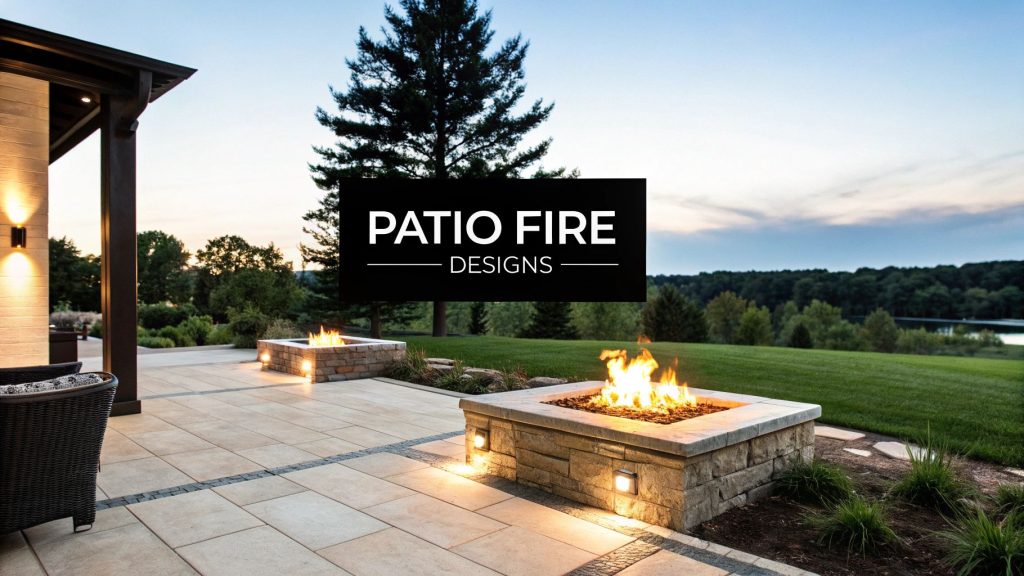
An outdoor fireplace is more than a source of warmth; it’s the architectural heart of a patio, a natural gathering place that extends your living space into the open air. The right design can transform a simple backyard into a luxurious year-round retreat for entertaining, relaxation, and creating lasting memories. Today’s sophisticated outdoor fireplace patio designs offer a stunning array of styles, from grand, rustic hearths that evoke a mountain lodge to sleek, modern linear flames that define contemporary elegance. This guide moves beyond mere aesthetics to provide a detailed exploration of ten distinct concepts for integrating this essential feature.
We will delve into the specific materials, strategic placements, and functional benefits that define each approach, ensuring you find the perfect inspiration for a high-end outdoor environment. From sunken fire pit patios that create intimate conversation zones to seamless integrations with outdoor kitchens, you will discover actionable insights to elevate your project. Each item is presented as a blueprint for creating a sophisticated and inviting outdoor sanctuary, complete with practical implementation details to guide homeowners, designers, and builders. Consider this your definitive resource for crafting a truly exceptional outdoor living experience centered around the captivating allure of fire.
1. Central Fire Pit Island
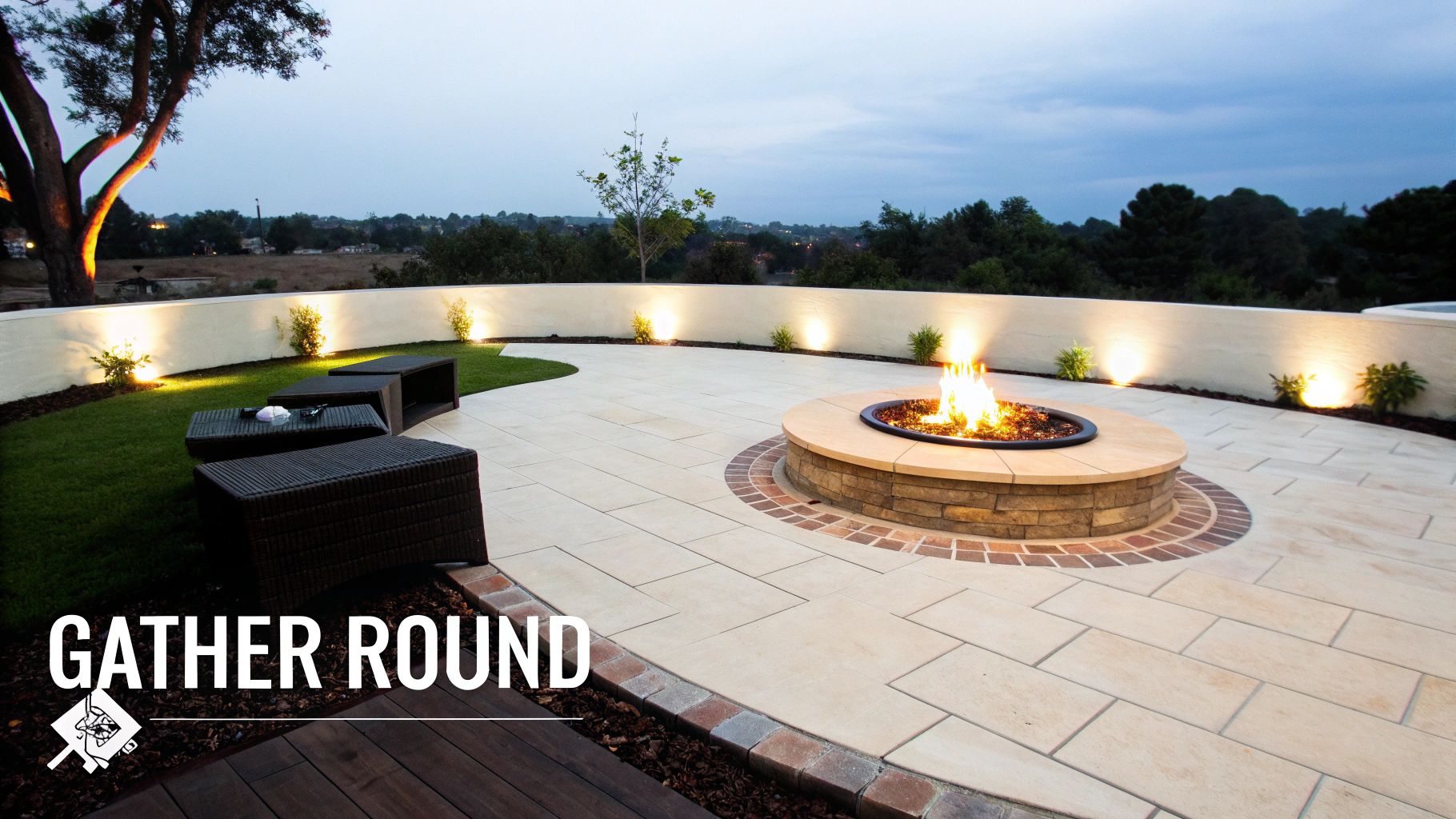
The Central Fire Pit Island is a quintessential element in modern outdoor fireplace patio designs, transforming a simple patio into a dynamic social hub. This design strategically places a circular or square fire feature at the very heart of the outdoor living area, with integrated or surrounding seating that radiates outwards. The effect is an inviting, communal atmosphere that naturally encourages conversation and shared experiences, much like a traditional indoor hearth.
This layout is not just about warmth; it’s a powerful architectural statement. By establishing a clear focal point, the design organizes the space, directs foot traffic, and creates an intuitive gathering spot. It’s a versatile concept seen in high-end residential projects from the Hamptons to luxury Scottsdale resorts, where the fire pit serves as both a functional heat source and a sculptural centerpiece.
Key Implementation Strategies
To execute this design effectively, precision is paramount. The goal is to create a seamless and safe environment that feels both luxurious and comfortable.
- Material Selection: Opt for durable, high-quality materials like cast concrete, natural stone, or corten steel for the fire pit structure. These materials withstand the elements and provide a sophisticated aesthetic.
- Seating Integration: For a cohesive look, consider built-in seating constructed from the same materials as the patio floor or fire pit surround. This creates a custom, amphitheater-like feel. If using freestanding furniture, ensure it is proportionally scaled to the fire pit.
- Safety and Clearance: Install a non-combustible surface, such as stone pavers or concrete, extending at least 10 feet around the pit. For wood-burning models, a spark screen is essential for containing embers.
Expert Insight: When positioning your fire pit island, consider the prevailing wind direction on your property. Placing the feature upwind from the primary seating area will help direct smoke away from guests, ensuring a more enjoyable experience. This small detail dramatically elevates the functionality of your outdoor fireplace patio design.
2. Built-in Stone Fireplace Wall
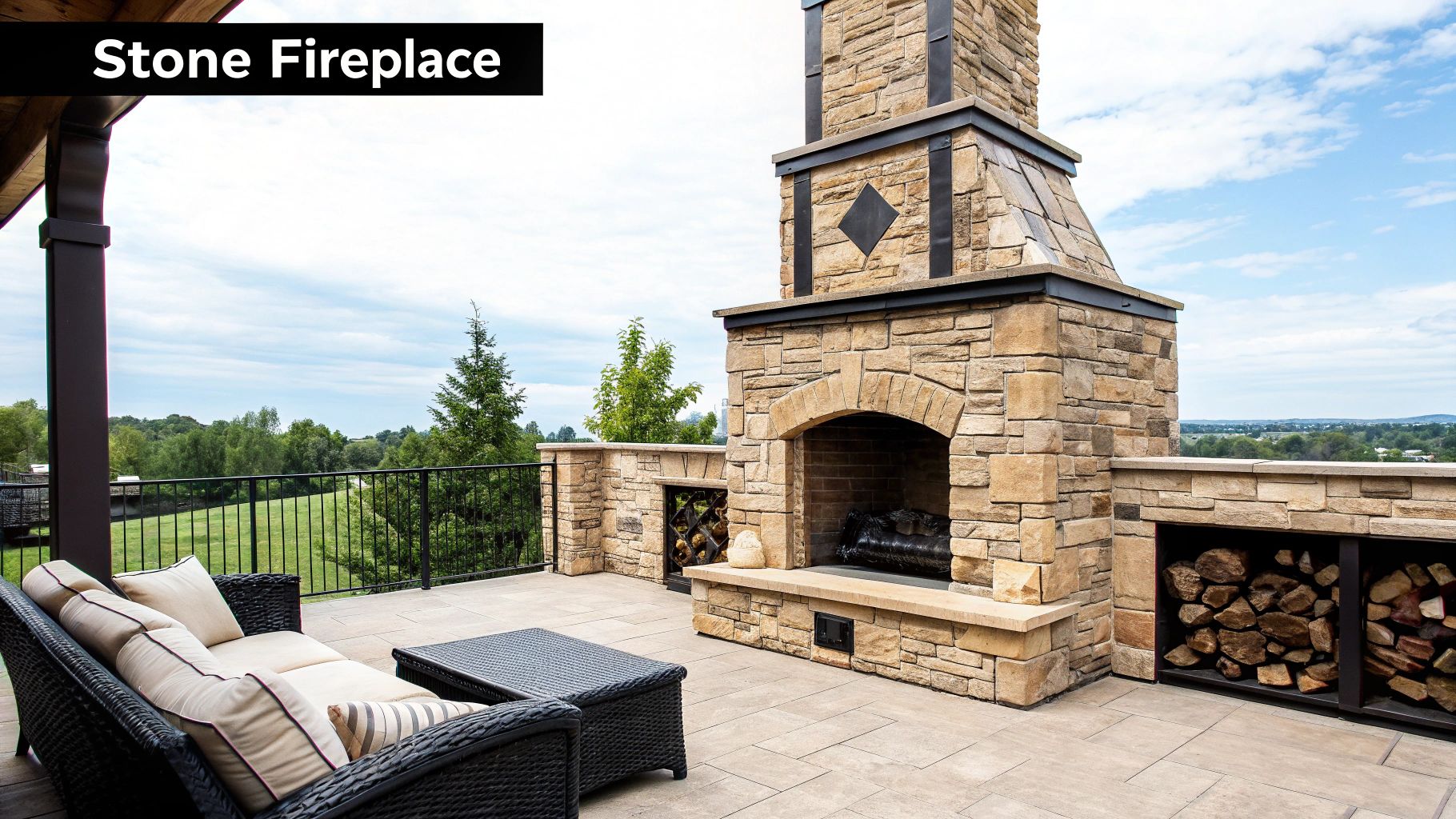
The Built-in Stone Fireplace Wall represents a timeless and substantial investment in outdoor fireplace patio designs, creating an enduring architectural anchor for any high-end exterior space. This design integrates a full-scale masonry fireplace directly into a patio wall or against the home itself, delivering significant warmth and establishing a commanding visual presence. It transforms an ordinary patio into a luxurious outdoor room, offering a sense of permanence and grandeur.
This approach is celebrated for its ability to define a space and create a sophisticated, resort-like atmosphere. It’s a signature feature in luxury properties, from Tuscan-inspired estates in Napa Valley to renovated historic homes in New England, where the stone structure adds character and tangible value. Brands like Belgard and Eldorado Stone have popularized material choices that make these grand designs more accessible yet equally stunning.
Key Implementation Strategies
Executing a built-in fireplace requires skilled craftsmanship and careful planning to ensure it is both beautiful and structurally sound. The goal is to make the fireplace feel like an original, integrated part of the home’s architecture.
- Material Selection: Choose weather-resistant natural stone like granite, fieldstone, or high-quality manufactured stone veneers that complement your home’s exterior. The material choice dictates the overall style, from rustic to contemporary.
- Structural Integrity and Safety: This is not a DIY project. Hire licensed masonry contractors to ensure the foundation, chimney, and flue system are built to code, providing proper ventilation and clearance from combustible materials.
- Ambient Integration: Enhance the fireplace wall by incorporating built-in wood storage boxes, a mantelpiece for decor, and integrated, low-voltage ambient lighting to highlight the stone texture at night.
Expert Insight: When planning your built-in fireplace, consider its relationship to your outdoor seating arrangement. The fireplace wall should serve as a backdrop, with comfortable, deep-seated furniture oriented towards it to create a cozy, conversational zone. This intentional layout maximizes both the physical warmth and the visual impact of the feature.
3. Modern Linear Gas Fireplace
The Modern Linear Gas Fireplace introduces a sleek, minimalist aesthetic to outdoor fireplace patio designs, perfect for contemporary spaces. This design features a long, narrow firebox that produces a continuous, ribbon-like flame, often set into a retaining wall or serving as a low-profile divider. It’s a sophisticated and highly controlled fire feature that offers instant ambiance and warmth at the touch of a button.
This style prioritizes clean lines and understated elegance, making it a favorite in modern architectural projects from Miami high-rises to luxury Arizona resorts. The elongated form creates a dramatic visual effect, drawing the eye and adding a layer of dynamic energy to an outdoor living area. Unlike traditional fireplaces, its appeal lies in its seamless integration and minimalist impact, serving as a horizontal focal point that complements, rather than dominates, the landscape.
Key Implementation Strategies
Executing a linear fireplace design requires careful planning to ensure it integrates flawlessly with your patio’s architecture and functions reliably.
- Material Selection: Frame the fireplace with non-combustible, weather-resistant materials like smooth-finished concrete, porcelain tile, or stacked stone. These materials enhance the modern look while ensuring durability against the elements.
- Flame and Media: Customize the look with fire media such as reflective fire glass, lava rock, or ceramic river stones. Many models also offer adjustable flame heights and even color-changing LED lighting for a tailored atmosphere.
- Gas and Electrical: Professional installation is crucial. Verify local codes and ensure easy access for gas line installation and electrical connections for ignition systems. Plan the location to align with existing or planned utility runs.
Expert Insight: For installations in breezier locations, specifying a model with a robust wind guard or a glass-enclosed front is essential. This not only protects the flame from being extinguished but also enhances safety and radiates heat more effectively, ensuring your outdoor fireplace patio design remains functional and beautiful in various conditions.
4. Rustic Wood-Burning Chimney
The Rustic Wood-Burning Chimney is a classic and enduring feature in outdoor fireplace patio designs, bringing the timeless appeal of a traditional indoor hearth to the open air. This design incorporates a substantial fireplace structure complete with a full chimney stack, creating a powerful vertical element that anchors the patio space. It delivers an authentic, multi-sensory experience with the crackling sounds, distinct aroma, and radiant heat of a real wood fire.
This architectural statement piece is more than just a heat source; it establishes a sense of permanence and heritage. The design is a cornerstone of rustic, farmhouse, and mountain-style aesthetics, seen in everything from sprawling Montana ranches to historic New England farmhouses. By integrating a full chimney, the design effectively channels smoke up and away from the seating area, a significant functional advantage over open fire pits.
Key Implementation Strategies
Proper construction and maintenance are crucial for the safety and longevity of a wood-burning chimney. The goal is to create an authentic, high-performing fireplace that complements its natural surroundings.
- Material Selection: Use natural, rugged materials like fieldstone, river rock, or reclaimed brick to achieve an authentic rustic look. For the firebox, use fire-rated bricks and refractory mortar to withstand high temperatures.
- Structural Integrity: Ensure the foundation is properly engineered to support the significant weight of a masonry chimney. The design should include a properly sized flue and smoke chamber for efficient drafting.
- Safety and Compliance: Install a spark arrestor at the top of the chimney to prevent embers from escaping. Adhere to local building codes regarding clearance from combustible materials, including overhanging tree branches and the main house structure.
Expert Insight: For optimal performance, only burn seasoned hardwoods like oak or hickory. These woods burn hotter and cleaner, significantly reducing creosote buildup in the chimney flue. An annual professional inspection and cleaning are non-negotiable for maintaining safety and efficiency in your outdoor fireplace patio design.
5. Corner Nook Fireplace
The Corner Nook Fireplace is a brilliant, space-efficient solution in modern outdoor fireplace patio designs, perfect for maximizing usable area. This design tucks a fireplace into an existing or newly created corner of the patio, using perpendicular walls as a natural frame. The result is an intimate, cozy retreat that anchors a seating area without dominating the entire space, making it a powerful focal point for smaller patios or urban outdoor living areas.
This strategic placement is more than just practical; it creates a distinct architectural zone. By leveraging vertical space and existing structures, it establishes a warm, sheltered enclave. This approach is frequently seen in high-density environments like New York City rooftop patios or compact suburban backyards where every square foot is valuable. The design transforms a neglected corner into the most sought-after spot on the patio.
Key Implementation Strategies
Effective execution of a corner nook fireplace hinges on thoughtful integration with the surrounding architecture and landscape to create a seamless, inviting atmosphere.
- Structural Integration: Use the corner walls as natural structural support for the fireplace chimney and surround. This reduces material costs and creates a more cohesive, built-in appearance.
- Seating Configuration: Install built-in L-shaped seating benches that hug the corner walls. This maximizes seating capacity and enhances the cozy, enclosed feeling of the nook.
- Vertical Accents: Frame the fireplace with decorative materials like stacked stone, reclaimed wood, or tile that extends up the walls. This draws the eye upward and adds visual texture, making the space feel larger.
Expert Insight: Leverage the corner to your advantage by positioning the fireplace to block prevailing winds. The two walls provide a natural windbreak, creating a more comfortable and protected environment for guests. This functional benefit is a key reason why this is one of the most practical outdoor fireplace patio designs for all climates.
6. Sunken Fire Pit Patio
The Sunken Fire Pit Patio represents a dramatic and sophisticated approach to outdoor fireplace patio designs, creating an intimate, self-contained conversation pit. This design involves excavating a section of the patio to place the fire feature and seating area below grade level. The result is a striking, amphitheater-like space that offers enhanced wind protection and a unique sense of enclosure, drawing people together in a cozy, protected environment.
This architectural technique is more than just a stylistic choice; it’s a method of landscape integration that shapes the user experience. By lowering the social space, it provides an unobstructed view of the surrounding landscape while keeping the fire and its occupants nestled away. This concept is frequently featured in high-end properties from the modern estates of Southern California to the mountain resorts of Utah, where it blends seamlessly with the natural topography.
Key Implementation Strategies
Executing a sunken patio requires careful planning around drainage, safety, and structural integrity to create a functional and lasting feature.
- Drainage and Foundation: Proper drainage is critical. Install a gravel base beneath the entire sunken area and incorporate a drainage system, such as a French drain, to prevent water accumulation.
- Integrated Seating and Lighting: Use retaining walls to form built-in seating benches, often capped with wood or stone for comfort. Installing low-voltage LED strip lighting beneath the seating ledges adds a warm, ambient glow and improves safety after dark.
- Accessibility: Ensure the design is accessible. While steps are common, incorporating a gently sloped ramp provides an elegant and inclusive entry point for all guests.
Expert Insight: The success of a sunken fire pit hinges on its foundation. Use a steel fire ring insert surrounded by fire-proof materials like fire brick or lava rock to contain the heat and protect the surrounding concrete or stone structure from thermal cracking over time. This foundational detail ensures both safety and longevity.
7. Outdoor Kitchen with Fireplace Integration
The Outdoor Kitchen with Fireplace Integration represents the pinnacle of alfresco living, creating a comprehensive entertainment hub that merges culinary function with ambient warmth. This design concept elevates a simple patio into a full-fledged outdoor room by cohesively combining cooking appliances, preparation surfaces, and a sophisticated fireplace. The result is a multi-functional space that seamlessly handles everything from food preparation and dining to social gathering and relaxation.
This highly functional layout is a hallmark of luxury outdoor fireplace patio designs, often seen in high-end properties from Aspen to the Hamptons. By unifying cooking and heating elements, the design creates a singular, powerful focal point that anchors the entire outdoor living area. It transforms the patio into a destination, offering the full comfort and utility of an indoor space while immersed in an open-air environment.
Key Implementation Strategies
Executing this ambitious design requires meticulous planning, especially concerning utilities and spatial flow. The goal is to create a durable, high-performance space that is both beautiful and practical.
- Strategic Zoning: Plan distinct zones for cooking (grill, pizza oven), preparation (countertops, sink), and lounging (fireplace seating). This ensures efficient workflow and prevents guests from interfering with the cooking process.
- Material Durability: Select materials that can withstand both high heat from cooking appliances and the elements. Stainless steel for appliances, along with granite, concrete, or quartzite countertops, are industry standards.
- Utility Planning: Proper planning for gas lines, electrical wiring, and plumbing is critical. Engage specialists early in the design process to ensure all utilities are safely and correctly installed before any construction begins. Learn more about how to design an outdoor space to master these details.
Expert Insight: Proper ventilation is non-negotiable in an integrated outdoor kitchen and fireplace design. Install a commercial-grade vent hood above the grill area to direct smoke, grease, and heat away from the dining and lounging zones. This technical detail is essential for guest comfort and safety, ensuring the atmosphere remains pleasant.
8. Portable Tabletop Fireplace
The Portable Tabletop Fireplace offers a sophisticated and flexible solution for adding ambiance to any outdoor setting, regardless of size. This design involves compact, self-contained fire features that can be placed on a patio table or other stable surface. Fueled by clean-burning options like ethanol, gel, or small propane canisters, they provide a gentle, flickering flame without the permanence or scale of a traditional fireplace.
This approach democratizes the concept of outdoor fireplace patio designs, making it accessible for apartment balconies, small urban terraces, and even temporary event setups. It’s a design element popularized by high-end home decor retailers and urban living influencers who value aesthetic appeal and versatility over sheer heat output. The result is a movable centerpiece that adds a touch of warmth and visual interest to intimate gatherings.
Key Implementation Strategies
Success with a tabletop fireplace hinges on safety, placement, and understanding its role as a decorative accent rather than a primary heat source.
- Fuel Selection: Choose the fuel type that best suits your needs. Ethanol provides a clean, odorless flame, while gel fuel is often considered the safest and easiest option for casual use. Small propane models offer more control over the flame height.
- Surface Stability: Always place the unit on a sturdy, level, and heat-resistant surface. Avoid placing it on glass tabletops unless the manufacturer’s instructions explicitly permit it. Ensure it is positioned away from flammable materials like umbrellas or napkins.
- Strategic Placement: Use the tabletop fireplace as a focal point for an intimate seating arrangement. It is most effective in smaller, sheltered spaces where its subtle warmth and light can be fully appreciated without being diminished by wind.
Expert Insight: For maximum safety and convenience, especially in rental properties or high-traffic areas, select a model with a built-in flame snuffer and a weighted base. These features provide stability and allow you to extinguish the flame quickly and safely, making it a practical and elegant addition to your outdoor fireplace patio design.
9. Pergola-Covered Fireplace Patio
The Pergola-Covered Fireplace Patio masterfully combines open-air ambiance with the comfort and structure of an indoor room. This design integrates a full-scale fireplace beneath a pergola or louvered roof, creating a defined outdoor living space that offers protection from the elements. The result is an elegant, multi-season sanctuary that feels both grand and intimate, effectively blurring the lines between indoors and out.
This approach is a cornerstone of sophisticated outdoor fireplace patio designs, providing architectural definition and functional benefits. It’s frequently seen in high-end residential projects in climates like Southern California and Mediterranean regions, where the pergola offers shade during the day and a cozy, protected enclosure by the fire at night. This design extends the usability of the patio, making it a true extension of the home’s living area.
Key Implementation Strategies
Executing this design requires a careful balance of structural engineering, safety compliance, and aesthetic integration to create a seamless outdoor room.
- Structure and Clearance: Ensure the pergola design allows for proper chimney clearance, following all local building codes and manufacturer specifications to prevent fire hazards. The structure must be engineered to support the roof and withstand weather.
- Material Harmony: Use heat-resistant, non-combustible materials like stone, brick, or concrete for the fireplace and the immediate surrounding area. The pergola material, whether wood, vinyl, or aluminum, should complement the overall aesthetic.
- Integrated Systems: Enhance functionality by incorporating systems like integrated LED lighting for evening ambiance, ceiling fans for air circulation, and motorized louvers for adjustable sun and rain protection.
Expert Insight: Proper ventilation is non-negotiable in a covered or semi-covered fireplace setting. Even with an open-sided pergola, smoke can accumulate. Consider installing a subtle, high-power ventilation fan within the structure above the fireplace opening to ensure smoke is actively directed up and away from the seating area, guaranteeing comfort for your guests.
10. Water Feature and Fireplace Combination
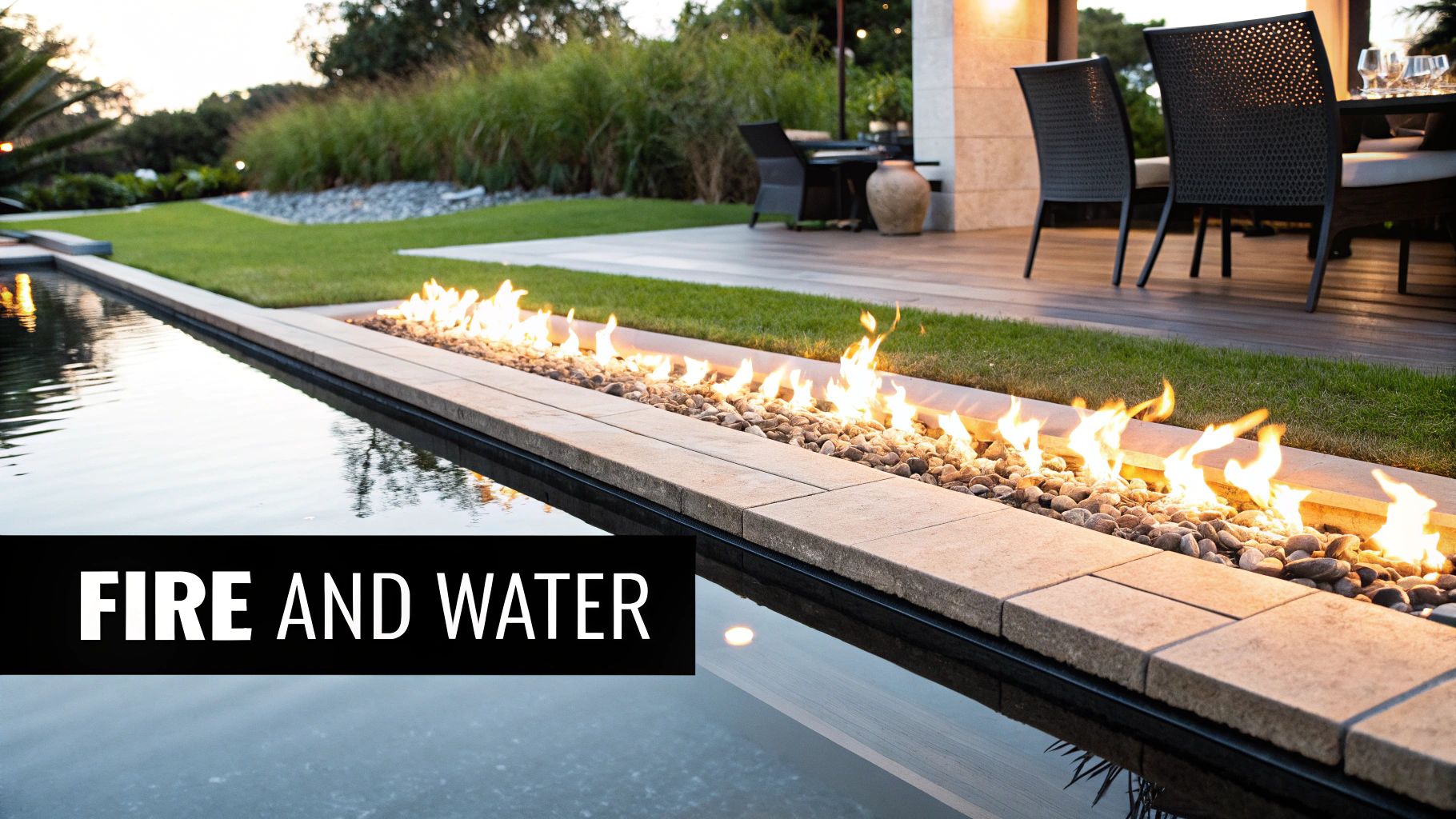
The Water Feature and Fireplace Combination is the pinnacle of multi-sensory outdoor fireplace patio designs, merging the elemental forces of fire and water. This sophisticated concept pairs a fireplace or fire pit with features like infinity-edge pools, tranquil water walls, or custom fountains. The result is a dynamic, resort-like atmosphere where the flickering warmth of flames contrasts beautifully with the serene sounds and reflective qualities of moving water.
This design elevates a patio from a simple gathering space to an immersive retreat. The juxtaposition creates a powerful focal point that engages multiple senses, offering both visual drama and tranquil ambiance. This approach is a hallmark of luxury landscape architecture, frequently seen in high-end properties from Malibu to Aspen, where creating a unique and captivating environment is paramount.
Key Implementation Strategies
Executing this dual-element design requires specialized knowledge to ensure safety, functionality, and aesthetic harmony. The integration must be seamless and engineered for long-term performance.
- System Integration: Hire specialized contractors experienced in both water feature and gas fireplace installations. Proper planning is needed for plumbing, drainage, gas lines, and electrical systems to work in unison.
- Material Synergy: Use reflective materials like polished granite, dark tile, or glass around the water feature to amplify the fire’s light. Ensure all materials adjacent to the fire are non-combustible and can withstand thermal stress and moisture.
- Strategic Lighting: Incorporate dedicated underwater and landscape lighting to highlight both features after dark. This creates a stunning visual effect and enhances the interplay between the light, fire, and water.
Expert Insight: When combining fire and water, the placement and barrier between them are critical. Consider a design where water cascades over a non-flammable weir into a basin positioned below or adjacent to the fire feature. This physical separation prevents water from extinguishing the flame while allowing the visual and auditory effects to coexist harmoniously.
10 Outdoor Fireplace Patio Designs Comparison
| Design | Implementation Complexity 🔄 | Resource Requirements ⚡ | Expected Outcomes 📊 | Ideal Use Cases 💡 | Key Advantages ⭐ |
|---|---|---|---|---|---|
| Central Fire Pit Island | Medium — site prep; possible pro install | Space‑intensive (8–15 ft); moderate materials/cost | High social engagement; even heat distribution | Medium–large patios; entertaining | 360° seating; efficient heat; strong focal point |
| Built-in Stone Fireplace Wall | High — masonry, structural work, permits | High cost ($3k–$10k+); durable materials, chimney | Substantial heat; architectural statement; adds value | Luxury homes; renovations; permanent installations | Durable; high heat output; increases property value |
| Modern Linear Gas Fireplace | Medium — gas line & electrical work | Medium–high cost ($2k–$8k); ongoing fuel supply | Consistent, reliable heat; low maintenance; clean look | Contemporary homes; urban patios; hospitality | Easy operation; low maintenance; clean burning |
| Rustic Wood-Burning Chimney | High — chimney/flue and ongoing maintenance | Medium cost; requires seasoned wood and annual sweep | Authentic ambiance; strong heat when managed | Cabins; farmhouses; rustic designs | Nostalgic aesthetic; potential no fuel cost; backup heat |
| Corner Nook Fireplace | Low–Medium — simpler corner integration | Low–moderate cost; compact footprint (4×4–6×6 ft) | Intimate gathering; limited heat spread | Small patios; urban rooftops; condos | Space‑efficient; wind protection; lower cost |
| Sunken Fire Pit Patio | High — excavation, drainage, retaining walls | High cost ($3k–$8k); site‑specific engineering | Lowered flame safety; amphitheater seating; wind protection | Larger landscapes; modern homes; resorts | Integrated seating; improved wind shelter; dramatic focal point |
| Outdoor Kitchen w/ Fireplace | Very High — plumbing, gas, electrical, structural | Very high cost ($10k–$50k+); large footprint (300+ sq ft) | Full entertainment hub; year‑round usability; high ROI | Luxury entertainers; resorts; large properties | Multi‑functional; major value add; professional entertaining |
| Portable Tabletop Fireplace | Low — plug‑and‑play or simple setup | Low cost ($50–$500); minimal space | Ambiance‑focused; limited heat | Renters; small patios; cafes; events | Portable; affordable; renter‑friendly |
| Pergola‑Covered Fireplace Patio | High — structural roof, ventilation, permits | High cost ($4k–$15k); engineered structures | Extended season use; defined outdoor room; aesthetic appeal | Mediterranean climates; high‑end patios; covered rooms | Weather protection; layered design; integrates lighting/heating |
| Water Feature & Fireplace Combo | Very High — integrated systems; specialist contractors | Very high cost ($15k–$50k+); maintenance‑heavy | Luxurious multi‑sensory experience; dramatic impact | Luxury resorts; high‑end estates; fine dining patios | Unique, dramatic aesthetic; multi‑sensory appeal; high prestige |
Bringing Your Vision to Life with Professional Expertise
The journey through these distinct outdoor fireplace patio designs reveals a fundamental truth: the perfect outdoor living space is a masterful blend of personal style, architectural integrity, and functional excellence. From the communal allure of a sunken fire pit to the architectural statement of a built-in stone wall, each concept offers a unique blueprint for creating an unforgettable atmosphere. We’ve explored how a modern linear fireplace can define a sleek, contemporary patio, while a rustic wood-burning chimney can anchor a space with timeless, traditional warmth.
The ultimate success of your project, however, extends far beyond the initial design choice. The true measure of a luxury outdoor space lies in its execution. Achieving a flawless integration with your landscape, ensuring structural longevity, and navigating the complexities of construction requires a depth of knowledge that transcends simple inspiration.
From Concept to Completion: Key Takeaways
Translating an ambitious vision into a tangible, high-quality reality involves several critical considerations. As you move forward, keep these pivotal takeaways in mind:
- Materiality and Durability: The selection of materials, from natural stone and concrete to Corten steel, directly impacts both the aesthetic and the resilience of your fireplace. High-end projects demand materials that can withstand the elements while aging gracefully.
- Code Compliance and Safety: Every region has specific building codes, setback requirements, and safety regulations governing outdoor fire features. Overlooking these can lead to costly revisions and significant safety hazards.
- Seamless Integration: The most captivating outdoor fireplace patio designs feel like a natural extension of the home and its surrounding environment. This requires a holistic approach that considers sightlines, traffic flow, landscape design, and architectural continuity.
The Value of Professional Collaboration
Embarking on a project of this scale is a significant investment in your property and lifestyle. Partnering with seasoned professionals is not a luxury; it is a necessity for achieving a truly exceptional outcome. An experienced architect, landscape designer, or specialized builder brings invaluable expertise to the table. They can provide tailored solutions that address your property’s unique challenges, source the finest materials, manage complex construction logistics, and ensure every detail aligns with your vision.
Engaging an expert transforms your project from a mere construction job into a curated design experience. Their guidance protects your investment, guarantees a higher standard of quality, and ultimately creates a sophisticated and enduring outdoor destination that you and your family will cherish for years to come. This collaboration is the final, essential step in bringing your dream outdoor fireplace patio to life.
Ready to connect with the visionaries who can turn these ideas into reality? The Haute Design network is a curated directory of the nation’s leading architects, interior designers, and builders. Find a vetted professional in your area to ensure your outdoor fireplace patio design is executed with unparalleled expertise and artistry.