


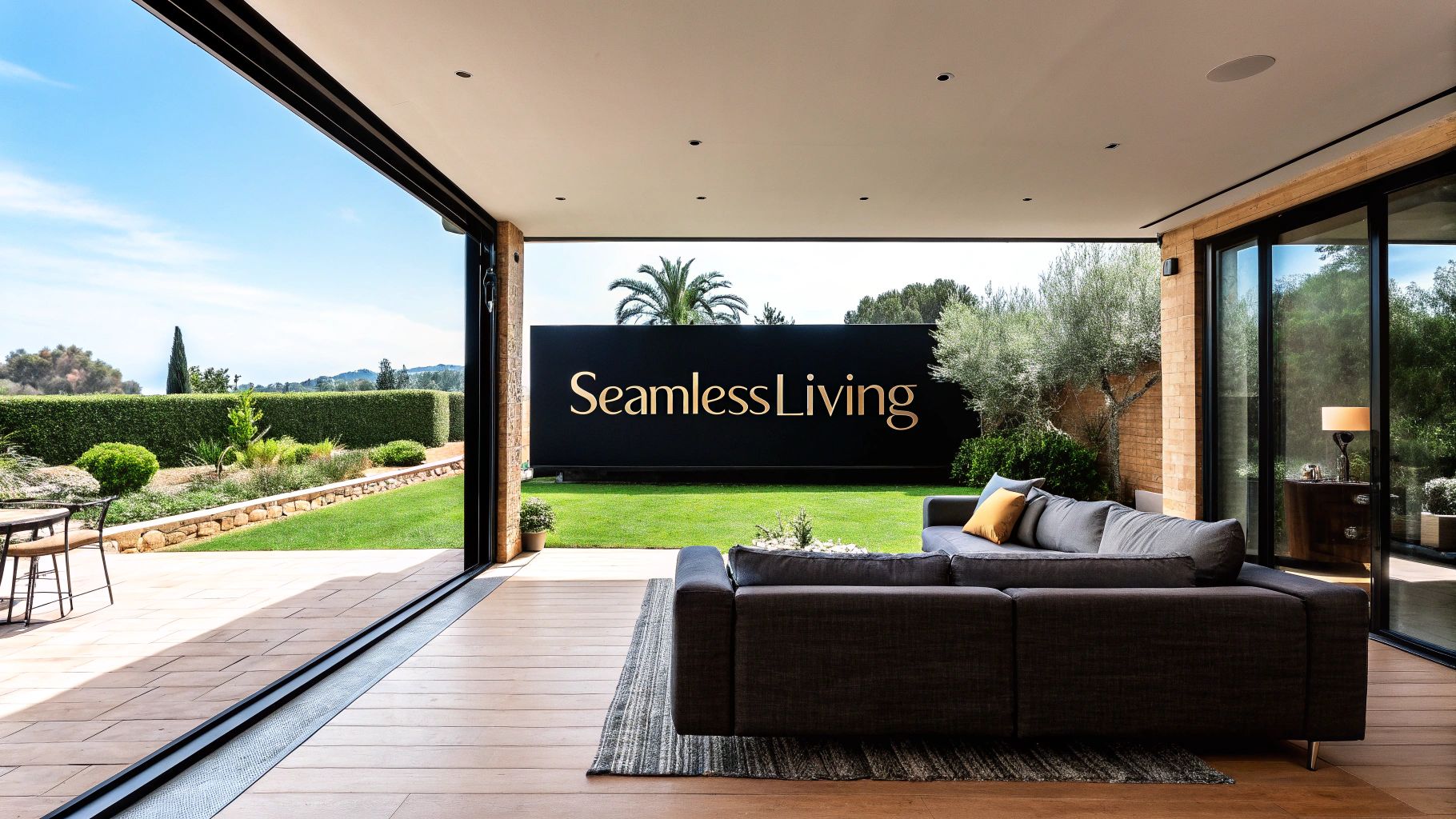
An indoor-outdoor living room is more than just a design trend; it’s a way of thinking that completely dissolves the line between your home and your garden. Forget the old-school patio with a clunky sliding door. We’re talking about creating one unified, expansive environment where your living space flows effortlessly into a deck, courtyard, or landscape.
The result is a home that not only feels bigger but also deepens your connection to the world just outside your walls.
The Modern Philosophy Of Blended Living
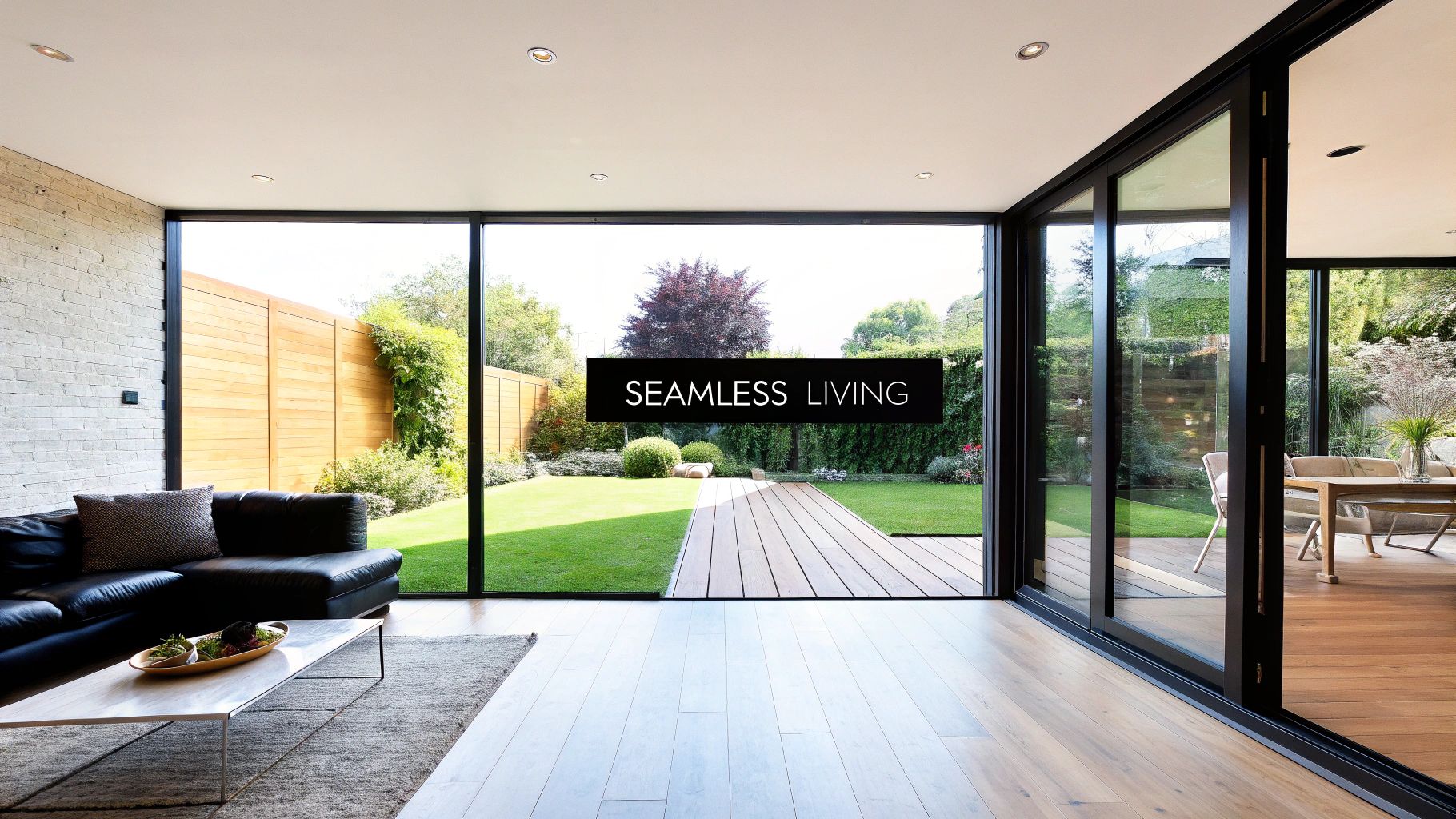
The idea of blending inside and out has evolved dramatically. Today, it’s about making the transition so seamless that the distinction between the two vanishes entirely. Think of it less as opening a door to the backyard and more like erasing the wall that separates them.
This isn’t just about good looks—it’s about enhancing how you live. When you remove those physical and visual barriers, you invite daylight, fresh air, and the texture of your landscape right into your home. The entire atmosphere becomes more open, spacious, and genuinely calming.
Key Benefits Of An Integrated Space
The most obvious win? You instantly gain a massive amount of usable living and entertaining space. A thoughtfully designed indoor-outdoor room can easily double the area you have for hosting, allowing parties to spill naturally from the lounge to the lawn.
The core advantages really speak for themselves:
- Expanded Living Area: Your home’s footprint feels dramatically larger without the high cost and complexity of a traditional addition. It gives you more room for family, friends, and everything in between.
- Enhanced Natural Light: Huge glass walls and doors flood the interior with sunlight. This not only lifts your mood but can also cut down on your electricity bill.
- Greater Connection to Nature: This design creates a constant, tangible link to the outdoors. Studies have shown that simply being exposed to natural elements can lower stress and boost mental clarity.
An indoor-outdoor living room is a masterclass in spatial perception. It’s where thoughtful architecture persuades you that your living space has no end, borrowing views and atmosphere directly from the landscape.
Pulling this off requires a holistic approach where every detail is considered. The architecture, the materials, and the landscaping must all work in concert to achieve that single, unified vision. For a closer look at creating layouts that are both beautiful and functional, this interior design space planning guide offers some fantastic insights.
This guide will walk you through the essential strategies to make your blended space a reality.
Architectural Keys To A Seamless Transition
The real magic of an indoor-outdoor living room isn’t just about the furniture you choose. It’s born from thoughtful architectural decisions that completely dissolve the boundaries of your home. These foundational moves are what elevate a simple patio into a true, integrated extension of your living space.
Think of the wall separating your living room and garden less as a fixed barrier and more as a flexible membrane—one that can slide, fold, or vanish entirely. This is where large-scale openings become the star of the show, creating an uninterrupted physical and visual flow.
Erasing The Wall With Grand Openings
Modern design gives us some spectacular ways to bridge the gap between inside and out. Instead of a standard patio door, the goal is to create an aperture so wide that when it’s open, it feels like the wall was never there to begin with.
Here are a few of the most effective solutions we use in high-end projects:
- Panoramic Sliding Glass Walls: These systems feature massive glass panels that glide effortlessly along a track, stacking neatly to one side. They provide breathtaking, unobstructed views even when they’re closed.
- Bi-Fold Doors: Made of several hinged panels, these doors concertina back on themselves. They allow you to open up almost the entire expanse of a wall, creating the widest possible connection to the outdoors.
- Pocket Doors: For the ultimate disappearing act, pocket doors slide directly into a hidden cavity built into the wall. When open, they are completely invisible, offering a perfectly clean and uninterrupted threshold.
These aren’t just doors; they are architectural statements that fundamentally define the character of an indoor-outdoor room.
The Critical Zero-Threshold Floor
One of the most powerful, if subtle, elements for a seamless transition is the zero-threshold floor. This is a design detail where your interior flooring meets the exterior surface—like a stone patio or wood deck—at the exact same level.
By getting rid of any step-up or step-down, you remove a tiny but significant physical and psychological barrier. The eye travels across a continuous plane, making the two areas feel like one cohesive room. It’s an unspoken invitation to drift freely between inside and out without a moment’s hesitation.
A home with a zero-threshold transition encourages a more fluid lifestyle. The garden becomes just another part of the living area, as easy to access as walking from the sofa to the kitchen.
Of course, pulling this off requires meticulous planning between your architect and builder. Clever drainage solutions, like discreet channel drains, are integrated right at the threshold to keep water out, ensuring the design is as practical as it is beautiful.
Extending The Ceiling Outdoors
To make an outdoor area feel like a genuine room, it needs a “ceiling.” This is where roof extensions, covered patios, and pergolas come into play. These overhead structures provide essential shelter from the sun and rain, which dramatically increases how often you can actually use the space.
A well-designed roof extension doesn’t just offer protection; it visually anchors the outdoor zone, making it feel like an intentional and connected part of the home’s architecture. That structural continuity is what crafts a space that feels both luxurious and genuinely livable. The demand for these features is surging; the U.S. outdoor living structures market is projected to hit USD 1.22 billion by 2030. Pergolas and patios are leading the charge, making up over 64.3% of the market, as homeowners seek to define open-air rooms for dining, lounging, and entertaining. You can dig deeper into the data in the outdoor living structures market report from GlobeNewswire.
By integrating these architectural elements from the start, you lay the groundwork for a truly exceptional indoor-outdoor space. For more ideas, take a look at our guide on how to design an outdoor space that perfectly complements your home’s interior.
Choosing Materials For A Cohesive Design
The magic of a truly seamless indoor-outdoor living room lies in the materials. This is where high design meets rugged durability. The goal is to choose a palette of finishes, furniture, and textiles that not only look like they belong together but are also built to handle the unique demands of this blended environment.
Think of your material choices as the common thread running through your entire living space. When the flooring flows from the sofa to the fire pit without interruption, and the furniture shares the same aesthetic language, the line between inside and out simply disappears. You’re telling one cohesive story.
Unifying The Foundation With Continuous Flooring
If there’s one move that delivers the biggest impact, it’s getting the flooring right. Choosing a single material that can run from deep inside the living room straight out onto the patio is the most powerful way to erase the threshold and create one expansive, unified plane. Of course, this material has to be tough enough for the elements while still feeling refined underfoot indoors.
Here are a few of the top contenders that designers turn to again and again:
- Porcelain Tile: This is a powerhouse for a reason. Porcelain is incredibly dense and non-porous, making it a champion against water, stains, and UV fading. Thanks to modern printing, it can convincingly mimic almost anything—natural stone, concrete, even warm woods—giving you immense design flexibility.
- Natural Stone: Materials like travertine, slate, and bluestone offer an authentic, textural connection to the landscape that you just can’t fake. Using the same stone inside and out creates a powerful, grounded feeling. It does require proper sealing to keep it looking its best, but the timeless beauty is worth it.
- Specialized Hardwoods: Your typical interior hardwood won’t survive outdoors, but certain tropical species like Ipe or Teak are a different story. They’re naturally loaded with oils that resist rot and pests. A covered deck in Ipe that meets a similar-toned wood floor inside can create an incredibly warm and sophisticated transition.
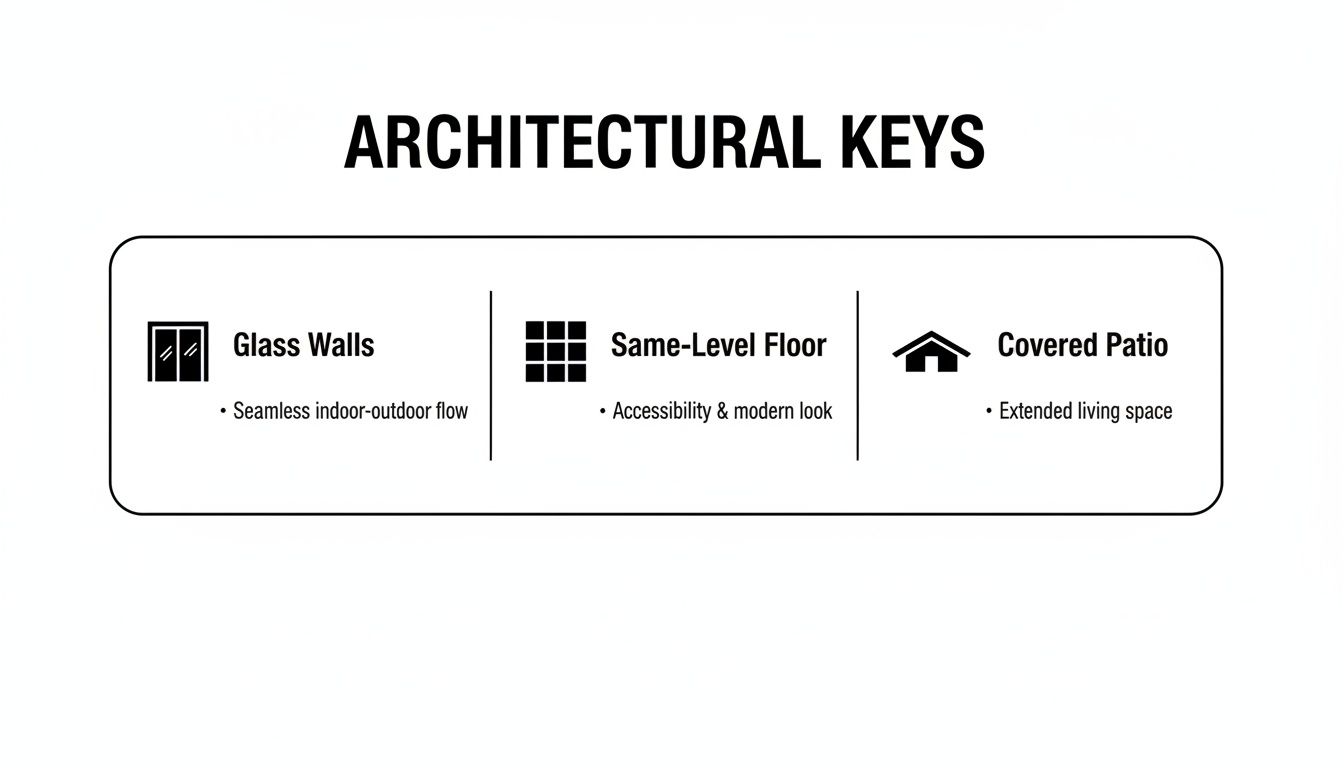
As you can see, the right flooring choice is the foundation that supports the other key architectural elements, like expansive glass and covered patios, to create that effortless flow.
To help you navigate the options, here’s a breakdown of common materials used to bridge the indoor-outdoor divide.
Comparison Of Indoor Outdoor Flooring Materials
| Material | Durability | Maintenance Level | Typical Cost | Best For |
|---|---|---|---|---|
| Porcelain Tile | Excellent | Low | Moderate | Versatility; can mimic stone, wood, or concrete with extreme durability. |
| Natural Stone | Very Good | Medium-High | High | Creating an authentic, high-end, and organic connection to the landscape. |
| Concrete | Excellent | Low | Moderate | A modern, industrial aesthetic that is incredibly durable and customizable. |
| Tropical Hardwood | Good | Medium | Very High | Covered areas where the warmth of wood is desired for a seamless transition. |
Ultimately, the best choice depends on your home’s style, your climate, and how you plan to live in the space.
Selecting Furniture That Blurs The Lines
The next layer of your design is the furniture. Gone are the days of flimsy plastic patio sets. Today’s outdoor furniture is every bit as sophisticated and comfortable as its indoor counterparts, a shift that has fueled a booming market projected to hit USD 81.44 billion by 2032. Homeowners are no longer willing to compromise on style or comfort just because a piece is outside. You can see the full trend in the outdoor furniture market analysis from Fortune Business Insights.
To nail the unified look, choose outdoor pieces that echo the style, scale, and color scheme of your interior furnishings.
The ultimate goal is to curate an outdoor lounge area that feels just as inviting and thoughtfully designed as your interior living room. The furniture should look like it belongs together, even if it’s made from different materials.
This means seeking out pieces with robust frames and high-performance fabrics that look and feel luxurious but are engineered to endure.
High-Performance Materials For Lasting Style
The specific materials in your outdoor furniture and textiles are what make or break the experience. They need to stand up to sun, rain, and temperature swings without fading, cracking, or losing their appeal.
For Furniture Frames:
- Powder-Coated Aluminum: This is a modern workhorse. It’s lightweight, completely rustproof, and can be finished in any color imaginable. The powder coating provides a tough, beautiful shell that resists chipping and fading.
- Teak: A classic for a reason. This premium hardwood contains natural oils that make it incredibly resistant to water and insects. It can be left to weather to a stunning silvery gray or treated to maintain its warm, honey-colored glow.
- Woven Resin Wicker: You get the beautiful texture of natural wicker without any of the fragility. All-weather wicker uses durable synthetic fibers woven over a sturdy frame, offering comfort and style that fits in everywhere from coastal homes to modern retreats.
For Fabrics and Textiles:
The right fabrics are what truly bring indoor comfort outside. The gold standard is solution-dyed acrylics, which are famous for their resistance to fading, moisture, and mildew. These high-tech textiles are used for everything from deep-seated cushions and pillows to outdoor rugs and curtains, giving you the tools to layer in softness and color that finally and fully ties the entire indoor-outdoor living room together.
Integrating Smart Lighting And Landscape
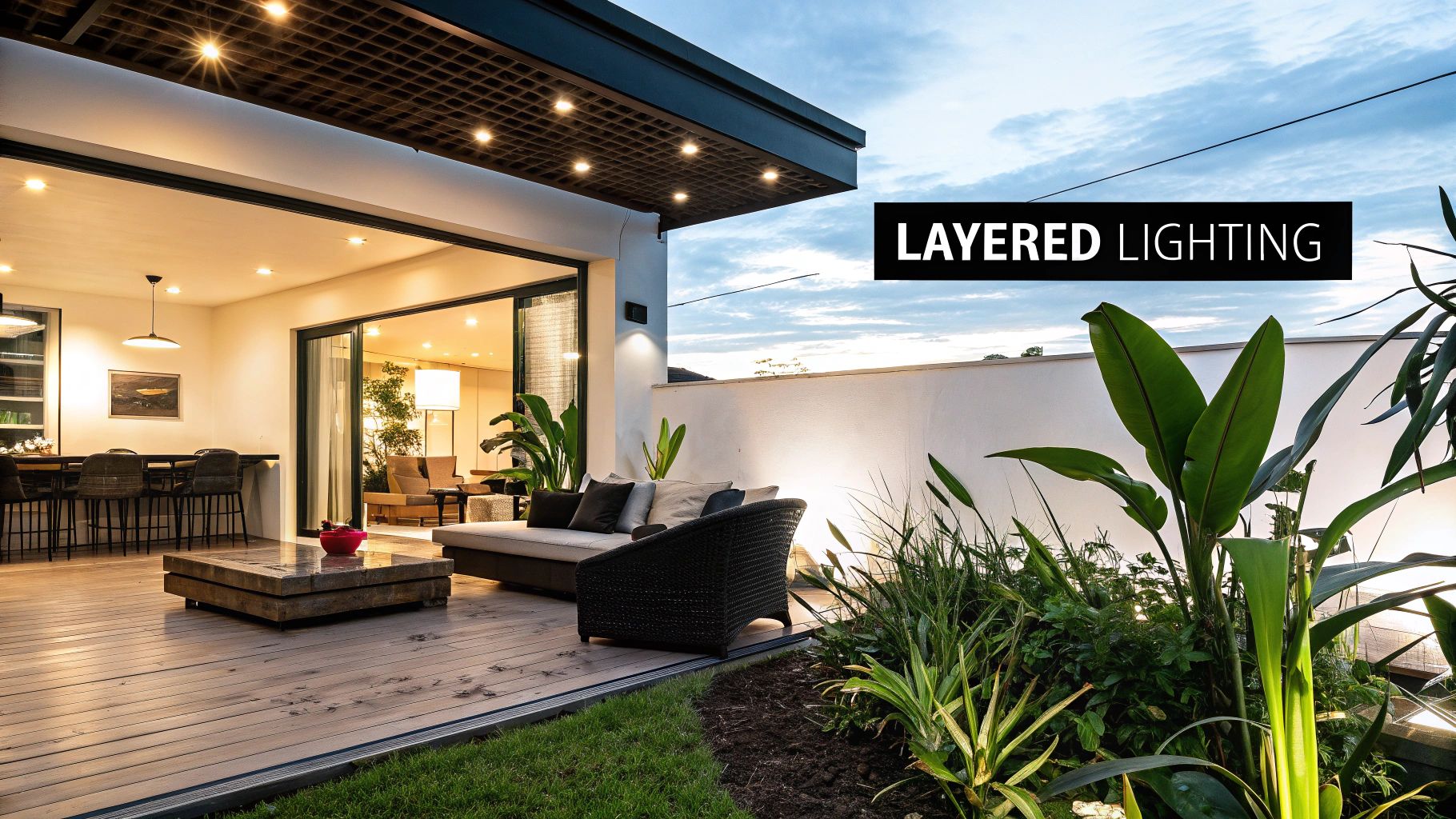
A truly exceptional indoor-outdoor living room really comes alive after sunset. It’s in this interplay of light and shadow that the final barriers between your home and garden completely dissolve. A thoughtful lighting scheme, paired with strategic landscaping, is what elevates the space from merely functional to something magical and immersive.
This isn’t about flooding the yard with a few harsh security lights. It’s about painting with light, using a layered approach to craft a mood, highlight natural beauty, and guide the eye. When done right, the lighting inside and out should speak the same language, making the entire area feel like a single, cohesive environment.
A Layered Approach To Lighting Design
Just like in a high-end interior, a successful outdoor lighting plan is built on layers. Each layer serves a distinct purpose, and together they create a rich, balanced, and functional atmosphere. Think of it as composing a piece of music—every instrument plays a specific role to create a complete symphony.
The three essential layers you’ll need to orchestrate are:
- Ambient Lighting: This is the foundational glow, the general illumination that makes the space feel safe and inviting. Indoors, this might be your recessed lights or a central fixture. Outdoors, it could be the soft light washing down from a covered patio ceiling or string lights casting a warm radiance over a seating area.
- Task Lighting: This is your focused, functional light, aimed right where you need it for specific activities. Inside, it’s the reading lamp beside your favorite armchair. Outside, it’s a downlight over the grill, step lights illuminating a pathway, or a spotlight on an outdoor bar.
- Accent Lighting: This is the dramatic layer. It’s all about creating visual interest and depth. Accent lights are used to highlight stunning architectural features, a beautiful sculpture, or the unique texture of a stone wall. Outdoors, this is where the real magic happens.
Using Light To Sculpt The Landscape
Accent lighting is your most powerful tool for making the garden feel like a natural extension of your living room. By carefully illuminating key elements, you create a stunning backdrop that draws the eye outward, making the entire space feel larger and more dynamic. A technique called uplighting is especially effective here.
When you uplight a majestic tree, its canopy becomes a living ceiling against the night sky. This simple act creates a sense of scale and wonder, framing your outdoor view and giving the space a profound sense of depth.
Consider these techniques for sculpting your landscape with light:
- Uplighting Trees and Plants: Place spotlights at the base of striking trees or sculptural shrubs to showcase their form and texture after dark.
- Grazing Stone Walls: Position lights close to textured surfaces like stone or brick. This creates dramatic shadows that emphasize their raw, natural character.
- Path and Step Lighting: Integrate low-level lights into pathways and staircases. This not only ensures safe navigation but also adds a gentle, guiding glow.
The Role Of Biophilic Design And Plant Selection
Landscaping is the final, living piece of the puzzle. It provides the texture and life that softens the transition between the built structure and the natural world. Biophilic design, which is all about connecting people with nature, should be your guiding principle. The goal is to use plants not just as decoration, but as architectural elements in their own right.
Strategically placed greenery can frame your best views, creating living picture windows that shift and change with the seasons. Plants can also be used to provide a soft, natural screen for privacy, avoiding the need for a hard, imposing wall.
A classic and highly effective trick is to use large planters with identical foliage both inside and just outside the glass doors. This repetition creates a powerful visual link, suggesting the garden is simply spilling into the living room. It’s a simple move, but it’s incredibly powerful in blurring those lines to craft a truly integrated indoor-outdoor experience.
Year-Round Comfort And Climate Control
Creating a visually seamless indoor-outdoor room is a design victory, but making it truly livable all year long? That’s where smart engineering comes in. A beautiful space that’s unusable because it’s scorching in August or freezing in October completely misses the point. The real goal is to extend the seasons, making this blended zone a comfortable, inviting retreat no matter what the weather is doing.
This means we have to think beyond aesthetics and get into the technical solutions that actively manage the environment. By thoughtfully building in climate control from the start, you transform a simple patio into a genuine four-season extension of your home. It’s all about anticipating the challenges of your specific climate and designing the answers right into the architecture.
Mastering Temperature For All Seasons
The first hurdle to clear for year-round enjoyment is temperature. The strategies you lean on will depend entirely on where you live—whether you’re battling oppressive summer heat, a biting winter chill, or a mix of both. The trick is to choose solutions that feel integrated and intentional, not like clunky afterthoughts.
For cooler regions or just those crisp evenings, adding warmth is key.
- Outdoor Fireplaces: A substantial fireplace, built from stone or board-formed concrete, does double duty. It acts as a powerful visual anchor for the entire space while also being a serious source of heat, creating a natural spot for people to gather long after the sun goes down.
- Built-in Infrared Heaters: For a more modern and discreet approach, infrared heaters are fantastic. We often mount them in the ceiling of a covered area. They work by warming objects and people directly—not just the air—making them incredibly effective even when there’s a bit of a breeze.
In warmer climates, the game shifts to cooling and keeping the air from getting stagnant.
- Integrated Ceiling Fans: A large, well-designed ceiling fan rated for outdoor use is a must-have for any covered space. It keeps humid air moving, creating a gentle breeze that makes a sweltering day feel far more pleasant.
- Misting Systems: If you’re in a truly hot, dry climate, a high-pressure misting system can be a game-changer, dropping the ambient temperature by as much as 20-30 degrees Fahrenheit. These aren’t the cheap misters you see at a theme park; they produce an ultra-fine “flash-evaporation” mist that cools the air instantly without getting you or your furniture damp.
Technical Solutions For A Resilient Space
Beyond temperature, a few critical technical details will protect your investment and ensure the space is efficient and comfortable for the long haul. These are the elements working behind the scenes to make sure your indoor-outdoor room functions flawlessly.
True luxury in design isn’t just about what you see; it’s about the problems you never have to think about. Proper drainage and high-performance glazing are the invisible heroes of a year-round indoor-outdoor room.
First on that list is drainage. When you have a zero-threshold transition, you absolutely must have a plan for water. A discreet channel drain, installed perfectly flush with the flooring right along the door line, is non-negotiable. It’s designed to intercept any rainwater and carry it safely away from your home’s foundation, preventing a disaster indoors.
Next up is the glass itself. The huge glass walls that make these spaces so spectacular can also be a major point of energy loss. Choosing high-performance insulated glass is essential. We’re talking double- or even triple-paned units filled with inert gas and finished with low-emissivity (Low-E) coatings. This specialized glazing is engineered to reflect infrared heat, helping to keep your home warmer in the winter and cooler in the summer, which has a huge impact on your energy bills.
Finally, you have to think about insects. In so many parts of the country, bugs can ruin a perfect evening outside. Retractable insect screens are the elegant solution. They retract into a hidden cassette when not in use, but with the touch of a button, they can glide into place to completely seal off the opening, keeping pests out without sacrificing the view or the breeze.
Inspiring Examples Of Blended Living Spaces
Theory is great, but nothing beats seeing these concepts brought to life. It’s in the real-world application—the finished homes—where the idea of an indoor-outdoor living room really clicks. By looking at successful projects, we can unpack the specific choices that completely reshape how a home feels and functions.
Each example tells a story of architecture, materials, and landscaping working in concert. Let’s walk through a few distinct case studies to see how designers turn the dream of blended living into a stunning reality.
The Modern Minimalist Pavilion
Picture a sleek, glass-walled structure rising out of a desert landscape. In a project like this, the architect’s masterstroke might be a system of massive pocket glass doors that slide away, disappearing completely into the walls. When they’re open, the living room and the minimalist stone patio become one enormous, unified space. The line between shelter and nature simply vanishes.
The flooring does a lot of the heavy lifting here. Imagine large-format concrete tiles flowing from the interior right out to the pool deck without a single break. This creates a powerful, continuous visual plane. The furniture is deliberately low-profile and sculptural, with outdoor pieces in powder-coated aluminum that echo the clean aesthetic of the indoor sofas. It’s a masterclass in restraint, where every detail exists to frame the dramatic landscape.
The success of a minimalist indoor-outdoor space lies in its precision. The focus shifts from ornamentation to the perfection of the connection itself—the flawless threshold, the invisible door, and the uninterrupted view.
When you strip away the visual noise, the connection to the outdoors becomes that much more profound.
The Cozy Coastal Retreat
Now, let’s shift to a home perched on a coastal bluff, designed to embrace ocean breezes and sweeping views. The approach here is warmer, more textured. The designer might opt for a wall of wide bi-fold doors that fold back, opening the entire rear of the home to a covered deck made of rich Ipe wood.
The material palette feels soft and organic. A light, wire-brushed oak floor inside meets the warm tones of the deck, creating a gentle transition. The outdoor furniture is all about comfort, with deep cushions wrapped in a durable navy-blue performance fabric. Add in some woven lighting fixtures and a stone fireplace on the terrace, and you have an atmosphere that feels like a true, livable extension of the great room. For more ways to refine your exterior spaces, take a look at these luxury back patio design ideas.
The Rise Of The Modern Garden Room
A fascinating trend gaining serious traction is the standalone “garden room.” This isn’t your grandfather’s shed; these are fully insulated, four-season structures designed as sophisticated extensions for work, leisure, or quiet retreat. The market for these versatile spaces is booming, projected to climb from USD 2.71 billion in 2025 to USD 4.38 billion by 2032. North America is leading the charge with a 34.8% market share, a clear signal that homeowners are craving year-round spaces that offer indoor comfort with a direct line to the outdoors. You can dig into the numbers in the latest garden rooms market report.
What these examples show is that there’s no single formula. Whether the style is starkly modern or comfortably rustic, the core principles hold true: erase the barriers, maintain a continuous flow of materials, and design a space that truly invites you to live more openly.
Frequently Asked Questions
When you start dreaming about an indoor-outdoor living room, the big, practical questions aren’t far behind. What will this actually cost? How much work is it to maintain? Will it even work where I live? Getting straight answers to these questions is the first step in making that dream a reality.
What Is The Average Cost To Build An Indoor Outdoor Living Room?
This is the big one, and the honest answer is: it depends entirely on your vision. A simple project, like swapping out a window for a set of panoramic sliding doors and laying a new paver patio, could land in the tens of thousands.
But if you’re aiming for a complete transformation—think structural changes, a top-of-the-line bi-fold door system, seamless stone flooring that flows inside and out, and integrated climate control—the investment can easily climb north of $100,000.
A few key variables will really move the needle on your budget:
- The Door System: High-end bi-fold and pocket doors are a significantly larger investment than even the best standard sliders.
- Material Choices: Opting for premium materials like Ipe hardwood or continuous travertine flooring will naturally raise the cost.
- Structural Work: If you need to add a roof extension or install new structural headers to support a wider opening, expect a major jump in the final price.
- The Finishing Layer: Custom lighting, professional landscaping, and built-in features like an outdoor kitchen or fireplace are all part of the final equation.
How Do I Maintain Outdoor Furniture And Fabrics?
The secret to low-maintenance outdoor living is buying right from the start. Focus on furniture and fabrics that were born for the outdoors—powder-coated aluminum frames, solid teak, and solution-dyed acrylic fabrics are the gold standard for a reason.
Once you have the right pieces, a little consistent care goes a long way. Invest in high-quality, fitted covers for when you’re not using the furniture, especially during the off-season or before a big storm. Bringing cushions inside during the wet winter months is also a great habit to prevent mildew. A simple, regular cleaning with mild soap and water will keep dirt and pollen from setting in and protect your investment for years to come.
Think of outdoor furniture maintenance not as a chore, but as a way to protect the investment you’ve made in your home’s comfort and style. A little care goes a long way.
Is An Indoor Outdoor Living Room Practical In A Cold Climate?
Absolutely, as long as you design for it. Making a blended space work in a four-season climate is all about smart climate control and specifying high-performance materials. You can easily create a beautiful, functional space you can use for three seasons and even on those surprisingly mild winter days.
The key is to integrate warmth. Think built-in infrared heaters mounted overhead, a sleek gas fireplace that works for both zones, or a cozy fire pit. Just as important, high-performance, insulated glass for your doors and windows is completely non-negotiable—it’s what keeps the cold out and the heat in. A covered or partially enclosed structure also makes a world of difference, offering a crucial buffer from wind and snow that makes the space infinitely more usable.
Finding the right team to execute your vision is the single most important decision you’ll make. Haute Design is your connection to a vetted network of the nation’s leading architects, builders, and interior designers who specialize in creating these extraordinary indoor-outdoor spaces. Discover the perfect partner for your project at the Haute Design Network.