


What was once a simple patio door is now an expansive, fluid connection between a home’s interior and its natural surroundings. This design philosophy is all about blurring—and in many cases, completely erasing—the line between inside and out. It’s a holistic approach that uses architectural ingenuity and continuous materials to craft a single, harmonious living environment.
This isn’t just about adding a deck; it’s about fundamentally rethinking the home’s shell to make nature an integral part of daily life.
The New Standard in Luxury Home Design
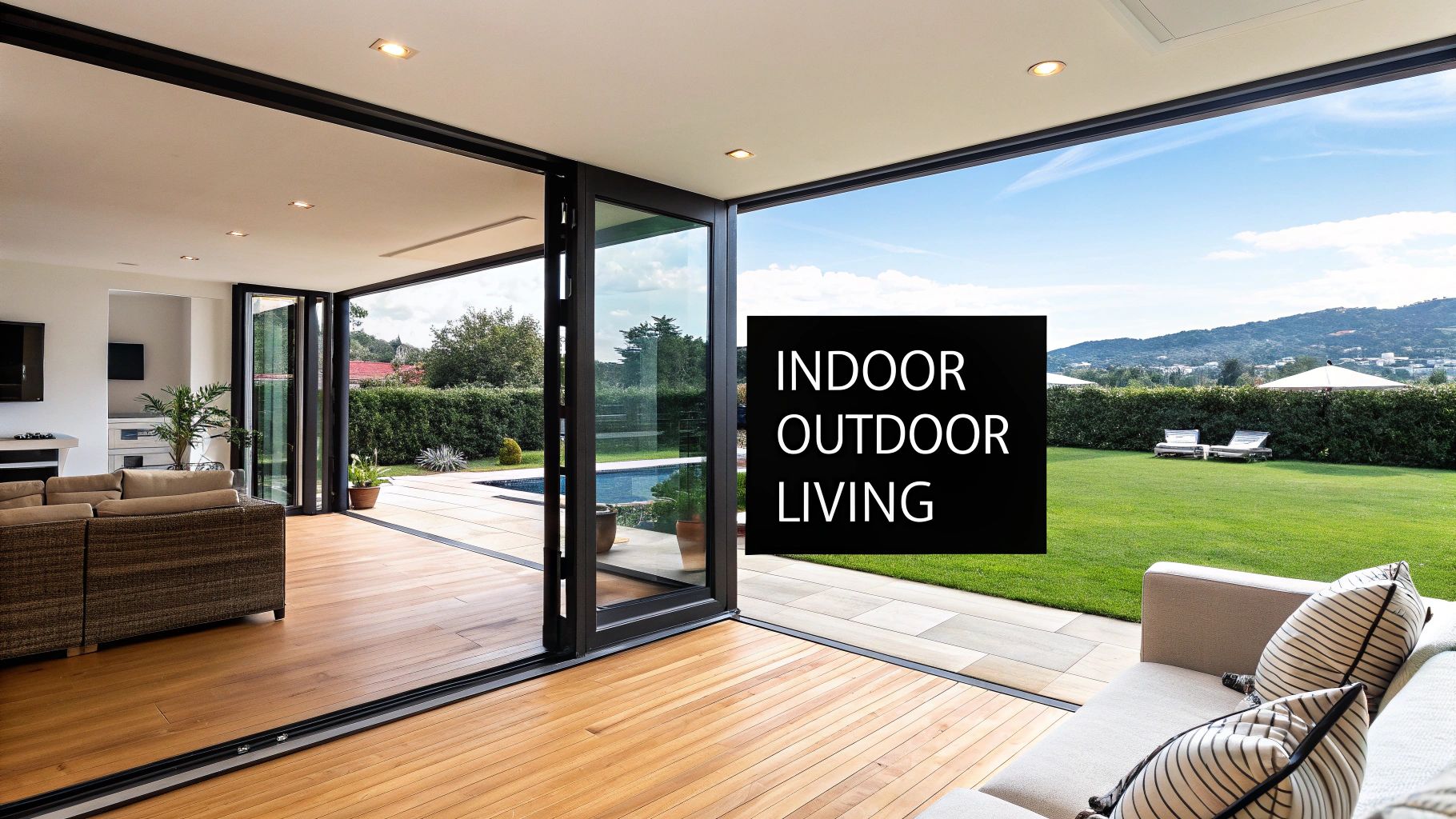
The expectation in modern luxury architecture has shifted dramatically. A seamless indoor-outdoor connection is no longer a “nice-to-have”—it’s a defining feature. This isn’t just a fleeting trend; it’s a response to a deep-seated desire for wellness, more versatile entertaining spaces, and a stronger relationship with the world just outside our walls.
We’re moving away from the idea of a home as a fortress against the elements and toward a design that breathes with nature.
This approach transforms how we experience our living spaces day-to-day. Instead of siloed rooms, we design unified zones that dramatically expand the home’s usable footprint. Think of a dinner party where guests flow from the kitchen to a covered loggia without a second thought, or a quiet morning where the living room is filled with fresh air and birdsong. That’s the magic we’re aiming for.
Why This Trend Is Reshaping Home Design
The appeal of erasing these traditional boundaries is both practical and profound. On an aesthetic level, it creates stunning, unbroken sightlines that make any room feel larger, brighter, and more connected to the landscape. Functionally, it delivers a host of benefits that resonate with how people want to live today.
- Expanded Entertaining Space: Merging interior and exterior areas creates a far more dynamic and spacious setting for gatherings, eliminating the classic chokepoint at a single patio door.
- Increased Natural Light: Walls of glass don’t just look incredible; they flood the home with daylight, which is proven to boost mood and can even reduce reliance on artificial lighting.
- Enhanced Wellness: Direct, easy access to fresh air, greenery, and sunlight supports both mental and physical health. The home becomes a sanctuary for restoration.
- Higher Property Value: As one of the most in-demand features in the luxury market, a thoughtfully designed indoor-outdoor space significantly increases a home’s appeal and appraisal value.
The numbers back this up. The global market for outdoor living structures was valued at USD 2.35 billion and is on track to hit USD 3.66 billion by 2033. North America is at the forefront of this movement, holding a market share of over 48.5% as homeowners continue to invest in more sophisticated and beautiful outdoor environments.
The ultimate goal is to remove any friction between being inside and being outside. When done correctly, the transition is so smooth that you hardly notice you’ve crossed a threshold. It becomes one cohesive living experience.
This shift is a comprehensive design choice that informs every decision, from architectural massing and window selection to interior material palettes. For designers aiming to set a new standard of luxury, creating this effortless connection has become the benchmark of exceptional work. To see what this looks like in practice, see how leading designers are ushering in a new era in outdoor luxury.
Architectural Strategies for Seamless Flow
Creating a true indoor-outdoor experience is an act of architectural alchemy. It’s about much more than just installing a big door. The real goal is to dissolve the boundary between inside and out so completely that the transition feels effortless, almost imperceptible. This requires a thoughtful approach that weaves together expansive openings, clean sightlines, and perfectly level thresholds.
When we succeed, we’re not just connecting two spaces; we’re creating a single, cohesive living area that can adapt to the weather, the mood, or the occasion. The choice of how to open up that wall is foundational, impacting not just the look but the entire rhythm of the home.
Selecting the Right Expansive Opening
The door system you choose is arguably the most critical decision in unifying the indoor and outdoor environments. Each option delivers a different experience and solves a unique set of design challenges. It’s all about matching the system to the home’s architecture, the climate, and, most importantly, how the owners want to live in the space.
- Bi-fold Door Systems: Think of these as a disappearing act. The panels fold and stack away to one or both sides, leaving a wide, completely unobstructed opening. They are brilliant for spaces designed for entertaining, where you want to fully merge a great room with a terrace and let the party flow freely.
- Sliding Glass Walls: For a more contemporary, minimalist feel, large-format sliding doors are hard to beat. They glide effortlessly on their tracks, with multi-panel systems that can either stack behind one another or vanish into hidden wall pockets. This preserves the clean lines of the design and is perfect for framing those jaw-dropping panoramic views without any vertical interruptions.
- Pocket Door Systems: This is the purest expression of the indoor-outdoor concept. The doors slide directly into a cavity built into the wall, completely out of sight. The result is a seamless opening with no visible stacked panels. Pulling this off requires significant upfront structural planning and thicker walls, but for the ultimate disappearing boundary, it’s unparalleled.
The larger the opening, the more connected the spaces feel. When you can push aside an entire wall of folding glass, you fundamentally change the room’s character. It stops being an enclosed space and becomes more like an open-air pavilion.
Mastering the Unbroken Sightline
A seamless connection is just as much a visual game as it is a physical one. Unbroken sightlines are what pull the eye outward, making the landscape feel like a deliberate and integral part of the interior design. This thinking needs to extend far beyond the door frame itself.
You have to consider the interior layout. How is the furniture arranged? The flow should guide the gaze toward the view, not block it. I always try to align a home’s primary seating area with the main opening or position a dining table to look out over the garden. It reinforces that psychological link between inside and out. This same principle is key to any great open-concept space, which you can dive into deeper in our guide to luxury open-floor plan design ideas. From the moment someone walks into the room, their attention should be naturally drawn to the beauty of the outdoors.
Engineering the Flush Threshold
Here’s where the technical details really matter. A flush threshold—with zero change in floor level from inside to outside—is the single most important element for making two zones feel like one. Even a tiny step-down creates a barrier, both physically and visually, that shatters the illusion.
Achieving this requires some serious architectural detailing and smart engineering.
- Integrated Drainage: You can’t have a level threshold without a sophisticated plan for water. We often use a concealed linear drain that sits perfectly flush with the flooring. It’s designed to capture any rainwater that hits the opening and channel it away before it ever has a chance to get inside.
- Material Continuity: Using the same flooring material inside and out is a powerful tool. When the tile or stone flows uninterrupted from the living room to the patio, it erases the line between them. High-performance porcelain pavers that mimic interior finishes are fantastic for this.
- Weather Sealing: Top-tier door systems are engineered with incredible precision. They use advanced compression gaskets and weather seals that create a completely watertight and airtight barrier when closed, all without needing a raised sill.
The demand for these kinds of sophisticated solutions is no longer a niche request; it’s an expectation in the luxury market. Projections show the U.S. outdoor living structures market is growing at a compound annual rate of 5.3%, and a survey of industry experts found that 78% identified seamless transitions as the most critical design element for modern homes. We’re seeing this especially in regions like the West South Central and South Atlantic, where new homes almost always feature a patio as standard. These architectural strategies have become central to high-end design.
4. Weaving a Cohesive Story with Materials and Finishes
A truly seamless indoor-outdoor space isn’t just about big doors; it’s about a unified material story. The real magic happens when you visually and texturally erase the line between inside and out, making the transition feel completely intuitive.
The key is to treat the entire area—from the family room sofa to the edge of the pool deck—as one continuous design canvas. This means selecting materials that can either perform in both environments or have convincing outdoor-rated counterparts. It’s a strategy that ensures your design is not just stunning on day one, but also durable enough to last for years.
This infographic shows just how much homeowners are prioritizing this connection in new construction.
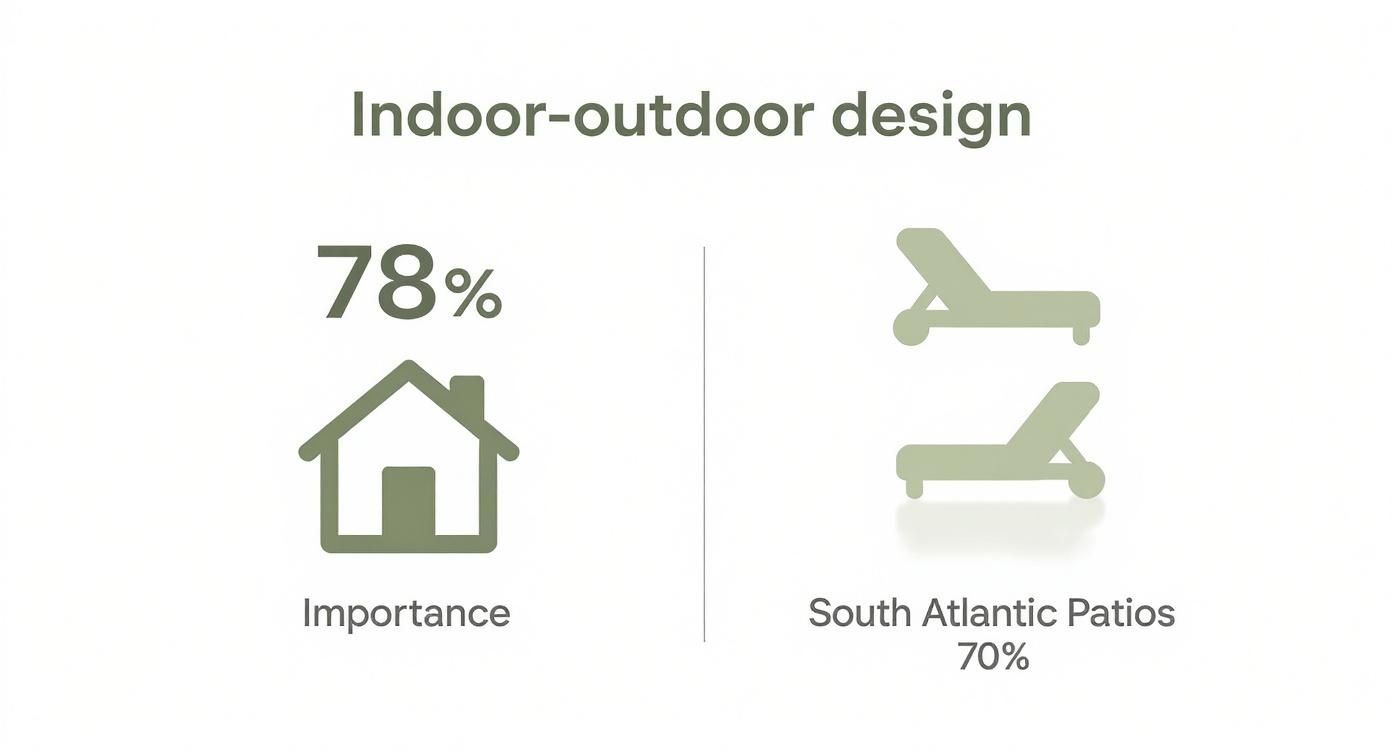
The numbers speak for themselves. With 78% of design experts prioritizing seamless transitions and regions like the South Atlantic seeing nearly 70% of new homes built with patios, this is no longer a niche luxury but a fundamental expectation.
Unifying the Foundation with Flooring
Your flooring choice is the single most powerful tool for creating continuity. When the same flooring material flows from the interior living space directly onto the terrace, it visually merges the two, creating one expansive, unbroken surface.
Large-format porcelain pavers are a designer’s secret weapon here. Manufacturers now offer identical tiles in both a smooth interior finish and a slightly more textured, slip-resistant exterior version. This gives you a perfect visual match while ensuring safety and performance where it matters most. You get the look of natural stone, concrete, or even wood, but with the bulletproof durability and low maintenance of porcelain.
If you love the warmth of real wood, thermally modified hardwoods are a fantastic solution. This chemical-free heating process makes woods like ash or pine exceptionally resistant to rot and moisture, allowing them to be used on covered exterior spaces to echo interior hardwood floors.
A common mistake is settling for materials that are just similar in color. True cohesion comes from using the exact same material or a designated indoor-outdoor pair. This eliminates any visual ‘stutter’ at the threshold, which is absolutely critical for a high-end execution.
Extending the Color and Texture Palette
Beyond the floor, your broader palette of colors and textures must also bridge the divide. Think of it as creating a design language that speaks consistently across the entire environment.
This means extending your interior color scheme to the outdoor furnishings, architectural cladding, and even the planters. If the living room features a dramatic stone accent wall, carry that same stone outside to clad an outdoor fireplace or a garden retaining wall. This material repetition is an incredibly effective way to tie distinct areas together.
Consider these practical ways to create a consistent design language:
- Architectural Finishes: Use the same stucco color, wood siding, or stone veneer on an exterior wall that mirrors an interior feature.
- Ceiling Treatments: Continue an interior tongue-and-groove wood ceiling out over a covered loggia. This one move dramatically enhances the feeling of a single, continuous room.
- Cabinetry and Countertops: For an outdoor kitchen, choose cabinet finishes and countertop materials (like durable quartzite or Dekton) that complement the style and color of the main kitchen inside.
Selecting Performance Fabrics That Feel Luxurious
The final, and often most important, layer of cohesion comes from textiles. Gone are the days of stiff, plastic-y outdoor fabrics. Today’s performance textiles are virtually indistinguishable from their indoor-only counterparts in softness and style, yet they’re engineered to stand up to sun, moisture, and stains.
Brands like Sunbrella and Perennials offer huge collections that can be used on an indoor sectional and outdoor lounge chairs. By using the same fabric—or coordinating patterns and solids from the same family—you create a perfectly harmonized look. Use these textiles for cushions, pillows, outdoor rugs, and even drapery to soften the outdoor space, making it feel just as comfortable and curated as the living room only a few feet away.
Indoor vs Outdoor Material Performance Comparison
Choosing the right materials is a balancing act between aesthetics and practicality. The goal is to find options that either perform well in both settings or have dedicated outdoor versions that create a seamless visual flow. This table compares common choices based on key performance factors.
| Material | Best Use Case | Durability (UV/Moisture) | Maintenance Level | Continuity Potential |
|---|---|---|---|---|
| Porcelain Pavers | Flooring, walls, outdoor kitchens | Excellent | Low | Excellent |
| Natural Stone (Sealed) | Flooring, walls, fireplaces (Travertine, Limestone) | Good to Excellent | Medium to High | Excellent |
| Thermally Modified Wood | Decking, siding, ceilings (covered areas) | Very Good | Medium | Very Good |
| Composite Decking | Decking, cladding | Excellent | Low | Good |
| Concrete (Polished) | Flooring | Good (requires sealing) | Medium | Excellent |
| Performance Fabrics | Upholstery, pillows, rugs, drapery | Excellent | Low | Excellent |
Ultimately, the best material choices will depend on the project’s specific climate, budget, and desired aesthetic. However, by prioritizing materials with high continuity potential, you can lay the groundwork for a truly integrated indoor-outdoor experience that feels both luxurious and effortless.
Designing Functional Outdoor Rooms
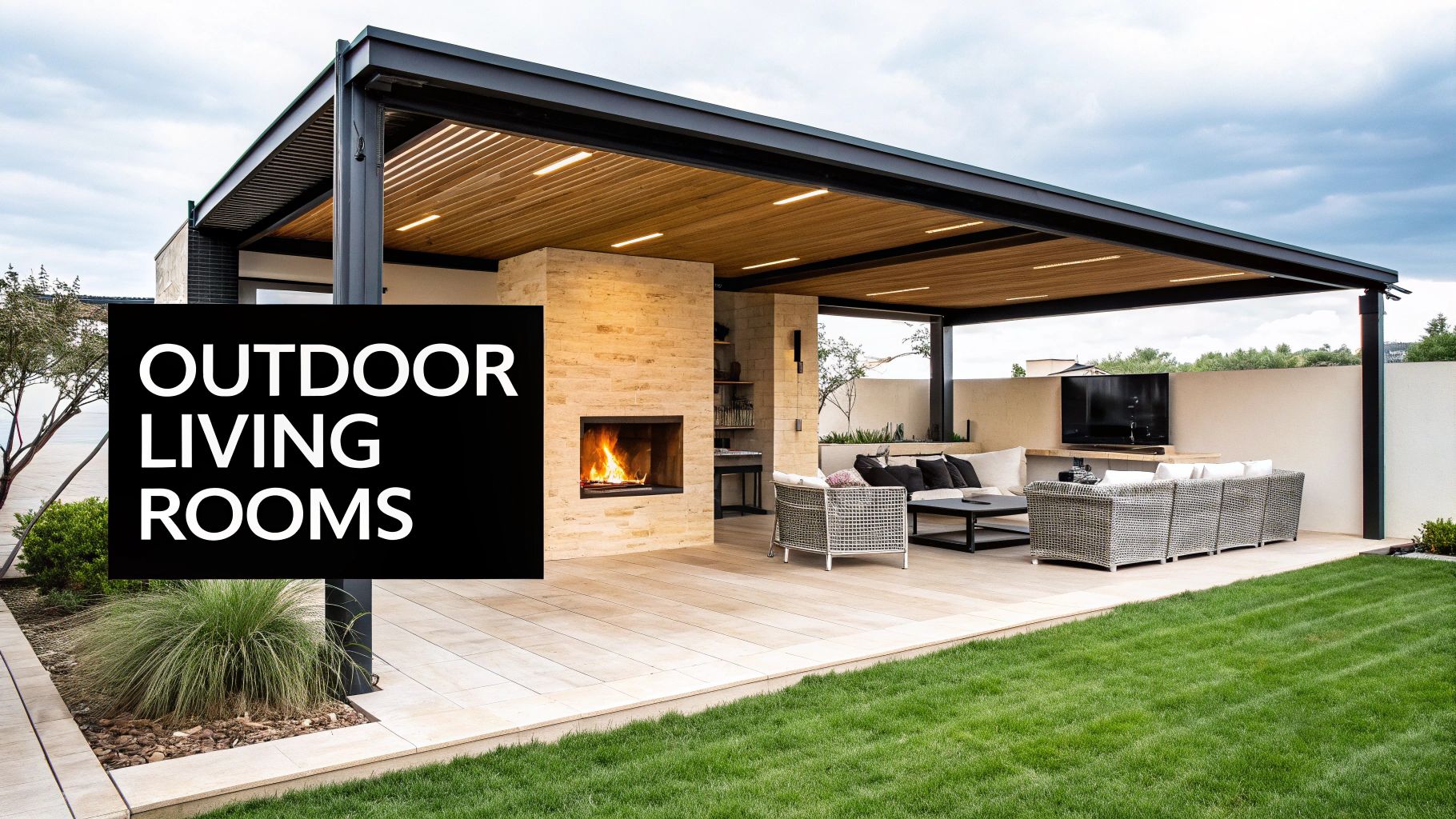
True indoor outdoor living is about more than just adding a patio. It’s about crafting exterior spaces with the same deliberation and purpose as the interiors, creating a series of well-appointed ‘rooms’ under an open sky. When you get this right, a backyard becomes a true extension of the home, multiplying its usable square footage with zones dedicated to cooking, dining, and unwinding.
These outdoor rooms often become the heart of the home, especially when the weather is cooperating. The objective is to make them so comfortable, beautiful, and functional that choosing to be outside feels as natural as walking into the living room.
Crafting the High-Performance Outdoor Kitchen
Long gone are the days of the lonely standalone grill. Today’s outdoor kitchen is a full-fledged culinary workspace and the social anchor for any entertainment-focused outdoor living area. Designing one demands a sharp focus on both high performance and ironclad durability.
I always start with workflow. Just like you would indoors, think about an efficient work triangle between the grill, sink, and refrigerator. This simple bit of planning keeps the cook from having to navigate through a crowd of guests just to grab a drink or wash some vegetables.
- Appliance Selection: Insist on appliances made from 304-grade stainless steel, which is the gold standard for rust and corrosion resistance. Think beyond the grill—a side burner for pots, an under-counter refrigerator, and even an outdoor-rated dishwasher can completely elevate the experience.
- Essential Utilities: Don’t treat utilities as an afterthought. Running permanent gas lines, plumbing for hot and cold water, and dedicated electrical circuits need to be mapped out early in the architectural phase. It’s a non-negotiable for a truly functional space.
- Durable Surfaces: Your countertops will be taking a beating from UV rays, temperature swings, and moisture. I find that materials like granite, quartzite, and the newer ultra-compact surfaces deliver the perfect blend of resilience and high-end aesthetics.
The demand for these spaces is absolutely booming. As a key part of the indoor outdoor living movement, the global outdoor kitchen market was valued at $24.45 billion and is expected to grow by 8.9% between 2025 and 2030. With residential projects making up over 62% of this market, it’s clear that homeowners are prioritizing these functional, stylish areas to blur the lines between inside and out.
Designing the Ultimate Outdoor Lounge
Think of the outdoor lounge as the family room, just without the walls. It’s a space designed purely for comfort, connection, and relaxation. Your goal is to create an environment that feels just as inviting as its indoor counterpart, encouraging long conversations and quiet moments in the fresh air.
Start with a foundation of comfortable, deep-seated furniture arranged to feel intimate and promote conversation. A large, outdoor-rated sectional or a mix of sofas and club chairs works beautifully. I always recommend anchoring the setting with an outdoor rug; it defines the zone and adds a crucial layer of texture and softness underfoot.
A fire feature is the single most powerful element for transforming an outdoor lounge. Whether it’s a grand fireplace or a modern fire pit, it provides warmth, ambient light, and a natural gathering point that draws people in and keeps them outside long after the sun sets.
To really maximize the lounge’s usability, consider a few more integrations:
- Automated Shade Solutions: Retractable awnings or louvered pergolas offer instant relief from the midday sun or a passing shower, dramatically extending the hours the space can be enjoyed.
- Integrated Media: For clients who want entertainment, we discreetly build outdoor-rated televisions and sound systems into custom cabinetry or architectural features so they’re hidden until it’s time for the game or a movie night.
Creating an Elegant Alfresco Dining Space
An outdoor dining area should feel like a special destination, distinct from the more casual lounge or the bustling cooking zone. Location is everything. It needs to be convenient to the kitchen (both indoor and out) but feel slightly set apart to cultivate a more intimate atmosphere.
Position the dining table to capture the best views—whether that’s a lush garden, a shimmering pool, or a distant city skyline. It’s also critical to leave ample space around the table for chairs to be pulled out and for people to circulate easily. Finally, well-considered lighting, like a statement pendant over the table or subtle uplighting on nearby trees, is what truly creates that magical ambiance for an evening meal.
By designing these distinct ‘rooms,’ you move far beyond a simple patio and create a multi-faceted outdoor environment. Each zone serves a purpose, but they all flow together to form a cohesive, functional, and beautiful extension of the home. Mastering this is central to the art of luxury design, and our guide on how to design an outdoor space offers even more insight into perfecting these layouts.
Extending Usability with Lighting and Climate Control
A gorgeous outdoor room is one thing, but a usable one? That’s the real measure of success. To truly transform a terrace from a daytime-only spot into a genuine, year-round extension of the home, you have to master two critical elements: lighting and climate control.
These are the features that make an indoor-outdoor living space genuinely livable, allowing everyone to enjoy the fresh air in total comfort, no matter the time of day or the season. Thoughtful planning here is what turns a pretty patio into an inviting environment that draws people outside and encourages them to stay. It’s the difference between a space that gets admired and one that gets used.
Creating Atmosphere with a Layered Lighting Scheme
Great outdoor lighting is about so much more than just flipping a switch to see. It’s about crafting a mood, ensuring safety, and artfully highlighting the best features of the architecture and landscape. Just like we do indoors, the most effective approach is always a layered one, combining different types of light for specific jobs.
I always think of it in three distinct layers:
- Ambient Lighting: This is your foundation—the soft, overall illumination that makes the space feel welcoming and safe to move through. Think of wall sconces on the home’s exterior, recessed lights tucked into a pergola ceiling, or a statement outdoor chandelier hanging over a dining table.
- Task Lighting: This is your focused, functional light, aimed right where you need it. It’s absolutely essential for an outdoor kitchen, where you need to see exactly what you’re doing on the grill. Under-cabinet LED strips or discreet, adjustable spotlights work wonders here.
- Accent Lighting: This is where the magic happens. This is the artistic layer that adds drama and visual texture. We use it to uplight a striking architectural column, graze a stone wall to showcase its texture, or highlight a magnificent specimen tree in the garden. Small spotlights and in-ground well lights are perfect for creating these captivating effects.
The most common mistake I see is simply blasting a space with harsh, uniform floodlights. It completely kills the atmosphere. A successful scheme is a delicate dance between light and shadow that creates depth, intrigue, and a real sense of intimacy.
Extending the Seasons with Climate Management
Climate control is what truly unlocks the full potential of an outdoor room, making it a comfortable destination even when the weather is less than ideal. The goal is to subtly take the edge off the extremes—the heat of summer and the chill of autumn—so you can enjoy your investment for more of the year.
For chilly evenings, integrated solutions always feel more luxurious than a clunky portable unit.
- Radiant Heaters: Sleek, electric radiant heaters can be discreetly mounted on walls or ceilings. What’s brilliant about them is that they heat objects and people directly, not the surrounding air, making them incredibly efficient even if there’s a bit of a breeze.
- Fire Features: A fireplace or a beautifully designed fire pit does more than just provide warmth. It creates a powerful focal point and a natural gathering spot. There’s just something about the flicker of a real flame that adds an unparalleled sense of comfort and connection.
When the temperature starts to climb, a smart combination of shade and air movement is your best friend.
- High-Pressure Misters: In seriously hot and dry climates, these are a game-changer. A high-pressure misting system can drop the ambient temperature by as much as 20-30 degrees Fahrenheit. It atomizes water into an ultra-fine fog that flash-evaporates, cooling the air instantly without making you or your furniture feel damp.
- Outdoor-Rated Ceiling Fans: Never underestimate the power of a simple breeze. A stylish ceiling fan under a covered patio circulates the air, creates a welcome cooling effect, and has the added benefit of deterring mosquitoes and other flying pests.
Mastering Insect Control for Total Comfort
Nothing ruins a perfect evening outdoors faster than buzzing, biting insects. A truly seamless indoor-outdoor living design has to include a smart strategy for pest management that goes way beyond citronella candles.
For the ultimate in protection and convenience, automated retractable screens are the gold standard. With the push of a button, fine-mesh screens descend from housings hidden in the ceiling, instantly transforming an open-air porch into a fully protected room. You get complete protection from bugs without ever sacrificing the open view.
You can also lean on the landscape itself as a natural line of defense. Planting aromatic herbs and flowers like lavender, rosemary, marigolds, and mint around the perimeter of your patio can help repel common pests. It’s a natural approach that adds beauty and fragrance while serving a very practical purpose.
Common Questions About Indoor-Outdoor Living
As we continue to blur the lines between inside and out, a lot of practical questions pop up. Designing a truly seamless indoor-outdoor space is about so much more than just looks—it’s about understanding the real value, sidestepping common pitfalls, and thinking about how the space will function for years to come. Getting these questions sorted out from the beginning is the key to a design that’s as smart as it is stunning.
Here are the answers to some of the most common questions I hear from clients and fellow designers, aimed at helping you navigate the process with confidence.
How Much Value Does an Indoor-Outdoor Living Space Add to a Home?
A well-designed indoor-outdoor living space is a huge asset, though the exact ROI will always depend on the location and the scale of the project. It’s more than just a number on an appraisal sheet; it fundamentally changes a home’s marketability and how large it feels. In the luxury market, buyers aren’t just looking for a house—they’re looking for a lifestyle, and these spaces speak directly to that desire for wellness and effortless entertaining.
When you get it right—a flawless transition, a high-spec outdoor kitchen, a genuinely comfortable lounge area—you can expect a return of 60-80%, sometimes even more. You’re not just selling a house anymore; you’re selling a complete living experience. That’s a powerful edge that often means a faster sale at a better price.
What Are the Biggest Mistakes to Avoid When Designing These Spaces?
The single biggest mistake I see is treating the outdoor area as an afterthought. When the patio or terrace is tacked on at the end, you almost always end up with a disjointed design, awkward changes in floor level, and a flow that feels anything but seamless.
Another major oversight is underestimating the infrastructure. If you don’t plan for adequate outdoor electrical outlets, plumbing for a summer kitchen, or gas lines for a fire feature right from the start, you’re setting yourself up for expensive and messy retrofitting down the road. Finally, forgetting about climate control and a sophisticated lighting plan can make a beautiful space unusable for half the year or as soon as the sun goes down.
The most successful projects are planned as a single, cohesive vision from day one. The outdoor spaces have to be treated as an integral part of the home’s architecture, not just a landscaping project.
How Do You Maintain Cohesion with Different Furniture Styles?
Creating a harmonious feel doesn’t mean your indoor and outdoor furniture has to be a perfect match. The goal is to create a visual bridge between the two zones. Think of it as telling a single design story using a consistent language of color, material, or form.
Here are a few strategies that work really well:
- Material Echoes: If you have beautiful walnut built-ins inside, choose outdoor furniture in teak or ipe. The materials are different, but they speak the same warm, woody language.
- Consistent Silhouettes: Pay attention to the overall shape. If your interior sofa has clean, modern lines and a low profile, look for outdoor seating that shares that same minimalist frame.
- Color and Pattern: This is the easiest trick in the book. Use outdoor-rated rugs, pillows, and throws that pull colors directly from your interior palette. It instantly ties everything together.
What Are the Best Solutions for Insect Control Without Using Screens?
Automated screens are fantastic, but sometimes the whole point is to have a completely open-air experience. Thankfully, there are plenty of effective ways to manage pests without enclosing the space.
I always recommend a layered defense. First, get the air moving. A good ceiling fan is surprisingly effective at deterring mosquitoes and other weak flyers. Next, use your landscaping as a natural repellent—plant citronella, lavender, marigolds, and rosemary around the perimeter of your living areas. They look beautiful and work hard.
For more targeted protection, a discreetly installed misting system can create a very effective barrier. And for evenings spent around the dining table or fire pit, a few high-quality, smokeless repellers or torches with repellent fuel can keep the space comfortable without ruining the indoor-outdoor living vibe.
Ready to showcase your own masterful indoor-outdoor designs to a discerning audience? Join the Haute Design network, the premier platform connecting top-tier architects and designers with affluent clientele seeking extraordinary living spaces. Elevate your portfolio and connect with your next great client today.