


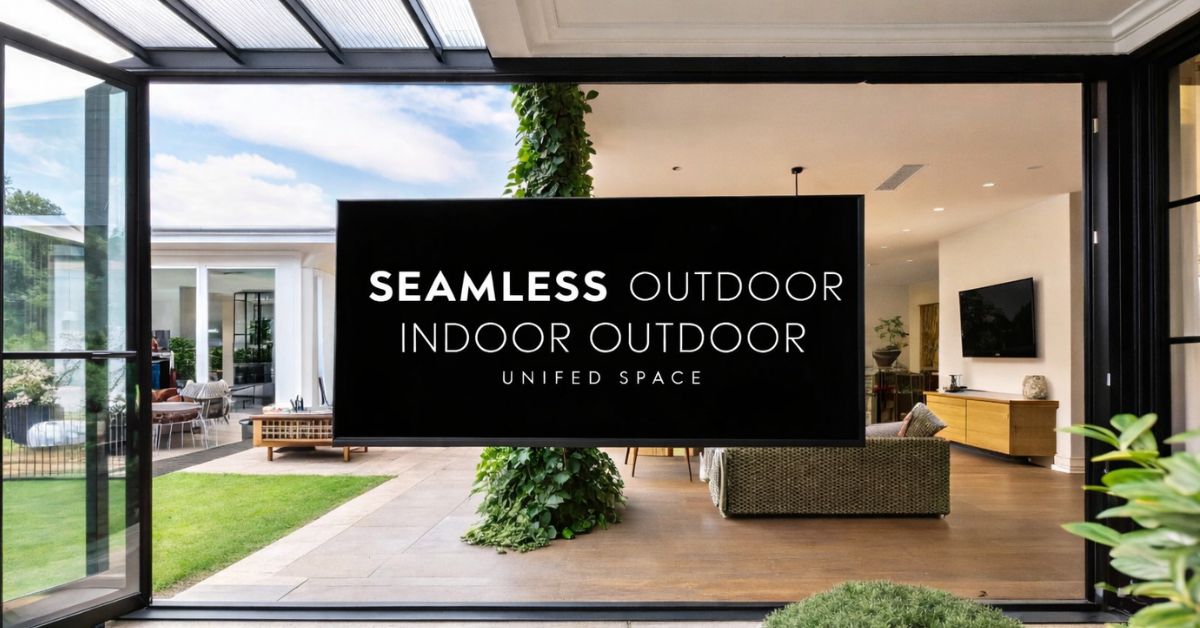
For those who appreciate the finer points of design, indoor-outdoor living is far more than just a patio door. It’s a philosophy—a way of dissolving the very line between a home’s interior and the nature that surrounds it. The goal is to create one expansive, unified environment where architecture, interiors, and the landscape speak the same language.
The New Standard of Luxury Living
What was once a novel feature has now become the hallmark of sophisticated properties. Seamless indoor-outdoor integration is no longer a trend; it’s an expectation in luxury design. This movement is fueled by our innate desire to connect with the natural world, improve our well-being, and create more versatile, beautiful spaces for living and entertaining. It’s not about adding a deck—it’s about fundamentally rethinking the home’s entire footprint.
This evolution is a major force in the global interior design market, valued at USD 137,930.0 million in 2024 and poised for significant growth. Much of that expansion is driven by high-end remodels specifically aimed at achieving this seamless flow. You can dive deeper into the data on interior design market growth from Grand View Research.
Why This Concept Resonates
The power of this design philosophy lies in its profound impact on daily life. When you erase the walls and invite the outdoors in, you gain far more than just extra square footage. You gain a whole new way of living.
- Expanded Living Space: Think of a covered terrace, complete with an outdoor kitchen and plush seating, not as an add-on, but as a genuine extension of your family room. It’s a space equally suited for hosting a party or enjoying a quiet morning coffee.
- Connection to Nature: There’s a proven link between well-being and consistent access to gardens, natural light, and the calming presence of water. This constant connection helps reduce stress and brings a sense of peace to the home.
- Architectural Drama: The visual impact is undeniable. Elements like cantilevered roofs that seem to float, massive glass walls that disappear into pockets, and flooring that runs uninterrupted from the living room to the pool deck make a bold, unforgettable statement.
A truly integrated space feels boundless. It’s where the comfort of your living room meets the tranquility of your garden, creating an experience that is both luxurious and restorative.
The Role of Elite Professionals
Crafting this level of integration is a sophisticated art. It’s a delicate dance between architects who engineer the effortless transitions, interior designers who maintain a cohesive aesthetic, and landscape artists who sculpt the surrounding environment into a living masterpiece.
Pulling off such an ambitious vision isn’t a job for just anyone. It demands the kind of expertise found among top-tier professionals. Connecting with a curated network of designers, like those in the Haute Design community, is the critical first step. These experts have the technical skill and creative vision to ensure every single detail works in harmony, delivering a result that is not just beautiful, but a true work of art.
Blurring the Boundaries of Architectural Design
How do you make a wall disappear? It’s the central question we grapple with in modern luxury design, and the answer isn’t about magic—it’s about a series of deliberate architectural choices that redefine what a “room” can be. Creating a truly seamless transition from inside to out is less about decoration and more about fundamental design principles that trick the eye and guide the experience. The goal is to create a single, unified space where the threshold is felt, not seen.
This whole process starts with establishing an uninterrupted visual path. Think of it like a river flowing from one area to another; any obstacle, like a sudden change in terrain, disrupts its course. Architecturally, that “terrain” is your flooring, and the “river” is the visual current that pulls your indoor and outdoor living areas together.
Establishing Unbroken Visual Flow
The most powerful tool we have for this is material consistency. When the same flooring—be it large-format porcelain tile, natural stone, or a specialized hardwood—runs from the living room directly onto the terrace, the brain registers it as one continuous plane. There’s no visual stop sign signaling where one area ends and another begins. The effect is a powerful illusion of spaciousness.
This diagram shows how unifying these two environments creates a foundation for the core elements of a luxury lifestyle.
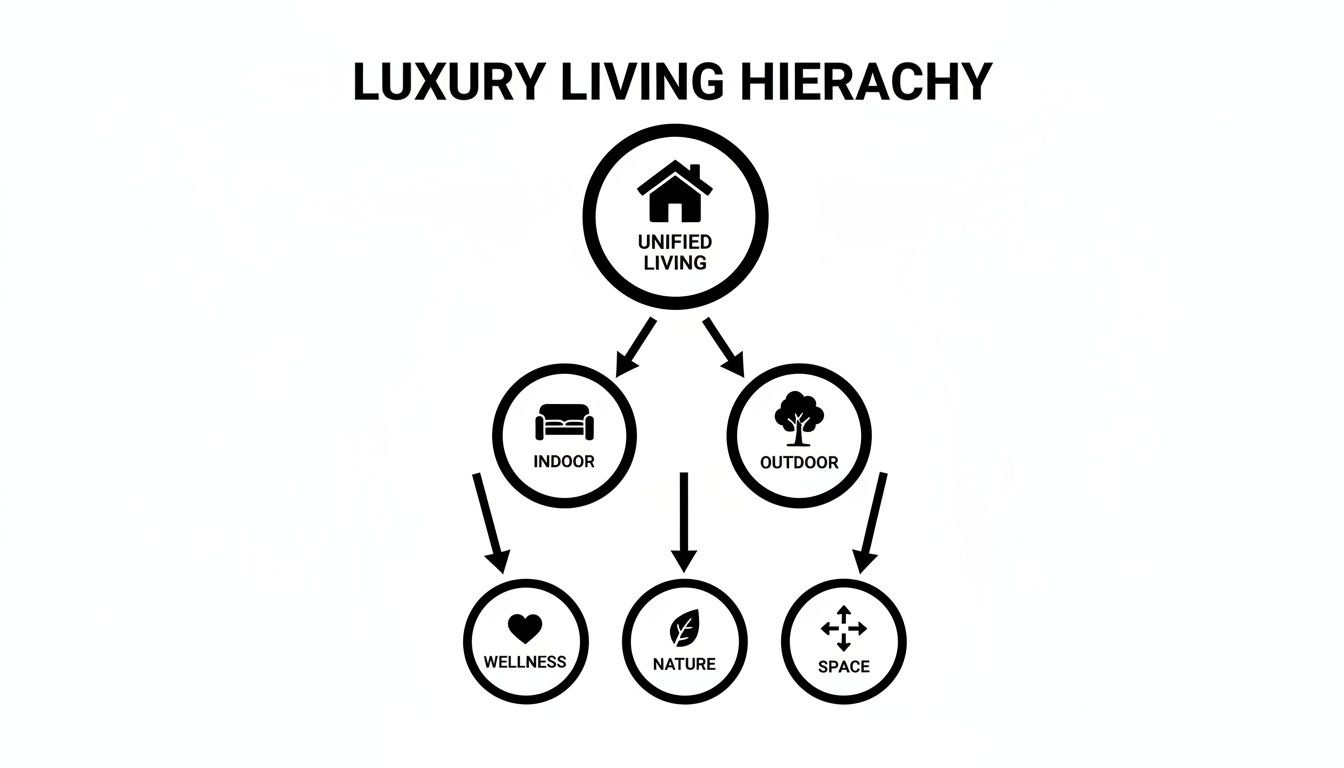
As the illustration makes clear, when indoor and outdoor environments merge, you naturally get an enhancement of wellness, a deeper connection to nature, and an overall greater sense of space.
Maximizing Sightlines with Glass
Once the floor is unified, the next step is to dissolve the vertical barriers. We achieve this by maximizing sightlines with massive glass panels and advanced window systems. A traditional window acts like a framed picture of the outdoors, but the best modern systems aim to remove the frame entirely.
Floor-to-ceiling glass walls, frameless corner windows, and minimal-profile sliding doors are essential tools of the trade. They do more than just let in light; they turn the surrounding landscape into a living piece of art, making it an integral part of the home’s interior. The objective is simple: make the barrier between you and the view as invisible as possible.
The following table breaks down the shift in thinking from traditional home design to the integrated approach that defines contemporary luxury.
Key Elements of Seamless Indoor-Outdoor Flow
| Design Principle | Traditional Approach | Integrated Indoor-Outdoor Approach |
|---|---|---|
| Visual Flow | Different flooring materials inside and out create a clear visual break. | Material consistency (e.g., same tile or stone) extends from the interior to the exterior, creating a single, uninterrupted visual plane. |
| Sightlines | Standard windows and doors act as framed, distinct openings to the outside. | Expansive glazing, floor-to-ceiling glass, and minimal frames dissolve walls, making the landscape a continuous part of the interior view. |
| Thresholds | Raised sills and heavy door frames create a physical and visual barrier. | Flush sills and pocketing/bi-fold doors eliminate the physical step, making the transition physically and psychologically seamless. |
This comparison highlights how every decision, from the floor under your feet to the walls around you, is re-imagined to foster a deeper connection with the outdoors.
Engineering Invisible Thresholds
The final, and perhaps most technically demanding, piece of the puzzle is engineering the invisible threshold. This is the physical point of transition—the doorway. A traditional door frame, with its raised sill and bulky structure, is a clear stop. It tells you, “You are now leaving the house.” High-end design works to erase that message entirely.
This is where some truly sophisticated systems come into play:
- Flush Sills: Architects and builders work meticulously to create a completely level transition where the interior floor meets the exterior patio. This requires careful planning for drainage to keep water out without needing a raised barrier.
- Pocketing Door Systems: This is the ultimate solution for making a wall vanish. Entire multi-panel glass walls can slide completely into a hidden cavity in the adjacent wall, leaving a wide-open, completely unobstructed connection.
- Bi-Fold Glass Walls: Another brilliant option, these doors fold accordion-style and stack neatly to one side. This can create an opening spanning 20 feet or more, effectively removing an entire wall of the home at will.
From aesthetic choices like consistent flooring to complex engineering feats like cantilevered roofs that shelter an outdoor room, every decision supports a single idea. The goal isn’t just to blur the boundaries but to erase them completely, creating a home and a lifestyle that are expansive, connected, and deeply in tune with the natural world.
Choosing Materials for Cohesive and Durable Spaces
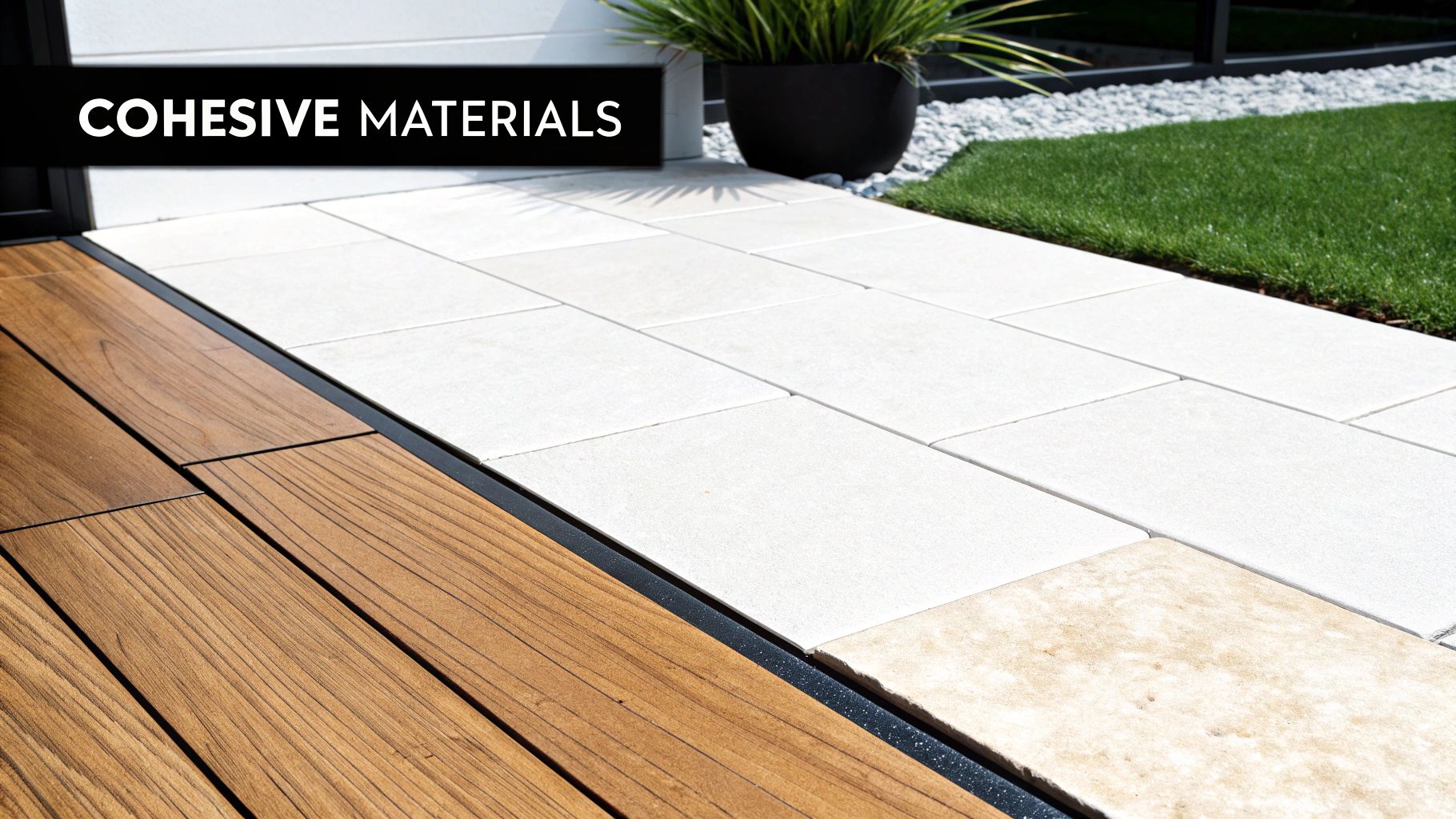
The real magic of a seamless indoor-outdoor design is in the materials. They’re the common thread, the visual language that tells the story of a single, unified space. Getting this right is a delicate dance between creating a stunning look and guaranteeing it will perform beautifully for years to come.
This goes way beyond just matching paint swatches. We’re talking about a consistent textural and visual narrative. Imagine the same large-format porcelain pavers from your great room flowing, without interruption, right out onto the pool deck. That simple, powerful choice makes the boundary between inside and out practically disappear.
Selecting a Unified Material Palette
Your most impactful decision will be the primary flooring material. It’s the anchor that connects everything. The goal is to find a single material elegant enough for your main living areas but tough enough to handle whatever nature throws at it. This creates an unbroken visual plane that makes the entire area feel more expansive and integrated.
Here are a few of the go-to choices we see in high-end design:
- Natural Stone: Materials like travertine, slate, and bluestone bring a timeless, organic beauty that works just as well inside as it does out. A honed or flamed finish provides the slip resistance needed for patios while keeping the look refined enough for a living room.
- Porcelain Pavers: This is a powerhouse option, offering incredible durability with almost no maintenance. Porcelain resists stains, won’t fade in the sun, and handles frost with ease. Even better, modern printing technology means it can convincingly replicate the look of natural stone, wood, or concrete.
- Specialized Hardwoods: When you want the warmth of wood, look to tropical hardwoods like Ipe or Teak. They’re naturally resistant to rot and insects, which is why they’re perfect for decking. Pair them with an interior hardwood of a similar tone, and the visual flow can be stunning.
The most successful indoor and outdoor living designs don’t just coordinate materials—they use a single, heroic material to form an unbroken visual bridge. This singular choice is what truly erases the threshold.
Balancing Aesthetics with Performance
While getting the look right is crucial, the technical specs of your materials are non-negotiable. An outdoor surface has to put up with a lot—scorching UV rays, wild temperature swings, rain, and constant foot traffic. A material that looks perfect on day one but degrades in a year will undermine the entire project.
This means you have to think critically about where each material is going. That polished marble floor might be breathtaking in the living room, but on the adjoining patio, it would be a slippery, etch-prone disaster waiting to happen.
Key Durability Factors to Consider
Every material choice has to be evaluated against your specific climate, expected maintenance, and long-term durability. The right answer for a sun-drenched Arizona terrace will be completely different from what works for a coastal New England home.
Think through these technical points:
- Climate Suitability: If you live in a region with freeze-thaw cycles, you need materials with a low water absorption rate to prevent cracking. In hot climates, you’ll want something that stays cooler underfoot and resists sun-fading.
- Durability and Wear: High-traffic zones need materials with a high abrasion resistance rating. If you’re designing an outdoor kitchen or dining area, stain resistance is everything.
- Maintenance Requirements: Be honest about how much upkeep you’re willing to do. Some natural stones need to be sealed regularly, while rich woods require periodic oiling to keep their color. Porcelain, on the other hand, usually just needs a good cleaning.
Ultimately, the art is in finding that sweet spot where beauty and endurance meet. When you prioritize materials that perform as well as they look, you’re not just designing a space—you’re making a lasting investment in your home’s indoor and outdoor living experience.
Integrating Technology for Year-Round Comfort
True luxury isn’t just about beautiful sightlines or expensive materials. It’s about creating a space that feels perfect, no matter the season or time of day. This is where smart technology and clever engineering elevate a great design into an exceptional, year-round retreat.
These sophisticated systems work quietly in the background, making sure your environment is always comfortable, convenient, and completely under your control. They’re what make an outdoor patio as livable and inviting as any room inside.
Advanced Glazing and Operable Walls
It all starts with the glass. We’ve gone far beyond standard sliding doors; we’re now designing entire walls that vanish at the touch of a button. These aren’t just windows—they’re dynamic, architectural features that redefine the boundary between inside and out.
Imagine floor-to-ceiling glass panels that glide silently into hidden wall pockets. Or picture frameless corner windows that meet without a post, opening up a breathtaking panoramic view. These installations don’t just frame the outdoors; they dissolve the very idea of an exterior wall, making your garden or city skyline a seamless extension of your living room.
Smart Systems for Ultimate Livability
Once the physical barriers are gone, technology takes over to manage the climate. These systems are designed to anticipate your needs and respond instantly, keeping you comfortable without a second thought. This level of control is what makes a space truly functional.
Think about these powerful additions:
- Radiant Heating: Tucked away in patio floors or mounted overhead, radiant heaters provide a silent, consistent warmth on cool evenings. This simple feature can easily extend your outdoor season well into the fall and even winter.
- Automated Screens: With a simple command, retractable screens can descend from hidden soffits. They’re perfect for keeping insects out or blocking harsh sun without spoiling the view.
- Smart Shading: Motorized awnings and louvered roof systems can be programmed to adjust automatically with the sun’s position. You get the perfect amount of shade all day long, without ever having to lift a finger.
This drive to merge high-end living with the natural world is a major force in the design market. In fact, the interior design services sector is projected to grow by USD 31.77 billion between 2024 and 2029, with much of that fueled by the demand for integrated outdoor living in luxury homes. It’s a global phenomenon, from heated patios in North America to the advanced glazing seen in modern European villas. You can explore more about the trends driving the interior design forecast and see how the market is shifting.
Integrating smart home technology isn’t just a feature—it’s the key to unlocking the full potential of your property. It provides absolute control over your environment, making your space responsive to your lifestyle.
The real magic happens when you connect all these systems to a central hub. You can create custom “scenes” for any occasion. A “sunset” mode might dim the interior lights, bring up the landscape lighting, switch on the patio heaters, and lower a sheer screen to cut the evening glare—all at once. This kind of orchestration is the hallmark of modern luxury. If this sparks your interest, you might want to explore more smart home automation ideas in our detailed guide.
Ultimately, technology is the invisible thread that makes a beautiful, open-concept space a practical reality. It’s the final, crucial layer that delivers effortless comfort and makes year-round indoor-outdoor living not just possible, but truly enjoyable.
Curating Furniture, Lighting, and Landscapes
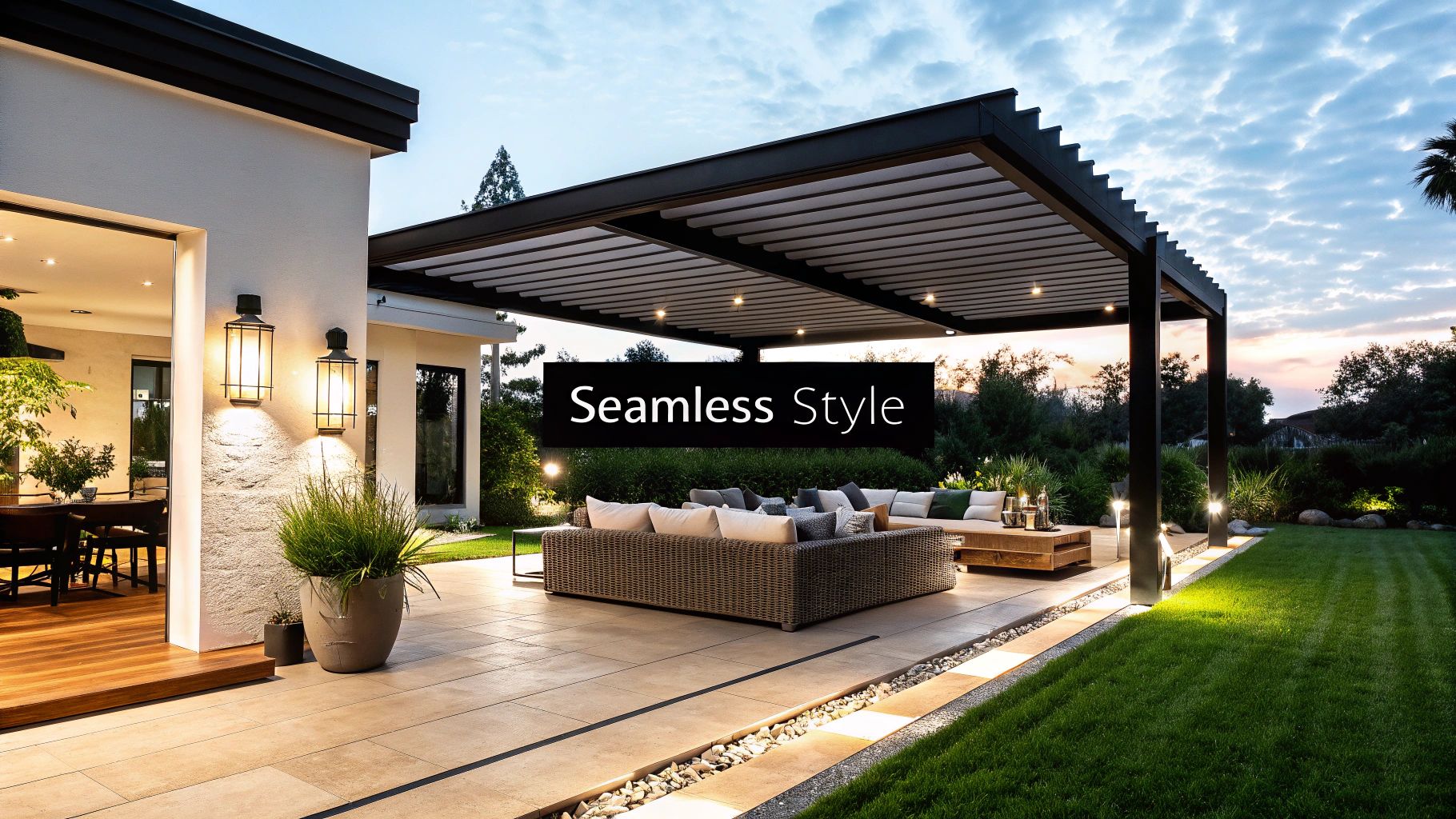
Once the architectural bones are in place and the material palette is set, the real magic begins. Furniture, lighting, and landscaping are the final, essential layers that breathe life into an integrated space. These elements infuse personality and craft the perfect ambiance, transforming a house into a true haven where the lines between a curated interior and a manicured garden completely disappear.
The trick is to start thinking of your outdoor areas as distinct “rooms” with a clear purpose. Is this a spot for quiet lounging, al fresco dining, or lively entertaining? Your answer will guide every decision that follows, from the style of seating to how a pathway is lit after sunset.
Selecting Furniture for Style and Stamina
Outdoor furniture has to pull double duty. It needs the aesthetic polish of high-end interior pieces but also the grit to stand up to the elements. Thankfully, we’ve moved far beyond flimsy metal chairs and plastic tables.
Today’s leading collections feature materials like powder-coated aluminum, sustainably sourced teak, and all-weather wicker, all shaped into elegant, sculptural forms. These are pieces stylish enough to anchor a living room, just engineered for the outdoors. The fabrics have evolved, too; modern performance textiles offer a soft, luxurious feel while effortlessly resisting sun, moisture, and stains.
Layered Lighting for Ambiance and Function
Lighting is arguably the most powerful tool for unifying the indoor-outdoor experience. A well-considered lighting plan doesn’t just illuminate; it sculpts the environment, sets the mood, and ensures a flawless transition from day to night. The goal is to layer light exactly as you would inside.
This means blending different types of light sources for a rich, dynamic effect:
- Ambient Lighting: This is your base layer, providing soft, overall illumination. Think discreet downlights in a covered patio ceiling or glowing lanterns that cast a warm, welcoming light.
- Task Lighting: This is all about focused light for specific activities, like a striking pendant hung over an outdoor dining table or integrated lighting in an outdoor kitchen to brighten countertops.
- Accent Lighting: Here’s where you add the drama. Use uplights to highlight the rich texture of a stone wall, showcase a magnificent tree, or graze the edge of a water feature to add depth and visual intrigue.
The most effective lighting plans make the source of the light feel almost invisible. The focus should be on the beautiful effect—the gentle glow on a pathway or the dramatic silhouette of a tree—not on the fixture itself.
A well-designed scheme extends your living space long after the sun goes down, turning the garden and patio into an enchanting, usable part of the home. For more specialized insights, a detailed guide on how to design an outdoor space can be an invaluable resource.
Integrating Landscapes as Living Architecture
Finally, we come to the landscape itself—the green architecture framing your entire design. Rather than being an afterthought, thoughtful planting and hardscaping must feel like a natural extension of your home’s interior. This is best achieved by echoing shapes, colors, and textures from the inside out.
For instance, a sleek, linear water feature can mirror the clean lines of your interior, while soft ornamental grasses can mimic the plush textures of indoor textiles. Hardscaping features, like low retaining walls or strategically placed stone paths, help define these outdoor “rooms” and guide the eye, creating one cohesive journey through the entire property.
This drive to create adaptable, wellness-focused properties is a global movement. In fact, recent data shows that 40% of luxury renovations worldwide now include features like bi-fold doors to create expansive views, boosting home values by as much as 15-20% in key markets. This trend is a direct response to clients who demand homes that adapt to their climate and lifestyle. By carefully curating these final elements, you create a harmonious atmosphere that makes your entire property feel like a single, exquisitely designed sanctuary.
Finding Top Designers to Bring Your Vision to Life
Creating a truly exceptional indoor-outdoor living space is an art. It takes more than a good eye; it demands a real command of architecture, material science, and landscape design.
As we’ve explored, the magic is in the details—erasing thresholds, weaving a consistent material palette throughout, integrating smart home systems, and curating every last finish. Every single choice, from the specific type of pocketing glass wall to the subtle layering of landscape lighting, plays a crucial role in creating a cohesive, immersive experience.
This is where a great vision requires true mastery to become a reality. The most stunning projects are always the result of a powerful partnership between a homeowner with a dream and a team of world-class professionals who can execute it flawlessly. Architects, interior designers, and builders who specialize in this niche bring both the technical skill and creative foresight needed to handle such a complex undertaking.
The Power of a Curated Network
Let’s be honest: finding the right expert can feel like a monumental task. But it’s single-handedly the most important step you’ll take. The gap between a good project and an unforgettable one is almost always the talent leading the charge.
This is precisely why a vetted, curated network of professionals is so valuable. It takes the guesswork out of the equation, ensuring you’re collaborating with people who have a proven history of delivering excellence time and time again.
Haute Design was built on this very idea. We act as the bridge, connecting your ambitious vision with the distinguished professionals who can make it real. Our network is an exclusive, hand-picked collection of the nation’s top designers and architects, all celebrated for their impeccable craftsmanship and innovative approach to luxury living.
Partnering with a vetted expert ensures your investment is not just in materials and construction, but in a cohesive, artistic vision that will stand the test of time and elevate your quality of life.
From Inspiration to Execution
Turning your home into a seamless indoor-outdoor sanctuary is a major project, but it doesn’t have to feel overwhelming. When you align with the right team, you can move confidently from the inspiring concepts in this guide to the tangible reality of a beautifully finished space.
The experts in the Haute Design network excel at translating a client’s dream into a functional and breathtaking environment. They manage the entire journey, making sure every architectural detail, material choice, and piece of technology works in perfect harmony.
If you’re ready to take the next step, exploring the top platforms to find luxury interior design firms is a great starting point. It can bring clarity to your search and simplify the process of finding your ideal creative partner.
Ultimately, your home should be a direct reflection of your lifestyle and aspirations. With the right team guiding you, you can create a truly boundless environment that not only adds significant value to your property but also enriches your daily life in ways you can’t even imagine yet.
Your Questions Answered
Even the most inspired vision for indoor-outdoor living comes with practical questions. As experts in the field, we’ve seen it all. Here are our answers to some of the most common queries we hear from clients, designed to give you clarity and confidence as you start your project.
What’s the Single Biggest Hurdle in These Designs?
Hands down, the biggest challenge is making the transition between inside and out feel completely effortless. It’s one thing to match a floor tile, but it’s another thing entirely to solve the complex engineering required for a perfectly seamless, weather-tight threshold.
You’re dealing with waterproofing, drainage, and often subtle differences in floor heights that have to be eliminated. The goal is to make physical barriers like door frames and changes in flooring simply disappear, all without compromising your home’s energy efficiency or structural stability. This level of detail requires a truly collaborative spirit between the architect, interior designer, and landscape architect from day one.
How Much Does Local Climate Really Matter?
Climate isn’t just a factor; it’s the foundation of every design choice. A stunning concept built for Southern California would be a disaster in a place with heavy snowfall or coastal humidity. Every material and system has to be chosen specifically for the environment.
- Colder Regions: We often specify triple-glazed windows for superior insulation and integrate radiant heating into the floors of covered patios. A large, double-sided fireplace that warms both the living room and the terrace is another brilliant solution.
- Hot Climates: Here, the game is all about shade and cooling. We design deep architectural overhangs, install automated awnings, and select materials with high UV resistance to prevent fading. Outdoor fans and misting systems are also popular additions for comfort.
- Coastal Areas: The salty air is relentlessly corrosive. Every piece of hardware, from hinges to screws, must be marine-grade stainless steel or another corrosion-resistant alloy. Material choices lean toward durable hardwoods and finishes that can withstand the constant assault of salt spray.
Can I Add This Kind of Space to My Existing Home?
Absolutely. In fact, remodeling is how most homeowners create these incredible spaces. Often, a single, decisive move—like removing an entire exterior wall and installing a state-of-the-art operable glass wall system—is all it takes to completely transform the feel of your home.
Other popular renovation strategies involve extending the roofline to form a protected outdoor room or building up the patio to sit perfectly flush with the interior floor. These are serious structural changes, so it’s critical to partner with an experienced architect and builder who understand the complexities involved.
What’s the Real Return on Investing in This?
The payoff is huge, touching everything from your daily life and well-being to your home’s market value. On a practical level, you’re massively expanding your home’s usable square footage. You gain new, flexible areas for everything from hosting dinner parties to enjoying a quiet morning coffee.
But the real magic is in the quality of life. You’re fostering a deeper connection to nature, flooding your home with natural light, and creating a sense of calm that’s central to biophilic design principles. And from a financial perspective? A masterfully designed indoor-outdoor space is one of the most desirable features in the luxury market today, making it a very smart investment that significantly boosts resale value.
Ultimately, it turns a house into a home that’s built around a lifestyle—one that feels more open, luxurious, and in sync with the world outside.
Creating an extraordinary home is a journey of vision and expertise. At Haute Design, we connect you with the nation’s most distinguished designers and architects who specialize in bringing ambitious indoor-outdoor living concepts to life. Find your perfect design partner on Haute Design and begin transforming your space.