


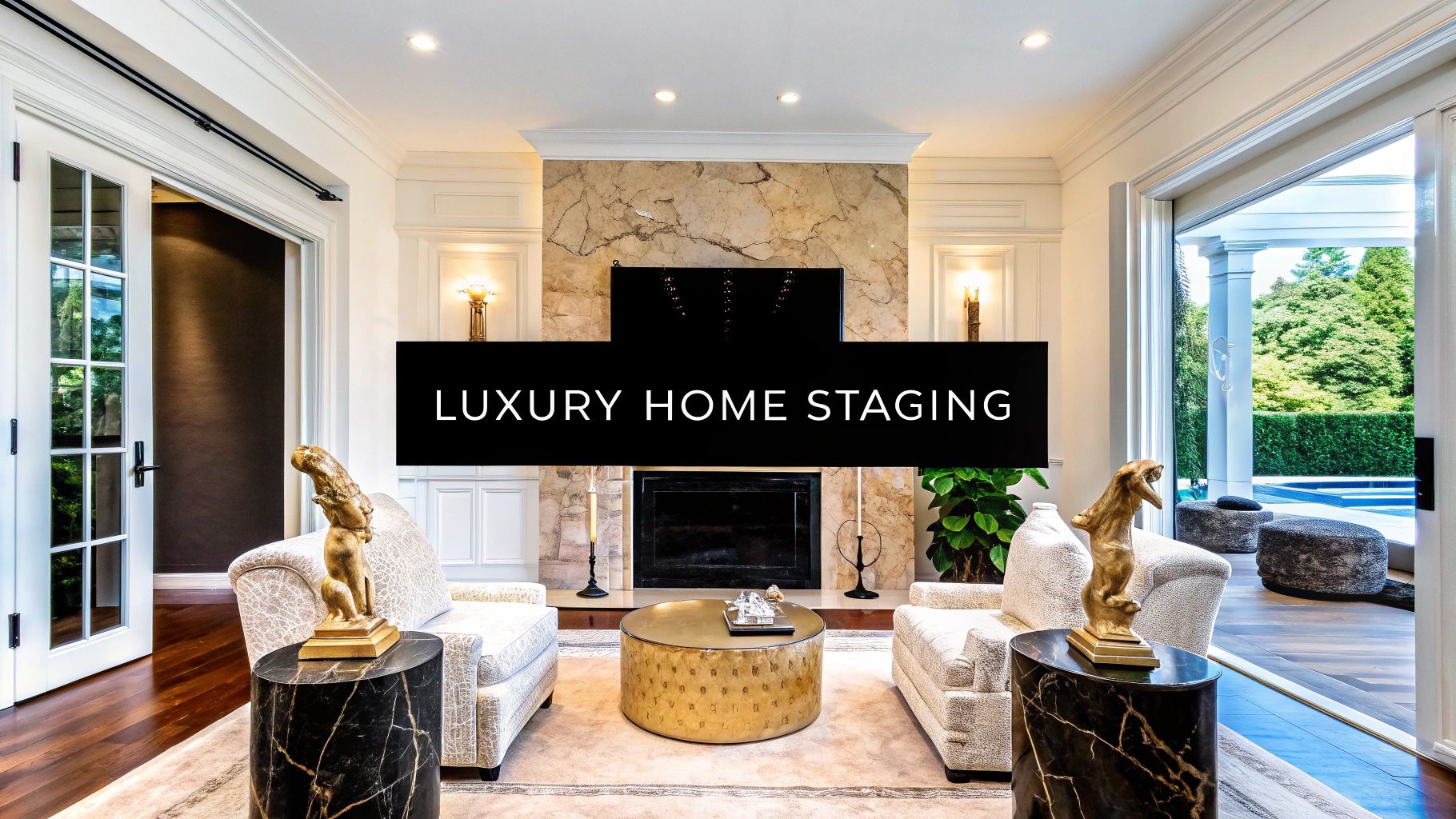
Learning how to stage your home isn’t just about tidying up—it’s about creating a fantasy. The goal is to present an aspirational lifestyle, not just four walls and a roof. This means strategically decluttering, dialing back the personal touches, and making smart design choices that will resonate with a wide range of sophisticated buyers. Done right, this process turns your property into a must-have product, forging an emotional connection that almost always leads to quicker sales and better offers.
Beyond Decor: Why Staging Is Crucial in the Luxury Market
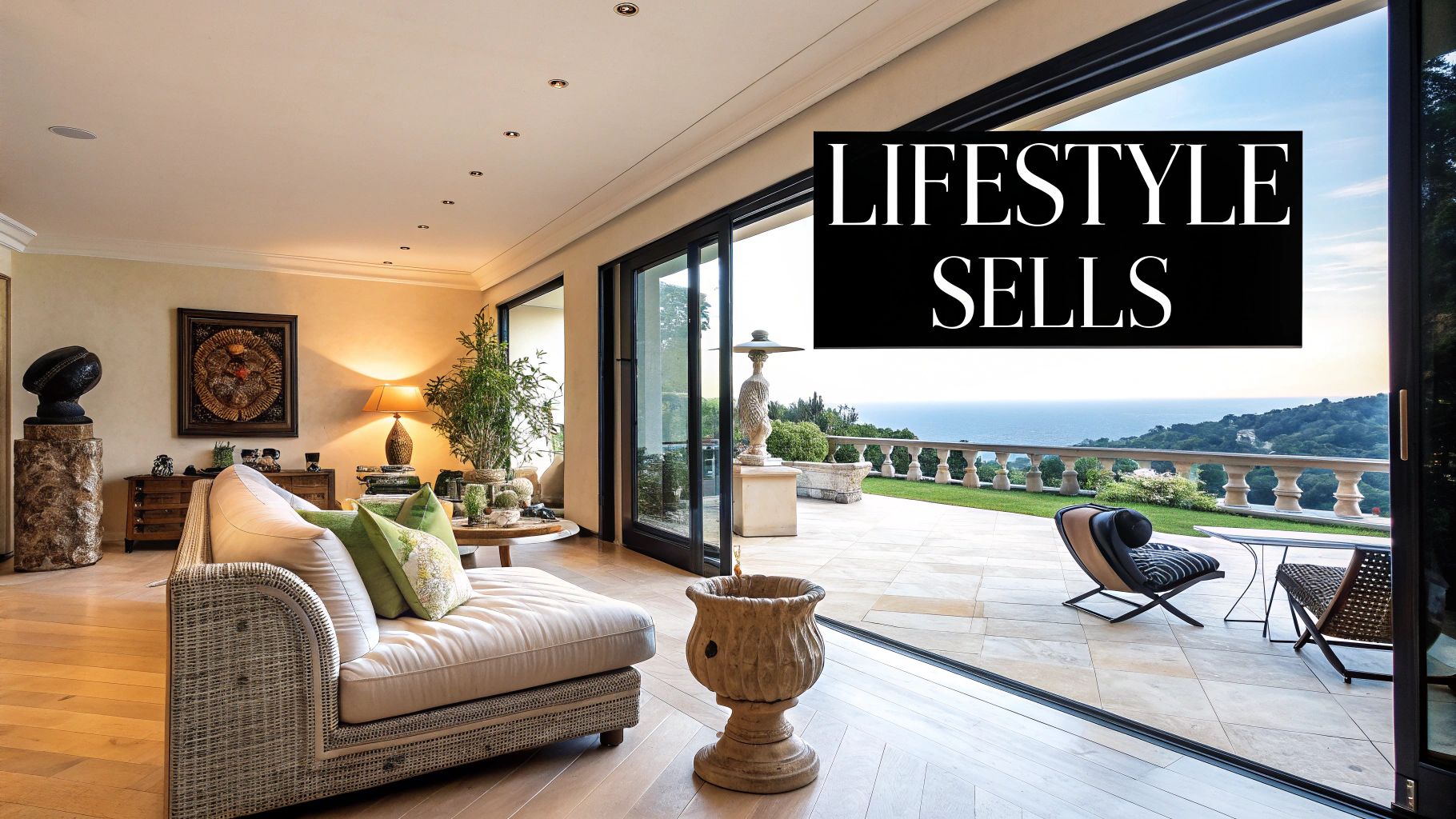
In the world of high-end real estate, staging is far more than simple decoration. It’s a calculated marketing investment. You’re not just selling a property; you’re selling a dream. Buyers at this level are acquiring an experience—an elevated lifestyle they can see themselves living. The art of effective staging is telling that compelling story within the walls of your home.
When a potential buyer walks through your doors, they shouldn’t see your life. They need to see their future. We achieve this by creating a space that feels both aspirational and welcoming, showing off the home’s potential without the distraction of your personal taste or clutter. The mission is to highlight architectural details, improve the flow from room to room, and spark a genuine sense of desire.
The Psychology of Luxury Buyers
You have to get inside the head of your target audience. Luxury buyers aren’t just counting bedrooms and bathrooms; they’re searching for a sanctuary that mirrors their success. Staging taps directly into this mindset by crafting an environment that feels exclusive, sophisticated, and completely move-in ready. It removes the mental work for them, letting them connect with the home on a much deeper, emotional level.
That emotional connection is what secures premium offers. A home that feels thoughtfully curated and stylish gives buyers the justification they need to meet a higher price, because they feel like they’re getting a complete, polished package. It’s no surprise that the latest trends in the luxury real estate market consistently favor properties that offer this kind of turnkey experience.
The real power of staging lies in its ability to transform a space from a personal residence into a valuable, marketable asset. It’s about depersonalizing without sterilizing, creating a canvas where buyers can paint their own aspirations.
The data backs this up. The home staging industry is on a serious growth trajectory, with a projected compound annual growth rate (CAGR) of 9.10% through 2033. This boom is fueled by the luxury market, where a strategic presentation can turn a beautiful house into an absolutely irresistible one.
To put it simply, staging a luxury home is less about the furniture and more about the feeling. It’s what separates a house from a home, a property from a lifestyle.
The table below breaks down the immediate impact and primary goals of professional staging.
The Staging Impact Quick View
| Staging Element | Objective | Key Focus Areas |
|---|---|---|
| First Impression | Create an immediate “wow” factor from the curb to the entryway. | Landscaping, exterior paint, front door, lighting, foyer. |
| Space Optimization | Make every room feel larger, brighter, and more functional. | Furniture placement, decluttering, use of mirrors, lighting. |
| Emotional Connection | Allow buyers to envision their own lives and futures in the home. | Neutral palettes, sophisticated art, lifestyle vignettes. |
| Highlighting Features | Draw attention to architectural details and high-end finishes. | Arranging furniture to showcase views, fireplaces, or finishes. |
| ROI Maximization | Increase perceived value to justify a higher asking price and sell faster. | Professional photography, targeting the ideal buyer demographic. |
Ultimately, investing in professional staging isn’t just about decorating rooms. It’s about crafting a powerful narrative that speaks directly to discerning buyers and ensures you get the maximum return on your most significant asset.
The Blank Canvas: How to Declutter and Depersonalize
Before you even think about bringing in a single piece of new decor, the most important step in staging your home is subtraction. We’re not just tidying up here; we’re creating a pristine, gallery-like canvas. The goal is to transform your personal home into a serene space where the architecture, high-end finishes, and incredible volume can finally take center stage.
Think of it as a strategic edit. You want the home’s best features to breathe. For example, I’ve seen countless expansive walk-in closets that feel cramped simply because they’re filled to capacity. But when you edit them down to a curated collection, they suddenly showcase their impressive scale and custom built-ins. It’s the same story in the kitchen—clear the appliances off those imported marble countertops and let buyers see the luxurious surface they’re paying for.
The Art of Purposeful Decluttering
Strategic decluttering is all about creating an overwhelming sense of space and possibility. People buying a luxury property aren’t just buying a house; they’re buying the promise of a better, more organized life. Overstuffed closets and crowded rooms completely shatter that illusion.
Your mission, and it can feel a bit extreme, is to remove at least 30-50% of the items from every room, closet, and cabinet. Seriously. Buyers will open your closets. When they do, they shouldn’t see your stuff crammed in; they should see ample room. A half-empty closet doesn’t suggest you lack belongings—it screams that the home offers more storage than one could ever need. Now that’s a luxury.
A simple rule to get you started: if you haven’t used it in a year or it doesn’t fit the sophisticated lifestyle story we’re telling, it needs to be packed away and put into storage.
- Edit the Library: Bookshelves should be styled, not stuffed. Take out at least a third of the books, then artfully arrange the rest. Mix in a few sculptural objects to break things up.
- Showcase the Storage: Go into the pantry, remove half the contents, and organize what’s left into matching clear or white containers. It’s a simple trick that instantly demonstrates order and ample space.
- Clear Every Surface: Your kitchen island, bedroom nightstands, bathroom vanities—every flat surface needs to be almost entirely clear. One or two intentional, decorative items are all you need.
Redefining Depersonalization
“Depersonalization” has a bad reputation. It often conjures images of sterile, lifeless rooms. But in luxury staging, it’s not about erasing character at all. It’s about neutralizing your personal story so a buyer can immediately start writing their own. They need to envision their future in your home, not be distracted by your past.
This means carefully packing away the things that scream “you.”
The most effective staged homes tell a story of sophisticated living, not just one person’s history. By swapping personal photos for curated art and niche collections for singular, impactful objects, you elevate the narrative from personal to aspirational.
Take the family photos off the mantle and replace them with a single, large piece of abstract art. That beloved collection of travel souvenirs? Swap it for one beautiful ceramic vase. The goal is to trade personal sentiment for universal style.
It’s a simple shift, but it’s what allows potential buyers to emotionally “move in” during a showing—and that’s often the final step before they decide to make an offer. By mastering the art of subtraction, you’re laying the critical groundwork for everything that comes next. This clean canvas is what makes the staging pop and what ultimately helps a buyer fall in love.
Telling a Story in Every Room
Once you’ve stripped the home back to a clean, depersonalized canvas, the real artistry begins. This is where we shift from subtracting to adding—placing carefully chosen elements that tell a compelling story in each key space. The goal here is to move past generic advice and create specific, memorable moments that let a buyer connect emotionally with the property.
Think of it like this: every room should telegraph a clear message about a sophisticated, effortless lifestyle. The entryway is the prologue, setting the tone. The living room isn’t just a place for a sofa; it’s a setting for elegant gatherings. The kitchen becomes the heart of the home, a place where culinary creativity and quiet morning rituals unfold.
This process builds on the foundational work of decluttering, depersonalizing, and neutralizing your palette.
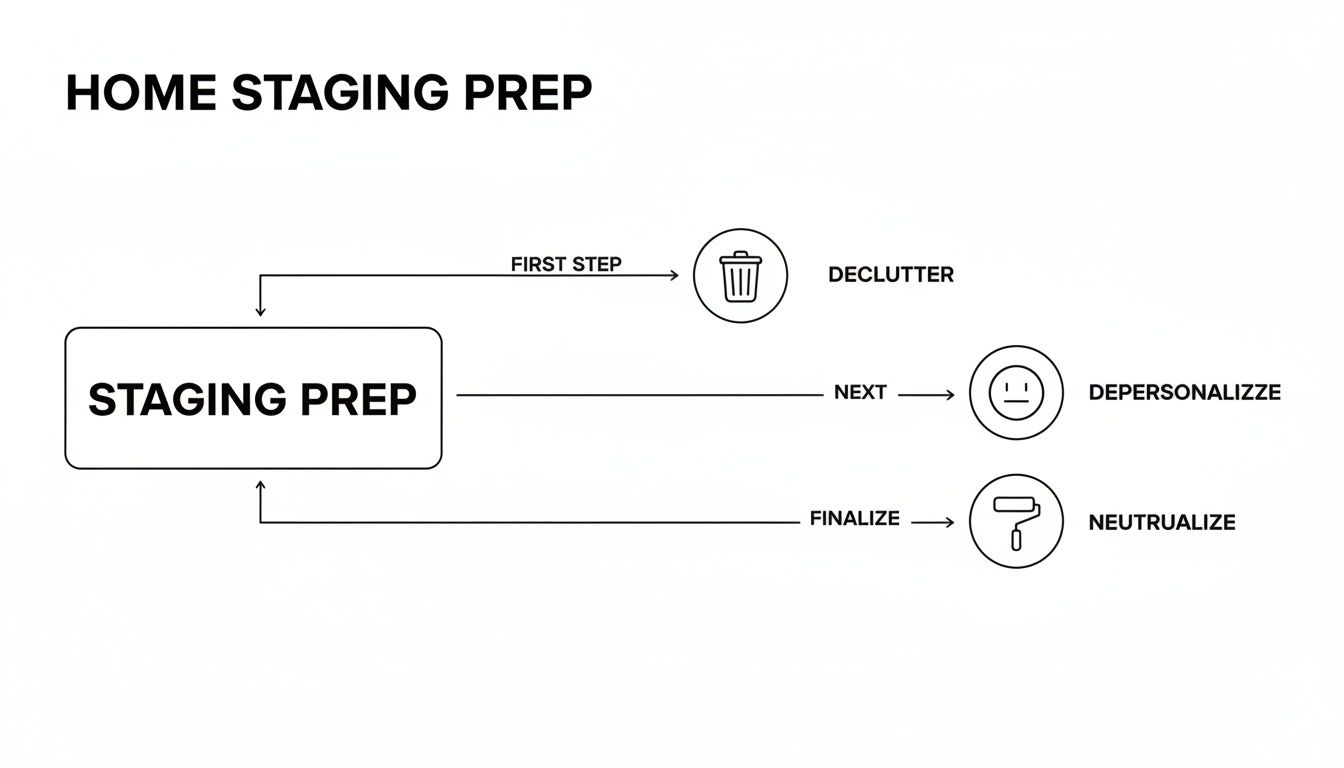
Without mastering these first steps, any layering you do on top will fall flat.
Crafting a Grand Entryway
First impressions are everything. The foyer needs to immediately communicate luxury, space, and order. It should feel open and bright, offering an irresistible glimpse of what lies beyond. Clutter is the enemy here; this is not the place for a pile of shoes or a key bowl overflowing with mail.
Instead, aim for a single, powerful statement. This could be a large, sculptural piece of art on the main wall, a striking console table with a simple but elegant floral arrangement, or a designer light fixture that sets a sophisticated tone. I always tell my clients to ensure the lighting is warm and layered to create a welcoming glow the moment that front door opens.
Designing an Elegant Living Room
The living room is often the most critical space for a buyer. It’s where they’ll picture themselves hosting friends or relaxing with family. For a luxury property, the goal is to showcase both elegance and versatility by creating distinct conversation zones. Please, don’t just push all the furniture against the walls. Pull pieces together into more intimate groupings.
For example, a primary seating area might feature a tailored sofa and two armchairs around a coffee table. Over by a window, you could create a secondary zone with two smaller chairs and a side table—a perfect spot for morning coffee or a quiet read. Use high-end textiles like velvet, silk, or Belgian linen in neutral tones to add texture and a palpable sense of quality.
Elevating the Gourmet Kitchen
It’s an old saying because it’s true: kitchens sell homes. In the luxury market, they must feel like the command center for both daily life and grand-scale entertaining. Since you’ve already cleared the counters, now you can add back a few carefully chosen items that tell a story of aspiration, not just utility.
Create a simple vignette that hints at a high-end lifestyle.
- The Coffee Bar: A sleek, premium espresso machine on the counter, flanked by two beautiful mugs and a small dish of artisanal biscotti.
- The Chef’s Corner: A beautiful wooden cutting board leaned against the backsplash, perhaps with a bottle of gourmet olive oil and a small potted herb like rosemary.
- The Host’s Island: A large, sculptural bowl filled with a single type of fruit—like a dozen green apples or lemons—adds a pop of color that feels intentional and clean.
These small, curated touches are what transform a kitchen from a purely functional space into an experiential one.
Creating a Five-Star Primary Suite
The primary bedroom must feel like a sanctuary. It’s a serene retreat that should evoke the feeling of a suite in a five-star hotel. The focus here is on tranquility, comfort, and pure luxury, with the bed as the undeniable centerpiece. It has to be dressed impeccably.
Start with crisp, high-quality white linens. Add a textured duvet or coverlet at the foot of the bed and use an assortment of sleeping and decorative pillows in complementary neutral shades. The goal is a bed that looks so inviting, a potential buyer can’t help but want to dive in.
Flank the bed with matching nightstands, each holding a stylish lamp and very little else—maybe a single hardcover book or a small ceramic dish for jewelry. If there’s a seating area, furnish it with a comfortable armchair and a small table to suggest a private space for unwinding. And don’t forget the closets: make sure they are sparsely filled with matching hangers to showcase their ample size.
Transforming Outdoor Spaces into True Living Areas
Never neglect the outdoors. A patio, terrace, or balcony is a massive selling point and a true extension of the home’s living space. You have to stage it as a compelling outdoor living room, not just a place to stick a grill.
Arrange comfortable, stylish outdoor furniture into a conversational grouping. Add an outdoor area rug, weather-resistant pillows, and a few large planters with lush greenery. This simple act helps buyers see the space as an area for relaxing and entertaining, effectively increasing the home’s usable square footage in their minds.
Data from the industry backs up this focused approach. Nearly half (49%) of sellers’ agents report that staging significantly reduces a home’s time on the market. Buyers consistently prioritize the living room (37%), primary bedroom (34%), and kitchen (23%), making these rooms the perfect places to focus your storytelling efforts. You can dive into the complete report on home staging ROI from the National Association of REALTORS® to see the full impact for yourself.
Embracing Today’s Luxury Staging Trends
To truly connect with a high-end buyer, a staged home needs to feel both fresh and sophisticated. It’s about moving past the clean, neutral look that dominated staging for years and creating a space that tells a compelling story of modern elegance. The goal is to curate a home, not just decorate one.
Think of it less like a catalog showroom and more like a private art gallery. Every single piece, from the sofa to the smallest accessory, has a purpose. It all works together to create an atmosphere of elevated, authentic comfort. This is where a designer’s eye becomes critical—making choices that feel both genuine and aspirational.
It’s All About Warmth and Texture
The biggest shift I’ve seen in luxury staging is the return to warmth. Today’s buyers crave spaces that feel inviting and truly livable, not like a sterile museum where they’re afraid to touch anything. We get there by layering natural materials and rich textures that appeal to the senses.
Start by looking for opportunities to swap out sleek, glossy surfaces for materials with more organic character. A rough-hewn stone bowl on a coffee table or a live-edge wood console in an entryway instantly adds a sense of history and depth. It’s this tactile quality that makes a high-end space feel grounded and real.
- Luxe Textiles: Forget the generic polyester throws. Opt for high-quality materials like Belgian linen, chunky knit wool, or a touch of cashmere. These fabrics add visual weight and an undeniable sense of quality.
- Natural Stone: Bring in accents of marble, travertine, or soapstone. A simple marble tray on the kitchen island or a small stone side table can elevate the entire room’s feel.
- Sophisticated Finishes: Move away from high-gloss everything. Matte black hardware, faucets, and light fixtures offer a chic, modern contrast that feels understated and incredibly current.
Bring the Outdoors In with Biophilic Design
A deep connection to nature is a cornerstone of modern wellness, and it’s a remarkably effective tool in staging. The practice is called biophilic design—incorporating natural elements into our homes—and it has a powerful psychological effect. It makes spaces feel calmer, more balanced, and more restorative.
This isn’t about stuffing a plant into every empty corner. It’s about strategic, intentional placement. A single, large-scale fiddle-leaf fig tree can act as a living sculpture, adding height, color, and vibrant life to a living room corner. A trio of small, architectural succulents on a bookshelf adds a pop of green without creating clutter.
The real aim of biophilic design in staging is to create a subtle sense of harmony between the indoor and outdoor worlds. This can be as simple as pulling back window treatments to perfectly frame a garden view or placing a vase of fresh-cut branches on a dining table.
Use Sculptural Pieces to Create Focal Points
Once a space is beautifully decluttered and neutralized, a few carefully chosen statement pieces can have a tremendous impact. Start thinking of your furniture and lighting as functional art that defines the room. This is one of the best ways to make a staged home feel unique and unforgettable.
For example, instead of a standard floor lamp, why not choose an arched lamp with a dramatic curve that draws the eye upward? Swap out a generic coffee table for one with a more interesting geometric base. These choices create intentional focal points that guide a buyer through the home, highlighting the architecture and incredible scale of each room.
To stay ahead, it’s crucial to understand where the industry is headed. The comparison below breaks down how to apply these modern principles.
Luxury Staging Trends to Implement Now
| Outdated Tactic | Modern Luxury Approach | Why It Works |
|---|---|---|
| Matching furniture sets | A curated mix of unique, high-quality pieces | Creates a collected, authentic look that feels personal and sophisticated, not mass-produced. |
| Sterile, all-white or gray palette | Warm neutrals, deep earth tones, and rich textures | Adds depth, warmth, and emotion, making the space feel inviting and livable rather than cold. |
| Generic, mass-produced art | Large-scale, original or abstract art pieces | Acts as a powerful focal point, communicating a sense of curated taste and making the home memorable. |
| Over-accessorizing surfaces | Minimal, high-impact “vignettes” | Allows architectural features and key pieces to stand out, creating a feeling of calm and sophistication. |
The best stagers are already abandoning cold minimalism for what I call “maximalism with intention”—a richly layered, curated luxury that speaks directly to affluent buyers. There’s also a growing emphasis on sustainability, with a focus on organic textiles and innovative finishes that signal forward-thinking design. You can learn more about the future of home staging trends on FeatheringtonInteriors.com.
By thoughtfully weaving these modern luxury trends into your staging, you’re doing more than just making a home look good in photos. You’re crafting an immersive, emotionally resonant experience that will stand out and connect with the most discerning buyers on the market.
Finding the Right Staging Partner
While you can grasp the basic principles of staging, executing them at a luxury level is a true art form. This is precisely where a professional stager or interior designer becomes your most critical asset, turning your property into a showpiece that buyers can’t resist.
Let’s be clear: choosing the right expert is probably the single most important decision you’ll make in this entire process. It will directly influence your final sale price and how quickly you get an offer.
Don’t confuse professional staging with simply decorating a space. A top-tier stager is a marketing strategist who uses design to tell a compelling story—a story of aspiration. They have a deep understanding of the affluent buyer’s mindset and know exactly how to craft an environment that feels both exclusive and emotionally captivating.
Vetting a Designer’s Portfolio
Your first move should be a deep dive into their past work. Of course, the portfolio will be beautiful, but you need to look beyond the pretty pictures. Does their aesthetic genuinely match the style of your home and, more importantly, the tastes of your target buyer?
Look for a proven track record with properties of a similar caliber and price point. Pay close attention to their “before and after” galleries, as this is where their real talent shines through. A good stager can make any home look nice, but an exceptional one can transform an awkward space or brilliantly highlight unique architectural details others might overlook.
Their portfolio should tell a story of consistency—the ability to create a sophisticated, cohesive vision across many different types of properties. If you’re looking for more guidance on this initial search, you can find in-depth advice on how to find the right interior designer for your project to help you build a solid list of candidates.
Critical Questions for Your Consultation
Once you’ve narrowed it down to a few potential partners, the consultation is your chance to really assess their expertise and how they operate. This meeting is more than just getting a quote; it’s an interview to see if they’re the right fit for your specific property. Arrive with smart questions ready.
Here are a few I always recommend asking:
- “Can you walk me through your process for creating a staging concept for a home like this one?” This question gets to the heart of their strategic thinking. You want to hear them talk about target demographics, architectural style, and creating a lifestyle narrative—not just about picking out furniture.
- “How do you source your inventory? Do you own your furniture, or is it rented?” A stager who owns a curated, high-end inventory can often deliver a more distinctive and seamless look that doesn’t feel generic.
- “What does your communication process look like during a project?” You need to be on the same page. Establish upfront how you’ll get updates and provide feedback to avoid any surprises down the road.
A professional’s proposal should be more than a price list. Think of it as a strategic plan. It should clearly outline the design concept, provide a detailed budget breakdown, and map out the timeline from installation to removal.
Ultimately, a great partnership is built on trust and clear expectations. Be transparent about your budget and timeline, and then trust their expertise. Give them constructive feedback, but also allow them the creative freedom to work their magic. By investing in the right professional, you’re not just hiring a decorator; you’re bringing on a marketing expert who knows how to unlock your property’s maximum potential value.
Preparing for Photography and Showings
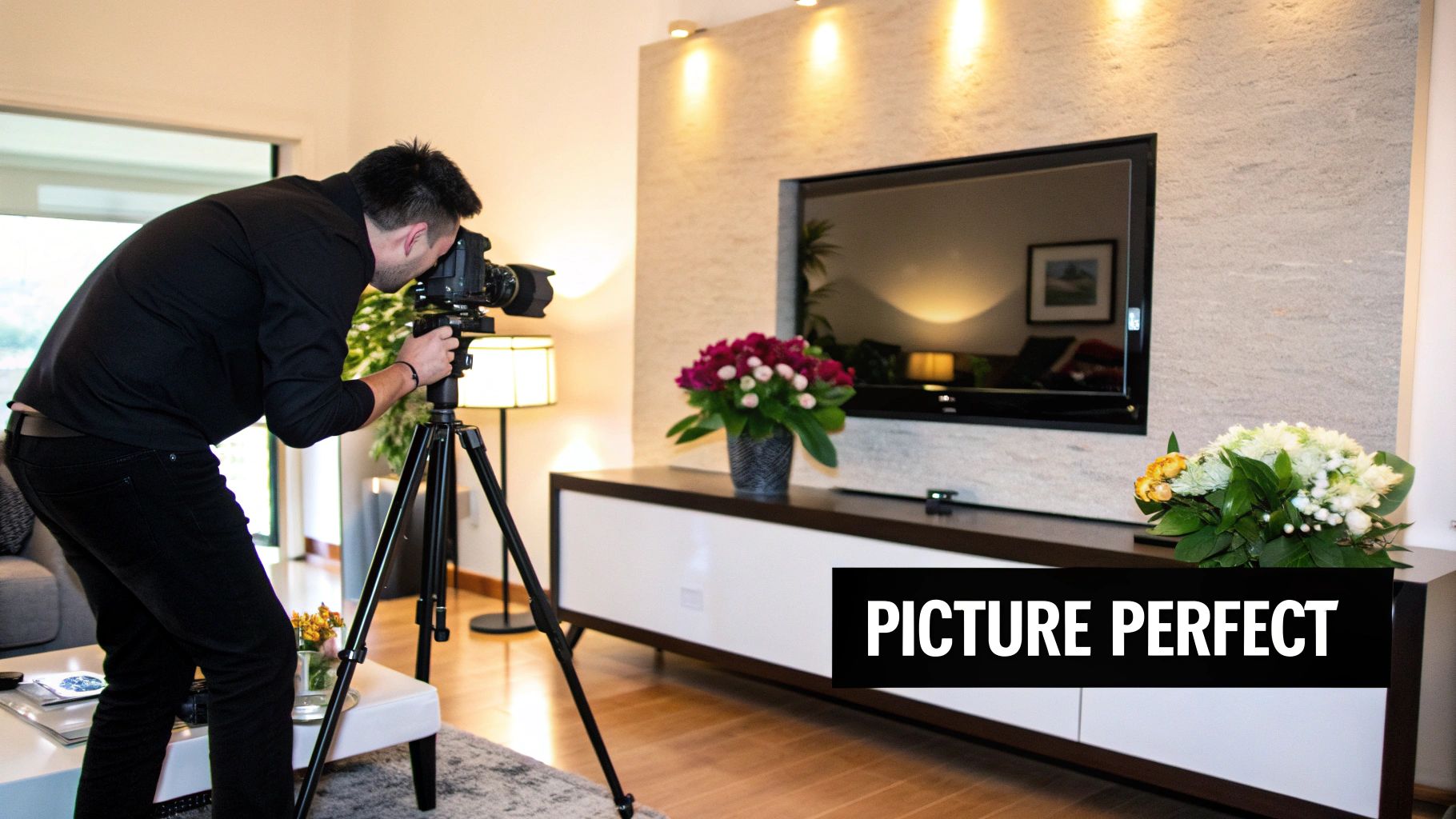
After all the planning, decluttering, and styling, you’ve reached the final, critical steps: the photoshoot and the showings. This is where all your hard work comes to life, translating the feeling of your home into stunning photos and an unforgettable in-person experience.
In the luxury market, professional photography isn’t just a good idea; it’s an absolute must. With over 90% of buyers starting their search online, your listing photos are the single most important first impression. A seasoned stager often works hand-in-hand with the photographer, knowing exactly how to tweak a furniture arrangement or adjust lighting to capture the most powerful, emotionally resonant shots.
The Pre-Shoot Checklist
Right before the photographer is scheduled to arrive, it’s time for one last, meticulous sweep of the property. This goes beyond a simple tidying up—it’s about perfecting every last detail so the home is completely camera-ready.
- Let There Be Light: Open every blind and curtain to let in as much natural light as possible. Then, turn on every single light source in the house—from table lamps and chandeliers to under-cabinet and accent lighting. This creates a warm, layered, and inviting look.
- Wipe Down Everything: Give all surfaces one final polish. Fingerprints and smudges on glass, mirrors, countertops, and stainless steel appliances are glaringly obvious in high-resolution photography.
- Add Fresh Touches: A beautiful bouquet of fresh flowers on the kitchen island or a simple orchid in the primary bathroom adds an immediate touch of life, color, and luxury.
- Conceal Daily Life: Make sure all signs of day-to-day living are completely out of sight. That means hiding trash cans, tissue boxes, pet food bowls, dish soap, and remote controls.
A key thing to remember is that the camera’s lens sees a space very differently than the human eye. An object that seems minor in person can become a major distraction in a photo, so the goal is to create clean, unobstructed sightlines that showcase the space itself.
Maintaining “Show-Ready” Condition
Once the photos are in the bag, the next challenge is to keep the home looking exactly like it does in those perfect pictures for every single showing. The trick is to develop a quick and easy daily routine.
Before you leave the house each morning, do a quick 15-minute reset: make the beds with crisp, hotel-style corners, wipe down counters and faucets, and give all the throw pillows a good fluff. For more great insights, you can explore some professional interior design photography tips for stunning photos to understand what the pros look for.
This commitment to consistency is what makes the magic happen. It ensures every potential buyer walks in and feels the full impact of your staging, turning a simple viewing into a compelling reason to make an offer.
Answering Your Questions About Luxury Home Staging
When you’re preparing a high-end property for sale, questions about staging are bound to come up. It’s a significant step, and understanding the nuances is the key to making a strategic decision that truly pays off.
But My Home is Already Beautifully Decorated… Do I Still Need to Stage It?
This is probably the most common question I hear, and it’s a great one. While your personal style might be stunning, professional staging isn’t about interior decorating—it’s about marketing.
A stager’s role is to look at the home with a buyer’s eyes. They depersonalize and neutralize the space, creating a clean, sophisticated canvas that allows a wide range of affluent buyers to envision their own lives there. The goal is to highlight the home’s incredible architecture and luxury finishes, not one person’s specific taste.
Is Professional Staging Really Worth the Investment?
Absolutely. It can feel like a significant upfront cost, but the return on investment is proven time and again. Staged homes consistently sell for more money and spend far less time on the market.
Think of it this way: staging isn’t an expense. It’s an investment in protecting your equity and maximizing your final sale price.
The cost of staging is almost always less than the first price reduction you’ll make on an unstaged home that isn’t selling. It’s a proactive strategy to secure top dollar right from the start.
What If I’m Still Living in the Home?
This is another frequent concern. The logistics of staging an occupied home can seem daunting, but professional stagers are masters of this process. They excel at minimizing disruption to your daily life.
A good stager will create a hybrid plan, artfully blending your best existing pieces with carefully selected rental furniture, art, and accessories. They’ll also give you a simple, manageable plan for keeping the home “show-ready” at a moment’s notice. This ensures every single buyer sees the property at its peak potential without turning your life upside down.
Ready to connect with a top-tier design professional who understands the luxury market? Explore the curated network at Haute Design and find the perfect partner to elevate your property. Visit us at to learn more.