


Marketing to the ultra-wealthy isn’t about casting a wide net. It’s about precision. Success hinges on a potent mix of an undeniable luxury brand, a portfolio that stops people in their tracks, and a meticulously cultivated referral network. You’re not just selling a service; you’re positioning your firm as the only choice for creating a legacy.
Crafting a Brand That Resonates With the Affluent
Before you even think about marketing tactics, you need to get your foundation right. In the world of high-end architecture, your brand is that foundation. It’s the silent ambassador that conveys your value, philosophy, and expertise long before you ever shake a client’s hand.
To attract discerning clients, you have to know what makes them tick. This goes way beyond demographics. You need to get into their mindset.
- What drives their decisions? Is it a desire for a family legacy, a passion for sustainable living, an appreciation for historical accuracy, or a need for cutting-edge smart home integration?
- What is their vision of a perfect space? Are they dreaming of a statement home built for hosting grand galas, or a private, restorative sanctuary to escape a high-pressure life?
- What are their non-negotiables? They don’t just expect incredible design. They demand a seamless, white-glove experience from the very first sketch to the final, impeccable walkthrough.
Carving Out Your Niche in the Luxury Market
Once you have this deep client understanding, you can define your unique position. Generic, “we do it all” firms simply don’t cut it in this space; they get lost in the noise. True expertise in a specific area, however, commands respect—and premium fees. Your niche becomes the heart of your brand’s story.
Ask yourself where your firm’s passion and proven skills meet a clear market demand. Is it:
- Sustainable Luxury: Engineering net-zero estates that fuse ecological integrity with breathtaking design.
- Historic Renovation: Masterfully restoring storied properties, honoring their past while equipping them for the future.
- Avant-Garde Commercial: Designing the next generation of boutique hotels or innovative workspaces that become destinations in themselves.
This focused identity will guide every single marketing decision you make, from the language on your website to the industry partners you align with.
Telling a Story That Sells Itself
Your brand narrative is what bridges the gap between your technical expertise and your ideal client’s deepest aspirations. It’s how you build a genuine emotional connection. For example, instead of a flat statement like, “We design modern homes,” a compelling narrative sounds more like, “We create serene, light-filled sanctuaries where busy professionals can disconnect and find harmony with nature and family.” See the difference?
Understanding the nuances of the luxury world is absolutely critical. To get a better sense of what defines this market, it’s worth exploring the details of luxury mansion interior design and seeing how it shapes the expectations of your target clientele.
Think of your brand as a powerful filter. It’s designed to attract the exact clients who will value your specific approach while politely signaling to others that you might not be the right fit. This is marketing at its most efficient, qualifying leads before they ever reach out.
Ultimately, building a premium brand is an exercise in total clarity and confidence. It’s about knowing exactly who you are, who you serve, and the distinct promise you deliver. When your brand speaks the language of your ideal client, your marketing efforts stop feeling like selling and start feeling like an invitation to collaborate.
Your Digital Studio: Crafting an Unforgettable Online Portfolio
Think of your website as the front door to your firm. For the affluent client, this first impression is a powerful test. Does it immediately convey the quality, sophistication, and unique vision you’re known for? Your website isn’t a digital brochure; it’s a virtual studio, and it needs to be as meticulously designed as the spaces you create.
The goal here is to craft an immersive experience, one that pulls a potential client from casual curiosity into genuine consideration. That means a clean, intuitive design, lightning-fast load times, and a mobile experience that’s flawless on any screen. You’re not just showing pictures; you’re guiding them on a journey.
Designing a Website That Wins Projects
In the luxury architecture space, a successful website is a delicate balance of stunning visuals and smart strategy. Every single element, from the font choice to the project layout, must work together to convert a high-net-worth visitor into a qualified lead.
Your site needs to tell a story. It should walk visitors through your design philosophy, reveal your process, and culminate in a breathtaking portfolio. This is a curated path designed to build trust and prove your expertise with every click. Never forget, your digital presence is a direct reflection of the client experience you deliver.
A seamless, elegant website signals a seamless, elegant client process. Any friction—a slow-loading page, confusing navigation—can plant a seed of doubt about your firm’s attention to detail. That’s a risk you can’t afford.
The market for architectural services is surprisingly fragmented. While the US industry hit $65.7 billion in revenue with over 21,500 firms, the top four companies only command 5.8% of the market. This creates a massive opportunity for specialized firms to stand out with a superior digital presence. You can dig into more data on the architectural services industry from Kentley Insights.
Your website is the single most important tool for capturing that opportunity. To do it right, certain elements are non-negotiable.
Here’s a breakdown of the critical components your firm’s website must have to effectively attract and convert the right clients.
Essential Elements of a Client-Winning Architecture Website
| Website Element | Purpose | Best Practice Example |
|---|---|---|
| High-Resolution Photography & Videography | To visually communicate the quality and emotional impact of your work. This is the #1 trust-builder. | A homepage hero video showcasing a recently completed project’s most stunning architectural features. |
| Clear Firm Philosophy / “About Us” | To connect with clients on a personal level and articulate your unique design ethos and values. | A well-written narrative detailing the founder’s vision and the firm’s approach to client collaboration. |
| Curated Portfolio with Case Studies | To not only show what you built but how and why you built it, demonstrating problem-solving skills. | Project pages that blend stunning final photos with initial sketches, plans, and a story-driven narrative. |
| Detailed “Process” or “Services” Page | To demystify the client journey, manage expectations, and build confidence in your methodology. | A step-by-step visual timeline from initial consultation and site analysis through to construction and final handover. |
| Prominent and Clear Calls-to-Action (CTAs) | To guide interested prospects on the exact next step, whether it’s booking a consultation or downloading a lookbook. | Buttons and links with clear text like “Schedule an Initial Consultation” or “Inquire About a Project.” |
| SEO-Optimized Content | To ensure your firm is found by high-net-worth individuals searching for architects in specific, affluent locations. | A blog post titled “Designing a Modern Coastal Retreat in Malibu: A Project Spotlight.” |
| Mobile-First Responsive Design | To provide a flawless user experience for the majority of users who browse on phones and tablets. | The website’s layout, images, and text automatically adjust perfectly to any screen size without pinching or zooming. |
Ultimately, these elements work together to create a cohesive and persuasive digital experience that mirrors the high-touch service you provide in the real world.
The Power of Professional Architectural Photography
Let’s be blunt: your portfolio is the heart of your marketing. iPhone shots just won’t cut it. Investing in a professional architectural photographer and, increasingly, a videographer is absolutely non-negotiable. It is the single most important investment you can make in showcasing the caliber of your work.
A truly skilled architectural photographer understands light, composition, and form. They do more than just document a space; they capture its soul. They create images that tell the story of the lifestyle a home enables. These visuals are the foundational assets for your website, social media, press kits, and award submissions. For inspiration, take a look at these professional interior designer portfolio examples to see how powerful a well-curated visual story can be.
Structuring Case Studies That Tell the Whole Story
A gallery of beautiful images is a start, but sophisticated clients want to see the thinking behind the beauty. They want to understand your problem-solving prowess. This is where detailed project case studies become your most powerful sales tool.
A great case study moves beyond the glossy final photos to showcase your strategic mind. Frame your projects as compelling narratives:
- The Client’s Vision: Start by briefly describing the client’s initial dream. What were their goals and aspirations for the space?
- The Challenge: What were the hurdles? Outline the unique constraints—a difficult site, tough regulations, a complex client brief.
- Your Innovative Solution: This is the core of the story. Walk them through your design process. Explain the “why” behind your material choices and how your architectural solution brilliantly solved the challenges while fulfilling the vision.
- The Result: Conclude with the stunning outcome, supported by that professional photography and, if possible, a powerful testimonial from the happy client.
SEO for Architects: Getting Found by the Right People
You can have the most magnificent digital studio in the world, but it’s useless if no one can find it. Search Engine Optimization (SEO) is what ensures that when an affluent client is looking for premier talent, your firm shows up. The secret is to stop thinking broad and start thinking like your ideal client.
Forget generic terms like “architect.” Instead, focus on the high-intent, location-specific phrases that a real person would type into Google.
They aren’t just searching; they’re qualifying. Their queries look more like this:
- “luxury home architect in Aspen”
- “modern coastal home designer Malibu”
- “sustainable estate architect Hamptons”
By strategically weaving these phrases into your website’s pages, project descriptions, and blog posts, you align your firm with the precise language of qualified, high-value clients. This transforms your website from a passive portfolio into a powerful, consistent lead-generation machine.
Creating Content That Establishes Your Authority
Your portfolio is undeniable proof of what you can build. Your content, on the other hand, is what reveals how you think. In the exclusive world of high-end architecture, affluent clients aren’t just buying a set of drawings; they’re investing in your process, your vision, and your expertise. This is where smart content marketing becomes your best tool for building trust and attracting the right clients—long before they ever pick up the phone.
Think about the real questions that keep these potential clients up at night. They aren’t starting their journey by searching for “award-winning architects.” They’re typing their specific, pressing concerns into Google: “How much does a custom home in the Hamptons cost?” or “Navigating zoning laws for a historic renovation.”
When you create content that directly answers these questions, you immediately shift your firm’s position from being just another vendor to being an indispensable guide.
From Project Photos to Compelling Stories
Simply posting beautiful photos of a finished project isn’t enough anymore. To really capture the attention of a discerning audience, you need to frame every project as a compelling story. It’s about showcasing your problem-solving abilities and unique design philosophy, turning a simple gallery into an engaging case study.
For each project you feature, try structuring the narrative this way:
- The Client’s Aspiration: What was the initial dream or vision they brought to you? What were they trying to achieve with this space?
- The Unique Challenge: Was the site notoriously difficult? Did you have to navigate a maze of complex regulations or meet a highly specific, unusual client need?
- Your Design Solution: This is where you shine. Explain how your team’s creativity and expertise solved the problem in a way that was both elegant and effective.
This storytelling approach shows your value far more powerfully than a simple list of services ever could. It proves to prospective clients that you genuinely understand their journey and have a repeatable process for turning big challenges into breathtaking results.
The real magic happens when you weave these content strategies into a seamless digital experience.
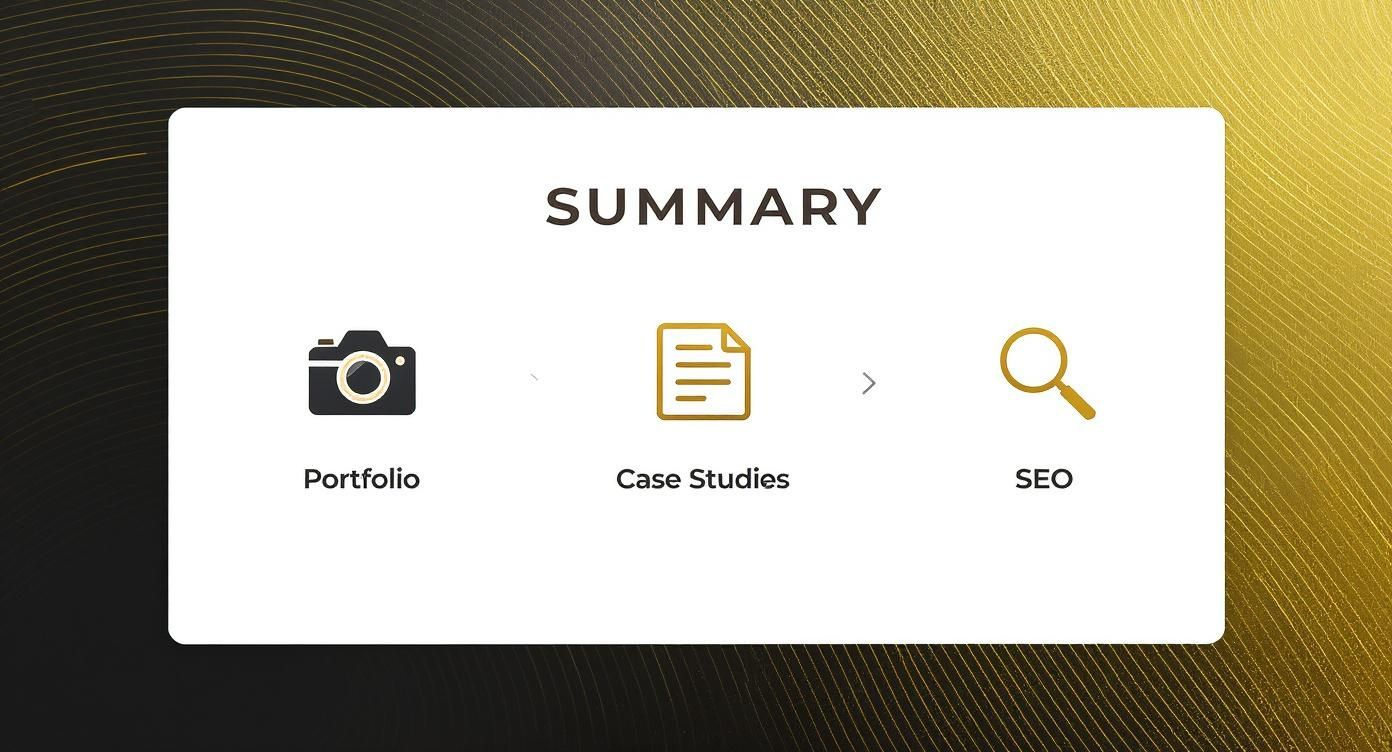
As you can see, a stunning portfolio, detailed case studies, and smart SEO all work together. Each piece reinforces the others to create a powerful system for attracting and converting high-value clients.
Choosing the Right Platforms for Your Content
Don’t fall into the trap of trying to be everywhere at once. A winning content strategy is about mastering the channels where your ideal clients and crucial industry partners actually spend their time. It’s about depth, not breadth.
Dominating the Visual Landscape
- Instagram & Pinterest: These platforms are your visual playground. Think of them as your primary channels for sharing magazine-worthy project photos, behind-the-scenes glimpses into your design process, and curated inspiration. This is where you build an aspirational following and put your firm’s distinct aesthetic on full display.
- LinkedIn: This is your digital conference room. Use LinkedIn to connect with developers, top-tier real estate brokers, and other B2B partners. Share articles on commercial design trends, post in-depth case studies on successful commercial projects, and solidify your credibility within the industry.
Remember, the goal of social media isn’t just to rack up likes. It’s about building a community around your firm’s expertise and point of view. Every post should reinforce your authority in your niche.
Developing a Sustainable Content Calendar
Consistency is the fuel for any successful content marketing effort. A few posts here and there won’t build the momentum you need. A content calendar is your best friend here, helping you maintain a steady presence without burning out your team.
Start with a goal you know you can hit. I’ve seen firms achieve incredible results with just one high-quality blog post or project spotlight per month. It’s far more effective than an over-ambitious plan that fizzles out after a few weeks. The data backs this up: firms that blog consistently generate 67% more leads per month than those that don’t. It just works.
Here’s a simple, effective content mix you could use for a monthly calendar:
- Week 1: Publish an in-depth project case study on your blog, then share it on LinkedIn with a professional summary.
- Week 2: Create an Instagram carousel post that highlights specific, interesting details from that same project.
- Week 3: Post a “Frequently Asked Question” graphic or short video answering a common client concern you hear all the time.
- Week 4: Curate a new board on Pinterest focused on a specific design trend or material palette you’re known for.
This structured approach transforms your marketing from a series of random acts into a deliberate system for building authority. By consistently sharing what you know, you create a powerful inbound engine that works for you 24/7, attracting and pre-qualifying the exact clients you want to work with.
Building a Powerful Referral and Partnership Network

A world-class portfolio and a perfectly optimized website are essential, but let’s be honest—the best projects rarely come from a cold Google search. In the world of luxury architecture, opportunities flow through a quiet network of trusted professionals. A warm introduction from a respected peer is worth its weight in gold, instantly bypassing the usual hurdles of establishing trust.
This is why proactively building a robust referral network is one of the smartest things you can do for your firm. It’s how you shift from constantly chasing leads to creating a steady, reliable pipeline of high-caliber projects. This isn’t about collecting business cards at mixers; it’s about forging genuine, mutually beneficial relationships with other experts who serve the same discerning clientele.
Identifying Your Core Referral Partners
Your network should be a hand-picked ecosystem of professionals who are already in your ideal client’s inner circle. These are the people having conversations about dream homes and legacy properties long before “architect near me” is ever typed into a search bar.
Think strategically about who holds the keys to these conversations in your market. Your most valuable partners will almost always include:
- Luxury Real Estate Brokers: They’re on the front lines, working with clients who just bought a tear-down on a prime lot or a historic property begging for a visionary renovation. They are the first to know.
- Custom Home Builders & General Contractors: A seamless architect-builder relationship is a massive selling point for clients. When you can recommend a builder you implicitly trust—and they can do the same for you—it builds unshakable confidence on all sides.
- High-End Interior Designers: You both share the goal of creating extraordinary spaces. Collaborating from the very beginning leads to a more cohesive vision and, frankly, a much better final product for the client.
- Wealth Managers & Financial Advisors: As trusted advisors on major capital expenditures, they’re in a prime position to make a strategic introduction when their clients are ready to invest in significant real estate projects.
Cultivating Relationships That Actually Work
A LinkedIn connection request isn’t a strategy. Real partnerships are built on a foundation of mutual value and trust. You have to operate with a “give to get” mindset, actively looking for ways to make your partners’ lives easier before you ever ask for anything.
How do you do that? Start by offering your expertise freely. Co-host a seminar with a broker for their top clients on the process of building a custom home. Provide a quick, back-of-the-napkin feasibility sketch for a property a builder is eyeing for a potential client. When you become a go-to resource, you become the obvious referral.
As the global architectural services market grows—projected to jump from USD 215 billion in 2025 to nearly USD 274 billion by 2029—competition will only get fiercer. You can read more about the future of the architecture industry and see why these personal networks are your competitive edge.
A truly powerful referral isn’t just a name passed along. It’s an endorsement of your quality, process, and character. Your goal is to make your partners look brilliant for recommending you.
Once a relationship feels solid, consider a simple referral agreement. It doesn’t need to be some dense legal document. It just needs to outline expectations, ensuring everyone is on the same page. A clear process removes any awkwardness and reinforces the professional nature of the partnership.
Gaining Credibility Through Exclusive Groups
Beyond one-on-one relationships, joining prestigious, invitation-only industry networks can seriously elevate your firm’s standing. Being part of a curated platform like Haute Design, which connects elite architects and designers with an affluent audience, acts as a powerful stamp of approval.
Involvement in these exclusive circles does two things: it validates your expertise and places you directly in front of a pre-qualified audience of potential clients and influential industry peers.
Ultimately, building this network is a long-term investment in your firm’s reputation and stability. Every single connection is a pillar supporting your growth, ensuring that even when you aren’t actively marketing, opportunities are still being created on your behalf.
Amplify Your Reach with Paid Media and PR
A solid foundation built on SEO and great content is your firm’s long-term engine for growth. It’s essential. But when you need to make an immediate impact and build prestige now, paid media and strategic public relations (PR) are your best friends. They’re the megaphone that gets your message directly in front of the high-net-worth individuals you want to work with.
Think of it this way: your organic marketing efforts build a beautiful, exclusive destination. Paid media and PR are the private jets that bring the right people straight to your door. When you combine them, you create a powerful system for attracting discerning clients who demand recognized excellence.
Precision Targeting with Paid Advertising
For architects targeting the luxury market, paid advertising is not about casting a wide, expensive net. It’s about surgical precision. Platforms like Google Ads, LinkedIn, and Instagram let you cut through the noise and place your firm directly in front of an affluent, highly-qualified audience.
The key is to stop thinking about “running ads” and start thinking about sending targeted invitations to the right people.
- Geographic Hyper-Targeting: Don’t just target a city. With Google Ads and Meta, you can zero in on the most affluent postcodes or even draw a radius around exclusive neighborhoods, country clubs, and private airfields. This ensures every dollar is spent reaching people in the right place.
- Demographic & Interest Layers: On LinkedIn, you can target by job title (“Founder,” “CEO,” “Surgeon”), industry (“Venture Capital,” “Private Equity”), and company size. On Instagram, look for interests like “luxury real estate,” “superyachts,” or brands like Porsche and Patek Philippe that signal the lifestyle your architecture complements.
- Retargeting Campaigns: This is where things get really effective. Set up campaigns to show specific ads to people who have already visited your portfolio or read a case study. It’s a subtle, professional way to stay top-of-mind as they consider their options.
The goal of a paid campaign isn’t just to get a click; it’s to start a conversation with the right person. A well-targeted ad that reaches ten ideal prospects is infinitely more valuable than a generic one seen by a thousand uninterested people.
This targeted approach is more important than ever. The architectural services market is growing fast, expected to jump from around USD 393 billion to USD 524 billion by 2030. As global trends shift, you can find more about these global architectural market trends to inform where you focus your ad spend.
Securing High-Profile Media Placements
While ads generate direct leads, PR builds something far more valuable: third-party validation. A feature in Architectural Digest or a prominent luxury lifestyle magazine acts as a powerful endorsement. It signals that your work isn’t just well-crafted—it’s culturally significant. You simply can’t buy that kind of credibility.
Getting featured, however, requires a professional and persistent game plan. Editors are bombarded with pitches, so yours has to stand out.
- Develop a Professional Press Kit: This is your firm’s calling card for the media. It should be a polished, easily accessible digital package with your firm’s story, high-resolution project photography, and detailed narratives for your most impressive work.
- Identify the Right Publications: Don’t waste your time with a shotgun approach. Curate a targeted list of magazines and blogs whose aesthetic and audience align perfectly with your brand. Actually read their recent issues to understand the stories they tell.
- Craft a Compelling Pitch: Your email to an editor must be concise and story-driven. Don’t just say, “Here’s our new project.” Frame it with a unique angle. Did it overcome a seemingly impossible engineering challenge? Does it feature a groundbreaking sustainable technology? Give them a story their readers will be genuinely interested in.
PR is a long game, but a single, well-placed feature can elevate your firm’s reputation overnight. This is the same principle of building trust outlined in our guide to custom home builder marketing that wins clients, where credibility is everything.
Your Top Marketing Questions, Answered
When I talk with architects about marketing, the same handful of questions always seem to pop up. Whether you’re running a solo practice or a growing firm, figuring out where to put your time and money can feel overwhelming. Let’s clear up a few of the most common sticking points.
How Much Should We Really Be Spending on Marketing?
For a stable, established practice, a good rule of thumb is to set aside 5-10% of your annual revenue for marketing. Think of it as a reinvestment in your future project pipeline.
If you’re a newer firm or you’re aggressively pushing for growth, you’ll want to aim higher—probably in the 10-15% range. This gives you the fuel needed to build brand awareness and get in front of the right people, fast. This budget needs to cover the essentials: a world-class website, top-tier project photography, well-placed digital ads, and creating content that positions you as an expert.
What’s the Single Most Effective Marketing Tactic for Architects?
If I had to pick just one, it would be building a powerful referral network. Nothing beats a warm introduction from a trusted luxury real estate agent, a high-end developer, or a respected interior designer. In the affluent market, trust is everything, and a personal recommendation is gold.
But here’s the catch: that referral is only as good as what the potential client finds when they look you up. A referral opens the door, but your impeccable website, stunning portfolio, and professional online presence are what will convince them to walk through it.
Your best strategy is a two-pronged attack: proactive, relationship-driven networking backed by a digital footprint that screams quality and expertise. One without the other is a job half-done.
How Can My Small Firm Compete Against the Big Names?
You compete by not competing. Don’t try to be everything to everyone—that’s a game you’ll lose. Instead, go deep. Become the absolute go-to expert in a very specific niche. This focus makes your marketing incredibly sharp and your portfolio undeniably authoritative.
What kind of niche? It could be anything:
- A distinct architectural style, like biophilic modernism or meticulous historic renovations.
- A specialized project type, such as private art galleries or cutting-edge sustainable estates.
- A specific kind of client, like Silicon Valley founders or multigenerational families.
Lean into your size as a strength. As a smaller firm, you can offer a level of personal service and direct access to principals that larger operations just can’t replicate. Make that high-touch, bespoke experience a cornerstone of your brand promise.
Is Social Media a Waste of Time for an Architecture Firm?
Not if you use it correctly. You absolutely have to be on social media, but you need a clear purpose for each platform.
Instagram and Pinterest are your visual portfolios. They are perfect for showcasing your design eye, telling the story behind your projects, and attracting clients who value exceptional aesthetics. This is where you build desire.
LinkedIn, on the other hand, is your digital boardroom. It’s where you connect with commercial clients, developers, contractors, and other industry leaders. Use it to share your professional insights, publish detailed case studies, and solidify your reputation as an expert. Don’t just post pretty pictures; share your thinking.
Ready to connect with the clients who will value your vision? Haute Design is the premier platform for distinguished architects to showcase their work to an exclusive, affluent audience. Elevate your brand and join a curated network of the nation’s top design professionals. Discover how to enhance your visibility and attract your next great project.