



Before you even start looking for an interior designer, the most important work has to be done by you. It’s about translating those vague ideas floating in your head into a clear, actionable vision. This prep work is the foundation of a successful project, ensuring that when you do sit down with a potential designer, the conversation is productive from the get-go.
Laying the Groundwork for a Successful Design Project
The process of hiring a designer isn’t just about saving a few images on Pinterest. It’s about deeply understanding how you live—or want to live—in your space.
Think about the real-world function of each room. Do you entertain often? Is a home office a non-negotiable? Is the living room a quiet retreat or a high-traffic hub for family activity? Answering these questions honestly builds the functional framework of your design long before aesthetics even enter the picture.
Defining Your Project Scope and Style
The first step is to create a comprehensive project brief. Think of this document as your project’s North Star; it outlines not just what you like, but what you actually need.
A great way to start is by listing everything you want to achieve. Then, brutally honestly, categorize each item into two columns: must-haves and nice-to-haves. This simple exercise forces you to clarify your priorities and will be incredibly helpful when discussing budgets later on.
For example, a “must-have” might be durable, pet-friendly upholstery for the sofa. A “nice-to-have” could be that specific designer light fixture you saw in a magazine. Making this distinction is invaluable when you have to make tough decisions down the line. If you need more guidance on this critical phase, you can learn more about planning a home renovation for success in our detailed guide.
A well-prepared client is a designer’s greatest asset. When you’ve done the upfront work to define your goals, the designer can spend less time guessing and more time creating a space that truly reflects you.
This visual guide breaks down the essential preparation steps:
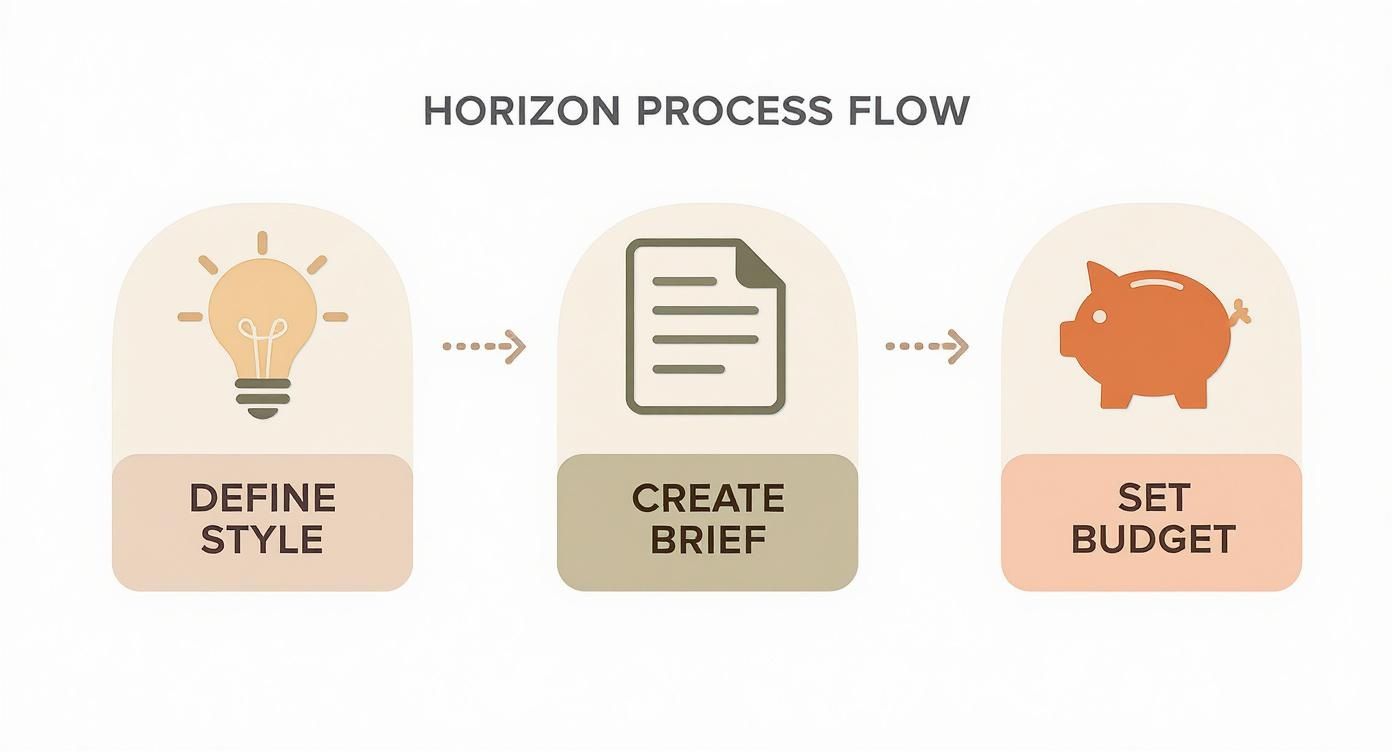
As you can see, each step builds upon the last, creating a solid foundation for your project.
Establishing a Realistic Budget
Let’s talk money. Setting a realistic budget is arguably the most critical part of this initial groundwork. You need to do some research into the costs of high-quality furniture, materials, and labor in your area to get a solid baseline.
Remember, the budget isn’t just for the pretty things you see. It must also account for the designer’s fees, shipping, installation, and—this is a big one—contingency costs. I always advise clients to set aside an extra 15-20% of the project total for the unexpected. It always happens.
It also helps to understand the financial landscape. The global interior design market was valued at approximately $136.12 billion in 2023 and continues to grow. This isn’t just a number; it reflects an industry with complex supply chains and pricing.
Having a clear, well-researched budget allows a designer to know immediately if they are the right fit for your project and what they can realistically achieve within your financial parameters. It’s the difference between a smooth process and a stressful one.
Finding and Vetting the Right Design Professionals
With your project brief and budget clearly defined, you’re ready to find your creative partner. This isn’t about a quick Google search; it’s about a strategic discovery process. While the internet is a fantastic tool, some of the very best connections still come from trusted, real-world networks.
I always advise clients to start by asking their architect or custom home builder for referrals. These professionals are on the front lines and regularly collaborate with top-tier designers. They can point you toward people whose work quality, professional standards, and even personality align with their own—a massive advantage that often leads you straight to designers who have handled projects just like yours.
Expanding Your Search Online
Once you have a few names from your inner circle, you can broaden your search online. While scrolling through Instagram and Pinterest is great for getting inspired, curated professional directories provide a much more structured way to vet actual talent.
These platforms are built to showcase professional portfolios in a credible context, helping you move beyond just pretty pictures. Many of the designers you’ll find on high-end directories are accustomed to the unique demands of discerning clientele. For a truly curated list, you can explore the work of vetted professionals in our own Haute Design network of premier designers.
Analyzing Portfolios and Credentials
As you start compiling a list of potential candidates, it’s time to put on your critic’s hat. A designer’s portfolio is their visual resume, and you need to look at it with a sharp eye. Look for consistency in quality and a meticulous attention to detail from one project to the next.
Ask yourself: Does their work show versatility, or is it a one-note signature style? More importantly, do you see projects that are similar in scale and scope to what you have in mind? A designer who creates stunning single-room makeovers might not have the logistical chops for a gut renovation of an entire estate.
Beyond the portfolio, it’s crucial to verify their professional credentials. Look for memberships in respected industry organizations. These aren’t just fancy acronyms; they are a real indicator of a commitment to professional ethics and ongoing education.
- ASID (American Society of Interior Designers): This shows the designer follows a strict code of ethics and professional conduct.
- NCIDQ (National Council for Interior Design Qualification): This certification is the industry’s gold standard for competency in health, safety, and building codes.
These qualifications provide peace of mind, assuring you that a designer has a proven level of expertise.
The world of interior design is always expanding. In fact, employment is projected to grow by about 3%, creating around 7,800 job openings each year. With so much new talent entering the field, taking the time to verify credentials is how you separate the true, established experts from the crowd. You can discover more insights about employment trends in interior design from the BLS.
Your goal here is to winnow down your long list to a shortlist of three to five designers. These are the professionals you’ll invite for an initial consultation, feeling confident that they not only align with your aesthetic but also have the proven expertise to execute your vision flawlessly.
How To Interview Designers and Evaluate Portfolios
Once you have a curated shortlist of designers, it’s time to move into the interview phase. This is where the real work begins. A beautiful portfolio is just the entry ticket; what you’re truly looking for is a partner whose process, personality, and communication style click with yours. It’s less about finding a good designer and more about discovering the right designer for you and your home.
When you dig into their portfolio, try to look past the beautiful, professionally shot photos. You need to see evidence of substance and versatility. Does the designer have a signature, unchanging aesthetic, or can they flex their style to suit different clients and unique architectural bones? More importantly, look closely at the scale and complexity of their past projects. If you’re planning a gut renovation, you need proof they’ve successfully managed that level of scope and budget before.
Decoding the Portfolio
A strong portfolio is more than a gallery—it’s a story of their expertise. As you review their work, look for projects that align with your vision, but also keep an eye out for the subtle details that signal a true professional.
- Clever Problem-Solving: Do you see before-and-after shots that reveal smart solutions for awkward layouts or challenging spaces? This shows creative thinking that goes far beyond simply decorating a room.
- Layering and Texture: Great design has depth. Look for a sophisticated command of materials, textiles, and lighting to create environments that feel rich, considered, and layered.
- Bespoke Details: The inclusion of custom millwork, furniture, or unique finishes is often a hallmark of high-end design. It also indicates they have a strong network of skilled artisans and craftspeople.
This kind of critical review helps you gauge a designer’s true capabilities, ensuring they have the technical prowess and creative vision to execute your project flawlessly.
Asking the Right Questions in the Interview
The interview is your chance to connect with the person behind the portfolio. You’re trying to get a feel for their working style and, crucially, how they handle the inevitable bumps in the road that come with any major design project.
Of course, you’ll discuss their initial thoughts on your space. But the most revealing answers often come from questions about their process. For instance, instead of asking if they can stick to a budget, try a more situational approach. Ask, “Can you walk me through a time a project faced an unexpected budget issue? How did you navigate that with the client?” This tells you volumes about their transparency, problem-solving skills, and grace under pressure.
To make sure you cover all your bases, it helps to go into these conversations with a structured set of questions. I’ve put together a table with some key areas to probe, sample questions, and what you should be listening for in their responses.
Key Questions for Your Designer Interviews
| Question Category | Sample Question | What to Look For in the Answer |
|---|---|---|
| Process & Workflow | “Can you walk me through your design process from initial concept to final installation?” | A clear, step-by-step explanation. They should be able to articulate how they handle procurement, vendor management, and project timelines. |
| Budget Management | “How do you establish and manage the project budget? What happens if costs start to exceed projections?” | Look for transparency. They should have a clear system for tracking expenses and a proactive communication strategy for addressing overages. |
| Communication Style | “What is your preferred method of communication, and how often can I expect updates?” | The answer should align with your own preferences (e.g., weekly emails, scheduled calls). Clarity and consistency are key. |
| Problem Resolution | “Tell me about a time a project didn’t go as planned. What was the issue, and how did you resolve it?” | You’re looking for honesty, accountability, and a solutions-oriented mindset, not blame. |
| Client Collaboration | “How do you involve clients in the decision-making process, especially when there are differing opinions?” | A good designer will listen and guide, not dictate. They should value your input while providing expert direction. |
These questions are designed to get past the surface-level conversation and give you real insight into what it would be like to work with this person day in and day out.
The relationship between a client and a designer is intensely personal. You are trusting someone not just with a significant financial investment, but with the very essence of your home. The interview should feel like a genuine conversation where you’re building a foundation of chemistry and trust.
Remember, even a single-room design can take 35-50 hours of a designer’s focused time, while a full-home renovation can easily span 18-24 months. Given this long-term commitment, ensuring your personalities are a good match is just as critical as approving their portfolio. The right fit truly makes all the difference.
Navigating Designer Fees and Project Contracts

Before a single sketch is drawn or a fabric swatch is pulled, the most important part of your design journey happens: getting the financial and legal framework right. A clear, upfront agreement on fees and a rock-solid contract are what separate a seamless, enjoyable project from one filled with friction and surprises. This is where you set the foundation for a successful partnership.
Let’s look at how designers typically structure their fees. You’ll likely see one of three common models, and the right one often depends on your project’s scale and complexity.
- Hourly Rate: You’ll often see this for consultations or smaller, more contained projects. Rates can vary widely, from $150 to over $500 per hour for sought-after designers. It’s perfectly transparent but can feel a bit unpredictable if the project’s scope begins to creep.
- Fixed or Flat Fee: This is my preferred method for large-scale projects where the scope is well-defined from the start. The designer calculates a total fee based on the estimated work, giving you total budget certainty. No surprises.
- Cost-Plus Percentage: Here, the designer adds a percentage (usually 20-35%) to the net or wholesale cost of all goods, materials, and contractor services they manage. This model works well because it incentivizes the designer to manage trade relationships and procurement efficiently.
Decoding the Design Contract
Once you’ve settled on a fee structure, it’s time to paper the agreement. The contract is far more than a formality; it’s the blueprint for your entire working relationship. A vague contract is an open invitation for misunderstandings down the road.
Think of it as the project’s rulebook. It ensures you and your designer are playing the same game with the same expectations. Honestly, it’s the most critical document you’ll sign in this entire process.
A detailed contract isn’t about a lack of trust; it’s about establishing a foundation of clarity. It ensures that both client and designer have a shared understanding of expectations, deliverables, and processes, which is the key to a successful collaboration.
Before putting pen to paper, make sure the agreement is ironclad. It needs to protect your investment and clearly define how you’ll work together. For a really thorough breakdown, this professional interior design contract template guide is an excellent resource for seeing what a comprehensive agreement looks like.
Essential Contract Components
Every contract is different, but there are a few non-negotiable clauses that absolutely must be included.
- Scope of Work: This can’t just be “living room design.” It needs to be an exhaustive list of every service, from initial concept development to final installation. It should specify the exact rooms, list the deliverables (e.g., floor plans, 3D renderings, mood boards), and clarify the designer’s role in project management.
- Payment Schedule: This section breaks down the financials. It should detail the initial retainer, outline milestone payments tied to specific project phases (like upon approval of the final design), and specify when the final balance is due.
- Purchasing and Procurement: How will furniture and materials be bought? This clause clarifies everything: who places the orders, how you’ll be invoiced, and—critically—who is responsible for inspecting items upon delivery and managing any damages or returns.
- Revisions and Changes: Creative work involves iteration. The contract must state how many rounds of revisions are included in the fee. It also needs a clear process for handling any changes you request after the scope is locked, including how they will be billed.
- Termination Clause: Life happens. This section outlines the terms for ending the contract, whether mutually or by one party. It defines how outstanding fees are settled and how any completed work is handed over.
Taking the time to review these points line by line ensures your agreement is fair, comprehensive, and ultimately sets everyone up for a successful and beautiful outcome.
Kicking Off Your Project for a Smooth Start
With the contract signed, you’re officially past the starting line. This is where the true collaboration begins, and a well-orchestrated project launch is the single best way to set the stage for success. Think of this initial phase as moving from abstract plans to tangible action, and it all starts with a foundational kick-off meeting.
This first formal sit-down is far more than just a formality. It’s a strategic deep-dive to align on the final project scope, walk through the initial timeline, and, crucially, establish how you’ll communicate for the duration of the project. Now is the time to get granular.
Setting Communication Expectations
If there’s one area where projects can go sideways, it’s a mismatch in communication styles. An experienced designer knows this and will spearhead a conversation to make sure you’re both perfectly aligned from the get-go.
Here’s what you should iron out together:
- The Rhythm of Updates: Will you get a formal progress report every week? Bi-weekly? What feels right for the pace of your project?
- Preferred Methods: Is a quick text acceptable for a simple question, or should everything be documented via email?
- Timelines for Decisions: To keep the project moving, your designer needs your feedback. Agree on a reasonable window for you to approve selections so they can avoid procurement delays.
A successful design partnership is built on a foundation of managed expectations. Knowing exactly how and when you’ll communicate removes ambiguity and builds the trust needed for a long-term project.
Getting this structure in place prevents small misunderstandings from becoming big problems, ensuring you feel in-the-loop and respected throughout a process that can often last 18-24 months for a major renovation.
Your Role in the Process
During this launch phase, your main job is to equip your designer with everything they need to hit the ground running. This means providing keys or access codes to the property so their team and trade partners can get in for site measures and initial assessments. You’ll also need to provide copies of any architectural drawings, floor plans, or property surveys you have.
Working with a modern design firm also means getting comfortable with new tools. Many of the best now use sophisticated project management software to keep every piece of the project—from design presentations and invoices to approvals and messages—in one central hub.
This shift to digital platforms is happening fast. In fact, roughly one-third of designers are already using AI tools for tasks like generating renderings and optimizing project schedules. This isn’t just a gimmick; the technology can slash concept development time by as much as 80%, paving the way for a more nimble and collaborative design journey. You can dive deeper into the tech trends shaping the design industry to see what’s on the horizon.
Ultimately, a thoughtful, deliberate project launch doesn’t leave things to chance. It ensures every detail is accounted for, creating a smooth runway for the incredible creative journey ahead.
Common Questions About Hiring an Interior Designer
When you’re embarking on a significant home project, it’s natural to have questions. This is especially true when bringing a professional designer into the picture for the first time. Let’s clear up a few of the most common queries I hear from homeowners.
Designer vs. Decorator: What’s the Real Difference?
This is a big one, and getting it right from the start can save you a lot of headaches. The distinction really boils down to scope and qualifications.
An interior designer has formal training—often a degree and professional certifications like the NCIDQ—that covers everything from space planning and ergonomics to building codes and structural integrity. If you’re planning on moving walls, reconfiguring a floor plan, or undertaking a major renovation, you need a designer’s expertise. They see the big picture, from the bones of the house inward.
An interior decorator, on the other hand, is a specialist in aesthetics. They work with the existing space to perfect the finishing touches: furniture, paint colors, fabrics, lighting, and accessories. Think of it this way: a decorator furnishes the room, while a designer can build the room itself.
How Much Should I Expect to Invest in a Designer?
There isn’t a single answer here, as the cost depends heavily on the designer’s reputation, your geographic location, and the project’s complexity. However, fees generally fall into one of these buckets:
- Hourly Rates: This is common for consultations or smaller projects. Expect anywhere from $150 to over $500 per hour for an established, high-end professional.
- Fixed or Flat Fee: For a clearly defined project, many designers will propose a single fee. This gives you budget clarity from the outset, which many clients prefer.
- Percentage of Project Cost: A frequent model for larger projects, where the designer’s fee is a percentage of the total cost of furnishings, contractor labor, and materials. This typically runs between 10% and 25%.
The most important thing is to get this conversation on the table immediately. A professional will be transparent about their fee structure and ensure it’s spelled out in the contract, so there are no surprises.
Your relationship with a designer is a partnership. The best results always come from a true collaboration, where their expertise meets your vision to create a home that feels uniquely yours.
What Happens If I Don’t Like a Designer’s Suggestion?
Speak up! A good designer will never be offended by honest feedback—in fact, they rely on it. This is your home, and you need to love the final result.
If a particular choice doesn’t resonate with you, explain why. Is it the color? The scale? The texture? The more specific you can be, the better your designer can understand your perspective and find an alternative. We often pull out the initial inspiration images and mood boards during these conversations to get back to the core vision. Think of it less as a disagreement and more as a collaborative refinement.
How Long Will My Project Actually Take?
The timeline is completely tied to the scope. A simple one-room refresh might take a few months from concept to completion. A full-scale, down-to-the-studs renovation? That could easily be a year, sometimes longer.
Keep in mind, many delays are simply part of the process and out of anyone’s direct control. Things like permitting holdups with the city, long lead times for custom furniture (which can be 6-9 months), and coordinating contractor schedules all play a role. Your designer’s job is to manage this complex orchestra and provide you with a realistic project calendar from the beginning.
Ready to find a professional who can turn your vision into a stunning reality? Explore the Haute Design network to discover a curated selection of top-tier interior designers, architects, and builders who specialize in creating extraordinary luxury homes. Find your perfect design partner today.