


Finding the right interior designer is a pivotal moment in transforming your house into a home. It’s less about hiring a service and more about finding a true creative partner who can translate your vision into a livable, breathtaking reality. The journey can seem overwhelming, but a clear, methodical approach makes all the difference.
This guide is built from years of experience in the luxury design world to help you navigate this process with confidence.
First things first, let’s clarify a common point of confusion: the difference between an interior designer and an interior decorator. A decorator excels at aesthetics—choosing paint colors, selecting furniture, and arranging accessories. An interior designer, on the other hand, is a trained professional who handles the technical side of a project, including space planning, architectural modifications, lighting design, and navigating complex building codes. For a gut renovation or a new build, a designer is essential.
Starting Your Search for the Right Designer
To simplify the journey, I’ve broken down the process into a clear roadmap. Think of it as a series of phases, each building on the last, to ensure you connect with a professional who not only shares your aesthetic but also has the expertise to execute your project flawlessly.
Your Search Roadmap
This table provides a high-level overview of the key phases for successfully identifying and hiring the perfect designer for your project.
| Phase | Key Objective | Where to Focus |
|---|---|---|
| Phase 1: Define | Clarify your project scope, budget, and personal style. | Introspection, creating a mood board, and defining functional needs for the space. |
| Phase 2: Discover | Identify a shortlist of potential designers. | Curated platforms like Haute Design, referrals, and industry publications. |
| Phase 3: Vet & Interview | Evaluate portfolios, check credentials, and interview top candidates. | Deep portfolio analysis, reference checks, and structured interviews. |
Following this structured path helps you move beyond a simple Google search and into a more intentional, strategic selection process.
Here’s a simple way to visualize that workflow, which I often share with clients.
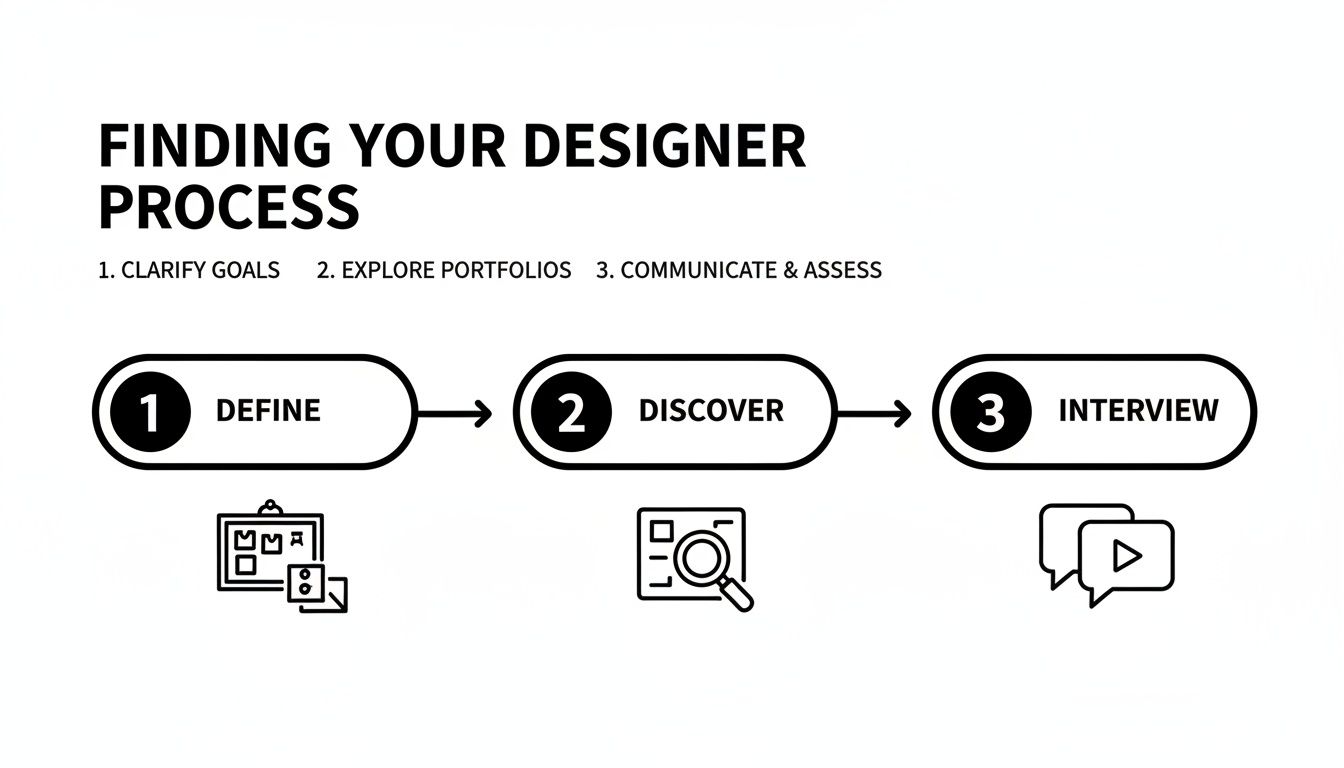
This process underscores a critical point: a successful search starts with self-reflection before you ever look at a portfolio.
The good news is that you have more exceptional talent to choose from than ever before. The global interior design market was valued at USD 137.9–138.6 billion in 2024 and is projected to climb to over USD 208.2 billion by 2033. While this growth means a wider pool of specialists, it also makes a structured search crucial for cutting through the noise. You can explore more about these interior design market insights to understand the landscape.
Key Takeaway: Your goal isn’t just to find a designer; it’s to find your designer. Compatibility in communication, style, and project management is just as important as a beautiful portfolio. Taking the time to follow a proven process ensures you find a professional who can manage everything from aesthetic vision to complex logistics.
Discovering Top-Tier Design Talent

Once you have a clear vision for your home, the real work begins: finding the right professional to bring that vision to life. A simple web search will throw thousands of names at you, but that’s a frustrating and often fruitless path.
To find a true high-caliber interior designer, you have to know where the experts are showcased. Think of it like looking for a world-class chef; you wouldn’t just Google “cook.” You’d look at Michelin guides and industry awards. The same logic applies here.
Start with Curated Digital Platforms
Your search should begin on platforms that specialize in vetting and presenting luxury design professionals. These services have already done the initial filtering for you, saving you from wading through an ocean of portfolios that don’t meet the mark.
They provide a concentrated pool of talent, complete with detailed portfolios, project histories, and client feedback. This makes it much easier to compare aesthetics, experience, and specialties all in one place.
- Haute Design: This is our premier network, featuring a hand-picked roster of the nation’s leading interior designers and architects who cater specifically to the luxury market.
- Houzz Pro: A massive platform with extensive portfolios and a robust review system, allowing you to gauge a designer’s past work and client satisfaction.
These platforms are more than just directories; they’re curated communities built on quality. For a deeper dive, check out our guide on the top platforms to find luxury interior design firms.
Expert Insight: The way clients and designers connect has fundamentally changed. Today, most meaningful introductions happen through professional channels like trade publications and curated online platforms. These are the same sources that spotlight firms generating millions in fees—a clear signal of their scale and experience.
Explore Professional Organizations and Publications
Beyond the digital sphere, professional organizations remain a gold standard for finding credentialed experts. Membership in these groups isn’t automatic; it requires designers to meet high standards for expertise and ethical conduct.
- American Society of Interior Designers (ASID): Their member directory is a fantastic tool for finding local designers who are bound by a strict professional code of conduct.
- International Interior Design Association (IIDA): This global organization includes both commercial and residential designers known for their strong professional track records.
And don’t overlook the power of print and digital design publications. Magazines like Architectural Digest and Elle Decor are invaluable resources for discovering both established legends and the industry’s rising stars. Keep an eye on their annual “best of” lists and award features—they’re a direct line to the designers currently shaping the future of luxury interiors.
Evaluating Portfolios Beyond Pretty Pictures
A designer’s portfolio is more than just their visual resume; it’s the opening line of a conversation. It’s what grabs your attention. But as anyone who’s managed a significant home project knows, a beautiful photo can hide a multitude of sins, from poor space planning to a lack of technical skill.
The real goal here is to get inside the designer’s head. Don’t just scroll through the pretty pictures—zoom in. Look closely at the details. Are the light fixtures perfectly aligned? How clean is the tile work? Does the custom cabinetry fit seamlessly? These are the little tells that reveal a designer’s dedication to quality and their ability to command excellence from their team of tradespeople.
Analyzing for Depth and Versatility
Look for a consistent thread of quality running through all their projects. It’s a red flag if you see one spectacular project followed by several that are just… fine. That could be a sign of a one-hit wonder or a team that simply can’t deliver that top-tier quality every single time.
Versatility is another crucial piece of the puzzle. While you’re obviously looking for a designer whose aesthetic resonates with you, a portfolio that shows a range of styles is a very good sign. It tells you they’re skilled at interpreting their clients’ vision, not just stamping their own signature look on every project.
A few things to watch for:
- Scale and Scope: Do they have experience with projects of your home’s size and complexity? The skillset needed for a historic brownstone renovation is worlds away from what’s required for a modern penthouse new build.
- Custom Solutions: Keep an eye out for clever custom millwork, unique architectural details, and thoughtful storage solutions. This is where a designer proves they can think beyond a catalog to create a home that is truly yours.
A great portfolio tells a story. It should reveal not just a beautiful final product, but also the intelligent thinking that solved complex design challenges—from taming an awkward layout to weaving modern tech into a classic space.
Understanding Professional Credentials
Beyond the visuals, professional credentials offer a solid, objective measure of a designer’s expertise and commitment to their craft. These aren’t just letters after a name; they signify years of rigorous training and adherence to professional standards, giving you peace of mind.
One of the most important qualifications to look for is the NCIDQ Certification. This is the gold standard from the National Council for Interior Design Qualification. To earn it, a designer needs a specific combination of accredited education and hands-on experience, and they must pass a grueling three-part exam covering everything from building systems and codes to contract administration.
An NCIDQ-certified designer has proven expertise in areas that truly matter:
- Health, Safety, and Welfare: They have a deep understanding of building codes, fire safety regulations, and accessibility standards.
- Technical Proficiency: Their skills go far beyond aesthetics to include professional space planning, lighting design, and coordinating with architects and builders.
- Ethical Standards: They operate under a strict professional code of conduct.
Ultimately, this certification separates a decorator from a true design professional—someone who creates spaces that are not only beautiful but also functional, safe, and built to last. For a masterclass in what this level of work looks like, take a look at these inspiring interior designer portfolio examples that showcase true professional depth.
Asking the Right Questions in the Interview
You’ve sifted through stunning portfolios and have your shortlist. Now comes the most crucial part: the conversation. This isn’t just a formal interview; it’s a chemistry check to see if you can truly partner with this person on an intimate and often long-term project.
Liking their work is what gets them in the door. But genuine compatibility in communication, personality, and expectations is what will make the entire process a success. The right questions peel back the layers of a curated portfolio to reveal how a designer thinks, solves problems, and handles the inevitable bumps in the road.
Probing Their Design Philosophy and Process
Go beyond the basics of fees and timelines, at least for now. Your first goal is to get a feel for how they actually work. You want a window into their professional world and what makes them tick creatively.
A great place to start is with an open-ended question like, “Could you walk me through your design process, from our first meeting to the final walkthrough?”
Listen carefully. You’re looking for a clear, structured response that touches on everything from client onboarding and concept development to procurement and project management. A well-defined process is the hallmark of an experienced pro who anticipates needs and minimizes surprises.
From there, dig into how they collaborate with clients:
- How do you prefer to get feedback? Are they looking for detailed emails, a shared Pinterest board, or in-person meetings? This reveals a lot about their communication style and whether it syncs with yours.
- What’s your approach if we have different opinions on a design choice? You want to hear a collaborative, solution-focused answer, not a defensive one. Great designers guide, they don’t dictate.
- How do you integrate a client’s existing art or furniture into a new design? This tells you if they’re flexible and respect your personal history or if they prefer a completely blank slate.
Uncovering Their Problem-Solving Skills
Even the most meticulously planned project will hit a snag. A top-tier designer isn’t just a creative visionary; they’re a master problem-solver who can navigate setbacks with grace and confidence. Your questions should put this skill to the test.
Give them a real-world scenario. For example, “Let’s imagine the custom sofa we’ve been waiting on for months arrives with a noticeable flaw, and the vendor says a replacement will take another 12 weeks. What happens next?”
Expert Insight: A seasoned designer won’t panic. They’ll immediately outline a plan: document the issue, contact the vendor to push for a repair or expedited replacement, and present you with clear, practical options to keep the project on track in the meantime.
This kind of situational question is far more revealing than asking, “How do you handle problems?” It shows you their real-time thought process, their commitment to managing expectations, and their ability to take charge of a difficult situation.
Finally, ask about their professional circle. A simple, “Who are the architects, builders, and artisans you trust and work with regularly?” gives you a peek into the quality of their network. A designer’s success is directly tied to the talent they bring to your home.
To keep your thoughts organized and compare candidates objectively, a scorecard can be an invaluable tool. It helps you move past a gut feeling and evaluate each designer on the same criteria.
Interior Designer Candidate Comparison Scorecard
| Criteria | Designer A | Designer B | Designer C |
|---|---|---|---|
| Portfolio & Aesthetic | |||
| Communication Style | |||
| Process Clarity | |||
| Problem-Solving Ability | |||
| Client References | |||
| Network Quality | |||
| Budget Alignment | |||
| Overall Impression |
After your interviews, take a few minutes to fill this out while the conversations are still fresh. It will give you a clear, at-a-glance comparison to help solidify your final decision.
Navigating Contracts, Budgets, and Timelines
Once you’ve found a designer whose work truly speaks to you, the conversation naturally gets down to brass tacks: the contract, the budget, and the timeline. This is where the foundation for a successful, stress-free project is laid. Getting these details right from the start protects your investment and ensures everyone is on the same page.
First things first, let’s talk about how designers get paid. In the luxury space, you’ll encounter a few common models: hourly rates, a fixed fee for the entire scope, or a fee based on a percentage of the total project cost—typically 10–30%. To keep the project from spiraling, it’s wise to have a firm budget in mind and ask potential designers to share cost breakdowns from similar projects. This helps ground your expectations in reality. You can also review these interior design market pricing trends to feel more confident in these discussions.
Decoding the Design Contract
Think of the design contract as the blueprint for your partnership. It’s far more than a formality; it’s a detailed guide that outlines who is responsible for what, every single step of the way. A vague or flimsy contract is a serious red flag, so pour yourself a coffee and read every line before you sign.
A solid, professional contract should clearly spell out a few critical components:
- Scope of Work: This needs to be incredibly specific, detailing everything from initial concept boards and floor plans to overseeing contractors and managing the final white-glove installation.
- Fee Structure: You should see a transparent breakdown of all costs. This includes hourly rates for different team members, how they handle markups on furnishings, and any other charges you might encounter.
- Payment Schedule: Look for a clear schedule that outlines when your deposit is due and how future payments are tied to specific project milestones, so you’re never paying too far ahead of the work.
- Procurement Policies: The contract should explain the process for purchasing all furniture, fixtures, and materials. Who is placing the orders, and how are purchasing fees or markups applied?
If you want to dive deeper, our guide to crafting a professional interior design contract is an invaluable resource. It will help you spot essential clauses and ensure your agreement is rock-solid.
Key Takeaway: A great contract leaves no room for ambiguity. It should feel like a collaborative tool that protects both you and the designer, setting the stage for a partnership built on mutual trust and clarity.
Establishing a Realistic Budget and Timeline
Finally, remember that a comprehensive budget is much more than just the designer’s fee. It has to cover every single line item—furniture, contractor labor, shipping, storage, and even taxes. An experienced designer will guide you through this, but you should insist on building in a 15-20% contingency fund. This isn’t a slush fund for splurges; it’s a non-negotiable buffer for the things you can’t predict, like a hidden plumbing issue or a sudden material delay.
The timeline deserves just as much attention. Ask the designer for a project schedule that breaks down the work into key phases with target completion dates. This document becomes your roadmap, holding everyone accountable and giving you a clear sense of the project’s rhythm so you can plan your own life around it.
Answering Your Final Questions Before You Hire

As you get closer to making a choice, some practical questions will inevitably pop up. Getting these answered is the final piece of the puzzle, giving you the clarity to move forward with complete confidence.
This is your last round of due diligence. It’s about tying up loose ends and ensuring there are no surprises before you sign on the dotted line and kick off a deeply personal creative partnership.
What Is a Realistic Timeline for a Full Home Design Project?
The timeline always comes down to the scope, but for a full-scale luxury home project, you should realistically plan for 12-18 months from start to finish. This isn’t just an arbitrary number; it’s grounded in the complex reality of high-end construction and design.
Typically, you’re looking at 3-6 months for the initial creative work—blueprints, mood boards, and material selection—followed by 9-12 months for the actual construction and installation. It’s crucial to remember that things like custom furniture lead times, contractor availability, and the local permitting process can all stretch this schedule. A good designer will be upfront about these variables from day one.
How Involved Should I Expect to Be in the Process?
This is entirely up to you, and it’s a conversation you need to have early on. Most successful high-end projects begin with an intense collaboration between the client and designer to nail down the core concept and major design elements.
Once those big decisions are approved, a great designer steps in to manage the day-to-day chaos, keeping you in the loop with regular, concise updates. The key is finding someone who can adapt to your style—whether you want to be involved in every detail or prefer to only step in for the most critical decisions.
The best designer-client relationships are built on clear communication about involvement. Define your ideal level of participation early on to ensure the process feels collaborative, not burdensome.
What Are the Biggest Red Flags to Watch For?
Staying sharp during these final conversations is absolutely essential. Certain things can be early warning signs of trouble ahead.
Be on the lookout for a few key red flags:
- Hesitation or refusal to provide client references.
- A portfolio that looks inconsistent, dated, or doesn’t align with their current work.
- A lack of a professional, detailed contract.
- An unusually large upfront payment request.
- An inability to clearly explain their fee structure.
Poor communication in these initial stages is often a preview of how they’ll operate for the entire project. And above all, trust your gut. If the chemistry just isn’t there, that’s a perfectly valid reason to walk away.
Does the Designer Manage Contractors and Architects?
This is a critical point to clarify, as it varies from one firm to another. Many full-service luxury designers maintain a trusted network of architects, builders, and craftspeople they work with regularly.
Some will manage this entire team as part of their comprehensive service fee, while others may recommend professionals for you to hire and manage directly. You need to ask this question point-blank during the interview and make sure the contract explicitly states who is responsible for hiring, managing, and paying all subcontractors. Getting this detail straight will save you a world of headaches and time.
Ready to connect with a vetted professional who can bring your vision to life? Explore the curated network of top-tier talent on Haute Design and find the perfect partner for your luxury home project. Start your search here.