


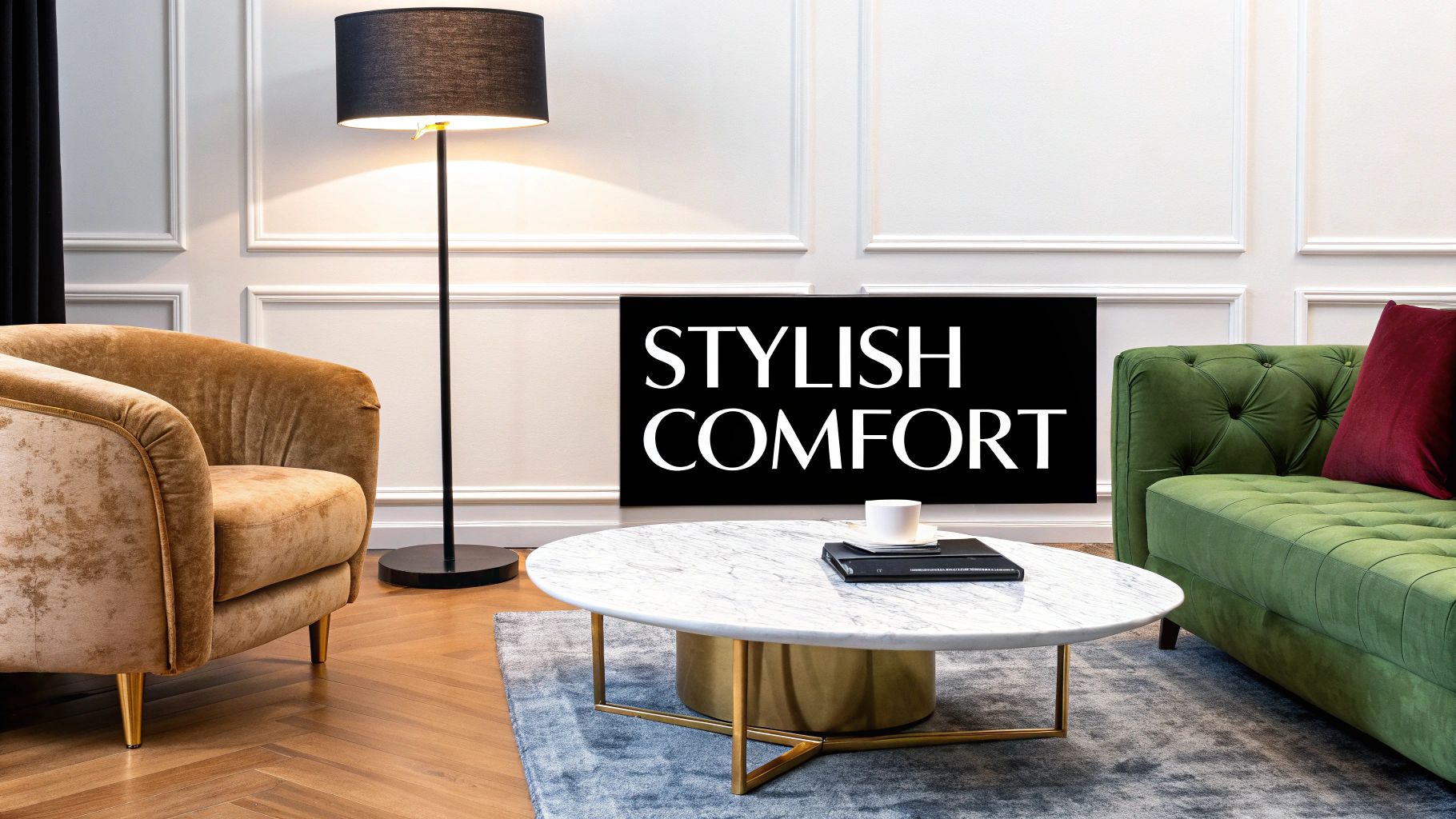
Creating a luxury living room means starting with a solid plan that marries plush comfort and enduring elegance. Over the next few sections, we’ll break down 5 essential stages that guide your design from day one through to the final flourish.
This roadmap keeps every choice—from seating layouts to paint selections—intentional and on budget.
Roadmap For Designing Your Living Room
To kick things off, step back and imagine the overall atmosphere. Are you aiming for a serene retreat or a vibrant entertaining space?
Once that vision takes shape, outline your budget and timeline. It’s far easier to adjust major elements up front than to make compromises halfway through.
Here’s a quick overview of the core phases and what each one zeroes in on:
Key Steps At A Glance
| Design Stage | Main Focus |
|---|---|
| Vision Planning | Set mood board and style direction |
| Space Layout | Ensure traffic flow and functional zones |
| Furniture Selection | Choose scale, comfort, and quality |
| Color Coordination | Integrate palette and material textures |
| Final Styling | Layer lighting, art, and accessories |
Glancing at these stages side by side makes it simple to plan your next steps and allocate resources where they matter most.
From personal experience, starting with a moodboard speeds up decision-making. Gather fabric swatches, wood samples and paint chips—all in one place.
Working through those textures reveals how neutrals pair with richer accents like velvet or polished metals.
This visual mashup highlights potential clashes before any orders ship your way.
Key Takeaways
By mapping out each design phase, you dodge costly surprises and land on a living room that feels both curated and welcoming.
- Test layouts in free 3D tools for pinpoint accuracy
- View swatches under different lights to spot true color shifts
- Track foot traffic patterns to confirm your seating arrangement
- Maintain a flexible budget line for custom accents
With this foundation in place, you’re set to dive deeper into room layouts and detailed concept work.
Mastering Concept And Space Planning
Crafting a luxury living room starts with a vivid picture of how you want the space to feel and function. This foundational vision steers every choice—from selecting upholstery to arranging bespoke pieces—so that every element aligns with your goal.
Defining Your Vision
Begin by assembling a mood board that weaves together fabrics, finishes, and inspiring imagery. In a Milan penthouse project, for instance, the designer paired marble samples with walnut veneers to explore striking contrasts.
Reflect on these guiding questions to sharpen your concept:
- How do you want the room’s energy to unfold?
- What experiences will guests have when they step inside?
- Can your mood board adapt to different events or moods?
Consider these critical dimensions:
| Vision Element | Purpose |
|---|---|
| Mood Board | Keep style focused |
| Concept Sketch | Quickly validate layouts |
Balancing scale relationships between furnishings, framing clear sightlines, and ensuring at least 30″ of clearance around seating creates a harmonious flow. In one Manhattan loft, the team mixed muted neutrals with brass accents to channel an Art Deco spirit—each finish choice traced back to that initial board.
Mapping Layout With Precision
Once you’ve locked in a concept, mark out zones on-site using masking tape or string. This hands-on approach highlights pinch points, accommodates bay windows, and even reveals quirks like sloped ceilings.
Global consumer spending on home décor is expected to hit USD 823 billion by 2029, a testament to growing demand for versatile social lounges over one-off TV rooms. Learn more in our home décor spending insights.
For deeper techniques on zoning and distance rules check out our guide on interior design space planning guide in our article.
Keep these actions top of mind:
- Measure rooms carefully, noting doors, windows, and ceiling details.
- Sketch furniture to scale—on paper or via digital tools—to confirm fits.
- Define primary and secondary pathways for smooth circulation.
A well-mapped layout saves time and prevents costly rearrangements.
Tools For Visualization
Before placing orders, bring your plan to life with sketches or 3D mockups. Here are a few reliable options:
- SketchUp: Robust 3D modeling for sizing and perspective checks.
- Roomstyler: Browser-based library for rapid drag-and-drop layouts.
- MagicPlan App: Snap photos to create quick floor plans on your phone.
- Hand-drawing on tracing paper remains unbeatable for on-the-fly tweaks.
For a low-tech test, lay down tape on the floor to confirm seating clusters and traffic flow. Many veteran designers layer tracing sheets over base plans to compare arrangements side by side without redrawing.
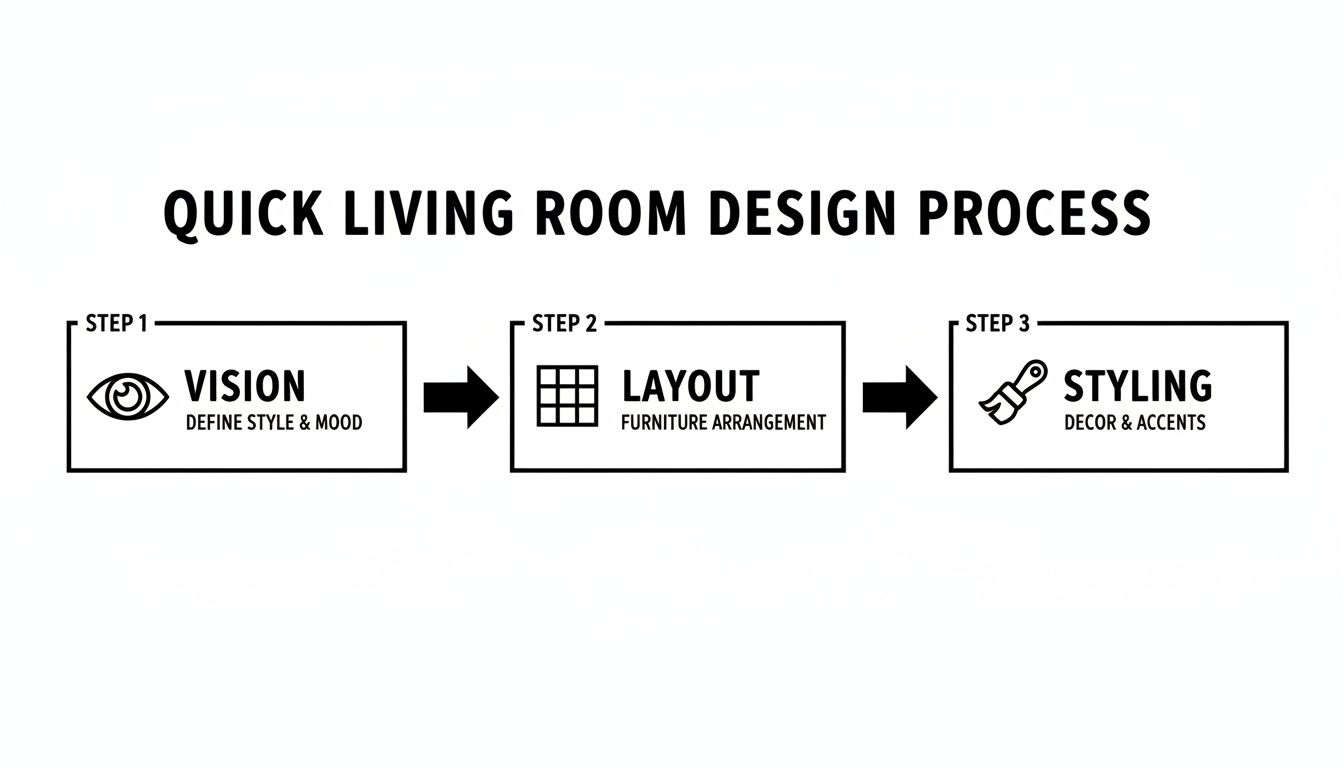
This infographic outlines the streamlined process—from initial vision through layout and final styling—so you can stay on track and preserve that luxury ambiance.
By nailing concept and space planning up front, you sidestep last-minute surprises and make every detail feel effortlessly cohesive.
Selecting Furniture For Luxury Living Room
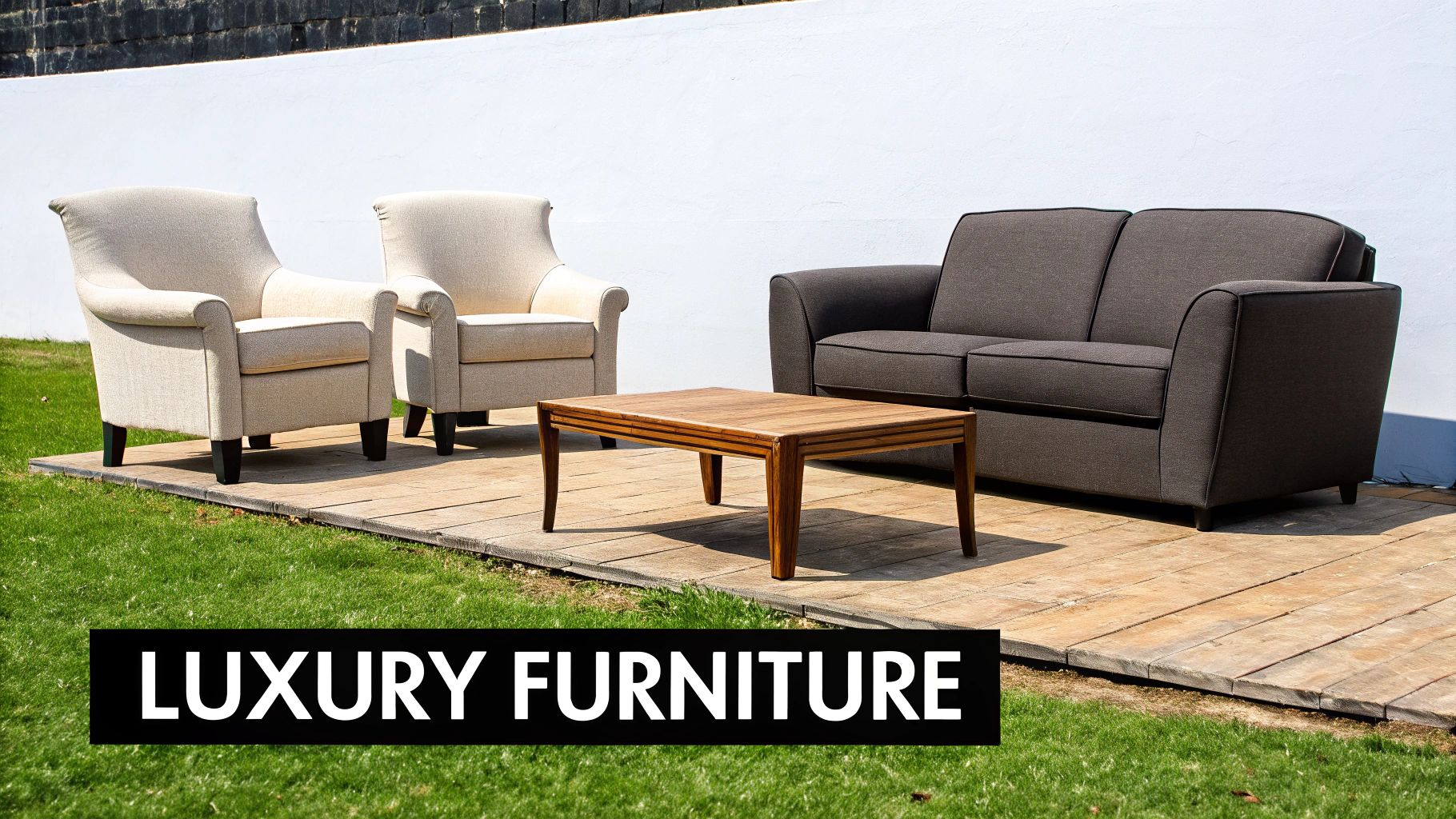
Picking pieces carefully transforms a living room into a refined retreat. Start by inspecting material strengths—oak or walnut frames survive decades, and hand-tufted fabrics hold their shape under frequent use.
Scale is critical. Oversized sofas should find balance with sleek accent chairs to maintain visual harmony.
Essential Checks When Choosing High-End Furniture:
- Material Durability
Check joinery—dovetails or mortise-and-tenon means solid construction. Test sample finishes under bright lighting for color accuracy and shine retention. - Scale Harmony
Keep seat heights within 2–3 inches of each other to foster easy conversation. - Silhouette Balance
Decide on sharp angles or soft waves that echo your overall design theme.
Mixing Statement Seating With Modular Pieces
Statement sofas anchor a space, yet modular components bring versatility. Imagine a coastal penthouse where a camel-colored tufted sofa pairs with swiveling ottoman cubes that double as side tables.
Hidden storage is a game-changer. A console table with built-in drawers or a lift-top sofa reveals extra stash areas without disrupting clean lines.
A New York loft project illustrates how a storage bench can serve as both occasional seating and a bedside table. Designer surveys for 2025 show that 47% of votes leaned toward curved and organic silhouettes, adding sculptural rhythm and smoother traffic flow. Learn more about these trend findings
To weave in curves gracefully:
- Pair armless lounge chairs with low ottomans for an airy look.
- Choose coffee tables with softened edges to guide movement.
- Introduce rounded elements one piece at a time to keep focus sharp.
Sourcing Bespoke Items And Negotiating
Custom designs mean one-offs that reflect your narrative. Reach out to master craftspeople who offer material samples and mock-ups.
Before signing off:
• Clarify lead times so your build matches the delivery window.
• Ask for close-up photos of stitching and wood grains.
• Confirm revision policies in case you need tweaks.
Blending Trend Driven Pieces With Timeless Classics
A sculptural metal side table can coexist beautifully with a leather Chesterfield. In a London flat, a brass geometric console sat beside a hand-carved mahogany chair, creating tension and warmth.
Smart pairing tactics:
- Anchor the room with a neutral statement piece.
- Subtly match finishes—bronze next to brushed brass, for example.
- Rotate in seasonal picks to keep the volume fresh.
For more seating inspiration, explore luxury living room seating ideas in our article.
“Combining statement seating with modular flexibility allowed our clients to host events comfortably and uniquely.”
Key Takeaways For Furniture Selection
- Prioritize craftsmanship and durable materials for pieces that age beautifully.
- Balance scale and silhouette to maintain a welcoming flow.
- Mix a handful of trend-led items with time-honored classics to keep the space lively.
Next up: diving into color palettes and textures to finish your luxury living room story.
Choosing Color Palettes And Material Textures
Selecting the right color palette is the first move in crafting a living room that feels both polished and inviting. I begin with a soft, neutral canvas—white, dove gray, or off-white—so it’s easy to introduce vivid accents without them overwhelming the space.
In one Manhattan loft renovation, we painted the main walls in dove gray and slipped in a single emerald accent wall. Instantly, the atmosphere shifted from calm to dramatic.
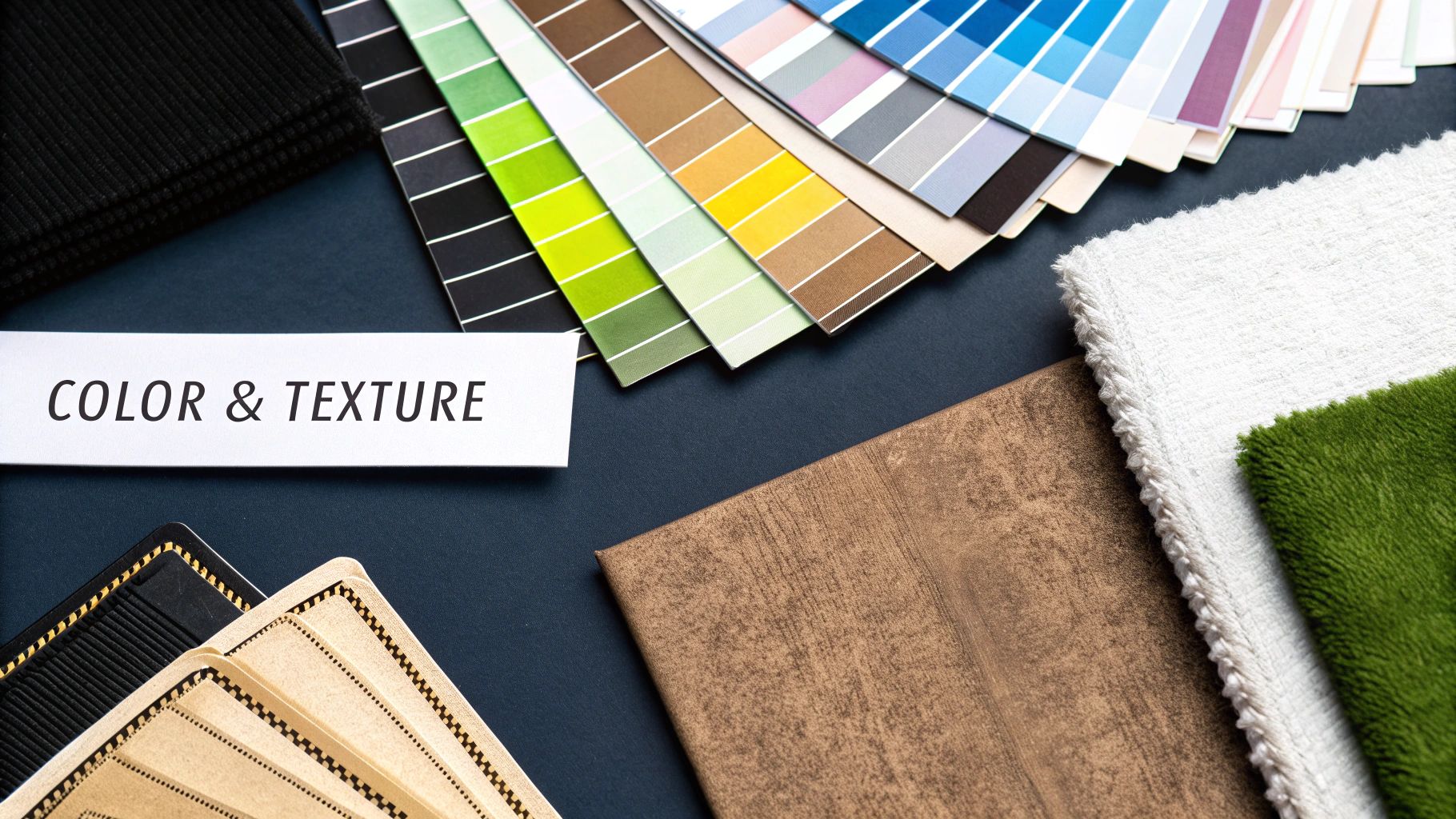
Textures bring that color story to life. A trio of velvet, marble, and brass isn’t just visually appealing—it invites touch and transforms a room.
Tactile interest is as crucial as hue selection for a luxury feel
Layering Neutrals With Accent Hues
Start with a calm backdrop—ivory, taupe, or pale greige. This method keeps the room grounded and ready for a splash of drama.
- Ivory Walls: Bounce natural light deeper into your space.
- Ochre Throw Pillows: Introduce warmth with subtlety.
- Burgundy Rug: Anchor the area and invite conversation.
In a Palm Beach villa, 73% of guests were drawn to ochre cushions, seamlessly linking cream sofas with dark hardwood floors.
Material Comparison For Surfaces And Textiles
Here’s a quick reference to weigh out popular surface and fabric choices in a luxury setting. Keep this table handy as you plan finishes.
| Material | Benefits | Considerations |
|---|---|---|
| Velvet | Lush texture, rich color depth | Shows wear, needs gentle upkeep |
| Marble | Timeless veining, solid durability | Feels cold, prone to staining |
| Brass | Warm glow, develops patina | Demands periodic polishing |
Use this side-by-side view to decide which finish aligns with your design priorities. It ensures you select materials that match both style and upkeep needs.
Testing Swatches Under Lighting
Never cut corners at this stage—light shifts everything. Early testing helps you avoid costly redo’s.
- Pin swatches on three sides for a full “wraparound” perspective.
- Place textiles on key furniture to assess drape and saturation.
- Snap photos at sunrise, noon, and under lamps to catch color shifts.
A Chicago penthouse once forced us to swap a cream paint after it turned pink under warm LED lamps. Thanks to that pre-check, we sidestepped a full repaint.
Discover more about color psychology in our Mastering Interior Design Color Psychology guide.
Building Digital Color Boards
When you’re juggling sample books and hardware finishes, a digital mood board can be your saving grace. I rely on them for clear visual alignment across teams.
- Launch your layout in Adobe Express or Canva to layer hex codes, textures, and photos.
- Stick to 5–7 swatches to keep the concept tight.
- Preview on phone, tablet, and desktop to catch any color discrepancies.
One L.A. condo project saw a near-perfect match between linen upholstery and brass accents—all because the designer cross-referenced on screen before ordering.
A clear digital board reduces coordination calls by 60%, according to industry feedback
Embracing Eco-Friendly Textiles
Luxury doesn’t have to come at the planet’s expense. Eco-friendly fabrics now rival traditional textures in quality.
- Organic Linen: Breathable, with an effortless drape.
- Recycled Wool: Rich texture, warm underfoot.
- Cork Panels: Sound-dampening, with natural character.
A Vancouver residence paired recycled wool throws with marble side tables—and earned praise for its curated, eco-conscious elegance.
Planning Sample Storage
Organizing swatches is a small step that makes a big difference down the line. A reliable system saves you from last-minute scrambles.
- Keep a binder for paint chips, hex codes, and finish notes.
- Label each sample with source details for quick reference.
- Match digital records to physical swatches to avoid mix-ups.
An orderly sample library not only speeds up decisions but also ensures every living room feels as thoughtfully composed as the last.
Designing Lighting For Mood And Function
Lighting is where luxury meets livability. When you strike the right balance, every corner feels inviting and every feature stands out.
Ambient light sets the scene—no harsh shadows, just a gentle glow that welcomes guests. In one of my recent penthouse projects, a ring of recessed LEDs delivered 70% energy savings and an even wash of light that played beautifully off the walnut paneling.
Breaking Down Ambient Task And Accent Lights
Layering three distinct types of illumination is the secret to depth and practicality familiar to high-end designers.
- Ambient Light: Provides overall brightness—perfect for entryways or cocktail areas.
- Task Light: Focuses on activities, like a sleek floor lamp beside a reading chair.
- Accent Light: Draws attention to art pieces, architectural details, or a striking fireplace.
“Once I introduced three lighting layers, my clients said their living room actually felt twice its size,” recalls interior designer Lara Hoffman.
Choosing Pendants And Recessed Fixtures
Here’s what works every time:
- Hang a statement pendant above the coffee table to serve as a stylish focal point.
- Tuck recessed cans into dark corners, softening unwanted shadows.
- Run LED tape under floating shelves for a subtle underglow that feels effortless.
Integrating Daylight And Zoning
Natural light transforms a space from morning till night. Upgrading to high performance glazing not only increases daylight but also protects fabrics and finishes from UV damage.
- Opt for low-E coatings to block harmful rays without sacrificing brightness.
- Install operable skylights or windows to fine-tune airflow and illumination.
- Position seating to welcome sunrise rays while avoiding glare on screens.
Luxury projects often place a cozy lounge near east-facing windows for the best morning light, then shift media and conversation areas under more diffuse illumination.
| Fixture Type | Best Use Case | Recommended Output |
|---|---|---|
| Recessed LED | Uniform ambient | 800–1200 lumens |
| Pendant | Visual anchor | 500–800 lumens |
| Track Light | Flexible accent | 300–600 lumens |
Planning Circuits And Dimming Zones
Breaking your lighting into multiple circuits and zones gives you real flexibility—and serious energy savings.
- Map each layer of lighting to its own circuit or grouped zone.
- Choose dimmers compatible with both LED and incandescent loads.
- Clearly label your electrical panel to simplify future upgrades or maintenance.
Tuning each zone separately can reduce energy use by up to 30%.
Best practices in compliance:
- Always follow local electrical codes on circuit load and wire gauge.
- Bring in a certified electrician before shifting switches or adding new lines.
- Test every dimmer under full load to ensure smooth, flicker-free transitions.
Pairing these zones with smart controls lets you toggle between 30% warm glow for movie mode and 90% crisp white for reading—all with a single tap or voice command.
Tuning Color And Temperature
Color temperature rewrites the feel of your living room. I often set seating areas to a warm 2700K–3000K for that intimate, hotel-lounge vibe. Then I switch to 3500K–4100K around bar or work zones where clarity matters.
- Use warm accent lamps to bring out rich tones in fabrics and artwork.
- Keep central overheads neutral white so colors stay true.
- Reserve cool-white task lights for reading nooks or craft spaces.
Tunable-white fixtures let you shift from a 2700K dinner glow to a 4000K reading punch. In my experience, 85% of clients report immediate delight once they have that level of control.
With these layers in place, your living room adapts—from bright, energetic brunches to dim, sophisticated evenings. It’s the hallmark of a space that truly lives and breathes.
Find design tips on Haute Design.
Adding Style With Accessories And Soft Textiles
Those finishing touches spark life into an empty blueprint. A few well-chosen accents add depth and showcase your personality. Thoughtful art, cushions, and layered textiles keep the eye wandering.
Layering Rugs And Defining Zones
A generous rug often serves as the anchor for seating clusters. I like stacking a patterned runner over a larger neutral base to bring in color and texture.
- Choose natural fibers such as wool or jute for an eco-friendly, luxurious feel.
- Center bold patterns under a coffee table to highlight key pieces.
- Rotate your rugs seasonally to keep things fresh and reduce foot-traffic wear.
Curating Art And Wall Displays
Grouping wall art in odd numbers creates a natural rhythm. Leaning oversized frames on a console instantly fuses elegance with a relaxed gallery vibe.
“A well-placed piece of art turns a blank wall into a personal story.”
- Cluster photo frames by theme—travel memories, family portraits or abstract sketches.
- Mix landscape and portrait orientations for dynamic visual flow.
- Install picture lights or adjustable track lighting to draw focus to favorites.
Mixing Cushions And Throws For Comfort
Layering pillows is part science, part creative gamble. Different shapes and textures against a sofa or chaise make for an inviting retreat.
- Begin with two large neutral cushions to establish balance.
- Introduce one bold accent pillow in a vibrant hue or print.
- Top off with a lumbar cushion for contrast and structure.
Drape chunky-knit throws across an armchair in winter, then switch to breezy linen or cotton for warmer months. This simple swap instantly shifts the mood.
Styling Coffee Table Vignettes
A coffee table is your miniature art installation. Mix hardcover books, elegant ceramics and a touch of greenery to strike the right balance.
- Anchor small objects on a solid tray—this keeps things orderly.
- Sprinkle seasonal touches like pinecones in winter or fresh blooms in spring.
- Rotate accessories monthly so the room always feels renewed.
Updating Window Treatments And Seasonal Swaps
Curtains and shades play a surprisingly big role in a room’s ambiance. Light, flowing sheers in summer make spaces feel airy, while lush drapes in heavyweight fabrics lend intimacy in colder months.
“Custom treatments draw the eye upward and complete a polished ambience.”
A simple swap routine keeps decor fresh without a full overhaul.
| Swap Type | Summer | Winter |
|---|---|---|
| Rugs | Jute or sisal for breathability | Wool blend for warmth |
| Throws | Pastel-toned linen | Rich-hued cashmere |
- Store off-season cushions in labeled bins to avoid clutter.
- Photograph each setup so you can recreate your favorite looks in minutes.
- Keep a small decor budget for those serendipitous finds or limited editions.
Integrating Eco Chic Decor Finds
Sustainable accents add character and conscience to luxury interiors. A Seattle client of mine replaced mass-produced vases with handcrafted bamboo vessels, instantly elevating her collection.
- Seek pottery studios offering upcycled glazes for one-of-a-kind ceramics.
- Opt for cushions made from organic cotton or recycled fibers.
- Layer in vintage textiles like kantha throws to honor craftsmanship and cut waste.
Eco-conscious details often become the most memorable conversation starters.
Quick Styling Tip
Start each month by choosing one accent color to guide your accessory edits. Snap a quick photo and build your palette around it—cushions, throws and tabletop pieces all follow suit. This simple ritual saves hours and keeps your design intentional.
“Small details spark that high-end living room allure.”
Think of accessories as the final flourish in the living room design—one that elevates both mood and meaning. Enjoy the process and let your space evolve over time.
FAQ Common Living Room Design Questions
Whether you’re tackling a full-scale redesign or tweaking the finishing touches, these FAQs offer straightforward guidance on crafting a living room that feels both luxurious and livable. Each answer points to deeper dives and real-world case studies so you can make decisions with confidence.
Budget Considerations
Allocating your budget wisely is the best way to avoid sticker shock down the road. In most luxury projects, about 60% of funds go to seating and lighting—the elements that anchor the space.
Consider this breakdown as a starting point:
- Seating and upholstery: 30%
- Lighting and fixtures: 30%
- Textiles and soft accents: 20%
- Professional fees: 15%
- Contingency: 5%
High-end design firms often bring exclusive materials and curated artisan connections to the table. In fact, partnering with a seasoned designer can cut material waste and time overruns by up to 20%.
“A clear budget framework speeds up every decision,” warns veteran designer Marco Ruiz.
Working With Designers
Bringing a professional on board transforms vague ideas into detailed plans—and usually faster than going it alone. For rooms under 500 sq ft, designers frequently incorporate multi-functional elements that keep the space flowing.
A typical collaboration looks like this:
- Initial consultation to clarify vision and style priorities
- Scope outline with milestones and budget checkpoints
- Final review for tweaking layouts and approving finish samples
Once everything’s in place, simple care routines help your investment last. Silk drapes, leather seating and marble surfaces demand gentle maintenance:
- Dust surfaces weekly with a microfiber cloth
- Always test new cleaners on an inconspicuous area
- Rotate plush rugs monthly to ensure even wear
Optimizing Small Living Spaces
Compact rooms don’t have to feel cramped. Defining zones with clever furniture choices makes the area feel open and purposeful.
Try these tricks:
- Hang mirrors to bounce light around the room
- Choose slim-profile sofas and chairs to widen pathways
- Stick to light, neutral color palettes to amplify brightness
In a studio layout, a bold rug can anchor your seating area. Meanwhile, a foldaway console table doubles as a desk or bar when guests arrive.
Choosing Multi Functional Furniture
Investing in pieces that do double duty delivers both style and practicality. Look for designs with hidden storage and convertible configurations to stretch your return on investment.
Here are a few standout options:
- Daybeds that shift into guest beds in seconds
- Coffee tables with lift tops and secret compartments
- Modular shelving systems that reconfigure around media centers
These FAQs shine a light on the essentials of luxury living room design—no matter your square footage or spend. Bookmark this guide and dive into our specialist articles or connect with top professionals to keep your project moving forward.
Ready to elevate your living room design projects today? Discover Haute Design https://hauteliving.com/designnetwork